Enterprises should be winning at DevOps and reaping the rewards of their digital transformation initiatives. After all, DevOps is not new. Its practices, technologies and processes have been widely accepted for years. Agile techniques, which underpin DevOps, are not new, either. Similarly, digital transformation may have started as a “tech solution” but it is now recognized as a C-suite imperative.
So why are the majority of business underexploiting their potential? Enterprises stand on the brink of a new era of opportunity heralded by 5G, the IoT and AI. So, how will DevOps rise to the new challenge of increased speed, scale and complexity?
Time to Worry?
Test automation levels in organizations speak volumes. Automation is an important marker of DevOps maturity and an indicator of how well a business can compete on quality at speed. So, it is a little worrying that software teams continue to rely on manual processes, with just 16 percent deploying automating common test activities.
It is often observed that DevOps requires cultural change to really take hold. Motivating and retaining top talent is as important to the health of a DevOps implementation as the latest platform or framework. Yet, it is often passed over in favor of a “quick-fix” in the form of a tech solution. Relatively small adjustments in how teams approach DevOps can make a huge difference, as any practitioner of nudge theory will tell you.
Here are six top tips to get DevOps delivering again.
Silo or Service Approach?
Consider switching to a horizontal software organization, sometimes known as a flat hierarchy, in which people are responsible for end-to-end ownership of the service they are tasked with. It is empowering because it gives them a complete view of what the service should be responsible for. In a vertical organization, the developers tend to become siloed and it can be hard to appreciate the bigger picture.
Adopt Microservices and Container-based Architectures
These technical advances have influenced how teams are built and how they operate. Their relative isolation forces teams to be organized independently. With that, comes flexible working and responsibility for the complete life cycle. View microservices and container-based architectures as opportunities for DevOps team members to have more ownership of deployments and results in faster release cycles.
Publish Matrices for Increased Visibility
There is a lot to be said for increasing transparency between teams and their members. Foster some healthy competition, share best practices or simply provide criteria for teams to match performance. This can be achieved with automated matrices that show software development and release agility, operational efficiency and quality of service. This kind of transparency is a motivator and will act as a catalyst to improve engineering.
Automation Leads to Motivation
Automation is vital for achieving scale and speed, as such, it is rightly seen as a DevOps must-have. It is also valuable because it frees up people’s time from routine activities and manual, repetitive, error-prone tasks. These manual tasks do not just burn precious work hours and reduce quality, they also grind down morale. Give developers interesting things to work on that are strategically important to the organization.
Immediate Feedback
In DevOps circles, people obsess about the importance of tightening customer feedback loops. But in an age where social networking is ubiquitous, it is not just customers who want immediate recognition more than delayed gratification. Employees are no different! Provide immediate feedback on code/ build/ test/ deployment /deviations from guidelines as they happen, so that corrective actions can be taken immediately.
Top-Down Commitment
DevOps requires C-suite commitment. This is especially true in the early stages of a DevOps implementation. Projects stall for various reasons. For instance, businesses can find it challenging to adapt organizational structures to fit the DevOps way of working. Technical hiccups occur too when technologies are new and its practitioners are learning the ropes. Active, unified support from management helps smooth the path to DevOps, deploying help and resources to ensure the project remains on track.
DevOps is one part technology, one part process and one part people. It is easy to take it for granted. Too often, businesses prioritize the tech and the processes and forget that what makes DevOps transformational. It is the bringing together of two (formerly) distinct groups, the development and operations teams. A nudge, a pat on the back or a common goal go a long way. These softer skills pack a bigger punch and deliver a better bang for the buck.
“As with any new technology, it’s really important that we be thinking now about how to do [it] ethically and responsibly.” —Robert High, Vice President and Chief Technology Officer, IBM Watson
Here’s something to think about: According to an article in The Wall Street Journal, more than 30 countries have defensive weapons run by automation. South Korea has robotic sentries along the DMZ, while Israeli robots patrol the border at Gaza. Russia has robotic vehicles armed with 30mm cannons and anti-tank guided missiles that are well-equipped to battle it out with NATO forces should the need arise.
Got your attention? Wait, there’s more.
The SeaHunter is a U.S. military vessel that can travel the high seas on its own for months without a crew to feed or protect. It’s completely unmanned. And, it costs only $20 million per boat, less than half of the $49 million it costs to fire 59 Tomahawk missiles. At that price, the SeaHunter is practically throwaway.
The SeaHunter, an unmanned oceangoing vessel, can remain at sea for months at a time.
The implications are profound. The value proposition is hard to resist, Why spend billions on building and manning traditional warships when, for the same expense or less, you can have a navy of predominantly robotic ships patrolling the oceans of the world? And, you can have robotic aircraft, capable of automated takeoff and landing, using these ships as mobile bases. An air force untethered to any land mass is a game changer, particularly when non-state actors can get their hands on a few of them. It sort of brings new meaning to the word “pirate”—no need to board a vessel by force, just get the access credentials.
And, at the core of it all this modern weaponry is automation and growing capabilities in AI. That should give you something to think about.
We in DevOps are all about automation. It’s our raison d’être. Our fondness for, and dedication to, automation is admirable. We really have changed the way tech works. Yet, many of us think of our activities as mundane. It’s akin to the nonchalance of a Major League baseball player. They’ve hit the ball so much that many players have forgotten how skillful one needs to be just to foul off a bad pitch. Most people on the planet can’t hit a Big League pitch, let alone make it go foul by intention. But for the pro, it’s no big deal—it’s just part of a day’s work.
It’s the same for us. We’re so accustomed to automating our world that it’s become no big deal. But, it is a big deal. It’s a very big deal.
The easiest thing in the world is to trivialize the incredible impact our work has on others. After all, we’re “just working on” an ecommerce site, a dating app, or IoT endpoint for wired bicycles, right? Those of us working in the defense industry might grasp the significance of the work, but for most of us, it’s business as usual.
Here’s the raw truth: Those of us doing the automation are changing the world. Each line of code we write is intelligence that alters the digital infrastructure of some part of the planet. The code we write will live on well after we’re gone, whether it’s from a company or from the planet. Are we really clear about the impact we have? Yes, some of our tech superstars are asking us to pay attention, but how many of us really are?
Every day that passes we give automation more power. It might be a little piece of power, such as letting only authorized users access to an application. It might be significant power, such as determining whether a person qualifies for a loan to buy a house. It might be enormous power, such as manipulating political forces toward a desired behavior. Or, it might be the ultimate power: Deciding who gets to live and who gets to die. But, regardless of degree, it is power and we have it. And, we continue to make automation more powerful. As surprising as it may sound, despite appearances otherwise, we’re the ones the world trusts intrinsically to do our work safely and responsibly. A lot of the world’s safety depends on how we do our work. Political leaders don’t write the code. We do.
Originally, I was going to call this piece “Death and Destruction in the Age of Automation” and write about how we’ve taken automation way beyond commercial IT into the realm of life-and-death decision-making. I decided otherwise. The world does not need another gloom-and-doom piece, nor does it need another piece of sensational journalism. We’d do better to focus more on the positive things we’ve achieved. Technology is doing a whole lot more good than bad.
But the fact remains that technology has accompanied death and destruction since Roman catapults assaulted the frontiers of ancient Europe. The thing that’s really different now is that the technology thinks—or, at least, it’s doing a really good job of emulating thinking. And, we’re the ones making it think better. Thus, we should ask, Are we making technology think in ways that are safe and trustworthy? Are we acting in ways that are safe and trustworthy?
These are big questions. Do most of us really care about them? Or, is it easier to accept our work as mundane, with little consequence in the Big Picture? The nice thing about mundane is that it doesn’t require a lot of ethical contemplation. But, when you consider that the script that deploys an updated container to a Kubernetes cluster is not that far from the one that deploys an unmanned warship to a regional hotspot, things look different. And, contemplating the implications thereof becomes more than an academic exercise in a computer science ethics class.
More than 2,000 years ago the philosopher Socrates said, “The unexamined life is not worth living.” Given the immense role that technology plays in today’s world and the power it wields—power that continues to move further away from our direct control—we might do well to say, “The unexamined technology is not worth doing.” It’s something to think about, while we still can.
Industrial revolutions have always dominated and changed the world in a big way. The first one happened way back in 18th century, and the second industrial revolution occurred almost two centuries later, in the 20th century. The third one happened only a half-century later, while the fourth one was observed within three decades. By the speed these transformations are occurring, a fifth industrial revolution is already around the corner.
The next technology revolution will be faster and more scalable, and will be adopted by a lot more people as compared to the previous ones. Everyone on the planet will undergo a “personal” revolution by the kind of technology at their disposal. 3D-printing, wearable technology, robots. driverless cars … everything will be readily available and will make lives simpler and faster. With every industrial revolution brought a substantial increase in the GDP, and lifestyles improved manifold. The next revolutionary technology, however, does not aim to simply improve the lifestyle or help people make more money; rather, it focuses on the higher form of intelligence. Now humankind is ready to take the big plunge and step into space. With ideas such as SpaceX and affordable space travel, a future that we cannot imagine today might be possible tomorrow.
The definition of industrial revolution includes the use of sophisticated machinery to make the work of humans easier and faster. Today, that includes robotics, machine learning, artificial intelligence and a lot more things that nobody could think would become a part of industrial revolution someday.
In future, we can only expect technology to become more superior and sophisticated in every sense: augmented reality, big data, virtual reality, artificial intelligence and the most disruptive one—cryptocurrency—are a few to name. Cryptocurrency is something so revolutionary that it is making news every day. Bitcoin’s price is touching the sky and investors of cryptocurrency believe that the prices are sure to touch the moon in coming years. With the number of people investing in cryptocurrency and people holding on to their alt-coins, one thing is sure: A fifth industrial revolution has “already” arrived.
Industry not only runs on machinery or ideas, but also on money. Today, people are spending their hard cash and fiat currency to buy cryptocoins, including Bitcoin, Ethereum, Litecoin, Ripple, Monero, Dash, Golem IOTA and even tokens (ICOs). A popular crypto-exchange claims it adds more than 30,000 new user accounts every day—a number not to be ignored!
It is true, cryptocurrency currently is not regulated or controlled by any government, but it’s possible governments could impose taxes on the income generated from it in future. There is still much to be worked out in making cryptocurrency a validated form of currency. But even high-end investors such as Warren Buffet claim cryptocurrency is here to stay, and it is indeed something that will bring a bigger revolution than expected.
The Fifth Industrial Revolution is poised at the cusp of a future in which things considered unimaginable today become the norm, and concepts such as universal basic income (UBI) help ease the sting of automation and mass unemployment. Mankind is ready to take a step forward.
The world currently is in a disruptive stage, as the fifth industrial revolution unfolds to impact our lives—for better or for worse. Now we wait and observe what the future has in store for us.
About the Author / Emma Rundle
Emma is a professional content writer currently providing her freelance services to Edubirdie. Emma’s favorite topics to cover include business, software, high tech, and web development. She has a Master’s degree in Economics from The University of Texas at Austin. Follow Emma on Twitter.
A newly published report by the Organisation for Economic Co-operation and Development (OECD) reveals the state of digital technology adoption, development and related research when it comes to digital transformation, manufacturing automation and providing skill sets for workers that will help carry them in the future.
The “OECD Science, Technology and Industry Scoreboard 2017” found that when it comes to the internet of things (IoT), the United States leads other G20 countries. It also garners the largest share of the top 10 percent most-cited scientific publications in the world. But that’s where the very good news ends. According to the OECD, that share of the top scientific publications is dwindling as more and higher-quality research is increasingly coming from China. The United States is also below average when it comes to the adoption of robots in manufacturing.
The top five economies when it comes to developing digital technologies? China, Chinese Taipei, Japan, Korea and the United States. According to the report, India and eastern Europe are becoming more substantially involved in innovation and science.
Key findings in the 2017 Scoreboard include:
China, Chinese Taipei, Japan, Korea and the United States accounted for 70 percent to 100 percent of the 20 fastest growing new information and communications technologies (such as payment protocols or interactive TV) between 2012 and 2015, as measured by inventions patented in the five top intellectual property (IP) offices.
Korea and Japan are the leaders in robot intensity, which is measured as the number of robots used in a sector divided by the overall value created by that sector, giving a sense of the pace of automation relative to industry size. Robot intensity is rising in the Czech Republic, Hungary, Slovak Republic and Slovenia and in the BRICS—most notably in China, which is fast catching up to U.S. levels.
IoT, or machine-to-machine communication via internet-connected devices such as vehicles, sensors or home appliances, is growing fast. China had the most SIM cards in machines in 2017 at 228 million subscriptions, accounting for 44 percent of global M2M connections and three times the U.S. share. In terms of M2M cards per person, the United States is in the lead among G20 countries, but ranks sixth globally behind Sweden, New Zealand, Norway, the Netherlands and Finland.
The number of artificial intelligence technologies patented in the five top IP offices rose by 6 percent a year on average over 2010-2015, led by Japan. Japan, Korea and the United States. Together those countries accounted for over 62 percent of AI-related IP5 patent applications, down from 70 percent in 2000-2005, as filings rose from China and Chinese Taipei. EU countries contributed to 12 percent of the top AI inventions, down from 19 percent in the previous decade.
The United States has the biggest share of the world’s top 10 percent most-cited scientific publications, and China has overtaken the UK for second place after tripling its high-impact output in a decade. The U.S. share of top-cited research fell to 26 percent in 2016 from 38 percent in 2005, the UK slipped to 6 percent from 8 percent and China increased its share to 14 percent from 4 percent.
Let me tell you about my granddaughter. She’s 14 years old and wicked smart. For a while we did pair programming together online in Python. In the old days you took your grandkids fishing. Today we code. Go figure.
These days, we don’t program together as much. She’s too busy preparing for math competitions. As I said, she’s wicked smart. Needless to say, my granddaughter has quite the future in front of her.
A few weeks ago, I had the opportunity to visit her in real time and space. We sat around drinking hot chocolate and cappuccino, talking about Big Picture stuff. That’s what grandparents are supposed to do with their grandkids, talk about matters beyond the day to day. At one point during the conversation I asked her the following question, “Are you friends with anybody who has trouble reading?”
Her reply was, no. All her friends read quite well and were interested in things that interested her. She wasn’t bragging or anything like that. It was just a matter of fact. All her friends are smart, engaged, have cell phones and know how to work a computer.
My question came from a book I had just finished reading, “Coming Apart,” by Charles Murray. One of the key points that Murray makes is that we’re dividing into two cultures and the distance between the two is growing wider. A key way to figure out how far from that “other” culture you are is to tally up the number of friends you have who have trouble reading. One camp will have a lot. The other will have practically none.
Back when I was my granddaughter’s age I had friends who had trouble reading. We met playing pickup basketball. The ability to read wasn’t important in that context. We based friendship on other factors. We played ball and rubbed off on each other. Some of the things that the poor readers were good at rubbed off on me. I like to think some of my better qualities rubbed off on them.
But that was then and this is now.
In the book, “Brave New World,” written in 1932, people are born in test tubes according to genetic recipes. Some grow to be highly intelligent, creative, analytic Alphas. Others grow up to be be Betas, people that can perform highly complex tasks such as mixing volatile chemicals, but without having an inkling of understanding as to why they are doing the task. Gammas were good at adding up numbers and thus, become bookkeepers. Deltas are the truck drivers and elevator operators. Epsilons are grown to be three feet tall and abhor the outdoors. They do the dregs of factory work, climbing in and under machines.
Now, hold that thought while I tell you about my daughter.
My daughter is a high school teacher. Most of her students are from what is termed, the wrong side of the tracks. They don’t read that well and are not terribly engaged in school. But, they do have cell phones and they know how to use them—mostly to text back and forth to home and with friends in classes in other parts of the building. To use the transportation analogy, for all intents and purposes they use of technology not so much to explore but to get from one place to another, something a driverless vehicle will do better than the human counterpart in the not-too-distant future.
So, what does this have to do with DevOps?
We in DevOps are the people who are going to drive most, if not all, the technology that will control the world. We are the Alphas. To get into our club you need to be very, very smart. Our work is complex and requires both commitment and ability to engage in continuous learning. When my granddaughter comes of age, she will mostly likely get into the club, maybe with honors. She lives in a world of increasing returns. Because she is smart, she hangs out with smart people. Because she hangs out with smart people, she will get smarter. To use an analogy: Those who know how to work GitHub have a universe of code at their disposal. Thus, they will make a lot more code for the world to use. Those who can’t do a pull request are stuck dead in their tracks. Access to opportunity provides more access to opportunity.
Using the model in “Brave New World,” those using GitHub creatively as part of the software development life cycle can be considered Alphas. Those who can’t are Betas, Gammas, Deltas and Epsilons. The really bad news is that the work of Betas, Gammas, Delta and Epsilons is low-hanging fruit for replacement by automation and robotics. The work of Alphas is a lot more difficult to emulate with machine intelligence. Corporate employers will still need them. The Alphas will do just fine.
Hopefully, those who are displaced by automation will be assuaged by low-cost television and cell phone plans that offer unlimited data and texting. Otherwise, they’re going to be looking around for something else to do instead of working. Hopefully there will be “something else to do” while the other culture is prospering.
My granddaughter’s world reflects the trend that Murray and others describe. We’re dividing into two cultures and the distance between these cultures is growing. The sad part is that the experiences that used to provide a bridge between cultures are becoming less common. There are fewer common spaces in which we can rub off on each other benignly, with no other agenda than to get the ball through the hoop. If the trend continues, the cultures will grow so far apart that they will become unrecognizable to each other. Once recognition leaves the landscape, understanding and empathy are not far behind. You cannot have affinity for that which you cannot see.
Is it possible to reverse the trend? Is it possible to have an outcome other than the very probable one on the horizon? I don’t know. But, if we don’t try, the ramifications will be dire.
A survey from IT World Canada (ITWC) apparently shows that CIOs are preferred by their companies to shepherd the digital transformation process in part because of their knowledge of legacy systems. The fifth annual CanadianCIO Census concludes that CIOs are “able to bridge in-place technologies required to run the business, while increasingly guiding their companies on how to grow and transform the business using digital technologies.”
Going hand in hand with that notion is the survey’s finding that the rise of the chief digital officer is a myth.
There are other interesting takeaways from the survey, which was completed by 164 IT leaders, mostly CIOs, in April:
The 2017-2018 time frame is shaping up to be a growth year with nearly half of respondents expecting to add IT staff this year, and only 7 percent expecting to decrease staff. Increased IT budgets are also the trend for 2018, with 57 percent of the respondents reporting that they expect an increased IT budget. Some 11 percent expect an increase of more than 15 percent.
Although the No. 1 concern of respondents is data security/data privacy, the more significant bit of data may be that the third-highest concern is business innovation, which rose significantly in priority over last year’s survey. Canadian CIOs also seem less enthralled with some of the latest technologies that some of their U.S. counterparts ballyhoo. Social media, artificial intelligence, blockchain and even internet of things rated lowest in terms of “benefits realized to date from investment” in these technologies.
The picture that emerges from the survey is a strong tension between opposing forces faced by IT executives. Cloud services, though heavily embraced and widely successful, still haven’t brought down the price of keeping the lights on sufficiently to divert enough IT budget to digital transformation and business innovation projects. The transition of funding toward digital business is inevitable in some companies, and senior IT leaders need to avoid being run over by that freight train. If IT budgets grow year over year, investment in digital transformation should be stepped up significantly, too. Find ways to automate processes that were more labor-intensive before.
Analysis
Although the survey finds that the CIO is the de facto digital transformation technology leader, I’m not sure you can draw that as a hard conclusion from a survey of 164 mostly CIOs. CIOs are a logical choice for this role, assuming they possess strong technical acumen, in-depth knowledge of the systems in place and up-to-date insights on the latest tools and services at their disposal. Many CIOs have shrewdly focused on the business innovation end of things—in other words, what you can do with a digitally transformed enterprise. And in the long run, that may be the smarter position for a CIO to take.
No CIO should assume they are in the driver seat on digital transformation. On the other hand, grooming and selecting a lieutenant to execute on the digital plumbing while you plan and implement your first digital business wins may be the better approach for some CIOs.
With half the year gone, Gartner just revised its 2017 worldwide IT spending projection up 1 percent to 2.4 percent. That may not sound like a lot, but last year’s IT spending growth was effectively flat at 0.3 percent. It isn’t just the uptick in the overall spending level that’s interesting, it’s how Gartner predicts the money is being spent. It sees the move to digital business and the related adoption of new technologies such as internet of things (IoT), blockchain and smart machines as a growth engine that’s creating new potential reasons for spending.
“Digital business is having a profound effect on the way business is done,” said John-David Lovelock, vice president and analyst at Gartner. “The impact of digital business is giving rise to new categories; for example, the convergence of ‘software plus services plus intellectual property.’ These next-generation offerings are fueled by business and technology platforms that will be the driver for new categories of spending. Industry-specific disruptive technologies include the internet of things in manufacturing, blockchain in financial services (and other industries), and smart machines in retail. The focus is on how technology is disrupting and enabling business.”
Worldwide, Gartner is forecasting that the enterprise software market will be the highest growth segment of IT spending—7.6 percent growth in 2017 from 5.3 percent in 2016. (Device spending is also up markedly in the report.) Enterprise software will be one of the keys to driving and controlling revenues derived from digital business advances.
Takeaways for senior IT leaders: Digital disruption is the probable stick slowly driving the adoption of digital business. The carrot is innovation. This is putting it too simply, but it’s true: Disrupt or be disrupted. And just because many of the high-profile digital disruptions have been business-to-consumer, don’t think you’re safe in the business-to-business sector, either. As this plays out, probably over the next five to 10 years, a lot more companies are going to be burned and a lot more companies are going to be made. You can no longer laugh this off as a buzzword.
It starts with analytics, preferably sifting through meaningful big data. Digital business is rewriting business process and the way data is collected, interpreted, moved and consumed in profound ways. That could make your analytics easier to implement and analyze. But if you don’t have a major business analytics upgrade just rolling out, you’re flying blind.
Ride the wave, but as you adopt new cloud-based services and enterprises apps, there’s a potential for management complexity to trip you up.
“With the increased adoption of SaaS-based enterprise applications, there also comes an increase in acceptance of IT operations management tools that are also delivered from the cloud,” said Lovelock. “These cloud-based tools allow infrastructure and operations organizations to more rapidly add functionality and adopt newer technologies to help them manage faster application release cycles. If the I&O (infrastructure and operations) team does not monitor and track the rapidly changing environment, it risks infrastructure and application service degradation, which ultimately impacts the end-user experience and can have financial as well as brand repercussions.”
In the technology world, we are in a time of incredible disruption and innovation. Many years ago, my friend and “DevOps Handbook” co-author John Willis predicted that a decade from now, academics will call this period the “Cambrian explosion” — it was an incredibly vibrant 25-million year period that resulted in an incredible diversification of cellular life forms, including the appearance of complex, multi-cellular organisms, setting the stage for the diversity of life we see today.
Similarly, over the last decade, we’ve seen an explosion of incredible innovation and disruption in almost every area of technology: cloud computing, containers, virtualization; Agile, iterative development, continuous integration and deployment, and automated configuration management.
One can be forgiven if all this change is overwhelming; I think we’ve all had moments in our careers where we think, “I’m not sure if I I’m up to learning how to tackle this next big thing.” Even someone who loves learning can become cynical, or maybe just fatigued by change.
But most of us, maybe with some calm reflection, will recognize that there’s never been a more fun time to be in technology. And many of these new techniques and practices lead to massively better ways of working, where after an initial learning curve, we’d never go back to the old way. I believe this actually calls for excitement! And, I’m not alone.
We recently hosted a live chat with multiple leaders in technology who’ve spoken at past DevOps Enterprise Summit events. As we are in full prep mode for the next event in San Francisco this November, we asked our esteemed panel to share about their career journeys in tech and their passion for learning and change. It was a great pleasure to be able to pick the brains of Dominica DeGrandis from LeanKit, Dr. Nicole Forsgren from DORA, Erica Morrison from CSG International, Terri Potts from Raytheon and Robin Yeman from Lockheed Martin. During the course of the discussion, each person shared how they got their start in tech and many of the lessons they have learned over the past 20 years in the industry. It was echoed throughout the discussion that while things are rapidly evolving, it’s an exciting time filled with continuous opportunities to learn, plenty of room for growth and time to experiment with new tools and processes. For the full video replay and transcript of the discussion, please see below.
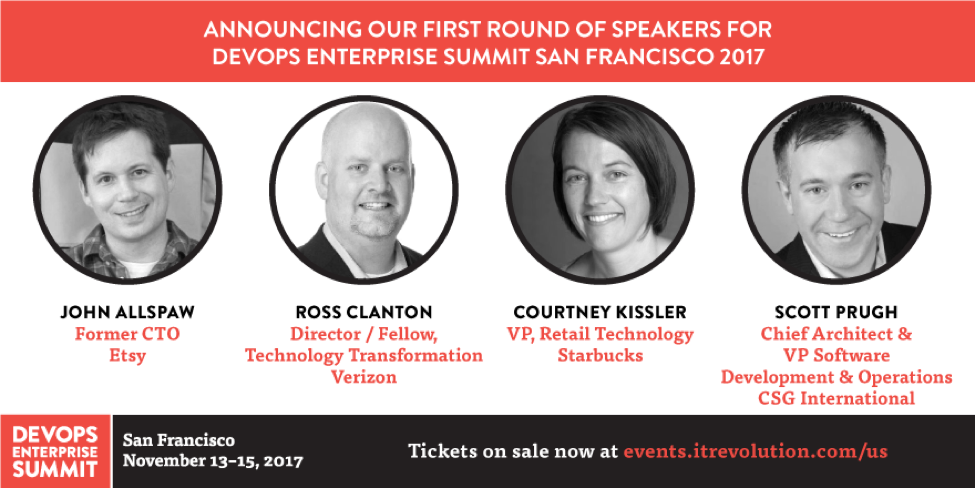
Also, don’t forget to register for the 2017 DevOps Enterprise Summit San Francisco to hear more from leaders in tech and get a glimpse into their organization’s journey into DevOps. Early Bird pricing discounts are available until July 31!
Gene Kim: Hello everybody, welcome to this episode of the DevOps Enterprise Summit live chat. We are assembled here today with a group of people I’ve known for years, and people who I genuinely admire. They’re all experts and leaders in the DevOps Enterprise community who are helping shape much of the practices that are going to almost certainly be commonplace in technology organizations over the next decade. Over the last 20 years I’ve been studying high-performing technology organizations, and more recently it’s led to studying transformational leaders and trying to understand how they became transformational leaders. What I find fascinating is there’s evidence to suggest that these are traits that you are not necessarily born with, but instead they’re actually learned.
Over the next hour, my goal is to learn about these leaders on this panel, their careers and experiences that shaped who they are today. My desired outcome is that we’ll all learn something that we can integrate into our own respective journeys. As you’ll surely find out over the next hour, these are all great people. As a reminder, the upcoming DevOps Enterprise San Francisco event is taking place on Nov. 13-15, and for more information visit events.itrevolution.com. And just a reminder, Early Bird pricing ends on July 31st.
Let’s go quickly around the panel, and everyone, if you could just introduce yourselves, name, company role, when did you present DevOps Enterprise and what did you speak on, and free to speak to share any professional accomplishment that you’re most proud of. Dominica, let’s start with you.
Dominica DeGrandis: All right. Well, I was a build engineer, spent 20 years bringing visibility to what version of what file was on what server in what environment. Currently, I am the Director of Training and Coaching at LeanKit. I’ve spoken at DevOps Enterprise Summit for four years in a row now, mostly speaking about experience reports and metrics and making things visible. And I guess, my most professional accomplishment, I think it would have to be finding my courage to get up in front of a group of people, and explain or present data, and demonstrate how to get leadership buy-in with metrics.
Kim: Awesome, thank you. Erica Morrison.
Erica Morrison: Hi, everyone. I’m the Director of Software Development and Operations at CSG International in Omaha. We’ve spoken the past couple years at DevOps Enterprise Summit chronicling our journey through the DevOps space, and we’ll continue to tell that journey. Something that I’m most proud of, probably the things that have brought the most challenges in my career have actually been in the DevOps space. We’ve undergone a fairly major transformation this past year, brought a number of teams through that, but one team in particular who have made substantial improvements as far as stability and automation. That’s been really something that’s been fun to be a part of.
Kim: By the way, following your experience reports has been my favorites among every year at DevOps Enterprise, fantastic. Robin.
Robin Yeman: Hey, I’m Robin Yeman, a Lockheed Martin fellow. I’ve been working in engineering about 23 years in the defense industry on everything from submarines to satellites, and everything in between. I think my biggest accomplishment is really being able to see the change. When I first started doing Agile in DevOps, you really couldn’t see it, but now I start getting contracts and RFPs from the customer repeating verbatim what I told them before. It’s cool to see that the influence is there. It might not be as fast as I’d like it, but it’s there.
Kim: That’s awesome, and then you spoke last two years of DevOps Enterprise San Francisco and London.
Yeman: You’re right. Yeah, the last two years on transforming large legacy organizations way back. A combination between Suzette Johnson from Northrop Grumman and myself from Lockheed Martin, because we both had very similar journeys.
Kim: Awesome. Thank you, Robin. Nicole.
Nicole Forsgren: Yes. Hello, I’m Nicole Forsgren, CEO and chief scientist at DevOps Research and Assessment, otherwise known as DORA. I spent years doing software development, enterprise storage at IBM, and then I went and got my Ph.D. that might be my professional accomplishment that I’m most proud of is that I’ve been studying and researching what’s basically known as DevOps for the last 10 years, and then applying it and bringing what I found to the industry and in my work with Gene and Jez Humble, and the team at Puppet on the State of DevOps Report. We all lived through that 2000 dot-com bust, and we saw many companies fail and I don’t want to see that again. Really helping to make an influence in the industry and make things a little bit better is an accomplishment for me.
Kim: Awesome, thank you Nicole, and you spoke in I think every year at DevOps Enterprise. Fantastic. Terri Potts.
Terri Potts: Hi, I’m Terri Potts. I’m from Raytheon Company, and I’m the Technical Director of the Software Development Organization. Like Robin, we are focused on doing mostly defense- and Intel community-related contracts. I started in the software development business actually in the Air Force and spent 11 years there, moving through the ranks and came to Raytheon, and moved on to be an architect after doing development for several years and have been a champion for technology transformation since the early 2000s.
I’ve spoken a few times at DevOps Enterprise Summit. Once about our legacy transformation since we have been around for long, and a lot of our code is quite old. Last year, I spoke about how you build up your staff of people that can support your DevOps transformation because it’s hard to just go out and hire those, some ideas around how to go do that.
Kim: Awesome, thank you much Terri. And by the way, I remember meeting you at the IBM Interconnect Conference in 2014, and you were actually one of the first announced speakers at DevOps Enterprise, very grateful for that.
First, let me just state an assumption I have that there’s actually never been a more fun time and exciting time to be in technology even though things are rapidly changing. Actually the pace of change is what’s causing much fear for many professionals about our livelihoods, our vocations, but I genuinely believe that the best times are ahead of us not behind us. Do you believe that? And if so, why? Erica could we start with you?
Morrison: Sure. I think about when I came out of college with a computer science degree, and I was focused on writing one language and writing that language well, and now we’ve got the proliferation of numerous different technologies, different languages. Like you said, the pace is moving much quicker. We actually hosted a hackathon here. We’ve done two of them for college students and just a number of different technologies that they use was absolutely mind-blowing to me, but I find it extremely interesting to continue to evolve for all these different things. It’s not just this one little dedicated space anymore, it’s constantly learning these new things which I love to do. Its new challenges everyday which keeps work interesting for us, makes work about being lifelong learners. I love that continuing to learn throughout our career, and it’s just focusing on learning different things now.
Kim: Awesome. Robin, how about you?
Yeman: I absolutely agree. I’d really think it’s the most exciting time. Just like Erica was saying, the college kids are coming in with 15, 20 different languages, they’re bringing all kinds of new technologies, they’re bringing gamification. They’ve really brought some different leadership styles. It’s very exciting. I know that some of our engineers get nervous, but if you just grab on and join the ride its fun.
Forsgren: Honestly, that’s one thing I love about technology. I mean, it kept me engaged, it kept me excited. Back when I was doing a bunch of development work, there was always something new to work on. As you said though, there’s always that other piece. There’s always the other side of it. We’re working in systems with growing complexity and that does make it really, really difficult, and that’s something that we’re seeing when we work with companies with DORA, in our assessment. You have to make sure that you can focus, but you need to know what your constraint is, particularly when we’re working on technology transformations. We need to make sure we can focus on the most important thing. We need to make sure that we can limit our whip, we can focus on our constraints, we can identify what the most important thing is that we don’t have sprawl and just contribute to technical debt. But, I think that’s what makes our work challenging and exciting and meaningful.
Potts: I love change, and that’s why my career has taken me where it has because the more different things you get into I think the more rounded you are, and the more you’re able to adapt new technologies. And the way I see it today is all the technology changes especially with the automation that many of us are going through that transformation, and I have always seen that as drudgery. If you’re working in some factory, let’s automate all the drudgery out, and then that gives us time on our teams to explore more around analytics or machine learning. That’s exciting for me.
Kim: Yes, you make it sound exciting. Dominica, you’re smiling.
DeGrandis: Well, I’m just thinking back at my first job out of school after I got my computer science degree. It was more configuration management back then, that was getting everything on the mag tape from IBM and putting that in a library, physical library somewhere safe in order to deploy it into production. But I think for me, it’s just the amount of opportunity there is now. There is this massive amount of opportunity for everyone whether they have a degree in computer science or not to go out there with all the sharing. The ability to share and learn now is much greater than it has been previously.
Kim: That is true. I mean, there’s never been a better time to be a learner. There’s no cost to entry it seems these days.
DeGrandis: Absolutely.
Kim: I suspect that this isn’t the first time that you’ve seen this dramatic change in the industry in your career. I’d love it if you could tell us about that time and how it affected your thinking about how you viewed your skills, your career, and where it took you. Robin, would you mind starting?
Yeman: Sure. When I first started we had a lot of ToR trend and ADA going on, and I was worried about the next generation of ADA, and whether they would even be able to keep up. So, just like that Dominica and the rest of the folks have said, I spent a lot of time at night trying to study, make sure I could stay on top of it because I was working with these amazing engineers and I just didn’t want to fall behind. I do the same thing now.
Kim: And by the way, I mean in a scale of 1 to 10 what level of fear did you feel? One is like it’s just another book no fear, 10 is existential fear of, “I might not be able to finish the book and therefore my career is over.”
Yeman: I work with some engineers—they’re smart that I was terrified. I’d say way up at 8 or 9 out of 10 because some people just get it quick and I have to work at it—I’m just not a natural. I was terrified.
Kim: by the way, it reminds me of learning Clojure very recently. It’s my first script language and I think I had to do 40 hours of reading before I could write a single line of code. It was just, it was very challenging, but very rewarding but all very intimidating. Nicole, how about you?
Forsgren: My first job in tech was when I was still in college, and it was on a mainframe. I was coming out of my associates in like ’99, and that was the big Y2K, everyone’s panicked, and it really fundamentally shaped what I thought about tech in many ways. Everyone was panicked, there was this big dot-com bust, and I alluded to this earlier, “Survival isn’t mandatory, companies can fail.”
That’s one piece where it really shaped what I do is that I don’t want to see companies fail. I’m sure you all have talked to me at conferences, and suddenly I just dig in, and I’m passionate. I have this drive to make sure we know we can find ways to help companies not fail, but it fundamentally affected me in a different way in that in the late ’90s, there was almost a tactical way to address the problem and it was teach everyone fundamental things. People look at me, they’re like, “How do you do mainframes?” It was mainframe, COBOL, Fortran and that was all we were teaching many students because we desperately had a very tactical need to make sure that when we hit 2000, the world didn’t end, technologically.
And then I did a bunch of consulting, and then I got a Ph.D., and then I was a professor. We’ve almost taken this other stance of we only want to or we’re very purposeful now, and I think it’s led to complexity sometimes in technology, but we want to make sure that we understand the purpose behind what we’re doing. We want to make sure that we have flexibility, we’re strategic, and we aren’t just tactical.
So, we designed the State of DevOps reports. They’re vendor and tool agnostic. We tell you about the principles that are important, the architectural designs that are important, the principles behind using version control are important. We aren’t going to tell you to use Git or Subversion, we’re going to tell you to use Subversion control. That’s the other thing that’s really impacted my career is that I need to make sure that if I walk into a situation I can tell someone from a conceptual level what’s really fundamentally important to improve their technology practice, and it won’t be tied to only a specific technology because that can end up being limiting. If you only tell someone teach someone a language, but not the fundamentals behind that language, it won’t work.
Kim: Principles are timeless and those things are not. Awesome, Terri.
Potts: When I think about this, the thing that comes to mind for me is probably about 20 years ago when systems software architecture started becoming a first-class citizen, at least at Raytheon. I remember seeing the first book, and one of my mentors saying, “Hey, I’m going to have a study group on software architecture do you want to join?” And I wanted to join and started seeing it as a way to grow my career, and be able to influence bigger parts of the system, and try to make things more maintainable, and really make good decisions going forward instead of just sort of stumbling into things. I wouldn’t say I was afraid, but I was really curious, and certainly felt like it was something that I needed to keep up with and did a lot of studying on my own outside of the office with study group, learning everything I can from them.
Kim: Sounds very interesting. In this case, it was like a mentor who actually sort of directed you down a certain direction. There seems to be a pattern of having great mentors. Fantastic, Dominica.
DeGrandis: When it comes to dramatic change, I have to say hands down 2005 or 2006. I was working at Corbis at the time managing environments, and we went from building out maintaining 25 servers to building out maintaining 250 servers over a period of 9 to 12 months. It was just impossible to manually build out servers. We had to start automating, and developers were like, “Builds take too long.” They wanted to put their own changes in their own dev integrated environment, and they took it seriously. They said, “Okay, then you get to own that dev environment like you build it, you maintain it. Then, I’ll just go build out maintain QA and staging inner prod.” That was huge dramatic change I think, and just being able to adapt to that and quickly was the biggest lesson for me there.
Kim: And specifically, was it dramatic because it was such a different way of doing things or it was dramatic because the role change and responsibilities for you, or what made it dramatic?
DeGrandis: Because for the previous six years we have had this process where we just dole out responsibilities, who’s doing what and how we’re doing it, and now that was turned on its head because we had to deliver faster, we had to deliver better quality, we had to get these environments up and running, and everything just exponentially grew with the number of servers and the number of environments. The way that I had been working for the last six years which had been fairly successful was completely different. That’s the second law of thermodynamics, everything is always in constant change and motion.
Kim: I love it. This is the famous story that’s in David Jay Anderson’s book, and in your upcoming book, Dominica. Fantastic, and Erica your dramatic changes in a certain point of your career.
Morrison: In addition to the ones that have been mentioned, there’s a couple that come to mind for me. First of all, the introduction of Agile. I started my career very waterfall. I probably wrote code for three to six months before I even chucked it in to the point that other people were using it which now is obviously mind-blowing to us, but that’s how we did software development back then. That’s been a major upheaval in pretty much all of our processes is around how we do software development.
I think overall, all these items point to the fact that software is constantly evolving, it’s not a static thing. When the next thing comes out we’re used to this evolution of change. It’s something that as developers, we just accept it, and look to learn the next best thing and how we get to evolve and continue to get better.
Kim: And physically what’s different or dramatic about the Agile transformation from your perspective?
Morrison: Pretty much everything about it, just the concept of batching work up into small little pieces. I’ve participated in helping roll out Agile with other teams, and it’s somewhat mind-blowing to these teams that you can take this big amount of work and you can even slice it up into one week or one day increments, and chuck that in and have this daily accountability with my team members. That test is now my responsibility and how am I going to automate that because as a developer, we want to automate that test as much as possible. It’s just much more of this integrated, fast-paced, all of us owning all the work and focusing on flow through the system.
Kim: I do remember that it was around 2005, we had just started our first experiments on Agile and even finishing something in a week was mind-blowing. That’s how long it took us to fill out the PRD forms usually. I love these amazing stories that you’re sharing. If you could compare yourself now to the person you were 20 years ago, what were the most important and significant differences between yourself now and yourself then? What skills did you have to develop? Nicole, let’s start with you.
Forsgren: Twenty years ago, as you think back, there’s no Facebook, there’s no Twitter, there was barely email. It existed, but not really. I mean, definitely all the technical skills, but for me learning how to be a leader and how to interact with people, and how to exert influence in a soft power sort of away.
Again, going back and talking to people that I knew 20 years ago there was learning how to do things in more of a nuanced sort of way, which you need to do when you’re managing large projects. For me, it’s been a soft skills thing. I always joke that technology is easy and people are hard, even as complex as technology can be. That was probably my biggest piece of learning.
Kim: In many parts what we work on, they’re all volunteer projects. And even the softer skills are necessary when everyone’s volunteering their time. Great, Terri.
Potts: Twenty years ago I was finishing up my last year in the Air Force and doing some leadership things, but much more as an individual contributor. I have a good view of what it was like to be on the Air Force side managing big contracts, and testing systems and operations. But since then I think that there have been a few things that I really had to develop. One was my network, the group of people that I learned from, and that has definitely grown in the last four years outside of Raytheon. I had a pretty good network within Raytheon, but once I met Gene and started participating in DevOps Enterprise Summits and the Forum, I just love how that career or that network has grown from there.
I’ve also always been interested in really staying with modern technologies and finding ways to make our teams more efficient, I think that’s always going to be something that’s changing. You always have to stay on top of what the latest thing is that’s helping your teams be more efficient. And the Agile transformation too because definitely we were waterfall all the way in the Air Force, and for the first several years that I was at Raytheon.
Kim: That’s interesting you mentioned network. One my favorite quotes is, “You’re only as smart as the average of the top five people you hang out with.” But I think what is interesting is when you can actually bring that network to help other people with their problems. It becomes a really powerful asset and the ideas of everyone.
DeGrandis: Well, I think 20 years ago, I assumed that everybody else knew what they were doing, and that if they were doing the right thing and I intended to feel like I didn’t know what I would. I didn’t know what was up, I didn’t know what I was doing. I was just inundated with trying to learn quickly. And now I recognize that most people really don’t know what they’re doing. Nobody has all the answers and it’s absolutely okay to ask questions, and that in order to have your voice heard and become the voice of reason, how important metrics have been in order to present them in a way that others can understand.
Forsgren: Plus one on metrics. I will cheerlead for metrics all day long.
DeGrandis: I used to rant we don’t have automated testing, smoke tests take too long, and it just has got me nowhere. Now being able to present data calmly and confidently, to be the voice of reason in the organization is one of the greatest learning changes over the last 20 years. That and learning much more about Flow and Lean and Kanban and different methods out there—it’s why I wrote my book, Making Work Visible to help others see how to become the voice of reason. I think that’s super important one.
Kim: Awesome, we have a calm voice of reason. Excellent, Erica.
Morrison: I’ll echo the comments made about people and relationships, and, I think in college we don’t get an understanding that there’s nontechnical problems in addition to the technical ones. Really, we all look at the world differently and we’re going to have to understand that everyone that we work with isn’t going to have the exact same perception as us, and we need to partner together and get these diverse viewpoints, build these relationships, build these networks. That’s something that I probably didn’t get proper appreciation until maybe the midway through my career journey far. And I just wish someone had told me that earlier in my journey.
And then, I think appreciation for the ecosystem that we operate in I talked about that when I first came out of school as a computer science graduate. I was focused on my view of the world and the code I was writing, and I thought the big picture was understanding what the rest of the developers on my team were working on not understanding how do we deploy this code, how do we maintain it, what’s the infrastructure that we’re running on, how does our customer use this code. All those different sorts of things, which I we work on now to get that bigger picture for people, but that appreciation that that bigger picture makes you good at your specific piece of that. And then just that need to continuously improve yourself. It’s not about just being good with what you’re doing right now, it’s about looking at what’s next, how can I continue to evolve myself and improve myself that I can help move our company along.
Dominica: Well said Erica. Hear, hear!
Gene: I can resonate with all elements of that, but just to share a story. I was talking to a younger developer, he must been like around 25 hanging out with a bunch of ops people and I asked him, “Well, what are you doing here hanging out with a bunch of ops people?” He said something that I thought was hilarious, maybe not the most politically correct, but I couldn’t fault his curiosity. He said, “I just want to know where my code goes. To me it’s like I flushed it down the toilet and I just I’ve been doing it for two years, I just wonder where it goes.” Which I thought was unfortunate imagery, but man he was like, “Well I’m the minority of developers actually caring about the system as a whole.” Obviously, that made an impression on me.
One of the things that, if you go back to the topic of change, one of the things I hear a lot these days is how people in our profession often feel very uncertain about their own future, and specifically about how to maintain their own relevance. I’m thinking a person I met that I was actually able to interview on my blog, and yeah, he’s my age and despite having an MBA, despite having a Master’s in engineering management, despite being an expert in the theory of constraints, despite being an operations lead at Boeing, he wrote asking for career advice saying, “What do I do to make sure that I’m as relevant in five years as I am five years ago?” Specifically, what advice would you give someone who’s in operations and feeling like if they don’t take drastic measures they won’t be as relevant, and what actions would you recommend? Terri, why don’t we start with you?
Terri: I was thinking about this question, much of it depends on where he wants to take his career you have to know where you want to go, in order to put together a plan for how to get there. Given all of his degrees, and what he’s doing, it doesn’t seem like he really wants to go off and start re-architecting software or it didn’t sound to me like he would necessarily need to get a whole computer science degree. But if he wants to really understand how the automation works maybe he takes a few classes in Python or Ruby or one of the scripting languages to help with that, and get involved with that. But it seemed like it would be pretty drastic to go out because there’s lots of opportunities to lead transformations and he’s got those leadership skills apparently. I would say, “Look for the opportunities that really fit with your personality and your skills rather than going back to school for the answer.”
Gene: Indeed, and by the way, I just realized, sorry Robin! I didn’t forget your answer—could you say what advice would you give yourself 20 years ago, and what skills are most important? Then we’ll get back to our friend Pat Birkeland. Sorry, Pat.
Robin: Just like the others, I would say people and people skills. I was really type A and really driven building my code, and I thought the harder I work the more impact I would make, but as I got older I learned really the more that I build people around me the bigger impact I make. Being able to build those co-workers or people that work for me actually magnify that tenfold, and it just didn’t occur to me at that time. I would really focus on what you share. We tend to get rewarded for what we know, but if we rewarded people for what they share, you’d be amazed at what can happen.
Gene: Thanks Robin, and one of the things that I found impactful about your presentation even just in this last London event was you shared the story about how you had created this very informal community of people just sharing, and you met weekly or monthly, and 15 years later you’re still meeting, and then you’ve all sort of ascended together. Am I misremembering that story?
Robin: No, no, we’re actually still meeting and we’re building people. I think both me and Suzette [Johnson] are in the same boat because at the same time we were we were looking for others that would help us because we’ve started Agile pretty early in our careers, and we really needed any information. There just wasn’t a lot of like-minded groups to get together and build each other.
Gene: Awesome, and I guess if I were to sort of speculate that all are sort of very curious, all ambitious, all good at networking, and what a great collection people to learn from and collaborate with.
Gene: Awesome, thank you Robin. Let’s go back to this non-fictitious Pat Birkeland, he was generous in writing up some of his thoughts and experiences. Terri, your advice was the answer is not to go back to school, but maybe more crystal clear about where he wants to go in his own career and find opportunities. I love that. Dominica, your thoughts on Pat Birkeland.
Dominica: First of all, I could definitely relate because I had the same thoughts myself earlier, “Man, I should go back and get my Master’s. I need to. I just need another degree, make more letters at the end.” But really can’t do that because of working full time with little children at home. It’s just really hard. I didn’t have a nanny. I think that what somebody can do immediately is to learn the business better. Maybe just brought it again by a bit from the business perspective and see what the business challenges and risks are. And then, figure out how to reduce some of that risk maybe by making things a little bit more predictable to you. That’s going to be such a huge growth experience to go around, and maybe visit some of the other parts of the value stream and go look at the whole value stream, and see where things are stocking. And you got making that fall in faster.
Gene: That’s such an interesting piece of advice. And by the way, it reminds me, one of the things I was always envious, if I had to do my career over again, I would have loved to spend a couple years at a big four audit firm just because I was envious my friends who could actually see the big value statement, procure-to-pay, order the cash. It was something I was envious about, just even the language they spoke in. That totally resonates with me, Dominica. Erica.
Erica: One thing that I’ve told a number of our operations personnel that I’ve had this similar conversation with is “Good people will always find a way to be successful.” I’ll hire good people any day, and they’ll acquire those new skills. When it comes to being nervous about the situation I think as long as people are eager and willing to learn new things, they’re going to be successful. And then we as companies need to set them up for success. So they’re just personally able to talk with their manager and see if they have specific areas where they see that there’s opportunities for improvement. And then like Terri said, find your passion and invest in that particular area.
Gene: There’s no shortage of problems to be solved, I think is what you’re suggesting, Erica?
Erica: Exactly.
Gene: Yeah, that’s actually great. Pat, I hope you’re listening. I’ll have this transcribed for you. Robin.
Robin: The first thing I did when after the DevOps Enterprise Summit in London is to come back and tell everybody about Nicole’s research which stated that, “Transformational leaders really improve the likelihood of your success.” We’re short on those, I would think being able to build those folks around them and really drive, help the technical folks get things across to understand the value stream as Dominica said. I think there’s plenty of work to be done there, and that would be amazingly helpful.
Gene: That was great. In fact, I mean I do love the literature that says these transformational leadership traits are learned behaviors not that the old school was like these are things you’re born with. The great man theory, that you had to be born that way, otherwise you’re just, yeah, you’re just not wired that way. I think that’s exciting. Nicole, on Pat Birkeland.
Nicole: Yes, I would start by asking in an ideal world right, what would Pat be doing in six months, and in a year? And then, work backwards. What’s your ideal job? What do you want to be doing? And then what skills do you need? Because again you take a look at what he’s been doing, look at his credentials. He’s got an MBA, he’s a theory of constraints expert, and he has a master’s in engineering management. It sounds like he’s setup to be doing incredible things right now in leading a technology transformation. If he wants to be doing that, he might need to brush up on one or two specifics of a new technology in order to like really be able to speak to the developers or the operations staff on a few of his teams, but he might be there.
And it’s funny I say that especially as I was listening to what Dominica said she wanted a master’s so she could add letters. Some people walk up to me and they’ll say, “I want a Ph.D.” because I have a Ph.D., and I’m like why? And they look at me like like I want to be the only one at the Ph.D. I’m like, “No, like why do you want a Ph.D.? Don’t get a Ph.D. just for fun.” A Ph.D. is a research degree. If, for example, if Pat says I want to be doing research in six months or a year it’s going to take more than a year, then get a Ph.D., but if you want a Ph.D. because or if you want to degree because you want someone to know you have a degree that’s not the reason to get a degree. But if the job that you want in six months or a year is to be writing code, okay, then yeah then you’re going to need to either get a degree or do some Coursera or some Udemy or something. But if what you want to be doing in six months or a year is leading transformations, you’ve got it, you’re set.
Gene: There’s many easy ways to learn these days and Ph.D. is just one of them. By the way, if I could just go back to this and this more for me, but I remember a point in my career this must have must been, must be about 2005. And, I hear all these talk about “It’s easy to learn things, yeah, rah, rah. Change is good.” I remember when Microsoft changed their database interface – it would change from ODBC to ado.net, and the reaction I had was like, “This is crap. I do not want to learn another way to access database. This is horrible.” I had no appetite for that. I mean, sure you might have had encountered people who had that reaction, what advice would you give me in 2005? I’ll take any advice from anybody, otherwise I’ll call on.
Dominica: I’ve had friends, developers, who have been extremely frustrated at the continual change in the learning. But if they feel like they learned something really good, and then it just all changes again, and how frustrating that was for them, and it made them want to go be a business analyst. But, I think that is just the nature the demand. That’s the reality that we live in, and that there’s a need, we have to learn and adapt and changes are always there.
Terri: Right, I’ve had interesting reactions from people in our organization who seem to think that learning something new is going to threaten their job right like if you move to automated test then, perhaps they won’t have a job anymore. It’s always surprising to me when people don’t want to learn because learning is sort of what keeps me motivated and excited. Although sometimes, you feel maybe it’s a step too far beyond what your current skills are. But, yeah, there’s lots of, there’s lots of ways to do that these days and to figure out. And worse, if worst comes to worst get a few of your colleagues or friends that are in a similar boat, and you all want to learn about the same thing and you go through a course or a book together and maybe a group effort might make it a little more interesting, less intimidating.
Gene: It always helps to have a buddy is what I learned. Any other advice for Gene 2005 who is enraged by ado.net?
Robin: I would just say that it’s constantly changing, and that if you’re if you’re enraged by it you’re just going to be unhappy all the time. It’s almost like it’s just a given. You might as well try to learn to like it or pretend you do.
Gene: Awesome, Robin.
Dominica: Do you think though that there’s one thing that hasn’t been talked about yet, is this sense of fear that people have. They were really good at something and they knew this technology and they were at the top of their game, everybody went to them to ask advice on this one thing and now that’s changing. That’s scary for a lot of people like “Wow, just a year ago, I was awesome at this and now everything’s changed and what the heck do I do now? I mean look at some project managers now with the whole coming out of waterfall and PMI and Gantt charts. And now all that’s being shifted upside down and where are they going to go now?” I think addressing that fear of what people used to be really good at and now that’s gone is real.
Terri: Those are really good points Dominica.
Gene: And by the way, I had no illusions that I was good at ODBC. I mean, I was barely competent. I felt like their people are just randomly shuffling chairs just to force people to upgrade from Windows 95 or whatever it was just, I saw no value in it. Yeah, but I loved that it is a fact of life and something genuinely miraculous. It’s like, who would want to go back to the old way?
We did a webinar. It was on the topic of how to get your DevOps Enterprise submission accepted to the conference, and one of the people who was on that panel was Margo Cronin. She was an Enterprise Architect at Zurich Insurance and she’s now at AWS, but we actually accepted her through the CFP process. It was fantastic to see her perspectives and the advice that she gave, but one of the things that she said really made an impression on me. She said, “Have confidence that you have an interesting story to tell.” I think she even said, “Just because you’re not the lead developer or using the new cutting-edge technologies that’s not necessarily as interesting as someone who’s helping drive behavior change and transformation in large organizations.” Do you agree with her? And if so, what advice would you expound to anyone who has a story to share, but maybe are hesitant to. Let me call on you Dominica. And Dominica this is great because you’re on the programming committee.
Dominica: I hear this a lot! People don’t feel like they have a story to share, but everybody does. It’s a different perspective that they can bring and there’s a lot of similar nuances that we all go through, but I think to hear, especially somebody that we haven’t heard from before, a new fresh perspective and their challenges always makes for an interesting story.
Gene: Maybe you can shed a little light outcomes of the process right now. We’re looking at every one of these submissions and we are looking for interesting stories.
Dominica: Yeah, how many submissions did we have for San Francisco?
Gene: It’s over 250 almost 300.
Dominica: Yeah, going through all of those is a challenge and one thing that I really look for is original, real wording of people telling a real story and not shying away from using their own language. I don’t think people feel should feel that they have to conform to using the book-written perfect language in a submission. Just say whatever—what’s the problem, why it matters, what they did about it. The real story that’s what I want to hear what worked, what didn’t work, what was some of the failures, and where they are right now, and where they hope to go.
Gene: Great. Yeah, the lull of deliberation. In fact, one of the things that maybe most people might not know is just the level of the intensity of some of these debates of who we accept in the conference. I mean is that something that gets very, very heated. I’m not sure it was actually hung up and out of the meetings, but sometimes very close. Erica, how about you?
Erica: So, yes I actually had a conversation with a co-worker of mine after we attended a local DevOps meetup here, and she said, “I would love to at some point work towards a goal of presenting at this [event].” And she actually comes from a non-technical background and she has participated in a lot of the same things that I have in our DevOps journey and I said, “You know, I think it would be interesting to hear the same story told through your eyes, and I think it would be a different story than my version of it, and just the different things that stick out to you and were amazing to you.” I really encouraged her and I said, “I’d like to hear this story.” Even just the two of us telling that same journey, different perspectives on that are very, very interesting.
Gene: And are you referring to the portion of the presentation you gave last year, which was when a dev manager takes over ops?
Erica: Yes, yup.
Gene: I would love to hear that story. In fact, three of your colleagues actually did submit through the CFP. I’m eager to see where that goes. Thank you for any encouragement that you gave them. Thanks Erica. Robin.
Robin: Just like Erica, I think everybody has a story to tell, and through another person’s eyes it’s a whole different perspective. Sometimes the things that we do every day seems commonplace. That happens to me all the time, but then, when you tell somebody else they’re like, “Wow, I didn’t even know that existed or how would you even do that.” I think, again, just having confidence in yourself and realizing you actually have something unique to sell other people is what you need to do.
Gene: Interesting, thanks. Nicole.
Nicole: Yes, sometimes when I think about what might be a good topic to talk about when I go to conferences, I think about things that I do pretty commonplace or things that are pretty easy and think about what used to not be super easy, right? If it’s a process that I’ve done or a process or what we’re working through right now, and then what that journey has looked like. Right? Because if I can do it now, and it’s pretty easy, and it’s almost habit or reflex, when was it not a habit and reflex. And then, how did I get here? What were the steps that I got here? Did we have a checklist? What were the crazy hurdles? Because if it’s easy for me now and it probably wasn’t easy for me at some point, I had to learn to get there. That’s probably going to be useful or at least interesting to someone.
And then, write that up. And then, that’s the story, but then writing it up I think is another piece. And like Dominica said, I’m on a budget program committee, write it up that when I’m reading 300 submissions or a 1,000 submissions it stands out to me and it’s interesting I can tell you’re going to have some personality onstage and let the audience know what they’ll get out of it. That’s when they read it in the brochure, they know like which talks to go to. What takeaways am I going to get from this? Am I going to have a few tips and tricks? Am I going to know what to avoid? Am I going to know where to start? Those are some tips in terms of like writing submissions. And sometimes I forget when I write my own submissions, so none of us are perfect.
Gene: Awesome.
Nicole: Keep trying. I mean, I still get CFPs rejected. We all do.
Gene: No, it’s so true. Terri Potts.
Terri: Yeah, I do this a lot with people in my organization because moving up the career chain at Raytheon often requires you if you want to stay technical to start presenting. First maybe internally within Raytheon and then externally.
Nicole: I love that.
Terri: Yeah, so a lot of times people think, “Wow, what I do? That’s boring.” I try to just have a conversation with them to get them to tell me some of the things that they’ve done recently. And some of the things I really like to hear about is, “Okay, you started using Puppet or you started using Chef, did that just go perfectly the first time?” “Well, no we tried this and that didn’t work. Then we did this.” I’m like, other people would love to hear that they don’t make those same mistakes. So write something up to say these are things that we found that work really well and these are things that we found that didn’t work so well, so don’t repeat those mistakes.”
Gene: That’s great. As a professional conference goer, I mean I love one of my favorite variances like the internal technology conferences because this is a hope of the shared context that’s already shared. There’s a mercenary reason why you want to help people within your own organization that isn’t present in a more industry-wide conference. I mean I just really I got to attend the one at Capital One and at Nationwide Insurance. I just, they really stand out in my memories. Just incredibly unique experiences and so great for internal technologists to be able to show off the amazing things they’ve done.
All right, we’re almost out of time, one last question. I think a theme that’s come up over and over again is we’re lifelong learners. Learning is part of the game, in this game that we’re playing. Learning is definitely part of it whether we like it or not. Hopefully, we’d like it far more than we don’t. What are your top resources for learning? Maybe answer two ways—of all time and maybe right now here in the moment. Erica, let’s start with you.
Erica: Sure. Of all time, once upon a time I had like my C++ book that I referenced all the time before I really even used Google, so there was those sorts of things. But, much more recently, I rely heavily on Twitter, and a lot of the things that I see on Twitter and on leaders in the DevOps space, and what are they reading, what are the things that they’re tweeting about. There’s obviously books like The DevOps Handbook. And The Phoenix Project and I try read probably about one book at a time, but then I like to just see what’s going on space. Yeah, I’ll see whether there’s a conference going on and I’ll go look for that conference and what’s going on with that conference and the slides that are coming out of that, and that helps me stay current. And then just rely on co-workers as well. They’ll send out emails and different articles that they’ve read.
Gene: That’s awesome. By the way, one of the things I just want to punctuate is several of you mentioned, it always helps to learn with co-workers. I mean I remember teaching myself JavaScript in React, and it was incredibly gratifying, but it was horrible beyond words because there were like 40 tools I had to learn what they were and I didn’t care. Just that it always helps to have a buddy in learning things. I love that pattern. Thank you, Erica. Robin, top resource for learning.
Robin: So, I again I follow Twitter just like our counterparts here. I am a big fan of LinkedIn, I read LinkedIn and read the latest things there. I have a membership to Safari Books. They always have the latest technology books which I just love. And I read the blogs. It’s interesting because you get many different perspectives on the different blogs you hear and what Mike Cohen thinks is cool and Ken Schrader, and then you turn around and hear David Anderson. Maybe they don’t all play nice in the sandbox, but it’s interesting to hear what they have to say.
Gene: Twitter, it is interesting and we always used to dismiss it as a toy, but more and more I find it interesting just to some of the most interesting reading comes from what other than what my friends are reading. Interesting Robin. Nicole.
Nicole: For my overall best learning it’s probably my Ph.D. because it taught me how to do a lot of critical thinking, statistical thinking, pulling things apart, how to design, and critically pull apart research and think about things in a really concrete, consistent, detailed way. And then overall in today, Twitter, news sites. I try to make sure I keep it as well-rounded as possible. New York Times, Wall Street Journal, Al Jazeera, and I try to keep up on what my friends are reading, but then I also try to occasionally do a random search to get exposure to things that my friends aren’t reading.
Gene: Great. Thank you, Nicole. Terri.
Terri: Let’s see, far all time, I mean I’ve kept a membership for IEEE and ACM for years just trying to keep track of what’s going on, but now things are a lot more electronic. Some of the things I do regularly is I try to listen to most of the Software Engineering Daily podcast episodes.
Gene: Oh, great.
Terri: And all the SE-org podcasts, which they’ve had a tremendous amount of podcasts that I found really, really useful. And of course, I do go to a few conferences every year, so I’ve learned a lot at DevOps Enterprise Summit, and this year I presented at the SEI’s Architecture and Technology User Network Conference, and it was really, really good to see the amount of architecture work going on around figuring out how to transform legacy systems and architect for automation in this assembly.
Gene: That’s great. And by the way, I echo your endorsement of the Software Engineering podcast as they have great people in there.
Nicole: Yeah, and I’ll plus on IEEE and ACM. ACM Queue has been really fantastic.
Gene: Yes, and then last is Dominica.
Dominica: Yeah, I’ve learned much from watching TedTalks. That’s one of the greatest sources of learning for me for years now. I mean Hans Rosling, “Let my dataset change your mindset”—in 20 minutes what you can learn from that. Or David McCandless in “The beauty of data visualization”—just phenomenal. And then the DevOps Enterprise Summit videos over the last four or five years, from the tech side great, great learning resources straight up on YouTube, easy to get to.
Gene: Awesome, yeah, because there’s a YouTube channel you can just subscribe to it, and then you’ll be notified whatever there’s a new one. In fact I was going through them last night. Awesome, well, hey thank you much. I so much appreciate your time and you sharing all of your experiences. This is a topic that is near and dear to my heart, and I think we were actually going to be writing this up that people can actually access it in written form and the summary of it.
I look forward to seeing you all soon, one way or another. At the very latest at DevOps Enterprise in San Francisco. I hope you’ve learned as much as I have today.
Thank you to all the panelists who are doing amazing work in all your respective organizations, and you will be able to see them too Nov. 13-15 at DevOps Enterprise in San Francisco. It’s at the Hilton Union Square location and look for updates on the website at events.itrevolution.com. In fact, we’ll be announcing more speakers in the next week or two as we start processing the CFP submissions. And just a reminder, last reminder early bird ticket pricing ends on July 31 be sure to register soon for a 20 percent discount!
With that, thank you much Erica Morrison, Robin Yeman, Nicole Forsgren, Terri Potts, and Dominica DeGrandis. See you next time, all.
Back at the turn of the century, I had a job working in the IT department of a Big Bank. The section I worked in was Mortgage Exceptions. My group’s task was to route exceptions that could not be addressed by the mortgage processing system to a human being for resolution.
Most of the intelligence required to execute the Big Bank’s mortgage business processes was automated by the mortgage system. Each month the system processed millions of mortgage payments. The systems sent out the bills for payment. And, when a payment came in, a human operator entered the check payment into the system. (This was before the days when direct withdrawal was the norm.) Most people paid their bills. So, for the most part, the system chugged along without a hitch. But every so often there was a problem the system could not handle—an exception, if you will.
Examples of exceptions were accounts that were significantly past due, account numbers that were unknown to the system, customer complaints and bounced checks. There was a whole array of stuff that could—and did—go wrong that the software could not handle. Thus, the exception ended up in front of a human being. The human was the ultimate exception handler.
I worked on that system more than 15 years ago. I think it’s safe to say that today the bank’s system intelligence is a lot smarter. I imagine that today the IT group I worked in is more concerned with writing more robust, automated exception-handling than routing problems to humans.
That’s the way technology goes. Systems get smarter and, in many cases, become better than humans when it comes to doing work that is well-known and repetitive. The more the machine can do, the more the machine will do. Businesses like machines—always have, always will. Automation is a good investment.
Those of you who have been following my writing on devopsy.kinsta.cloud know that I am very concerned with the impact of automation on human employment. I saw the writing on the wall when I read the Ball State study. As time goes on, more machines will be doing more work. Less human labor will be required. What will those displaced humans do?
Many believe that automation will create new jobs for humans. In some cases, it will. As I said earlier, I am sure the people who were writing the routing code at the Big Bank I worked at years ago are now writing more robust exception handlers that require less human interaction for resolution. Those few developers writing the exception handlers are probably doing just fine. The developers who were writing simple if-then rules, with no ambition otherwise, are probably gone. Also, I’ll bet the the Big Bank has embraced the DevOps sensibility, which probably has resulted in those with lesser talent in terms of implementing automation being shown the door. As for those humans who were entering checks into the system and turning delinquencies over to collection agencies, their number is probably now a handful, if any. Hopefully, the poor soul who was hired as a teller out of high school and worked her way into mortgage exception resolution adapted, despite the odds.
As I said previously, many believe that automation will create new jobs. There always will be new things to do or things that need to be done that machines can’t do. Fair enough. Still, for me it’s not about new jobs being created. It’s about the number of new jobs that will be created.
Many of the new jobs will require a lot more smarts than did the jobs they are replacing. And my gut tells me that, while there will be new jobs, there will be fewer than the number of old jobs eliminated. And these new jobs will fall into two categories: “Cool New Work” and “Doing Work the Machines Have Yet to Master.” The “Cool New Work” is just that. “Doing Work the Machines Have Yet to Master” is handling exceptions, the work I used to route to humans back at the Big Bank. Except this time, as systems become smarter, many of the exceptions these systems throw will become a lot more difficult for humans to resolve. The systems will throw fewer errors, but when they do, watch out!
Exception-handling has been in the realm of advanced human activity since the days when the ancient Mayans needed to figure out a way to build pyramids that didn’t fall down. A lot of buildings fell down before a few stood up. Eventually, they figured it out. Exceptions gave way to learning, and today we have the art and science of architecture. The industry has matured. Today, constructing a building is more about process and technology than figuring out what went wrong with the last building.
So, too, will it be with automation exceptions. Just as over time fewer pyramids collapsed, with automated systems fewer exceptions will be raised and fewer humans will be needed to figure out what went wrong. Then, we’ll be back to where we seem to be going: more machines doing more general work, a smaller number of very intelligent people doing more advanced work, and the rest of us doing the tasks the machines can’t do yet—aka, the exceptions. We’ll be working on exceptions until the time that the thinking machines will be able to resolve those exceptions. Then what? Dunno.
Now, don’t get me wrong. Technology is good; automation is good. There’s more to life than spending most of one’s waking hours entering check deposits into a mortgage system. Humans were meant for more. But, when earning a living means being really smart or being just one step ahead of a machine, it’s going to be a real challenge for the Average Joe to the find opportunities to earn a buck, let alone find a job. How will we meet this challenge? This I leave for you to determine.
Over 10 years ago, Nick Carr wrote an article in the Harvard Business Review with the title, “IT Doesn’t Matter.” As you might expect, an article with a title like that generated a significant amount of controversy. CEOs from leading technology companies and other writers at the time panned Carr’s premise in a way that, in retrospect, seems a bit overly defensive.
His point, after all, was not that IT was not unimportant; rather, IT (as vaguely defined in the article) was so ubiquitous that it was no longer a competitive advantage. Rather, it was what companies did with their IT technologies that provided competitive advantage. It’s also worth noting that his (seemingly) intentionally vague definition appeared to focus on the generic notion of IT as PCs, servers and things that had become commonplace at the time.
This has been a common pattern throughout the history of technology: Early adopters enjoy a competitive advantage, but only as long as the technology they’ve adopted remains scarcely used. Any advantage goes away when the technology becomes ubiquitous. The technology remains important—even critical—to a business’ operations, but it’s hardly an advantage when everyone else has the similar technology.
Carr’s article uses the example of electricity: In the late 19th century, when electricity was an emerging and scarce technology, factories that were able to leverage electricity for their manufacturing efforts held a significant advantage. Today, no factory can operate without electricity, yet it’s hardly considered a strategic asset.
Today in the 21st century, we’re seeing a similar trend repeated, but on much compressed time scale. Providing free Wi-Fi was once a lure for customers of restaurants, coffee shops and the like, but today it’s essentially table stakes. Likewise, leveraging clouds was once a competitive advantage, but with more than 90 percent of companies using some form of public or private clouds, one would be hard-pressed to argue that cloud usage alone provides any significant advantage. However, how you use these clouds can, in fact, become a competitive advantage. CA offers a variety of tools to help you manage, secure and accelerate your use of clouds.
It’s an important lesson to learn: In the application economy, early adopters enjoy an important—yet relatively short-lived— competitive advantage. Knowing when to jump on an emerging technology can be the difference between surviving and thriving.
Today, there are several technologies that are on the cusp and moving quickly to adopt them can provide a significant competitive advantage. The ability to deliver software continuously—while not exactly a single technology—is on this cusp. Continuous delivery is a core component of a successful DevOps implementation, and means essentially what it sounds like: the ability to deliver software from planning to production in a near constant and continuous fashion. Achieving true continuous delivery means you must test continuously, develop continuously and release continuously.
To learn more about CA’s portfolio of continuous delivery solutions—and hear directly from several customers—you can check out the replay of Jeff Scheaffer’s keynote presentation from CAWorld 2016.


 The next technology revolution will be faster and more scalable, and will be adopted by a lot more people as compared to the previous ones. Everyone on the planet will undergo a “personal” revolution by the kind of technology at their disposal. 3D-printing, wearable technology, robots. driverless cars … everything will be readily available and will make lives simpler and faster. With every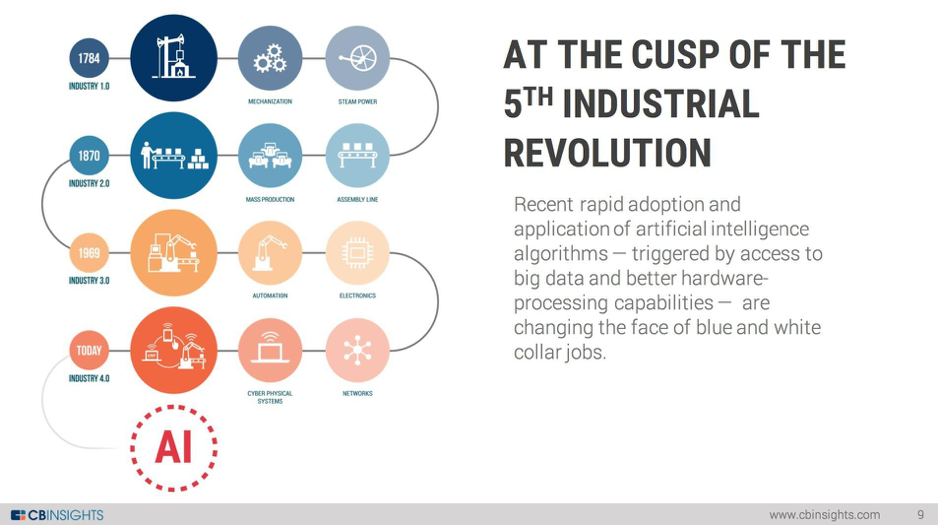

 Emma is a professional content writer currently providing her freelance services to