Tag: supply chain

  • Synopsys Report Sees Steady Application Security Gains

    Synopsys Report Sees Steady Application Security Gains

    An analysis of the security automation practices of 130 organizations published today by Synopsys suggests significant progress has been made toward securing software supply chains in the last year. However, much work still remains to be done.

    The annual Building Security In Maturity Model (BSIMM) report found there has been a 22% increase in the number of organizations creating software bills of materials (SBOMs) this year. Additionally, there has been a 10% increase in the number of organizations tracking open source software risks.

    At the same time, there has been a 25% increase in the number of organizations that are fixing all defects found in software and a 15% increase in the number of organizations that can identify potential attackers and track attack patterns.

    The report also sees significant gains in activities related to software development practices (44%), penetration testing (35%) and compliance and policy controls (21%). Usage of application behavior monitoring and diagnostics grew 64% and monitoring automated asset creation grew 45%, respectively.

    The finding and publishing of secure design patterns, the required use of approved security features and frameworks and the use of application containers to support security goals all grew about 25%, according to the report.

    However, the report also noted that usage of possible attack lists dropped by 31%, while expert-driven tasks such as building and applying adversarial security tests declined 25% and use of centralized defect reporting dropped 18%.

    The most widely used processes are implementing security checkpoints and associated governance (91%), creating or interfacing with incident response (90%), identifying privacy obligations (88%), using external penetration testers to find problems (88%), ensuring host and network security basics are in place (87%) and automated code review tools (86%).

    Jamie Boote, associate principal security consultant for the Synopsys Software Integrity Group, said the report suggests more responsibility for cybersecurity is shifting everywhere as organizations rely more on automation to apply security controls. Application development and IT operations are, as a result, able to address vulnerabilities more proactively either before an application is deployed or as soon as a vulnerability is discovered, he noted.

    The challenge organizations will encounter when it comes to automating security processes is there is a tendency to set and forget. Once a process becomes automated, not enough organizations will reevaluate that process as the cybersecurity threat landscape continues to evolve, noted Boote.

    Of course, the rate at which security processes are being automated varies widely from one organization to the next, but the more automated they become, the less dependent organizations become on application developers who typically don’t have a lot cybersecurity expertise. All too often, application developers are rushing to meet software delivery deadlines at the expense of security best practices. Unfortunately, it’s usually only a matter of time before an issue that was avoided is later discovered in a production environment and is considerably more problematic to update, given all the dependencies between software and infrastructure that exist.

    One way or another, however, a pending wave of regulations will soon force organizations to pay more attention to securing software supply chains. The only thing left to determine in the absence of automation is how painful the reengineering of DevOps workflows to embrace DevSecOps best practices is going to be.

  • How DevSecOps Addresses Supply Chain Security

    How DevSecOps Addresses Supply Chain Security

    “The absence of security in the initial stages of system engineering is the single most significant cybersecurity gap and risk in modern system development.” This quote from tech entrepreneur Linda Rawson is a good reminder for the current cybersecurity threat situation. With software supply chain attacks increasing in aggressiveness and sophistication, organizations need to understand that cybersecurity should no longer be an additional process, let alone an afterthought.

    Integrating security in the software development process provides a few other benefits, including better efficiency and customer satisfaction. However, its most notable benefit is addressing cybersecurity threats more effectively compared to the conventional ways of enabling software security.

    The Rise of DevSecOps

    DevSecOps is a fast-rising star in today’s search for effective cybersecurity solutions. The DevSecOps market is expected to be worth $23.63 billion in 2030, growing at a CAGR of 23.84% in the forecast period 2023-2030. Its value in 2022 was estimated at around $4.27 billion.

    This double-digit growth is actually a bit conservative. Other forecasts showed higher CAGRs in the 30% range. This growth hints at the strong demand for DevSecOps solutions. Many organizations have started to acknowledge the benefits of implementing security validation methods early in the software development life cycle (SDLC) instead of doing them in bulk as a separate phase at the end of the development process.

    Many organizations are now convinced that they can benefit from shifting left or bringing security into the SDLC earlier. Tools and solutions like static code analysis (SCA), automated dynamic analysis, interactive application security testing (IAST) and source composition analysis address security weaknesses before an application is released to the market. This allows organizations to release apps faster and, because of the elimination of most bugs and vulnerabilities, provide considerably better user experiences.

    Vulnerabilities will never be completely eliminated, but they can be significantly reduced and more properly resolved while software is being developed if security validation is integrated in the development process. Some software defects and weaknesses tend to be more difficult to address through a separate security testing process, since it would entail a broader code tracing or review as opposed to quickly spotting the affected code when security validation is done alongside the development process.

    Addressing Software Supply Chain Attacks

    So, how does DevSecOps help prevent supply chain attacks? The key is in the visibility and control DevSecOps affords.

    DevSecOps requires vigilance of security issues throughout the software development process. Security is not relegated to a different team that doesn’t understand the specifics of a development project. As such, the team has broad visibility over security concerns. Because the DevSecOps team also has mastery of the code being developed, it is easy to trace the origin of vulnerabilities and implement the necessary corrections.

    DevSecOps is aided by automated tools that scan code for security issues and detect threats even before they manifest themselves as problems. These tools are used across all phases of the development process, from the time code bears basic features and functions to deployment and post-production.

    Static testing: Even before an application’s code is ready to run, it can be subjected to static testing to find vulnerabilities. Tools such as static application security testing (SAST) can analyze code and detect possible security problems.

    How does this address software supply chain attacks? Static testing can be overlaid on automated CI/CD pipelines to stop code that has security weaknesses from getting committed to the codebase.

    Dynamic testing: An automated dynamic analysis can be used for code that is already executable. This is done through dynamic application security testing (DAST) tools, which are capable of detecting vulnerabilities usually invisible to SAST but which are detectable once the code is running.

    How does this address software supply chain attacks? Organizations can implement automated black-box testing for apps in the CI/CD pipeline(s) to detect security flaws for apps that are already executable. This addresses the vulnerabilities that have not been detected by static testing while reducing the costs associated with the corresponding remediation.

    Interactive app testing: This is a combination of static and dynamic testing. It employs IAST tools which run static testing on available code and come up with bespoke dynamic tests for a specific app to identify issues more thoroughly.

    How does this address software supply chain attacks? Pure static and dynamic testing usually apply to earlier stages of the development process, whereas interactive testing addresses vulnerabilities that emerge in the later parts. By bringing IAST to the CI/CD pipeline, organizations achieve better security issue detection outcomes, which means the prevention of malicious code deployment.

    Supply chain analysis: This entails the use of tools that specifically examine the security of third-party libraries and dependencies. To be clear, this is not the only method for addressing software supply chain vulnerabilities. In this case, supply chain merely refers to the external libraries, dependencies and other components that do not originate from the development team.

    How does this address software supply chain attacks? Integrating software chain analysis tools in the CI/CD pipeline significantly reduces the adverse effects of vulnerabilities in dependencies and other components on a project’s codebase as well as on the development process itself.

    Security-as-Code

    One of the best practices developed in line with the integration of security in the software development process is the idea of implementing security-as-code. This means that security policies and measures such as testing and validation are turned into code whenever possible. In other words, the code itself already bears security mechanisms. Security testing runs automatically whenever code is committed. This ensures robust, consistent, highly scalable security that does not rely on external rules and mechanisms to prevent the introduction of anomalous code or malicious inputs.

    Security-as-code also means that the DevSecOps team can see how modifications to code and the underlying infrastructure are created. The team can map out the impact of code changes and identify the areas where security tests and regulations can be implemented to optimize processes and avoid unnecessary delays.

    Security-as-code is essentially the automation of security practices. It is not applicable in all instances, though, so it is still important to be knowledgeable about security testing methods that can be used in different stages of the development process.

    Securing the Software Supply Chain

    The SUNBURST incident and other similar high-profile attacks should serve as a warning for all organizations to ascertain the security of their software supply chain. DevSecOps is one of the best solutions right now. It does not guarantee the complete elimination of all threats, but it ensures that if threat actors succeed in getting around security controls, a breach won’t go unnoticed.


  • npm is Scam-Spam Cesspool ¦ Google in Microsoft Antitrust Thrust

    npm is Scam-Spam Cesspool ¦ Google in Microsoft Antitrust Thrust

    Welcome to The Long View—where we peruse the news of the week and strip it to the essentials. Let’s work out what really matters.

    This week: The npm registry suffers spam infestation, and Microsoft makes Google sad. (more…)

  • Software Supply Chain Risk Management: A 2023 Guide

    Software Supply Chain Risk Management: A 2023 Guide

    Software supply chain risk management (SSCRM) refers to the process of identifying, assessing and mitigating risks associated with third-party software components and services that are integrated into software products. SSCRM involves understanding the potential vulnerabilities that may arise from these components and taking measures to reduce the risk of exploitation or compromise to the software system or end-users.

    Why Software Supply Chain Attacks are Becoming More Common

    Software supply chain attacks have become common due to several factors: 

    • Larger attack surface: The increased use of third-party software components and services in software development has expanded the attack surface for cybercriminals. This means that attackers can exploit vulnerabilities in these third-party components to gain access to the larger software system. 
    • Rise of open source: The proliferation of open source software has also contributed to the rise of supply chain attacks as attackers can inject malicious code into open source repositories, which can then be used by developers in their software products.
    • Difficulty to detect: Detecting supply chain attacks can be challenging since attackers often use legitimate-looking code that may be difficult to distinguish from normal code. This can make it difficult for traditional security measures to detect the attack. Additionally, the attack may not manifest itself until much later, making it even harder to trace back to its source.
    • Automation: Supply chain attacks are also becoming more sophisticated through the use of automation. Attackers can use automated tools to scan for vulnerabilities in third-party components and inject malicious code into them. This means that they can quickly and efficiently compromise a large number of software products.
    • Evasion techniques: Attackers can evade traditional security measures through techniques such as code obfuscation and encryption. This makes it difficult for security measures to detect malicious code, which can easily slip through undetected.
    • Sophistication: Supply chain attacks are becoming more challenging to combat due to the use of advanced malware techniques to change shape. Attackers can use polymorphic malware that can change its code and behavior to avoid detection. This means that even if the malware is detected, it can quickly change its form to evade detection in the future.

    Supply Chain Security and DevSecOps

    DevSecOps is an approach that integrates security into all stages of the software development process. Adopting DevSecOps practices can help businesses manage supply chain risks by building security into their software development and delivery pipelines. 

    Continuous integration/continuous deployment (CI/CD) pipelines are a key component of DevSecOps, as they allow developers to rapidly test and deploy code changes while ensuring that security and compliance requirements are met.

    Here are some ways DevOps tools in the CI/CD pipeline can help manage supply chain risks:

    • Automating security testing: DevSecOps enables businesses to automate security testing throughout the software development life cycle, including during the development, testing and deployment phases. This can help identify and mitigate security vulnerabilities early in the process, reducing the likelihood of supply chain risks.
    • Continuous monitoring: DevSecOps enables continuous monitoring of software and infrastructure, providing real-time visibility into the security posture of the supply chain. This can help identify and respond to security threats quickly and effectively.
    • Secure coding practices: DevSecOps encourages the use of secure coding practices, such as input validation, access control and error handling, reducing the likelihood of supply chain risks.
    • Risk management: DevSecOps incorporates risk management into the software development process, ensuring that supply chain risks are identified, assessed and managed effectively.

    Tools and Solutions to Help Manage Supply Chain Risks

    Supply Chain Risk Management (SCRM)

    SCRM solutions are software tools and services that help organizations manage and mitigate supply chain risks. These solutions provide visibility into the supply chain operations, identify potential risks and enable organizations to take proactive measures to mitigate these risks. 

    They may include features such as supplier risk assessments, real-time monitoring of supply chain operations, analytics and reporting and incident response planning. SCRM solutions are often available as a service (SaaS) and can help organizations to enhance supply chain resilience, reduce disruption and ensure business continuity.

    Software Composition Analysis (SCA)

    Software Composition Analysis (SCA) is a software security practice that involves identifying and managing open source and third-party components used in the development of software applications. SCA tools scan the software codebase, detect and report the presence of third-party and open-source components and identify known vulnerabilities in these components. 

    SCA helps organizations to identify and manage risks associated with third-party components, including license compliance, intellectual property infringement and security vulnerabilities. SCA is an essential component of SSCRM and can help organizations to ensure the security and integrity of the software products they develop and distribute.

    Third-Party and Supplier Risk Management

    Third-party and supplier risk management software is designed to help businesses manage the risks associated with their third-party vendors and suppliers. This software provides tools and resources to identify, assess and manage the risks associated with third-party relationships.

    Here are some features of third-party and supplier risk management software:

    • Supplier management: The software provides tools to manage supplier relationships, including supplier performance monitoring, supplier compliance and supplier risk assessment.
    • Risk assessment: The software enables businesses to assess the risks associated with their third-party relationships, including financial risks, operational risks and reputational risks.
    • Compliance management: The software helps businesses comply with regulations and standards, such as GDPR, HIPAA and ISO 9001.
    • Data analytics: The software uses data analytics tools to help businesses identify trends and patterns in third-party data, enabling them to anticipate and mitigate risks.
    • Incident management: The software provides tools to help businesses respond to and manage incidents related to third-party relationships, such as data breaches or compliance violations.

    Best Practices for Software Supply Chain Risk Management

    The following are some best practices for managing supply chain risks.

    Identifying Supply Chain Threats and Potential Weaknesses

    The first step in managing supply chain risks is to identify potential threats and vulnerabilities in the supply chain. This involves conducting a comprehensive risk assessment that considers all potential sources of risk, including geopolitical factors, natural disasters, cyber threats and other disruptions. The risk assessment should consider the entire supply chain, including all vendors, suppliers and partners.

    During the risk assessment, organizations should identify the critical components and services that are essential to their operations. They should also evaluate the potential impact of a disruption to these critical components and services, including the financial, reputational and operational impact.

    Establishing a Supply Chain Risk Management Framework

    After identifying potential threats and vulnerabilities, organizations should establish a supply chain risk management framework that outlines the policies, procedures and controls required to mitigate these risks. The risk management framework should be aligned with the organization’s overall risk management strategy and should include the following components:

    • Risk management policy: This policy should outline the organization’s approach to supply chain risk management and define the roles and responsibilities of key stakeholders.
    • Risk assessment procedures: These procedures should describe how the organization conducts risk assessments, including the criteria used to evaluate risks and the frequency of assessments.
    • Risk mitigation controls: These controls should outline the specific measures the organization will take to mitigate identified risks.
    • Incident response plan: This plan should describe the steps the organization will take in the event of a supply chain disruption.

    Continuously Monitoring Risks

    Once the supply chain risk management framework is in place, organizations should continuously monitor supply chain and third-party risks and take proactive measures to mitigate them. This includes establishing a patching cadence to ensure that all software components are up to date and protected against known vulnerabilities.

    Organizations should also implement endpoint security controls, such as antivirus software and intrusion detection systems, to protect against malware and other cyber threats. Network security controls, such as firewalls and access controls, should be implemented to protect against unauthorized access to systems and data.

    Web application security controls should also be implemented to protect against web-based attacks, such as SQL injection and cross-site scripting. This includes conducting regular vulnerability assessments and penetration testing of web applications.

    Promoting a Culture of Awareness

    Finally, organizations should promote a culture of awareness among all stakeholders, including employees, vendors, and suppliers. This includes providing risk awareness training to employees, so they understand the risks associated with the supply chain and the steps they can take to mitigate these risks.

    Organizations should also communicate their supply chain risk management policies clearly to vendors and suppliers so they understand their obligations and responsibilities in managing supply chain risks. This includes conducting due diligence on vendors and suppliers to ensure they meet security standards and policies.

    Conclusion

    Managing supply chain risks is a critical task for organizations that rely on third-party vendors and suppliers to deliver goods and services. These risks can arise from a range of sources, including geopolitical factors, natural disasters, cyber threats and other disruptions.

     To effectively manage these risks, organizations need to adopt best practices such as identifying threats and potential weaknesses, establishing a supply chain risk management framework, continuously monitoring risks and promoting a culture of awareness.

    As we look ahead to 2023, it is clear that software supply chain management will continue to be a priority for organizations across industries. With the increasing complexity of software supply chains and the evolving threat landscape, organizations must remain vigilant in their efforts to identify and mitigate potential risks.


  • Tips For Securing CI/CD Pipelines

    Tips For Securing CI/CD Pipelines

    Most development teams want to increase the pace of their software delivery. As such, continuous integration and delivery (CI/CD) has grown in importance, helping push code from build to production as seamlessly as possible. CI/CD pipelines often loop in many elements and may comprise a diverse stack of tools, automations and various languages. But because of this, the attack surface can be large. And as gaps in the CI/CD toolchain emerge, so do security concerns.

    In recent years, we’ve seen several high-profile cases where CI/CD environments were compromised. For example, take the Circle CI breach, in which a bad actor accessed Circle CI production systems. Others include the compromise of the SolarWinds build system and the Codecov breach. CI/CD security issues are alarming because so much control and automation are given to a pipeline. Unauthorized CI/CD access could be leveraged to publish malicious code or steal sensitive information.

    I recently met with Daniel Krivelevich, co-founder and CTO of Cider Security (acquired by Palo Alto Networks), to better understand the risks facing modern CI/CD. Krivelevich is a seasoned CI/CD security expert and co-author of the Top 10 CI/CD Security Risks framework, which OWASP adopted in late 2022. According to Krivelevich, there is a general lack of knowledge and visibility into these risks. “The CI/CD ecosystem as a whole is full of holes and opportunities for attackers,” he said.

    Below, we’ll review some of the risks that CI/CD pipelines face and offer general ways to mitigate some of these concerns. Hopefully, with greater security awareness around CI/CD threats, both tooling providers and users can begin to diffuse the potential of attacks against their systems.

    The Top Concerns Facing CI/CD Security

    The OWASP Top 10 CI/CD Security Risks framework covers the most impactful risks within modern engineering systems and gaps in CI/CD. It was informed by analyzing many attacks in recent years and was compiled with insights from numerous experts. Krivelevich hopes the framework will spark discussions around the mindset defenders should have when they’re looking to protect the modern engineering ecosystem. The top 10 risks are as follows:

    • CICD-SEC-1: Insufficient Flow Control Mechanisms
    • CICD-SEC-2: Inadequate Identity and Access Management
    • CICD-SEC-3: Dependency Chain Abuse
    • CICD-SEC-4: Poisoned Pipeline Execution (PPE)
    • CICD-SEC-5: Insufficient Pipeline-Based Access Controls (PBAC)
    • CICD-SEC-6: Insufficient Credential Hygiene
    • CICD-SEC-7: Insecure System Configuration
    • CICD-SEC-8: Ungoverned Usage of Third-Party Services
    • CICD-SEC-9: Improper Artifact Integrity Validation
    • CICD-SEC-10: Insufficient Logging and Visibility

    Before an organization can dissect these individual risks, however, they must overcome an even bigger problem—a critical lack of understanding regarding the CI/CD ecosystem and the many elements under the hood. Since CI/CD is not traditionally viewed as a security risk, this can result in insecure default configurations, insecure processes and systems not adopting a secure-by-design approach.

    “There’s a big gap between the level of understanding and opportunities attackers have and the knowledge defenders have over what attackers can do,” said Krivelevich. “Organizations traditionally have not been proactive enough in understanding this, unlike other elements that are more traditionally recognized as part of the attack surface. The main gap is a mindset shift.”

    Tips to Secure CI/CD

    So, knowing the above risks, what are some best practices to secure CI/CD pipelines? Krivelevich shared some tips to keep in mind.

    Bring CI/CD under the security umbrella. First, realize that CI/CD should be scrutinized. This will require an awakening in the community and more proactive effort than before. Krivelevich encouraged development teams to place it on their roadmaps and think about it.

    Map the attack surface. Before implementing security measures, you need to know what you’re protecting. Therefore, it’s a good idea to map your CI/CD environment and produce an inventory of assets. Cataloging the total surface area of dependencies and integrations is necessary to understand risks and helps mitigate CICD-SEC-10: Insufficient Logging and Visibility.

    Keep this updated regularly. Since the cadence of change is fast, teams will want constant visibility into their ecosystem and what’s under the hood. This may even lead to shadow IT, as per CICD-SEC-8: Ungoverned Usage of Third-Party Services. Therefore, Krivelevich recommended keeping a regularly updated inventory. This means continually mapping control systems, container registry artifacts, plugins and all other assets used as part of CI/CD.

    Protect the software supply chain. Many building blocks make up the modern software delivery process. But, some dependencies may be abused or contain malicious code, as per risk CICD-SEC-3: Dependency Chain Abuse. Dependencies within the CI/CD process may be prone to a host of open source vulnerabilities.

    Safeguard CI/CD credentials. CI/CD tools “possess secrets to most sensitive crown jewels in an organization,” Krivelevich explained. Therefore, access tokens and secrets related to CI/CD tools should be protected to avoid costly credential leaks. A zero-trust approach to CI/CD could help avoid CICD-SEC-2: Inadequate Identity and Access Management.

    By creating a virtual heat map of areas to address, organizations will be more informed and better equipped to assess risk. And according to Krivelevich, by implementing these best practices, defenders have a lot of power to raise security expectations in the CI/CD space. “When defenders and users become more diligent about security, the requirements from vendors will increase.”

    CI/CD is the Beating Heart, Don’t Let it Break

    “The engineering ecosystem and pipelines themselves are the beating heart of engineering,” said Krivelevich. And as this system becomes a larger part of what makes a business tick, it will be more heavily relied upon for mission-critical tasks and retaining agility.

    Yet, many building blocks comprise the contemporary software delivery process, and CI/CD pipelines can be a risky area due to the number of systems they touch. Further complicating things is the fact that the delivery ecosystem wasn’t traditionally viewed in security terms. This combination of many opportunities and limited security oversight makes CI/CD lucrative for attackers.

    Rectifying the top 10 risks is a relatively easy gap to address, said Krivelevich—what’s not so easy is the mindset shift required to take CI/CD security seriously. Organizations that invested deeply into microservices and rapid engineering processes will most likely be more susceptible to attacks, he added, since they typically use a diverse array of tools and a complex, integrated delivery process.

  • Software Supply Chain Security Debt is Increasing: Here’s How To Pay It Off

    Software Supply Chain Security Debt is Increasing: Here’s How To Pay It Off

    Last year, the world woke up to the software supply chain dilemma. We saw a spike in attacks as hackers sought to exploit known and unknown vulnerabilities within dependencies. There is also the chance of typosquatting, and malicious code commits to consider. Such supply chain attacks have increased by a shocking 742% over the past few years.

    It’s easy to let software security debt accumulate, as it’s cumbersome to stay on top of frequent updates — especially when new releases cause breaking change. Furthermore, companies might unknowingly collect security debt by hastily looping in projects whose origin is unknown. Plugging these gaps can bring a high burden down the road, which too often falls on the shoulders of developers to manage.

    I recently reconnected with Dan Lorenc, founder and CEO of Chainguard, to discover why risks in the software supply chain contribute to increased security debt and how organizations can proverbially pay it off. Lorenc is a key figure behind Sigstore, the open source utility built to verify the provenance of open source packages. Below, we’ll consider the state of software supply chain security and examine some modern solutions that lessen its severity.

    Why is Supply Chain Security Debt Rising?

    Modern software ecosystems are an intricate mosaic of dependencies, and supply chain security concerns often arise at the cracks between them. “It’s about the gaps and hand-off points between individuals in the software life cycle,” said Lorenc. Since these hand-off points can threaten systems at large, they can accumulate considerable security debt if left unguarded.

    Another reason why security debt is increasing, said Lorenc, is that fixing issues is rarely incentivized—it’s always thought of as “someone else’s problem.” Minimizing this debt will require organizations to change this mindset and follow modern security best practices, like implementing multifactor authentication infrastructure and more frequent code reviews. It will also take a coordinated effort from package managers to integrate tooling that helps verify the legitimacy of packages, said Lorenc.

    Solutions to Reduce Software Supply Chain Security Debt

    Automated Vulnerability Scanning

    In addition to advancing internal culture toward greater security awareness, organizations will benefit from automation that enhances the discovery of vulnerabilities. Because when a severe incident like Log4j hits the presses, it’s a mad scramble to respond. Even a year later, one in four downloads still possesses the infamous vulnerability.

    Integrating automated security scanning is the first step to knowing how these incidents impact your security posture. A tool like Snyk can do a great job of surfacing known vulnerabilities and finding where they lie within your software stack and provide remediation advice. Continually checking for updates can also help pay off security debt “as you go” instead of upgrading everything all at once, says Lorenc. But although scanning tools are essential for increasing visibility, they don’t address the root cause of why they are vulnerabilities in these packages in the first place, says Lorenc.

    Checking Transitive Dependencies

    Reports find that 95% of vulnerabilities stem from transitive dependencies. These are dependencies that are buried deep within the dependency tree of another package. And depending on the programming language, they’re not always that visible. The combinatory effect of transitive dependencies can lead to exponentially more vulnerabilities and issues if not carefully tracked. And since they’re running locally with the same privileges as your other packages, you shouldn’t treat these vulnerabilities any differently, said Lorenc. “You need to realize they can affect your application in the same way.”

    Validating The Source

    The link between the package manager and the source code is a frail area that warrants additional verification. Social engineering tricks can effectively trick users into downloading insecure packages that appear safe at the outset yet hide corrupt code. Or, account takeovers can result in attackers inserting malicious code into commonly used open libraries. Package managers often host built versions and forked versions of software produced by the community on GitHub, yet do not validate a clear link to the original repository. This gap heightens the chance for a malicious package to slip through the cracks, says Lorenc.

    This is something that Sigstore, the open standard for signing, verifying and protecting software, aims to accomplish. In mid-2022, Sigstore was implemented within Kubernetes, signaling the adoption of Sigstore as a standard throughout the open source ecosystem. It’s also been adopted by Npm and PyPI and Maven Central will soon support Sigstore as well, said Lorenc. Although some of these moves have received pushback from developers, Lorenc argued that such verification is necessary to help link packages to their source and increase credibility for open source dependencies.

    Chipping Away At Security Debt

    Like technical debt piles up over time, security debt can quickly rise if left unchecked. Chipping away at increasing software supply chain security debt will likely require a “pay as you go” approach wherein developers continuously scan and update their dependencies. One good sign is that people are paying more attention to risks latent within their code, and the industry is discovering and sharing more potential vulnerabilities before they are exploited.

    “Security has advanced, and there are common best practices across the industry,” said Lorenc. But if these practices aren’t followed, it could bring dire consequences for the organizations and the industry as a whole. And although Sigstore can help bridge the disconnect between the package managers and the source code, there are plenty of other techniques to help improve a security footprint for open source software and cloud-native infrastructure. For example, SLSA and greater use of SBOMs can help address security debt more holistically.

    The software supply chain security dilemma is an advanced topic that requires a coordinated effort from various stakeholders to remedy. The important takeaway is to stay positive, see the debt, and pay it off incrementally, says Lorenc.

  • A DevOps Thanksgiving: What Are You Thankful For?

    A DevOps Thanksgiving: What Are You Thankful For?

    As crazy as it seems, here we are on the cusp of another Thanksgiving. This year has gone by so quickly, and as we enter the holiday season and the end of 2022, those of us in the DevOps community have much to be thankful for. First and foremost, I’m so happy to once again see my colleagues and friends in-person at conferences and events around the world. I’m looking forward to resuming travel not just in the U.S. but the rest of the world and seeing DevOps enthusiasts share their knowledge, their experiences and further the state of DevOps.

    While we are thankful for the resumption of a more normal lifestyle, we also need to pause to acknowledge and mourn for those we’ve lost during this terrible pandemic. Their lives and the time taken from all of us during these past years can never be replaced.

    They say every dark cloud has a silver lining; if there was a silver lining for DevOps during the COVID-19 pandemic, it was the unprecedented pace of digital transformation. Make no mistake—digital transformation is powered by software development and DevOps powers software development. It wasn’t just the sheer number of applications or lines of code that were developed and deployed during these past few years, but the accelerated maturity of software supply chain software pipelines that became the de facto standard for how software is developed and deployed; that was greatly accelerated as a result of the push to digital transformation.

    It was not just software development that was accelerated, software supply chain attacks gave rise to an entirely new subset of security. Software supply chain security and SBOMs are now everyday words in the security lexicon. While I’m not happy about an entirely new class of attacks, I’m grateful for the response the White House and the U.S. government gave to our industry as a whole to address software supply chain attacks. I’m also grateful for the continued evolution of tools and techniques, people and processes around DevOps.

    While some look to make marketing hay by proclaiming that DevOps is dead and other such nonsense, the truth is that DevOps is thriving. It is the way software is developed today. In fact, in conjunction with cloud-native, it would seem that we have a whole new stack and an entirely new way that software is created.

    Looking forward, on the horizon we continue to see the development of AI that is making a real impact on observability, testing and application management. I think we’re also on the verge of AI having a profound impact on software development, as well. Low-code/no-code development tools paired with AI promise to take some of the most mundane software development tasks and automate them. This will free up overworked software developers to focus on higher-value software development tasks.

    Despite macroeconomic conditions putting a damper on the entire tech space (if not the entire world economy), I remain enthusiastically bullish about the continued growth and maturation of DevOps and I am excited to see what the weeks, months and years ahead bring. I am grateful to be involved in our industry during these heady times, and I’m grateful to you, our readers, supporters and the community for your continued support of our company.

    To that end, I wanted to announce that we’re trying something new this year at Techstrong Group, and we hope you’ll join us. We want to know what you believe makes tech strong—and we’re asking people to record a quick TikTok video or LinkedIn video with the hashtag #Techstrong. We’ll select the winners and are giving away two (2) Sony PlayStation5 game consoles to the best two entries as selected by our judges. You can get all the details on our social media channels on Twitter, Facebook and LinkedIn.

    So, now you know what I’m grateful for—we really want to hear what you’re grateful for and what you think makes tech strong! Throughout the holidays and the new year, we wish you health and happiness—and know that tech will remain strong!

  • The Age of Software Supply Chain Disruption

    The Age of Software Supply Chain Disruption

    The software supply chain is swiftly becoming a widespread attack vector, and securing it is now in the spotlight. Software supply chain attacks have become a given in 2022, reports Darktrace.

    SolarWinds, Kaseya and GitLab are just a few examples of organizations that have been vulnerable to attack in recent years. We’ve also witnessed an increasing number of exploits, like Log4j and Log4Shell that have the potential to affect billions of devices. What these instances have in common is they leverage vulnerabilities in open source software and third-party dependencies commonly used in the software delivery process — meaning one corrupt package could have broad encompassing impacts on the tech industry at large.

    I recently chatted with Doug Dooley, COO, Data Theorem, about the consequences of today’s intricate software supply chains. “The software supply chain problem is bad, but it’s only going to get worse in the next five years,” he said. According to Dooley, application security requires a continuous context of how the app functions at runtime in a software ecosystem—otherwise, it will continue to miss gaping holes in the big picture.

    Understanding Software Supply Chain Disruption

    Most people understand what a traditional product supply chain is—it encompasses all the components involved to bring a product to the end consumer, from raw materials to manufacturing, distribution and retail locations. But, amid the pandemic and recent international conflict, we’ve witnessed how brittle this chain is. If you shut down one of these components, all consumers feel the effect, resulting in everything from gas hikes to baby food shortages. A full 61% of organizations were hit by supply chain attacks in 2021.

    In software, the supply chain can be thought of similarly—there are many components involved between a software product and the end consumer. The developer writes code, integrates third-party libraries and frameworks, puts it in source code systems, pushes it to test environments and eventually deploys it to production. And often, DevOps has the view of this whole picture.

    “DevOps has become some of the most powerful people in the business,” said Dooley. “They can take a business person’s idea and turn it into reality in the form of an application.”

    Third-party exposures can create huge disruptions in this above workflow. This could take the form of insecure libraries, underlying cloud vulnerabilities or API vulnerabilities, says Dooley. “Customers will embed APIs in the software stack—to them, it’s a black box.” There’s also the potential for misconfigured S3 buckets, which continually leak millions of records. More serious application security threats include remote code execution, which can invoke a detrimental loss of control.

    Why Now?

    So, why the sudden peak in software supply chain-related security incidents? After all, open source software, APIs and third-party vendors have been around for decades. Well, according to Dooley, there are several factors at play here.

    For years, the Silicon Valley mantra has been to ‘move fast and break things.’ Take Netflix engineering, for example, which is constantly evolving services and releasing dozens of changes per day. According to Dooley, such rapid application development often means that security is following development rather than preceding it or becoming integrated into the process, à la DevSecOps. This could lead to what he calls an “ambulance chaser moment.”

    The attack surface is heightened as the number of third-party suppliers and dependencies increases. The average company has 254 SaaS apps, Productiv data found. Also, on the attacker side, we’re seeing increasing levels of automation and sophistication. “You only have to be right one time when attacking,” said Dooley. “The deck is stacked in an attacker’s favor.”

    Strengthening The Chain

    The software supply chain issue is a complex problem that won’t be solved by any single action. However, Dooley offered several tips for companies to consider as they confront this broad problem:

    • Source code analysis and vendor management. It’s important to vet partners and have a process to audit new software by scanning for common vulnerabilities and exposures (CVEs). Yet, source code analysis falls short in many areas, admitted Dooley, as it is unlikely you will be able to view the source code behind cloud API calls and production behavior doesn’t always match documentation.
    • Continuous runtime security monitoring. New exploits are being found constantly. Thus, organizations require a continuous defensive posture at runtime, even if they were found to be secure in development. Continuous full-stack discovery must consider many third-party components, like SDKs, open source code, mobile apps, web services, cloud services, APIs and identity and access management, explains Dooley.
    • Increased transparency with SBOMs. More widespread use of software bills of materials (SBOMs) will be critical to increasing transparency across the industry. Just as nutrition facts describe the food we eat, SBOMs spell out the internal makeup of software components. “We’re trying to get to a place where we get more transparency into the software we depend on,” Dooley said.
    • Rapid vulnerability detection. Have a good handle on the attack surface. Businesses will want to collect an accurate inventory of what can be attacked.
    • Build protection around the “crown jewels.” Sometimes, you must prioritize which steps to take first. Dooley reiterated that securing applications that interface with customer data is critical, as these are the “crown jewels”—leaks here could have serious consequences around regulatory penalties and brand reputation.

    Caution: Heavy Lifting Required

    “The moment you ship a piece of software, you’ve taken on a risk,” said Dooley. But at the same time, if you’re not creating digital interfaces, you’re missing out on massive opportunities.

    Reusing code and open source packages have become necessary to maintain agility to help continuously release digital products. “Even if you build everything from scratch, you’re still reusing a lot,” said Dooley. “Without it, you’d never get to market.” While these tools enable unprecedented speed, we can’t overlook the potential vulnerabilities that may lie within the software supply chain.

    With its unique window into the software deployment and automation process, the DevOps sphere will undoubtedly have a role to play in protecting this paradigm. “Let’s push for more transparency and disclosure,” said Dooley. “But don’t hang your hat on that to make your program great—if you really care about this problem, you’ll have to do some heavy lifting in the real world.”

  • Orca Security Adds CLI to Improve Cloud Security

    Orca Security Adds CLI to Improve Cloud Security

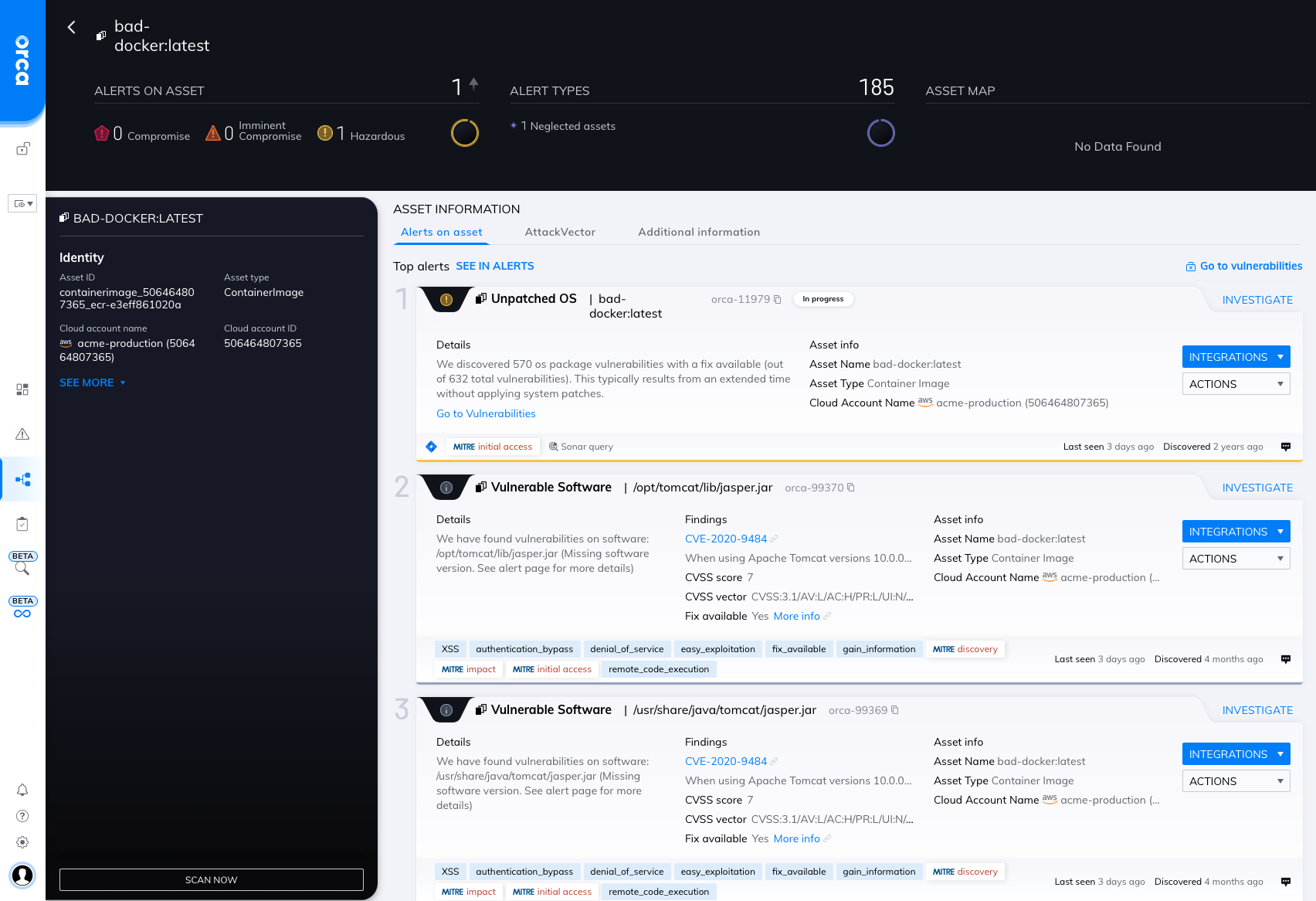
    Orca Security has extended its cloud security platform via a command-line interface (CLI) that makes it simpler to integrate with a wide range of DevOps tools.

    Rather than relying on agents, the Orca Security platform creates a risk profile using read-only access to block storage accessed via a runtime hosted on Amazon Web Services (AWS), Microsoft Azure or Google Cloud Platform. That approach, dubbed SideScanning, eliminates the need for DevOps teams to deploy and maintain agent software to ensure cloud security.

    The platform then scans both workloads and cloud configuration metadata to build a map of risks that better enables DevOps teams to prioritize cloud security efforts.

    Orca Security CEO Avi Shua said the CLI will now make it easier to shift responsibility for cloud security further left toward developers and the DevOps teams that support them by making it easier to scan for vulnerabilities with the context of a larger set of DevSecOps best practices.

    Cloud security remains a major challenge because infrastructure is often provisioned by developers that have little to no security expertise. It’s almost inevitable that mistakes will be made. Orca Security is making a case for a tool that enables organizations to identify those security issues without deploying additional agent software across a wide area network.

    The challenge, of course, is determining how far left to shift responsibility for application security. Even when alerted to a security issue, many developers may not fully appreciate the severity of that issue, noted Shua. Many developers also assume their cloud service provider is providing a level of security that they actually don’t. It’s the responsibility of the entity deploying the application to secure it and the associated configurations used to deploy it. Integrating a cloud security tool within a DevOps workflow becomes critical because it enables more members of a DevOps team to evaluate potential risk to the business as the application is being built rather than after it’s running in a production environment, he added.

    Many existing DevSecOps tools don’t provide enough context; all they do is provide static analysis of the code that’s been deployed, Shua noted. Developers need to have a deeper understanding of which issues represent a level of risk that requires their immediate attention, he said.

    There is, of course, more focus than ever on cloud security as more organizations review how their software supply chains are constructed in the wake of a series of high-profile cybersecurity breaches. Many are discovering that the level of security visibility they have into cloud computing environments is limited, at best.

    It’s not likely security concerns will slow down the rate at which applications are now being deployed in the cloud. Instead, the challenge is better understanding how to secure those applications using substantially different tools and processes than those used to secure applications within an on-premises IT environment.

  • WhiteSource Becomes Mend, Launches Automated Remediation Platform

    WhiteSource Becomes Mend, Launches Automated Remediation Platform

    WhiteSource rechristened itself Mend today and launched a remediation platform that automatically resolves security issues for application developers.

    Rami Sass, co-founder and CEO of Mend, said now the company is going beyond just identifying vulnerabilities in open source software using software composition analysis (SCA) tools and is also fixing them. The overall goal is to make it simpler for developers to address security issues without taking time away from writing code or slowing down the rate at which applications are developed, he added.

    To further that effort, Mend also announced today it is making available a plug-in for JFrog Artifactory that enables Mend Supply Chain Defender, formerly WhiteSource Diffend, to enable detection of malicious open source code. Last year the company acquired Diffend followed by the acquisition of two startup providers of static analysis security testing (SAST) tools.

    Collectively, those applications enabled the company to build the Mend Application Security Platform, a software-as-a-service (SaaS) offering that combines SCA and SAST tools to create an automated remediation framework that can be applied to both open source and proprietary code residing in a repository.

    Mend claimed it added more than 350 customers in the last year to bring its total to more than 1,000 organizations. Most recently, the company raised an additional $75 million in financing to continue investing in a platform specifically designed to address application security issues. In the wake of a series of high-profile security breaches involving software supply chains, Sass noted there is now a much greater appreciation for securing applications and that demand for application security solutions is growing. That demand, in turn, is fueling a wave of consolidation that is, in part, enabled by the convergence of application security tools made available via a SaaS platform, he added.

    Historically, much of the focus on application security focused on discovering vulnerabilities that developers are asked to patch. The issue is that developers are being asked to patch the same modules repeatedly. The Mend Application Security Platform keeps track of what modules have been successfully updated to give developers higher confidence in the updates being applied, said Sass.

    Those recommendations are not being surfaced using machine learning algorithms but rather by the data analytics capabilities that have been added to the company’s portfolio of tools over time, he noted.

    While there may never be such a thing as perfect security it’s apparent that most application security issues can be traced back to relatively common mistakes that developers routinely make. The more those issues are surfaced within a developer workflow, the less dependent organizations will need to be on embedding guardrails within DevSecOps workflows to prevent vulnerabilities from finding their way into production environment. The Mend Application Security Platform doesn’t eliminate the need for those guardrails as much as it reduces the sheer volume of security issues that might otherwise need to be addressed.

    It may be a while before these more advanced developer security tools achieve that result, but it’s clear from how quickly advances are being made that such tools should have a material impact on the overall state of application security.