Tag: speed

  • Speed and Security: How to Find a Balance in Development

    Speed and Security: How to Find a Balance in Development

    Time management can help developers realize the necessary combination of security and speed in application development

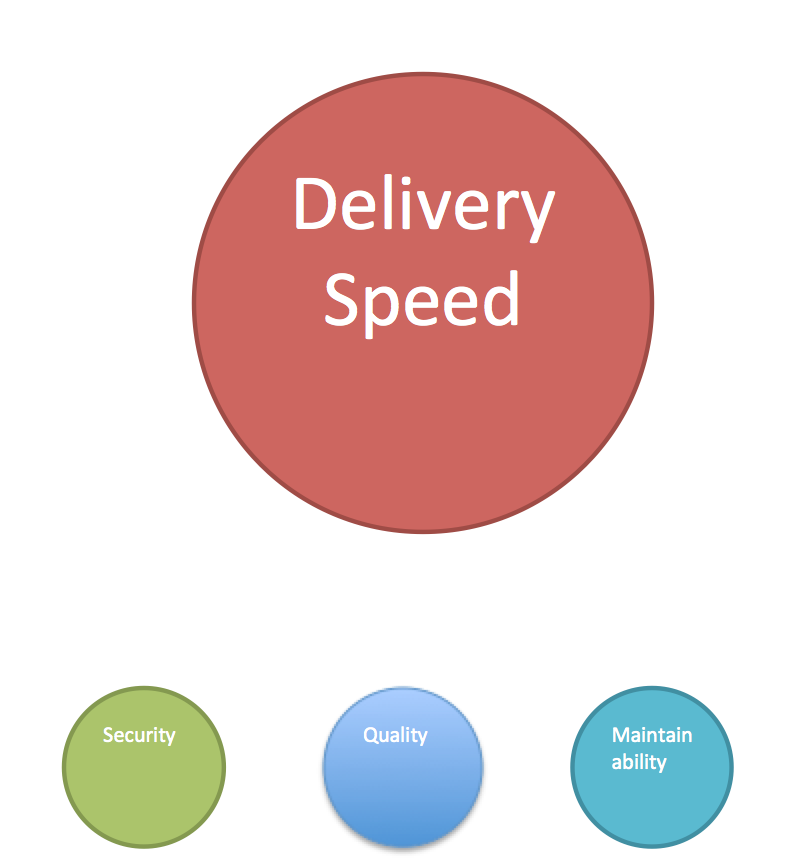
    As software continues to create competitive advantages and market differentiation for organizations focused on successful digital transformation, developers will continue to be measured by how fast they can develop and release code. Business leaders encourage DevOps teams to push the pace of innovation to deliver features quickly while leveraging the newest technologies to gain any available advantage in the market. As a result, development and operations teams work at breakneck speeds to meet the deadlines of short and frequent development life cycles.

    Security teams, however, are not measured by speed but rather by certain metrics of success, such as whether they achieve a certain security rating or reduce the number of incidents. Traditionally, security sets corporate standards and best practices centrally and tries to enforce them across the enterprise. With DevOps teams becoming increasingly distributed and decentralized, these conventional security methods no longer work and have actually slowed down security and/or blocked the software development process. Security tries to keep pace, but with numerous disparate reports to review and too many results to manage, they inevitably fall behind. In the rush to catch up, either critical vulnerabilities are overlooked or frustration sets in when releases are delayed.

    Developer and security teams both know the importance of delivering secure software but struggle to find the right balance. Let’s take a look at some strategies that can help ease the tension between DevOps and security teams and create a happier work environment, where safer code is delivered to the market.

    Incorporating Time Management for Speed and Security

    Consider implementing the following time management strategies to make life easier for developers:

    Integrate AppSec in the DevOps Pipeline: Application security scanning should be incorporated early and often within the DevOps pipeline. While this statement may sound like a broken record, the days of running scanning tools independent of your pipelines are gone. Studies have shown the earlier you detect an issue, the easier it is for developers to fix—with as much as 50% time reclaimed over late-stage remediation. By including AppSec in the pipeline, you ensure all issues are identified as quickly as possible. This effort will not only improve the quality of your software but also free up more time overall for developers to write code and create cool features. Sounds like a win-win for both teams.

    Incorporate automation as much as possible: DevOps teams should look to leverage automation when implementing application security wherever possible. Many of the steps for securing your software development process are repetitive. For AppSec to be successful, the steps must work within the developer’s world and along with the other tools developers love. Developers look for tools that help them move faster.

    Here are some areas where application security automation can unburden developers from repetitive tasks:

    • Use AppSec tools that can be easily tied into your DevOps toolchains. As a matter of fact, a developer may not even need to know what security tools are being run, only that they are executed on every run of the pipeline.
    • Automate the ingestion and correlation of the security findings. There will often be a boatload of redundancies between the findings from different security tools (i.e. SAST versus DAST versus SCA) and the potential compression ratios can be in the order of 10-50:1. There are tools to automate this process and dramatically simplify making sense of all the data. The onus shouldn’t be on the developer.
    • Once a security issue has been identified, it should automatically create a ticket in the ticketing system that developers use today. We all know developers don’t like being forced to use a new tool. Give them the findings in the system they are already familiar with.

    Tailor security training for your teams: Security training is a great way to reduce the number of security findings within an organization, which in turn frees up developers to work on other pressing issues. However, most security training is ad hoc and not tailored to meet the needs of the development teams. Even the most basic security testing can provide baseline metrics that enable security teams to recommend tailored training for development teams. These sessions can focus on areas that teams struggle with or areas known to be susceptible. Training is also a great way to develop security champions within the development teams, dedicated professionals who have shown to improve the overall security posture and awareness of organizations. Security champions—and the programs they advocate—have the power to improve both AppSec and relationships among people, a sentiment endorsed by 84% of industry professionals.

    Summary

    Developers know the importance of security and truly want to deliver safe code in the timeframes they are being judged on. By incorporating the strategies outlined above, they will have a fighting chance to reach the lofty goals set by the business, while releasing higher quality and more secure code. Security teams need to meet the developers in their world and help enable application security to be automated and work at the speed of DevOps.

  • In DevOps, Speed Isn’t Always the Point

    In DevOps, Speed Isn’t Always the Point

    The high-tech industry has fallen into a rut and seems to be struggling to get out of it. This rut is most fervently seen when talking about DevOps, but it exists across the board.

    We’ve fallen in love with the idea that faster is always better. That idea is provably false, and the assumption that everything needs to be faster is false, also.

    Early on, time to market and increased responsiveness to user needs were the driving market differentiators for agile development, DevOps and DevOps tools. There were indeed cases where IT was not responsive enough to business needs—I think most of us were acutely aware of this issue, so dwelling there for a while was not a terrible thing. But responsiveness to business needs is one piece of a much larger puzzle. And we seem to be stuck, with some lip service paid to other strengths of DevOps … as long as it’s still delivered yesterday.

    In my career I’ve worked in two industries where speed of delivery was a tertiary concern for core business systems. To be blunt, when you are putting together a system that will administer contracts expected to last a hundred years or more, you really don’t get that worked up about it being out there tomorrow and “good enough,” you worry about it being right when it does go out, so you’re not still paying for mistakes a century from now that were made by rushing today.

    Of course, there are vendors that don’t want to hear people like me say these things. Of course, there are products with other benefits that are more important than speed of delivery. But as an industry, we’re still too obsessed with speed.

    How we too often see priorities

    Most industries do not even fall into a neat category where they are all or nothing. For most, some teams need to be fast, using agile, CI/CD and fully automated deployment to drive out changes fast (not as fast as some talk—most don’t even need weekly, but fast, nonetheless), while other teams need to be more thorough and cautious and the cadence of releases really doesn’t matter as much as the final result.

    So my advice is similar to advice I’ve offered on similar “hot” topics for the last decade or so:

    You are the rock stars.

    No vendor, analyst, pundit or author knows your vertical market, organization, environment or team the way you do. Do not let them proxy their view of what is “right” over you. Yes, far too many act as though, “If you’re not doing X, you’re behind.” But again, you can look at your industry and get a better grasp of what the definition of “behind” is than someone talking in generalities.

    Know what you need, know what is most important, know how to get to what you need. Don’t do what “everyone” says you should.

    But don’t dismiss the need, either. There are other benefits to these technologies that we have only recently started discussing. Infrastructure as code is an astounding way to transfer knowledge should something happen to critical people, for example. You just have to choose the technologies for the right reasons, and what the right reasons are is dependent upon the organization, not what Vendor Y is selling today.

    We’ve come a long way, and are on the cusp of some very cool stuff, but make sure you know what you need, and how to get it, then keep doing your magic.

    — Don Macvittie

  • The Real ROI of DevOps

    The Real ROI of DevOps

    Many established enterprises are stuck in reverse. Dragged down by legacy IT systems and sclerotic software workstreams, these businesses simply cannot adapt and get up to speed in the continuously changing, high-velocity global marketplace of the 21st century. Delta Airlines’ recent technology crash, for example, dramatically illustrates how aging and inflexible IT systems can cripple a company in 2016 and lead to millions of dollars in lost revenue, as well as the dissipation of a hard-won reputation among customers.

    But an increasing number of organizations are accelerating their cultural transformations to become software-led companies that can consistently deliver new products and services as a result of automated and collaborative workflows. Alaska Airlines, which focuses relentlessly on measuring the innovation velocity of its business, is a powerful case in point.

    This is DevOps at work, and it’s how IT must operate to be the business engine of our quicksilver digital economy.

    Measuring the return on investment (ROI) from DevOps is critical to convince organizations falling behind that they can still shift course, transform and head to the IT future. Measuring DevOps ROI is also essential for companies that are embracing the industry’s forward movement, so they know if they’re on the right track and can keep turbo-charging their DevOps efforts.

    The most proactive approach for measuring DevOps ROI is to gauge the impact of products and services on customers. But, to get there, we must also assess and analyze the efficiency and effectiveness of the software development process.

    Which brings us to the one metric that’s truly relevant in business today—velocity. Without velocity, you can’t quickly recognize and remediate problems. More significantly, you’ll fall behind in the marketplace because you can’t innovate fast enough to keep pace with competitors and customer demand.

    Enter DevOps: The culture of innovating at velocity.

    Of course, that’s easy to say, difficult to measure. The real ROI of DevOps is how rapidly you can ship your new ideas to customers—and, importantly, understand if those ideas meet customer needs.

    Many may look at cost savings and headcount as their first DevOps metrics. These are important barometers but don’t measure long-term value back to the business. Two places to start for value-oriented metrics are time to delivery and quality of release.

    Measuring time to delivery shows how long it takes to get new product from code checking to production. Ideally, you want to see your time to delivery drop from months to weeks to days, and then literally to hours and minutes.

    Quality of release reveals how many bugs and errors are found in each iteration of the product. Companies should look to remedy these immediately and to develop a pre-production environment and workflow of automated testing for issues.

    It’s equally important to measure how rapidly you can get feedback from customers and incorporate that into the next development cycle. Development teams must get clear, direct and actionable feedback about whether their products are moving the business forward. For example, did the two-week sprint to build a new landing page for a bank’s website increase customers’ online banking sessions? Did it generate more cross-sell for the bank’s product portfolio? How soon can we see an uptick in customer satisfaction? This is significant information, and the question is, how fast do the developers respond to this feedback?

    The bottom line is that DevOps metrics should always connect back to the business; they need to show a measurable improvement in the customer or staff experience. This could be more quality touchpoints with customers, an improved customer satisfaction score (such as a Net Promoter Score) or increased customer activity in areas such as online billing or account management.

    “Delivering on the final product is key,” says Adam Mikeal, director of Information Technology at the College of Architecture, Texas A&M University. “Your job’s not done if the customer can’t accomplish what they want. If the customer can’t do it, it doesn’t matter if your section of the code was good. The customer experience is all that matters.” 

    Another important part of this equation is measuring your team’s efficiency on the road to velocity. To truly ship ideas at speed, and positively impact your business and its customers, you also need to understand how smoothly your teams are working—in addition to how quickly they’re delivering.

    Banks Cash In on DevOps

    Westpac Bank in New Zealand fully grasps this imperative, for example, and it enacted DevOps practices to deploy a new pricing engine for mortgages in just three months—from concept to customer. In the past, this project would have taken Westpac 18 months.

    Additionally, Westpac measures how well it’s using resources—for every $1 spent on a problem, how much is chewed up by politics and how much actually goes to solving the problem? Before adopting DevOps practices, Westpac was delivering a return of about 20 cents to 22 cents. Now, that number is just shy of 40 cents. That’s a near-2x increase in the value delivery. Westpac’s goal is 3x. In addition, Westpac has increased the amount of work its development teams accomplish by more than 40 percent over the previous year.  

    Like Westpac, Standard Bank in South Africa has boosted efficiency, thanks to a thriving DevOps culture. The cost of production at Standard, for example, has dropped from about $4,000 to $700—a 300 percent improvement.

    The goal for companies in every industry and economic sector around the world today is clear: Accelerate your business so that you create and provide greater—and faster,—value for the customer. But, to drive a robust ROI on this journey, it’s crucial that you carefully measure the true velocity of your organization, whether you’re just beginning with DevOps or you’re well along in the transformation.

    — Justin Arbuckle

  • Q&A: BDO’s Coffman on Change Management, Security and DevOps, Part 1

    Q&A: BDO’s Coffman on Change Management, Security and DevOps, Part 1

    DevOps’s best asset is swift and valuable change, which also may be its biggest risk factor. DevOps certainly challenges change management and security. We recently discussed these challenges and the solutions with Deena Coffman, managing director at BDO Consulting’s Technology Advisory Services practice. Here is part one of that exchange.

    David Geer: What kinds of challenges does DevOps create for change management? Can you illustrate with an example?

    Coffman: By combining the sysadmin and developer functions, DevOps can lend to “shortcutting” the change management process in the interest of expediency. It may also undercut the value of having a critical eye from both a distinct system administrator and a distinct development reviewer. DevOps is designed to move quickly, and while the pace of change is accelerating, speed is often an ingredient for a security incident. Much like having the same individual who approves invoices also issue a check, DevOps makes for a faster, but not always secure, process.

    When the system of checks and balances can be purposefully circumvented, that privilege tends to be invoked more often than necessary. As a result, developers may bypass change management altogether far too frequently. The collaborative benefits from DevOps integrating typically siloed functions such as QA, software development, security and information technology operations are important, so long as they aren’t offset by compromises in quality and security that result from the reduction in the review and approval process.

    The expedient nature of DevOps can also lead to error, given the absence of human experience involved in the evaluation process. Before DevOps, if a developer needed to change a setting on the web server, they would submit a change request and wait for approval. Under a DevOps structure, though, the developer simply scripts the change and commits it to the repository—automatically kicking off the build process. The process runs unit testing, integration testing, functional testing and regression testing against the new code, and then pushes the new code to the staging environment and finally, to production.

    Geer: What kinds of challenges does DevOps create for security? Can you illustrate with an anecdote?

    Coffman: The biggest security challenge in a DevOps environment is that speed becomes paramount, which reduces critical evaluation on security risks. Developers incentivized to quickly deploy new capabilities are naturally pushed toward productivity and efficiency, which often run counter to security. DevOps can skew that balance so that security is only lightly or sometimes insufficiently considered. Automated testing will test for known exposures, but a trained, experienced human may be able to anticipate a risk before it materializes.

    Geer: How can flaws in change management in DevOps approaches lead to security issues?

    Coffman: Flaws or inefficiencies in the change management process reinforce the views of those who are prone to bypassing what they perceive as tedious process requirements. If a change management process is too burdensome or seen as lacking value, people will avoid it at any opportunity—not just when an exception permits a bypass. Since technology professionals tend to have a bias against waste and inefficiency, introducing a process requirement that consumes time and effort without returning value has a high probability of triggering a wholesale negative reaction.

    Geer: What kinds of things do DevOps shops and teams need to be doing to address change management so that they continue to meet the expectations of the business?

    Coffman: When it comes to ensuring that change management meets business expectations, it really comes down to several key ingredients: flexibility, speed, efficiency and risk management.

    DevOps teams should design and manage the change management system to be efficient, responsive, and flexible enough to accommodate cursory reviews for low risk scenarios and careful, in-depth reviews for other changes. Leadership needs to also set a tone of support for the change control process so it is not dismissed or marginalized. Additionally, engaging outside expertise and/or including additional quality and security measures for higher risk projects are recommended.

    A risk review that identifies projects with security and privacy risk and distinguishing types of changes supports the automation decisions and builds a DevOps program that balances its benefits with risk management.

    Stay tuned for part two.

  • DevOps: Commoditizing Infrastructure

    DevOps: Commoditizing Infrastructure

    Hardware vendors face a quandary. How do you distinguish yourself as superior from your competitors if you are unable to continue to grow a distinct architecture as your competitive advantage? But this dilemma does not begin and end with only hardware vendors; operating system vendors and virtual machine vendors are on the same horizon. In an effort to “uncomplicate” hardware idiosyncrasies, our industry evolves efforts from open standards to least-common-denominator functionality for a “common” language or set of features, and over time technologies such as containers emerge. If I can abstract my application from the “uniqueness” of hardware vendors, from the complexity of configuration settings, and make only assumptions about basics such as CPU, disk, memory, etc., then I am free to focus on the application and allow my “hardware mitigation technology” to perform its function.

    The Relationship Between App and Storage

    But to accomplish this feat, I must agree to a basic set of features or functions I intend to call, such as making “x” amount of machine memory available to my application. Whether disk or RAM, I am looking to define what my application needs and then expect the container (or hardware mitigation/abstraction manager of my choice) to manage the actual allocation. Then the quandary begins. Asking for 1TB of disk space as an example is generic enough. But does my request include the ability to specify I am looking only for disks that spin at more than 7,500 revolutions per minute, or will I be saddled with 5,000 rpm disks? There is a clear implication in speed for my app.

    Ultimately, as I sit and tune my code because my app has become “slow,” it could be something as innocuous as having its actual execution occurring in a cloud provider who uses the slower disk revolutions as opposed to the faster ones. Worse, it simply could be that the same cloud provider has a batch of the slower ones in one of its data centers where I wind up executing (only on a temporary basis), and I am never fully able to figure out why my app got “slow” for a while. That kind of random bad ju-ju requires the execution of a chicken to fix (I prefer Popeye’s, myself).

    Different storage vendors might have additional peculiarities that make one or the other superior in speed, reliability or performance over their respective competitors. But the container’s main functionality is to provide “disk” to my app. Specifications of specific disk vendors or providers are the problem of the cloud provider, not the app developer, in theory. But hardware refresh can be pricey, and to make a claim that “all our disks” have rpm specifications above 10,000 will be meaningful only for about 10 minutes when the 12,000 rpm models come out. And of course, there are many more architectural designs in the engineering that are intended to boost speed and reliability. If these are not to be ignored, a decision must be made as to “who” has the responsibility to manage their usage (usually the cloud provider), and “who” will complain when things get slow (usually you the customer).

    And what happens when “breakthroughs” occur in a specific technology? Solid-state hard drives, for example, are not exactly new now, but they once were. When you move your app from operating on a high-speed hard drive that spins to a chip-based hard drive the operates at the speed of the RAM it is based on, the difference in speed is an order of magnitude better. The inevitable question emerges, Will my container have the ability to specify RAM-based disks instead of traditional spinning disks, as part of the disk commodity it is providing to my app?

    Since the difference in speed is so great, you would think it would come up with a way. You would equally expect that providing offline storage such as tape (from the age of the dinosaur) would have its own designation in my container structure (not be equated with offline spinning drives due to the speed differential). When you go to make a backup or restore, the difference between tape and hard drive becomes as apparent as the difference between solid-state and spinning drives on app execution. So when a platform evolves, my container mitigation must evolve with it. But to offer the uniqueness of vendor superiority requires my programmers to learn who to request (or what level of hardware specs they must know), which is the whole point of wanting a commodity in the first place: I don’t have to know.

    Impact of Commodity on Other Components

    This same dilemma can be exhibited in CPU vendors. Intel touts its superiority, AMD would disagree, and there may always be an upstart who wants to rival the current leader in any space. Lest we think Intel-based computing is the undisputed champion, quantum computing may upset that assumption (unless, of course, Intel corners that market as well). The point here is simply to ask: how many features, how many specifications, how much do we the programming team need to know about our platform provider to understand why and where our application runs better and worse? In the days before container-style ideology, hardware vendors touted their differences and their uniqueness as the reason they were better. Now what?

    Then comes our virtual machine providers, and eventually our operating systems. If I want to truly abstract from my hardware layer, I must not call an OS-unique command that only Linux or only Windows can do. I must stick to functionality that both OS instances can reasonably understand and accommodate. While this least common denominator is great for extending where my app can run (on multiple types of hardware, in multiple types of OS installations), it has the same effect on uniqueness and potentially on competitive advantage. If the intent is to come up with a one-world OS, I am generally in favor, but our journey there is sure to have certain casualties in innovation that a single OS is suited for and its competitors are not.

    The inevitable question becomes, How far down, or how far up, do we want to form commodity provisioning of computing capabilities? One could argue that the simplicity of the iPhone platform is a user-centric expression of commodity provisioning at the top of the stack. Drag-and-drop programming languages are yet another expression of bucketing computing capabilities into more simplistic expressions (that more people can understand and, therefore, utilize). Commonality and simplicity do increase audience. In many segments of our industry, this is the nirvana of sales to the public.

    Impacts to the Bottom Line

    DevOps focuses on enabling innovation. At its core DevOps is focused on software innovation. Let’s face it—changes to hardware platforms are generally less frequent. If those hardware platforms are married to a particular app (not serving a large number of apps on the same box, same virtual instance, etc.) then at least provisioning can be tuned one to one with the app. But with the desire to turn infrastructure into a generic commodity that application programmers don’t have to think about comes the fact that they stop thinking about them. Over time they will understand less and less about why things become slow, or work better, as the knowledge of uniqueness goes away.

    Depending on your market focus, ubiquity is either your friend (as it touches consumers) or your enemy (if you are the hardware vendor attempting to maintain relevance over your competitors in an increasingly commoditized market). The questions I raise in this article are designed to focus on how to keep our trend toward hardware mitigation from stifling innovation in the very hardware platforms we depend upon. In any case, I welcome your thoughts on the topic.

    To continue the conversation, feel free to contact me.

  • Why we are still fighting with the same problems in DevOps as 15 years ago

    Why we are still fighting with the same problems in DevOps as 15 years ago

    One thing that continues to fascinate me is how after so many years I can still walk into IT organisations and see basic practices not being followed (e.g. Software Configuration Management or Continuous Integration or …). Shouldn’t we all know better?!? I recently came across some slides from the late 90s and early 2000s that pretty much read like something that comes from a DevOps conference today. So I wonder what is it that has prevented us from being better today and I think I found a feasible answer to my question.

    For illustrative purposes I have used the Accenture DevOps maturity model, but feel free to use any other model here as the tendency would be similar. I believe that as an industry we used to be better than we are today (of course all generalisations are dangerous, including this one). While it is hard to find hard evidence for this, let me try to justify my perspective.
    DevOps Journey

    More than 10 years ago we had much more custom development to solve the big problems and most work was done onshore in collocated teams. The only way to be more productive and reduce cost was to have better engineering practices and leverage more automation, hence companies invested in this. We used to be on the mature end of consistent in many places. Then two trends caused us to regress as far as engineering practices are concerned:

    • Offshoring – With the introduction and mastering of offshore delivery, the industry had an alternative to automation and good engineering practices as labour arbitrage was providing a quick fix to cost reduction. It was potentially cheaper to do something manually offshore than maintaining or introducing automation onshore. Of course this couldn’t last as the labour cost offshore increased steadily. Some organisations stayed the course of engineering practices and automation others lost maturity along the way. This trend is similar to the same trend in manufacturing where manual labor became so cheap that automation wasn’t a critical element to cost reduction anymore. Those companies who went offshore did not sufficiently focus on automation and good practices as it was harder to oversea this with across locations and cost reductions were easy to achieve.
    • Packaged and proprietary Software – As we leveraged more and more packaged and proprietary software we relied on those vendors to provide the solution to our productivity challenges. This led over time to island solutions, which supported specific packages, but are not open enough to integrate into the IT ecosystem. How do you baseline an enterprise wide software package when configuration management is hidden in a package or worse still configuration is only possible through a graphical user interface with no access to the underlying source code/text files? The pre-packaged software was a quick fix to get functionality, but again the good engineering practices were lost out of sight. And many organisations make so many customisations that they should really treat the original “COTS” just like any other application with the same rigor. The other problem that packaged software introduced is that the people customising them are often considered or consider themselves not to be programmers (which means they don’t have to worry about those practices that the custom application developers use), a dangerous mistake in my view.

    “Speed is the new currency of IT and businesses”

    This was all well and good when cost as expressed by the cost of a day of labor was the main driver for optimisation in organisations. This paradigm has shifted and nowadays speed to market is driving incentives and behaviour. Organisations across the globe are trying to find ways to speed up their delivery processes without risking quality. But how do you now revert the trend that many organisations followed – your IT organisations is mainly outsourced and/or offshored, you have an application architecture that is a mix of packaged software, proprietary solutions and custom elements and you lack the engineering experience and skills to fix it.

    This is where we need to acknowledge that DevOps is a journey that is different for every organisation. Of course there are the engineering driven organisations like Etsy, Amazon and Facebook that have engineers/IT people in their C-suite of executives who intuitively understand the importance of application architecture and good engineering. I believe they won’t ask you for a business case for what is ultimate an optimisation for speed and flexibility – they understand how important good IT is – at least I believe that to be the case. They will also consider which applications to introduce into their ecosystem and making sure that those are open products for which good engineering practices can be employed. In other organisations the adoption of DevOps practices needs to be supported by business cases that are often difficult to create (especially in the middle maturity levels where the pain is not at mission-critical levels and the full benefit of highest maturity is not yet in arms reach). Organisations that are on this journey with the majority of us in the industry need to acknowledge the sometimes intangible nature of improvements. Speed to market and other cycle time measures should be the guides for your journey.

    “Everyone is on the DevOps journey, whether you know it or not”

    The question whether “you are doing DevOps or not” is not valid in my view. We are all on the DevOps journey, it’s the journey of improving delivery of IT solutions. DevOps is a broad field and provides us with an ever growing toolkit of practices and tools. All of us IT Executives are on the search to improve our organisations and our delivery capabilities. What label we use for that doesn’t matter as long as we keep moving forward and keep experimenting. Is there a goal to this journey? No, I don’t think there is concrete goal, a state when we declare we are done. I think the best of us will keep pushing forward no matter how good we are getting at it and from what I have seen during my travels there is still plenty of road in front of me that I can see and I don’t need to worry about getting “there” anytime soon in any case. Join me on the journey and may our paths cross to share stories of our adventures on the road.

  • How Fast Is Fast Enough?

    How Fast Is Fast Enough?

    One of the primary goal of DevOps is the ability of an organization to bring an idea to market faster. But how fast is fast enough? Do they need to improve time to market by 10%, 20%, 50%..90%? Do all applications need to ultimately be released within hours? In order to compete do we all have to be the Etsy or the Netflix’s of the world?

    Unfortunately there is no simple answer. Optimal application delivery speed (aka time to market) varies drastically across industries, markets, organizations, and even within an organization’s own application portfolio. Remember “two speed IT”.

    In other words there is no “one fit for all” when it comes to speed. Yet defining your optimal speed – goal – is critical to your DevOps success. Without it, its almost impossible to provide a vision, measure progress, and fundamentally change the way you delivery software. For example, IT is very good at measuring costs. In fact they measure costs from every way to Sunday. As a result, cost takeout becomes the fundamental value metric for service delivery – “how low can you go to delivery the same service”. Similarly, if speed and agility is the goal then we must start with measuring our current velocity and then setting (realistic) goals for the future state.

    The Definition of Speed

    Before we go about trying to determine an applications optimal speed it is important that we first agree on the definition of speed. We like to think that speed is a fairly simple concept, but its amazing how mis understood it is.

    Many organizations new to DevOps simply equate speed to release cycles. They believe that if they increase the number of cycles then they are improving their time to market. Unfortunately it does not work that way. Improvement in release frequency is a natural outcome of going faster (as we will see in the example below) but not the driver of speed.

    True cycle time is measured from end to end – when the idea enters the development funnel to the time it is released to the end user. In other words it’s the Work In Progress (WIP) time for that particular piece of code and any improvement in speed is the reduction of this WIP time.

    For example, a healthcare client recently shared with us that it takes them just 20 days to develop a medium size enhancement. For them, their cycle time was 20 days per enhancement. But on further inspection we found that it takes 20 days to determine requirements, 10 days for setting up environments (while using cloud), another 15 days for testing, 10 days for moving code from one environment to another, and a whopping 15 days for approvals. When we added all that up, we discovered that their true time to market (speed) for that enhancement was just over 90 days.

    Once we were able to define speed in tsurehis context, it opened up an entire new world of dialogue within the organization. Now instead of optimizing 20 days, they have another 70 days of activities to pick on. Even if they were to shave just a mere 1/3 of the 70 days (cue automation with some simple processes engineering) they would be able to improve their time to market to 65 days. And as an added bonus, the team instead of just delivering 4 enhancements per year (90 days x 4) they can now deliver 5 enhancements (65 days x 5) much faster.

    By defining speed in such broad terms, it not only gives IT teams a glimpse at the big picture but also visibility into areas of wastes, opportunities for true end to end improvement, and a platform for collaboration.

    Now that we have our definition right, lets get on to answering the million dollar question,

    How fast should I be (what is my optimal speed)?

    The simple answer is fast enough to delight the customer and beat the competition. But to determine at what point you are able to achieve this goal is a bit more complicated.

    Most organizations try to answer this question by looking inward. They perform a detailed value stream mapping exercise, determine cycle time for each activity, identify bottlenecks, and then triangulate how fast they can go if they eliminate some of the key bottleneck.

    Unfortunately, speed is not a function of how fast can you go (IT view) but a function of potential benefits (business / market view). More precisely, your optimal speed is directly depended on the additional benefits the business will enjoy (additional revenue, higher customer acquisition, better customer retention etc.) as a result of greater velocity.

    To help understand this relationship between benefit and speed better, ask yourself the following three questions,

    1. If we were to reduce our cycle time (from idea to production) by 10%, 20%, 30%, 40% etc., what is the incremental benefit to the business
    2. Can we quantify this benefit?
    3. How sensitive is this benefit to speed? Are they inversely proportionate, is there a benefit / speed plateau?

    By doing so, there is a good chance that most applications will fall within one of the three scenarios.

    1. Benefit and Speed Are Directly Proportional

    For some businesses, speed is king. The faster you can deliver a product the greater the incremental benefit. Consumer facing apps (Facebook, Linked In etc.) focused on revenue generation / customer acquisition work well in this scenario. For these applications, there is essentially no speed limit. The rule of thumb is step on the gas and get out of my way.

     Figure A How Fast Is Fast Enough

    Optimal Speed: No speed limit, step on the gas


    1. Benefit Improves But Only To A Certain Point

    Most SaaS applications (SFDC, Workday etc.) fall within this category. At a certain point the incremental benefit diminishes as speed increases. In other words, users like the regular updates and upgrades but to a certain point. Change too much too fast and you end up delivering little additional value. In this case, there is an optimal speed and any investment in speed after that is a waste of money.

    Figure B How Fast Is Fast EnoughOptimal Speed: Limit your speed to the point where benefits plateau

    1. Benefit and Speed Are Adversely / Not Related

    This is the opposite of A, where speed has an adverse / no impact on benefit. Here users prize stability and status quo over anything else. Changes are welcomed but need to be few and far between. Many on-prem legacy applications fall into this category. Imagine if your ERP provider published a new update (mini upgrade) every day. It would wreak havoc to the organization. If this happened to your general ledger system, you would never be able to close your books. If you find yourself in this category it is best to go pick a different application.

    Figure C How Fast Is Fast EnoughOptimal Speed: None, stability is prized over changes


    Two Caveats

    The graphs are a great representation of the various options but there are two caveats that every organization should be aware of, cost and competition.

    Cost: The speed limit makes little sense if the cost of getting to that speed is greater than the incremental benefit potential. After all, like any other IT project ROI is key in deciding if DevOps is worth investing in.

    Competition: Ultimately…competition holds the trump card. No matter what your charts say and / or your cost model shows, if the competition is going faster…you have no choice but to match that speed or better yet, beat that speed. Which is why we urge many of our clients to invest into DevOps early, set the benchmark, and build a competitive advantage.

    Happy speeding!!

    About the Author/Mustafa Kapadia

    Mustafa-KapadiaMustafa Kapadia is Service Line Leader for IBM’s DevOps practice, a business advisory practice focused on helping large enterprises transform their software & application delivery. Through DevOps, organizations can get software to market faster, with better quality, less defects, reduced risk and shortened lead times.

    Prior to joining IBM, Mustafa was a management consultant with Deloitte’s Strategy & Operations practice. He lives in San Francisco Bay Area, is an avid blogger (when time permitting), a speaker, and and advisor to start ups.

    You can follow Mustafa on LinkedIn: https://www.linkedin.com/in/kapadiamustafa and Twitter: https://twitter.com/mkapadiatweets