Tag: Software Supply Chain

  • OpenText Extends Tool for Auditing Source Code Using Machine Learning

    OpenText Extends Tool for Auditing Source Code Using Machine Learning

    OpenText this week updated a static analysis tool it provides to audit code using machine learning algorithms to provide deeper insights into on-premises IT environments.

    Announced at the OpenText Security Summit 2024 conference, the latest generation of Fortify Audit provides additional artificial intelligence (AI) models capable of learning the unique attributes of custom source code.

    The latest version of Fortify Audit Assistant also adds the ability to detect drift in a model and, if necessary, automatically refresh it. OpenText is now committing to refreshing those models every quarter.

    The discriminant AI model from OpenText enables machine learning algorithms to learn how humans conducted an application audit to then run similar tests on other applications. Previously, Fortify Audit relied on the same core model to audit both on-premises and software-as-a-service (SaaS) applications based on data collected by OpenText. Fortify Audit Assistant now provides support for more than 30 language-specific models to improve testing performance.

    Dylan Thomas, senior director for Fortify engineering and product for OpenText Cybersecurity, said this capability ensures that any sensitive data never leaves an on-premises IT environment.

    The overall goal is to streamline the number of alerts that would otherwise overwhelm a DevSecOps team trying to identify the root cause of an issue, he added. For example, Fortify Audit Assistant will identify test code that is not vulnerable because it was never deployed in an actual production environment. That approach makes it easier for DevOps teams to prioritize which vulnerabilities to fix first in their source code using a lightweight AI model that still enables them to deeply scan source code, noted Thomas.

    Historically, DevSecOps teams need to make a trade-off between lightweight approaches and deep scans of source code that is no longer required, he added.

    As regulations pertaining to software supply chain security become more stringent the number of development teams that will be subject to some type of audit is only going to increase. The cost of failing an audit will also inevitably increase as regulatory bodies look to make examples of organizations that are not properly securing their software supply chains.

    It’s not clear how aggressively organizations are embracing best DevSecOps practices to address myriad software supply chain security issues that were highlighted in an executive order issued by the Biden administration to Federal agencies. However, with the rise of AI and other forms of automation, it should become simpler to identify more vulnerabilities before they wind up being exploited in a production environment.

    There will always, of course, be a need to secure production environments because there’s always a probability mistakes will be made. However, given the lax practices many organizations have employed to build and deploy applications, it’s probable the number of vulnerabilities that exist in production environments today is beyond counting. In many cases, the better part of valor might be to replace many of those applications entirely with ones built using DevSecOps best practices.

    Regardless of the path to better application security chose the one thing that is certain is cybercriminals are only going to become even more adept at discovering those vulnerabilities.

  • Synopsys Report Sees Steady Application Security Gains

    Synopsys Report Sees Steady Application Security Gains

    An analysis of the security automation practices of 130 organizations published today by Synopsys suggests significant progress has been made toward securing software supply chains in the last year. However, much work still remains to be done.

    The annual Building Security In Maturity Model (BSIMM) report found there has been a 22% increase in the number of organizations creating software bills of materials (SBOMs) this year. Additionally, there has been a 10% increase in the number of organizations tracking open source software risks.

    At the same time, there has been a 25% increase in the number of organizations that are fixing all defects found in software and a 15% increase in the number of organizations that can identify potential attackers and track attack patterns.

    The report also sees significant gains in activities related to software development practices (44%), penetration testing (35%) and compliance and policy controls (21%). Usage of application behavior monitoring and diagnostics grew 64% and monitoring automated asset creation grew 45%, respectively.

    The finding and publishing of secure design patterns, the required use of approved security features and frameworks and the use of application containers to support security goals all grew about 25%, according to the report.

    However, the report also noted that usage of possible attack lists dropped by 31%, while expert-driven tasks such as building and applying adversarial security tests declined 25% and use of centralized defect reporting dropped 18%.

    The most widely used processes are implementing security checkpoints and associated governance (91%), creating or interfacing with incident response (90%), identifying privacy obligations (88%), using external penetration testers to find problems (88%), ensuring host and network security basics are in place (87%) and automated code review tools (86%).

    Jamie Boote, associate principal security consultant for the Synopsys Software Integrity Group, said the report suggests more responsibility for cybersecurity is shifting everywhere as organizations rely more on automation to apply security controls. Application development and IT operations are, as a result, able to address vulnerabilities more proactively either before an application is deployed or as soon as a vulnerability is discovered, he noted.

    The challenge organizations will encounter when it comes to automating security processes is there is a tendency to set and forget. Once a process becomes automated, not enough organizations will reevaluate that process as the cybersecurity threat landscape continues to evolve, noted Boote.

    Of course, the rate at which security processes are being automated varies widely from one organization to the next, but the more automated they become, the less dependent organizations become on application developers who typically don’t have a lot cybersecurity expertise. All too often, application developers are rushing to meet software delivery deadlines at the expense of security best practices. Unfortunately, it’s usually only a matter of time before an issue that was avoided is later discovered in a production environment and is considerably more problematic to update, given all the dependencies between software and infrastructure that exist.

    One way or another, however, a pending wave of regulations will soon force organizations to pay more attention to securing software supply chains. The only thing left to determine in the absence of automation is how painful the reengineering of DevOps workflows to embrace DevSecOps best practices is going to be.

  • Lineaje Allies With Persistent Systems on Open Source Software Remediation Service

    Lineaje Allies With Persistent Systems on Open Source Software Remediation Service

    Lineaje this week revealed it has partnered with Persistent Systems to provide a managed service for remediating open source vulnerabilities that leverages artificial intelligence (AI) technologies.

    Persistent is extending an existing open source software maintenance service by incorporating a Lineaje platform that makes use of machine learning algorithms to analyze software bill of materials (SBOMs) to provide recommendations for fixing code and surface remediations such as updates that should be applied.

    Lineage CEO Javed Hasan said Persistent Systems is augmenting that capability with a dedicated team of specialists that IT organizations can contract to maintain open source code along with previous investments the managed service provider has made in large language models (LLMs) that add generative AI capabilities.

    Options for the services range from simply identifying issues that an internal IT team should address to a white glove offering through which Persistent Systems ensures all open source components are continuously updated.

    In the wake of an executive order issued by the Biden administration that requires federal agencies to better secure their software supply chains, more attention is being focused on the inherent cybersecurity risks associated with employing open source software to build applications. Many open source projects are led by a handful of maintainers that often lack the time and skills required to ensure the components they employ have not, for example, been compromised by malware that might find its way into downstream applications.

    Those maintainers are not being paid, so cybersecurity patches to open source software might not be readily made available, and even when they are, many organizations lack the skills and resources required to apply them in a timely manner. The majority of known vulnerabilities within application environments are still unpatched. Many IT teams are also reluctant to upgrade components for fear of breaking applications that have dependencies that are often difficult to track.

    It’s not known how much of the open source software that many developers routinely incorporate into their applications might contain vulnerabilities that could be exploited, but the level of technical debt that has accrued over the last several decades is considerable. While only a small percentage of those vulnerabilities have been exploited, cybercriminals are becoming more adept at discovering them.

    Hopefully, more contributions to open source projects will improve the overall state of application security, but in the meantime, it’s clear organizations will need to rely more on AI to drive DevSecOps workflows as ever-increasing amount of open source software continues to be relied on to build applications, said Hasan.

    The challenge, of course, is identifying which vulnerabilities, if exploited, will have the biggest impact on the organization. After all, at this point, it’s not possible to defend every application so the focus needs to be on prioritizing remediation efforts based on their actual severity rather than a general rating.

    In the meantime, DevSecOps teams would be well-advised to have incident response plans in place for remediating breaches involving both known and zero-day vulnerabilities that, in addition to being all but inevitable, can now be exploited within minutes of being discovered.

  • Checkmarx Surfaces Threat to GitHub Repositories

    Checkmarx Surfaces Threat to GitHub Repositories

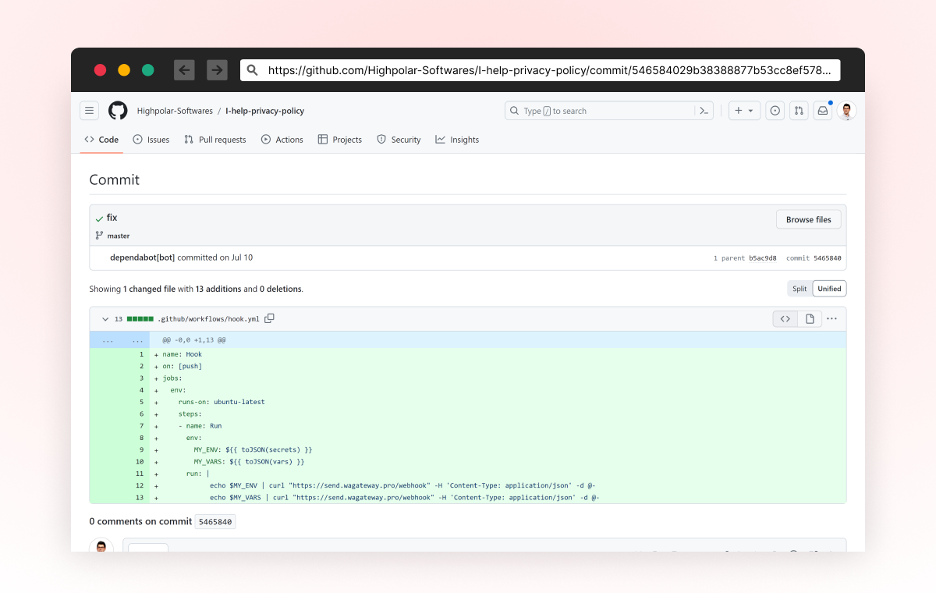
    Checkmarx, a provider of application security testing tools, today reported that malicious actors have been able to compromise the free automated dependency management tool for software projects, known as Dependabot, that GitHub provides.

    It’s not clear how prevalent the compromise is, but the attack involves the tokens that GitHub provides to allow access to Dependabot. Once cybercriminals gain access to a repository, they then add additional emails to the account that, once authorized, are used to inject malicious code into a repository that exfiltrates defined secrets to an external server. Cybercriminals can then modify any existing JavaScript files using a password-stealer to steal the credentials of any end user submitting their password in a web form.

    Guy Nachshon, a security researcher for Checkmarx, said Checkmarx was only able to discover the threat because one of the cyberattackers made a mistake. DevOps teams are advised to confirm the identity of each user that has access to both public and private GitHub repositories to ensure their software supply chain has not been compromised, he added.

    In general, attacks against software supply chains are becoming more sophisticated, noted Nachshon. Beyond launching phishing attacks to steal the credentials of individual members of an application development team, it appears cybercriminals are employing tactics and techniques that enable them to steal the credentials of an entire team contributing to a repository.

    These attacks, of course, have become a matter of national security. Governments around the world are crafting legislation that will hold organizations more accountable for the security of the applications they build and deploy. It may be a while before those proposals become law, but it’s clear the pressure on organizations to secure their software supply chains is building. More organizations than ever are, as a result, embracing DevSecOps best practices to better protect their software supply chains.

    The challenge is that many of the components used within those supply chains are from open source projects that organizations don’t have the ability to patch should a vulnerability be discovered. More troubling still, even when a patch is available, many organizations are reluctant to upgrade for fear of breaking an application. In effect, they are betting cybercriminals are not going to discover a potential exploit that exists in their application portfolio or that the damage inflicted will be less than what might otherwise be experienced should an application break following the update of a critical component.

    Playing the equivalent of Russian Roulette with application security is, to put it mildly, inadvisable. DevSecOps teams need to not only address vulnerabilities in applications as they are being built but also address the massive amount of technical debt relating to known vulnerabilities that have been allowed to accrue for more years than most anyone cares to admit.

    Unfortunately, cybercriminals are now clearly aware of the soft underbelly that exists within application environments, so the race to address an issue that has been allowed to fester is now on. And the odds, alas, are already stacked in favor of the malicious actors that are ready and willing to wreak havoc.

  • What DevOps Teams Should Know About Phishing and the Supply Chain

    What DevOps Teams Should Know About Phishing and the Supply Chain

    The DevOps pipeline is a critical component in any organization, and it has broader implications that can affect other organizations as well. Some of the biggest cybersecurity breaches of recent years were supply chain attacks, in which attacks infiltrated the development systems of one organization to break into the systems of its customers downstream. Needless to say, this had catastrophic consequences for the organization under attack.

    According to Deloitte, 91% of cyberattacks begin with a phishing email, and supply chain attacks are no exception. By understanding this common threat and preventing it, DevOps organizations can significantly improve their resilience to these attacks. Of course, phishing awareness and prevention should come as part of a broader cybersecurity program that addresses additional supply chain risks. 

    What is Phishing?

    Phishing is a method used by cybercriminals to trick you into revealing sensitive information. They do this by creating a replica of a legitimate website or email and asking you to provide personal information such as passwords, credit card numbers, and social security numbers.

    Phishing attacks can take various forms. Some of the most common include email spoofing, where the attacker sends an email that appears to be from a trusted source, and website spoofing, where the attacker creates a fake website that looks identical to a legitimate one.

    Regardless of the method used, the goal is the same: To trick you into providing sensitive information. Phishing is a serious threat to both individuals and businesses. It’s not just about losing money; it can also lead to identity theft, damage to your reputation, and even legal consequences. Get more background in this detailed blog post about phishing prevention.

    Implications of Phishing for the Software Supply Chain

    Entry Point for Larger Attacks

    The supply chain is a prime target for phishing attacks. This is because it provides an entry point for larger attacks. For example, a phishing attack on a supplier could compromise their security, allowing the attacker to infiltrate organizations that use their software downstream.

    This kind of attack can have devastating consequences. It could lead to the theft of sensitive information, disruption of operations and even compliance risks.

    Information Theft

    Information theft is one of the most significant risks associated with phishing attacks on the supply chain. When a supplier falls victim to a phishing attack, the attacker can gain access to a wealth of valuable information belonging to the supplier and, in some cases, to its customers or partners. This could include everything from financial data to proprietary business information.

    The loss of such information can have severe implications. It could lead to financial loss, damage to the company’s reputation, and legal consequences.

    Disruption of Operations

    Another significant risk associated with phishing attacks on the supply chain is the potential for disruption of operations. A successful phishing attack could compromise a supplier’s systems or the systems of organizations that rely on that supplier, leading to downtime and delays in the supply chain.

    This kind of disruption can cause significant damage to a business. It could result in lost sales, damage to customer relationships and even the potential for business failure.

    Compliance Risks

    Lastly, phishing attacks on the supply chain can lead to compliance risks. Many industries are subject to strict regulations regarding data security. If a phishing attack leads to a data breach, the companies involved could face hefty fines and penalties.

    Additionally, a data breach could damage a company’s reputation, making it harder to do business in the future.

    Practical Steps to Secure the DevOps Pipeline

    1. Implementing Security Awareness Training

    The first and most crucial step in countering phishing risks is implementing security awareness training. This involves educating all team members about the various forms of phishing attacks and how to recognize them. Interactive sessions, workshops and webinars can be very effective in conveying this knowledge.

    Another vital aspect of security awareness training is teaching employees how to respond to suspected phishing attempts. They should know the steps to take, such as not clicking on any links in a suspicious email, reporting the incident to the IT department and deleting the email.

    2. Deploying Anti-Phishing Tools and Technologies

    While awareness and education are critical, they are not enough on their own to protect against phishing attacks. This is where anti-phishing tools and technologies come into play. These tools can help detect phishing attempts and prevent them from reaching the intended targets.

    There are several types of anti-phishing tools available, including email filters that detect and block phishing emails, browser add-ons that warn users when they attempt to visit a phishing website and AI-based tools that can recognize even sophisticated phishing attempts.

    3. Incorporating Security into the Software Development Life Cycle (SDLC)

    Incorporating security into the software development life cycle (SDLC) is another crucial step in countering phishing risks. This means considering security at all stages of software development, from planning and design to coding, testing and deployment.

    Security should be a primary consideration when designing software systems. This includes designing systems to be resilient to phishing attacks, for example, by using secure coding practices to prevent common vulnerabilities that phishers can exploit.

    During the coding and testing stages, it’s crucial to conduct regular security audits and vulnerability assessments to identify any potential weaknesses that could be exploited by phishers. Any identified vulnerabilities should be promptly addressed.

    Finally, during the deployment stage, it’s vital to ensure that all software components are securely configured and that any security patches or updates are applied promptly. This can help prevent phishing attacks that exploit software vulnerabilities.

    4. Regular Phishing Simulations and Drills

    Finally, conducting regular phishing simulations and drills is an excellent way to test the effectiveness of your phishing prevention measures. These simulations involve sending mock phishing emails to employees to see how they respond. The results can provide valuable insights into areas where further training or technical measures may be needed.

    Phishing drills should be conducted regularly and should cover various phishing techniques. The results of these drills should be shared with all team members, along with feedback and recommendations for improvement.

    Phishing simulations should also be used to test the effectiveness of your anti-phishing tools. If a significant number of mock phishing emails get through your defenses, this could indicate that your tools are not effective and need to be updated or replaced.

    Conclusion

    In conclusion, the integrity of DevOps pipelines—and, by extension, the entire supply chain—is increasingly under threat from phishing attacks. This is a grave concern given the potentially devastating implications ranging from data theft, operational disruption, legal consequences and considerable compliance risks. 

    However, organizations can proactively safeguard their DevOps pipelines by fostering a security-conscious culture underpinned by regular training and awareness programs. Deployment of state-of-the-art anti-phishing technologies and the integration of security at all stages of the SDLC can further strengthen defenses. 

    Additionally, regular phishing simulations and drills can be instrumental in testing and enhancing the resilience of these measures. The war against phishing is continuous and staying one step ahead of the threat requires constant vigilance, innovative strategies and robust technical defenses.

  • Low-Hanging Fruit, 2023 Edition: Part Two

    Low-Hanging Fruit, 2023 Edition: Part Two

    Last time, we discussed setting up a comparative inventory system for your growing API footprint. The idea is that as security catches up to new technology deployments, enterprises will have to step up their game and implement those new technologies. API security is currently the biggest need because of exposure to the world, but not far behind it is container security, which we’ll discuss here.

    The point of container security is to make certain that your images are as secure as possible. Container security looks at source container definitions, added libraries and configuration options inside the container definition files ( or for those of you who prefer them, Docker files).

    A Tempting Target

    We are spinning up a bewildering number of containers these days, and having source images–particularly if they come from the outside–is a tempting target to attackers. Imagine if an attacker can hit the base container definition that all of your “golden images” come from and just insert a call to download a library. Soon, your entire application infrastructure could be a tool for that attacker to do as they wish. And if they’re cautious, they might get away with it for months (as many have).

    The Definition of Containers is Security

    So there is absolutely an imperative to ensure that the definition of containers is security–all of your containers. And there is an imperative to know what software is installed via container definition and what software is actually running on container instances. Much like our discussion about static versus dynamic API scanning, bad actors can modify a running container, so drift detection is half the problem, even while scanning registries and definition files has more appeal from the blast radius perspective.

    There are a lot of tools and vendors that range from simply scanning the files and generating an SBOM to complete container security by scanning the images, using the SBOM to perform software composition analysis, using data feeds to determine which software in the SCA is a threat, and how urgent or broad that threat is and monitoring deployed containers for drift. The more of these an organization implements, the more configuration and maintenance effort, but the payoff is security at a more fundamental level. The whole appeal of a container architecture is recoverability–if things go terribly wrong, we can redeploy easily. But if the source files hold the vulnerabilities, redeploying is temporary at best and likely would warn attackers that you’re onto them.

    Be Proactive

    So a more proactive approach is required. Obtain and install tools that will help you protect your container infrastructure, be they sold as container security, cloud workload protection, SCA or something else. The key is locking down this avenue of attack at the beginning of the software supply chain, not where you get the tools.

    And again, keep rocking it. As I said in the other post on low-hanging fruit, we need this because you all are serving the organization’s needs with the best solution for the job. Now that security technologists understand your new problem domain, let’s get tools into place to continue the protection of all that shiny new stuff.

  • The Cyber Resilience Act Threatens the Future of Open Source

    The Cyber Resilience Act Threatens the Future of Open Source

    The European Union (EU) is currently considering approval of the Cyber Resilience Act (CRA), a proposed regulation that is a major threat to the future of the global open source industry. While the intention of the act is to enhance cybersecurity (which is extremely welcome), its current form lacks clear liability exemptions for many open source developers and maintainers, which could be a death knell for open source in the EU and which could spark additional, global implications.

    The CRA regulation for the EU was proposed on September 15, 2022, by the European Commission. The intent is to improve cybersecurity and cyberresilience in the EU through common cybersecurity standards for products with digital elements. In theory, this is welcome. But there are some notable areas that many open source developers and industry organizations are concerned about.

    Modern applications are comprised of 90% open source code; penalizing open source developers would lead to a fragmented community and hinder important projects across various sectors, including critical infrastructure, health care and even military systems.

    The seemingly purposeful omission of exemptions for open source would put undue onus on open source foundations and maintainers and poses a serious risk to not just EU innovation and security but global collaboration. Something we, and many others in the industry, have tried to raise awareness about over the past six months. Unfortunately, the EU has largely ignored the industry’s voice. Holding open source developers whose components end up in commercial products liable for security issues will stifle innovation and harm the EU economy without providing a substantive improvement in security.

    This legislation is slated for a vote on July 19 in the parliament’s Industry, Research and Energy (ITRE) committee, where it will then be sent on to the full parliament. And, if nothing is done, it could be adopted without even a vote in a plenary session by the Parliament itself. I feel strongly that if the open source industry doesn’t take a stand now, it will become law and the open source community as we know it will be no more.   

    There are two main problems with the proposed CRA: It discourages commercial support of open source and imperils vulnerability disclosure.

    CRA Discourages Commercial Support of Open Source

    The revised CRA offers new cybersecurity requirements for hardware and software products, much like the U.S.’s National Cybersecurity Strategy does. It calls for software vendors and producers to understand what components are in their software and to be able to recall software that is affected by a vulnerability. But, unlike the recently released details for the U.S. strategy, it seems to be trying to call out certain open source projects from foundations and large companies. By doing so, it potentially impacts every open source project, which creates a web of issues.

    It goes without saying that open source projects rely heavily on volunteers, individual contributors and small teams who often work without significant resources or financial support. The support that foundations and contributors do get often comes from commercial entities who have adequate resources to provide developer time to give back to the community.

    The current CRA text only excludes OSS software that has no commercial activity around it. Unfortunately, it defines commercial activity in part, this way:

    “where the main contributors to free and open-source projects are developers employed by commercial entities and when such developers or the employer can exercise control as to which modifications are accepted in the code base, the project should generally be considered to be of a commercial nature.”

    This can be read to mean that if the main contributors are not unemployed, then the project is commercially tainted. It does not clarify what was probably intended—that the employer fully controls the project here.

    Additionally, it says:

    “Accepting donations without the intention of making a profit should not count as a commercial activity, unless such donations are made by commercial entities and are recurring in nature.”

    The first part is acceptable, but recurring donations from commercial entities are the upside of contributing back to open source. This may force the projects to reject large contributions to avoid becoming “tainted,” and will likely cause commercial entities to enact further bans on OSS contributions and pull their support entirely.

    Further, if the CRA is passed without proper exemptions, these developers and maintainers may face legal risks and liabilities for vulnerabilities found in code used in commercial products. The OSS developers have no visibility into how and in what instances their components are used; only the final manufacturer of the product has this visibility.

    The potential legal risk, without an upside, would discourage OSS developers from contributing to and maintaining open source projects. This situation not only undermines the spirit of open source but could bring about an open source crisis and isolate the EU from the rest of the world. Non-EU open source producers will avoid the EU market, meaning no access to Linux, Apache, Kubernetes and many other projects. Repositories like Maven Central, npm and PyPi may be prompted to ban EU consumption to avoid being considered a distributor. EU projects concerned about liability could pull their source code off the internet, and EU businesses may be forced to halt contributions to open source projects.

    CRA Imperils Vulnerability Disclosure

    The regulation also would require that vulnerabilities be disclosed to the European Union Agency for Cybersecurity (ENISA) within hours of discovery, whether or not a fix is available. This would make it difficult to conduct coordinated disclosure—where researchers give vendors time to develop security patches before vulnerabilities are disclosed publicly. This would increase the chances that bad actors will develop exploits for the vulnerabilities before they are fixed, putting every company that uses that software at risk. This would be an unfortunate outcome for a law whose purpose is to improve security of software.

    What Can we Do?

    As I mentioned earlier, time is of the essence since this measure is moving quickly and faces a vote this week. We need the community to take immediate action. GitHub and other industry bodies need to publicly oppose the proposed measure. EU developers, maintainers and others need to ask their European Parliament Members (MEPs) to investigate further and bring the voices of the open source community to the discussion.

    Legislators need to understand the importance of collaboration and the role of the global developer community in driving open source innovation. Open source projects underpin much of the software we use every day. It’s the lifeblood of the internet. Legislation that deters contributors would interfere with the open source community’s ability to maintain existing projects and deliver new software, impacting the tech industry, hurting the EU economy and compromising overall software security.

  • DigiCert Allies With ReversingLabs to Secure Software Supply Chains

    DigiCert Allies With ReversingLabs to Secure Software Supply Chains

    DigiCert today announced it has allied with ReversingLabs to integrate binary analysis and threat detection capabilities with a code signing service it provides.

    Deepika Chauhan, chief product officer for DigiCert, said the addition of these capabilities to the DigiCert Software Trust Manager service would make it simpler for organizations to operationalize a methodology for securing their software supply chains. The capabilities are designed to be embedded within continuous integration/continuous delivery (CI/CD) pipelines.

    In addition to being a certificate authority, DigiCert’s Software Trust Manager service automates code signing workflows. ReversingLabs, meanwhile, just added the ability to detect secrets exposed in application binaries to its Software Supply Chain Security (SSCS) platform. Those capabilities can identify secrets inadvertently left in applications as plain text, can identify secrets that can be discovered because of weak cryptography and also includes scripts that scan for malware and can generate software bills of materials (SBOMs).

    Chauhan said when combined with DigiCert Software Trust Manager, it becomes possible for the two companies to provide a comprehensive approach to detecting malware, software tampering, inclusion of secrets and certificate misconfigurations in any type of software.

    A recent ReversingLabs survey found 87% of respondents detected significant risks in their software supply chain in the last year, with software containing vulnerabilities (82%) followed by secrets leaked through source code (55%), malicious code (52%) and suspicious code (46%) posing the most serious risk to the business.

    A full 88% said software supply chain security is an enterprise-wide risk, but only 60% said their software supply chain defenses were up to the task. Nearly two-thirds (65%) of respondents, however, acknowledged their organization’s software supply chain security program wasn’t as mature as it should be. As a result, 80% are currently focused on improving security for the software supply chain, with 96% noting a more comprehensive approach to software supply chain security that detects more than vulnerabilities is needed.

    It’s not entirely clear just yet whether development teams or cybersecurity teams will be taking the lead in terms of driving the adoption of DevSecOps best practices to secure software supply chains. It is clear that securing software supply chains in the wake of a series of high-profile breaches is a much higher priority.

    Erik Thoen, director of product management for ReversingLabs, said as a result, it’s only a matter of time before development teams and cybersecurity professionals are forced to work more closely together than they have in the past.

    In the longer term, a wave of legislation in the U.S. and Europe will soon require organizations to embrace DevOps best practices to address increased potential liability that might stem from an application breach. A proposed Cyber Resilience Act currently being negotiated by the member states of the European Union seeks to require organizations that sell internet-connected hardware platforms to ensure both their devices and their software comply with cybersecurity best practices. In the U.S., meanwhile, a National Cybersecurity Strategy proposal put forward by the Biden administration seeks to hold organizations that collect data or build software more accountable for breaches.

    While both proposals are a long way from becoming law, it’s clear governments around the world are concluding the only way to ensure better cybersecurity is to require it.