Tag: software development life cycle

  • CollabNet VersionOne Advances End-to-End DevOps Strategy

    CollabNet VersionOne Advances End-to-End DevOps Strategy

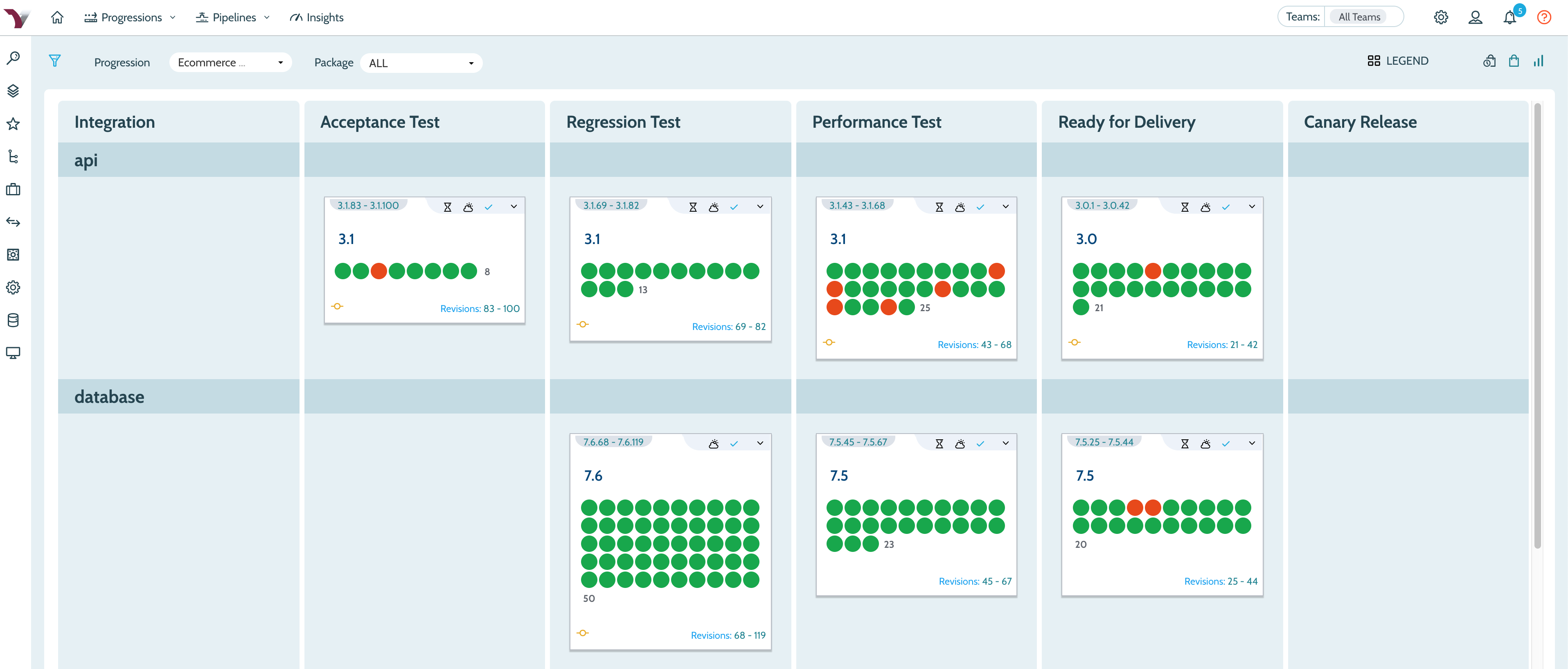
    At its Agile 2019 conference, CollabNet VersionOne announced it plans to extend the capabilities of its software delivery and management platforms later this month as part of an effort to provide organizations with more visibility into how changing software development project schedules impact the business.

    Company CEO Flint Brenton said updates to the VersionOne value stream enterprise management platform will include a revamped user interface that provides more visibility into events occurring within the Continuum continuous integration (CI) platform.

    Brenton also said those updates will further advance adoption of agile frameworks such as the Scaled Agile Framework (SAFe), a prescriptive approach to combining best agile development and DevOps practices.

    While organizations may opt to employ VersionOne in combination with other CI/CD platforms, Brenton said CollabNet VersionOne provides a more comprehensive understanding of the impact changes to software development schedules will have on the business.

    As part of that effort, CollabNet VersionOne also announced VS Exchange, a marketplace for custom and preconfigured Continuum and VersionOne extensions and workflows, and enhancement to the Continuum TestDrive component within the company’s implementation of Continuum that streamline provisioning.

    With more organizations than ever starting to appreciate how dependent they are on software, Brenton said business leaders are now looking to exercise more control over software development projects. It’s no longer enough to generate more code, he noted; rather, DevOps teams are now being asked to generate more reliable code that has the greatest impact on the business faster. CollabNet VersionOne enables organizations to achieve that goal by providing a management platform in the form of VersionOne that is layered on top of Continuum.

    CollabNet VersionOne is now taking part in a race to infuse more business analytics into a software development lifecycle (SDLC) platform. While SDLC platforms have typically been employed to gather technical metrics, organizations now want to correlate that data against business metrics.

    Less clear right now is whether having access to business metrics will influence the selection of one CI/CD platform over another. Over time, the expectation is that various forms of business intelligence capabilities will be a standard capability of the platform, especially as IT leaders continue to assume larger business responsibilities in the age of digital business processes.

    It may be a while yet before business and IT roles start to converge. In the meantime, CollabNet VersionOne is clearly betting there will be a lot more collaboration between these two camps going forward. In many ways, the DevOps best practices that organizations have adopted to become more agile are about to be extended to the business processes enabled by software. Savvy business leaders will realize their ability to meet financial goals for any given quarter is tied to the timely manner in which new digital customer experiences are enabled. In fact, there may come a day when IT organizations are able to deliver software updates faster than most businesses will be able to consume it.

    — Mike Vizard

  • Software Compliance Teams Can Learn a Lot from DevSecOps

    Software Compliance Teams Can Learn a Lot from DevSecOps

    Many argue that application security should be the responsibility of a security team. However, while security professionals can contribute, developers are usually the only ones with the technical ability to fix software security vulnerabilities. The same goes for software compliance. When it comes down to it, only developers are equipped to build applications in compliance with specific software standards.

    Considering the tight deadlines for development teams, giving them additional duties can present challenges. To help developers deliver secure applications without slowing them down, many teams have adopted DevSecOps—which encourages integrating automated security testing into the DevOps workflows for every release.

    DevSecOps helps teams deliver more secure software faster, but what about more compliant software? Many teams trying to achieve software compliance encounter similar challenges as those trying to achieve software security. Luckily for them, they can use similar strategies.

    What Does DevSecOps Do?

    The fast, iterative software release cycles supported by DevOps workflows present hurdles for software security.

    In traditional approaches to securing software, testing occurs toward the end of the software development life cycle (SDLC), after an application’s construction. As a result, most (if not all) of the application is tested at once, and a long, daunting list of security issues is sent back to developers.

    However, many teams find this methodology incompatible with DevOps. Development teams don’t have the time—not to mention the budget—to stop whatever they’re doing to sort through a massive spreadsheet of issues.

    To solve this problem, organizations can implement DevSecOps by integrating security testing into the shorter, higher-frequency feedback loops of fast DevOps release cycles. Rather than running one big test after developers finish building an application, DevSecOps calls for automated security testing performed early and often. By helping developers check in more secure code, DevSecOps helps reduce the volume of issues QA must identify and send back to them.

    If development teams can integrate security testing into DevOps workflows, why not compliance testing?

    How to Apply DevSecOps Practices to Software Compliance

    While testing for security usually requires a different analysis than testing for compliance, development teams practicing DevSecOps can use a similar approach to compliance testing.

    Like traditional application security testing, compliance testing typically happens in the QA environment. A very rough application development and testing workflow looks something like this:

    1. Developers write the code for an application.
    2. QA tests the code while developers move on to another project.
    3. QA sends a list of compliance violations back to developers, requiring them to pause their current work to fix those problems.

    There is nothing technically wrong with this compliance testing strategy. However, this approach is frustrating for developers and costly if the list of issues is especially long. To resolve more compliance issues before an application is complete, teams can implement practices inspired by DevSecOps to help developers commit compliant code earlier in the SDLC.

    One of these strategies is to integrate automated compliance testing into DevOps release cycles. By testing the application in increments rather than all at once, teams can reduce the number of compliance violations per testing cycle. While it obviously requires higher-frequency testing throughout the SDLC, this approach has proven to be faster than waiting to find issues in QA.

    Another approach is to create a sandbox environment in the integrated development environment (IDE) where developers can run tests themselves. Testing their own code as they write it equips developers to check in cleaner, more compliant code, so compliance violations are less likely to show up in QA—or worse, production. This approach has the added benefit of familiarizing developers with code that leads to compliance violations.

    These strategies for identifying and resolving compliance violations are not meant to replace QA testing. However, by integrating compliance testing into multiple stages in the SDLC, teams will see fewer issues in feedback loops between QA and development—which better supports DevOps workflows.

    What Does This Look Like in the Real World?

    As with security testing, integrating compliance testing into DevOps release cycles requires new technologies and workflows, each with a different learning curve.

    Regarding technology, static analysis is growing as a popular option to help development teams build compliant applications. Coverage varies between static analysis tools, but in general, the technology can find issues in code quality standards, such as MISRA and CERT C/C++, as well as security standards, such as OWASP Top 10 and PCI DSS.

    The static analysis tool or any other technology that teams choose to address, software compliance plays an important role in the workflows they adopt. As discussed earlier, those hoping to keep issues out of QA will want to find solutions that can:

    1. Integrate into the quick feedback loops between testing and development.
    2. Scan code in the IDE as developers write it.

    Creating a more continuous cadence of feedback between testing and development could represent a significant shift in a developer’s day-to-day.

    While “DevCompOps” doesn’t quite have the same ring, development teams in regulated industries will find cost-cutting benefits by integrating compliance testing into DevOps release cycles.

    — Charlie Klein

  • Fail Fast: How Shifting Security Left Speeds Development

    Fail Fast: How Shifting Security Left Speeds Development

    How DevSecOps can help organizations increase security, move faster and save money

    With developers under constant pressure to create more software in less time, the last thing you need is for your code to fail at the end of the development lifecycle. No developer wants to create inoperable or insecure code.

    We know that most software products reach the market with flaws or vulnerabilities. On average, more than 85 percent of all software applications have at least one vulnerability, and more than half of flaws remain unaddressed for one to three months after first being discovered.

    The sooner a developer can identify, view and correct a flaw, the more efficient it becomes to fix in the software development life cycle (SDLC). That is the underlying philosophy of DevOps. Despite the somewhat negative connotation, failing early in development can be beneficial in deploying software to market more quickly.

    The most advanced organizations today employ a DevSecOps model, which tends to incorporate more frequent security scans, incremental fixes and faster rates of flaw closures into the SDLC. More importantly, it allows security teams to shift left to test software products against security standards earlier in the development process.

    According to Gartner, more than 80 percent of development teams will implement DevSecOps by 2021. In 2017, that number was around 17 percent.

    In Veracode’s latest “State of Software Security” report, we discovered companies that adopt a DevSecOps approach to development are addressing software vulnerabilities more than 11 times faster than companies that use a more traditional software development method. In the process, DevSecOps companies are innovating faster, saving money and becoming more efficient in how they identify and resolve new risks.

    By integrating developers with IT operations and focusing everyone on making better security decisions, DevSecOps can help deliver safer software with greater speed and efficiency.

    Introducing security earlier in the development process creates a sort of blueprint for teams to build within the specifications of major IT regulation and helps reduce risk by fixing vulnerabilities before they can be exploited. Think of it like building an apartment complex according to city codes with inspectors integrated in the construction crew.

    In practice, DevSecOps can add some friction and hinder the development process. Traditional tools for testing code and assessing application security risk simply weren’t built for the speed that DevOps testing requires.

    To make DevSecOps successful, development teams need to start with automated testing tools, as relying on manual processes can’t possibly keep pace with accelerated development timelines. Tools that can be used in an integrated development environment (IDE) are key, as they allow developers to integrate security into their workflow rather than having to launch a new environment whenever they need to test code. Solutions that check for flaws during the coding process enable developers to address vulnerabilities early on when fixes are the most cost-efficient. And because DevSecOps is equally concerned with security when software is in production, development teams need tools for testing applications after release. Development teams, meanwhile, must be comfortable with changing the way they work.

    Business leaders must recognize the importance of integrating security with development and communicate that priority to development teams. New regulations such as the EU General Data Protection Regulation (GDPR), which can fine companies up to 4 percent of their revenue for failing to disclose processes related to data breaches, are now in place. All businesses must be motivated to operate with a security-first mentality that permeates through the business, including within development teams. Veracode data shows that customers taking advantage of DevSecOps’ continuous software delivery are closing their vulnerabilities more quickly than the typical organization.

    DevSecOps doesn’t always require security personnel to be physically involved in the development process. Companies can and should train developers on basic security techniques and offer security resources to help developers become responsible for the security of the software they build.

    As the DevOps movement has unfolded, security-minded organizations have recognized that embedding security design and testing directly into the continuous software delivery cycle of DevOps is necessary. This is the genesis of DevSecOps principles, which offer a balance of speed, flexibility and risk management for organizations that adopt them.

    — Mark Curphey

  • DevOps Chat: Crowdsourced Continuous Testing with Rainforest’s Derek Choy

    DevOps Chat: Crowdsourced Continuous Testing with Rainforest’s Derek Choy

    Scaling your testing is the scourge of many software teams. While test automation and continuous testing have made great strides, it still is difficult to automate every QA test. Also, engineering resources who can script these tests are difficult to find. Enter Rainforest.

    Rainforest has a unique crowdsourcing solution to continuous testing. It combines crowdsourcing talent with automation to deliver a high level of quality assurance on a continuous basis.

    In this DevOps Chat, we speak with CIO Derek Choy as he explains to us why Rainforest in some ways can be the Uber of QA. As usual, the streaming audio is immediately below, followed by the transcript of our conversation.

    Transcript

    Alan Shimel: Hey, everyone, it’s Alan Shimel, devopsy.kinsta.cloud, and you’re listening to another DevOps Chat. Today’s DevOps Chat features a first-time guest on DevOps Chat. He’s Derek Choy, CEO at Rainforest, or Rainforest QA, as some may know them. Derek, welcome.

    Derek Choy: Thank you. Just a little correction: I’m CIO at Rainforest.

    Shimel: What did I call you?

    Choy: Responsible for primarily the technical side of the functions here.

    Shimel: Did I call you “CEO”?

    Choy: I think you did, but I just want to make a little correction there.

    Shimel: You know, it’s 2019; that’s my prediction.

    [Laughter]

    Choy: I don’t know that I would support that prediction, but thank you. [Laughs]

    Shimel: Well, I _____ – CIO’s enough. But, anyway, Derek, thanks. Yes, it’s Derek Choy, CIO at Rainforest. So, Derek, you know what? I didn’t make the mistake on purpose; it was an honest mistake. Good. That leads us – why don’t we talk a little bit about Rainforest for our audience who may not be familiar?

    Choy: Absolutely. So Rainforest is a testing platform. What we do is we help our customers with their software testing. You know, as you know, we’re moving – a lot of companies are moving towards a rapid development cycle, CI/CD, frequent releases and stuff. Testing becomes much of a challenge for a lot of our customers because now they not only have to do testing, but they have to do it fast. They have to have accurate results and stuff.

    So Rainforest is actually a crowd-based testing platform that allows our customers to simply input test cases in plain English, so no Selenium or any sort of programming language, and then we can actually execute them as if they are automated test. We’re fully integrated into any CI/CD tools, like Jenkins or CircleCI and so on, so you can actually trigger a Rainforest test. Typically, we can return results in 30 minutes or so, and you can actually test across many different platforms, like different browsers, different OS’s, and the same for mobile as well. And so that allows our customers a wide variety of options, in terms of where they want to run their plain-English test cases and when they want to run it – it’s on demand. And we typically return results in 30 minutes, fully integrated into an automated release cycle.

    Shimel: Great. Excellent. And, Derek, how did it come to be that you became the CIO of Rainforest? Let’s hear a little bit your own personal journey.

    Choy: Cool. Oh, thank you. So I have been always involved in the product engineering side of things. I started off my career earlier with Accenture. Spent a number of years at eBay. And then my last company at Aria Systems, building SAS-based billing system, also running their engineering and product function. So, coming to Rainforest, I brought my experience and knowledge in this space, to help build the engineering and the product organizations. Now here, besides product engineering, I’m also responsible for our professional services team and our client success team. So essentially kind of helping build out product and making sure that our customers are successful in using that.

    Shimel: Absolutely. So, Derek, you know what? Here we are in December. We’re looking at 2019.

    Choy: Mm-hmm.

    Shimel: I probably have spent the last three weeks – if I tell you I’ve spoken to dozens of vendors and C-level execs at large organizations, and, to me, the real story of 2019, as well as what’s emerged as the story of 2018, is around – you know, you wanna call it “digital transformation” and “DevOps,” _____ say great, but, really, down to these two things: companies are – they need scale in what they’re doing today, right?

    Choy: Yeah, absolutely.

    Shimel: When we’re talking about data and computation and transactions or whatever the metric is that’s driving your company, everybody wants to do it at huge scale, like unprecedented scale that, 20 years ago, you would’ve went – you know, I’m just reminded of Carl Sagan saying, “Billions and billions of stars,” _____.

    Choy: [Laughs] Yes, that’s right.

    Shimel: That’s the scale. And the only way to achieve that kind of scale is automation.

    Choy: Yes. Absolutely.

    Shimel: So these are two kind of twins, co-joined at the hip – scale and automation.You can’t have scale, I think – well, you can’t handle scale without automation.

    Choy: Absolutely. Yeah. And – sorry.

    Shimel: Go ahead. No, no, go ahead.

    Choy: I –

    Shimel: You know, to me, that’s it right there. That’s the crux of it.

    Choy: Exactly. And, Alan, I would say that I’ve never been more excited, right, than where we are right now. I think we are definitely at a very exciting time and, just to kinda set the context and maybe kinda recapping a little bit of what you just said, right, the world is very different now, even compared to five years ago. Right? A while ago, you would hear companies having a quarterly release. Some would even have an annual release, if you remember, especially the bigger companies, right? You know, release cycle was a lot longer, takes a lot more time to get things out to the market. Today, release cycles are typically maybe in a month, right? Maybe two weeks and, in some cases, days or even multiple times a day. Right?

    And exactly to you – and the interesting thing is that the world has got accustomed to that and has come to expect that, frankly. Right? Think about the apps that you’re using. If they come back to you and say, “Well, you know what? We update our apps once every six months,” or something, you’re like, “Wait, six months? Wow, that’s unheard of.” Right? “I was expecting a weekly update or at least monthly or something.” So the world has actually comes to expect that.

    Now the challenge, exactly as you pointed out, is how do companies deal with that? Right? How can we scale our organization through automation, among other things, right, to make sure that we can keep up with that pace? I think that that is the challenge with a lot of technical leaders, is we understand what the companies are looking for, understand what the consumers and our customers are looking for, right? But how do we do that? Right?

    And there’re different aspects of it, Alan. I think that there is definitely a development aspect of it, right? How do we scale development? How do we do rapid development, Agile, sprint? You know, all these things. Things have evolved a lot over the last, I would say, ten years, in terms of faster development. There’s a lot _____ –

    Shimel: On the development side?

    Choy: Exactly. And there continue to be more evolution on that, which is super exciting. Now one thing that hasn’t really, at least in my opinion, gone as far in this particular context is testing. Right? If you think about testing, we’ve had automated testing for a long time – 10, 20 years, maybe even longer, right? We’ve always had manual testing, right?

    Now, when you think about testing, that’s – which is a critical part of the release cycle. Of course, right? You cannot push things out without some sort of testing at least, right? There hasn’t really been a lot of innovations and evolutions in testing. We’re still trying to do automated testing; we’re still doing some manual testing; we’re still doing it kinda the same way, so to speak. There’re new automated testing language, but they all kinda do similar things, right? And they all have similar –

    Shimel: Absolutely. And, Derek, let me stop you there for a second.

    Choy: Yeah.

    Shimel: To me, here’s the real crux in the issue.

    Choy: Yeah.

    Shimel: We talked about that we’ve certainly seen, let’s call it, a “revolution” in development acceleration, rapid development over, let’s say, 10 years. I’ll say even 20 years, right? _____ _____ _____ around for about 20 years.

    Choy: Agreed.

    Shimel: Do you consider testing part of development? Or did DevOps come along and say, “Wait a second, it’s all one continuity here, with development, testing, operations, security – you wanna put security next to testing, whatever – but it’s one continuum”?

    Choy: Yeah. It’s definitely – I completely agree with that. It is definitely one continuum, meaning that they are all part of the overall workflow, right, to make automation possible, to make a fast release process possible. You cannot do it without any one of those components, right?

    Shimel: No. But they haven’t kept pace with the changes that we’re in – what we consider when we talk development.

    Choy: Yes.

    Shimel: Where many of us think, you know, of coding.

    Choy: Exactly.

    Shimel: That’s the issue right there.

    Choy: That’s the issue, exactly as you pointed out, right? All the components of that whole continuum hasn’t really kept pace, right, with the developments that we’ve made on coding, right? On the actual coding of the product. And I think that that’s starting to show or actually has been starting to show, in terms of how other components of that, testing in particular, has been frankly dragging down the overall speed of being able to push things out faster and so on, so forth. Right?

    If you talk to – and you do that all the time. If you talk to a lot of CIOs and CTOs and so on, frequently, you’ll hear challenges with testing. Right? And most people will tell you, “Yeah, I’m okay. I get it going,” but very few people –

    Shimel: “It’s good enough.”

    Choy: Yeah, it’s just good enough, but it’s not great, right?

    Shimel: No, it’s not.

    Choy: Yeah.

    Shimel: And, Derek, I’ll go one further with you. What I see is this, is that, when we talk about testing – and _____ _____ the same thing with security, right? Is we’ve got twin challenges.

    Choy: Yes.

    Shimel: I can’t do it fast enough, so I’m constantly behind, running as fast as I can, but I can’t – just not fast enough.

    Choy: Exactly.

    Shimel: And then, number two, the train won’t wait for me.

    Choy: Yeah. Exactly.

    Shimel: If I can’t finish my testing, “Well, you did it good enough.”

    Choy: Yeah. “Let’s go.”

    Shimel: “We’ve gotta release. We’ve gotta release this hour,” or, “We’ve gotta release this week.” You didn’t do – dirty testing? That’s okay; it’s probably secure anyway. And, boom, out the door it goes, right? And that’s the dilemma, the enigma of testing, is “I can’t do it fast enough, but, if I don’t do it fast enough, they don’t wait for me.”

    Choy: Exactly. Right. And there is a reason for that. Exactly, right? Like we talked about earlier, because customers actually expect releases, right, whether you’re ready or not, right? They are expecting releases in a very frequent cycle. Right? And so companies therefore cannot wait. Right? It is not acceptable to go back to the customer and say, “You know what? My release is delayed and therefore you have to wait another week or two.” In the past, that used to be the common thing to do, right? Nowadays, that’s not acceptable.

    And so then what happen, exactly like you said, is that people compromise, right? They’re like, “Oh, you know what? Testing is not done. Okay, well, you know what? It should be fine. Let’s just go.” Right? “Security testing is not complete, but we’ve done a portion,” right? “Okay, well, let’s just go.” Right?

    The downside, however, is that – and you’re seeing it frequently; some people are just not paying attention to it – is that there is a high price to pay for that, right? You’ve seen a lot of security loopholes out there, right? And, yes, the release is out, right, but then at what cost, right? If people found a loophole and there is a data breach and costs companies lots of moneys and reputations and things like that.

    And equally with software quality as well, right? Things don’t work. Even bigger companies, you’ve heard companies like Apple, for example, struggle with that. Google, right, struggle with that. And they release something and people like, “Wow, this is junk,” right? “And I don’t want to upgrade,” and you hear that all the time, right? And it tarnish your reputation.

    Now bigger companies have, obviously, a lot more buffer to kind of weather these kind of quality problems, right? You know, whether you like it or not, you’re gonna continue to use Apple, right? Or Android or whatever. But then smaller businesses may have less tolerance for that, right? And customers of those businesses, if they’re not happy with your quality, they’ll move somewhere else.

    So I think it’s very important for technical leaders to figure that out and not just kinda brush it aside and say, “You know what? It’s not important. If quality’s not good enough, let’s just go. It’s fine. We’ll find bugs in production; we’ll fix it.” Personally, I don’t think that that’s the right approach and I think that it’s gonna hurt businesses down the road.

    Shimel: So you know what I call that? So that’s the double-edged sword of MVP.

    Choy: Yeah.

    Shimel: Right? ‘Cause you talk to these people and they say, “Don’t worry. We’re just doing an MVP. It’s a minimally viable product. We know it’s not 100-percent tested. We know it’s not a 100-percent baked. We know it doesn’t have everything, but we’ve gotta get an MVP out there, god darn it.” Right? [Chuckles] And so –

    Choy: Yeah.

    Shimel: And we appreciate – look, I’ve been – I founded, cofounded several venture-backed companies. I’ve been on pushing the VP of engineering, saying, “Hey, we promised our customer we had a new release coming out before Thanksgiving, man, and it has to get out. It has to get out. I don’t care if it’s fully tested. Get it out.”

    Choy: Yeah.

    Shimel: It’s not – you know, MVPs were being chewed to death.

    Choy: Yeah. I – [laughs]

    Shimel: So that “minimum” – that “M” in MVP keeps getting bigger and bigger and bigger. Right?

    Choy: Exactly. Right, exactly.

    Shimel: And more and more critical.

    Choy: Exactly. I think we continue to push the boundary of MVP. You know, I think that – and that’s really the challenge, right? So, you being kind of the leader of the business, right, you’re not wrong because customers really need it, right? “In order to move my business forward, I really need the release. I really need to get that feature out. I really need to get ahead of the market.” That’s not wrong. Right? And I think that that’s the needs of the business; that’s the market; that’s what people expect today. The challenge that we technical leaders needs to solve – CTOs, CIO, VP of engineering, VP of product – what we need to solve is “How can we support the business in doing that but also maintain the quality?” Right?

    And so, as a leader, in my opinion, going back to the business and say, “You know what? I can’t actually make your delivery date. You will have to wait another two weeks, four weeks, six weeks,” or something – that’s gonna be a tough sell, right? But, at the same time, releasing it without quality assurance, without security and all these stuff, is also not the right approach.

    So I think what we leaders needs to figure out is “How can we do better, right, in QA? How can we do better in security?” All these other things that are probably less mature than development itself, coding itself, right, how can we do better in these areas so that we can also support the business in shipping this MVP? Whatever the definition of this MVP is, right? We can support a business in shipping the MVP because that’s very critical to the business but, at the same time, maintain the level of quality and the level of security and, among other things, right, that we are proud of, right? That we want to have, right?

    And I think that that’s the biggest thing that we need to figure out in 2018 and definitely going into 2019, right? How fo businesses figure that out? How do we implement processes and tools and technologies that will allow us to do that?

    Shimel: Yep. So, Warren – Warren? I’m sorry. Derek, fantastic discussion. Let’s bring it home a little bit to Rainforest.

    Choy: Sure.

    Shimel: What can you do to help?

    Choy: Yeah, so Rainforest has a very – takes a very different approach to QA, right? You know, so the traditional way is, obviously, automated test with Selenium and all these different Appium, all these different technologies, or we can go manual testing and perhaps building an AMI offshore – that’s very, very typical as well. Rainforest looks at it and say, “Well, neither one are the best approach,” right? And therefore we come up with a testing platform, you know, that is powered by the crowd. And we allow our customers to actually put plain-English test cases on our platform. We can execute these tests without actually building an AMI offshore, but, at the same time, you don’t have to worry about the downside of automation, having to hire QEs and spend a lot of time writing Selenium scripts and things like that.

    And so we offer a solution that, at least we think, solves problems on both sides, right, and also allows you to hook it up into your CI/CD process so that you can actually push this MVP out in an automated fashion, fully kinda connected with all the rest of the continuum, right, and be able to actually ship code faster but with higher quality.

    Shimel: So let me ask, so, at some level, though, you are reintroducing or relying on human element?

    Choy: Right. Correct.

    Shimel: So why don’t you have the same scale problems that others do?

    Choy: That is an excellent question. So I would say that there are two elements, right? So, when we look at the human elements, we look at it from a crowdsourcing basis, right? So think about Uber, for example, right? If I were to hire my own team of drivers, that would be a little bit challenging, but then, leveraging the crowd and scaling it based on demand, we’re able to actually solve a lot of the human aspect of the problem. We can have testers that come in whenever they like to come in and we have enough testers to support the test that our customers would like to do. Right?

    And now the challenge there and probably a followup question then is “Well, but what about the quality of these people? Do they know what they’re doing?” Just like a Uber driver, right? How do you know that that guy actually drives well, right? So we actually developed a bunch of AI algorithms that actually analyze the work that they do and also take in feedback from customers, based on their former – the previous tests that they have done. And a combination of that with a lot of data mining and AI analysis helps our customers determine whether that test result is correct or not. If it’s not correct, we will engage additional testers to make sure that the tests are consistent and results are correct.

    So we have refined that algorithm over the years and now we have achieved a very high level of accuracy that, based on our data, is showing us that the accuracy’s actually higher than having your own manual QA team. And so you get better results, without actually hiring an AMI, either onshore or offshore. You can actually run your test on demand – typically, you’ll get results in 30 minutes or so. Right? And it’s fully integrated into your CI/CD cycle. And the best part is you can do all these things and achieve all these benefits without having to hire QEs to write automated scripts and having to maintain it, and so on, so forth.

    Shimel: Excellent. So, Derek, I get the outsource. I get the army of people doing it. But, on the back end, are you doing some automated testing as well?

    Choy: Yes, we are. And so what we’re also doing is we’re developing additional AI algorithms to actually learn from these human executions. So what we do is we have lots of human executions that are happening as we speak. In our environment, we have 80 million, 90 millions of tests that have already conducted on our platform, so what we do is we actually do machine learning through these data and learn from previous executions and develop algorithms so that, instead of actually having to send it to a human tester, we can actually achieve it with a robot.

    Very similar to the approach that Uber is taking. Today, human drivers are driving people around, right? In the back end, they’re developing these self-driving cars so that, in the future, we don’t really need a human drivers anymore. Very, very similar approach, from a QA standpoint. Today, we’re sending testers, but then, in the future, we’ll have these robots that will execute these tests based on what they have learned from these human testers.

    And tomorrow is already here for us today because we’re already doing that and a number of our customers are already using these automated AI algorithms. So they just need to write their test cases in plain English and they’ll see the tests executed by robots automatically, without having to worry about building automations or anything like that. So that’s kind of our approach to solve the QA problem.

    Shimel: So Rainforest, the Uber of QA.

    Choy: I don’t know that marketing will approve that line, but –

    Shimel: No, I don’t think _____ _____ –

    Choy: – personally, but, yes. Yes.

    Shimel: It does remind me – you know, when – you’re out in San Francisco, we’ve all been in venture-backed world.

    Choy: That’s right.

    Shimel: There was a period there where every pitch was “We wanna be the Uber of,” right?

    Choy: Yeah. Exactly.

    Shimel: Uber of this or the Uber of that and _____ _____ to be disruption, or crowdsource in this case, but fascinating take on solving an age-old problem.

    Choy: Mm-hmm. Exactly.

    Shimel: Interesting to see. Just – Rainforest is, what, about two-and-a-half years, three years old now?

    Choy: Yeah, it’s just a little bit longer. We’ve been – our total existence, probably about six, seven years. We’ve kinda pivoted a little bit at the beginning, so our current product is about three to four years old.

    Shimel: That’s when I think I first became aware of it.

    Choy: That’s right.

    Shimel: And, look, testing and continuous testing is such a – I mean, it’s a hot area. There’s a lot of different solutions vying in the market, but this one is really kinda unique, so it’ll be interesting to watch how it happens.

    Choy: Yeah.

    Shimel: Derek, as I promised you before we started, the time goes really fast here. We’re way out of time, but, hey, man, I wanna thank you for being a guest on DevOps Chat. And maybe we’ll catch up with you again in the new year and find out how things are going.

    Choy: That will be awesome. Well, thank you, Alan, and have a wonderful holiday to you and everybody listening. And, hopefully, I’ll talk to you again soon.

    Shimel: Absolutely. Derek Choy, CIO still, not CEO, of Rainforest. Thanks for being our guest on DevOps Chat today. Have a great holiday and thanks very much.

    Choy: Thank you. Buh-bye.

    Shimel: Buh-bye. This is Alan Shimel for devopsy.kinsta.cloud and you’ve just listened to another DevOps Chat.

    — Alan Shimel

  • Testing’s Role in Delivering Digital Transformation

    Testing’s Role in Delivering Digital Transformation

    “We have a quality philosophy now…but it took the rise of the middle child to make it happen.”

    • Ann Lewis, ExxonMobil

    Ann Lewis’ metaphor of testers being the “middle child” between software development and IT operations was present throughout Accelerate 2017, Tricentis’ annual user conference. Nearly every head in the room nodded as Lewis described how testers, like middle children, tend to get less attention than their professional or familial siblings, but she insisted that there’s never been a better opportunity for testers to receive the respect they deserve. Digital transformation, no matter how you define it, requires new commitments to quality, and it’s up to testers to claim be the change agents in the transformations that CIOs are tasked with delivering.

    Tricentis CEO Sandeep Johri and other CxOs who spoke at Accelerate echoed this sentiment. Johri pointed out that speed continues to be a primary focus of maintaining or gaining competitive advantage, and manual testing processes that prevent agility or DevOps success at the enterprise level must be automated going forward.

    What was also made clear is that scaling investments in automation is not the single key to success. The pressure CIOs are under today, especially around digital transformation, requires new investments in a number of different areas, many of which are only just being realized. While CIOs may understand the necessity of quality, it’s up to testers to get the buy-in required for the continuous testing required to deliver it at scale.

    Testers with an oft-ignored middle child mindset may find the concept of being recognized as a “champion” by their CIO or CEO unlikely. But, Todd Pierce’s impassioned session on “What CxOs really think about testing” was designed to inspire testers to change the way testing was viewed too often in the past.

    As a current Rock Health and Dignity Health board member, and former Bill & Melinda Gates Foundation chief digital officer, Pierce shared his peers’ all-too-common beliefs that testing takes too long, costs too much and constrains developer productivity. And, while it may hurt to admit, with manual testing that should be automated and insufficient testing time that results in bugs making it to production, it’s not surprising that CIOs would feel this way.

    Pierce explained that testers who adopt innovative, scriptless “high-precision testing,” are able to shorten their test cycle, reduce defects that make it to production and eliminate costly rework for themselves and developers alike. When high-precision testing is performed continuously throughout the software development life cycle (SDLC), those beliefs that testing takes too long, costs too much and impedes innovation lose all validity. “Everyone in this room should be the drivers of agility in the enterprise,” remarked Pierce.

    Emmet Keeffe at Insight Venture Partners hosted a CIO roundtable later in the day where four CIOs detailed their personal experiences with taking enterprises through digital transformations. Each CIO admitted that in the past they had underestimated the the time being spent on testing, and one somewhat bravely stated that he’d always found testing somewhat “boring.” One might expect a room of testers to storm the stage with charges of heresy, but, given that many testers have suspected that management felt this way for years, I got the feeling that many were simply impressed that someone who felt that way had admitted it.

    But the panel, Pierce, Lewis and countless other speakers at Accelerate also made sure that the attendees of their sessions understood one thing: As more organizations undergo digital transformation—and no matter what stage of digital transformation they’re in—testing has never been in a better position to drive positive changes that will have monumental impacts on the business.

    Whether CIOs have been tasked with delivering greater agility, DevOps shifts, increased security, enhanced user experience, reliability and performance or legacy app modernization, testing may not be the first organization that CIOs turn to for help. But, as Keeffe explained, testing leaders who truly understand the incredible opportunity they have to make those CIOs heroes will make themselves heroes in the process.

    About the Author / Noel Wurst

    Noel Wurst leads influencer relations for Tricentis, and collects stories around cultural shifts and evolving technology’s impact on the software testing industry. By attending global conferences, interviewing passionate software professionals, and working closely with product, engineering and customer success teams, Noel looks for stories that matter and innovative ways to share them with audiences that lead to business growth. You can follow Noel on Twitter and LinkedIn.

  • Next-Generation DevOps: Self-Learning Systems

    Next-Generation DevOps: Self-Learning Systems

    The massive enterprise movement toward all things “digital” has accelerated the adoption of DevOps in all kinds of projects, but particularly in digital transformation initiatives. Apart from the productivity benefits gained by automating software development and rollout, the increased agility has helped move DevOps adoption to gain critical mass in a relatively short time.

    However, challenges remain, particularly in ensuring the alignment of the three dimensions of business systems enabled by DevOps—people, process and technology—are coordinated enough to achieve desired outcomes. The “churn” in each of these three dimensions with every software release—particularly given constantly changing technology, constantly evolving operating procedures to support business requirements and end users and the impact the churn has on the “people” dimension—cannot be underestimated.

    To mitigate this churn, it is essential to implement a DevOps “composite system” that manages it methodically and systematically to bring some order to the seemingly chaotic mess of managing multiple moving systems at the same time. The composite system should essentially be able to deliver the following capabilities to address people, process and technology:

    A Visibility Dashboard for all Stakeholders in the DevOps Value Chain

    Visibility and relevance of their work is of prime importance for people to feel connected to a mission. In a typical software development life cycle (SDLC) in an Agile methodology executed through DevOps, there are many stakeholders involved, including business stakeholders, developers, testers, and support services personnel. In an integrated life cycle of constant and continuous software development, testing and rollout, the cycle can seem complex and never-ending. For a successful and motivated team committed to do their best, systems should provide a visibility dashboard customized to each individual based on their role in a project. The dashboard could involve gamification and relative performance visibility of trends at an individual and group/project level.

    The purpose of such a dashboard is not just to improve visibility and individual performance but also bring in alignment and connect each member of a DevOps team with a broader mission of the project/company.

    Event-driven Technology Automation Spurred by API Integration

    The sheer complexity and number of technologies and platforms involved in a DevOps life cycle can be unnerving and intimidating at the same time. Ultimately, the aim of deploying technology to a process is to simplify and create efficient systems. To this end, DevOps technology architecture must be governed by two critical design principles:

    1. An event-driven architecture that enables asynchronous integration of data generated by different tools and technologies involved.
    2. An API-enabled interface at each level of DevOps process flow so that a change in underlying tooling does not (or should not) have an impact on the business.

    Data Driven Self-Learning Systems to Constantly Streamline and Improve Processes

    In systems heavily laden with interconnected tools and technology, a typical DevOps process is heavily automated. However, this is just a “first generation” maturity of DevOps evolution. Just as with the people dimension, where team members are constantly measured, benchmarked and improved, systems and processes need to evolve continuously.

    Because of automation, integrated DevOps systems generate lots of data (systemic/process-related data including build cycle times, testing cycle times and operational data such as issue resolution) that can be harnessed and plowed back in. Next-gen maturity in DevOps is achieved through a data-enabled feedback engine that constantly improves the quality of DevOps processes and their performance. Advanced data analytics and machine learning algorithms can be implemented to monitor, track and improve DevOps performance metrics.

    In summary, to implement next-generation DevOps, organizations need to consider a holistic approach to manage changes at people, technology and process levels. Each of these dimensions require unique needs and a keen understanding of what it takes to make a DevOps system work for all stakeholders involved.

    About the Author / Madhavan Krishnan

    Madhavan Krishnan serves as vice president of Cloud & DevOps solutions at Virtusa. In this role, Madhavan is responsible for competency development, client solutions, and practice team development from Asia and P&L. With more than 17 years of global IT industry experience across multiple technology and business roles, Madhavan’s experience cuts across different dimensions of Virtusa’s IT Services business including global delivery, enterprise architecture, incubating and scaling technology practices with P&L responsibility, and presales and business development. Madhavan is an active participant in various industry and client forums including CII, MAIT and RFID World Asia, and was a member of RFID Integration Consortium in 2005.

  • In DevOps, Quality is a Team Effort

    In DevOps, Quality is a Team Effort

    Technology is changing every industry; we can all agree on this foundational premise. If you disagree, I believe the rest of this post is going to do nothing for you, so feel free to stop reading now. If you do agree, then you know that apps, the internet of things (IoT) and APIs are table stakes now. Businesses need strategies for each, and the forward-thinking executives are already adapting. The ones that aren’t risk alienating a channel in their overall digital strategy. It’s not all about strategies for building new types of functionality and partnerships; organizations also need to validate they will work specifically with their customers’ use cases in mind.

    When we study software development, the history books teach us that waterfall strategies followed a linear path. In the past, this pace may have worked, but the future seems bleak with the evolution of technology and its disruption of traditional, manual business processes advancing at an exponential rate. Over time, the stages in the software development life cycle (SDLC) may remain the same, but organizations need to focus specifically on becoming more efficient at completing more work in less time. With this “do more with less” mindset, it’s no wonder many organizations see a backlog of work piling up. This point is especially true for quality assurance and quality engineering teams.

    First, let’s unpack the software development stages from a traditional sense. Historically, organizations would get an idea and that idea could come from the businesses stakeholders (sales, marketing, customers, etc). The business would prioritize/stack rank all of their ideas by which carried the most merit and how much work those ideas would require for implementation. This is known as the “planning” phase. From planning, the idea would progress to be built. “Building” is the part of the life cycle where your artists/engineers live. You know, the creative people, the developers. They build the technology according to specifications that come from the planning phase. Most importantly, they are incentivized based on the project being delivered on time.

    After the technology is built and packaged, it is passed on to the team that has been traditionally responsible for quality—quality assurance (QA). QA has their time with the product to validate the product works as intended, can scale to the appropriate demand levels, is secure and meets all the use cases without error before they pass it over to the team that will deploy it to the hands of their customers. Finally, the business is measuring feedback and customer sentiment, and then rolling that feedback back to the plan stage for improvement.

    As time has passed, we have also seen another major trend develop. Organizations have developed agile/iterative SDLC strategies that are focused around bringing smaller chunks of functionality to their users/customers faster. Just like “lean manufacturing,” this concept has been focused predominantly around helping the developers get their projects completed faster. The primary challenge with waterfall development strategies is that by the time an organization brings the plan to market, the needs and priorities of the customer will have already changed. The speed of idea generation outpaces the execution of said ideas. That being written, while development has kept pace, quality has not, unfortunately.

    Now I pose a simple, albeit, extremely important question: Who owns responsibility for ensuring quality of the finished product? If your answer is QA (like stated above), and I can see why that would be the instinctual response—the process is set up for failure. Here’s the fundamental reason why: if quality is so important to the process, then why is it the third phase in the SDLC? This implies planning and building without quality in mind is an acceptable process.

    Quality should be owned by everybody in the process. QA/QE teams are your enablers of embedding quality throughout the SDLC. The distinction is more about instituting an ideology or culture based on quality.

    With a culture focused on driving quality, when the planning team works on creating a specification for the idea, they should work with development and QA/QE as they are designing the flows, behaviors of the application. This allows for QA/QE teams to understand what to validate much earlier in the process. Teams are always looking for ways to factor more automation into the process. QA teams are also looking for ways to make their test environments more closely resemble the production environment where their customers interact with the business.

    Unfortunately for QA/QE, they feel pressure from the business to execute within a constrained time frame with better results. This typically means inadequate windows of opportunity to start building automated tests or an incomplete environment that doesn’t quite resemble what the end user will face.

    The last frontier to validate is performance which answers the important question: Will the app scale for the expected user population? This is often the last step before flipping the switch and shipping the product to your customers. But what happens if the application doesn’t scale? Organizations need to drive performance validation earlier. Better yet, they should engineer the application for the desired performance, and that means—yes, you guessed it—taking care of this earlier in the life cycle.

    What if it were possible to drive more improvement?:
    1. … To start building functional test plans and test automation at the time when planning happens?
    2. … To ensure that development and test environments more accurately have access to the constrained downstream resources that cause unexpected “wait time”?
    3. … To ensure that the automated testing that will be executed in the testing phase, has the right data to power the tests?
    4. Finally, … to make sure that performance isn’t just an afterthought but a strategy to scale to the changing landscape of a digital business?

    It’s more than possible. It’s obtainable. This process is known as continuous testing. It’s about the validation that needs to occur earlier—not just within a window of allotted time within an overall life cycle. It’s also important to understand that it’s a maturity curve, and it will take work to evolve your individual process.

    Can your organization embrace continuous testing strategies? If not, what’s stopping you? If so, where can we begin to improve? Driving quality isn’t just about your company’s KPIs—it’s about your customers’ perception of your brand and what you do for them. You never get a second chance to make a first impression. Let’s build the right impression today!

    — BobbyMelwani

  • DevOps: State of the Art in 2017, and Why CDOs Should Care

    DevOps: State of the Art in 2017, and Why CDOs Should Care

    Nine years after the term “DevOps” was coined, the following two questions seem still open:

    From the perspective of the industrialization of work labor also in the software industry, the answer to the first question appears very clear to me: DevOps is the third (digital) revolution of software and IT services, where CI/CD was equivalent of the second industrial revolution as elaborated in more detail in this article. Chances are high that further transformation can be expected to merge it with the fourth industrial revolution, as stated here: “DevOps will underpin the 4th industrial revolution.” That is also why chief digital officers (CDOs) should be in contact with DevOps teams in their organizations.

    Now, I see two important things have happened end of 2016: First, the establishment of DevOps Express, as 14 leading enterprise vendors have recognized the importance of interoperability of their tools for leveraging DevOps stack. The demand for this—the second important thing—has been (in my opinion) totally confirmed by CA’s infographic going viral, which maps a broad selection of tools around the software development life cycle. Adding the lifecycle view has been definitely an improvement beyond an overview of tools as proposed in the Periodic Table from XebiaLabs. Still, we are not done. Let me explain why.

    The next challenge I see is there is yet no agreement within the community what is—or could be—a reference DevOps toolchain (meta) model or process (meta) model. Is it:

    • “Plan, Develop, Test, Release, Operate,” as suggested by CA, or maybe
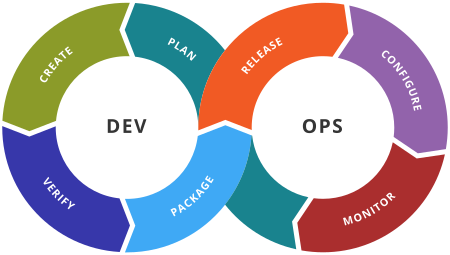
    • “Plan, Create, Verify, Package, Release, Configure, Monitor,” (Wikipedia) or
    • “Requirements, Development, Build, Testing, Deployment, Execution” (Len Bass et al.)?
    Source: Wikipedia, DevOps toolchain

    In the seminal book, “Continuous Delivery,” this life cycle was suggested as “Commit stage, automated acceptance testing, automated capacity testing, manual testing, release.” While we talk so much about culture in DevOps, we should recognize the need to align on a high-level view on the DevOps life cycle that is well-understood and accepted by most stakeholders.

    To have a track of all this and attract other collaborators, I have created an open format (SVG) infographic and published it as a GitHub project. Dear colleagues at the DevOps Express consortium, this is your call! Let’s join forces and accomplish this together.

    Next Steps

    After we will have (I hope so) a community-accepted DevOps meta-model toolchain setup and all important tools in place on the ecosystem, many more interesting questions will appear:

    • Which of these DevOps tools leverage open APIs to reduce risk of vendor lock-in?
    • Which tools belong to which generation of systems, leveraging optimization of human labor?

    Why DevOps is also CDO’s Business

    The fourth industrial revolution builds on digital process data, right? So if we aggregate all that data spread across and produced by the DevOps tools, we could get useful and holistic analytics and insights about IT in much faster time than we can imagine today.


    About the Author / Peter Muryshkin

    1Peter studied M.Sc. in Applied Computer Science and works in management consulting roles focusing on complex analysis and customer satisfaction, like IT Business Analyst and Change Manager. His current scientific research focus is digital transformation applied to the field of software engineering in large distributed organizations. Connect with him on LinkedIn.



  • How to Fail at Test Automation

    How to Fail at Test Automation

    Let me start by admitting that I am not a test automation expert. I have done some work with test automation and have supervised teams who practiced it, but when it comes to the intricacies of it, I have to call a friend. It is from such friends that I have learned why so many test automation efforts fail. Talking to people about test automation validates my impression that this is the DevOps-related practice that people most often fail at.

    Let me share the four reasons why test automation fails, in the hope that it will help you avoid these mistakes in your test automation efforts.

    Before I go into the four reasons, allow me one more thought: Test automation is actually a bad choice of word. You are not automating testing, you automate quality assessments. What do I mean by that? It is a mistake to think of test automation as automating what you otherwise would do manually. You are finding ways to assess the quality of your product in automated ways and you will execute it way more often than you would do manual testing. This conceptual difference explains to a large degree the four reasons for test automation failure below.

    Reason 1: Underestimating the Impact on Infrastructure and the Ecosystem

    There is a physical limit of how much pressure a number of manual testers can put on your systems. Automation will put very different stress on your system. What you otherwise do once a week manually you might now do 100 times a day with automation. And into the mix an integrated environment, which means external systems need to respond that frequently, too. So you really have to consider two different aspects: Can your infrastructure in your environments support 100 times the volume it currently supports, and are your external systems set up to support this volume? Of course, you can always choose to reduce the stress on external systems by limiting the real-time interactions and stub out a certain percentage of transactions or use virtual services.

    Reason 2: Underestimate the Data Hunger

    Very often test automation is used in the same system where manual testing takes place. Test automation is data-hungry, as it needs data for each run of test execution and, remember, this is much more frequent than manual testing. This means you cannot easily refresh all test data whenever you want to run test automation and have to wait until manual testing reaches a logical refresh point. This obviously is not good enough; instead, you need to be able to run your test automation at any time. There are a few different strategies you can use (and you will likely use a combination):

    • Finish the test in the same state of data that you started with;
    • Create the data as part of the test execution;
    • Identify a partial set of data across all involved applications that you can safely replace each time; or
    • Leverage a large base of data sets to feed into your automation to last until the next logical refresh point.

    Reason 3: Not Thinking About the System

    Test automation often is an orchestration exercise as the overall business process in test flows across many different applications. If you require manual steps in multiple systems, then your automation will depend on orchestrating all those. By just building automation for one system you might get stuck if your test automation solution is not able to be orchestrated across different solutions. Also, some walled-garden test automation tools might not play well together, so think about your overall system of applications and the business processes first before heavily investing in one specific solution for one application.

    Reason 4: Not Integrating it into the Software Development Life Cycle

    Test automation is not a separate task; to be successful it needs to be part of your development efforts. From the people I have spoken to there is general agreement that a separate test automation team usually doesn’t work for several reasons:

    • They are “too far away” from the application teams to influence “ability to automate testing,” which you want to build into your architecture to be able to test the services below the user interface;
    • Tests often are not integrated in the continuous delivery pipeline, which means key performance constraints are not considered (tests should be really fast to run with each deployment);
    • Tests often are not executed often enough, which means they become more brittle and less reliable. Tests need to be treated at the same level as code and should be treated with the same severity. This is much easier when the team has to run them to claim success for any new feature and is much harder to do when it is a separate team who does the automation. It also will take much longer to understand where the problem lies.

    Of course, absence of failure does not mean success. But at least I was able to share the common mistakes I have seen and, as they say, “Learning from others’ mistakes is cheaper.” Perhaps these thoughts can help you avoid some mistakes in your test automation journey. I do have some positive guidance on test automation, too, but will leave this for another post.

    And in the case you found your own ways of failing, please share it in the comments to help others avoid those in the future. Failures are part of life and even more so part of DevOps life (trust me, I have some scars to show). We should learn to share those and not just the rosy “conference-ready” side of our stories.

    Test automation is for me the practice that requires more attention and more focus. Between some open-source solutions and very expensive proprietary solutions, I am not convinced we in the IT industry have mastered it.

    One bonus thought: If you cannot automate testing, automate the recording of your testing.

    If you cannot automate testing, find a way to record the screen with each test by default. Once you identify a defect you can use the recording to provide much richer context and make it a lot easier to find the problem and solve it. Verbal descriptions of error are very often lacking and don’t provide all the context of what was done. I keep being surprised how long triage takes because of the lack of context and detail in the defect description. There is really no excuse for not doing this. Record first, discard if successful, attach it to the defect record if you find a problem.