Tag: software as a service

  • Best of 2020: SaaS : The Dirty Secret No Tech Company Talks About

    Best of 2020: SaaS : The Dirty Secret No Tech Company Talks About

    As we close out 2020, we at devopsy.kinsta.cloud wanted to highlight the five most popular articles of the year. Following is the third in our series of the Best of 2020.

    Software as a service (SaaS) in its purest form is amazing—like compound interest, it grows upon itself and just keeps growing. Given the current climate in tech, the growth-at-all-cost playbook has been replaced with a focus on efficiency of growth. This rings very loud in enterprise SaaS.

    SaaS products are supposed to be easy to deploy and adopt. That’s the dream. It’s the reason SaaS companies trade at astronomical multiples, why they can open and expand markets faster than ever, and why venture investors (and public market investors) give them seemingly crazy valuations.

    The dirty little secret I have found is that, in most cases, this promised state just isn’t the case. The more SaaS companies I’ve seen, the more I’ve witnessed great companies forced to become service businesses to scale. Having a services team isn’t bad; it can even produce a lot of benefits for customers. But many times it ends up being necessary in SaaS.

    As with all things that involve consultants, it’s going to take longer and cost more to get your product(s) live.

    Put frankly, this process sucks, and it’s not the SaaS dream. Especially today, when organizations need to do more with less, adding heads just to get your product live seems like another problem to deal with, not a solution. SaaS products were supposed to be delivered via the cloud almost instantly. The same SaaS product was going to work for every customer, and once we built a brand, it was gonna be glorious. WTF happened?!

    I grew just as frustrated as some of you likely are. As part of the founding team at Behance (think Linkedin for the creative world), I lived this myself. We built a beautiful portfolio-sharing platform employed by millions of people, which we eventually sold to Adobe. Our platform became the engine that powered portfolios for design institutions including the Rhode Island School of Design (RISD), Savannah College of Art and Design (SCAD), School of Visual Arts (SVA), and the American Institute of Graphic Arts (AIGA), among others. We would fight for these deals with design institutions where we could step-function our member base and establish credibility in the creative world quickly just by signing up a single design school. What we found, though, was that implementations stalled for avoidable reasons. These delays would cause our team to scramble and delay accordingly, impacting critical messaging to millions of our customers.  Customers and vendors were using a different language. It drove us nuts.

    When I started angel investing in SaaS, I began to see the same story of avoidable delays all over again. Companies would have a great quarter and book more revenue than ever, but two quarters later they still hadn’t realized any revenue! What was happening?!?

    As I studied it, the issue became more and more clear: Adding more heads to an org, coupled with tons of manual processes, actually decreased operating leverage in the businesses. The teams leading implementations would dig through Excel files to try and pinpoint where the hold-ups were occurring, but there never was a good reason and everyone was blaming each other.

    I was suspicious this was a market-wide problem, but I wanted to be sure, so I started asking some friends who had built, scaled and exited large startups if they, too, were experiencing this conundrum. Carsten Thoma, who founded Hybris and later sold it to SAP for $1.5 billion, told me numerous stories about the difficulties he had getting information from his team. “I distinctly remember one senior executive meeting about a customer crisis. I kept asking seemingly simple questions and kept getting conflicting information. We just kept opening Excel spreadsheets, and it took 48 hours to get an answer that I should have had in five minutes regarding what was stalling the project,” he said. “You can imagine how the problem is compounded by a company’s size, complexity of partner network, geographic distribution and newly integrated products.”

    Carsten clearly identified that, regardless of size, companies need a way to manage and view the process of how they, and their partners implement their products. The best companies he had seen and been a part of found ways to standardize and automate processes to improve areas of inefficiency. While many times the mantra is to do things that don’t scale early to be close to customers, Carsten preached that “a process that involved the whole company and worked to get your first five customers live can’t be relied on to bring your 100th customer live.”

    To get a view from the other side of the table, I talked with some investor friends. Peter McCoy, a partner at Activant Capital, told me that during diligence his team looks to understand if a company can acquire customers efficiently. To hone in on this, he highlighted the relationship between net-new product revenue and professional services spend. This spotlights the maturity of product operations and the product itself. If the product operations are still early in their maturity, you will see a 1:1 or greater ratio. Typically this results from the company signing clients and not getting them live, overhiring in professional services to add bandwidth to non-scalable processes, and the destruction of marketing capital.

    There’s a trend here: Companies that don’t implement their products well end up hurting themselves in the long run via lower profitability and margins and fewer growth opportunities. I wanted to know more about how companies could systematize and create better processes for this workflow, so I asked Kristine Vallila, a customer success expert, about organizations she’s seen conduct implementations successfully at all scales. Kristine worked for several unicorns including Endeca and Demandware and then led customer success at NewStore.

    “So many of the delays present during implementations are the result of the same scenarios being repeated over and over. There is a need for some central fit-to-purpose tool that can provide visibility that I can compellingly champion to my executive team,” said Kristine. “More importantly, this would allow me to spend my team’s time and talent on value-add programs rather than merely delivering the table stakes. Competition in software is fierce, and customer relationships are made or broken during implementation.”

    Kristine had seen it all, yet still had the same problems. I’ve always been a runner, so I started calling her issues “false starts.”  Kristine, like everyone else, had no way to know across multiple hundreds of projects which issue would hold up which project before it happened as there was no standardization across projects to compare them and no real-time visibility into the projects to surface insights. Further, due to manual compilation, she spent the majority of her week asking for updates from clients and internal teams.  More than once, canary-in-the-coal-mine signals from existing customers were ignored because they were brought in as anecdotal examples that could not be supported with massive data. The executive team was missing out on the most important customer feedback channel via the services team.

    Having heard these stories, I’ve identified four principles by which SaaS companies must operate to survive:

    1. Optimize for product-driven growth, but consider the services team your first and most important customer feedback channel—just keep it margin positive!
    2. Standardize from day one so that all members of the company speak the same language and all projects can be compared using the same yardstick.
    3. Report to stakeholders frequently—provide information to the executive team and the client regularly about implementation progress, not just on Monday morning status/standups.
    4. Quantify your process—Create an internal NPS for implementations with clients, know where things get held up and systematize those processes.

    It might seem unreasonable that some clients who live in a world where they know within a five-minute window when their pizza will arrive hold similar expectations for tracking the progress of their enterprise-wide software projects. But it is very reasonable for them to expect better management and far clearer visibility into the critical projects for which they’re responsible.

    Earlier I stated that SaaS was like compound interest. The most important factor in compounding is to understand which variable it is applied to. My team and I hope to usher in the age of “efficient” growth. “Efficient” means that companies generate 4x every dollar invested operationally by using process, systems and structure to enable their products to be deployed with customers instead of just people.

    The dirty secret is out. It’s time for a standard here.

  • ZeroNorth Adds Security Defect Density Dashboard

    ZeroNorth Adds Security Defect Density Dashboard

    ZeroNorth today announced it has added a Defect Density Dashboard to its software-as-a-service (SaaS) platform for managing and orchestrating application security scans.

    Company CEO John Worrall said Defect Density Dashboard borrows a concept employed to measure software quality and applies it specifically to application security. The dashboard surfaces the number of application security defects per thousand lines of code discovered during scans of code made using software composition analysis (SCA) and software application security testing (SAST) tools.

    That metric will create a key performance indicator that application security champions within DevOps teams and chief information security officers (CISO) can use to quantitatively measure the progress being made toward improving overall application security, he said.

    As organizations begin to adopt best DevSecOps practices Worral said one of the challenges IT leaders face is showing the board of directors that the level of investment being made is delivering measurable results. The Defect Density metric applies a concept that is already widely employed by quality assurance teams in manufacturing and other vertical industries to software development, he noted.

    As a provider of a SaaS platform for orchestrating security scans across multiple third-party tools, Worral said ZeroNorth is in the unique position of being able to normalize all the data generated by the tools.

    The Defect Density Dashboard also makes it easier to identify specific areas of weakness such as larger numbers of SQL injection vulnerabilities that would indicate a need to make additional training available to software development teams, he added, noting that approach allows the application security advocate to be viewed as an ally versus someone who merely criticizes the efforts of a software development team.

    Encouraging developers to scan their code before they make a commit is, of course, at the heart of any effort to shift more responsibility for application security to the left. ZeroNorth has been making a case for a platform that makes it easier to implement multiple scans across a DevOps workflow using different tools. That approach makes it more likely that a vulnerability that isn’t discovered by one tool is uncovered by another.

    The challenge, of course, is making sure developers scan their code often. There is a natural tendency to delay a scan in the name of productivity. However, the larger the base of code that needs to be scanned, the longer it takes to complete those scans. Most developers would be well-advised to scan smaller amounts of code more often.

    Regardless of the approach to scanning, developers should expect to be evaluated based on the number of vulnerabilities that are inadvertently introduced into their code. Cybersecurity teams can no longer keep pace with the rate at which application code is being deployed and updated. As such, many organizations have launched a concerted effort to eliminate as many vulnerabilities as possible before code gets deployed in a production environment. It may never be possible to eliminate 100% of vulnerabilities, but at the very least the most common exploits that cybercriminals actively scan for when looking to compromise an application can be greatly reduced.

  • Rubrik Looks to Meld Data Management and DevOps

    Rubrik Looks to Meld Data Management and DevOps

    During its FORWARD Digital Summit event last week, Rubrik made a case for the melding of DevOps and data management.

    The company announced that its Polaris Data Management Platform, delivered as a software-as-a-service (SaaS) platform, has added the ability to protect workloads running on virtual machines on the Google Cloud Platform (GCP). Rubrik already provides support for Amazon Web Services (AWS) and Microsoft Azure clouds.

    In addition, Rubrik announced it has extended its AWS data protection support to include the Amazon Relational Database Service along with support for the OneDrive cloud service from Microsoft. Rubrik already provides support for Microsoft Office 365.

    While most of the revenue Rubrik generates comes from data protection delivered as a service, president Dan Rogers said Rubrik is really a provider of a data management platform. With more applications heading into the cloud, it’s now only a matter of time before DevOps teams start to leverage the Rubrik application programming interface (API) to make the Polaris platform a vehicle for accessing large amounts of data, he said, noting Polaris is built from the ground up using GraphQL APIs and metadata that make it programmatically accessible.

    Of course, Polaris today is accessed most often by IT operations teams via a graphical user interface (GUI). That approach allows Polaris to bridge legacy approaches to data management alongside emerging DevOps environments. It’s not clear to what degree DevOps teams are programmatically invoking platforms such as Polaris, but as applications are developed and deployed at faster rates DevOps teams have a vested interest in a platform that makes it easier to access the data those applications require.

    Rogers also noted data protection platforms play a major role in application development and testing environments. Developers need to be able to recover the previous iteration of the application following a crash.

    IT teams are also making extensive use of the backup capabilities provided by a data protection platform to migrate data from on-premises IT environments into the cloud.

    Rubrik is not the only provider of a data management platform being delivered via a set of SaaS applications. The company has been making a case to initially replace on-premises data protection offerings with a cloud approach that in addition to data protection software makes data management tools available to address tasks such as data governance and compliance as well as metadata management.

    It’s not clear to what degree data management and protection will be automated. However, in the wake of the COVID-19 pandemic, Rogers noted more organizations will be accelerating the rate at which IT management platforms of all types are accessed as a cloud service. With many IT operations teams now working from home for what may be an extended time period, organizations will be migrating to platforms that lend themselves more easily to being remotely accessed, he said. In fact, it’s already apparent that in some cases IT teams—like it or not—may never be returning to an office again.

  • VMware Makes vRealize Automation Framework Available via the Cloud

    VMware Makes vRealize Automation Framework Available via the Cloud

    VMware this week announced it has made a software-as-a-service (SaaS) edition of its vRealize automation platform generally available.

    Taruna Gandhi, senior director for product and technical marketing at VMware, said VMware vRealize Operation Cloud will make IT automation more accessible to a broader swath of organizations that might not be able to implement IT automation on their own.

    The vRealize Operations Cloud service provides all the same capabilities as the on-premises edition of vRealize with the added benefit of being integrated with other VMware Cloud services, including VMware Cloud on AWS.

    In general, Gandhi said VMware is seeing increased adoption of IT automation frameworks occurring in three phases. In the first phase, IT teams are automating internal processes primarily for their own benefit. In the second phase, IT operations teams set up self-service portals for developers. In the third phase, organizations embrace DevOps processes to provide developers with the equivalent of a cloud computing experience spanning both on-premises and public cloud computing resources.

    Most existing VMware customers are still in the first or second phases, but over time Gandhi said VMware expects organizations to adopt DevOps practices as part of a more aggressive effort to reduce costs during the current economic downturn brought on by the COVID-19 pandemic while accelerating the rate at which applications are deployed and updated.

    The VMware vRealize Operations Cloud will play a significant role in accelerating that transition because it makes IT automation available as a service rather than a platform that needs to be deployed and maintained by an internal IT department. The beta test for vRealize Operations Cloud spanned dozens of customers that put more than 130,000 virtual machines under management across 120-plus vCenters and more than 10 VMware Cloud on AWS deployments, Gandhi said, noting the next phase will to see IT organizations begin to centralize the management of multiple cloud silos that have sprung up over the last several years within most organizations.

    There are, of course, no shortage of options these days when it comes to IT automation frameworks. VMware is making a case for vRealize as a natural extension of the VMware management tools that many organizations employ to manage VMware virtual machines that are widely used across most enterprise IT environments. VMware is now extending the reach of those tools to enable IT teams to also manage containers and even rival virtual machine platforms, noted Gandhi.

    Most of those IT organizations are now struggling to manage IT environments that have become more complex at a time when the pressure to employ higher levels of automation to rein in costs is rising sharply. It remains to be seen how IT organizations will respond to that imperative as pressure to either cap or reduce IT headcount continues to mount. Of course, not every sector of the economy is experiencing the same pressure. There are high-growth segments involving, for example, educational or entertainment services. Regardless of industry, however, it’s clear IT teams are being asked to do a lot more sooner with either the same or fewer resources.

    — Mike Vizard

  • COVID-19 Response: Espressive Makes AI Help Desk Free for 90 Days

    COVID-19 Response: Espressive Makes AI Help Desk Free for 90 Days

    Espressive, a provider of a help desk software that makes extensive use of artificial intelligence (AI), announced this week it will provide free access to its software-as-a-service (SaaS) platform for the next 90 days.

    Company CEO Pat Calhoun said the COVID-19 Rapid Assistance Program is intended to provide a way to augment existing help desks that are now being overwhelmed by requests from end users working from home.

    With a massive spike in IT incidents being seen since the onslaught of the COVID-19 pandemic, many help desks are now simply overwhelmed. In some cases, Calhoun said some end users are finding themselves on hold for 2.5 hours or more.

    Espressive, via its Barista virtual agents, provides a means to automatically address most routine requests using chatbots and a natural language processing (NLP) engine that the company developed specifically to address help desk use cases.
    The Espressive platform has already been trained to recognize 750 million phrases, Calhoun said, noting each time a new phrase is added to the NLP engine, the entire customer base benefits from the addition.

    Organizations that are finding it difficult to handle the volume of support calls being made by often geographically distributed remote workers can employ chatbots via a SaaS platform in a few hours, Calhoun said. In many cases, IT staff are trying to respond to help desk requests using on-premises applications that they need to access remotely, often using cumbersome virtual private network (VPN) software. A SaaS platform provides an alternative approach that is designed from the ground up to be accessed remotely, he said.

    Chatbots are already being widely employed online by customer service organizations with mixed success. Most end users, however, are at the very least familiar with interacting with them. In the case of IT support calls, the volume of requests is within a narrow range of tasks that could be handled via a chatbot, such as requesting a new password.

    Many organizations have already been gradually infusing AI into their help desk operations. The COVID-19 pandemic is likely to accelerate that transition. AI isn’t likely to completely eliminate the need for help desk staff anytime soon. However, it does provide a way to scale help desk services at a time when IT staff are trying to manage a massive transition in how and when applications are accessed by the entire organization.

    Naturally, it remains to be seen how much organizations will rely on AI to resolve support issues once the current pandemic crisis has passed. Short of being replaced altogether, there are many rote tasks that many IT professionals would just as soon not have to manually perform multiple times a day. The challenge now is defining the line between where an interface between man and machine makes the most sense for the benefit of all. In the meantime, to one form or another, chatbots are now here to stay.

    — Mike Vizard

  • Zoho Offers Free SaaS Apps to Combat Coronavirus Spread

    Zoho Offers Free SaaS Apps to Combat Coronavirus Spread

    Zoho today announced it is making available for free a bundle of software-as-a-service (SaaS) applications dubbed Remotely through July 1.

    Raju Vegesna, chief evangelist for Zoho, said Remotely is a humanitarian gesture to help mitigate the impact of a global coronavirus epidemic. Remotely comprises a set of productivity and collaboration applications that users can access in as little as five minutes.

    Included in Remotely are productivity, collaboration and project management applications as well as tools that automate the migration of data into the Zoho cloud platform.

    Vergesna said Remotely also addresses cybersecurity concerns by enabling IT teams to apply security controls to the data that employees are allowed to access. Of course, IT organizations in many cases would still need to make sure the network connections being employed to access SaaS applications are secure.

    Now that many local governments are recommending that organizations allow employees to work from home to help limit the spread of the coronavirus outbreak, many IT administrators are scrambling to provide remote access to applications at scale. It’s one thing to provide access to a small number of employees who might travel intermittently, but it’s quite another to support an entire remote workforce for some unknown period of time.

    Vergesna, however, said that at this point the challenges associated with making that transition have a lot more to do with overcoming cultural issues than they do the technology. Much of the transition to Zoho SaaS applications has been automated, he said.

    It remains to be seen to what degree the coronavirus outbreak might accelerate the transition to cloud applications. Many IT administrators are still managing local instances of Windows servers to deliver applications because the time and effort to migrate to SaaS applications have been substantial. Making those on-premises applications available remotely at scale is not only challenging from a technical perspective, but it’s also expensive.

    Of course, Zoho is far from being the only provider of SaaS productivity and collaboration applications. However, it remains to be seen whether other providers will follow Zoho’s lead. The hope each of these vendors has is that once the coronavirus crisis passes many of the organizations that take advantage of their software to enable employees to work from home will start paying to use that software.

    In the meantime, the economic impact of the coronavirus is likely to be staggering. Conferences are being canceled and face-to-face business meetings are being shifted online. It’s hard to say how many of those meetings are likely to stay there for good. At the very least, many more end users are about out to discover just how rich SaaS application environments have become. In many cases, IT teams will stitch together workflows across a range of SaaS applications using application programming interfaces (APIs). The challenge they will face is acquiring the programming skills required to construct those workflows.

    — Mike Vizard

  • Castles in the Cloud: How to Take Your Business Kingdom Off-Prem with Confidence

    Castles in the Cloud: How to Take Your Business Kingdom Off-Prem with Confidence

    Cloud transformation requires migrating all or part of an organization’s virtual assets off-premises, typically to a public cloud.  This enables greater efficiency and cost savings, among other benefits, but it brings heightened risk as well. At the same time, many organizations moving to the cloud don’t fully understand the implications in terms of security. Consequently, successful cloud migration requires a shift in mindset.

    A Medieval Metaphor for Cloud Infrastructure

    Think of your organization as a kingdom surrounded and protected by a castle. Traditionally, this castle would be outfitted with defensive layers designed to protect the residents, the royal family and the possessions within. Protection of the castle is straightforward. A moat surrounds the castle with drop bridges in and out at strategic points (firewalls).

    In addition, guards are stationed at each entry point, conducting a thorough inspection of the people, carts and the content that they carry both in and out of the castle (IDS/IPS). The guards also check credentials at the gates and within the castle to ensure patrons are cleared for access and use of rooms and resources (IAM). The perimeter and interior walls are continuously checked for weaknesses that could introduce potential blind spots that are unguarded (vulnerability management).

    The castle has a variety of rooms, each with its own function, content and worth. Each door has a lock (AV). Within each room and the correlative hallways exist guards who check credentials, monitor the people who enter and the contents they carry, etc. (behavioral detection and endpoints). In addition, multiple other measures are in place that bolster prevention, detection and response capabilities (DLP, deception, etc.). Information from all of these sources is noted in a central location by a scribe. Guards analyze the information, looking for additional indicators of potential threats to the kingdom (SIEM) and respond accordingly.

    Comprehensively, protection of the kingdom requires an overall model and policies that accounts for new threats and tactics from rival kingdoms and thieves. Architecture of security measures are continuously updated and adaptable. In the event of an incident, the guards have designed and exercised a plan to respond. 

    Understanding the Three Different Models of Cloud 

    Clearly, this is a basic metaphor for the on-prem approach. Moving to the cloud introduces a new level of complexity to protection spread across three different models: Infrastructure as a service (IaaS), Platform as a service (PaaS) or Software as a service (SaaS).

    In the context of our castle analogy, let’s assume the castle has reached productive capacity. Neighboring rivals are creating competitive pressures, offering residents (who pay taxes) the possibility of a better life if they relocate. To keep residents happy, productivity requires expansion beyond castle walls. As production expands, neighboring kingdoms offer different models to achieve productivity. However, each model presents different levels of shared responsibility in protection (referred to as the Shared Responsibility Model).

    • IaaS: In this model, the on-premises kingdom (kingdom A) decides to expand all operations to a neighboring castle (kingdom B). The castle itself and the moats are all controlled and provided by kingdom B. However, the infrastructure, moats, hallways, rooms, access lists, monitoring of activity and protection and usage of its contents are the responsibility of kingdom A.
    • SaaS: Kingdom A decides to have blacksmithing conducted in a neighboring castle (kingdom B). The castle itself, the moats, infrastructure, hallways and blacksmithing room are all protected by kingdom B for a charge. Kingdom B’s responsibility is to control access to the room, but maintaining who’s on the access list to the room and the protection of its contents and usage are the responsibility of kingdom A.
    • PaaS: Kingdom A decides to house and build military operations in a neighboring castle (kingdom B). Kingdom B is responsible for the basic controls, but the configuration and monitoring remain the responsibility of Kingdom A.

    With this transformation, Kingdom A faces a more complex security landscape. Innovation and efficiency are critical to meeting the growing and changing demands of their kingdom, but not without additional risks. New operating models bring new risks and potential vulnerabilities to their system(s). Methodologies and processes used to secure their own kingdom do not necessarily work or apply to protecting their new partner kingdoms. Additionally, people–and experience–that understand these new complexities are harder to come by while the thieves and rival kingdoms discover vulnerabilities and weaknesses and begin to exploit and steal valuables that put the entire kingdom and its residents at risk.

    Protecting Your Castle in the Cloud Takes a Deep Understanding

    Moving to the cloud is almost inevitable at this point, and it carries so much potential to accelerate business outcomes. It takes a different mindset to secure it than what we are used to as an industry–the landscape has been changed from a security perspective. By fully studying and understanding the differences, organizations can continue rapid and secure adoption of the cloud, while reaping the benefits that it promises to bring.

    — Sean Blenkhorn

  • Observability-Driven Development: From Software Development to DevOps and Beyond

    Observability-Driven Development: From Software Development to DevOps and Beyond

    In today’s world of cloud platforms and applications, typically delivered as SaaS (Software as a Service), it is critical for organizations to ensure efficient collaboration between software development and operations teams. The software development team codes the software application or platform, while the DevOps team streamlines and automates the entire production lifecycle, from development and testing to deployment.

    Today, applications are updated anywhere from weekly to daily, requiring fast turnaround. In the old days, every change request would go to the different stages–software design, development, testing and release. This can’t be sustained in an agile environment where updates must be as close to instantaneous as possible. 

    How can organizations achieve this, and where does observability fit into it all?

    What Is Observability and ODD?

    Observability-driven development (ODD) adds another layer to software development by encouraging the development team to think about the application availability and uptime throughout their development process and similar to unit-testing development, wrap their code with more verbose logging, metrics and KPIs. This gives the IT operations team more data on the application and improves overall observability, allowing an organization to detect predictable and unpredictable permutations of failures that may occur in the future. ODD observes the behavior of a system throughout the entire development cycle in order to learn what behavior is normal and abnormal, and to detect potential weaknesses.

    Observability provides everything with a real-time status of a product–this includes software developers, DevOps and any other department that requires it. Each role has different needs. Software developers need to know why a certain feature has to be added or developed in order to understand its business value and prioritize it over other features or updates. If a certain feature is likely to require many future updates, this also needs to be taken into consideration in the development phase so that the code can be adjusted easily without negatively affecting DevOps teams when they test and deploy the feature.

    These are just examples of things that must be taken into consideration during the development process. Organizations must be able to create transparency and effective communication between the different departments and roles.

    Inefficient Collaboration in the SaaS Market 

    DevOps need to ensure zero downtime, fast updates, constant monitoring and more. This can be done by maintaining an operational mindset during the development process. Traditionally, developers write the code, QA do the testing and operations take care of deployment, but there needs to be more collaboration between these three stages with each doing their part with an understanding of everyone else’s roles and needs pertaining to the product. When this isn’t done, numerous problems arise. Operational inefficiencies can ultimately lead to a delay in delivery time and even affect system availability. When there are multiple teams involved, especially in different locations and even time zones, there can be ineffective communication and hand-offs, particularly between software development and operations teams.

    Meanwhile, ad hoc changes must be implemented, negatively affecting product stability and release cycles. Miscommunication and inefficient operations lead to confusion over who is responsible for what task, feature and target. These are all issues that can result in significant downtime, losses, wasted resources and frustration within the organization. Effectively streamlining the software development cycle using full transparency and seamless collaboration between development and operations solves these problems.

    ODD Can Improve Your SaaS Product

    A strong proactive observability platform can predict and address issues before they occur, thus increasing effectiveness and speed when it comes to updating and tracking changes, as well as releasing new features. It simplifies complexities and management, and allows to automate operations so that organizations can maximize efficiency.

    Benefits of ODD include:

    • Common goals.
    • Shared metrics.
    • Execute on goals and recognize results.
    • Performance guidelines.
    • Application governance strategy.
    • Alignment between IT and business perspectives.

    Employing ODD when developing cloud applications is critical. This is due to the highly distributed nature of cloud architectures, increasing the chances of a failure exponentially compared to traditional systems. As a result, developers should be educated to think and implement observability to create highly available and resilient applications and systems.

    How to Integrate ODD in Your R&D Practices

    Today, development teams and practices are under constant pressure to meet scrum deadlines and release features on time. They are measured on their code effectiveness and meeting deadlines, while ODD adds another layer of measurement of serviceability and observability metrics to their considerations. 

    Implementing such an approach requires organizations to provide their development teams with the right toolset and knowledge on how their code affects the SRE and IT operations teams. From a technical standpoint, development teams should be familiar with all levels of monitoring for application infrastructure (for example Kafka, RabbitMQ, Kubernetes), application performance metrics (user experience, transactions per second, etc.) visualizations and their respective remediation processes. 

    ODD culture changes the way organizations think about their development process, and essentially injects an operational mindset to their daily practices and processes which should increase the availability and performance of their cloud application while streamlining collaboration and work processes, and improving teams’ satisfaction and productivity.

    — Avi Shalisman

  • Splunk to Acquire SignalFx to Gain APM Platform

    Splunk to Acquire SignalFx to Gain APM Platform

    Splunk today announced it will acquire SignalFx as part of an effort to extend its reach beyond IT operational analytics and into the realm of application performance management (APM).

    Valued at approximately $1.05 billion, the deal to acquire an APM platform delivered as a software-as-a-service (SaaS) offering will expand and accelerate Splunk’s overall transition to a recurring revenue model based on cloud services, said Splunk CEO Doug Merritt during a call with industry analysts.

    Splunk is currently on pace to generate over $300 million per year from the cloud version of its IT operational analytics platform. Splunk revenues for the second quarter were $517 million, up 33% year over year, with software generating $350 million of that total. However, as Splunk transitions to more of a subscription-based pricing model, the company has some financial management challenges. GAAP operating loss for the company’s second quarter was $87 million. However, non-GAAP operating income was $47 million, even though operating cash flow was negative $129 million. That cash-flow issue is a direct result of the transition away from a perpetual software license model based on the volume of data consumed by the Splunk platform. Overall, Merritt said Splunk is firing on all cylinders and is still on track to have 20,000 customers by the end of its fiscal year.

    Merritt said once the deal is approved, sometime in the second half of fiscal 2020, SignalFx will provide a complementary set of services for monitoring legacy monolithic applications as well as cloud-native applications based on containers, Kubernetes and serverless computing frameworks. There are very few customers at this point who have not adopted cloud-native technologies, but for now they remain a small percentage of the overall number of application workloads being managed, he added.

    The goal is to provide a suite of services that will enable IT teams to investigate, analyze, monitor and act on data in real-time, said Merritt.

    Splunk is already widely employed by internal IT operations teams, many of whom already rely on a complementary APM platform. Splunk clearly expects organizations will prefer to acquire an IT operational analytics platform and an APM service from the same vendor. However, competition between APM platform providers is already fierce. That said, Splunk appears to be counting on increased demand for real-time application monitoring to differentiate SignalFx from rivals.

    It’s not clear to what degree Splunk might converge the various services now being provided separately by both companies. It’s also not clear how or whether this deal will accelerate acquisitions of the remaining independent APM platform providers.

    In the meantime, Merritt said SignalFx and Splunk’s earlier acquisition of VictorOps, provider of incident management platform based on best DevOps practices, will expand the amount of visibility Splunk has with application development teams.

    Ultimately, acquisitions of smaller, DevOps-oriented companies by vendors that today are still more closely identified with legacy ITIL-based IT processes, such as Splunk, are only like to increase. What will be interesting to watch is whether the tools and services being acquired by those companies wind up being the DevOps tail that wags the proverbial ITIL dog.

    — Mike Vizard

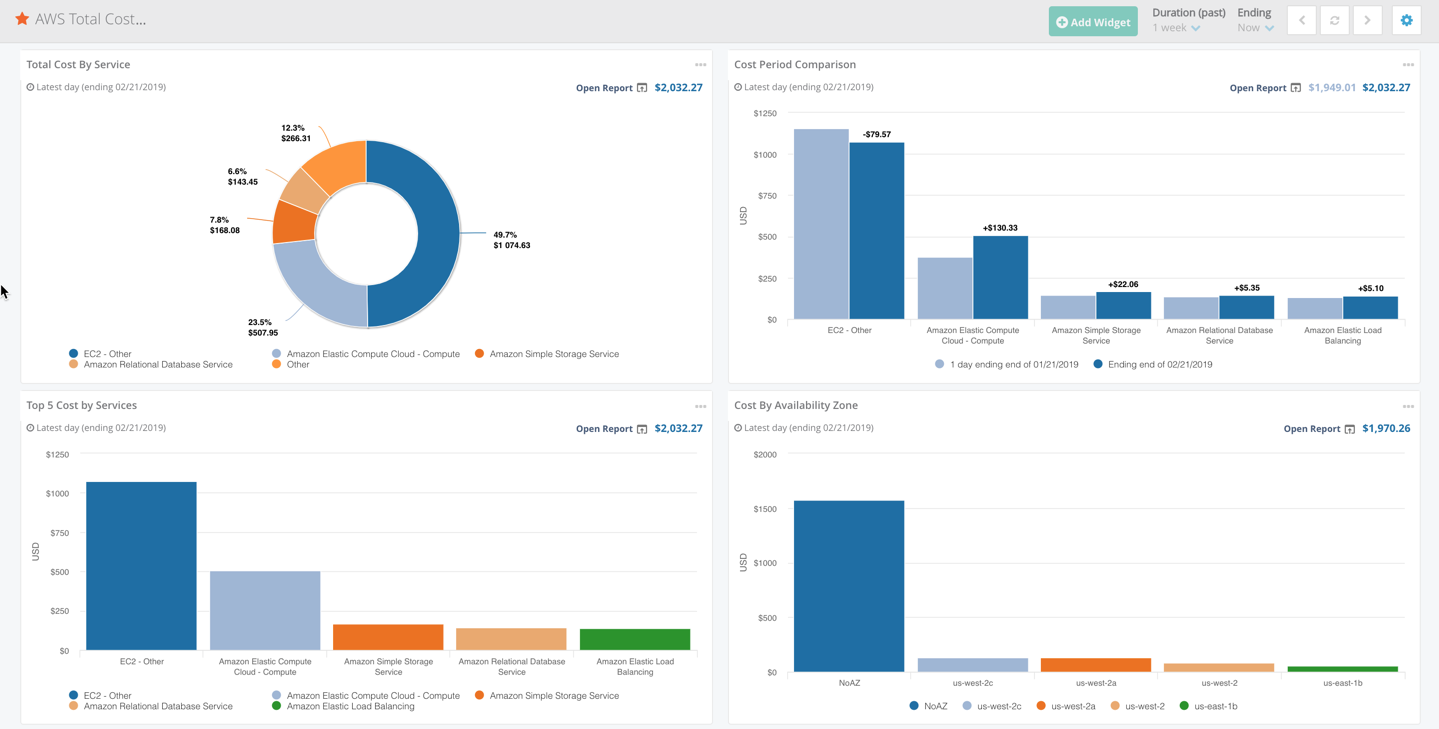
  • Virtual Instruments Acquires Metricly to Monitor Cloud Costs

    Virtual Instruments Acquires Metricly to Monitor Cloud Costs

    Virtual Instruments has acquired Metricly, a provider of a software-as-a-service (SaaS) application that help organizations to optimize the deployment of cloud application workloads.

    Tim Van Ash, senior vice president of products at Virtual Instruments, said Metricly employs machine learning algorithms to identify opportunities to improve performance and reduce costs. Those capabilities complement an existing VirtualWisdom platform from Virtual Instruments to apply machine learning algorithms to optimize IT operations, otherwise known as AIOps.

    Virtual Instruments focused exclusively on enhancing storage I/O performance before extending the reach of its portfolio to include server performance. With the acquisition of Metricly, the company is further extending the portfolio to span hybrid cloud computing environments, said Van Ash.

    Metricly, formerly known as Netuitive, provides analytics tools that are focused on helping organizations contain cloud costs.

    Metricly CEO Bob Farzami said the company’s tools increasingly are being incorporated via application programming interfaces (APIs) into DevOps processes to provide visibility into costs, as the number of applications deployed in the cloud expands and increases. The acquisition of Metricly adds more than 50 integrations to open source DevOps technologies to the Virtual Instruments monitoring portfolio, which spans databases, messaging platforms, containers and cloud infrastructure services such as AWS Lambda, EC2, ECS, ASG, EMR, Microsoft Azure VMs and Load Balancer.

    Those integrations are critical because as the number of services being made available on AWS increases, the visibility organizations have into their real cloud costs becomes more difficult to both discern and limit, said Farzami. There are already hundreds of cloud services on AWS. Cloud service providers often count on organizations to forget how many instances of, for example, virtual machines they have spun up, only to be presented with an unexpected bill at the end of the month. Those issues will be further exacerbated as organizations more aggressively employ multiple cloud platforms.

    Many organizations are also seeing cloud costs rise over time as the volume of data being dynamically accessed by stateful applications increases. Once those costs reach a certain level, those organizations are realizing it costs less to repatriate those applications back on into on-premises IT environments. Metricly provides a mechanism through which organizations gain more visibility into their cloud costs in real-time, but also identify when specific cost thresholds are about to be reached.

    It will be at least somewhere between five to 10 years before even the majority of application workloads are running in the cloud. Today, after more than 10 years, only about 20% of application workloads are running in public clouds. There are a whole host of reasons organizations still prefer on-premises IT environments, ranging from regulatory requirements and performance to cybersecurity and simple inertia. Wherever workloads wind up being deployed, however, the one thing DevOps teams can count on going forward is that someone in the finance organization soon will be asking more pointed questions about how much it costs to run that workload.

    — Mike Vizard