Tag: security

  • Ransomware will Double in 2017. Are you Prepared?

    Ransomware will Double in 2017. Are you Prepared?

    A recent report found that ransomware attacks quadrupled in 2016, and are likely to double in 2017. Not surprisingly, a research survey showed that 48 percent of organizations had been hit by ransomware in the past year. And as we highlighted in a recent blog post, next generation cloud applications and databases are quickly becoming an attractive target for criminals.

    Attackers are targeting critical data or operations now, not just files. A few examples from the past two weeks highlight this trend:

    Attackers are getting much more clever and picking valuable targets within a business. It’s only a matter of time before ransomware hits cloud-based applications that run on these platforms. What can you do? Be prepared.

    A layered “onion strategy” means using a set of security tools to spot and isolate malware and ransomware, but that alone isn’t enough. The Department of Homeland Security issued an alert last year highlighting the key role backup plays in defending against ransomware:

    Employ a data backup and recovery plan for all critical information. Perform and test regular backups to limit the impact of data or system loss and to expedite the recovery process. Note that network-connected backups can also be affected by ransomware; critical backups should be isolated from the network for optimum protection.

    As the Texas police department example shows, recovering from a backup won’t work if the backup itself gets infected. A versioned backup of business data and files is essential to recovery. That’s where most backup solutions fall short, especially for next-generation applications and databases that cannot be quiesced to make a consistent backup copy across the database cluster due to their distributed nature. More importantly, given the large amount of data that is processed by these applications, it is critical that there is no bottleneck to data movement in and out of the cluster for an application consistent backup.

    — Jeannie Liou

  • Security @ the Speed of DevOps Survey: Efforts Still Lag

    Security @ the Speed of DevOps Survey: Efforts Still Lag

    Enterprises today are in a relentless race to digitize or die. If they don’t digitize business processes, services or internal workflows and their competitors do, they will be at a steep disadvantage—and perhaps soon an irrecoverable one.

    In more and more companies these efforts are being driven by DevOps. According to IDC, the vast majority of businesses today think—and rightly so—that it is essential for them to put into place the right resources and IT processes to support a digital business model. Unfortunately, about 75 percent of organizations don’t think that their IT organization is actually scalable enough to deliver and support a comprehensive digital business model.

    There are many reasons why so many organizations have a challenging time with their digital transformation efforts. Many of these are cultural: IT commands tightfisted control over all information technologies used throughout the organization, yet being unable to deliver the infrastructure and digital services enterprises need to succeed, for example. Or, others within the organization still are unable to see how rapidly the world is being changed by digital technologies and so aren’t taking the necessary steps.

    Another reason is security. That’s because this rapid digitization of business processes can have a profound impact on how enterprises secure their data, applications and software development and delivery. In devopsy.kinsta.cloud’s inaugural annual “Security @ the Speed of DevOps” survey, we queried 255 security IT decision makers within organizations currently practicing DevOps or that are on a path to DevOps adoption. The survey found that enterprises of all sizes are embracing DevOps, cloud, continuous integration and deployment. But in securing these processes, however, we found vast differences in maturity.

    When it comes to DevOps practices, larger companies are outperforming. For organizations with 5,000 to 9,999 employees, a full 90 percent have either adopted or started DevOps practices. However, only 38 percent of organizations with 500 or fewer employees have started DevOps or widely adopted such practices.

    As I wrote in our report on the survey, smaller organizations also have a way to go with automated security testing. Only 6.5 percent of those with fewer than 100 employees have automated large parts of their application security testing, while 29 percent have automated some of their application security testing. For firms with 5,000 to 10,000 employees, 38 percent have automated large parts of their testing, and nearly 50 percent some of their testing. For those with more than 10,000 employees, these figures are 20 percent and 48 percent, respectively.

    The challenge here, for many organizations, is the same with enterprise security in general: the view that security slows things down. For the business, it’s about getting more digital capabilities out as quickly as is possible. It’s the same for developers. Security too often is seen as standing in the way of this.

    When this conflict is experienced at DevOps speed, there is the risk not only of development slowing down but also security processes breaking. To succeed, enterprises can’t take the same approaches to security as they did in the past. They must find tools and processes that are designed for the highly automated and continuous world of DevOps.

    Have a look at our survey and report to see how enterprises are tackling this challenge today.

    — George V. Hulme

  • Elasticsearch Ransomware Attacks Highlight Need for Better Security

    Elasticsearch Ransomware Attacks Highlight Need for Better Security

    Recently, reports surfaced that a large number of Elasticsearch servers fell victim to potential ransomware attacks. Ransomware is the type of malware a company doesn’t want on its systems or network. It takes systems hostage, most commonly by encrypting or stealing data, and exposes the owners to blackmail attempts. According to a report by the Herjavec Group, the cost of damages from ransomware was projected to reach $1 billion by the end of 2016.

    A new wave of ransom attacks observed over the last several weeks targets unsecured MongoDB databases. Security researchers Victor Gevers and Niall Merrigan call these attacks a “ransack,” and Merrigan estimates that more than 40,000 databases were impacted in the first two weeks alone.

    Now research shows that Elasticsearch servers, which are configured to be insecure so they can be accessed over the public internet, are being subjected to similar ransom attacks. Victor Gevers tweeted that within the first three days, 2,515 Elasticsearch servers were eradicated and ransomed and 34,298 vulnerable Elasticsearch instances are still open. In the following days, the number of affected servers has risen to more than 5,000. John Matherly, founder of Shodan, tweeted that the vast majority of vulnerable Elasticsearch servers are open on Amazon Web Services (AWS).

    If an Elasticsearch server is hacked, users will find data indices gone and a message that reads: “SEND 0.2 BTC TO THIS WALLET: 1DAsGY4Kt1a4LCTPMH5vm5PqX32eZmot4r IF YOU WANT RECOVER YOUR DATABASE! SEND TO THIS EMAIL YOUR SERVER IP AFTER SENDING THE BITCOINS…”

    The FBI stresses that victims should refuse to pay Bitcoin ransoms, so users might or might not get their data back depending on the security processes they had in place in case of an attack. At this point, it is unclear who is behind the attacks.

    Ironically, what makes these attacks possible is not that Elasticsearch in itself is insecure, because it isn’t. Ransom attacks are possible because these instances have been configured in a way that makes them vulnerable. It’s like leaving the front door open.

    Technology journalist Steven Vaughan-Nichols of ZDNet gave an excellent summary, explaining that, when used by amateurs without any security skills, Elasticsearch is simple to crack. The people deploying instances on AWS clouds are under the impression that AWS is protecting them, but that’s not the case. While AWS tells users how to protect their AWS Elasticsearch instances, users still need to do the work themselves.

    He notes: “The worst thing about this? Just like the MongoDB attacks, none of this would have happened if its programmers had protected its instances with basic, well-known security measures.”

    Elasticsearch is often used in log management, typically as part of the Elastic Stack or ELK, which stands for its main open-source ingredients of Elasticsearch, Lucene and Kibana. Since it’s free, open-source software, ELK is an easy first choice for many. It’s a great, powerful piece of software. These open-source projects are highly active, with thousands of code contributions every month and a growing combined code base of about 2.5 million lines of code.

    Users need expertise to deploy and run it efficiently and safely, though, and that means needing people in an organization with the skills and time to maintain ELK clusters. If these people leave, companies need to have a backup. If they aren’t willing or able to invest in these resources, they are likely to get into trouble, like this latest ransom attack situation illustrates.

    ELK is free software, but keep in mind what Richard Stallman, founder of the Free Software Foundation and the GNU Project, has to say about free: “’Free software’ is a matter of liberty, not price. To understand the concept, you should think of ‘free’ as in ‘free speech,’ not as in ‘free beer.’”

    Whether a company pays for a log management service or runs ELK, one approach isn’t necessarily better than the other. For some companies, it makes a lot of sense to run an in-house-built log management solution based on ELK, or even one built from scratch. For others, a delivered solution may be best.

    Regardless, companies and teams need to carefully evaluate if open source makes business sense and if they are realistically able to properly support the deployment without imposing risks. If these factors aren’t weighed or completed correctly, the number of Elasticsearch ransomware attacks will continue to grow and be a profitable endeavor for hackers.

    About the Author / Sven Dummer

    Sven Dummer is the senior director of product marketing at Loggly. Previously, Sven worked with Yahoo, Wind River (acquired by Intel), SUSE, and Microsoft in product development and management. At Intel, Sven also helped launch (and named) the collaborative Yocto Project, an open-source initiative that enables users to create custom Linux-based systems for embedded products regardless of the hardware architecture. Connect with him on LinkedIn and Twitter.

  • 5 Ways DevOps Can Help Improve IT Security

    5 Ways DevOps Can Help Improve IT Security

    You already know DevOps can make software delivery faster and more efficient. But did you know it can help to keep software more secure, too? Here’s how.

    DevOps refers to a set of practices and cultural priorities related to the way software is designed, produced and deployed. It emphasizes collaboration between developers (the people who write code), IT Ops (the folks who manage software in production) and everyone in between—such as software testers and designers.

    When done properly, DevOps greatly reduces the time it takes to bring software from idea to implementation to end user delivery. It also adds efficiency to the software delivery process in many ways. It allows different team members to work in parallel, for example. It also ensures that coding problems are found early in the delivery pipeline, when fixing them requires much less time and effort than it does once a bug has been pushed into production.

    DevOps and Security

    But making software delivery faster and less costly isn’t the only thing DevOps does. DevOps also helps make software more secure.

    It does this in several ways. Consider the following:

    • Visibility. DevOps encourages constant communication between all members of the IT organization. That maximizes each team member’s visibility into the software being developed. In so doing, it places as many eyeballs as possible on the code, at all stages of delivery—which maximizes opportunities for your staff to find security flaws before code is released into production.
    • Automation. In the DevOps world, software delivery tasks are automated as much as possible. With automation comes consistency and predictability—and a much lower chance that human error during a manual process could introduce a security vulnerability.
    • Fast updates. DevOps enables a much faster pace of software delivery. That means that security bugs (and bugs of all kinds, for that matter) can be squashed very quickly by rolling out a fix.
    • Tool-agnosticism. With DevOps, you can use whichever tools or programming frameworks you like. You’re not bound to particular platforms or vendors. That’s important from a security perspective because it empowers you to adopt the tools that are most secure for your needs—not the ones you’re locked into because you have an outdated, inflexible software release process.
    • Agile technology. While DevOps doesn’t require you to use any specific type of tool, DevOps teams tend to favor next-generation architectures and technologies, like microservices and containers. These help to make apps more secure by reducing attack surfaces and enabling quicker reaction. If you deploy your app using containerized microservices, it becomes harder for attackers to compromise your entire app, because an attack against one microservice doesn’t give them control of the other ones.

    DevOps isn’t a silver bullet when it comes to cybersecurity, of course. Keeping your systems and data secure requires careful planning on a number of fronts and implementing a variety of tools.

    But DevOps—especially a highly automated, DevOps-based release process—should be one important weapon in your cybersecurity arsenal.

    — Chris Tozzi

  • Protecting Data in Public Cloud and Hybrid Cloud

    Protecting Data in Public Cloud and Hybrid Cloud

    Backup, business continuity (BC) and disaster recovery (DR) have all been a critical part of IT for over 30 years—ever since we began relying on technology to run our businesses. Traditional solutions were designed for the world of on-premises infrastructure and structured applications and relational databases. But the world is changing. In the last blog, I talked about the era of digital transformation and the impetus it has on rethinking and reinventing the fundamental backup and recovery architecture for workloads moving to the cloud and applications being born in the cloud.

    What Changed? Reinventing Backup and Recovery

    Application and data platforms are undergoing the biggest transformation since the dawn of computing. There are several forces at work:

    • New applications. The third-generation applications are geo-distributed, scale across multiple systems, always on and typically are deployed in a cloud-first model.
    • Existing applications are moving to the cloud. They aren’t going away, but companies are moving some or all of them to the cloud. They still need backup and recovery.
    • RPO and RTO windows are shrinking: Enterprises want “always-on” and gone are the days when you could do nightly backups.
    • Smaller companies will go all-in on public cloud. SMBs don’t want to be in the business of IT. They’ve been driving the rapid growth of cloud applications and platforms.
    • Enterprises will build hybrid clouds. Enterprises will deploy applications and data across on-premises and public cloud environments. Scale, compliance and other factors mean they’ll need to keep some systems on-premises.
    • Everyone will use multiple clouds. No one will bet their business on one cloud or one provider. Even now, enterprises are splitting workloads across clouds or cloud and on-premises. Development and test may use one cloud, while the same application might be deployed in a private cloud or a different public cloud.

    Cloud’s Impact on Backup, Recovery and Continuity

    Cloud gives organizations much more agility, operational savings, and a pay-as-you go model. Public cloud providers can also build much more resilient infrastructure. Amazon guarantees 99.95 percent availability for EC2 and 99.99 percent for S3; S3 is designed for 11 nines of data durability, with multiple availability zones. Because the cloud is so reliable—and cheap—it’s quickly becoming a backup target for on-premises data. But that shouldn’t trick us into believing backup and recovery are “built-in” when we run applications in the cloud. Even Amazon itself recommends backup services for all AWS-native applications and cloud databases.

    While service availability and data resiliency addresses infrastructure business continuity and disaster recovery, it doesn’t provide point-in-time recovery or application level intelligence for backup and recovery. As good as the cloud platforms are, they don’t protect against logical errors. And research shows 8 out of 10 errors are logical errors—data corruption, user errors.

    Existing Backup Products and the Cloud

    As we noted above, traditional backup and recovery products don’t meet the needs of cloud applications—even for existing applications that have moved to the cloud, and not just because they were built in a different era. Cloud and distributed architectures present several other challenges:

    • Cloud breaks the media server based architecture of traditional solutions. Cloud applications and data don’t reside on a specific array or disk, so you can’t easily back up what you can’t see. Backups also don’t capture configuration data in the cloud, such as AWS Cloud Formation templates.
    • Cloud doesn’t speak the same language. Legacy solutions talk to tape, disk or virtual disks. Backup and recovery in the cloud means integrating with the right protocols, such as the S3 API or Google Cloud Storage.
    • Backup appliances can’t be moved to the cloud. Existing backup appliances such as EMC Data Domain or NetBackup that work extremely well on-premises can’t be picked up and moved to the cloud.
    • Traditional backup agents won’t scale. If you could get a backup agent running in the cloud, it wouldn’t scale well across dozens or possibly hundreds of nodes.
    • VM is not the right layer of abstraction: This is precisely why the core principle of the Datos IO CODR architecture is a scalable application-centric view of data management and data protection that distinguishes it from conventional approaches. This is the exact reason why the CODR architecture introspects application data and uses global semantic de-duplication to achieve storage efficiencies, instead of relying on traditional de-duplication techniques which treat data as an opaque object (such as a VM or a LUN). The benefit of this approach is fine-grained and highly space-efficient data protection that can span clouds over network links.
    • Cloud Gateway or Migration Services: Unidirectional only.

    Data Protection Must Be Reinvented

    The problem of backup and recovery of cloud applications is novel as there are three critical things a cloud backup and recovery architecture should have:

    • Elastic compute only. The architecture should scale efficiently on elastic compute instances. There shouldn’t be any CapEx costs for servers or appliances.
    • No media servers. Backing up large, scale-out databases requires direct a parallel streaming architecture for data movement between the database and secondary storage. Legacy backup architectures rely on media servers that quickly would become choke points. Direct parallel streaming also allows the data to remain available in native formats.
    • Semantic deduplication. Scale-out application databases typically have a 3x replication factor. If you back up individual nodes or even manage to snapshot the whole database, two-thirds of the backup data is redundant. Over time, backups will be 75 percent to 80 percent inefficient without semantic deduplication that works across a distributed architecture.

    — Shalabh Goyal

  • 2017 Security Blogger Awards – Open for Voting!

    2017 Security Blogger Awards – Open for Voting!

    It’s another year, and another awards ceremony to come at the Security Blogger Meet-Up at RSA Conference in San Francisco. It’s time to vote for your favorite blogs, which were selected solely by our esteemed influencers: Ericka Chickowski, George Hulme, Kelly Jackson-Higgins (Dark Reading) and Don MacVittie. We are very grateful for their taking the time to support our bloggers and the event. 

    Before you vote (https://www.surveymonkey.com/r/sbn2017), remember a few things from last year:

    • Anyone can vote in the awards. However, a valid email is required and it will be verified. Only one vote per IP
    • Any nominee caught trying to “game the system” will be disqualified. Please try to play by the rules and may the best blog win
    • If you are going to RSA be sure to register for the Rugged DevOps event on Monday at the Moscone Center. Free to anyone with any type of RSA ticket (even just expo pass holders). You can register for the event on the RSA Conference website. Here is a code for a free expo pass, 1U7DEVOPSXP. If you are already registered for RSA, you can reserve a seat here.
    • You can also participate in our “Security @ the Speed of DevOps” survey here.

    Here are our nominees for the 2017 Security Blogger Awards

    Most Entertaining Security Blog

    Most Educational Security Blog

    Best New Security Blog or Podcast

    Best Security Podcast

    Best Blog Post of the Year

    Best Corporate Security Blog

    Please vote today!

    — Alan Shimel

  • Protecting Data in Public Cloud and Hybrid Cloud

    Protecting Data in Public Cloud and Hybrid Cloud

    Backup, business continuity (BC) and disaster recovery (DR) have all been a critical part of IT for more than 30 years—ever since we began relying on technology to run our businesses. Traditional solutions were designed for the world of on-premises infrastructure and structured applications and relational databases. But the world is changing. In the last blog, I talked about the era of digital transformation and the impetus it has on rethinking and reinventing the fundamental backup and recovery architecture for workloads moving to the cloud and applications being born in the cloud.

    The Motivations Leading to Reinvent Backup and Recovery

    Application and data platforms are undergoing the biggest transformation since the dawn of computing. There are several forces at work:

    • New applications. The third-generation applications are geo-distributed, scale across multiple systems, are always on and typically deployed in a cloud-first model.
    • Existing applications are moving to the cloud. They aren’t going away, but companies are moving some or all of them to the cloud. They still need backup and recovery.
    • RPO and RTO windows are shrinking: Enterprises want “always-on” and gone are the days when you could do nightly backups.
    • Smaller companies will go all-in on public cloud. SMBs don’t want to be in the business of IT. They’ve been driving the rapid growth of cloud applications and platforms.
    • Enterprises will build hybrid clouds. Enterprises will deploy applications and data across on-premises and public cloud environments. Scale, compliance and other factors mean they’ll need to keep some systems on-premises.
    • Everyone will use multiple clouds. No one will bet their business on one cloud or one provider. Even now, enterprises are splitting workloads across clouds or cloud and on-premises. Development and test may use one cloud, while the same application might be deployed in a private cloud or a different public cloud.

    Cloud’s Impact on Backup, Recovery and Continuity

    Cloud gives organizations much more agility, operational savings and a pay-as-you go model. Public cloud providers can also build much more resilient infrastructure. Amazon guarantees 99.95 percent availability for EC2 and 99.99 percent for S3; S3 is designed for 11 nines of data durability, with multiple availability zones. Because the cloud is so reliable—and cheap—it’s quickly becoming a backup target for on-premises data. But that shouldn’t trick us into believing backup and recovery are “built-in” when we run applications in the cloud. Even Amazon itself recommends backup services for all AWS-native applications and cloud databases.

    While service availability and data resiliency addresses infrastructure business continuity and disaster recovery, it doesn’t provide point-in-time recovery or application-level intelligence for backup and recovery. As good as the cloud platforms are, they don’t protect against logical errors. And research shows 8 out of 10 errors are logical errors—data corruption, user errors.

    But Won’t Existing Backup Products Work in the Cloud?

    As we noted above, traditional backup and recovery products don’t meet the needs of cloud applications—even for existing applications that have moved to the cloud, and not just because they were built in a different era. Cloud and distributed architectures present several other challenges:

    • Cloud breaks the media server based architecture of traditional solutions. Cloud applications and data don’t reside on a specific array or disk, so you can’t easily backup what you can’t see. Backups also don’t capture configuration data in the cloud, such as AWS Cloud Formation templates.
    • Cloud doesn’t speak the same language. Legacy solutions talk to tape, disk or virtual disks. Backup and recovery in the cloud means integrating with the right protocols, such as the S3 API or Google Cloud Storage.
    • Backup appliances can’t be moved to the cloud. Existing backup appliances that work extremely well on-premises can’t be picked up and moved to the cloud.
    • Traditional backup agents won’t scale. If you could get a backup agent running in the cloud, it wouldn’t scale well across dozens or possibly hundreds of nodes.
    • VM is not the right layer of abstraction: Look for technologies that provide a scalable application-centric view of data management and data protection, introspect application data and use global semantic de-duplication to achieve storage efficiencies, instead of relying on traditional de-duplication techniques. The benefit of this approach is fine-grained and highly space-efficient data protection that can span clouds over network links.
    • Cloud Gateway or Migration Services: Unidirectional only.

    The problem of backup and recovery of cloud applications is novel there are three critical things a cloud backup and recovery architecture should have:

    • Elastic compute only. The architecture should scale efficiently on elastic compute instances. There shouldn’t be any CapEx costs for servers or appliances.
    • No media servers. Backing up large scale out databases requires direct a parallel streaming architecture for data movement between the database and secondary storage. Legacy backup architectures rely on media servers that would quickly become choke points. Direct parallel streaming also allows the data to remain available in native formats.
    • Semantic deduplication. Scale-out application databases typically have a 3x replication factor. If you backup individual nodes or even manage to snapshot the whole database, two-thirds of the backup data is redundant. Over time, backups will be 75 percent to 80 percent inefficient without semantic deduplication that works across a distributed architecture.

    — Brian Yin

  • DevOps in 2017: From Building to Executing

    DevOps in 2017: From Building to Executing

    In 2016, DevOps grew in popularity and use, new tools were introduced and enterprises across industries realized the influence and benefits derived from agile development. But there are even more developments to look forward to as enterprises engage DevOps teams further.

    Scaling-out solutions, providing a baseline for a new cultural approach to problems and continuous improvement will continue to be priorities. But there are a few items that we’ll likely see come to the forefront in the new year. In fact, 2017 should be an even more exciting year for DevOps.

    Here are my top four predictions for what we can expect this year:

    The next phase of DevOps will focus on security

    Security was a perennial news event throughout 2016, and we can expect the same in 2017. However, DevOps teams likely will be challenged to build good security practices into code as a part of application development, rather than refining security post-facto. This will lead to DevOps, QA and operations bringing security teams deeper into the DevOps environment, if not outright incorporating them as a part of the team.

    The foundations for this development were put in place in early 2016 as the DevSecOps model gained traction in cybersecurity circles throughout the year. In 2017, we’ll see DevSecOps teams build on these foundations. After all, every company is at risk for a data breach.

    Containerization will go mainstream

    The convenience of containerization makes it one of the most desirable technologies for DevOps teams, and next year we’ll see it gain even greater use. It’s easy to understand why: Containerization solutions, such as Docker, grant teams the ability to provide a consistent environment from development to production. We may even see containerization move to non-production environments over the course of 2017 due to its portability across multicloud platforms. And that portability is critical not just for production purposes but for security as well.

    DevOps will extend into pay-as-you-go

    DevOps will, almost by necessity, develop an on-demand model in 2017. Companies are realizing the stark demand for DevOps skills and they will be meted out according to internal needs and external demands.

    In particular, we’ll likely see a lot of opportunity for DevOps in cloud implementation, since enterprises leverage solutions across cloud providers. With cloud provider “lock-in” still a real concern for many enterprises, any provider capable of operating cross-cloud development—thereby allowing customers to switch to a low-cost cloud provider—will be in high demand. This is good news for customers, as it allows them to finally benefit from the elastic nature of cloud pricing models.

    DevOps will become pervasive across the enterprise

    Finally, enterprises will use DevOps across the enterprise. Thus far, large enterprises have been experimenting with DevOps in discreet projects, but they have started to plan for employing DevOps principles at enterprise-level, and we will see this roll out next year.

    Watching the Shift

    Thus far, DevOps has been focused on adopting and orchestrating technology and tools to build automation pipelines. But moving ahead, we’ll witness DevOps change its focus from building to executing. With this industry development and the shift within DevOps to security and containerization at an enterprise level, we’ll begin the true potential of DevOps.

    About the Author / Tan Moorthy

    Tan Moorthy is Head of Global Services for Application Development and Management at Infosys, a next-generation IT services provider. Connect with him on LinkedIn.
     

  • Addressing Container Security Challenges

    Addressing Container Security Challenges

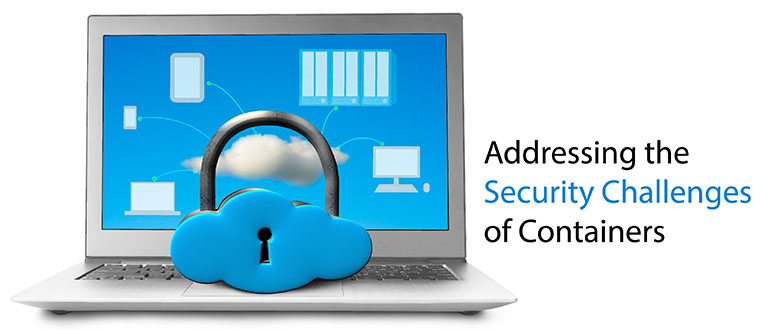
    From month to month or even week to week, more organizations are developing with containers. The concept of containers isn’t all that new, but the dramatic rise in adoption of container technologies and the support from major tech vendors and platforms has helped containers become mainstream quickly. As with most emerging technologies, now that containers are hot there is a greater focus on some of the security issues of containers. So devopsy.kinsta.cloud worked with leading vendors to address that issue.

    A new report from devopsy.kinsta.cloud, sponsored by Aqua Security and Microsoft, examines the weaknesses of containers and that the security concerns introduced by using containers, and provides a look at some of the approaches to addressing those issues. “Containers: Security Challenges and How to Address Them” contains insights from DevOps and containers experts to help you understand the challenges and how to solve them.

    The report explains, “There is a general lack of awareness of existing container security concerns and best practices. Organizations need to understand the security issues that arise due to the differences in how VMs and containers function. Enterprises need to prepare for the glut of additional files that need protection with containers and the unwieldy nature of third-party libraries that containers use. Businesses also must consider configuration mistakes including those that grant root status to containers or simply make containers overly complex. Most importantly, organizations that adopt containers need to accept responsibility for security them, and should expect to keep tabs on new container vulnerabilities as the industry discovers them.”

    “Containers add a layer of obscurity that reduces visibility,” warns Amir Jerbi, CTO of Aqua Security. “You have an operating system running a container engine, which in turn runs containers. The OS is not aware what containers are running—it only sees the container engine. The container engine knows what containers are running, but has no clue what the containers are actually doing. So, if you’re running a host-based security tool to monitor the OS, you will not see what containers are running and what they’re doing.”

    Thankfully, there are solutions and best practices you can employ. The report describes how to use a combination of preventive measures, active detection and active response to protect container environments. It also covers some of the approaches to creating a more secure container in the first place using concepts such as isolating the containers with virtualization, as Microsoft does with Hyper-V Containers.

    “What’s really important about Hyper-V Containers is that rather than trying to close existing holes, now we can implement a solution that is secure by default and already meets compliance requirements,” explains Taylor Brown, principal lead program manager at Microsoft.

    You can download the free report from devopsy.kinsta.cloud by clicking here: “Containers: Security Challenges and How to Address Them.”

    — Tony Bradley

  • Confessions from Fannie Mae, Liberty Mutual and Capital One

    Confessions from Fannie Mae, Liberty Mutual and Capital One

    Learn from real-world stories from presenters at the All Day DevOps conference …

    True Story

    Over the past few years, Fannie Mae transformed the way in which it delivered software. Deploys increased from 1,200 per month to 15,000 per month.  At the same time, productivity increased by 28 percent while costs were reduced by 30 percent.

    But, how did Fannie Mae do it?

    During the All Day DevOps conference, more than 13,500 practitioners from around the world came together to learn from their peers in the industry. Barry Snyder, senior manager of DevOps at Fannie Mae, was one of 57 practitioners who shared his real-world journey through his enterprise transformation.

    Choke Point or Checkpoint?

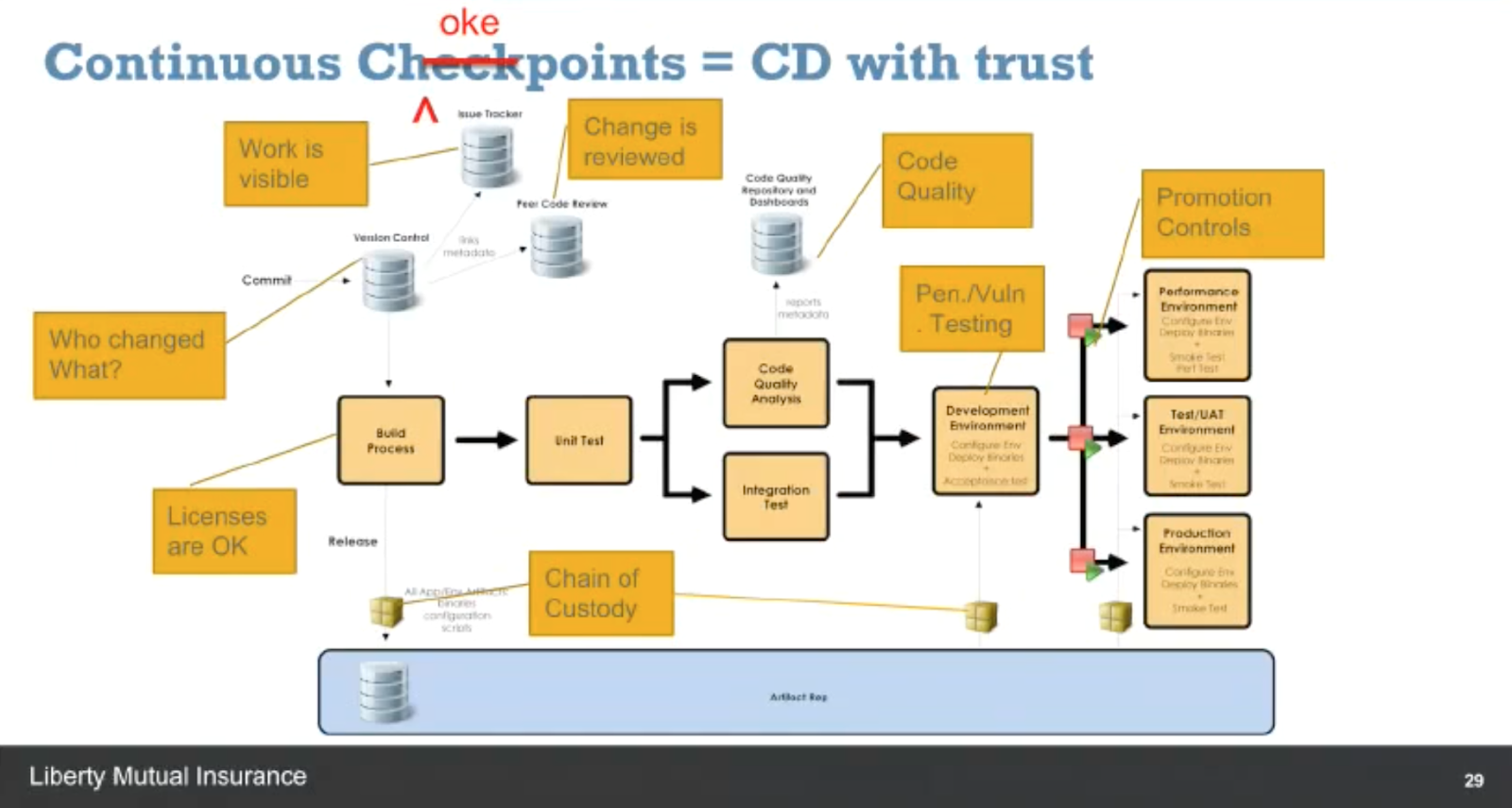
    Eddie Webb, director of Software Delivery Platforms at Liberty Mutual, also shared his organization’s journey into DevOps.  Eddie described how Liberty Mutual evolved its organization, tool chain and processes to go from 20 percent of builds being deployed to 60 percent over the past 18 months. He described how the company documented its value delivery chain and identified all of its choke points in the continuous delivery process that would need to be automated to achieve its new velocity and quality targets.

    Screen Shot 2016-12-05 at 11.35.04 AM.png

    Run the Gauntlet

    The All Day DevOps conference recorded more than 57 practitioner-led sessions (30 minutes each) including those from Barry and Eddie. Every session is now posted online and is free to watch. The conference itself had three tracks: CI/CD, Automated Security and Modern Infrastructure, including:

    • Application Secret Management with KMS – Andrey Utis of Capital One
    • Getting out of the Job Jungle with Jenkins – Damien Coraboeuf of Clear2Pay
    • Serverful Computing – Taking One for the Team – Paul Czarkowski of Blue Box Group

    One of the best ways to learn about DevOps is to hear from the experiences of others who have run the gauntlet. Take 30 minutes this morning, at lunch or at home this evening to watch your first online session with All Day DevOps On-Demand.

    — Derek E. Weeks