Tag: security

  • DevSecOps and DevNetOps: New Heroes in the DevOps Saga

    DevSecOps and DevNetOps: New Heroes in the DevOps Saga

    The evolution of DevOps is by no means done, but it’s safe to say that there is enough agreement and acceptance to declare it a hero. DevOps has helped glorify IT to the point where it’s no longer preventing business, nor a provider nor a partner of the business.

    Often IT is the business, or its vanguard for competitive disruption and differentiation.

    Splintering the success of this portmanteau hero, we now hear more and more of two trusty sidekicks: DevSecOps and DevNetOps. Lesser known in their adolescence, these tots are still frequently misunderstood, are still forming their identities, and still need a lot of development if they’re to enter the IT hall of fame like their forerunner.

    Just as the terms look, DevSecOps and DevNetOps are often assumed to be about wrapping DevOps principles around security and networking: operators hope to assuage technical debt and drudgery by automating in proficiency and resiliency. For networking, I’ve covered how there is a lot more to that than coding, but to be sure, these sidekicks certainly espouse operators learning how to do develop while DevOps was equally, if not more, about developers learning to operate.

    The Shift Left: SecDevOps and NetDevOps

    As if it wasn’t hard enough to tell what DevSecOps and DevNetOps want to be when they grow up, we’ve gone and given them alter egos: SecDevOps (aka “rugged” DevOps) and NetDevOps. Think about them exactly as the words look—it’s about the shift to the left. Left of what?

    Traditional DevOps practices focus on business-specific applications development. The development timeline is known as a concept to cash, and with all the superpowers of DevOps we try to reduce our enemy—the lead time and repeatable processes between code and cash.

    Security and building infrastructure, like networks, were considered supporting tasks, not revenue-generating nor competitive advantages. Thus, security and networking were far to the right on the timeline with concerns that deal with operational scale, performance and protection.

    Today’s shift left propels security and infrastructure considerations earlier down the timeline, into coding, architecture and pre-production systems. It’s a palpable penny-drop amid daily news of security breaches and infrastructure outages causing technology-defined establishments to bleed money and brand equity.

    Fill the bucket with cash, but don’t forget to forestall the leaks!

    DevOps and Infrastructure: Challenge and Opportunity

    Automation sparks have flown over the proverbial wall into the camp of I&O pros. Operators trading physical for virtual, macro for micro, converged for composed, and configuration for code is proof that the fire has caught security and networking. Controlling the burn now, is key, so that healthier skills and structures arise in place of the I&O dogma and duff. Fortunately, this is precisely the destiny for our newfound heroes, DevSecOps and DevNetOps.

    However, doing DevSecOps and DevNetOps, embracing security and networks as code, we mustn’t be so credulous as to forget the formidable DevOps practices and patterns that need transforming along the ultimate automation journey. Testability, immutability, upgradability, traceability, auditability, reliability and other you-name-it-abilities are not straightforward to achieve.

    Discounting “aaS” technology consumed as a service, a fundamental challenge to innovating SecOps and NetOps, compared to application ops, is that applications are crafted and built; security and networking solutions are mostly still bought and assembled.

    Security and network infrastructure as code is something that needs to be co-created with the vendors. Other than in the cloud, it will take a while before security and networking systems are driven API-first, and redesigned to offer simulation, finer disaggregation into microservices, and orchestration with scale and resilience.

    While this will land first in software-defined infrastructure, there is still a way to go to manage most software-defined security and networking systems with continuous practices of artifact integration, testing and deployment. Hardware and embedded software will be even more challenging.

    Finding Strength in Challenge

    So on one hand, DevOps is evolving with security and networking shifting left. On the other hand, traditional security and networking ops are transforming with DevOps principles.

    Is the ultimate innovation to squeeze out those traditional operations altogether? Does NetDevOps + DevNetOps = DevOps?

    There is a parallel train of thought and debate, with success on both sides. Purist teams cut out operations with the “you build it, you run it” attitude. Other companies such as Google have dedicated operations specialist teams of SREs. While the SRE reporting structure is isolated, SRE jobs are very integrated with that of development teams. It’s easy to imagine the purist approach, subsuming security and networking into DevOps practices, but only if we assume the presence of cloud infrastructure and services as a platform. Even then, there is still substantiation for the SRE.

    Layers below, however, somebody still needs to build the foundations of the cloud IaaS and data center hardware. As they say, “Even serverless computing is not actually serverless.”

    Underpinning the clouds are data centers. And then there’s transport, IoT, mobile or other secure networks to and between clouds. In these areas, it’s obvious there is a niche for our two trusty sidekicks, DevSecOps and DevNetOps, to shake up ops culture and principles. These two heroes can rescue software-defined and physical infrastructure from the clutches of so many anti-pattern evils, like maintenance windows and change controls (ahem, it’s called a “commit”).

    We may not require rapid experimentation in our infrastructure, but we would warmly welcome automated deployments and updates, failure and attack testing drills, and intent-driven continuous response. They will boost resiliency and optimization for the business and peace of mind for the builders.

    Teams operating security, networks and especially clouds, need to honor and elevate DevSecOps and DevNetOps, so that on the journey now afoot, our teams and our new heroes may realize their potential.

    About the Author / James Kelly

    James Kelly is a lead expert architect on cloud and software-defined networking at Juniper Networks. He also serves as a private yoga instructor, and previously, he founded a capital management firm in Ottawa, Canada. Connect with him on LinkedIn and Twitter.

  • Liberty Mutual: Taking an Organic Approach to DevOps

    Liberty Mutual: Taking an Organic Approach to DevOps

    Some people are directors, managers, and administrators. Others are disrupters.

    Eddie Webb (@edwardawebb) is an IT disrupter for Software Development Platforms at Liberty Mutual and was a presenter at the 2016 All Day DevOps conference. His talk, “Organically DevOps: Building Quality and Security into the Software Supply Chain at Liberty Mutual,” looked at Liberty Mutual’s transformation to continuous integration, continuous delivery and DevOps. For a large, heavily regulated industry, this task can be not only daunting, but also viewed by many as impossible.

    Eddie’s talk looks at the origins of DevOps at Liberty Mutual, the challenges of centralizing DevOps, and how to make it easy for developers and operations to do the right thing. He noted that DevOps is not Liberty Mutual’s goal; continuous delivery is the goal and DevOps is the enabler.

    It all started at Liberty Mutual in 2004 with a vision: “Black-box reusable services that benefit the business.” The company also had a concept that “developers own the quality of the code; we have no QA team.” Employees were empowered with this “concrete vision but malleable strategy,” as Eddie said. The company gave them time and space to explore solutions, because ownership increases adoption.

    The team started with fixing what frustrated them, including CI/CD pipelines, artifact and code repositories, elastic cloud-native runtime and Agile planning and delivery.

    But what about centralizing DevOps?

    The reality is that tools can be centralized, but culture cannot.

    Eddie laid out an example of a large organization’s IT structure, saying that this is how things work at Liberty Mutual. Eddie’s team is the Central IT, and their customers are the Market IT team, not Liberty Mutual’s end customers. As Eddie pointed out, the more layers you create, the more friction that enters the system. Often, organizations try to reduce the friction through microfixes, but Eddie’s team asked how to change the culture to reduce the friction.

    webb1.png

    This required distributing innovation and centralizing the tools that work. As an example, if you build a manufacturing plant, you wouldn’t build your own power plant. If you are in IT, why build your own cloud?

    webb2.png

    This is the Netflix way. At Netflix, teams are independent, but responsible. Engineers can choose the best tools for the job. No one single team is responsible for innovation. However, the Engineering Tools team helps direct other teams’ experimentation toward new products without getting in the way of innovation.

    Eddie quoted the book, “Drive,” when looking at how to motivate innovation in complex work environments. The author says if you want to incentivize or motivate cognitive tasks, you need three things: autonomy, mastery and purpose.

    When you centralize non-value added platforms, it enables teams to:

    • Master their specific domains of business;
    • See clear purpose in everything they build; and
    • Maintain autonomy of choice of frameworks, patterns, and approach.

    When you decentralize, it raises the question: What about security? Developers are humans, and humans inherently try to avoid tasks they see as unnecessary or overly burdensome, and this becomes easier when the compliance person isn’t there (think of how we handle speed limits). Traditional security measures erode profit and market share, and, from a stat Eddie quoted from Gartner, 77 percent of IT security professionals agree that security slows down IT.

    webb3.png

    Whether you are centralized or decentralized, security (and other compliance-oriented tasks) can increase adoption rates by making it easy to do the right thing. How do you do this? Eddie proposes governing with tools (think of speed governors in fleet cars).

    You also need to have immutable environments, because, “We can’t trust humans to manipulate production.” So, again, you have to make the path you want them to take, and make this the easiest path. As Eddie notes, “You can’t put too much friction into the pipeline, because developers are good at bypassing friction.” You have to make your CI/CD pipelines the easiest way to get ideas to production by. You also have to abstract complexity and automate policies. You have to have an “opinionated platform, and observe your customer so you can address their pain.”

    webb4.png

    Eddie concluded with the following final points:

    • Don’t mandate DevOps. Give employees the chance to master their discipline with examples to set and follow.
    • Favor deep end-to-end accomplishments over broad but incremental steps forward. Focus on taking the right teams far before encouraging broad adoption.
    • Centralize the platforms and tools that your teams shouldn’t be thinking about. Provide foundational services/commodities and let teams stay on purpose.
    • Incorporate contributions from everyone; don’t stifle autonomy. Stay open to new ways of working.
    • Challenge security policies, but respect intentions. Find new ways to enforce concerns without abandoning precaution.

    You can listen to Eddie’s entire talk online here. You might learn an unexpected lesson.

    If you missed any of the other 30-minute long presentations from 2016 All Day DevOps, they are easy to find and available free of charge here. Finally, be sure to register you and the rest of your team for the 2017 All Day DevOps conference here.  This year’s event will offer 100 practitioner-led sessions (no vendor pitches allowed). It’s all free and online Oct. 24.

    — Derek E. Weeks

  • DevOps, Security, AI Convergence on Horizon

    DevOps, Security, AI Convergence on Horizon

    DevOps is regarded as practice that can drive performance advantages. Artificial intelligence is showing very real promise across the security market. Most public and private-sector organizations know that they must explore new and different ways of defending their networks against modern threats. These three factors make it clear that DevOps, AI and security are ripe for convergence.

    Defining AI

    Anyone reading this post doesn’t need me to explain to them what DevOps and security are; both of these categories are well-defined. However, AI is really in an emergent stage, with different types in use and many definitions floating around. Because of this, I think it is important to let readers know that in this post, AI refers to a class of technology that can:

    • Consume data, learn and get smarter on its own
    • Automatically identify and solve problems
    • Operate independently, without human supervision
    • Scale massively
    • Move at near real-time speed
    • Achieve levels of accuracy that are beyond human capabilities

    DevOps and Security are United

    DevOps and security have merged. For several years now, organizations have been leveraging automation technologies and DevOps practices to continuously deliver security and compliance policies across data centers and clouds.

    Further legitimizing the union is the fact that leading DevOps and automation players such as Puppet, Chef and Ansible have formed numerous partnerships that deliver effective security capabilities to their customers.

    There are, of course, other signs that show how successful the DevOps and security marriage has been. One of which is the emergence of the term “rugged DevOps.” It is now so widely recognized that it commands its own section on this site and is often the subject of discussion at several notable security conferences.  

    DevOps and AI are Dating

    The relationship between DevOps and AI is in the early stages, with the courtship between the two well underway. Examples of its progress are found in numerous blogs and articles, several of which include:

    DevOps and AI have certainly not yet intertwined as deeply as DevOps and security have. These examples (and others out there) do show they the two will continue to integrate beyond what we are currently witnessing.

    DevOps, Security and AI

    DevOps and security are wed. DevOps and AI are moving closer toward each other. It’s only a matter of time until all three get together.

    Because several DevOps leaders are already in the business of security, it’s logical to assume that a partnership between one of them and an AI-driven security provider will be what ultimately leads to a marketable solution.

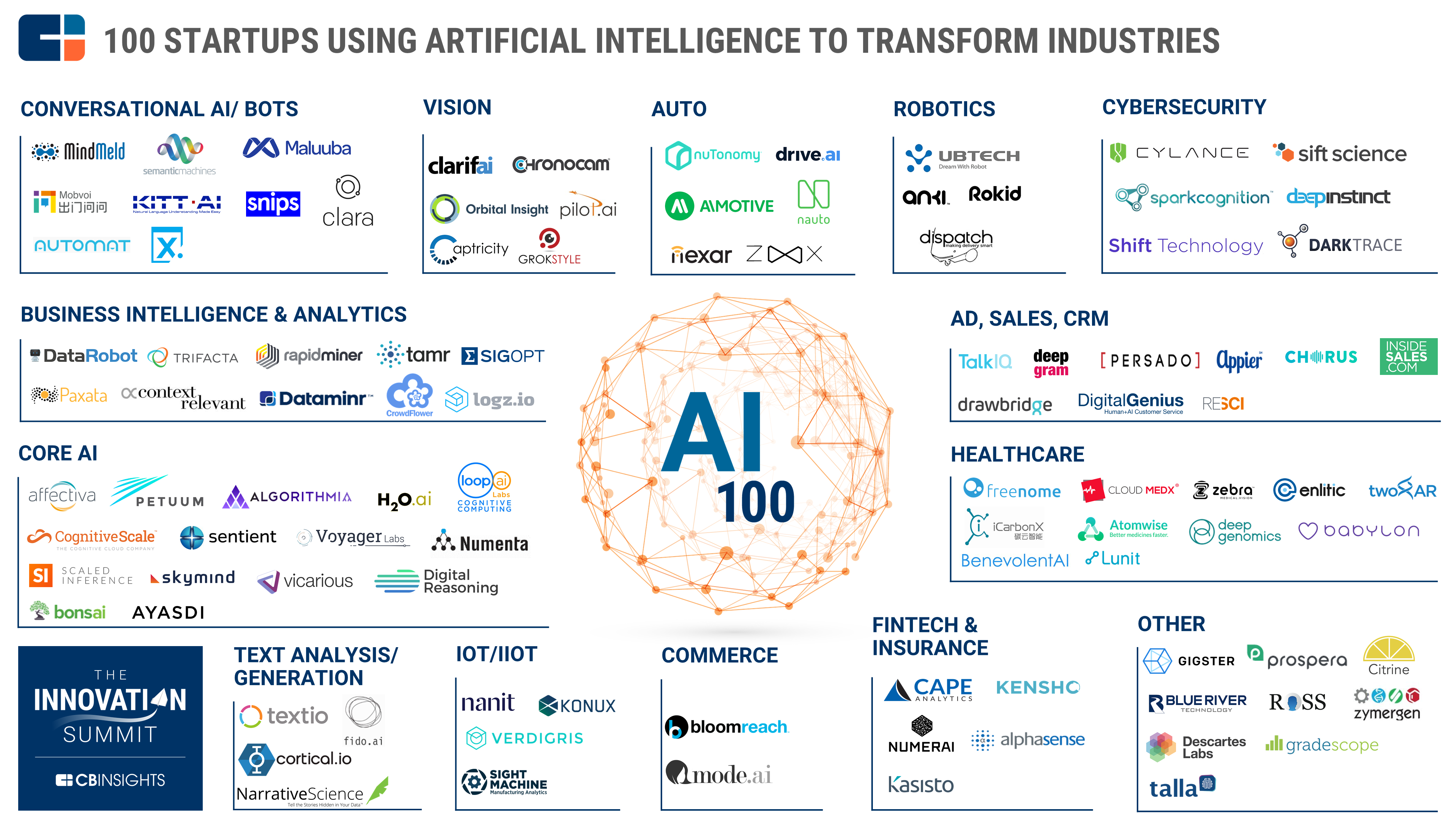
    DevOps provider candidates with the potential to move on a partnership that can combine DevOps, security and AI have a raft of new and established security providers available to work with. Several of the startups in this class are recognized in the CB Insights AI 100 2017 infographic. Companies such as Cloudera (NYSE: CLDR), which is using AI and machine learning to solve security problems, are among the more established providers that may make for a perfect partner. 

    How quickly will the market see such a partnership? That remains to be seen. However, with DevOps now fully accepted as a methodology that can positively impact bottom lines, AI coming into its own, and the need for new and different ways of defending organizations against attacks at a critical stage, it seems almost certain that the convergence will be upon us sooner rather than later.

    — Joe Franscella

  • Amazon’s Macie: Machine Learning to Protect Data in AWS

    Amazon’s Macie: Machine Learning to Protect Data in AWS

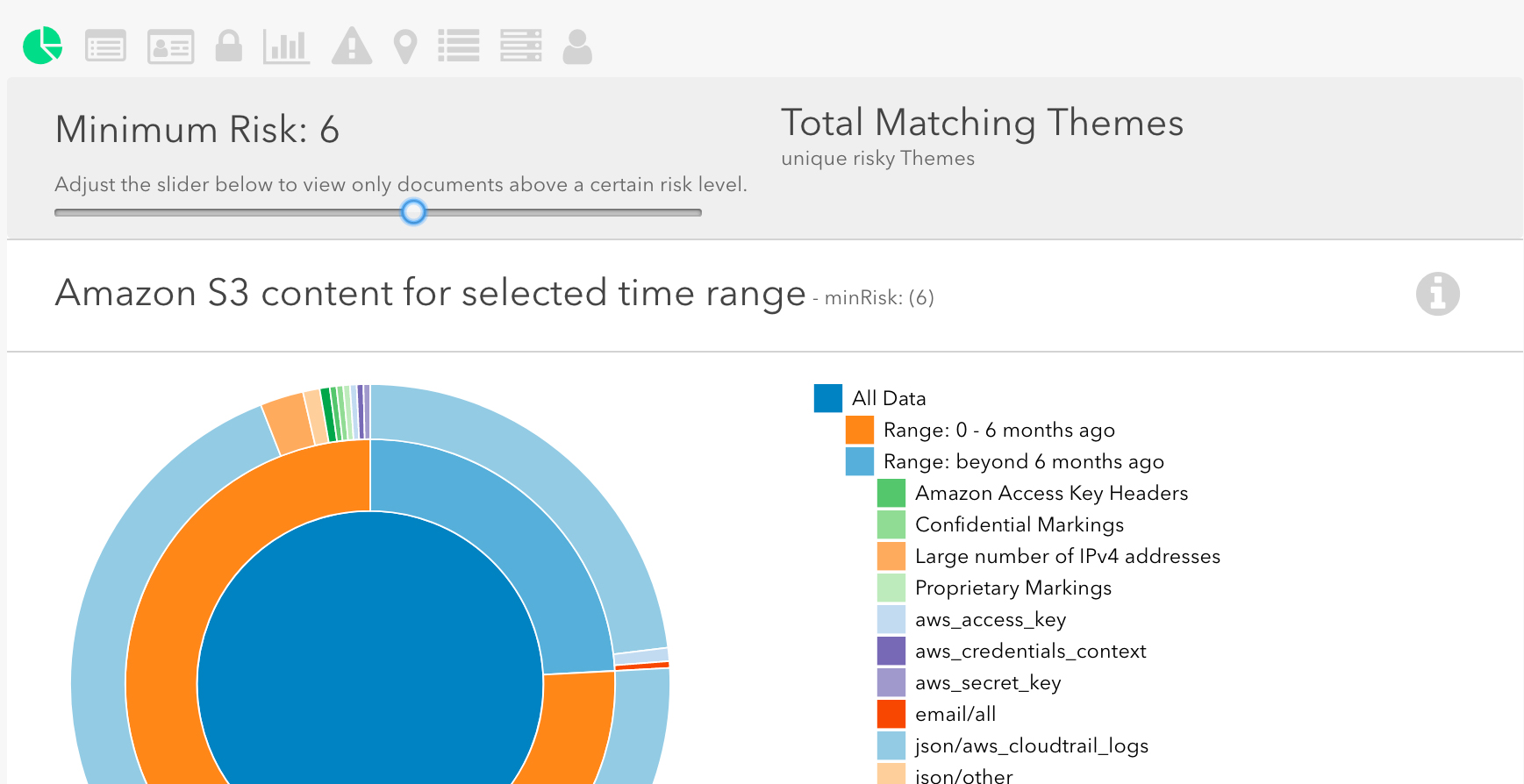
    Macie is a recently launched security service from Amazon for its AWS customers. It works by identifying and classifying sensitive data such as personal information or intellectual property, continuously monitoring that data for anomalies and giving customers detailed alerts and dashboard readouts related to the access or movement of the data. Macie is currently able to protect data stored in Amazon S3, and support for additional AWS data stores will be available later this year, according to AWS.

    Netlix is an early adopter of Macie and so far has seen good results. “Since we started using Amazon Macie we’ve found that it is flexible enough to solve a range of information security challenges that would have previously required us to write custom code or build internal tools, helping us move fast with confidence,” says Patrick Kelley, cloud security engineer at Netflix.

    In addition to Netflix, Amazon lists Autodesk and Edmunds as early users of Macie.

    Amazon claims that Macie uses machine learning to automate the process of discovering, classifying and protecting data stored in AWS. Macie starts out by creating a baseline of data access behavior and then monitors for actions that might indicate risk, such as large quantities of data being downloaded, sensitive data being configured to be externally accessible or credentials being stored insecurely. Macie provides a console front end. It also delivers alerts and recommendations on how to strengthen your security.

    The results of Macie’s analysis of your data may help you better understand where sensitive information is stored and how it’s typically accessed, including user authentications, locations and times of day. It can identify data with high business value, including programming languages to detect source code, logging formats, database backup formats, credentials and API key formats. This is one of its more powerful benefits. Anything that helps you understand your data is a major plus.

    Amazon’s new AWS security service supports 20 alert categories designed to provide early warning on security and compliance use cases, such as high-risk data events, API keys and credentials being stored within source code, unencrypted backups containing credentials and early stages of an attack, including behaviors indicating lateral movement, persistence mechanisms, back-door accounts and enumeration of role privileges.

    Whether Macie’s pricing makes sense for your company will depend quite a bit on the type of data you’re using in AWS. The pricing also involves the data analysis so it starts out higher as Macie analyzes your data store. On the other hand, if you are continuously adding significant amounts of new data, it may continue to get more and more expensive. Check out the detailed pricing information for some insight. Amazon lets AWS customers try before they buy Macie with this test drive. You may also find its FAQ and documentation useful in assessing the tool as well as more details about AWS security.

    Analysis

    Any enterprise application that mentions the terms artificial intelligence or machine learning in its marketing materials sets off alarm bells these days. It’s not uncommon to find that such laims are more hype than reality. Enterprise buyers, beware. But Macie’s ability to classify data in risk terms is well within the state-of-the-art of machine learning today. There are no apparent flights of fancy or flowery marketing language involved. Amazon isn’t promising unrealistic things from its new AWS security service. In fact, Macie looks promising for the many enterprises that are using AWS.

    — Scot Finnie

  • DevOps and Security is Like Smoking Meat

    DevOps and Security is Like Smoking Meat

    It isn’t everyone who thinks, “Doesn’t Ubuntu remind you of wild boar?” Or labors over his pit of slow-roasted pork shoulder while contemplating containers. Or dwells on e2e testing while mesquite smoke permeates spareribs.

    But, Apollo Clark (@apolloclark) does. Apollo is a foodie of smoked meats (is that a meatie or smokie?), working to master the craft: understanding different cuts, what each type of wood adds, and the subtleties of sauces. But, alas, it is a hobby; security and DevOps are his career.

    Being passionate about both, he naturally sees parallels between the two, so Apollo presented at the 2016 All Day DevOps conference with a session titled, “What Smoking Meat Taught Me About DevOps and Security.”

    Understandably, you are asking yourself, “What does smoking meat have to do with DevOps and security?” Apollo notes both have tremendous complexity and nuances, there are multiple ways of getting the job done, lots of ways to mess it up, a couple of ways of doing it right, and you are always learning.

    apollo 1.png

    For both, there are many tools and processes to get the job done. For smoking, your wood is a critical component, along with time. Let’s look at some parallels:

    • Oak = unit testing
    • Maple = coverage
    • Apple = dynamic analysis
    • Peach = static analysis
    • Mesquite = e2e testing. People love it, but it is difficult to handle
    • Wine barrel = browser support. This is when you are doing it really well
    • Bourbon barrel = device support. Pretty complicated
    • Smoking time = testing. You can test or smoke for five minutes or five hours, but there is a sweet spot. You can oversmoke meats and you can overtest.

    Getting hungry?

    apollo2.png

    Meat is critical to a meal of smoked meat, but so are many other components. Likewise, software applications take a suite of other tools and components to deliver the full package. Get your taste buds ready, because Apollo likens all of the goodness that goes with smoked meats to tools you use to keep applications running:

    • Sauces = auto-scaling. They both can get pretty complicated. Always a little different, but you have to make it work for you.
    • Bread = monitoring, which is the bread and butter of infrastructure. Make sure you have it up and down your stack.
    • Salad = system logs. Not the sexiest things, but you can rely on them.
    • Fruit = custom application logs. Takes a lot of time to pair them, but takes a really good thing and makes them better.
    • Beer = firewall. You should always have both.
    • Wine = Intrusion detection systems. These are your fine wines.
    • Whiskey = IR training. It takes time and there are so many ways of doing it. When things break, we have procedures on how to deal with them.

    When smoking meats and in DevOps and security, Apollo asks and answers, “Do we have to do everything? No, but the more we do, the better it will taste.

    “Does it cost money and take time? Yes, but you can do great things even without money and time. You can use cheap meats and you can use open source. Start simple, build up complexity, and always be learning.” Constantly ask yourself, “Am I better today than I was yesterday.” If not, be better.

    You can watch Apollo’s entire talk online here. If you missed any of the other 30-minute long presentations from All Day DevOps, they are easy to find and available free-of-charge here.  Finally, be sure to register you and the rest of your team for the 2017 All Day DevOps conference here.  This year’s event will offer 96 practitioner-led sessions (no vendor pitches allowed).  It’s all free and online Oct. 24.

    — Derek E. Weeks

  • CloudCoreo: Get Your Cloud Security on at Jenkins World

    CloudCoreo: Get Your Cloud Security on at Jenkins World

    I mentioned in a previous blog post that I’d take some more of the people pinging me about Jenkins World 2017 and post about them. One of the companies I’ve picked to highlight is CloudCoreo, makers of AWS security controls and auditing.

    Disclosure: My company, Ingrained Technology, has a business relationship with CloudCoreo outside of our relationship with devopsy.kinsta.cloud. That’s how I know about their attendance. But they’re a cool company for cloud security automation, so I chose to include them in my Jenkins World previews.

    CloudCoreo is based on the premise: What if you could automate and audit security settings in AWS without learning security for each of their services? I’ve used their tools, and I’ll be honest, my personal AWS account had a bunch of security violations. Since I use AWS off and on in spurts, this makes perfect sense, and I was able to clean house a bit based upon the tools’ feedback.

    CloudCoreo’s presence at Jenkins’ World will be to talk about itsr system, but will also concern its new Jenkins’ plugin. While there are tools that allow you to partially automate security generation in AWS, the cool part of the plugin is that it allows your automated system to audit the actual results of a deployment to check against standard security patterns. And those checks include things that are normally outside the build/deploy process, such as user rights and password change frequency.

    One of the directions that cloud is going is putting security configuration directly into templates. But not every template will be designed with the same level of configuration/security. By auditing the results as part of a deploy, weaknesses in templates obtained from external sources easily can be detected early in the development process. This is fully in line with the “shift left” approach currently being used in DevOps, and gives security an edge in automating one more thing. If it is just part of the deployment to kick off this Jenkins plug-in as one of the final steps of deployment, then security can shift from “pawing through tons of config code” to “reviewing results.”

    Right now, security is one of a few items (NetOps being the other) that is on the critical path for DevOps to be both responsive and controlled. Companies such as CloudCoreo are helping make certain that not only does it go out quickly, but it goes out secure.

    I haven’t tried its Jenkins plug-in yet, and don’t currently have any complex AWS projects going on, but the thought intrigues me. Someone should go stop by (the company will be giving a demo of stopping a release for violations at table T1) and see it in action, then report back what you learn. Having used CloudCoreo’s web interface, I expect the results of the Jenkins plugin will be both thorough and definitive, but verification of those suspicions would be nice.

    — Don Macvittie

  • Synopsys: IoT, ICS More Vulnerable to Security Exploits

    Synopsys: IoT, ICS More Vulnerable to Security Exploits

    A new report shows that internet of things (IoT) implementations and industrial control systems (ICS) are more vulnerable than most to potential zero-day exploits of the open-source protocols, common file formats and APIs they rely on. The report, prepared by vulnerability test firm, Synopsys Inc., is based on 4.8 billion fuzz tests conducted on the company’s customers throughout 2016. The report focuses on six key vertical areas: automotive, financial services, government, health care, ICS and IoT.

    To rank the vulnerability of different protocols, Synopsys measured the time it takes between the start of fuzz testing and when a protocol crash is recorded along with how many crashes occurred over longer periods of time. Newer, less mature or proprietary protocols proved to be the most vulnerable. In some cases, time to failure was measured in minutes or even seconds. Fuzz testing is a method of testing code for flaws and security vulnerabilities that involves throwing large amounts of malformed, random data at the system being tested.

    Industrial control systems are the most vulnerable of the six areas covered by the report. To a great degree that’s driven by the fact that ICS uses a lot of proprietary or ICS-specific protocols, some of which may not have been tested thoroughly enough. Three of the most vulnerable protocols are IEC-61850 MMS, IEC-104 SERVER and MODBUS PLC. The ICS protocol IEC-61850 MMS failed in just 6.6 seconds.

    IoT is the next most vulnerable system. It mixes older, better-tested core IP protocols with newer niche categories such as wireless and ICS. The three most vulnerable protocols for IoT are CoAP Server (failed in 8.5 seconds), CIP and OPC UA.

    It’s important for enterprises to prioritize security in their zeal to build IoT solutions. In some cases, Synopsys revealed that security vulnerabilities stemmed from an incomplete or improper implementation of protocols or unpatched code.

    “The applicability of IoT across all vertical markets and within enterprises of all shapes and sizes has brought us to an important inflection point,” said Brad Shimmin, service director for IT Technology and Software at GlobalData. “Thanks to ubiquitous and readily accessible APIs, development frameworks and even pre-built but extensible apps, virtually anyone can stand up an IoT deployment with very little experience in the way of application development practices. This will undoubtedly reveal the many dangers inherent in building highly distributed systems—dangers affecting both data and logic.”

    Some interesting data from the report: The overall average time to first failure of a protocol was 1.4 hours. When the time to first failure is measured in seconds instead of hours, it indicates a higher potential for criminal exploitation. The most vulnerable protocol tested was the previously mentioned IEC-61850 MMS; the least exploitable was the TLS client, which had an average time to first failure of 9 hours.

    Of the vertical areas the report classifies, the two least risky sets of protocols are the ones used by government and financial services. Synopsys attributes this to the more mature aspects of the categories of protocols used by these industries. They had fewer overall failures and longer test times to their first failure. It would take black hats a lot longer to fuzz them into vulnerability.

    — Scot Finnie

  • Cybersecurity Improvement Act of 2017:  The Ghost of Congress Past

    Cybersecurity Improvement Act of 2017: The Ghost of Congress Past

    It seems like yesterday when when Representative Ed Royce proposed legislation titled the “Cyber Supply Chain Management and Transparency Act.” Almost three years have passed since Congressman Royce introduced his bill in November 2014 and helped educate the world about serious security vulnerabilities (such as Apache Struts and Heartbleed) lurking inside open-source components that are commonly used by anyone and everyone building modern software applications.

    Broadly speaking, Royce’s bill would have required technology vendors selling software to the U.S. government to do the following:

    1. Provide customers with a bill of materials documenting all open-source components utilized in the software application;
    2. Demonstrate that the component versions utilized in the application have no known vulnerabilities (CVEs from NVD) for which less-vulnerable alternatives are available;
    3. Provide a mechanism to promptly remediate new vulnerabilities when they are discovered.

    Despite dying a quiet death, the Royce bill helped to pioneer an important conversation between government and industry leaders with respect to the age-old question of software liability.

    This conversation continues to evolve—and just recently Sen. Mark Warner, a Democrat in Virginia, and Sen. Cory Gardner, a Republican from Colorado, introduced the “Internet of Things Cybersecurity Improvement Act of 2017“—an attempt to force companies selling IoT devices to federal agencies to adhere to new security standards.

    Just like the Royce bill before it, the newly proposed legislation from Sen. Warner would require vendors selling IoT-connected devices to government customers to do three simple things:

    1. Provide written certification that IoT devices do not contain hardware, software or firmware components with any known security vulnerabilities or defects listed in the NVD or similar databases.
    2. Notify government customers of any new security vulnerabilities or defects subsequently discovered.
    3. Provide a mechanism that allows for any future security vulnerability or defect in any part of the software or firmware to be patched or fixed in a timely and secure manner.

    As Bruce Schneier observed more than a decade ago, there are no real consequences for having bad security or having low-quality software of any kind. Even worse, the market often rewards low quality. More precisely, it rewards additional features and timely release dates, even if they come at the expense of quality.

    Although the Royce bill failed and the future of the Warner bill is yet to be determined, there is an increasingly steady breeze blowing from Washington, D.C., that is gently nudging the entire software industry toward a future in which vendors will no longer be immune to liability for damages due to known security vulnerabilities or defects.

    About the Author / Matt Howard

    A proven executive and entrepreneur with over 20 years experience developing high-growth software companies, Mr. Howard leads Sonatype‘s corporate marketing, strategic partnering, and demand-generation initiatives. Prior to Sonatype, he co-founded, developed and successfully sold two software companies. Earlier in his career, Howard led sales and marketing at USinternetworking (acquired by AT&T) and Groove Networks (acquired by Microsoft), where his teams distributed workgroup collaboration products to enterprise customers. Howard holds a Bachelor of Arts degree from The George Washington University and a Master of Arts from George Mason University.

  • SecOps: The Next Stride for DevOps

    SecOps: The Next Stride for DevOps

    Global IT spending is now touching a figure of $4 trillion. In today’s technology-intensive environment, data is the biggest commodity, more valuable and powerful than ever. And like Peter Parker’s uncle Ben noted, “With great power comes great responsibility.”

    Security has always been a big concern for valuable things and IT is no exception. IT as a whole is trying to push security left in the development cycle—trying to involve it in every step of the development cycle. And just when development and operations teams are getting used to the “esprit de corps” we call DevOps, I think it’s time we add the third musketeer: security.

    What is SecOps?

    SecOps is a collaboration between security and operations teams, just like development and operations teams collaborate on DevOps front. SecOps is a set of practices organizations need to follow, processes they need to execute and tools they need to use to ensure the security of their application environment. SecOps is making sure organizations do not sacrifice security to attain set performance and uptime indexes.

    In a typical development cycle—requirements gathering, design, development, testing, implementation or deployment and maintenance—security normally is introduced in the later stages, somewhere between testing and deployment or even later. But SecOps is all about making sure to introduce aspects around security much earlier or at each stage of the software development life cycle (SDLC).

    I know what you are thinking: This is going to complicate things and increase the time to delivery. This is where operations and development teams need to join forces to uncomplicate the things and make it time efficient practice. Next thing you must be thinking of is, Why so much hassle? Think of it the other way. Wouldn’t it save more time when you address the security concerns at much earlier stages than at the time of delivery or implementation? All it takes is an amalgamation of the security group, development team and operations team; a little bit of planning; and a whole lot of execution.

    SecOps + Containers

    Containerization is slowly but steadily moving from an alternative to full virtualization to a serious platform for running your applications. Containers have some obvious advantages including scalability and flexibility, and this solves most of the problems related to resources in case of application development. Reduced size; reduced time to provision application environment and testing; platforms including Docker, Solaris Zones, BSD Jails; and orchestration platforms including Kubernetes, CoreOS Fleet, Amazon ECS and OpenShift make containers a more preferred option for application development environments.

    This increased traction toward containerization points to the increased need to concentrate on security aspects. Here are some best SecOps practices for container environment you and your organizational teams can follow:

    • Authentic sources and images: Always check for authenticity of container images. There are various tools such as Docker’s security scan. With Docker Cloud and Docker Hub you can scan images to check for potential security vulnerabilities. Most images are built from some base image and not built from scratch, so there is always a threat with the used images.
    • Vulnerability management tool: There are tools available in the market to analyze container image formats and libraries for threats before you actually start using them.
    • Follow benchmarks and hardening guidelines: Always make sure you do the checks and follow hardening guidelines for containers, images, hosts and platforms before you start with production. There are few standards and benchmark checks for containers such as CIS’s Docker security benchmark, PCI compliance checklist, etc.
    • Periodic auditing: Regular auditing of your application environment can help you save yourself from the future troubles. Moreover, automation of auditing process can help in detection of unused images and containers.
    • Use of management frameworks: Use frameworks that can automate behavior profiling and control all the users, authorize the access to the containers, images and hosts.
    • Security built in to container engine systems and third-party security solutions: Third-party vendors have a number of applications for container security in addition to security systems of container management platforms.

    Dev + Sec + Ops

    With the continuously increasing business demands for new applications and software, and new practices and development trends such as DevOps, Agile, cloud, automation, CI/CD and others, traditional security needs to upgraded in the new paradigm. Thankfully, some of these practices facilitate the security. Consider CI/CD as an example: Continuous integration requires continuous integration tools, or what we call build servers. Some popular examples are Jenkins, TeamCity, GitLab CI, Travis CI, Bamboo, Go CD, CircleCI and Codeship. The best SecOps practice is to check and fix vulnerabilities at early stages as a part of CI/CD workflow. Integration between authentication, scanning, management tools and CI/CD pipeline tools could be the best possible solution to your security-related problems. Some easy-to-implement solutions can include automated security testing, static code analysis, authentication checks and login tracking.

    SecOps enable organizations in lifecycle management, analysis of security threats, incident management, optimizing and measuring the effectiveness of security controls, reduced breach response time, reduced security risks and increased business security. The basic principle on which SecOps works is Avoid, Analyze, Respond, Review, Repeat. By analyzing the security events and data, you can build incident response plans to avoid future unwanted events.

    Frameworks and Tools

    Now that you have a clear understanding of why you need your security, development and operations teams to work together, let’s see what tools and frameworks you can use.

    • Docker-native tools: If you are using Docker as a platform then you can use few security tools provided by Docker itself for the security of production environment: Docker Bench and Docker Notary. Docker Bench is a script that checks common best practices around deploying Docker containers in production. Docker Notary enables you to check whether content is from a trusted publisher.
    • Chef: Chef provides different tools including Inspec to automate security testing.
    • Puppet: Puppet provides security compliance and policy defining frameworks.
    • Ansible: Ansible provides system tracking, setting up firewall rules, user lockdown and compliance automation solutions.
    • CoreOS Clair: CoreOS Clair is an open-source project for vulnerability analysis in applications and Docker containers.
    • SaltStack: SaltStack can help in orchestration and automation of security practices solutions for containers.

    This is just a look at some of the most popular ones. If you want, there are a number of others that can look after the security of your application environment.

    The main motive behind implying SecOps practices in any organization is involving security team at all possible stages to remove any ambiguity in any stage of development rather than security team providing analysis reports to the operations team and then sitting back and enjoying the show. When these teams perform in a synergistic manner, the business focus can be shifted to other important things.

    About the Author / Chaitanya Jawale

    Chaitanya Jawale is founder and CEO of Opcito Technologies, a leader in microservice-based product engineering and automation. Chaitanya comes with strong background in product engineering, data center automation, DevOps and multi-cloud orchestration and management.

  • 9 Essential Ingredients for Modern Enterprise Applications

    9 Essential Ingredients for Modern Enterprise Applications

    Digital transformation. It’s the latest in a series of buzz phrases intended to describe how enterprises are embarking on top-to-bottom modernization of their IT environments. It’s easy to see why it’s a hot topic. Emerging technologies including cloud, containers, microservices and distributed applications hold the promise of greater flexibility, lower cost and faster release cycles. The benefits to companies that make this journey can be enormous.

    Unfortunately, making this journey can take years with today’s manual processes and antiquated tools. Not to mention that most IT budgets are at least 80 percent focused on keeping the lights on. Application modernization projects can be extremely complicated since legacy, monolithic enterprise applications are intrinsically dependent on underlying infrastructure and data stores. Cloning complex application environments, including critical production data, for upgrades or testing often can take days or weeks, slowing down cycles and contributing to lower quality releases. Even new applications are too often designed with infrastructure dependencies, trapping organizations onto specific cloud, server or container vendors. This vendor lock-in reduces choice and leaves IT organizations open to unexpected price hikes down the road.

    The truth is that the way we have designed, built, deployed and managed enterprise applications needs to change. Business-critical software is too often built in monolithic blocks that are nearly impossible to move to new infrastructure or storage options without lots of effort and time. The applications are hard to upgrade since updating even one small portion means rebuilding and retesting the entire thing. Managing the various versions of the discrete application modules and the resulting testing permutations can be quite challenging. It’s not unusual to hear from CIOs that they feel trapped in a world where they can only reasonably expect to update critical enterprise applications just twice a year at most.

    Business needs to move faster. There’s no reason why release cycles, even for enterprise applications, couldn’t be every few days instead of months. Application quality should actually be better in this world. Continuous delivery models such as DevOps should be an integral part of the process. And security should not be an afterthought; it should be built-in. To accomplish this, the future of enterprise applications must look very different from today.

    What are the essential ingredients for modern enterprise application platforms and tools in this new world? Here are a few suggestions.

    Complete Portability, Without Code Change

    Enterprise applications must be abstracted and separated from any dependency on underlying infrastructure, including sources of data. By abstracting the functions of an application into components that can run anywhere, it’s possible to then move the application to different infrastructure combinations, without changing a single line of code. It’s only through complete portability between cloud environments, container tools and servers that IT organizations will break vendor lock-in and gain the flexibility required to move their applications to vendors that offer the best combination of price, performance, reliability and features.

    On-Demand

    All enterprise applications should be on-demand, meaning the provisioning of new instances should be hands-free and fully automated. This implies tight integration with orchestration tools that most companies are already using to provision infrastructure. The key difference here is that the provisioning of storage options also needs to be fully automated. This is made possible by the fact that modern applications won’t have any dependencies on the specific data stores they rely on. This on-demand nature is not restricted to technical teams but includes business users that can easily perform user acceptance testing by simply provisioning full-fledged application environments.

    Self-Healing

    Modern enterprise applications should be self-healing, which means applications not only should have measurable data points to define their health but can then react based on these metrics. They must be able to scale up (or down) based on performance characteristics up to a certain cost threshold, restart on a healthy node in case of infrastructure bottlenecks and cache or deploy closer to the user based on latent use performance.

    Composable (DevOps-friendly)

    All enterprise applications should consist of a number of building blocks: APIs, web servers with content, databases seeded with data, security policies, the operating system, network configurations, deployment configurations and application binaries. By breaking apart monolithic enterprise applications into smaller components that can then act as independent services, IT organizations gain the flexibility to upgrade and automatically deploy individual components through standard DevOps processes and orchestration tools. The services can run anywhere desired, giving flexibility of choice in infrastructure or sources of data. And developers can use a point-and-click UI to pull pre-defined components together to build larger functions of an application.

    Model, Snapshot and Clone

    Once an application is separated into its essential components, a catalog can be maintained that makes it easy to create new versions of the application. Developers, test engineers and DevOps teams can then pick and choose whatever combinations of components they need to create or clone complex application environments for testing or deployment. The state of the application environments can be snapshotted, cloned and replicated. This cloning process should be efficient and quick. This dramatically speeds up development and testing processes, which to-date have been largely manual.

    Scalable

    Scaling application and infrastructure environments automatically, on-demand, and in near real-time is one of the essential capabilities that makes modern infrastructure so valuable. Any solution that is used to develop, test, deploy and manage enterprise applications should offer these same capabilities, giving the ultimate in cost flexibility, performance and scalability. As containers are moving quickly from the lab into production environments, look for a container-based solution that complements this strategy.

    Security is Included

    Application security should not be tacked on after deployment. This slows down continuous delivery processes like DevOps and creates friction between development/ops and the security team. Instead, security should be considered an essential component of the overall application environment and treated the same as any other component and baked into the application from the start.

    Push-Button Upgrades

    Upgrading enterprise applications should be made much easier by taking a point-and-click, push-button approach through a modern UI and integration with continuous deployment tools. Once an application is blueprinted into its various components, using a modern UI to choose versions and assemble the final application becomes entirely possible, saving time and reducing manual errors.

    Single-Pane-of-Glass Application Management

    By taking an end-to-end view of the enterprise application development, testing, deployment and management process, it’s now possible to create a “single pane of glass” console that gives development and deployment teams a powerful way to manage what’s been deployed to various infrastructures in the organization. With this approach, it’s also now possible to collect invaluable utilization and cost metrics which can help an IT organization continuously improve their portfolio.

    Enterprise applications of the future are going to look very different from today’s monolithic behemoths. By leveraging new technologies and processes, IT organizations will be able to dramatically speed up their modernization efforts and release cycles, improving competitive position. The inherent cost savings of this approach will be transformational as well, as IT budgets shift toward net-new innovation, not just keeping the lights on. The future looks bright indeed.

    About the Author / Rahul Ravulur

    Rahul Ravulur is the cofounder and CEO of appOrbit, which was founded in 2014. Most recently, he was the Director of Product Management at VMware managing the Availability suite of products. Before that, Rahul managed the vCenter Server and Client set of products with a special focus on scalability and extensibility to chart the evolution of vCenter to a broad virtualization management platform. Prior to VMware, Rahul held engineering leadership roles at BMC Software and Marimba.