Tag: security

  • Using Blockchain to Advance IoT

    Using Blockchain to Advance IoT

    Imagine two disruptive technologies come together to democratize transparency and connectivity in the tech world. That’s exactly what’s happening with blockchain technology, once synonymous with powering cryptocurrencies including Bitcoin, has the potential to be a disruptor in a number of verticals and the internet of things (IoT), with blockchain addressing key IoT security concerns.

    About Blockchain

    The blockchain is the transaction recording distributed computer ledger. Its major use traditionally has been in securing the transaction of cryptocurrencies over the internet. Different users have their own wallet, which serves as a node in the blockchain network connected to the internet. Transaction messages can be sent in an encrypted form, which acts as a digital signature and does not allow tracing of the user’s wallet or tampering with any data stored there. Each wallet is controlled by a public key and a private key. To initiate a transaction, the user broadcasts an encrypted message in the network using the private key and the message can be decrypted by other network members using the public key. To materialize a transaction between the users, it needs to be approved by the majority of the nodes to help detect any fraud or data-breaching attempt before finalizing the transaction. So, it is the public that is controlling transactions, unlike banks or other financial institutions.

    About IoT

    IoT is a concept of embedding everyday-use items with sensors and other electronic components for enabling connection and data exchange between these objects. It is growing at a fast pace, and internet-connected devices increasingly are being used in different industries. IoT has made life easier, with smart devices that can be controlled using mobile apps, and can even be programmed using artificial intelligence.

    To function most effectively, IoT devices generally take user information, which means there are security risks. As a result, IoT development is lagging and IoT vulnerability to cyberattacks due to the lack of a robust centralized security model is a real concern.

    Blockchain and IoT Complement Each Other

    It is evident from history that whenever two complementary technologies merge, new, dynamic products are formed. The greatest advantage provided by blockchain technology is security of data, which happens to be the most difficult challenge faced by IoT. Immutability, decentralization and transparent data-sharing are the most significant advantages of blockchain that are lacking in IoT, and the IoT community wants to integrate these features for data security. User privacy can be maintained in cases where desired by grouping and classifying anonymous individuals or groups under an über Do Not Track (uDNT) system. The smart IoT devices can use the data and information stored on blockchain efficiently for performing various tasks. Blockchain also can help in IoT scaling as it struggles for growth.

    Blockchain also benefits from being paired with IoT, as it is showing its worth in a new domain of application apart from cryptocurrencies that most would consider to be much more useful on a daily basis. Thus, the two disruptive technologies complement each other and can reap dynamic solutions for different industries when used in conjunction.

    Security of Data is Enhanced

    IoT needs a robust centralized security model to grow in acceptance and use—something blockchain technology and the cryptographic processes driving it can offer. More and more offline objects are being converted into online assets with IoT, thereby increasing the risk of cyberthreats. Businesses, therefore, need to plan strategically for the protection of not just the smartphone and desktop computer, but almost everything connected to the internet. The objects in IoT ecosystem can act analogous to the nodes in blockchain technology, thus making connected home, connected cars and other connected devices more reliable and secure with blockchain-based IoT.

    Data Analysis and Intelligent Use of Data

    By leveraging other technologies such as artificial intelligence (AI), businesses using IoT along with blockchain can uncover useful insights through data analysis and understand the consumer requirements and market trends in a better way.

    User Interconnectivity is Enhanced

    With the transparency provided by blockchain, the users can make the best use of the interconnectivity provided by IoT to the networks of smart devices. IoT users can connect with each other in more beneficial ways and discuss their issues and queries more openly to gain different insights.

    Privacy and Integrity of Data is Increased

    With the increased amount of data, the privacy of data is gaining more importance as powerful IoT companies are tracking almost everything about the users. Lack of proper encryption and data leakage not only put individuals at risk, but also makes industrywide business models vulnerable. Using blockchain with IoT not only makes data immutable, tamper-proof, verifiable and transparent, but the data also is encrypted correctly to preserve user privacy.

    Transactions are Fast and Small

    Certain companies plan to incentivize users with small rewards for sending data, such as by paying a percentage of their electricity bill, providing points or paying the user, thereby creating a new route for earning a passive income. However, with banking fees often outweighing the transaction itself, this idea currently is not feasible. Blockchain can help to solve this problem.

    Transactions can be Automated

    Using blockchain, the services and transactions made by IoT devices can be automated without human interference. For instance, an autonomous car would be able to pay for a refill, parking fees or mechanic fees by enabling smart contracts that follow the “IFTTT (IF-this-THEN-that)” command.

    Infrastructure, Operational Costs are Reduced

    Using blockchain, the infrastructure for projects can be outsourced and the cloud side of IoT can be handled by the network. The need of any middleman and the legal and contractual costs, along with the maintenance, update, and supervision costs are cut down. This leaves ample time and money with the companies to focus on the hardware, application, and innovation side of things.

    How will Blockchain Combine with IoT?

    In the near future, a conventional, centralized model will not be able to manage the data produced by IoT, so, the decentralized approach of blockchain technology will be necessary for data management to avoid data tampering, single-point failures and third-party interference. The entire data is shared across the network like a shared ledger updated in real time.

    Comprehensive Blockchain-IoT Approach

    To face growing competition in the market, businesses that adopt the blockchain-IoT approach earlier are bound to be more successful. A suitable blockchain-IoT app development company is one that has the following characteristics:

    Domain-specific knowledge: Data intelligence needs to be applied along with the knowledge of specific domain to derive the warranted performance or result from investments.

    Development intricacy: With the growing business needs and customer expectations, businesses expect a high-performance computing infrastructure. Thus, the company should be able to deal with the business operation and data processing complexities.

    Data management on a large scale: For storing and processing large amounts of data, AI and machine learning need to be used. The company must have a hands-on experience in data handling and processing using these techniques.

    Final Thoughts

    Blockchain and IoT together can be a game-changing technology for the mobile world. Many companies will benefit from the added security and automation offered by blockchain. In the very near future, we are going to see how blockchain solutions will rule the commercial IoT world and futuristic companies will undertake the process of developing and implementing it themselves.


    — Juned Ghanchi

  • Don’t Forget to Automate Cloud Security

    Don’t Forget to Automate Cloud Security

    Cloud has been around long enough, and we’ve had enough breaches stemming from unsecured cloud (mostly data objects, but other items, too) that we should know better. I cringe whenever I see a security headline along the lines of “… Unsecured S3 Bucket.” Would you publicly expose a server in your data center and not lock it down? No.

    So, what is the problem? Frankly, “cloud” now consists of so many separate-but-integrated offerings that it can be daunting, even improbable, for security staff to lock it down. Add in dozens or even hundreds of instances/storage locations/routers, and you have a separate data center with different requirements—at least, that’s what it essentially is for your security team. Then add agile and DevOps, spinning up new infrastructure and changing the parts at a rapid pace, and you have a fast-moving, complex data center environment. Yet, if you are a typical organization, your security staffing hasn’t significantly changed, nor do you have requirements for securing the physical infrastructure. In short, same group of individuals, a ton more work to do.

    Before it was purchased by VMware, I had the pleasure of working with CloudCoreo, and truly liked what I saw. The problem in highly automated environments, be they DevOps or just automated, is that a lot of parts are moving as the system is maintained/updated. Some of those parts are changing security settings in a complex (data center-size complex, in many cases) environment. For security teams to keep up and be part of DevOps—or just keep up with automation—quite often corners must be cut.

    That’s bad for all of us—security staff, the company and customers. If anything, when the cloud environment grows complex, security needs to be more cautious, not less. And yet, the number of data leaks/exploits that involve “misconfigured” security settings in the cloud says we have a problem.

    So what to do? One option is to check out security control and auditing software from the likes of RightScale, Dome9 or Evident.io. (DISCLAIMER: I have not used any of these tools. They were chosen because each shares attributes with CloudCoreo, which I have used.)

    The ability to scan and apply policy to a broad array of cloud artifacts—from users to back-end storage—is essential in allowing security to keep up with DevOps. There is just too much change in a fully automated cloud-based environment to expect security to keep up without the same level of tools as developers and ops get. “Shift left” doesn’t stop misconfigurations, but scanning can detect them, and some tools can even auto-fix those misconfigurations.

    In the end, protecting systems and data is what the security team does. Bringing them along on the DevOps grand tour and offering them the same type of automation opportunities as the rest of IT is benefiting from is mandatory. It is not “would be nice to have” to give security the chance to keep up; it should be a requirement.

    And you might still have rogue S3 buckets that security doesn’t know about that might be misconfigured, but any that are paid for by the corporation will be available to security and those automated tools and, thus, will be locked down.

    And if security isn’t enough of a reason for you to want to implement one of these tools, “Come for the compliance, stay for the security.” Most solutions offer auditing that helps with compliance.

    — Don Macvittie

  • Continuous Discussions Video Podcast: DevSecOps, Best Practices and More

    Continuous Discussions Video Podcast: DevSecOps, Best Practices and More

    In a recent episode of the Continuous Discussions (#c9d9) podcast, a group of industry experts discussed why DevSecOps is officially more than just a buzzword, tips on how to get everyone in the organization to own security and some of their own challenges and experiences baking security into the software delivery pipeline.

    The panel included: Alan Shimel, editor in chief at devopsy.kinsta.cloud; Chenxi Wang, managing general partner at Rain Capital; Derek E. Weeks, VP and DevOps Advocate at Sonatype; Paula Thrasher, Chief Architect, National Security Division at GDIT; Geetika Tandon, director of technology at Federal Civilian CTO Group; and Electric Cloud’s Sam Fell and Anders Wallgren.

    Continue reading for some of their top takeaways!

    Why DevSecOps?

    DevSecOps is really more about a cultural shift, said Shimel: “DevOps is DevOps. It’s not just about Dev and Ops, though. DevOps is about the whole organization adapting a common cultural way of interacting including security, and bringing security into that culture, into that software ordination assembly line.”

    Integrating security into development practices takes a lot of collaboration and communication, per Wang: “It’s easy to say security should be part of the process. But in practice, it’s difficult to do. When you have a security testing process that takes days to complete from the input to the output, and then you have developer teams releasing 500 releases a day, those are two very different cultures. It’s usually an iteration process but it takes a lot of team communication, a lot of sitting down, figuring things out for security to be part of it, and so it’s a not an easy process.”

    Why DevSecOps and not just DevOps? Well, security people weren’t necessarily invited to the party, explained Thrasher: “It’s a cultural challenge that security hasn’t necessarily been an integrative part of a lot of the DevOps transformations. I think ‘DevSecOps’ exists because either we’ve left security out or they’ve stayed outside this transformation that’s happening.”

    There really shouldn’t be a trade-off between security and quality, according to Wallgren: “I long for the day when we don’t distinguish between security and quality because, yes, there are different disciplines to them in some extent, but as far as the end user is concerned a bug is a bug.”

    Weeks wanted to let nonbelievers know that DevSecOps is real and more than just a buzzword: “DevOps and security can integrate with each other and integrate successfully at scale. There are organizations of a couple of hundred or even a couple of thousand people that have a DevSecOps practice in place that are continuously improving it, adding an automated security, so it’s definitely gone beyond buzzword status.”

    Including security in the release process should be a no-brainer, according to Tandon: “I think of it as common sense. I don’t even understand how security has been left out. I don’t understand how we have these huge pipelines, we’re releasing a hundred code releases a day and then, boom, we’re stopped. We’re stopped for scanning.”

    Common Barriers to DevSecOps and Patterns for DevSecOps Success

    Progress takes time, but Shimel remains hopeful of the future: “We’re not going to boil the ocean or change the world in a day, but we will change the world and we will change the way software is delivered so that software and security is synonymous with quality.”

    Wang explained how one company is utilizing automation to successfully bake security into their process: “A company that I have worked with is in the container world and they have what they call a Brown’s registry. So they have code that is assembled by the development team and then goes into a Brown’s registry.  No other code can get in to the Brown’s registry unless it’s from their own team. Then from that Brown’s registry the security team automatically goes in and scans it and then only those that pass the scan gets put into what they called a Gold registry. And from there then they could deploy it to the server.”

    Everyone in the organization should practice and be prepared to respond to security incidents, advised Thrasher: “The people that need to practice responding to vulnerabilities the most actually aren’t the security people. They’re used to responding to security issues. It’s the ops and the developers who aren’t used to responding to security incidents and they aren’t equipped, they aren’t trained on how to respond. So when your vulnerability happens it’s a bad new story.”

    Many security issues have been around for a notorious amount of time, which is where the software delivery industry can improve, said Wallgren: “Where are most of the exploits coming from? The vast majority of them as I understand it are coming from well-known longstanding security issues that have been out there for a long time or, at least long by technology standards. And so a lot of it is just simple stuff that we need to be better at.”

    Security as code is the next step in truly integrating security with DevOps, explained Weeks: “I was just talking to someone in Europe at a big telecom company, and they were saying, ‘I’m on the security team, we’re working with development, and we’re getting closer. We have all these rules and things that developers need to follow and we’ve been working with getting them to follow them more.’ And I said, ‘That’s really cool. Any of those rules or policies instrumented as code?’ And he responded cross-eyed like, ‘What? Code?’”

    Tandon shared an eye-opening experience with a customer: “I’ve seen a situation where we were about to go to production—it was DevOps with security toward the end—and we got 4,000 hits and we had to go to production, most of them were ignored. So are we really securing our system or are we making our own system even more insecure by doing that?”

    Watch the full episode:

    Want to dive deeper into DevSecOps? Industry expert John Willis, co-author of “The DevOps Handbook” and “Beyond The Phoenix Project” and VP of DevOps and Digital Practices at SJ Technologies, is scheduled to lead a full day hands-on workshop immediately following DevOps Enterprise Summit in London and Las Vegas. Register soon—space is limited!

    Register for the London workshop

    Register for the Las Vegas workshop

    — Anders Wallgren

  • Reducing Risk in Applications Using Docker Containers

    Reducing Risk in Applications Using Docker Containers

    Docker. It seems like in this day and age you are either using Docker containers or you are going to use Docker containers. If you haven’t jumped on the bandwagon yet, check out a previous article, “Docker: The New Ordinary.” If you are on the wagon or are thinking about it but have concerns about their security, it’s time to read on.

    José Manuel Ortega (jmortega.github.io ) is a software engineer and security researcher in Spain. I recently watched his presentation online titled, “Testing Docker Images Security.” He gave an overview of typical Docker deployments, explained the attack surface and threats, presented how to detect vulnerabilities and outlined a couple of best practices. In short, his advice will help you learn how to better secure your Docker containers.

    (New to Docker? Read this paragraph; all others skip ahead.)  If you aren’t sure what Docker is, José offered this explanation: “Docker containers wrap a piece of software in a complete file system that contains everything it needs to run: code, runtime, system tools, system libraries—anything you can install on a server, regardless of the environment it is running in.”

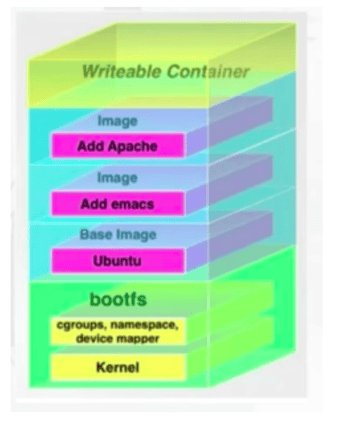
    That is, containers are isolated but share an operating system and, where appropriate, binaries and libraries. Docker provides an additional layer of isolation, making your infrastructure safer by default. This makes the application life cycle faster and easier to configure, reducing risks in your applications.

    For starters, José laid out Docker’s default mechanisms for security:

    • Linux kernel namespaces
    • Linux Control Groups (cgroups)
    • The Docker daemon
    • Linux capabilities (libcap)
    • Linux security mechanisms like AppArmor or SELinux


    Screen Shot 2018-04-08 at 7.17.58 AM

    José walked through others tools, add-ons, best practices, etc., to increase Docker container security. I will cover most of them here.

    Docker Inspect Tool. The Docker Inspect Tool is built into Docker. It provides information about the host name, the ID of the image, etc. and it comes up when you start Docker.

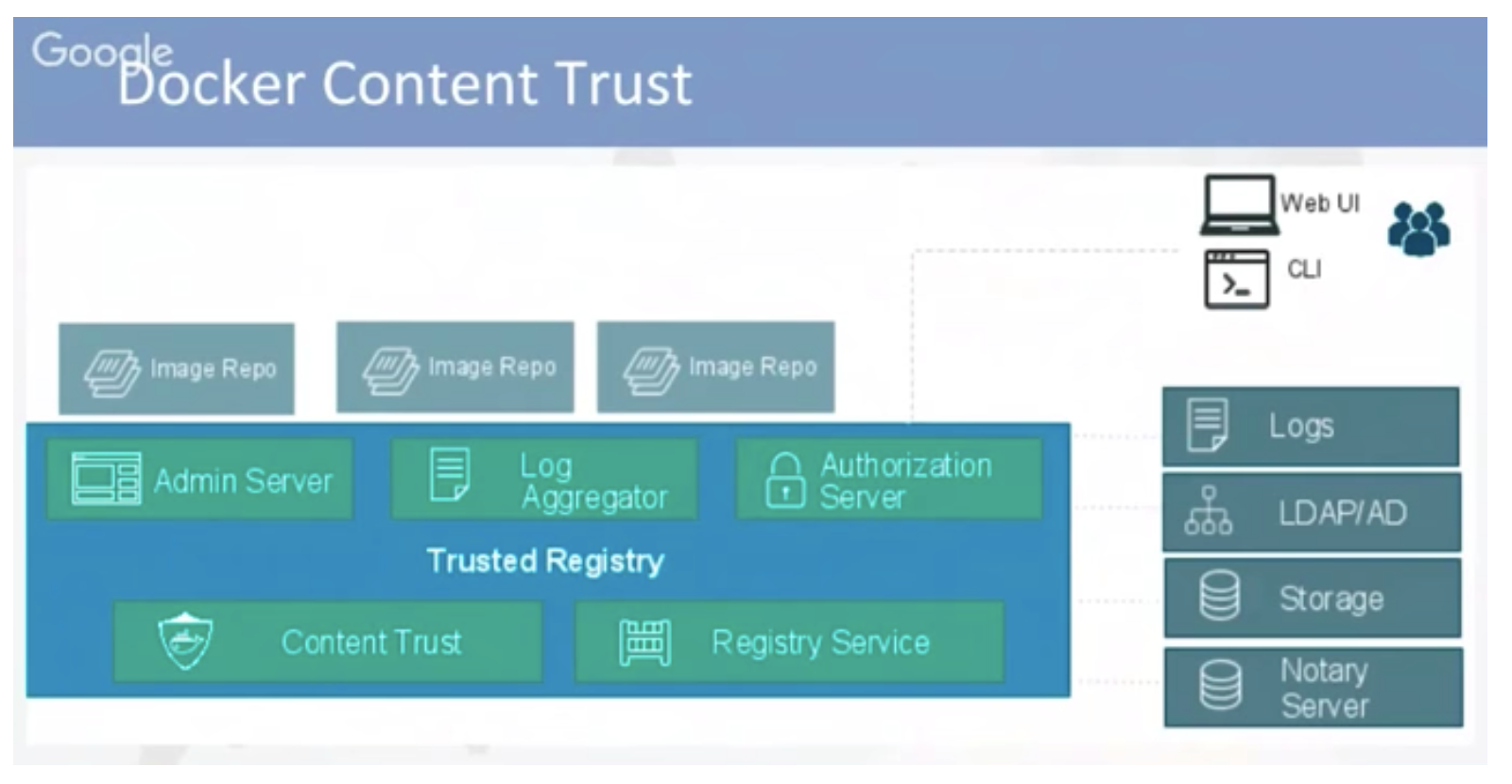
    Docker Content Trust. It protects against untrusted images. It can enable signing checks on every managed host, guarantee integrity of your images when pulled and provide trust from publisher to consumer.

    Screen Shot 2018-04-08 at 7.19.01 AM

    Docker File Security. Docker files build Docker containers. They should not write secrets, such as users and passwords. You should remove unnecessary setuid and setgid permissions, download packages securely using GPG and certificates, and try to restrict an image or container to one service.

    Container Security. Docker security is about limiting and controlling the attack surface on the kernel. Don’t run your applications as root in containers, and create specific users for testing and policing the Docker image. Run filesystems as read-only so attackers can not overwrite data or save malicious scripts to the image.

    José provided a useful checklist to check the security of a Docker container, but it’s not a short one. Remember, if you are going to deploy hundreds or thousands of these containers, you’ll want to ensure consistent handling of security concerns to keep the hackers at bay:

      • Do not write secrets to Docker files
      • Create a user
      • Follow version pinning for base images, packages, etc.
      • Remove unnecessary setuid, setgid permissions
      • Do not write any kind of update instructions alone in a Docker file
      • Download packages securely
      • Do not download unnecessary packages
      • Use COPY instead of ADD
      • Use the HEALTHCHECK command
      • Use gosu instead of sudo whenever possible
      • Use no-cache (if applicable) when building
      • Enable Docker Content Trust
      • Ensure images are free from known vulnerabilities
      • Ensure images are scanned frequently throughout your DevOps pipeline
      • Ensure your images, packages are up to date
      • Use file monitoring solutions for image layers (if required)

    Auditing Docker Images. You can scan your images for known vulnerabilities with a wide variety of commercial and open source tools such as:


    All of these solutions can be integrated in one element of your CI/CD pipelines — some can be integrated in multiple places.

    José explored these solutions and best practices in more detail and offered up technical implementation tips in his full talk, available for free here. If you are working on or interested in Docker security, his talk is worth your time.

    Thirsty for more DevOps discussions led by practitioners (not vendors)?  You too can binge watch 99 other talks from the All Day DevOps conference here.

    — Derek E. Weeks

  • Akamai Extends Scope of DevSecOps Reach

    Akamai Extends Scope of DevSecOps Reach

    Akamai pressed its case for becoming a strategic DevSecOps platform by adding a range of security capabilities to its network service platform that help isolate applications from cybersecurity threats.

    The company has added support for scripting to automate application security using its Kona Site Defender web application firewall as well as improved management and versioning support for application programming interfaces (APIs). Those capabilities complement an Akamai API Gateway for securing and managing APIs.

    Akamai is also updating Akamai Bot Manager, adding a client SDK for mobile applications to help mitigate distributed denial of service (DDoS) attacks. The company also is adding capacity to its scrubbing centers to further defend against large-scale DDoS attacks.

    Ari Weil, vice president of product marketing for Akamai, said the company is evolving into a platform that securely provides web applications with access to caching software and network infrastructure that dynamically scale up and down as required.

    The goal is to make the Akamai network a seamless extension of any DevOps processes that developers can programmatically invoke on demand regardless of whether their applications reside in a public cloud, on-premises or in a third-party hosting center, said Weil. Because Akamai sits between users and production applications, Akamai now plays a critical role in terms of bother DevOps and DevSecOps, he said.

    In term of accomplishing that goal, Weil conceded Akamai doesn’t have as much visibility in the DevOps community as it would like. The company has integrated its platform into continuous integration/continuous development (CI/CD) platforms such as Jenkins to reduce as many steps as possible for DevOps teams. But developers are not always fully cognizant of the security services that Akamai makes programmatically available, he said.

    Weil noted that as DevSecOps continues to gain ground, Akaimai expects many developers will increasingly appreciate those security services, especially as cyberattacks become both more frequent and lethal. A 2017 security report published by Akamai finds DDoS and web application attacks rose 14 percent and 10 percent, respectively, year over year.

    In effect, Akamai turns web application security into a large-scale zero-trust managed service that is available on thousands of points-of-presence (PoPs) around the world. In time, developers will only have to express their intent concerning the level of security to be applied. The execution of that intent will all be automated, Weil said.

    In an ideal world, all cybersecurity battles would be fought as far away from applications as possible. Rather than focusing solely on the edge of the corporate network, Akamai is encouraging DevOps teams to think in terms of layers of defense that starts where applications are cached at the edge of the network. In theory, platforms such as Akamai provide a lot more visibility into what types of cyberattacks are circulating in the wild hopefully long before they ever get a chance to impact an application. The challenge, however, lies in distinguishing between what security technology needs to be embedded in the application itself versus an on-demand service that’s only a simple API call away.

    — Mike Vizard

  • Building a Solid Foundation for Microservices Security

    Building a Solid Foundation for Microservices Security

    It’s often true that threats evolve faster than development practices and technologies can keep up with, which can be seen in the current microservices approach to application development. While microservices bring clear benefits to developers by enabling application deployment via modular, independently deployable services, they also open the door to new security vulnerabilities.

    Consequently, these changes in the approach to software development require a change in the mindset of developers regarding how they think about and implement security. Security now must be a core component of each service—security that can withstand the constantly changing nature of these interactive services. Each service must be a resilient and secure unit that is capable of interacting with other apps and services without compromising security. In addition, each service must be careful how it handles data at the edges to ensure every possible interaction can be secured, even when interacting with services that do not meet the required security standards.

    To fully address these security challenges, developers also need to change their mindset on how they approach privacy and security in their code. That means thinking of security from the genesis of the program and from within the code itself rather than relying on the infrastructure to secure the application. This approach enables developers to start their architectural decision-making by thinking of security as the foundation of their code, instead of as an accessory.

    Security from the Start

    In the bigger picture, DevOps teams must have full awareness and appreciation that there is no single approach to security, and that security and privacy considerations must be addressed case by case. Although there can be more, there are essentially five things that developers can do to make microservices security foundational to the development process.

    Compartmentalization

    First, developers must begin compartmentalizing the software development mission by attempting to make their microservices as essential as possible. Still, developers have to be careful not to go to extremes that result in the creation of a swarm of nanoservices performing a single task. The overall goal is to reduce responsibilities to the point where each single process lacks enough information to be a liability if it were to be breached.

    Encryption

    The role of encryption plays prominently in the new mindset for developers, so it’s imperative to utilize it on all of the data that each microservice needs and sending it on a perishable channel. This allows the cancellation of a compromised communication channel, rotation of the encryption keys used and retrying the message on a different channel or to a different node without worrying about a breach.

    A good example of this is a node where control has been lost in a high availability (HA) layout. By cancelling all message queues and resending the messages with a rotated key, it’s possible to continue functioning without worrying that the unresponsive node could be compromised and avoid a full stop.

    Disposable Channel Signing

    Developers will greatly improve their security posture in the software development life cycle (SDLC) by sending disposable channel signing and encrypting data to the services under their control. This will allow them to cancel credentials, and avoid data leakage, even when the control on the node is lost.

    Different Keys

    Developers are beginning to understand the efficacy in using as many different keys as may be needed since storage is a weak point in terms of encryption. The alternative is to use keys that are rotated regularly. This, however, requires going around the persistence solution and re-encrypting a lot of the data, which is not ideal. Besides, having layers of encryption will ensure that a single leakage from the storage keys will not grant access to plain data. Also, it’s important to use different keys for storage and transport, as re-encrypting on read is easy. This process avoids the need to spread keys and keep it tight.

    Key Access

    Finally, developers will benefit from making sure that all keys allow the minimum possible access while keeping in mind that they will need to tailor the time to live (TTL) as much as possible to the targeted use of each key. Although this approach may result in a complex permission schema, it delivers a massive reduction of the attack surfaces while adhering to security best practices.

    Conclusion

    Some of this may be common sense, and what is useful for one developer might not be sufficient for another. Generally, it’s good for developers to regularly challenge these suppositions on every service that they write, but the above formulated guidelines will serve almost every developer well by providing a stable foundation on which to begin their thinking. The universal viewpoint that they should all be taking is that security must be part of the DNA of their software.

    — Horacio Duran

  • DevSecOps: Don’t Invest In Hope

    DevSecOps: Don’t Invest In Hope

    A successful DevSecOps approach is rooted in action, not hope.

    There is a lot of investment in hope.

    I hope we won’t get breached.

    I hope our DevOps teams aren’t deploying thousands of vulnerable containers.

    I hope our developers aren’t downloading millions of vulnerable open source components.

    I hope our developers and security teams will figure out how to work together.

    I hope we won’t be fined under GDPR.

    I hope the hackers don’t notice.

    Yet, the fact remains that hope will not reduce breaches. Hope does not safeguard your containers or components. Hope cannot achieve collaboration. Hope won’t prevent a fine. Hope is not a strategy.

    Many organizations are considering their approach to DevSecOps. They are moving beyond hope to strategy. They are choosing action over indifference. They are taking the first step of their journey.

    Here are three ways to start your journey:

    Picture This

    We all learn from others. Here is a collection of 20 DevSecOps reference architectures. They reveal the choices and priorities others have made ahead of you. Look at what they did. Choose to do something similar, or create your own path from a mix of their ideas. If your canvas is blank, use these to draw something.

    Watch This

    The pioneers are the ones with the arrows in their backs. Another word for DevSecOps pioneers is practitioner. And many practitioners have navigated their journey successfully enough to share it. More than 15 practitioners shared the tale of their DevSecOps journey during All Day DevOps. Every session was recorded online. Every session is free. Start with this one from DJ Schleen at Aetna and then pick your next one.

    Start There

    In a panel discussion I sat on recently as a prelude to DevSecOps Days at this year’s RSA Conference, I heard some very practical advice (find the recording here). One of the other panelists, Stephanie Derdouri from Fannie Mae, advised our audience to start with one thing. Don’t pick a bunch of strategies and tactics. Just pick one painful, suboptimal or annoying practice tied to security and improve that element within your DevOps practice.

    Pick only one. Start there.

    Hope is not a strategy. Action is your only safe option. Take the first step.

    — Derek E. Weeks

  • Barracuda Networks Survey: DevSecOps Is Hard

    Barracuda Networks Survey: DevSecOps Is Hard

    Organizations that have adopted DevSecOps processes may be making progress when it comes to improving cybersecurity, but it’s far from easy. A survey of 618 IT decision-makers conducted by Dimensional Research on behalf of Barracuda Networks, a provider of IT security software and appliances, finds half have adopted either DevOps, DevSecOps or a continuous integration/continuous development (CI/CD) platform. A full 93 percent of those IT decision-makers said they faced challenges integrating security into those practices.

    Top challenges cited include: Existing security technologies don’t integrate with application development environments (63 percent), application developers are not comfortable with security (48 percent), and security processes have not evolved (48 percent).

    Much of the frustration can be tied to reliance on firewalls that don’t feature application programming interfaces (APIs) or are natively integrated with a public cloud, said Tim Jefferson, vice president for public cloud at Barracuda Networks. Each cloud service provider has a unique environment that requires providers of IT security software to write code that natively integrates with that platform. IT organizations can’t simply cut and paste security controls created for on-premises IT environments mainly because the cloud provider has already implemented its own controls at the infrastructure level. The IT organizations need to develop their own controls for the application layer, each of which then must be layered on top of the controls put in place by the cloud service provider.

    In the absence of those capabilities, developers get frustrated because a firewall running on a virtual machine on a public cloud presents them with a graphical user interface (GUI) rather than an API. Developers in the age of the cloud are not going to engage with any technology that they can’t programmatically invoke via an API, Jefferson said.

    Not surprisingly then, the survey finds the most requested firewall capabilities requested are cloud-native integration (74 percent), ease of deployment and configuration by cloud developers (59 percent), ability to regulate traffic flows between on-premises IT environments and public clouds (56 percent) and distributed policy enforcement (53 percent).

    Because many IT professionals don’t have these capabilities many of them conclude on-premises IT environment are more secure than public clouds. More than half the respondents (56 percent) say on-premises cybersecurity is still superior to a public cloud. Clearly, there a lot of technical and emotional factors that go into those assessments, but regardless of the truth, perception remains reality.

    Regardless of the approach taken, however, organizations that deploy firewalls in the cloud are expecting to pay for those services on a consumption basis, which doesn’t always align with taking a firewall running on virtual machine and then deploying it on a public cloud.

    Jefferson said that as cybersecurity in the age of the cloud continues to mature, expectations are rising regarding the capabilities a firewall should be able to provide—especially when it comes to controlling the flow of traffic coming into and out of a public cloud.

    Obviously, anything to do with DevSecOps these days is still evolving. But whatever the cybersecurity future holds the relationship between on-premises and cloud security is far more nuanced than many appreciate.

    — Mike Vizard

  • DevOps Isn’t Getting Cloud Security Right (and What Can Done About It)

    DevOps Isn’t Getting Cloud Security Right (and What Can Done About It)

    The song title of Billy Joel’s 1977 hit, “Get it Right the First Time” aptly describes what DevOps teams need to take to heart when making the jump to the public cloud. But in most cases, security is lacking in the pipeline when making the shift—and a change in DevOps culture and mindset is necessary to “get it right the first time” for cloud security, according to McKinsey analysts.

    It seems commonsensical to make sure adequate security protocols are extended to the DevOps pipeline before migrating to the public cloud. But in practice, statistics tell a different story.

    According to analyst firm McKinsey, a full 78 percent of more than 100 firms recently surveyed are not reconfiguring their security tools when migrating to the cloud. Similarly, most security standards in place among the enterprises listed in the survey are non-sustainable for cloud networks.

    “There are, of course, many security configurations for a public cloud for DevOps that need to be in place,” said James Kaplan, a McKinsey partner and cybersecurity lead. “Creating your server image in a public cloud can create many vulnerabilities [compared to in-house data centers].”

    Security improvements will obviously need to be made on an industrywide scale in the near future as more companies embrace the cloud for DevOps. Currently, only 10 percent enterprises McKinsey surveyed have ported more than 40 percent of their workloads to the cloud. Within three years, that percentage is expected to jump, as 80 percent plan to migrate more than 40 percent of their workloads to a public cloud platform.

    Culture Lag

    At issue is how DevOps teams’ cloud projects very often remain straddled by security practices dating back to the 1990s.

    “Most DevOps security is still with a ticket-based model,” Kaplan said. “They just called Joe in security and asked him to do x, y and z.”

    Porting legacy infrastructure and operations to the cloud can also be problematic. A startup, for example, might make the jump more easily than a 30-year-old Fortune 500 company with data centers located in the North America, Europe and Asia. “It’s one thing if you’re building greenfield, such as creating a video streaming service from the ground up,” Kaplan said. “It’s much tougher to go to an agile DevOps cloud platform world if you are dealing with 30 years of legacy applications, eight mergers and all that type of good stuff.”

    The Big Meld

    Cloud servers can be fired up and ready to use in minutes. But it can take weeks before standalone security departments catch up. This might mean waiting on a security team to manually complete vulnerability scanning, penetration tests and firewall installation before cloud deployment. Or, in the worst case, these steps remain incomplete, leading to relatively easy-to-exploit vulnerabilities on the public cloud.

    “DevOps cloud security requires particularly high levels of sophistication and capabilities, as well as agility,” Kaplan said. “There has also traditionally been less focus on speed.”

    The solution is to converge security with the DevOps from the outset ahead of cloud development. In this way, security controls, reviews and deployment are integrated with DevOps, to create DevSecOps for the cloud migration process. This heavily involves developing APIs for security automation, Kaplan said.

    Implementing DevSecOps also requires investments in training and culture. This consists of ensuring DevOps teams receive additional training  to ensure security is integrated into every step of development work and for developers to maintain security support once the switch to the cloud is complete, Kaplan said. Training ensures DevOps team members have working knowledge of security APIs and orchestration technologies, and are eventually able to create new security APIs for DevSecOps, Kaplan said.

    The end result is that cloud deployment remains agile, as it should be. Cloud migration is done more swiftly and efficiently compared to traditional security models, once the DevOps team has acquired the security knowledge it needs, Kaplan said.

    “DevOps teams really need to expand their purview to think more about security. They must create more rigor around the security services and how the developer journeys should involve security,” Kaplan said. “And they then need to think about how to incorporate those security APIs into the application scripts for infrastructure APIs, capacity scaling and what have you.”

    — B. Cameron Gain

  • DevSecOps: Deception in Depth

    DevSecOps: Deception in Depth

    Mantraps, tripwires and tarpits … sounds like the start of a solid spy-movie plot, doesn’t it? These are among the many concepts of physical security that are making the crossover to software security.

    You’ve likely heard that security is all about defense in depth—the idea of layering several defensive measures so that their combined effectiveness is stronger than if they were used individually.

    In the case of deception, we are taking tried-and-true warfare approaches and applying them to DevSecOps. According to researcher, deception specialist and popular speaker Herb Todd, there is no rule of law in warfare, and in environments where you put code on the web, you are giving the world access.

    Deception Approaches

    There are two primary approaches to deception in software security. The first is to get attackers to look in places where you have no vulnerabilities. Todd would call this, “Appear weak where you are strong.” This is what honeypots do: offering an attacker a weak-looking target that appears as if doors are unlocked and there’s an opportunity to gain a foothold. All the while, there is no real vulnerability to be found, and the defensive team can be alerted to an adversary on the network.

    The second approach is to isolate or slow down attackers as they progress through your networks and application. One way to do this is to add tripwires throughout. When parts of your web application starts being manipulated in ways that normal users wouldn’t do, you know you have an adversary testing your application looking for vulnerabilities. At this point, you can move them off to a segmented portion of your application or network through the use of a mantrap, or slow them down with a maze or tarpit.

    Provoke Action

    Deception measures hinge on being able to get attackers to take an action. This is the main goal of deception. If we can provoke an action from the adversary, then we can begin to understand them and to track them throughout our system. This creates a feedback loop in DevSecOps for developers, operations and security to determine how many adversaries are currently interacting with the system, what they are attempting to do and how to add new defenses in the future.

    None of the major data breaches you read about start with the organizations saying, “Our security team has been tracking these attackers for weeks.” In fact, it is the exact opposite: We usually learn that the attackers had been inside the system and exfiltrating data undetected for months on end. The organization didn’t know they were under any attack until after their database got dumped on the internet or leaked to the media.

    Start with Tripwires

    Deception sounds great, but how do you go about it? In Todd’s talk on the Modern Security Series, he gave several ideas on how to get started in the case of web application security development. Methods in DevSecOps include adding fake paths to robots.txt and fake hidden fields to your application. When someone hits your tripwires, you log it and fire an alert for the team to investigate. As you gain familiarity with that, moving into tarpits and mantraps begins to make more sense.

    One example that Herb Todd gave in his talk was to add a hidden field of “encrypted-auth” and set it equal to “YWRtaW49ZmFsc2U=”. An astute web developer will notice that this is not actually encrypted. This is a base64 encoding of “admin=false.” When an attacker sees this, they will immediately think, “What if I tried sending admin=true?”

    So the attacker takes the string “admin=true” and then uses base64 encoding to produce “YWRtaW49dHJ1ZQo=” and submits that. Now, if your application receives a value for the hidden field that isn’t the original value or matches “YWRtaW49dHJ1ZQo=”, then you have actionable intelligence to alert on.

    When creating a tripwire is this simple, why stop with just one? Adding small tripwires throughout an application through DevSecOps can be highly valuable to identify more advanced attackers.

    DevSecOps: Making a Practice of Deception

    While deception is beginning to gain favor among AppSec professionals and thought leaders, it’s not yet standard practice by any means. But this should soon change, as  the next year or two see the best security teams adopting deception strategies—and for good reason. With traditional methods such as web application firewalls (WAFs) breaking down in the face of high-volume traffic and more sophisticated threats, security needs to become more creative. Defense-in-depth concepts such as deception have been proven effective in the physical worlds of warfare and spycraft—and when incorporated into DevSecOps, they can be just as powerful for ensuring protection in the digital world as well.

    — James Wickett