Tag: Secure Software

  • Survey: Widespread Inability to Remediate App Vulnerabilities

    Survey: Widespread Inability to Remediate App Vulnerabilities

    A survey of 621 IT and security professionals published this week found only 20% are confident in their ability to detect a vulnerability before an application is released.

    Conducted by the Ponemon Institute on behalf of Security Journey, a provider of cybersecurity training services for developers, the survey finds 61% struggling to remediate vulnerabilities effectively, with 55% blaming misalignment between development, security and compliance teams for delays.

    A third of respondents (33%) said teams lacked a common view of applications and assets, with 38% acknowledging they lack the ability to hold departments accountable for patching applications. Only 11% of organizations believed they patch vulnerabilities effectively in a timely manner, the survey finds.

    In the 12 months prior to the study, 54% of respondents suffered a security incident due to an unpatched vulnerability, with 51% experiencing more than eight incidents.

    Overall, half (50%) admitted they fail to test the security of their applications after they have been released. Only 36% specifically teach developers to write secure code. Just one-fifth (21%) educated developers on vulnerability remediation. Less than half (43%) have invested in training provided by a third party.

    When training is provided, 68% of respondents also admitted immediate feedback is not provided and less than half (47%) said secure coding training is customized to meet developer needs. Half (50%) of those who provided training have no formal assessment to measure knowledge gain, the survey found.

    Amy Baker, chief marketing officer and security education evangelist for Security Journey, said the survey makes it clear much work still needs to be done in terms of teaching developers how to write secure code.

    In addition, too many software development teams are overly optimistic about their ability to remediate known vulnerabilities the next time they plan to update an application, said Baker. Many developers move on to the next application simply because either the pressure to meet delivery deadlines is too intense or there is some other emerging technology, such as large language models (LLMs), that needs to be learned, she added. In fact, too many organizations are far too focused on the rate at which applications are built and deployed at the expense of cybersecurity, Baker noted.

    That’s especially problematic because cybercriminals have become much more adept at monitoring application deployments and updates, she added.

    The amount of time between when code is deployed and when cybercriminals begin scanning it for vulnerabilities is now measured in hours rather than days. Developers, unfortunately, are deploying more insecure code than ever. In fact, much of that code is insecure by design, noted Baker.

    Overall, nearly half of respondents (48%) only train developers annually, bi-annually or when an incident occurs. More than two-thirds (68%) only train developers on how to implement secure coding practices to meet compliance requirements. In effect, because developers are not taught security in school, what training they do receive is on the job, said Baker.

    Clearly, there is still much work to be done when it comes to implementing DevSecOps best practices to improve application security. In the meantime, the amount of code that needs to be patched has already reached proportions that most application development teams are never going to be able to effectively address.

  • Vulnerability Management for DevOps Teams: A Practical Guide

    Vulnerability Management for DevOps Teams: A Practical Guide

    Vulnerability management is a process that includes the identification, categorization, prioritization and resolution of security vulnerabilities in software systems. It involves a continuous cycle of protection to ensure that your digital assets are secure and your operations are running smoothly.

    With the rapid evolution of technology, fast-moving cloud-native systems and evolving cyber threats, it’s critical to stay ahead of the game. The goal is to close the gap between the discovery of vulnerabilities and their resolution, thereby minimizing the window of opportunity for potential attacks.

    Vulnerability management is not just about finding and fixing vulnerabilities. It’s also about understanding the nature of the vulnerabilities and the potential impact they could have on your network and systems. This understanding informs the prioritization process, helping teams decide which vulnerabilities need immediate attention and which ones can be addressed later. See this blog post for an in-depth review of vulnerability management.

    Why is Vulnerability Management Important for DevOps Teams?

    With the DevOps approach, development and operations teams work together throughout the software life cycle. This collaboration results in faster development times and more reliable software. However, the fast development cycle also introduces new security challenges. This has given rise to the DevSecOps paradigm, where developers, operations teams, and security experts collaborate during all stages of the development lifecycle.

    Here are a few reasons vulnerability management is a critical part of DevSecOps practices:

    Early Detection of Vulnerabilities

    DevOps teams are under constant pressure to deliver high-quality software quickly. However, the speed of delivery should not compromise the security of the software. Vulnerability management helps DevOps teams identify vulnerabilities early in the development process. This early detection allows teams to address security issues before they become serious problems.

    Early vulnerability detection is not just about finding vulnerabilities; it’s also about understanding the potential impact of those vulnerabilities. It involves analyzing the vulnerabilities to determine their severity and the risk they pose to the system. This analysis informs the prioritization process, ensuring that the most critical issues are addressed first.

    Building Continuous Security Into CI/CD Pipelines

    Integrating vulnerability management directly into continuous integration/continuous deployment (CI/CD) pipelines is essential for maintaining continuous security. CI/CD pipelines automate the steps in software delivery, from code integration to deployment, ensuring faster and more consistent releases. By embedding vulnerability management into these pipelines, DevOps teams can automatically scan for and address security vulnerabilities at each stage of the software development life cycle.

    Incorporating vulnerability management tools into CI/CD pipelines allows for automatic scanning of code repositories, container images, and even infrastructure-as-code (IaC) configurations for known vulnerabilities. This integration means that any security issues are identified as soon as code is committed or containers are built, not just at the deployment stage. The advantage of this approach is twofold: It reduces the risk of deploying vulnerable software, and it allows developers to fix issues in their context of development, making the process more efficient.

    Cost-Effective Development and Operations

    Implementing vulnerability management can lead to cost savings for DevOps teams. By identifying and resolving vulnerabilities early in the development process, teams can avoid the high costs associated with fixing security issues after the software has been deployed. In addition, vulnerability management can help prevent costly security breaches that could damage the company’s reputation and result in financial loss.

    Moreover, vulnerability management can contribute to more efficient operations. By systematically managing vulnerabilities, teams can avoid wasting time and resources on low-priority issues. Instead, they can focus their efforts on addressing the most critical vulnerabilities.

    Enhancing Cross-Team Collaboration

    Vulnerability management can also enhance cross-team collaboration within the DevOps environment and between DevOps and security teams. By providing a clear framework for identifying, categorizing, prioritizing and resolving vulnerabilities, it fosters a shared understanding of security issues among team members. This shared understanding can facilitate communication and cooperation, ultimately improving the software product’s security posture.

    Strategies for Integrating Vulnerability Management Into DevOps Processes

    Adopt a ‘Shift-Left’ Approach

    The ‘shift-left’ approach is a strategy that involves shifting the security measures to the early stages of the DevOps pipeline. Traditionally, security checks and vulnerability assessments were conducted toward the end of the development cycle, often leading to late discovery of security flaws and vulnerabilities.

    By shifting these security measures to the left, i.e., to the earlier stages of the development cycle, DevOps teams can catch and fix security vulnerabilities early on. This approach aligns well with the DevOps philosophy of early error detection and continuous improvement.

    Automation of Vulnerability Scanning and Detection

    Automation is at the heart of DevOps. It allows for rapid, reliable and consistent processes, freeing up the team to focus on what they do best – delivering quality code and features. Automation should also extend to vulnerability management.

    Automating vulnerability scanning and detection means integrating security tools into the DevOps pipeline that can automatically scan the code, detect vulnerabilities and even suggest fixes. This approach ensures that security checks are not skipped or forgotten and that vulnerabilities are dealt with promptly.

    Security as Code

    Another strategy for integrating vulnerability management into DevOps processes is embracing the principle of security-as-code. This principle treats security infrastructure and configurations as code, allowing them to be part of the DevOps pipeline.

    By adopting security-as-code, DevOps teams can ensure that the security configurations and infrastructure are always up-to-date and follow the best practices. Like the rest of the code, security configurations can be version-controlled, reviewed, tested and automatically deployed.

    Collaboration Between Security and DevOps Teams

    One of the key tenets of DevOps is collaboration between different teams. In a DevSecOps paradigm, this collaboration extends to the security team as well. Integrating vulnerability management into DevOps processes fosters close collaboration between the security and DevOps teams.

    The security team can provide valuable insights into the security landscape, vulnerability management tools and best practices. On the other hand, the DevOps team can ensure that these insights and tools are integrated into the DevOps pipeline.

    Continuous Monitoring and Feedback Loop

    Continuous monitoring is crucial for effective vulnerability management. Continuous monitoring ensures that the security state of the system is always known and that any changes or vulnerabilities are promptly detected. The feedback loop ensures that the insights gained from monitoring and vulnerability assessments are fed back into the development process, leading to continuous improvement in security.

    Regular Training and Awareness

    Finally, regular training and awareness are crucial for integrating vulnerability management into DevOps processes. DevOps teams should be trained in security best practices, threat landscape, and use of vulnerability management tools.

    Regular training ensures that the team stays up-to-date with the latest security trends and vulnerabilities. Awareness sessions can help the team understand the importance of security and vulnerability management, encouraging them to take an active role in securing the system.

    Conclusion

    In conclusion, integrating vulnerability management into DevOps processes is not only possible but crucial for secure and reliable systems. Adopting a shift-left approach, automating vulnerability scanning and detection, embracing security-as-code, fostering collaboration, implementing continuous monitoring and feedback and ensuring regular training and awareness are some of the strategies that can help achieve this integration. 

    Remember, vulnerability management is an ongoing process that requires commitment, collaboration and continuous improvement.

  • Lineaje Unfurls Platform for Creating and Managing SBOMs

    Lineaje Unfurls Platform for Creating and Managing SBOMs

    Lineaje this week unfurled a platform for creating and managing the software bills of materials (SBOMs) that are increasingly mandated by enterprise IT organizations and government agencies.

    Fresh from raising $7 million in seed funding, Lineaje CEO Javed Hasan said the SBOM360 platform provides a simpler way to manage all the SBOMs that will soon inundate organizations.

    The SBOM360 platform makes it possible to use a search engine to discover all the components of an application and all the dependencies that exist within it, including vulnerabilities, and indicators of compromise (IOCs) in seconds, said Hasan. The company then adds fingerprinting technology that enables the platform to attest to the authenticity of the entire software supply chain, he added.

    While there is no shortage of tools for creating SBOMs, there are not as many platforms that enable DevOps teams to both create and manage them. In the wake of an executive order issued by the Biden administration requiring federal agencies to have an SBOM for all the software they use, interest in SBOMs to better secure software supply chains has significantly increased. However, very few organizations have a process in place that enables them to operationalize all the SBOMs that might be created.

    More challenging still, the pace at which software is being updated has accelerated to the point where many SBOMs are likely to be outdated. The only way to keep pace with that rate of change is to rely on a platform designed from the ground up to dynamically create SBOMs in seconds, noted Hasan.

    Finally, IT organizations are now being held more accountable for legacy software often polluted with vulnerabilities that need to be remediated, he added. As such, organizations need a tool that makes it simpler to identify vulnerabilities within the context of an SBOM.

    It’s not clear whether greater awareness of the need for SBOMs is translating into concrete action, but the expectation is that more organizations will soon be following the lead of the federal government by requiring them. That shift will naturally bring a lot of additional pressure to bear on DevOps teams. Historically, organizations tended to allow developers to aggregate software components without always checking to see if they are compromised. Cybercriminals are becoming increasingly more adept at injecting malware into software components in the hope that malware will find its way into any number of downstream applications.

    Regardless of the approach an organization takes to better secure software supply chains, more rigor is being applied to how software is built and deployed. The days when developers were free to aggregate software components as they saw fit by, for example, relying on open source software downloaded from a repository, are now at an end. The expectation now is the developer will be held accountable for the integrity of all components used within an application as organizations move to implement additional processes to more rigorously review code before it is deployed in a production environment.

  • What Developers Need for Software Security Success

    What Developers Need for Software Security Success

    Given today’s evolving threat landscape, organizations and businesses in every sector now have a critical need to produce secure software. Criminal gangs, professional attackers and hostile nation-states are employing advanced tactics designed to exploit any vulnerabilities in programs, applications, networks and even raw code. Attackers are constantly finding new ways to bypass even the most advanced protections and defenses. For example, many have shifted their focus from delivering malware to instead compromising credentials, or launching targeted attacks against a supply chain. And while those high-level incursions are happening with much greater frequency, so too are the more basic attacks like ransomware and SQL injections that have been a scourge on cybersecurity defenses for many years. It’s becoming apparent that while cybersecurity platforms and defenses are critical components in defense against modern attacks, what is truly needed is secure code that can be deployed free from vulnerabilities. And that requires security-aware developers with verified security skills.

    Most developers say they are willing to champion security and commit to higher standards of code quality and secure output, but they can’t do it without a lot of support, as well as a reworking of the traditional metrics by which they are often judged by their employers and organizations.

    Why Most Developers Don’t Prioritize Security

    Coding best practices have continued to evolve over the years in response to business needs and market trends. In the past, most applications were created using the so-called waterfall development model where software engineers worked to get their code ready to meet an ongoing series of milestones or goals before moving on to the next phase of development. Waterfall tended to support the development of programs that, having met all of the previous milestones along the way, were free from bugs or operational flaws by the time they were ready for the production environment. But it was slow going, with sometimes 18 months or more between starting a project and getting to the finish line.

    The Agile method tended to replace Waterfall, putting a much greater emphasis on speed. And this was followed by DevOps, which is built for even more speed by combining development and operations together to ensure that programs are ready for production almost as soon as they clear the final development tweaks.

    Putting speed over security—and nearly everything else beyond functionality—was a necessity as the business environment evolved. In a cloud-based world where everyone is online all the time and mobile transactions by the millions can happen every few seconds, getting software deployed and into the continuous integration and continuous delivery (CI/CD) pipeline as quickly as possible is critical for business success.

    It’s not that organizations didn’t care about security. It’s just that in the competitive business environment that exists in most industries, speed was seen as more important. And developers who could match that speed thrived to the point where it became the primary means by which their job performance was judged.

    Now that advanced attacks are ramping up so dramatically, deploying vulnerable code is becoming a liability. The preference is once again shifting, with security increasingly becoming the primary focus of software development, with speed a close second. Bolting on security after the fact is not only dangerous, it also slows the process of deploying software. That has led to the rise of programs like DevSecOps that attempt to merge speed and security together to help generate secure code. But developers trained for pure speed can’t become security experts without a lot of help and support from their organizations.

    What Developers Need

    The good news is that most developers want to see a shift to secure coding and a reprioritizing of security as part of the development process. In a comprehensive survey conducted by Evans Data of over 1,200 professional developers actively working around the world earlier this year, the overwhelming majority said they were supportive of the concept of creating secure code. Most also expected it to become a priority in their organizations. However, only 8% of the respondents said that writing secure code was easy to accomplish. That leaves a lot of room for improvement within most organizations’ development teams between what is needed, and what is required in order to get there.

    Simply mandating secure code won’t get the job done. Development teams need training, support and a change in how software engineers are valued and judged within their organizations.

    The biggest thing that is needed is more and better training for them. And it should be customized so that less experienced developers can begin their training by learning how to recognize the kinds of common vulnerabilities that often creep into code, with lots of hands-on learning and examples. Meanwhile, more advanced developers who demonstrate their security skills can instead be tasked with things like advanced threat modeling concepts.

    Teamwork should also be emphasized so that the developer community can help one another grow their skills. Skilled and willing developers who know security should be appointed as security champions. Their responsibility as a champion will be to help fellow developers improve their skills. And while a security champion is almost always an informal title, they should be given the respect, rewards, and compensation that such an important position deserves.

    In addition to funding and supporting training programs and security champions, including giving developers enough time away from coding in order to properly participate in those programs, organizations also need to change the way that developers are evaluated. The primary metric for rewarding developers needs to shift away from raw speed. Instead, evaluations could reward those developers who can create secure code that is free from vulnerabilities or exploits. Yes, speed can be an evaluated factor as well, but first and foremost, code needs to be secure and free from vulnerabilities.

    Producing insecure or vulnerable code is no longer an acceptable risk for most businesses. And bolting on security after the fact is becoming increasingly ineffective. Thankfully, the best weapon to fight this disturbing trend is having the developer community produce secure code that attackers can’t exploit. Most developers are willing to step up to that challenge. They just need the proper training and support to help make it happen.

  • GitHub Brings 2FA to JavaScript Package Manager

    GitHub Brings 2FA to JavaScript Package Manager

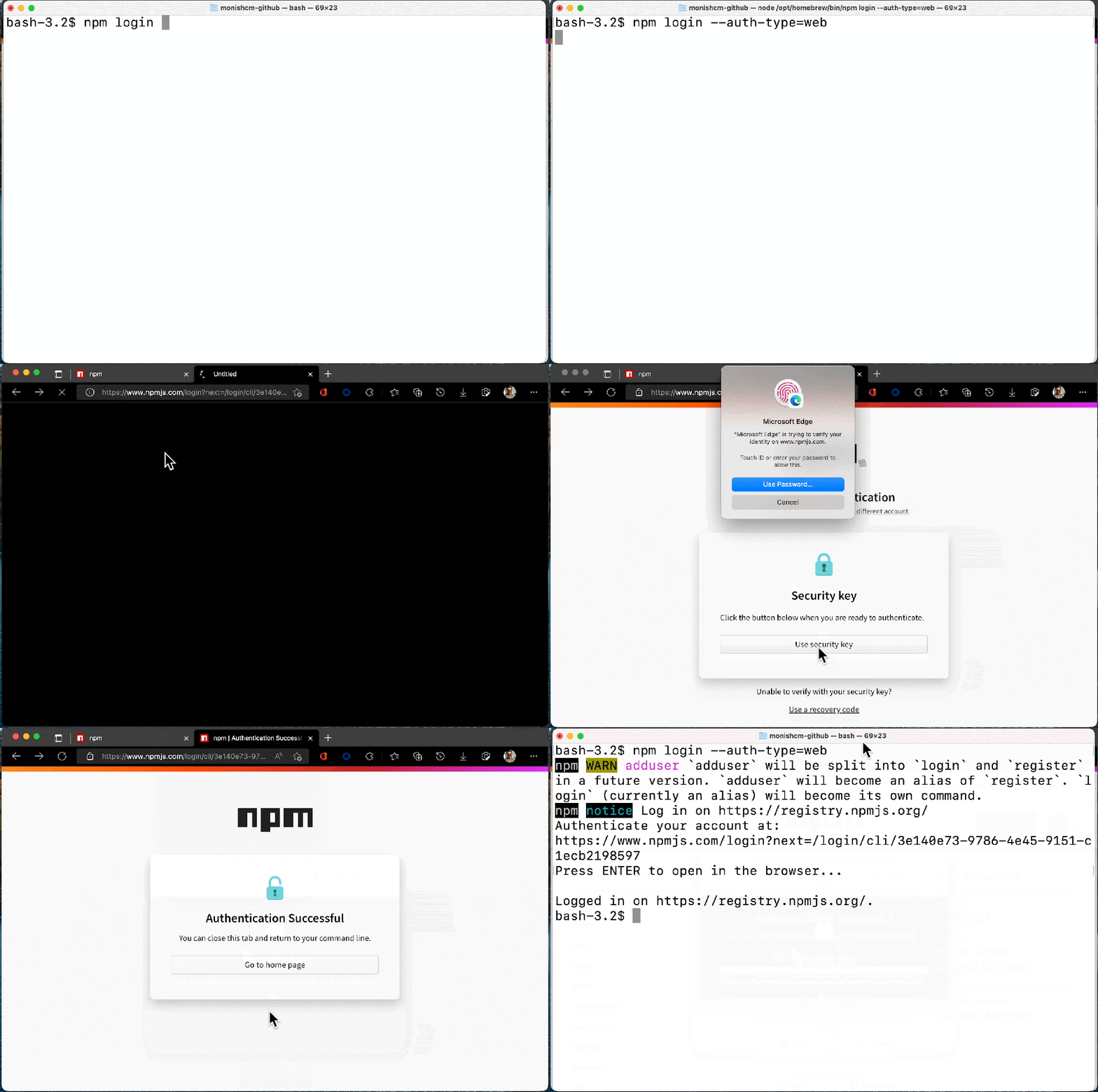
    GitHub has made generally available a two-factor authentication tool for the package manager for JavaScript applications maintained by its NPM, Inc. arm.

    In addition, all npm packages have been re-signed and there is now an npm command line interface (CLI) command to audit package integrity.

    Finally, GitHub has added the ability to connect GitHub and Twitter accounts to npm along with a streamlined login and publishing experience with the npm CLI.

    Myles Borins, staff product manager for open source at GitHub, said these enhancements are part of an ongoing effort to enable organizations to better secure their software supply chain by better protecting credentials against being used to take over GitHub accounts.

    There isn’t a huge volume of these types of attacks, but it’s apparent cybercriminals are attempting to compromise the security of software supply chains by gaining illicit access to the platforms used to build applications, noted Borins. Once cybercriminals gain access, they could potentially insert malware in software components that could find its way into any number of downstream applications. That malware can then be used to, for example, potentially launch a ransomware attack or simply exfiltrate data. More troubling still, that malware might begin to spread laterally across an entire application environment.

    GitHub is currently dealing with the fallout from a report that its repositories were attacked; that turned out to be a false alarm. The repositories attacked turned out to be either forks or clones of real, popular repositories with names similar to legitimate repositories on the GitHub platform. No malicious code was actually merged into any of the original repositories; however, it’s apparent cybercriminals are using a technique known as spoofing commit metadata to attempt to trick developers into committing code to a fake repository.

    The challenge that GitHub is trying to navigate is the degree to which some security controls should be enabled by default based on the level of risk, said Borins. Individual developers, for example, might have a higher tolerance for risk than an enterprise IT organization building an application that is core to the processes that drive the business, he noted. In some cases, organizations may opt to restrict access altogether whenever a user name/password can’t be remembered while others will simply limit access to ensure productivity is maintained, added Borins.

    In general, the average enterprise IT organization is likely to have a higher tolerance for disrupting workflows to make sure critical intellectual property is always protected, he added.

    The critical issue, of course, is no one knows for sure what open source component might one day wind up in what application. Regardless of the type of application, developers now routinely reuse code that could contain any number of known vulnerabilities or zero-day vulnerabilities that have yet to be discovered. The foundation for building secure DevSecOps workflows for most organizations at a bare minimum is going to start with implementing two-factor authentication, said Borins.

    Regardless of the DevSecOps approach, just about everyone recognizes there is a need to better secure software supply chains. The one thing that remains to be determined is what impact achieving that goal might actually have on the rate software is being built and delivered.

  • The Age of Software Supply Chain Disruption

    The Age of Software Supply Chain Disruption

    The software supply chain is swiftly becoming a widespread attack vector, and securing it is now in the spotlight. Software supply chain attacks have become a given in 2022, reports Darktrace.

    SolarWinds, Kaseya and GitLab are just a few examples of organizations that have been vulnerable to attack in recent years. We’ve also witnessed an increasing number of exploits, like Log4j and Log4Shell that have the potential to affect billions of devices. What these instances have in common is they leverage vulnerabilities in open source software and third-party dependencies commonly used in the software delivery process — meaning one corrupt package could have broad encompassing impacts on the tech industry at large.

    I recently chatted with Doug Dooley, COO, Data Theorem, about the consequences of today’s intricate software supply chains. “The software supply chain problem is bad, but it’s only going to get worse in the next five years,” he said. According to Dooley, application security requires a continuous context of how the app functions at runtime in a software ecosystem—otherwise, it will continue to miss gaping holes in the big picture.

    Understanding Software Supply Chain Disruption

    Most people understand what a traditional product supply chain is—it encompasses all the components involved to bring a product to the end consumer, from raw materials to manufacturing, distribution and retail locations. But, amid the pandemic and recent international conflict, we’ve witnessed how brittle this chain is. If you shut down one of these components, all consumers feel the effect, resulting in everything from gas hikes to baby food shortages. A full 61% of organizations were hit by supply chain attacks in 2021.

    In software, the supply chain can be thought of similarly—there are many components involved between a software product and the end consumer. The developer writes code, integrates third-party libraries and frameworks, puts it in source code systems, pushes it to test environments and eventually deploys it to production. And often, DevOps has the view of this whole picture.

    “DevOps has become some of the most powerful people in the business,” said Dooley. “They can take a business person’s idea and turn it into reality in the form of an application.”

    Third-party exposures can create huge disruptions in this above workflow. This could take the form of insecure libraries, underlying cloud vulnerabilities or API vulnerabilities, says Dooley. “Customers will embed APIs in the software stack—to them, it’s a black box.” There’s also the potential for misconfigured S3 buckets, which continually leak millions of records. More serious application security threats include remote code execution, which can invoke a detrimental loss of control.

    Why Now?

    So, why the sudden peak in software supply chain-related security incidents? After all, open source software, APIs and third-party vendors have been around for decades. Well, according to Dooley, there are several factors at play here.

    For years, the Silicon Valley mantra has been to ‘move fast and break things.’ Take Netflix engineering, for example, which is constantly evolving services and releasing dozens of changes per day. According to Dooley, such rapid application development often means that security is following development rather than preceding it or becoming integrated into the process, à la DevSecOps. This could lead to what he calls an “ambulance chaser moment.”

    The attack surface is heightened as the number of third-party suppliers and dependencies increases. The average company has 254 SaaS apps, Productiv data found. Also, on the attacker side, we’re seeing increasing levels of automation and sophistication. “You only have to be right one time when attacking,” said Dooley. “The deck is stacked in an attacker’s favor.”

    Strengthening The Chain

    The software supply chain issue is a complex problem that won’t be solved by any single action. However, Dooley offered several tips for companies to consider as they confront this broad problem:

    • Source code analysis and vendor management. It’s important to vet partners and have a process to audit new software by scanning for common vulnerabilities and exposures (CVEs). Yet, source code analysis falls short in many areas, admitted Dooley, as it is unlikely you will be able to view the source code behind cloud API calls and production behavior doesn’t always match documentation.
    • Continuous runtime security monitoring. New exploits are being found constantly. Thus, organizations require a continuous defensive posture at runtime, even if they were found to be secure in development. Continuous full-stack discovery must consider many third-party components, like SDKs, open source code, mobile apps, web services, cloud services, APIs and identity and access management, explains Dooley.
    • Increased transparency with SBOMs. More widespread use of software bills of materials (SBOMs) will be critical to increasing transparency across the industry. Just as nutrition facts describe the food we eat, SBOMs spell out the internal makeup of software components. “We’re trying to get to a place where we get more transparency into the software we depend on,” Dooley said.
    • Rapid vulnerability detection. Have a good handle on the attack surface. Businesses will want to collect an accurate inventory of what can be attacked.
    • Build protection around the “crown jewels.” Sometimes, you must prioritize which steps to take first. Dooley reiterated that securing applications that interface with customer data is critical, as these are the “crown jewels”—leaks here could have serious consequences around regulatory penalties and brand reputation.

    Caution: Heavy Lifting Required

    “The moment you ship a piece of software, you’ve taken on a risk,” said Dooley. But at the same time, if you’re not creating digital interfaces, you’re missing out on massive opportunities.

    Reusing code and open source packages have become necessary to maintain agility to help continuously release digital products. “Even if you build everything from scratch, you’re still reusing a lot,” said Dooley. “Without it, you’d never get to market.” While these tools enable unprecedented speed, we can’t overlook the potential vulnerabilities that may lie within the software supply chain.

    With its unique window into the software deployment and automation process, the DevOps sphere will undoubtedly have a role to play in protecting this paradigm. “Let’s push for more transparency and disclosure,” said Dooley. “But don’t hang your hat on that to make your program great—if you really care about this problem, you’ll have to do some heavy lifting in the real world.”

  • One Year Out: What Biden’s EO Means for Software Devs

    One Year Out: What Biden’s EO Means for Software Devs

    It has been just over a year since president Biden issued executive order 14028 (EO) to improve the nation’s cybersecurity posture. Despite the Log4j vulnerability and a worldwide increase in ransomware attacks, this EO signaled a major step in improving software security at federal agencies and establishing cybersecurity as a priority for the U.S. government. While the agencies tasked under this EO have made significant gains, it is important for industry to understand just how much progress has been made since its inception and what that progress means to the average producer of software.

    To understand the effects of the EO, it is important to remember that president Biden does not have the authority to order any government agency to purchase specific software, nor does the president have the authority to require any governmental agency to procure specific software. Instead, the EO instructs heads of agencies to perform specific tasks that will ultimately define more stringent cybersecurity requirements to protect government offices. This doesn’t mean the EO solely applies to U.S. government contractors; if your company is anywhere in the software supply chain leading to a U.S. government purchase, then you need to pay attention to the EO and plan accordingly.

    One of the first of those tasks was for the National Institute of Standards and Technology (NIST) to solicit input from the public and private industry surrounding the structure and management of software supply chains. That work resulted in an NIST publication on EO Critical Software in July 2021. That publication helped outline security measures for software use, including applying practices of least privilege, network segmentation and proper configuration. It also helped NIST to frame the Secure Software Development Framework (NIST sp800-218v1.1) (SSDF) published in February, which provides a set of fundamental secure software development practices.

    This guidance, along with the definition of a software bill of materials (SBOM) by NTIA in November and the updated Cyber Security Guidance for Supply Chain Risk Management (NIST sp800-161r1) released in early May now form part of the risk-based framework that OMB instructed agencies to follow.

    What it Means To Be “EO Compliant”

    Before beginning any discussion about EO compliance, it’s important to recognize that until there are contract clauses defined—and those contract clauses are incorporated into contracts—there isn’t anything to comply with. That process is part of the Federal Acquisition Regulation (FAR) and Defense Federal Acquisition Regulation (DFAR) effort, and the proposed clauses haven’t been published yet. Despite this, we do know enough to start preparing for future compliance and creating processes that will allow for EO compliance.

    The first step is to recognize whether your organization is a supplier within a supply chain of a U.S. government agency. In the context of the EO, that would mean any organization who creates, procures or embeds software into a component or assembly that is ultimately bought by a U.S. government agency. This includes open source software, low-code/no-code frameworks and DevSecOps tooling, to name just a few of the scenarios where U.S. government use might not be immediately apparent. 

    With that in mind, any provider of software within a supply chain should be prepared to answer questions about EO compliance if their software can be used in the U.S. government setting. For some, this could mean updating a few processes; for others, it may prompt a much larger set of changes in the development cycle. Those willing to change may be more likely to retain relationships or gain favor with government suppliers.

    How Software Providers Can Be Proactive

    There are three critical steps that can be performed today as part of preparing an organization for future EO compliance requirements. The first thing providers can do is generate a complete SBOM for their software in an NTIA compliance format and be prepared to attest to its accuracy. While it is not yet clear how the U.S. government will expect to receive an SBOM or what attestation format will be required, generating compliant SBOMs is one of the easiest tasks software producers will face as part of a post-EO world.

    Next, providers should baseline existing software development practices with the objective of aligning with the SSDF (NIST sp800-218v1.1). The SSDF defines a set of tasks that NIST views as a minimum requirement to securely create software and manage the software creation process. If the government procurement requirements include an attestation of compliance to the SSDF, then software producers who already know how well-aligned they are to the SSDF will be that much closer to compliance. 

    Lastly, providers must implement controls related to open source governance. While an SBOM helps identify open source use and the SSDF includes tasks related to its use, neither specifically defines how any software producer is expected to govern their use of open source software. Open source software is fundamentally different from commercial software in many ways; the most important differentiator is that it is freely downloadable from the internet. This free access means that creators likely do not know who their consumers are and thus cannot proactively provide updates or security information. Open source governance processes can help to fill that gap.

    Why It is Time to Embrace the EO

    These first steps can help software providers address the initial requirements that have come out of Biden’s EO and those who get a jump on implementation will have a leg up against their competition. Starting now can save providers a major headache in the long run, as federal agencies seek an understanding of how much risk they bear when operating the software you produce. 

    The rapidly changing cybersecurity landscape was a key driver behind Biden’s EO. Threat actors are evolving their tactics to keep pace with improving cybersecurity postures and it is in everyone’s best interest—from the federal government to the private sector—to put an emphasis on security. An important place to start—regardless of where you are in any software supply chain—is by taking the steps necessary to demonstrate that you understand the risks inherent in operating software and are actively working to reduce those risks for your customers.

  • Codenotary Adds SLSA Framework Support to Advance App Security

    Codenotary Adds SLSA Framework Support to Advance App Security

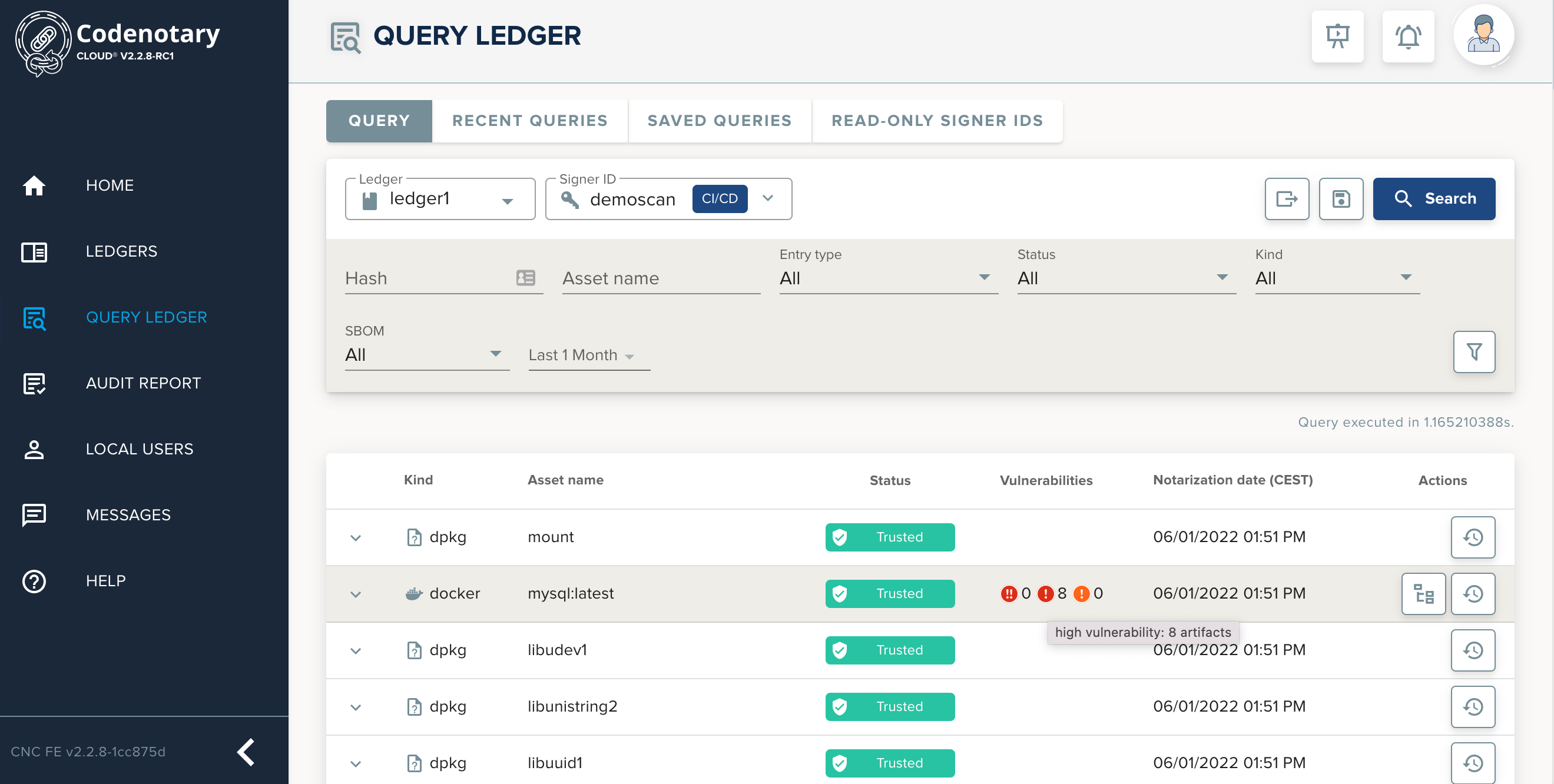
    Codenotary this week announced it has integrated support for the Supply-Chain Levels for Software Artifacts (SLSA) framework in its free notarization and verification service for ensuring the integrity of code.

    Moshe Bar, Code Notary CEO, said as the first application security platform to attain SLSA compliance, the company is making it easier for organizations to secure their software supply chains.

    SLSA is a framework defined by Google that it uses to attach binary authorization to code. In its current form, SLSA is a set of guidelines that identify how to attain four different levels of application security. The long-term goal is to create a framework that will automatically generate auditable metadata that can be fed into policy engines to create a SLSA certification.

    Codenotary provides tools for cataloging and verifying the authenticity of components used with a software development life cycle. At the core of that platform is an immutable open source immudb database that cryptographically attaches an identity to each software artifact. That capability can also be used to dynamically generate a software bill of materials (SBOM).

    The Codenotary Attestation Service can also be integrated with the continuous integration/continuous delivery (CI/CD) platform that DevOps teams use to build and deploy applications using those artifacts. Ideally, DevOps teams should construct a security pipeline that runs alongside their existing DevOps pipelines, noted Bar.

    In the wake of recent high-profile software supply chain breaches, the level of scrutiny being applied to how software is constructed has increased significantly. In theory, at least, developers have assumed more responsibility for application security as part of an overall shift left that provided them with more programmatic control over IT environments. Cybercriminals, however, are now becoming more adept at compromising developers’ credentials and insert malware as an app is developed.

    DevSecOps best practices are, of course, being adopted to teach developers how to better secure their application environments. The issue is that not enough developers are learning how to secure applications fast enough. The volume of attacks against the software supply chain continues to grow at a rate that is now much faster than organizations can thwart simply by educating developers.

    There is a now clear need to embed more cybersecurity guardrails within DevOps workflows, noted Bar. Rather than attempting to achieve that goal in a piecemeal fashion, Bar said Codenotary is making a case for an integrated platform that can be invoked as a natural extension of a DevOps workflow.

    In general, Bar said there’s now a greater sense of urgency when it comes to software supply chain security. Many of the reviews of those processes are, arguably, long overdue. One way or another, there will be a lot more questions asked about how software is actually developed. The organizations that consume this software are starting to appreciate how vulnerable they are as the overall dependency on software continues to increase. The only real question now, unfortunately, is how many more breaches there might be before those software security issues are thoroughly addressed.

  • Secure Software Summit Series: Focus on Preventative Readiness

    Secure Software Summit Series: Focus on Preventative Readiness

    The connected world economy and the COVID-19 pandemic forced companies to accelerate digital transformation. Sophisticated cybercriminals have seized this forced acceleration to lay the groundwork for cyberwarfare. In reaction to recent attacks ranging from the SolarWinds breach to the recent Log4Shell exploits, many companies have quickly isolated and patched their systems. However, these reactive fixes do not work all the time; nor does the watch-and-wait approach. We must focus on re-engineering our organizational operations and culture to build and maintain preventative readiness. Companies and infrastructures need to be more resilient and secure from the start by building secure coding practices into the development process.

    Secure Software Summit

    At the beginning of 2022, ShiftLeft hosted the Secure Software Summit to provide industry experts and practitioners in the software development world a platform to discuss the latest methods and breakthroughs in secure coding and development practices—securing code earlier and better has become a discipline unto itself!

    Some of the main takeaways from the event were:

    SBOMs are in Your Future

    In the very near future, organizations will need to better account for all the software and components of their applications, most likely via a software bill of materials (SBOM). The U.S. government has mandated barebones SBOMs, and we will soon see private industry start to mandate them, too, as part of procurement processes and auditing. This will enforce greater transparency and automate discovery of all dependencies and components in a way that, until now, was not common. Software composition analysis (SCA) will make this process easier and will become a standard part of the build process and the application development life cycle.

    Securing Open Source is Critical

    With Log4Shell and other open source software (OSS) supply chain attacks, application security teams must learn how to more intelligently update and secure the most critical OSS components and infrastructure. The average AppSec team needs to sift through massive piles of vulnerabilities and suggested security fixes — far more than they can possibly fix. We have seen record numbers of new vulnerability disclosures in each of the past four years. Proper prioritization based on whether a vulnerability can significantly impact an organization’s own applications and infrastructure is now essential amidst the blizzard of OSS dependencies that make up the modern application.

    Digital Threats Impact the Real World

    For many organizations in non-tech verticals such as health care that consume a lot of software, application security is at a crisis point—software vulnerabilities can literally put lives and our economy at risk. Researchers have correlated increases in mortality with hospitals running at higher levels of stress and capacity. When ransomware or other attacks impact health care institutions, the effect is the same as a massive pandemic flooding the ER: Doctors can’t use systems or equipment, care is rationed, patients are turned away and everything becomes more time-consuming. The net result is more deaths. Securing these systems against attacks becomes a matter of life or death—literally.

    Culture Change Must Come First

    Organizations will deploy new security architectures such as zero-trust, but these attempts will only be successful if AppSec and development teams change the culture around security. Organizations must recognize that the new normal is a state of constant renewal of trust. This will be challenging; constant renewal of trust requires entirely new infrastructure and a new mindset that can be hard on humans. It means implementing multifactor authentication in many more places and removing conveniences like administrative accounts that have blanket access to systems; it requires implementing least privilege practices. Software development will need to bake this constant renewal of trust into workflows and tooling to make it the new normal.

    Shift From Reactive to Proactive

    AppSec and development teams must shift from reactive approaches that tend to mobilize most resources during a breach or an incident and emphasize more proactive approaches such as better software security analysis and security chaos engineering. Knowing the unknown unknowns before they become a problem is key here. Netflix, which pioneered chaos engineering, recognized that stressing systems frequently and constantly to see how they behave under adverse conditions often yielded surprising insights that could improve security (and resilience, more broadly). As mentioned above, creating better ways to prioritize vulnerabilities and focus on the ones that are actually attackable shifts the task from a hopeless burndown to a targeted and proactive tactical exercise that is manageable. 


    Stay tuned for more articles to follow written by the following keynote speakers from the event:

    • Aaron Rinehart, Verica – Security Chaos Engineering
    • Dan Lorenc, Chainguard – The State of OSS Supply Chain Security
    • Steve Springett, OWASP – Behold the SBOM
    • Shinesa Cambric, Microsoft – Importance of Securing Software with a Zero Trust Mindset
    • Malcolm Harkins (Epiphany Systems), Rob Lundy (ShiftLeft) and Bryan Smith (RiskLens) – Reachability and Attackability
    • Abhishek Arya, Google – Measuring and Mitigating Risks in Open Source Software