Tag: SCA

  • The Security Pipeline

    The Security Pipeline

    Over the last few years, the ability to secure our applications has grown, and deep integration into the DevOps toolchain has, too. There are more tools doing more security checks protecting more of the infrastructure and source than there have ever been. The key is putting them to use intelligently.

    We now have the ability to secure the image an app is based upon, the images that are derived from that original—complete with supporting software. We can get feeds to tell us which bits of our included open source components are insecure and how to protect them; we can scan the source, the assembled application, the APIs and the network. We can put runtime protections in place in front of web apps and in front of APIs. We can even track the long-tail attacks like slow data extraction that are becoming more common as security tools master more obvious attacks.

    That is a great set of security capabilities. And automation puts every bit of it within reach. Your job is to pick the bits you need to increase the security posture of your environment and get them worked into your specific toolchain. This is not all that difficult, but nothing is free, so you will need at least some implementation time and some staff time to work through results. After all, no matter how automated, current solutions do end with a list of changes that need to be made to increase security. Some tools will put a runtime fix in place immediately, but honestly, that is a patch—it only stays in place until you can fix the underlying issue.

    Integrating all of the great security tooling with each other is another aspect that will require some time. Some vendors cover a massive amount of the security testing needed across markets and technologies. These companies show us that even if an organization would rather use best-of-breed, there is a lot of benefit in increasing integrations. For an easy example, consider this: If the software bill of materials (SBOM) generated during the build steps shows that a given framework is included in an application, then active testing via dynamic or interactive application security testing can include extra tests specific to that library.

    Integrations will take effort, but once they’re in place they will enhance application security. There is no perfectly secure application, but the tooling is available to make a given environment less of a target because it is too much work to attack. And that is what you should be shooting for.

    I’ve said before that making security part and parcel of your DevOps practices is mandatory at this point, but that was in reference to the great DevSecOps toolsets currently out there. I’m suggesting now that we include it all–from design to GitOps runtime drift management. Because we can, and the result is reduced risk to the organization.

    And keep rocking it. Honestly, you’re maintaining something worth protecting–that alone means you are successful, even if you aren’t aware of every issue that crops up. Issues are why you’re there, and the systems keep running because you are.

  • Software Supply Chain Risk Management: A 2023 Guide

    Software Supply Chain Risk Management: A 2023 Guide

    Software supply chain risk management (SSCRM) refers to the process of identifying, assessing and mitigating risks associated with third-party software components and services that are integrated into software products. SSCRM involves understanding the potential vulnerabilities that may arise from these components and taking measures to reduce the risk of exploitation or compromise to the software system or end-users.

    Why Software Supply Chain Attacks are Becoming More Common

    Software supply chain attacks have become common due to several factors: 

    • Larger attack surface: The increased use of third-party software components and services in software development has expanded the attack surface for cybercriminals. This means that attackers can exploit vulnerabilities in these third-party components to gain access to the larger software system. 
    • Rise of open source: The proliferation of open source software has also contributed to the rise of supply chain attacks as attackers can inject malicious code into open source repositories, which can then be used by developers in their software products.
    • Difficulty to detect: Detecting supply chain attacks can be challenging since attackers often use legitimate-looking code that may be difficult to distinguish from normal code. This can make it difficult for traditional security measures to detect the attack. Additionally, the attack may not manifest itself until much later, making it even harder to trace back to its source.
    • Automation: Supply chain attacks are also becoming more sophisticated through the use of automation. Attackers can use automated tools to scan for vulnerabilities in third-party components and inject malicious code into them. This means that they can quickly and efficiently compromise a large number of software products.
    • Evasion techniques: Attackers can evade traditional security measures through techniques such as code obfuscation and encryption. This makes it difficult for security measures to detect malicious code, which can easily slip through undetected.
    • Sophistication: Supply chain attacks are becoming more challenging to combat due to the use of advanced malware techniques to change shape. Attackers can use polymorphic malware that can change its code and behavior to avoid detection. This means that even if the malware is detected, it can quickly change its form to evade detection in the future.

    Supply Chain Security and DevSecOps

    DevSecOps is an approach that integrates security into all stages of the software development process. Adopting DevSecOps practices can help businesses manage supply chain risks by building security into their software development and delivery pipelines. 

    Continuous integration/continuous deployment (CI/CD) pipelines are a key component of DevSecOps, as they allow developers to rapidly test and deploy code changes while ensuring that security and compliance requirements are met.

    Here are some ways DevOps tools in the CI/CD pipeline can help manage supply chain risks:

    • Automating security testing: DevSecOps enables businesses to automate security testing throughout the software development life cycle, including during the development, testing and deployment phases. This can help identify and mitigate security vulnerabilities early in the process, reducing the likelihood of supply chain risks.
    • Continuous monitoring: DevSecOps enables continuous monitoring of software and infrastructure, providing real-time visibility into the security posture of the supply chain. This can help identify and respond to security threats quickly and effectively.
    • Secure coding practices: DevSecOps encourages the use of secure coding practices, such as input validation, access control and error handling, reducing the likelihood of supply chain risks.
    • Risk management: DevSecOps incorporates risk management into the software development process, ensuring that supply chain risks are identified, assessed and managed effectively.

    Tools and Solutions to Help Manage Supply Chain Risks

    Supply Chain Risk Management (SCRM)

    SCRM solutions are software tools and services that help organizations manage and mitigate supply chain risks. These solutions provide visibility into the supply chain operations, identify potential risks and enable organizations to take proactive measures to mitigate these risks. 

    They may include features such as supplier risk assessments, real-time monitoring of supply chain operations, analytics and reporting and incident response planning. SCRM solutions are often available as a service (SaaS) and can help organizations to enhance supply chain resilience, reduce disruption and ensure business continuity.

    Software Composition Analysis (SCA)

    Software Composition Analysis (SCA) is a software security practice that involves identifying and managing open source and third-party components used in the development of software applications. SCA tools scan the software codebase, detect and report the presence of third-party and open-source components and identify known vulnerabilities in these components. 

    SCA helps organizations to identify and manage risks associated with third-party components, including license compliance, intellectual property infringement and security vulnerabilities. SCA is an essential component of SSCRM and can help organizations to ensure the security and integrity of the software products they develop and distribute.

    Third-Party and Supplier Risk Management

    Third-party and supplier risk management software is designed to help businesses manage the risks associated with their third-party vendors and suppliers. This software provides tools and resources to identify, assess and manage the risks associated with third-party relationships.

    Here are some features of third-party and supplier risk management software:

    • Supplier management: The software provides tools to manage supplier relationships, including supplier performance monitoring, supplier compliance and supplier risk assessment.
    • Risk assessment: The software enables businesses to assess the risks associated with their third-party relationships, including financial risks, operational risks and reputational risks.
    • Compliance management: The software helps businesses comply with regulations and standards, such as GDPR, HIPAA and ISO 9001.
    • Data analytics: The software uses data analytics tools to help businesses identify trends and patterns in third-party data, enabling them to anticipate and mitigate risks.
    • Incident management: The software provides tools to help businesses respond to and manage incidents related to third-party relationships, such as data breaches or compliance violations.

    Best Practices for Software Supply Chain Risk Management

    The following are some best practices for managing supply chain risks.

    Identifying Supply Chain Threats and Potential Weaknesses

    The first step in managing supply chain risks is to identify potential threats and vulnerabilities in the supply chain. This involves conducting a comprehensive risk assessment that considers all potential sources of risk, including geopolitical factors, natural disasters, cyber threats and other disruptions. The risk assessment should consider the entire supply chain, including all vendors, suppliers and partners.

    During the risk assessment, organizations should identify the critical components and services that are essential to their operations. They should also evaluate the potential impact of a disruption to these critical components and services, including the financial, reputational and operational impact.

    Establishing a Supply Chain Risk Management Framework

    After identifying potential threats and vulnerabilities, organizations should establish a supply chain risk management framework that outlines the policies, procedures and controls required to mitigate these risks. The risk management framework should be aligned with the organization’s overall risk management strategy and should include the following components:

    • Risk management policy: This policy should outline the organization’s approach to supply chain risk management and define the roles and responsibilities of key stakeholders.
    • Risk assessment procedures: These procedures should describe how the organization conducts risk assessments, including the criteria used to evaluate risks and the frequency of assessments.
    • Risk mitigation controls: These controls should outline the specific measures the organization will take to mitigate identified risks.
    • Incident response plan: This plan should describe the steps the organization will take in the event of a supply chain disruption.

    Continuously Monitoring Risks

    Once the supply chain risk management framework is in place, organizations should continuously monitor supply chain and third-party risks and take proactive measures to mitigate them. This includes establishing a patching cadence to ensure that all software components are up to date and protected against known vulnerabilities.

    Organizations should also implement endpoint security controls, such as antivirus software and intrusion detection systems, to protect against malware and other cyber threats. Network security controls, such as firewalls and access controls, should be implemented to protect against unauthorized access to systems and data.

    Web application security controls should also be implemented to protect against web-based attacks, such as SQL injection and cross-site scripting. This includes conducting regular vulnerability assessments and penetration testing of web applications.

    Promoting a Culture of Awareness

    Finally, organizations should promote a culture of awareness among all stakeholders, including employees, vendors, and suppliers. This includes providing risk awareness training to employees, so they understand the risks associated with the supply chain and the steps they can take to mitigate these risks.

    Organizations should also communicate their supply chain risk management policies clearly to vendors and suppliers so they understand their obligations and responsibilities in managing supply chain risks. This includes conducting due diligence on vendors and suppliers to ensure they meet security standards and policies.

    Conclusion

    Managing supply chain risks is a critical task for organizations that rely on third-party vendors and suppliers to deliver goods and services. These risks can arise from a range of sources, including geopolitical factors, natural disasters, cyber threats and other disruptions.

     To effectively manage these risks, organizations need to adopt best practices such as identifying threats and potential weaknesses, establishing a supply chain risk management framework, continuously monitoring risks and promoting a culture of awareness.

    As we look ahead to 2023, it is clear that software supply chain management will continue to be a priority for organizations across industries. With the increasing complexity of software supply chains and the evolving threat landscape, organizations must remain vigilant in their efforts to identify and mitigate potential risks.

  • Addressing Software Supply Chain Security

    Addressing Software Supply Chain Security

    It’s essential for organizations to learn more about the software supply chains they rely on and the steps needed to secure them. In just the past few years, we have seen a major uptick in malicious actors exploiting vulnerabilities in software supply chains to facilitate attacks on organizations. However, it’s important to remember that these attacks are not a new phenomenon. In fact, they’ve been around for decades. Therefore, the need to secure the software we rely on is not new, though the industry turning its attention to this problem is.

    Software supply chain attacks are also far from simple. Given the fact that software supply chains are highly complex and made up of a number of constantly changing components, the avenues that malicious actors can take to pull off an attack are plentiful. For example, software artifacts are partially made up of components downloaded from open source software repositories. These platforms have become a favored attack avenue, given how frequently they are used by developers and the trust extended to them by development organizations. According to GitHub, anywhere from 85-97% of enterprise codebases come from open source repositories. Two of these repositories, npm and PyPI, have seen a nearly 300% spike in the number of attacks on their platforms in the past four years, impacting thousands of software supply chains globally.

    One example of the kinds of software supply chain attacks that are now common is IconBurst, a major attack from last year where more than two dozen typosquatted packages were discovered on npm. As with other recent attacks, the IconBurst attackers used typosquatting – uploading malicious packages to repositories with names that closely resemble popular and legitimate packages on the same platform. Developers, in a rush to complete their work, are often tricked into downloading these typosquatted packages. In the case of the IconBurst campaign, for example, one of the malicious packages discovered was downloaded over 17,000 times!

    Given the significant increase in the number of software supply chain attacks, organizations must make more of an effort to understand how these attacks work and then take steps to secure their software supply chains from compromise.

    Say Goodbye to “Shift Left”

    To begin with, development organizations need to reevaluate the mantra to “shift left.”

    For years, industry leaders promoted the notion of “shifting left” as a call to marry application security with application development: Embedding secure development tools and practices into the continuous integration/continuous delivery (CI/CD) process. But times are changing and the industry is beginning to understand that while shifting left is necessary, it is not sufficient to secure software supply chains.

    “Don’t shift left; shift everywhere!” said Tanya Janca, founder and CEO of WeHackPurple. Janca was speaking as a member of a recent Techstrong panel, “Software Supply Chain: It’s All About The Code” at the Predict 2023 virtual event. Janca pointed out the industry’s past fixation on “shift left” and the gaps in security that this caused since threats to the software supply chain not only happen during development but also throughout the entire software release process.

    In fact, the notion of shifting left may do development organizations and developers a disservice: Leaving the work of securing applications entirely to them. “It’s unfair to expect developers to write perfect code,” said Jeff Williams, co-founder and CTO of Contrast Security, another member of the panel.

    Software engineers are already under pressure to develop software quickly to meet development and project milestones. That makes it difficult for them to implement perfect security measures, like vetting every single line of third-party code they use while also watching out for social engineering attacks.

    A New Approach to Secure the Software Supply Chain

    For organizations looking to secure the software supply chains they rely on, they must choose the right tools. But much of the secure development and application security testing (AST) technology out there won’t cut it. For instance, tools such as dynamic or static application security testing (DAST/SAST) are critical components of the secure development life cycle (SDLC). However, they don’t provide holistic coverage of all of the supply chain threats out there, including software tampering and the risk posed by compromised open source and third-party libraries. On the other hand, tools such as software composition analysis (SCA) can help vet open source components but often fail to detect malicious modules or provide total security coverage of software supply chains. Knowing that your application depends on a malicious open source package after the fact is of little consolation when you release code at the speed of DevOps.

    This is why modern tools that go beyond these capabilities should be considered. “It’s about giving developers the tools they need to be successful,” said GitLab’s CPO David DeSanto at the event. Experts in the space agree that change is needed but that developers and development teams aren’t set up for success as it stands.

    According to Mat Matthews, an experienced practitioner in the DevOps space: “While developers are responsible for ensuring clean code, it takes a cross-functional team with a specific focus on security to reduce the attack surface against supply chain attacks.”

    To accomplish that, organizations need to look to their security operations centers (SOCs) to take on a greater role in helping to secure software supply chains. Close collaboration between development and SOC teams is the surest way to provide end-to-end security for an organization’s software supply chains. And, supplied with the right tooling, SOCs and development teams working together will be better positioned to scan software packages; achieve greater visibility into development processes; detect deviations from a set baseline; and pursue possible supply chain compromises before they can cause real harm to software publishers and their customers.

    As threats and attacks on software supply chains evolve, so must protections. A modern software supply chain security program should aim to protect the entire software development process, from the developer IDEs and their plugins to the open source components, CI/CD workflows and the release pipelines, while also being equipped to spot and pursue compromises at any point in the development life cycle. Only then will development teams be able to prevent harmful attacks like SUNBURST, IconBurst and countless others that have happened since.

  • Modern DevOps is a Chance to Make Security Part of the Process

    Modern DevOps is a Chance to Make Security Part of the Process

    I’ve mentioned before, and many of you have lived through, the slowly changing beliefs around DevOps versus security. We are past the days of “Security slows us down” and into “How can we bake security into the development process?” which is essential. Indeed, I would say it’s more essential every day as the number of threat actors and their use of automation to perform more attacks increases.

    So where can we slip in a little security to protect those sweet, innocent apps from the Big Bad Wolf? Let’s make a list, then chat about it.

    • Source code
    • Inclusions–libraries, shared objects, etc.
    • Container/cloud images
    • Network
    • Running applications and APIs

    This is honestly not an exhaustive or detailed list, but we’re writing a blog here, so let’s stop there so we have time to discuss.

    Source code security is greatly enhanced by putting in any of a dozen development security tools, which include static and dynamic security scanners along with a variety of other features.

    Inclusions are often nested and confusing. A mod that developers include relies on other mods and libraries—sometimes so many that the developer can’t even list them all. So, this type of security starts with software composition analysis (SCA), then uses the list that generates to pursue vulnerabilities—normally by looking for the included libraries in a vulnerability database. Several prominent source code security solutions bundle at least the SCA part, and some also help nail down included vulnerabilities. Check with your vendor if you’re just getting started here.

    Container images are akin to the “golden images” of old. Build one that has what most applications need, add on the security that an organization wants most applications to support and then have every project start there and only add what this specific app needs. That allows for scanning of the base image so all applications start out at least somewhat secure. Cloud images can be done much the same, but beginning at a higher level. Look into registry security or image scanning tools to meet this need. It is worth asking your source scanning vendor if they offer this functionality; some do.

    The network on which an application will be exposed needs to be locked down. While the access points into the org probably are protected, portability of applications means that the application itself should be locked down wherever it uses that network. Tools are specific to the platform and networking in use, so look into it—I can’t offer much more generic advice.

    Security has long tried to lock down running applications—generally with pushback from developers and even ops, a bit. Between web application firewalls (WAFs) and API security, we have the ability to stop a whole host of attacks on their way in … But you have to use WAFs and API security best practices. If you’re starting from scratch, consider tools in the application and API security space that protect against both the web UI and API attacks with a breadth of technologies. For those with a WAF, look at API security tools that protect APIs. For those with API security covered, consider a next-generation WAF.

    My usual encouragement applies. You are rocking it, and all of these tools are increasingly integrated into the DevOps toolchain, so it’s worth the time investment to get them set up and let them run. If you’re just starting out, start with source code security. Honestly. It will make the overall app more secure by tightening its source. But don’t ignore the ops side, as that is part of the attack surface. Protect those apps you built and/or maintain that are keeping the org running.

  • ReversingLabs Adds Ability to Detect Secrets in Application Binaries

    ReversingLabs Adds Ability to Detect Secrets in Application Binaries

    ReversingLabs today announced it added an ability to detect secrets exposed in application binaries to its Software Supply Chain Security (SSCS) platform.

    Tomislav Peričin, chief software architect for ReversingLabs, said this addition will make it easier for DevSecOps teams to identify secrets that are inadvertently left in applications as plain text or that can be discovered because of weak cryptography, scripts that have been included in directories that have secrets configuration files, packaging automation mistakes, compromised developer accounts or the activities of malicious insiders.

    The SSCS platform can identify more than 250 secret types out of the box, including private keys, version control, certs, tokens and more. Once they are identified, the platform also surfaces their precise location, which services are affected and if those secrets are exposed or leaked elsewhere. The platform also identifies third-party, open source, testing keys and other commonly shared secrets in addition to which secrets have already been exposed. Armed with those insights, it then becomes possible to better prioritize remediation efforts on actionable issues to reduce overall manual triage fatigue, noted Peričin.

    ReversingLabs also provides guidance for sensitive information policies, including documentation of public exposures and breakdowns of secrets used for web service access credentials, web service access tokens, web service API keys and webhook service access keys.

    Most software composition analysis (SCA) tools used to secure software supply chains are limited to identifying issues in source code. As applications become more modular, however, the odds authentication credentials such as login credentials, application programming interface (API) tokens and encryption keys might be left exposed because of a developer mistake substantially increase. The overall goal is to make it possible for DevSecOps teams to discover these issues in binary code before an application is deployed, noted Peričin. That “just in time” approach to secrets management includes canary token management and custom detection policies to better ensure application security.

    In general, secrets within applications are becoming more challenging to secure as cybercriminals increasingly scan repositories and continuous integration/continuous delivery (CI/CD) platforms to find them. The ultimate goal is to inject malware into a software component that will be used in multiple downstream applications. Once activated, that malware will then create a backdoor through which cybercriminals can exfiltrate data or launch a full-blown ransomware attack. It was the latter type of attack that led to the U.S. government creating a formal National Cybersecurity Strategy to, in part, lock down the software supply chains employed by federal agencies to build applications.

    A recent survey published by ReversingLabs, however, found that while 87% of respondents agreed that software tampering has become a more frequently used cybersecurity attack, only 37% said they have any means to detect it. Only 7% said they could detect software tampering at each phase of the software development life cycle.

    It’s not clear to what degree best DevSecOps practices are currently being implemented within application development teams, but as more attacks are launched against software supply chains, it’s now only a matter of time before most DevOps teams are routinely required to scan code for exposed secrets and known vulnerabilities long before code is allowed anywhere near a production environment.

  • The Scariest Things About SCA

    The Scariest Things About SCA

    It is a time of ghouls, mischievous spirits and David S. Pumpkins. In the spirit of Halloween, here are the top five scariest limitations of software composition analysis (SCA) tools that are enough to send shivers down your spine. Read on … if you dare!

    1. SCA Scans Only Your Application Code

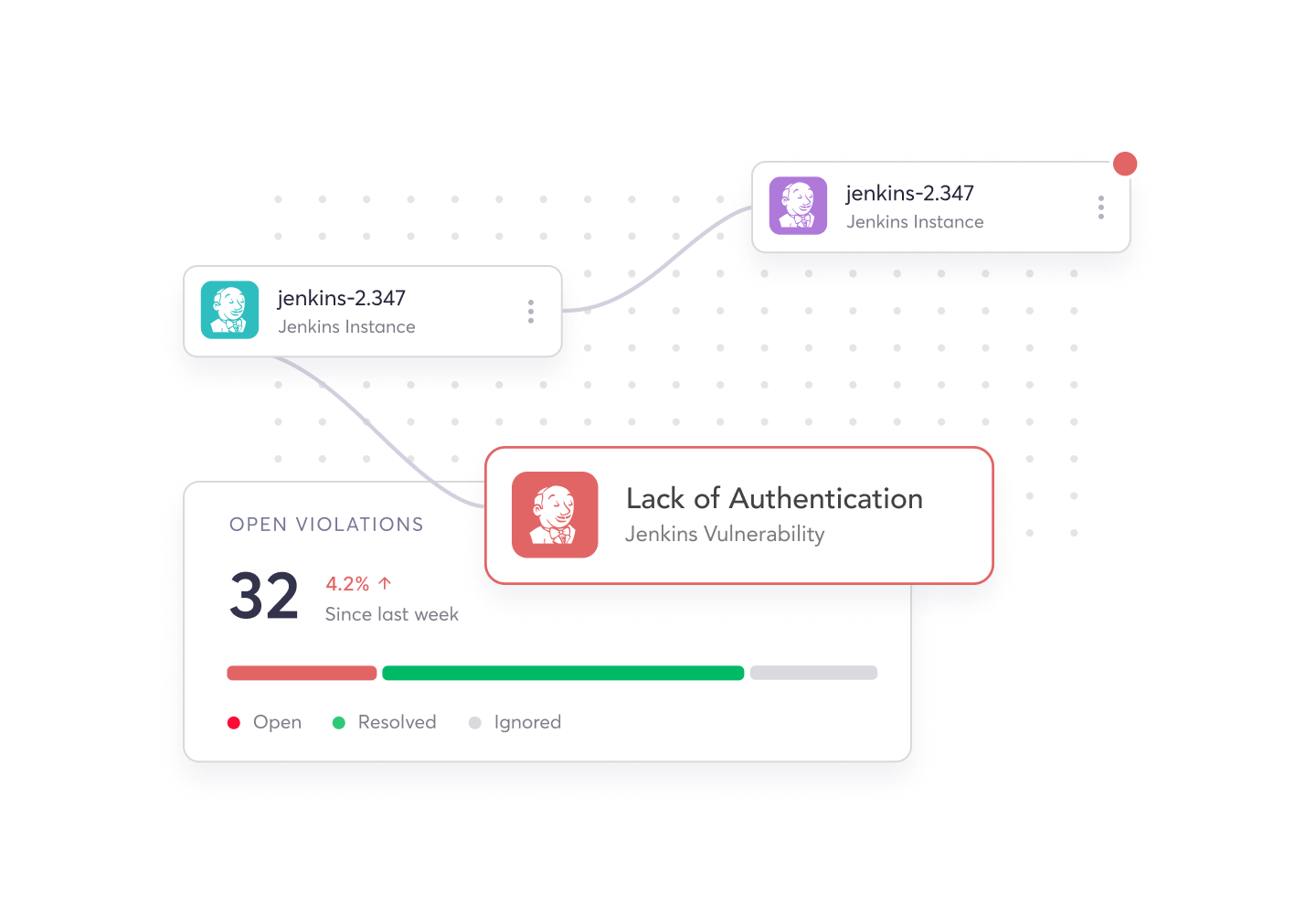
    SCA’s scope is frightfully narrow. When scanning for vulnerable dependencies, SCA only examines your source code even though vulnerable dependencies used to build your software can exist throughout your entire development pipeline. Vulnerable dependencies can be found in dev tools like Jenkins, dev tool plugins like Jenkins Plugins, build modules like GitHub Actions, build module dependencies like GitHub Actions libraries, and infrastructure-as-code (IaC) dependencies. If you’re only scanning application code, you should be shaking in your boots because it is not enough to protect against modern software supply chain attacks like SolarWinds or Codecov.

    The good news is that next-gen SCA, pipeline composition analysis (PCA), scans your application code and your entire pipeline for vulnerable dependencies. PCA improves upon the foundation of SCA by including a deep understanding of the tools, configurations, processes, activities, components and dependencies used at every stage of the delivery pipeline. When new dependencies like Text4Shell are disclosed, you can be sure every instance of the vulnerability is found and remediated. This way you know you don’t have any proverbial skeletons lurking in your software’s closet.

    2. SCA Can’t Tell You Where Vulnerabilities Are Deployed

    Vulnerability remediation can be ghoulish. When new high-severity exploits are disclosed, you need to remediate every instance of the vulnerability from all production environments where it could be exploited–and you need to do it fast. Identifying a vulnerability like Log4j in your code base is a start, but you’re not truly secure until you have removed every instance of the vulnerability in production systems where they pose a real risk to your organization. Though traditional SCA can tell you where a vulnerability is in your application code, it has no visibility once that code has been deployed.

    PCA gives you visibility into your entire development pipeline, including production environments. This enables you to easily trace the path of a vulnerability from code to deployment locations, such as identifying which Kubernetes clusters contain a specific vulnerability. This enables organizations to be more agile in their response to newly disclosed threats and ensures that every instance of a vulnerability has been remediated.

    3. SCA Doesn’t Correlate Risk Across AppSec Engines

    Some traditional SCA solutions may be able to collect data from various scanning engines, but they are terrible at making meaningful connections between various data points. Because of this, “traditional” SCA is unable to provide the context required to deliver an accurate and nuanced assessment of the impact of one event and how risk might be compounded by other related events. SCA without context generates too many false positives—this results in your team wasting time chasing ghosts.

    PCA correlates risks and threats across all phases of the SDLC as well as from all AppSec scanning tools. By connecting the dots from numerous data sources, PCA helps your security and DevSecOps teams understand holistically how risks relate to each other so they can best tackle the most important security initiatives first.

    4. SCA Ignores Pipeline Security and Governance

    Modern development pipelines are complex and deeply interconnected–almost as if they are stitched and bolted together like Frankenstein‘s creation. Though managing security policies across the entire SDLC is an arduous and painful task, it is essential if you want to prevent software supply chain attacks. Unfortunately, traditional SCA solutions don’t even come close to helping you manage pipeline security and governance policies like enforcing least privilege or hardening authentication.

    Pipeline composition analysis identifies pipeline tooling misconfigurations and helps you implement best practices for security controls across your entire pipeline. Even better, to prevent your tooling from being bypassed, PCA alerts you when pipeline security controls like SCA scanning are removed or disabled.

    5. SCA Provides No Visibility into Your SDLC

    Traditional SCA solutions focus only on application code. They provide no visibility across your SDLC. They were not designed to scan development and deployment environments, so they cannot secure the later parts of your SDLC. SolarWinds was infiltrated via its TeamCity build server, which traditional SCA tools did not scan. So how can you protect your software supply chain if you can’t see it? Don’t be haunted by SCA tools’ inability to scan the entire SDLC.

    Vulnerable dependencies that impact your application can be found across the SDLC. You need to understand all development and deployment tooling–activity, settings, configuration, users and more–to protect your application. Pipeline composition analysis was designed from the ground up to understand your SDLC and bring context to your SCA findings to improve accuracy. It can give you complete visibility into the big picture to cut down on all the noise that traditional solutions generate.

    Pipeline Composition Analysis: Put Your Nightmares to Rest

    While it’s fun to be scared at Halloween, the last thing you want is to be terrified by your AppSec program. When the limitations of traditional SCA solutions threaten to keep you up at night, just remember that AppSec innovation requires the ability to do pipeline composition analysis across the entire SDLC, hence the shift from SCA to PCA. PCA plugs all the holes mentioned here, which hopefully can put even the worst nightmares to rest.

  • SCA, SBOMs and Floodgates

    SCA, SBOMs and Floodgates

    Two criteria are used to determine pervasiveness of a new idea. Availability of an easy-to-understand solution and customer need. Given both of these items, what might be a market-differentiating feature available in a single IT/DevOps market becomes a wave of options in multiple markets that an organization can (and should) choose from.

    What started this off? Well, I’ve been working in areas that involve expansive use of open source. This is pretty much to say, “I’ve been working in IT,” at this point, but that’s a different blog. The thing is, today, working with open source implies a complex software infrastructure that, traditionally, no one actually had a handle on. What is directly included in that project? What is indirectly included in that project?

    But then we had some pretty stellar security issues related to commonly-used open source. And we had commonly-used programming language modules pulled out from under hundreds of thousands of applications. Then we started paying attention. Or, more accurately, then we finally set out to fix a problem we’d been ignoring.

    This market is a bit confused by different use cases and the fact that there are two toolsets to achieve what IT sees as one job. So let’s talk about the complexities, just for clarity. First off, a software bill of materials (SBOM) is the list of what is included in a software project. The complexities here are twofold. From a programming perspective—meaning tools designed to be used by programmers during development—“included” means libraries, modules, etc. that the application calls on to do what the organization needs. These are “included” in the build process. From a systems perspective, “included” means everything installed on the image when it goes to production. These are similar but very different lists. The developer list is a subset of the production list because all of the items in the development list are included in production, but the production list will have other software that is used to support the developed application. Think of the application having all of its libraries and modules, but assuming SSL termination will be there. Because it will. In the image. That’s the difference. Many products have had an internalized version of SBOM for years now—developer security tools and release scanning tools pretty much require a list of everything they need to scan. But few made these lists public, and many tools did not have them.

    Software composition analysis (SCA) takes the SBOM and adds value. While a list of everything included is useful, a subset that lists everything that’s actually used is more to the point, for example. So is a list of flaws found in included libraries/packages and suggestions on how to address them. This can be done from either the source or production SBoM side, depending upon implementation.

    Once the value of both tools was made clear—and implementations existed that showed both how to implement them and what the benefits were—the floodgates opened. Now there are few DevOps or security tools that do not offer one or both of these features. That gives us an embarrassment of riches. Which tool(s) do we use for compliance and security review? As we do with data, I’m going to suggest that a single product is chosen as the “source of truth” and run with. At this time, I do not have suggestions on which ones are better for this purpose, just a suggestion that if you use different ones for different purposes you are likely to get different results, and that isn’t going to help simplify things at all. So, look at the ones you already have access to—they’re in enough products that you likely have more than one available in your existing infrastructure—and make it your standard.

    Then, use that standard to help monitor use of open source. Monitoring can help with open source licensing, with application and infrastructure security, with image simplification and with compliance. So strip unused packages out of images and clean libraries that are no longer called out of your build process. Respond to issues faster, and keep that application infrastructure you’ve been nursing along humming. And keep kicking it; your users should appreciate it, even if they do not.

  • Cycode Expands Scope of AppDev Security Platform

    Cycode Expands Scope of AppDev Security Platform

    At the Black Hat USA 2022 conference, Cycode this week announced it has added static application security testing (SAST) and container scanning capabilities to its software composition analysis (SCA) platform that is based on a graph database.

    Amnon Even-Zohar, director of product management for Cycode, said the addition of these tools brings to eight the total number of modules that are now integrated with its Knowledge Graph database. Those modules address application security requirements spanning everything from infrastructure-as-code misconfigurations and DevOps pipelines to binary and source code analytics in a way that reduces both the number of false positives being surfaced, he added.

    That approach makes it possible to provide more context to software remediation efforts by pulling data from across the entire software development life cycle rather than focusing solely on vulnerabilities found in source code, he noted. Cycode, for example, can pinpoint where vulnerable dependencies are found in test and production environments, said Even-Zohar.

    A Cycode Pipeline Composition Analysis tool also provides insights into which components enable a vulnerability or security issue, how pipeline components relate to each other and if they are present in runtime environments, he added.

    While there’s a lot of interest in implementing DevSecOps best practices in the wake of a series of high-profile AppSec breaches, many organizations still lack the tools required to secure an application development environment on an end-to-end basis. The Cycode platform leverages the data that already exists in DevOps workflows to enable organizations to better prioritize their remediation efforts and lower the total cost of doing so, said Even-Zohar.

    The goal is to not only enable organizations to shift cybersecurity further left toward developers but also further right by more closely integrating cybersecurity and DevOps teams, he noted.

    The DevSecOps challenge that most organizations are trying to navigate is that, historically, a list of vulnerabilities discovered by cybersecurity researchers is shared with DevOps teams without much context. Developers don’t know which vulnerabilities are most critical or, for that matter, whether the vulnerability identified is actually present within their application environment. SCA tools, in theory, could make it easier to identify, for example, where a Log4j or a shell vulnerability might be found. Graph-based tools take that capability to the next level by making it easier to visualize where any instance of a vulnerability might be found. In the absence of such tools, IT organizations would spend weeks looking for each instance of a vulnerability.

    It may be a while before DevSecOps workflows become commonplace but at the very least there is now more awareness of software supply chain security issues. The Biden administration has also issued an executive order that requires federal agencies to review the security of software supply chains. Many enterprise IT organizations are now following suit. One way or another, application security is going to improve. The only thing that remains to be determined is what impact those improvements will have on the rate at which software can be built and deployed.

  • WhiteSource Becomes Mend, Launches Automated Remediation Platform

    WhiteSource Becomes Mend, Launches Automated Remediation Platform

    WhiteSource rechristened itself Mend today and launched a remediation platform that automatically resolves security issues for application developers.

    Rami Sass, co-founder and CEO of Mend, said now the company is going beyond just identifying vulnerabilities in open source software using software composition analysis (SCA) tools and is also fixing them. The overall goal is to make it simpler for developers to address security issues without taking time away from writing code or slowing down the rate at which applications are developed, he added.

    To further that effort, Mend also announced today it is making available a plug-in for JFrog Artifactory that enables Mend Supply Chain Defender, formerly WhiteSource Diffend, to enable detection of malicious open source code. Last year the company acquired Diffend followed by the acquisition of two startup providers of static analysis security testing (SAST) tools.

    Collectively, those applications enabled the company to build the Mend Application Security Platform, a software-as-a-service (SaaS) offering that combines SCA and SAST tools to create an automated remediation framework that can be applied to both open source and proprietary code residing in a repository.

    Mend claimed it added more than 350 customers in the last year to bring its total to more than 1,000 organizations. Most recently, the company raised an additional $75 million in financing to continue investing in a platform specifically designed to address application security issues. In the wake of a series of high-profile security breaches involving software supply chains, Sass noted there is now a much greater appreciation for securing applications and that demand for application security solutions is growing. That demand, in turn, is fueling a wave of consolidation that is, in part, enabled by the convergence of application security tools made available via a SaaS platform, he added.

    Historically, much of the focus on application security focused on discovering vulnerabilities that developers are asked to patch. The issue is that developers are being asked to patch the same modules repeatedly. The Mend Application Security Platform keeps track of what modules have been successfully updated to give developers higher confidence in the updates being applied, said Sass.

    Those recommendations are not being surfaced using machine learning algorithms but rather by the data analytics capabilities that have been added to the company’s portfolio of tools over time, he noted.

    While there may never be such a thing as perfect security it’s apparent that most application security issues can be traced back to relatively common mistakes that developers routinely make. The more those issues are surfaced within a developer workflow, the less dependent organizations will need to be on embedding guardrails within DevSecOps workflows to prevent vulnerabilities from finding their way into production environment. The Mend Application Security Platform doesn’t eliminate the need for those guardrails as much as it reduces the sheer volume of security issues that might otherwise need to be addressed.

    It may be a while before these more advanced developer security tools achieve that result, but it’s clear from how quickly advances are being made that such tools should have a material impact on the overall state of application security.

  • OpenSSF Adds Open Source Package Analysis Tool Prototype

    OpenSSF Adds Open Source Package Analysis Tool Prototype

    The Open Source Security Foundation (OpenSSF) has made available a prototype of a package analysis tool that has already identified more than 200 malicious packages uploaded to PyPI and npm software components.

    Caleb Brown, an OpenSSF maintainer of the project, said the goal is to understand the behavior and capabilities of packages available on open source repositories. It also tracks how packages behave over time to make it easier to identify when previously safe software began to act in a suspicious manner.

    Most of the malicious packages detected are employing dependency confusion and typosquatting techniques, Brown said. They usually contain a simple script that runs during installation and provides a few details about the host to an external command-and-control system. Most of these packages are not exfiltrating meaningful data except the name of the machine or a username, but they make no attempt to disguise their behavior. The issue is that any one of these packages could have done far more damage, noted Brown.

    Future goals for the project include detecting differences in package behavior over time; automating the processing of the package analysis results; storing the packages themselves as they are processed for long-term analysis and improving the reliability of the pipeline. As such, the OpenSSF is looking for application developers and cybersecurity researchers to contribute to the project. The expectation is that many providers of application security tools will incorporate the package analysis tool within their offerings rather than requiring each vendor to create their own version of the same tool, said Brown.

    The OpenSSF has launched a series of initiatives to improve the overall state of open source security. Most recently, it added an Alpha-Omega Project to automate security testing processes for open source software using a $5 million initial investment provided by Microsoft and Google. The core challenge is that many organizations are dependent on open source software projects created and maintained by just a handful of volunteer maintainers and contributors. The individuals that created those projects don’t always have a lot of cybersecurity expertise. In fact, many of them would argue that the onus for securing open source software is on the organizations that use what amounts to free software. It’s not the responsibility of the contributors and maintainers to, for example, drop everything and immediately create a patch to address a zero-day vulnerability.

    It’s not clear how easily open source software could be compromised by cybercriminals that insert malware into downstream applications that rely on that code. However, in the wake of a series of high-profile breaches, it’s safe to assume that more cybercriminals than ever are trying to compromise open source software projects. While some organizations may opt to limit their dependency on open source code that has not been properly vetted, there is no way to entirely avoid using open source code. The challenge is finding a more efficient way to ensure the integrity of that code for all concerned.