Tag: SAP Cloud

  • SAP Makes Available Free Cloud Tier to Build Applications

    SAP Makes Available Free Cloud Tier to Build Applications

    SAP announced that next year it will make available a free tier on SAP Cloud Platform for developers that are building applications.

    Announced at the SAP Tech-Ed conference, the free tier comes at a time when SAP is encouraging developers to use its applications as a foundation for digital business process transformation initiatives.

    As part of that effort, SAP is also extending the capabilities of the low-code tools it makes available to customize SAP Cloud Platform Workflow Management and SAP Intelligent Robotic Process Automation (RPA) 2.0 to make it easier to integrate these offerings with other applications. SAP beginning in January is also promised to include a limited edition of SAP Intelligent RPA in every SAP S/4HANA Cloud subscription.
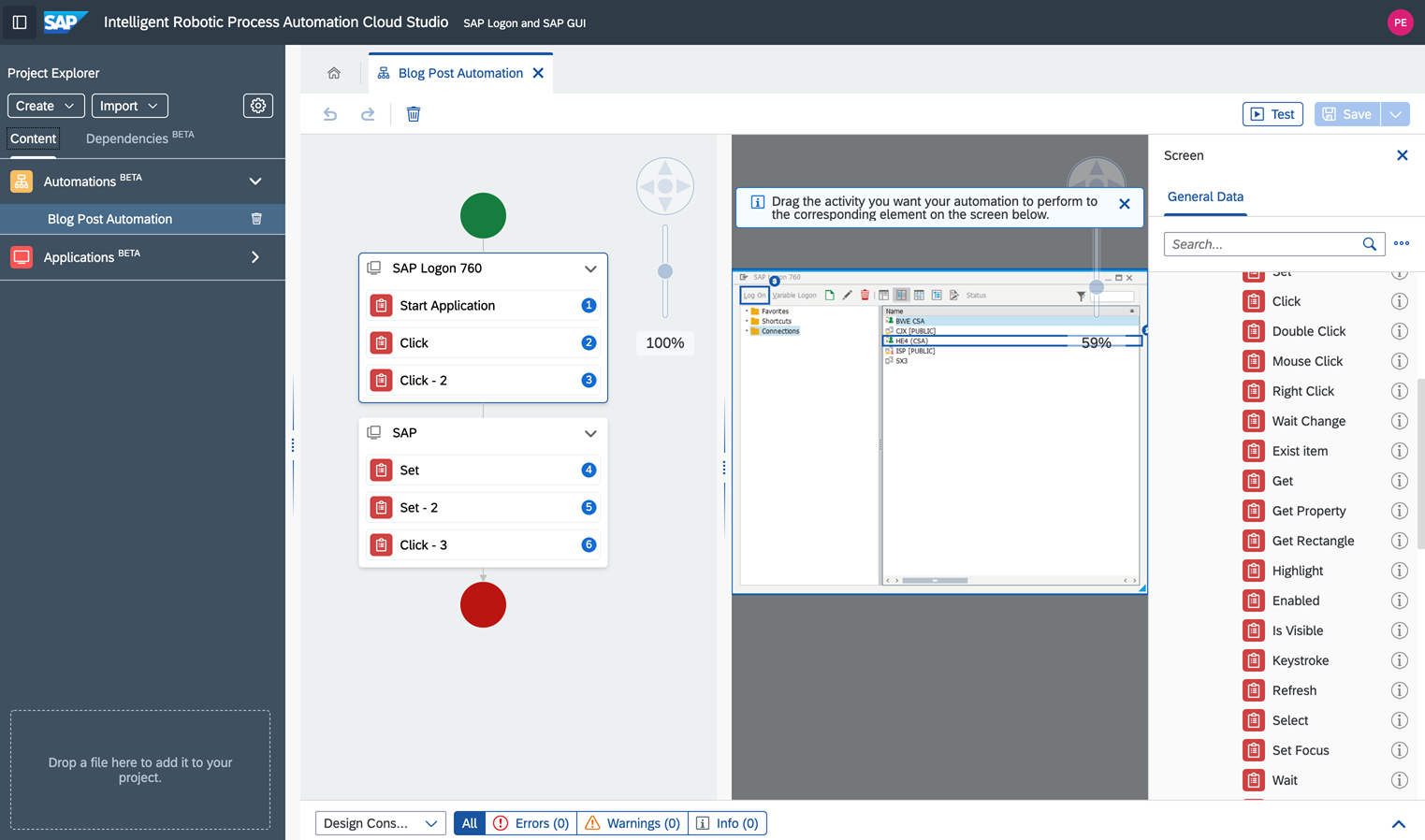
    Finally, SAP is beta testing SAP Ruum, a set of no-code tools it plans to make available alongside the low-code tools it already includes in its portfolio of tools for building custom applications that extend the packaged applications it provides on-premises and in the cloud.

    At the heart of the SAP digital business transformation strategy is SAP Business Technology Platform, which makes it possible to share data across SAP applications via a common data and object model. SAP makes available SAP Cloud Platform to provide a distinct platform-as-a-service (PaaS) environment through which developers can build extensions to its applications.

    Most recently, SAP has made SAP Graph tools in beta offering as a complement to a revamped SAP API Business Hub that will be available in beta this month.

    Thomas Grassl, vice president and global head of developer relations and community for SAP, said the company is also embracing continuous integration/continuous delivery (CI/CD) platforms as it continues to encourage developers to move away from waterfall-based approaches to building and deploying applications.

    The free tier of resources SAP is providing developers will encourage organizations to experiment more at a time when many organizations are now quite certain what digital process may ultimately gain traction with their end customers and suppliers. SAP is also focusing on no-code and low-code tools to enable organizations to accelerate the development of those applications. SAP already has an existing partnership in place with Mendix, a unit of Siemens, to make available low-code tools.

    SAP’s biggest concern, of course, is that digital business transformation initiatives will revolve more around application platforms from Oracle, Salesforce, ServiceNow and Workday. Every major provider of enterprise applications offers low-code and no-code tools to customize their applications. Many enterprise IT organizations are employing these tools more widely to accelerate digital business initiatives as an alternative to building entire applications from the ground up.

    The challenge these organizations will soon encounter is that as the backlog of applications that need to be deployed starts to build, they will have to modernize their approaches to deploying applications to keep pace.

    As a dominant provider of enterprise applications, SAP is in a position to drive digital business transformation in a way that extends the reach and scope of its enterprise resource planning (ERP) portfolio. The issue is finding a way to accomplish that goal when organizations thanks to the COVID-19 pandemic have a pressing need to transform much sooner than later.

  • SAP Embeds Integration Services in PaaS Environment

    SAP Embeds Integration Services in PaaS Environment

    SAP, at its SAP Tech-Ed Europe 2018 conference, expanded the scope of the integration services it provides within SAP Cloud Platform, the platform-as-a-service (PaaS) environment it provides for building custom applications based on the open source Cloud Foundry project.

    Dan Lahl, global vice president of product marketing for SAP Cloud Platform, said SAP is now adding a Content Advisor service that makes use of machine learning algorithms and other forms of artificial intelligence (AI) to recommend what integrations should be created next based on those that have been previously deployed on the platform.

    In addition, SAP announced the general availability of SAP Cloud Integration Automation Service, which provides deeper integration with a standard set of metadata SAP is in the process of defining for all its packaged application software, and SAP Cloud Platform Open Connectors, a set of application programming interfaces (APIs) based on code SAP has licensed from Cloud Elements.

    SAP also revealed that it will start making an on-premises edition of SAP Cloud Platform available via partners including IBM and Atos beginning in 2019. Lahl said that decision was driven by customers that for either regulatory or intellectual property concerns did not want to deploy custom code on any cloud service. Those efforts become more feasible once SAP finishes porting its distribution of Cloud Foundry to run on top of Kubernetes, which presents a more efficient approach to deploying an application development platform using a cloud-native platform that can run anywhere. While SAP remains committed to Cloud Foundry, the cost and effort of standing up instances of a Cloud Foundry PaaS in its original form are considerable.

    Finally, a new SAP Business Partner service on SAP Cloud Platform, planned for general availability in November, will provide access to a set of master data services that simplify access to and orchestration of enterprise business applications. The master data services can be shared and reused for any LOB-specific intelligent business processes to ensures a consistent and comprehensive view of customers, sales and products. In effect, SAP is now providing compliance as a service, said Lahl.

    The integration additions to the SAP Cloud Platform should improve performance and help drive down costs, he said, because  collectively they eliminate the need to rely on an external integration service when building and deploying applications on SAP Cloud Platform.

    SAP has put considerable effort into building out SAP Cloud Platform as part of a strategy that provides a layer of isolation between SAP applications running on the HANA database and custom applications running on Cloud Foundry. That approach enables SAP to deliver a quarterly cadence of updates to both its packaged applications and HANA running on a cloud service without having to worry about the impact those updates might have on custom applications. One of the reasons why so many SAP customers are several releases behind on SAP packaged applications is because they have all been customized extensively in on-premises IT environments.

    As part of that effort, SAP is now also making available a series of best practices for implementing DevOps processes across its platforms. It may be a while before organizations that have standardized on SAP platforms master those processes. But modernization of those platforms is now more a matter of when rather than if.

    — Mike Vizard

  • SAP Extends Effort to Modernize App Development

    SAP Extends Effort to Modernize App Development

    SAP this week expanded the scope of the SAP Cloud Platform to include support for the ABAP programming language and made available a beta version of a Kubernetes-as-a-service offering, in effort to update its app development portfolio.

    Announced at the SAP TechEd 2018 conference, these two offerings serve as bookends for an evolving SAP strategy that seeks to include organizations that have heavily invested in ABAP over the last 20 years as well as organizations that are shifting toward employing containers to build applications based on a microservices architecture.

    Dan Lahl, vice president of product marketing for SAP, said ABAP has been widely employed by more than thousands of SAP customers to build applications using the same language that SAP employed to build its on-premises IT environment. Those applications now can be built or enhanced using an SAP Cloud platform based on a distribution of the open source Cloud Foundry platform-as-as-service (PaaS) environment.

    At the same time, Lahl said SAP is working toward hosting its distribution of Cloud Foundry on Kubernetes in addition to making available a Kubernetes-based platform alongside Cloud Foundry. SAP is also leveraging container-based technologies such as Knative and Kubeless to provide access to a serverless computing framework based on Kubernetes. That capability is also in beta.

    The SAP Cloud Platform Backend Service for generating application programming interfaces (APIs) is now available in beta, while the SAP Cloud Platform Enterprise Messaging Service—based on technology developed by Solace—is now generally available.

    Finally, SAP is making available Cloud Application Programming Model for SAP Cloud Platform, a set of framework, tools, languages and libraries based on best practices defined by SAP. Lahl noted that many of those best practices are based on DevOps methodologies that SAP is helping customers embrace as part of an effort to accelerate application development projects.

    Lahl said SAP is, for the moment, focused on modernizing the application development processes of its core developer community. ABAP support, for example, makes it possible to use a venerable programming language that most SAP customers know on a managed instance of the Cloud Foundry PaaS. But the goal is to make SAP Cloud a platform that organizations will use to build applications using multiple programming languages regardless of how many SAP applications they might have running. According to SAP, today there are more than 10,000 customers using SAP Cloud Platform.

    It’s not clear to what degree Kubernetes might supplant Cloud Foundry as a major platform for building applications in the enterprise. Lahl contended that by putting Cloud Foundry on top of Kubernetes, SAP now provides one of the richest application development tools on a platform that is rapidly becoming a de facto standard for orchestrating containers.

    It may take a while before SAP becomes a dominant provider of a platform for building custom applications. But the one thing that is clear is that SAP these days is focused on a lot more than delivering a set of packaged applications that eliminate the need to build a custom application in the first place.

    — Mike Vizard