Tag: Salesforce

  • Salesforce Adds RPA Bots to MuleSoft Integration Platform

    Salesforce Adds RPA Bots to MuleSoft Integration Platform

    Salesforce today announced that it is now using robotic process automation (RPA) to connect disparate data via a no-code tool developed by its MuleSoft unit.

    Shaun Clowes, chief product officer for MuleSoft, said bots created using an RPA-infused integration platform can now automate much of the effort previously required to integrate data residing in different systems. Salesforce acquired MuleSoft in 2018 and, since then, has been working to make the platform for integrating application programming interfaces (APIs) a core element of its business process workflow tools.

    The news was announced at the MuleSoft CONNECT 2022 conference. The overall goal is to employ RPA and no-code tools to accelerate digital business transformation initiatives without writing code, noted Clowes. Overall, Salesforce claimed its customers are running 4.8 billion MuleSoft transactions daily, resulting in a 74% decrease in operational costs and a reduction of more than 100 billion hours of work every month, using Salesforce Flow tools that are integrated with the MuleSoft integration platform.

    In theory, no-code tools that integrate disparate data sources can be used by professional and so-called citizen developers alike. That capability should reduce the time and effort required to create those integrations. A recent survey conducted by Salesforce found nearly 96% of respondents said that modifying and rebuilding automation is a challenge as systems and business requirements change. In addition, four out of five respondents noted that restructuring existing application and data landscapes to support automation would likely compound their organization’s technical debt.

    More than half of respondents (53%) said they are using integration and API management capabilities to some extent, with 44% employing those capabilities to drive business process automation initiatives. A full 80% said they are working toward putting hyperautomation on their technology roadmap within the next 24 months.

    Of course, the MuleSoft platform can be employed beyond the portfolio of software-as-a-service (SaaS) applications provided by Salesforce. However, it’s also become apparent that more organizations are building and deploying custom applications on top of a range of SaaS applications in addition to building and deploying applications written in procedural code that might be running in the cloud or in an on-premises IT environment.

    It will be up to each IT organization to determine how much they need no-code integrations as part of a larger DevOps workflow, but as it becomes easier to create integrations using RPA tools their numbers should increase. The impact all those integrations will have on DevOps pipelines remains to be seen, as well. Many organizations will need to revisit their DevOps workflows as the number of application development projects being simultaneously launched continues to increase.

    In the meantime, it’s clear that no-code/low-code tools infused with RPA capabilities will empower more end users. That shift will have a profound impact on DevOps teams, as the sheer volume of code and associated integrations increases. The challenge, of course, will be finding a way to make sure that the integrations created are secure and that they can actually scale as more data sources are added.

  • DevOps for Salesforce: CI/CD Challenges

    DevOps for Salesforce: CI/CD Challenges

    DevOps encompasses a wide variety of technical and social practices for improving the development, delivery and operation of IT systems. Salesforce has become more than a CRM system; it evolved into a full-featured ecosystem and a low-code platform that made development far simpler and more approachable than traditional code-based platforms. Cross-functional teams build on Salesforce to create custom apps and integrations with other enterprises systems without requiring the rigorous approaches that are common with traditional technologies like Java.

    Now, DevOps for Salesforce has emerged to enable teams to build applications faster. And as teams have built more and more customizations onto the Salesforce platform, the level of complexity has exploded. DevOps has emerged as a critical capability for teams to bring this complexity under control.

    The Primary Challenge of Deployments

    The primary challenge that most Salesforce teams face is deployments. Deployments on Salesforce are not just a matter of moving files, they require sophisticated management of thousands of XML files and careful management of dependencies. A number of commercial companies have appeared to help manage the Salesforce development life cycle, and the Salesforce development experience (DX) initiative has unlocked vastly more possibilities for teams to automate existing processes and adopt new workflows.

    The need for more structured and rigorous approaches to Salesforce development has increased the need for teams to learn from traditional software development and DevOps teams and understand how traditional techniques like modularization and continuous integration can be adapted to the Salesforce platform. Technology and knowledge transfer from the broader DevOps community to the Salesforce community remains an active area of exploration.

    Working in Parallel

    It was the adoption of continuous integration by the extreme programming (XP) community in the 1990s that drove intense interest in the need for automated testing, especially unit testing. This allows teams to create exact copies of each other’s work and develop in parallel. Working in parallel allows for far faster innovation since work doesn’t have to be precisely sequenced. 

    But there’s a cost to working in parallel; these workstreams eventually need to be integrated into a cohesive whole. Software projects following a “waterfall” methodology may delay integration until near the end of the project. But these parallel work streams diverge naturally over time, meaning that integration can take months and require enormous amounts of rework.

    Continuous Delivery: A Distinct Practice

    Continuous integration (CI) avoids this issue by merging work early and often (at least daily). “If it hurts, do it more frequently,” is a mantra in the CI world, where the challenge is to resolve conflicts in small batches rather than letting them accumulate.

    CI creates a constant risk of failure for software, since teams working on one part of the system may be making changes to shared components that can cause other teams’ code to fail. Automated testing provides a layer of protection by allowing functionality to be checked and rechecked thousands of times with minimal human intervention. Creating automated tests requires more effort than executing a manual test, but the cost of re-running each test becomes negligible. Thus, automated testing is a perfect solution for high-velocity teams who need fast and ongoing ways to ensure they are not regressing as they build new capabilities. 

    Continuous delivery (CD) is a distinct practice that’s often mentioned in the same breath as CI. Continuous delivery was popularized by the 2010 book of the same name by Jez Humble and Dave Farley. The practice of CD extends the idea of CI by aiming to deploy code to production in small batches on a regular basis; ideally at least daily. Whereas CI addresses the risks of developing in parallel, CD addresses the risks of delaying feedback from end users.

    Software is built to solve specific problems. But each attempt at a solution by developers is a hypothesis that needs to be tested and confirmed. Only the people who actually experience that problem can tell developers whether these solutions are sufficient. So developers must get fast feedback from end users to have confidence in what they’ve built. Teams that neglect this practice are operating on assumptions and optimism; the longer they delay delivery the more the risks of those assumptions compound. Poor adoption and user experience is to be expected when teams don’t practice continuous delivery.

    Increasing Pressure

    CI creates added pressure to test quickly, CD increases that pressure significantly. Delivering small batches of changes reduces the risk of each change and makes them faster and easier to roll back. But by definition, we are changing production systems that may be used by thousands or millions of people each day. A failure caused by CI may waste a few hours of a developer’s time and delay delivery of a change. But a failure caused by CD can prevent thousands of people from doing their jobs, corrupt production data, expose security vulnerabilities and worse.

    When developers integrate their work in CI, the goal is to run a fast set of tests that confirms nothing major has broken. But work being delivered to production needs to go through a battery of comprehensive tests to ensure it meets all functional and structural requirements. In a waterfall-style project, pre-release testing may involve scores of testers working for months. In continuous delivery, teams must be able to execute tests at every level of the system and have robust confidence that no failures have occurred.

    Comprehensive testing requires testing the user interface, testing processes that span multiple systems, loading and confirming data using APIs, security testing and more. Continuous delivery has driven the need for automated testing to new levels and led to entirely new approaches like canary deployments. Canary deployments are a form of shift-right testing where a feature is initially delivered to a small subset of end users to check for issues before rolling it out to everyone.

    The Essence of Lean

    It’s often said that the main driver of success in DevOps is culture. The acronym CALMS is used to summarize the five aspects of DevOps: Culture, automation, lean, measurement and sharing.

    Culture refers primarily to creating a culture of continuous learning and experimentation. The practices described above are not formulaic and require a growth mindset and a culture that prioritizes psychological safety and information flow.

    Automation is the aspect of DevOps most commonly emphasized (including in what’s been written here). Automation enables dramatic efficiencies and is the central miracle of technology, but automation is not a panacea without addressing these other aspects of DevOps.

    Lean refers to the manufacturing practices pioneered in the 1930s at Toyota and further developed and built upon in the late 1980s and 1990s. The essence of lean is to do more with less by understanding and optimizing the value stream by which work is actually performed.

    Measurement refers to the importance of taking a data-driven approach to optimizations. Measurement provides teams with a way to gauge whether process improvements are effective or not.

    Finally, sharing refers to the importance of sharing information, practices and resources between individuals, teams and organizations.

  • Salesforce Pilots Series of DevOps Initiatives

    Salesforce Pilots Series of DevOps Initiatives

    At its online TrailheaDX 2021 conference, Salesforce today unveiled a DevOps Center pilot that provides a portal through which organizations can track and manage changes to Salesforce applications along with a unified command line interface (CLI) for all its applications.

    In addition, Salesforce plans to add Salesforce Functions to enable developers to deploy code in a serverless environment.

    The company has also promised to extend its low-code App Builder tool to include support for Dynamic Interactions, a capability that enables both professional and citizen developers to add reusable components to any application. The company has also added a Customer Identity Plus tool that enables developers to consolidate and manage customer identities.

    Finally, Salesforce is adding an Einstein Automate tool that employs machine learning algorithms to both integrate data and automate workflows that can invoke, for example, an existing MuleSoft Composer tool for integrating applications using a Flow Orchestrator that will be made available as a pilot project this summer. MuleSoft is a subsidiary of Salesforce. There is also now an Einstein Data Detect tool that ensures organizations adhere to data privacy laws by employing machine learning algorithms to discover when developers might have inadvertently exposed sensitive data.

    Dynamic Interactions, Salesforce Functions and CLI unification are expected to be generally available in the winter of next year, while the Einstein capabilities are expected to arrive this summer.

    Ryan Ellis, senior vice president of product management for platform at Salesforce, said the company is making a concerted effort to make it easier for both professional and citizen developers to build applications within the same environment by fostering collaboration via a DevOps Center portal that is expected to be generally available in the spring of 2022. Today the skills that any citizen developer can bring to bear are generally limited, largely because they don’t typically know how to build a well-designed, secure application that will truly scale in an enterprise IT environment.

    Salesforce

    However, as more artificial intelligence (AI) capabilities are added to low-code tools the amount of developer guidance being provided will increase over time. That additional guidance will enable citizen developers to build robust applications more reliably, noted Ellis.

    In the meantime, the primary beneficiaries of low-code tools continue to be professional developers that employ them to build applications faster than they could otherwise using procedural code.

    In general, Ellis said the relative DevOps maturity of organizations building and deploying custom applications on top of the software-as-a-service (SaaS) platform managed by Salesforce continues to increase steadily. In the wake of the COVID-19 pandemic, many organizations opted to extend existing SaaS applications provided by Salesforce to accelerate digital business transformation initiative using low-code tools rather than developing every application from scratch using procedural code.

    Of course, as the rate at which those applications are being built continues to accelerate, the next big challenge is managing the application life cycles after they are deployed.

    It’s not clear what the ultimate mix of applications built using low-code tools versus procedural code will be. Millions of lines of code are now being regularly deployed on Salesforce platforms, noted Ellis. It may be a little while before Salesforce is able to bring DevOps best practices to all that code, but, starting today, the journey has begun.

  • DevOps Skills Increasing Among Salesforce Developers

    DevOps Skills Increasing Among Salesforce Developers

    A survey of 521 attendees at a recent online Future of Salesforce DevOps Summit event hosted by Gearset, a provider of a continuous integration/continuous delivery (CI/CD) platform for Salesforce developers, found just under half (47%) of respondents now release software at least multiple times a week, with another 29% releasing software weekly or biweekly.

    More than half of respondents (52%) also noted they now can deploy software in less than an hour.

    Gearset CEO Kevin Boyle said the survey suggested the level of DevOps maturity among developers building applications on top of the Salesforce software-as-a-service (SaaS) platform is increasing rapidly. In the wake of the COVID-19 pandemic, many organizations embraced SaaS platforms to accelerate their digital business transformation initiatives rather than building entire applications from scratch.

    However, the biggest benefit cited by survey respondents was not the ability to release applications faster, but rather the improvements to application quality (77%), followed by increased productivity (69%) and enhanced collaboration (46%). Other benefits cited included reduced complexity thanks to automation; increased agility; more reliable releases and time and cost savings.

    Overall, the survey identifies source code control, CI/CD, unit testing, change monitoring and backups of metadata and data as being the most widely implemented DevOps capabilities that have been adopted. Over the next 12 months, capabilities that will see the most increased adoption among survey respondents include CI/CD, static code analysis and sandbox seeding with data.

    Survey respondents said their top obstacles to adoption of DevOps are ramp-up time, followed by difficulties adopting source control and a perceived steep learning curve. For many organizations that have adopted Salesforce, the intimidation factor when it comes to adopting DevOps best practices is still fairly high, Boyle noted.

    Most recently, Gearset added a free training platform, dubbed DevOps Launchpad, that employs gamification techniques to make DevOps more accessible to developers. Topics covered include version control fundamentals, Git branching strategies and Salesforce backups.

    Gearset counts McKesson, Zillow, Traction on Demand, Intercom, Accenture, IBM and Johnson & Johnson among its customers. It’s not clear to what degree appreciation for DevOps has risen among smaller companies. However, as the number of custom applications deployed as extensions to the Salesforce platform increases, it is apparent that manual processes for building and deploying applications will not scale. The Salesforce platform itself is uniquely constructed using a set of objects and tables that generally lead organizations to adopt a DevOps platform built for that environment. However, it is possible to build and deploy applications using a DevOps platform designed for building and deploying applications that might need to span multiple platforms. Those applications would be integrated with the Salesforce platform at an application programming interface (API) level.

    Regardless of how custom applications are built and deployed, it’s clear Salesforce platforms are becoming more widely used in enterprise IT environments. Each DevOps team will need to determine how best to integrate those platforms within the context of their overall DevOps strategy.

  • Copado Acquires New Context to Drive DevSecOps Adoption

    Copado Acquires New Context to Drive DevSecOps Adoption

    Copado, a provider of a DevOps platform for building applications deployed on the Salesforce cloud platform, announced today it has acquired New Context as part of an effort to expand the scope of its portfolio into the realm of DevSecOps best practices.

    Andrew Leigh, chief marketing officer for Copado, said the acquisition brings Copado tools and professional services expertise that will be applied to help organizations build and deploy secure, custom applications on top of the same cloud platform they already use to access a range of software-as-a-service (SaaS) applications.

    The New Context Lean Security Intelligence Platform enables developers to achieve that goal by analyzing code and then surfacing recommendations for when developers should apply specific security controls, Leigh explained. Existing New Context customers include Blue Shield of California, GE, Kaiser Permanente and Royal Dutch Shell.

    Like most organizations that have embraced DevOps best practices, it’s still early days as far as adoption of DevSecOps are concerned. However, it’s already apparent that Copado is well-positioned to advance adoption of a complementary Lean Security Intelligence Platform, said Leigh. Copado, which claims to have more than 1,000 customers, recently raised an additional $96 million in funding to help fuel those efforts. The company also claims it recorded 120% growth in annual recurring revenue (ARR).

    In the wake of the COVID-19 pandemic, more organizations are employing SaaS applications to drive digital business transformation initiatives. Rather than building every application from the ground up, it is often simpler to extend, for example, a Salesforce customer relationship management (CRM) application.

    Once organizations reach a certain level of scale, they then start to apply DevOps best practices to those builds. These efforts, however, are often uneven. A recent survey, conducted on behalf of Copado, found that while 82% have increased or maintained the size of their Salesforce development teams, the change fail rate jumped from 23% last year to 33% in 2020 when compared to a similar survey conducted a year ago. The survey also notes time to recover increased from 110 hours in 2019 to nearly 196 hours in 2020.

    The next major challenge facing organizations that have embraced DevOps is, of course, DevSecOps. The challenge is that, since Salesforce environments are unique, applications are constructed using a set of objects and tables that are specific to that platform. As such, Salesforce environments generally require a DevOps platform designed from the ground up to work with objects and tables.

    Salesforce, in its most recent fourth quarter, reported revenue of $5.82 billion, up 20% year-over-year despite the lingering economic impact of the COVID-19 pandemic. As such, the number of custom applications being developed on top of Salesforce should steadily increase, especially as low-code tools become more widely adopted. It’s now only a matter of time before more organizations reach application development initiative critical mass that warrants investing in a DevOps platform to manage them.

  • Survey: DevOps Growing Pains in Salesforce Environments

    Survey: DevOps Growing Pains in Salesforce Environments

    IT organizations that have adopted software-as-a-service (SaaS) application platforms from Salesforce in part to jumpstart their digital business transformation initiatives are experiencing some DevOps growing pains.

    A survey published this week of 230 executives, managers, and members of Salesforce delivery teams conducted by Beagle Research on behalf of Copado, a DevOps platform for IT teams building custom applications, shows that while 82% have increased or maintained the size of their Salesforce development teams, the change fail rate jumped from 23% last year to 33% in 2020 when compared to a similar survey conducted a year ago. The survey also notes time to recover increased from 110 hours in 2019 to nearly 196 hours in 2020.

    Andrew Leigh, chief marketing officer for Copado, said those results generally reflect the nature of the more complex application initiatives being launched on top of Salesforce applications. The survey also noted 55% of respondents don’t consistently automate their Salesforce deployments, with less than a quarter of respondents (23%) having a way of automatically deploy a configuration from development through testing to production.

    In fact, in teams with fewer than 10 members, only 28% of survey respondents automated Salesforce deployments compared to 56% of teams with more than 100 developers that have automated their deployments, the survey found.

    The survey also noted that more than a third (34%) of respondents said features that development teams create may not be adopted. That issue suggests there is more work to done in terms of better aligning development teams with the goals of the business, Leigh said.

    Organizations building applications on top of Salesforce don’t typically embrace DevOps best practices until development teams have 25 or more members, Leigh noted. Salesforce environments generally require their own DevOps platform, because applications are constructed using a set of objects and tables unique to the platform. Those objects and tables are most often invoked using a set of low-code application development tools. Nearly three-quarters of respondents (73%) employed at least one commercial Salesforce development tool.

    Overall, the survey finds 82% of organizations have increased their budgets for or effort toward digital transformation, with 53% reporting they have exceeded their performance goals for the year. The survey also identifies a set of elite DevOps performers that are reporting 30x shorter lead times; 46x more frequent deployments; 5x lower change fail rate; and 37x shorter time to restore. Elite performing teams are 65% more likely to have adopted continuous integration than low performing teams, the survey notes.

    More than half of respondents (53%) said that they found it easy to find people who have DevOps experience in a Salesforce environment, with salaries typically in the $90,000-$140,000 range.

    The survey also finds the majority of organizations (82%) expect the systems integrators they contract to build applications to help define their DevOps processes.

    As organizations continue to adjust to new business realities in the age of COVID-19, there’s no doubt more custom applications will be built and deployed on top of SaaS application platforms such as Salesforce. The challenge is finding the best way to accelerate the development of those applications in a way that consistently produces the desired result.

  • Groove Launches the First Sales Engagement Platform for Salesforce Financial Services Cloud

    New platform enables banks and wealth management advisors to strengthen customer relationships and accelerate sales productivity post COVID-19

    December 7, 2020 – San Francisco, CA – Groove, the leading sales engagement platform for enterprises using Salesforce, today announced general availability of their first industry-specific product, Groove for Salesforce Financial Services Cloud. The new sales engagement platform is currently in use at a major multi-national bank to help them accelerate sales productivity and build stronger relationships across their retail and commercial banking operations in the United States.

    According to the Salesforce State of Sales 2020 report, 82% of salespeople in Financial Services say that their digital transformation has accelerated since 2019.  The COVID-19 pandemic has further fueled this trend, as banks and wealth management advisors look to quickly transform their old way of doing business into a digital-first world, with fewer in-person meetings, fewer branches, and fewer retail locations.

    “2020 will be remembered as a watershed moment when B2B buying and selling changed forever,” wrote Mary Shea, principal analyst for Forrester Research in the recent Wave report on sales engagement. “While the digitization of the buying and selling process has been underway for some time, the hardships from COVID-19 have dramatically accelerated this trend.” According to the report, “sales engagement is poised to meet the moment.”

    Twenty of the top twenty Financial Services companies use Salesforce, according to the CRM industry leader. Built on the word’s #1 CRM solution, Salesforce Financial Services Cloud comes out of the box with all the core features of its Sales Cloud, plus new custom fields and objects modeling financial accounts, assets, liabilities, and goals for both individual clients and across entire households. This means advisors no longer have to spend time and money customizing their CRM to speak the language of their firm.

    “Salesforce Financial Services Cloud provides an integrated platform that can be tailored to any financial services organization’s high-touch relationship model,” said Chris Rothstein, co-founder and CEO of Groove. “We are aligned with Salesforce Industry Clouds’ vision to help their customers accelerate digital transformation and realize time-to-value as quickly as possible. This is why we are bringing to market the first sales engagement platform that has been tailored to meet the specific needs of the financial services industry.”

    Groove for Salesforce Financial Services Cloud is unique in that it aligns with the custom data model and hundreds of industry-specific workflows in this cloud, so that banks and wealth management advisors can quickly realize time-to-value, without a heavy lift from their IT team. Groove’s unique architecture is also highly secure and ensures that sensitive client data remains in Salesforce as the system of record.

    Key capabilities of the new platform include:

    • Information technology teams can centrally manage an automated system for multi-channel communications around loan disbursement programs, mortgage lending, and other common workflows. Unlike marketing automation systems, all communications can be highly personalized and 1:1 in nature.

    • Relationship managers, advisors, and teams can deliver personalized advice at scale across any channel or device, surfacing real-time CRM information in the inbox.

    • Sales management benefits from real-time visibility into activity levels and outcomes, instantly logging emails, calls, SMS messages, and LinkedIn correspondence to custom objects and industry-specific workflows.

    Over two-thirds of US workers are now remote post COVID-19, and with the economy and a path to a viable vaccine still unclear, it’s critical that financial services companies adopt technology systems that will enable them to manage important customer relationships regardless of where relationship managers, advisors, or customers are located.

    Forrester Research recently published The Forrester Wave™: Sales Engagement, Q3 2020, an independent assessment of the top vendors in the market. Groove was among the select sales engagement platforms that Forrester invited to participate in the evaluation and received the second-highest Current Offering score of all vendors evaluated as well as the highest possible scores in the Workflows, Service and Support, and User Experience – Interface categories.

    According to the report, “Groove’s 92% renewal rate is among the highest in the industry.” The report also states that “its architecture eliminates data latency and sync errors and supports customized workflows. The platform is designed for full-cycle reps and has a UI that can adapt to role, division, team, and other unique requirements.” And that “Groove is an ideal fit for global companies that want platform customization and a high-touch customer experience.”

    About Groove

    Groove is the leading sales engagement platform for enterprises using Salesforce, specializing in ease-of-use, ease-of-administration, and cross-team collaboration. Built for the needs of full-cycle sellers, Groove automates non-sales activities so that pre- and post-sales reps can spend more time building relationships and generating revenue. On average, Groove gives revenue teams 20% of their time back to focus on higher-value activities. Groove’s Salesforce-native architecture can be customized to align with industry-specific workflows while ensuring more accurate reporting and forecasting, lower compliance risk, and streamlined administration.

    Over 50,000 account executives, sales development, and customer success representatives use Groove at some of the world’s largest and fastest-growing companies, including Google, Uber, and Capital One. Groove has earned the highest customer satisfaction rating on G2 in the sales engagement category for over two years in a row.

    Groove was named one of Inc. Magazine’s Best Workplaces 2020 and is one of the 2020 Inc. 5000 fastest-growing privately held companies in the U.S. Groove also ranks #16 on the San Francisco Business Times’ “fastest-growing private companies in the Bay Area in 2020” and #191 on the Deloitte 2020 Technology Fast 500 list. Founded in 2014, Groove is headquartered in San Francisco with offices in San Diego and Seattle. To learn more, visit groove.co.

  • Copado Adds Value Stream Management to Salesforce DevOps Platform

    Copado Adds Value Stream Management to Salesforce DevOps Platform

    Copado, a provider of a DevOps platform for building applications that extend software-as-a-service (SaaS) applications from Salesforce, this week announced it has added value stream management capabilities.

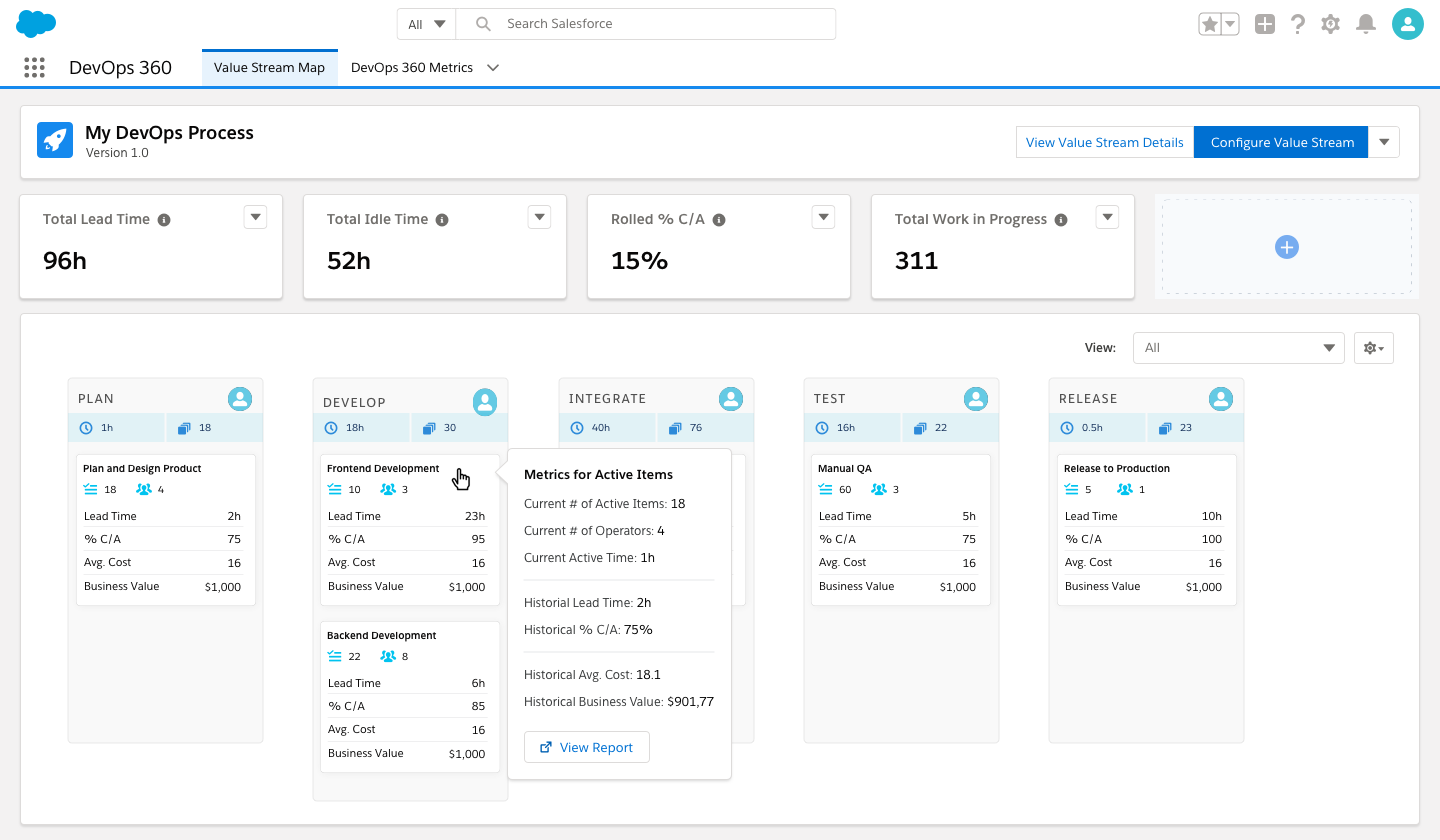
    Andrew Leigh, chief marketing officer for Copado, said providing a platform that accelerates the development and deployment of application code is no longer sufficient. The winter 2021 release of the Copado DevOps 360 platform now includes value stream management capabilities that enable organizations to better prioritize DevOps projects, he said.

    In response to the COVID-19 pandemic more organizations than ever are now relying more on SaaS applications that can be accessed easily by employees working from home. IT organizations are also now using platforms such as Salesforce to jumpstart digital business transformation initiatives. Rather than write develop entire applications from the ground up, many organizations are employing low-code tools from Salesforce and others to extend, for example, customer relationship management (CRM) platforms.

    Leigh said most of the activity revolves around professional developers who are increasingly applying best DevOps practices to build those applications. Copado has certified more than 25,000 developers on its platform, he said.

    Given the current state of the economy, Leigh said interest in DevOps platforms is rising among organizations building Salesforce applications because they want to ensure a return on investment (ROI). Organizations that are investing six figures to build these applications are especially interested in value stream management tools that help make sure these projects are delivered on time.

    The value stream management capabilities added by Copado include support for the Scaled Agile Framework (SAFe) for building complex applications more efficiently. It also provides the ability to synchronize stories from Jira and Agile Planning boards.

    The latest version of the Copado DevOps 360 platform also adds a suite of declarative pipeline builders that allow non-technical teams to define and manage value pipelines without a single line of code. That capability is intended to simplify version control and automation flows to enable developers and administrators who manage Salesforce instances to better align their efforts.

    Copado added deeper integrations to third-party testing tools that incorporate artificial intelligence (AI) and updated its static code analysis and compliance tools.

    Salesforce is clearly not the only SaaS application platform that organizations are looking to extend, but it is among the fastest-growing. For its most recent third quarter, the company posted revenues of $5.42 billion, an increase of 20% year over year. The company is now lifting its future guidance to slightly exceed pre-pandemic levels. Salesforce is projecting fiscal 2021 revenue at the end of its fourth quarter will total $21.11 billion. Revenue guidance for fiscal 2022 has been raised to $25.5 billion. Salesforce earlier this week also announced its intention to acquire Slack, a provider of a messaging platform that is used widely by DevOps teams.

    Leigh said a dedicated DevOps platform for Salesforce applications is necessary because Salesforce applications are constructed using a set of objects and tables unique to the platform versus traditional application code. Regardless of the reason for requiring a dedicated DevOps platform, interest in building and deploying custom applications on top of the Salesforce platform has increased sharply since the start of the pandemic.

  • The DevOps Long Tail of Salesforce’s Slack Buy

    The DevOps Long Tail of Salesforce’s Slack Buy

    While most of the focus on the acquisition of Slack this week by Salesforce for $27.7 billion clearly revolves around digital business transformation initiatives, the implications of the deal for DevOps teams that have been employing Slack to collaborate for years is significant.

    Salesforce owns both Heroku and Force.com in addition to providing developers with a set of low-code Lightning tools for building applications on top of software-as-a-service (SaaS) applications built by Salesforce.

    During a conference call with analysts this week, Salesforce CEO Marc Benioff made it clear most of the initial focus will be on tightening integration between Slack and the company’s broad portfolio of customer relationship management, marketing, analytics and artificial intelligence software. However, Slack first gained traction as a collaboration service that DevOps teams employed to share updates and notifications. Many DevOps teams still employ Slack for that purpose and it’s only a matter of time before all the units that make up Salesforce tighten integration with Slack.

    It’s not clear to what degree that integration might convince DevOps teams to either stay with or switch to one of the several platform-as-a-service (PaaS) environments that Salesforce makes available. However, the Lightning PaaS that Salesforce provides for organizations that want to extend the company’s SaaS applications has been gaining significant traction. Rather than writing entire applications from the ground up, the path of least digital business transformation resistance for many organizations is to employ low-code tools such as Lightning to extend existing SaaS applications.

    Salesforce also own MuleSoft, which it positions as a platform for integrating both SaaS and on-premises applications to further those digital business transformation initiatives.

    That approach has gained significant traction in the last six months as organizations have expanded reliance on SaaS applications to enable employees to more easily work from home to help combat the COVID-19 pandemic. For its most recent third quarter, Salesforce posted revenues of $5.42 billion, an increase of 20% year-over-year. Benioff said the company is now lifting its future guidance to slightly exceed pre-pandemic levels. Salesforce is projecting fiscal 2021 revenue at the end of its fourth quarter will total $21.11 billion. Revenue guidance for fiscal 2022 has been raised to $25.5 billion.

    Most of the custom applications being built on top of Salesforce platforms are constructed by professional developers. That shift toward employing Salesforce SaaS applications as a platform has created demand for DevOps platforms from providers such as Copado and Gearset. Most recently, Gearset has begun offering free training to encourage the adoption of best DevOps practices among developers of applications based on the Salesforce platform.

    Benioff said the first fruits of the acquisition of Slack will manifest themselves next year. In the meantime, DevOps teams that have standardized on Slack for collaboration should expect to be hearing a lot more about Salesforce tools and platforms on a Slack channel near them.

    Of course, none of this is lost on Microsoft, which is similarly moving to incorporate Microsoft Teams within DevOps workflows. It will be up to each individual DevOps team to decide which approach to collaboration makes the most sense from here.

  • New Low-Code Innovations for Building the Apps You Need, Fast

    N

    The digital imperative has accelerated for every CIO. Organizations must build apps fast to respond to ever-evolving business and economic changes. This is where the power of the Salesforce Platform shines, empowering everyone to innovate fast and scale with confidence using low-code builders. Drag, drop and deliver modern apps that increase employee productivity with Lightning App Builder. Automate processes that improve operational efficiency with Flow Builder. Ultimately, delight every employee and customer with modern experiences that do not sacrifice enterprise quality, all without having to code.


    At Salesforce, our roadmap is driven by listening to our customers. And today, we are delivering two new highly requested capabilities to Lightning App Builder — Dynamic Forms and Dynamic Actions.


    What are Dynamic Forms and Dynamic Actions?

    Dynamic Forms is the ability to configure the behavior of forms as people fill them out.  With Dynamic Forms, every engagement is data driven and responsive in real time to user input.  Dynamic Actions further guide people through the experience with intuitive next steps. These features are a powerhouse of innovation for businesses to easily build and scale productive and engaging experiences that surface the right information at the right time to the right person without code.


    Why are Dynamic Forms and Dynamic Actions Important?

    Dynamic Forms and Actions are important for every company looking to transform into the digital world and embrace modern architectures. Apps of the past were static, trigger based, batch updated, and hard coded. Apps of today are dynamic, event driven, real-time, and responsive. Dynamic Forms and Actions further the power of the Salesforce Platform with its seamlessly integrated event, identity, and security model and its ability to build apps from components that serve as interchangeable building blocks. They can be combined with other platform services, including Flow, Einstein, Mobile, and Collaboration, and unlock the possibilities of a composable enterprise.


    In fact, automation by Flow Builder has been surging on the Salesforce Platform. In March 2020, we’ve seen 3.25B+ processes automated, an increase of 25% YOY, and 161M+ visual screenflows launched, an increase of 83% YOY, to help with repetitive tasks like closing cases or onboarding new hires. This helps increase productivity, improve efficiency, increase data quality, and provides peace of mind for security and governance.


    How do Dynamic Forms and Dynamic Actions Work?

    Dynamic Forms transform static data entry forms into responsive experiences that are intuitive and easy to use. You can place fields and sections anywhere on the page to provide structure and organization for the information. Further, you can ensure people stay focused by setting rules to only show certain fields based on other field values, for example only when a checkbox is selected or when a picklist has a certain value. Experiences can be personalized further by only showing data to people based on their role, location, or other identifying information.


    Dynamic Actions allow you to control the set of next steps, or actions, that are available in an experience. As with Dynamic Forms, you set the rules for when actions are shown based on field values or user information. This ensures that people only see actions relevant to them at the right time.


    Here’s an example of how these innovative capabilities can be used. Job candidates provide multiple documents and pieces of information when applying for a role – including salary information, resumes, job history, legal status and references – but not everyone in the hiring process needs to see it all. Using Dynamic Forms, you can quickly add visibility rules that surfaces different candidate information to the recruiter, HR department, hiring manager and interviewers. And with Dynamic Actions, you can assign specific actions for each person involved in the hiring process to ensure they are aware of next steps to move the candidate along. After the candidate is hired, users can leverage flow automation to create an onboarding journey that helps hiring managers assign the right equipment to their new hire, ensure they receive necessary training, and provide them with credentials to access online tools.


    “This is huge,” said Amber Boaz, Trailblazer and Salesforce MVP. “Dynamic Forms and Actions will allow me to create pages once and reuse them multiple times, all without any custom coding, managing permissions or moving between environments to get an app built. This won’t just make my life easier – it will make my organization more efficient overall.”


    Tune into Salesforce’s #LowCodeLove event today, May 7, 2020, at 11am PT to learn more. Event registration information can be found here.