Tag: quali

  • Quali Adds Governance and Cloud Cost Control Tools to Automation Platform

    Quali Adds Governance and Cloud Cost Control Tools to Automation Platform

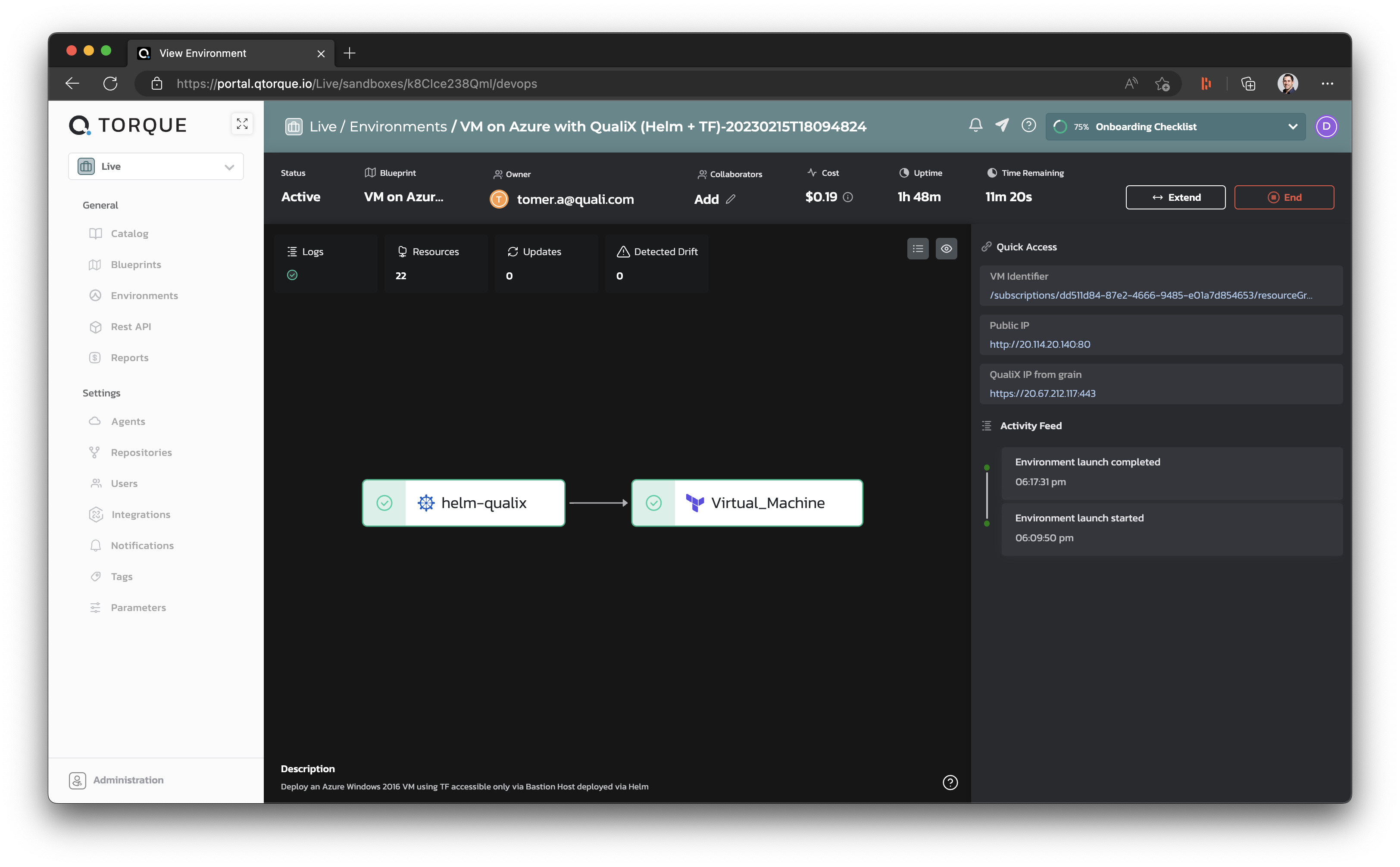
    Quali today revealed it added governance and cloud cost management tools to its Torque platform for automating IT infrastructure management.

    David Williams, senior vice president for market strategy at Quali, said the added governance tools will make it possible to enforce security, compliance and consumption policies as IT environments are launched using the automation blueprints that Torque enables IT teams to create.

    At the same time, IT teams can now also define consumption policies based on cloud runtime or regions employed within a cloud computing environment. In addition to taking advantage of dashboards to visualize consumption of cloud resources, IT teams can also use Torque to identify cloud waste including detached, inactive and overprovisioned instances. They can pause, right-size or tear down environments to reduce costs and eliminate the possibility of a billing surprise at the end of the month, noted Williams.

    Torque also enables IT teams to detect drift and then update live cloud environments to remediate any that fall out of scope, he added.

    Quali has been making a case for an environment-as-a-service approach to managing IT. That approach is based on a set of triggers for controlling infrastructure via a software-as-a-service (SaaS) platform that can be invoked either via an application programming interface (API) or a graphical user interface (GUI).

    In addition to providing a set of infrastructure provisioning guardrails that prevent mistakes from being made, Torque makes it possible to automatically deploy complete application environments on top of infrastructure provisioned as code using blueprints rather than relying on low-level Terraform scripts. The goal is to increase developer productivity by enabling IT teams to create self-service portals that developers can use to spin up environments.

    That approach is becoming more appealing as many organizations begin to adopt platform engineering as a method to centralize the management of DevOps workflows, noted Williams. In fact, as part of that effort, many organizations are starting to unify the management of cloud and on-premises IT environments, he added.

    While many developers routinely provision IT infrastructure using tools such as Terraform, many of them lack the cybersecurity expertise required to ensure cloud computing environments are configured properly. Developers also tend not to remember to de-provision cloud resources when no longer needed; over time, those factors contribute to unnecessarily increased cloud costs.

    Ultimately, the goal is to find ways to centrally manage IT environments to reduce costs and improve cybersecurity without inhibiting the pace at which developers are building innovative applications, said Williams.

    At the same time, as application environments become more complex, it is becoming even more challenging to provision and manage IT environments at a time when many organizations are reluctant to hire additional IT staff, he noted.

    One way or another, IT environments will become more automated. The issue is determining how best to organize the IT teams managing those environments as tasks that once required a lot of manual effort are increasingly automated.

  • Quali Update Strengthens Infrastructure Security

    Quali Update Strengthens Infrastructure Security

    Quali today announced enhancements to its Torque automated infrastructure platform to add support for security scans and Open Policy Agent (OPA) software being advanced under the auspices of the Cloud Native Computing Foundation (CNCF).

    OPA enables organizations to implement cybersecurity policies as code. The challenge many organizations have encountered is that not many developers have mastered the programming language required to implement OPA. Quali is embedding OPA in a platform that enables IT teams to implement it using a graphical tool that enables central management and application of those policies.

    David Ben Shabat, vice president of research and development at Quali, said the overall goal is to implement scans and policies in a way that reduces the number of misconfigurations that are made when organizations provision infrastructure-as-code (IaC).

    As part of that effort, Torque now flags any policies that fail validation. In addition, administrators can pick and choose which OPA policies to import, including both out-of-the-box and existing custom policies. Those policies then enable Torque to automate approvals or denials of deployments based on compliance with those policies after scans and other health checks have been run.

    Quali has been making a case for policy-based triggers for cost controls, automated start-up, shut down and pausing of IT environments to give IT teams more control over infrastructure using a software-as-a-service (SaaS) platform. That approach enables IT teams to provide a set of guardrails for provisioning infrastructure that prevent mistakes from being made, noted Ben Shabat. Those controls can be applied using the graphical tool Quali provides or programmatically via an application programming interface (API) that Quali exposes, noted Ben Shabat.

    It’s not uncommon for a port to be left open, for example, which cybercriminals later exploit to exfiltrate data. Quali is offering a DevOps platform that allows for central application of policies that act as guardrails to prevent developers from making these types of mistakes as an alternative to scripts created using tools such as Terraform. That approach also provides more visibility into how infrastructure resources are being consumed.

    Every minute a developer spends managing infrastructure is one less minute they could be spending writing code. As application environments become more complex, it is becoming more challenging for developers to manage infrastructure-as-code. The issue is that DevOps teams who could provision infrastructure for developers are overwhelmed by the number of projects they need to manage. As a result, DevOps teams are becoming bottlenecks. Naturally, that only encourages more developers to provision infrastructure on their own, leading to more mistakes.

    It’s not clear whether IT organizations will look for an alternative to provision infrastructure in a way that doesn’t require developers to have as much infrastructure expertise. However, as organizations look to lock down software supply chains, the way infrastructure is provisioned using code will, in many cases, need to be reconsidered within the context of a larger DevSecOps workflow.

  • Tips for Better Governance – Techstrong TV

    Tips for Better Governance – Techstrong TV

    David Williams, VP of Porduct Strategy at Quali, and Charlene discuss David’s top tips to better governance in DevOps. The video is below followed by a transcript of the conversation.

    Charlene O’Hanlon: Hey, everybody. Welcome back to Techstrong TV. I’m Charlene O’Hanlon, and I’m here now with David Williams, who is the VP of product strategy over at Quali. David, thank you so much for joining me. Good to see you.

    David Williams: It’s good to see you, too, Charlene. It’s good to be here.

    O’Hanlon: Excellent, excellent. So, lots of stuff going on in the world of DevOps these days, but one of the things that we have been hearing a lot more noise about is governance in DevOps. And especially with just the insane amount of automation that’s going on to help kind of speed up the processes, obviously, it can be pretty easy for things to kinda go off the rails. So I wanna kinda get a sense from you as to what you see happening in the space with respect to governance in DevOps, and how we can kind of maybe move away from the herding cats mindset when it comes to governance.

    Williams: Yeah. It’s been a journey on DevOps. DevOps, when it was introduced many, many years ago as a concept immediately aligned itself with Agile, so it became only the ability to get things out as continuously as possible, and also as fast as possible. And so what happened is that at that time, things were very much managed. It was small teams doing lots of work. As enterprises started kicking in, with DevOps become a serious strategic way of actually delivering applications to their consumers, the amount of people got involved grew. 

      The amount of teams that were involved grew. Even though the DevOps philosophy was small teams, fast moving, application componentry going out into the ether as fast as possible, it stopped being that quite a while ago, and started becoming much more mainstream. So unfortunately, DevOps grew up a lot, and one of the things that became an issue was governance. And governance from that perspective wasn’t really just about security – y’know, SOC 2 compliance, and making sure that your secrets are held and managed efficiently across the pipeline – 

      but it was also around, how do you understand what people are doing? And what is the interaction that they’re having? And why are they having that interaction? And basically it’s a fragmentation challenge, more than anything else. DevOps pipelines are fragmented, and so how do you get control without inhibiting innovation? And how do you get visibility, having lots of teams that wanna innovate in their own areas, but not necessarily give you that full end to end? So that’s the challenge that has emerged. 

      And I think it’s going to continue to do that for quite a while to come, because the applications are getting bigger and more contention-based in regards to infrastructure sharing. So governance is gonna be the thing.

    O’Hanlon: It’s interesting, because I think of it a lot like a company itself growing out there. When you have two or three people working in a company, it can be very difficult to get a lot of achieved without everybody kinda going all in. But as a company grows, you’ve got more people who are doing the work, but maybe they’re not necessarily talking to each other, and not everybody has all the information they need. So you kind of have to kinda build a technology, or at least a process, around being able to get the information out and helping everybody be on the same page. 

      And it kinda sounds like the same thing is happening in the DevOps space with respect to just having a greater understanding. Not just an understanding of the process, but just, I guess, a better way of enabling the process from an understanding and a communication perspective – as well as just making sure that all the right things are getting done at the right time. So what do you guys propose? What do you see that you believe could make a real difference?

    Williams: You used two words that always make me smile when I talk DevOps. I used to be an analyst, talking to a lot of DevOps practitioners, and the two words that I used to run for the hills were “process;” y’know, that was one thing. And so they wanted collaboration, but they wanted to be able to collaborate without being governed in any way. So I think that that process word is one, and anything to do with “abstraction.” So abstraction’s not a good thing. It takes you away from the core. 

      So what I’m saying to you is that any solution that enables you to get greater control on governance and understanding has got to be able to do it without impeding people’s ability to do their jobs. And it’s gotta be something that is subsumed within their normal breathing in and out. It can’t be something that’s another job to do. That defeats the whole point of, anything that’s to do with lean practice is about removing stuff. We’re the software industry, so the way that we make things less complex is by adding something, y’know; that’s the normal inclination. 

      I think DevOps, when you actually use it, whatever you add into the mix has got to be subsumed within your normal day-to-day activities. So it can’t be yet another thing to do. For example, security has gotta be there, but not intrusive. Why I came to Quali was because I’d spent a lot of time with companies where infrastructure, the ability to provision into the cloud, do all the things, was becoming a bit of a mystery. People would assume infrastructure. 

      So the governance around what you’re deploying and how you’re provisioning your infrastructure not only became fragmented through your pipelines – Because you plan something, and then you code it, you build it, you release it, and test it, et cetera. Each one of those is a very defined area. It might be one person; it might be many teams. But each one of those is a very specific thing you have to do. But wouldn’t it be cool if you could subsume testing into your code? Wouldn’t it be cool if you could consume compliance while you’re coding? 

      So you’re coding, and it’s automatically looking at configurations and modifications, and logging that appropriately without you having to add another layer. And I think the same with infrastructure. I think that the companies I’ve worked for before really didn’t know what was going on, and I worked for DevOps companies that were trying to work out, “Okay, so the infrastructure was there; now it’s gone,” or “It’s there, and it’s modified.” 

      Every commit that a coder does is, y’know, a point in time. “So what has happened between that commit and the next commit?” And so all these stages of infrastructure, how do you build that in? So at Quali, what we looked at is providing a method with which you can let people use infrastructure as code practices, configuration management tools. Do what you need, but it gets automatically subsumed into a model. And the model is what you rate on. That’s what applies the policies around access and et cetera. 

      But it should allow the coders, the release managers, the testers to do what they need, but also it provides sort of like a control plane on top that enables you to talk and be governed, but without that Big Brother type of thing looking at you. So I think that’s the magic about DevOps, is if you add something in, it’s gotta be something that doesn’t get in the way of speed. It’s gotta not provide another barrier. It’s gotta do these things. It’s a hard problem to solve, but if you approach it in a way that assumes that people are going to do things, they’re gonna break stuff – 

      People do that; that’s what they do. They do their own stuff. They don’t like being told what to do. So if you can provide as subliminal a level of control over infrastructure that says, “I know how you’re doing it. I’m now going to provide that same capabilities that we used in build to help the testers understand what to build.” So now you’re providing some consistency across, using the control plane. So you’re using your models, and you’re moving them across. But it subsumes what they already use, so you can add it in. 

      Your infrastructure stack and the way that you deploy it is implemented in the model that has policy, access control, secrets integration. And so that’s really the philosophy, is to make sure that we can provide the end-to-end capabilities, accelerate the delivery life cycle, but not impede the practitioners from what they do, but provide the business with visibility which they do not have today. So I would just follow up by saying cost isn’t a governance thing, but unless you govern it, and you understand why you’re doing something, then how do you associate a cost of the cloud, if you can’t associate it with a pipeline? 

      At the moment, cost is associated with instances, and you’re having to group that together. What if you could provide the model with a value while you’re doing it, the application that you’re delivering on? And if you could do that, then you’re subtly applying what they do at the practitioner level with an application, with an owner, with a cost. So that is a way that governance actually comes in with the access, the controls, without being intrusive. We can basically provide all the capabilities there, and enable the business to get better visibility control over all sorts of things, including, for the first time, cost on the end to end. 

    O’Hanlon: Yeah, that makes a whole lot of sense. And in my mind – please tell me if I’m wrong – but it also means that the developers don’t really have to think about, how shall I say? They don’t actually have to learn more about something that would – If they’re moving from, say, a regular kind of a developer motion into more of a DevOps motion, it doesn’t require them to kinda add on a level of expertise that they might not need otherwise. This kinda does it for them, and kind of fills in the blanks for them, and also kinda helps other organizations or other teams within the organization understand the flow a little bit better, which makes a whole lot of sense. 

      And I think that may be part of kinda the governance conversation as well, is if we all have a greater level of understanding about what is happening at any particular time, we can better manage it.

    Williams: Yeah. I mean, secrets management, people hear a lot about that. They don’t quite know what it is when you talk to them about secrets management. I mean, something like a password or a username would be used maybe throughout a process, and it’s a shared piece of knowledge that you don’t wanna expose. So you keep that consistent throughout your environment, but keep the access controls consistent throughout whoever uses that access throughout the pipeline. One thing that we’ve learned is that DevOps isn’t a thing; it’s an interpretation of a thing. 

      The objective is very clear for people, but how they implement it can differ, depending on organization, application, design, et cetera. So what we also have to do is make sure that people with lesser skills – And I don’t mean lesser skills in regards to infrastructure; infrastructure can be cloud provisioned. But what if they have to manage all the networking components and the database instances, the things that aren’t inherent within a cloud-provisioning environment? 

      So we’ve gotta make sure that as developers of different skill levels interact with the infrastructure, we can fill the gaps for them, so they can do what they need to do, but if there’s networking, et cetera that needs to be managed, then the model should be something to give them the guardrails with which to implement that in support of the application requirements to that part of the pipeline. So it is something that we’re working on quite heavily, to make sure that we can get those guardrails in place.

    O’Hanlon: That’s great. And I think about all of the things that have kind of expanded DevOps, if you will, beyond the original parameters, including the implementation of DevSecOps, and the adoption –

    Williams: Yeah.

    O’Hanlon: – and DevNetOps, and all of these things that have kinda piled on top of DevOps. 

    Williams: [Chuckling] Yeah.

    O’Hanlon: It can be very, very difficult for the DevSecOps community, or the DevOps community, especially developers, to kinda have to manage all of that knowledge. So having those guardrails in place, I imagine, is going to be very well received by a lot of organizations, simply because we’re also talking about the dearth of talent in the developer community these days.

    Williams: Yeah.

    O’Hanlon: So anything that an organization can do to help ensure that there is a level of governance around the way their DevSecOps tools and practices and culture and everything is run, I think is a huge benefit. David, thanks very much for walking me through what you guys see happening with DevOps and governance. And hopefully this is an issue that is going to get better as we move forward. To your point, we do tend to throw technologies at problems, and hopefully this is one that will stick, if you know what I mean. 

    Williams: Yeah.

    O’Hanlon: So thanks again for your time. I do appreciate it.

    Williams: Right. Thank you, Charlene. It’s been a pleasure. 

    O’Hanlon: All right, everybody. Please stick around. We’ve got lots more Techstrong TV coming up, so stay tuned.

  • Quali Adds Control Plane to Platform to Manage IaC

    Quali Adds Control Plane to Platform to Manage IaC

    Quali has added a control plane to its Torque platform to give DevOps teams the ability to consistently provision and orchestrate infrastructure across a heterogeneous distributed computing environment.

    Amir Rosenberg, vice president of product for Quali, said the control plane allows DevOps team to centrally manage the provisioning of infrastructure via reusable blueprints accessed via a self-service portal, which individual developers can access. That approach eliminates a bottleneck that occurs when DevOps teams manually provision infrastructure on behalf of development teams, he said.

    The latest release of Torque also adds enhanced visibility and cost control capabilities such as the ability to set limits for maximum duration and number of concurrent environments and limits for the total cost of an environment. Also included are cost reporting tools for Kubernetes clusters and improved forecasting and resource consumption policies that can be applied to blueprints, sandboxes and spaces.

    Security enhancements include new customizable role-based access to blueprints, API Token Controls and integrations with secrets management platforms.

    Through its software-as-a-service (SaaS) platform, Quali makes it possible to access Torque via either a cloud account or a user interface that connects to a GitHub account where blueprints are stored. The goal is to enable DevOps teams to maintain some control over how infrastructure is provisioned without impeding developer productivity, said Rosenberg, noting at a time when more organizations than ever are launching multiple application development projects, there is more sensitivity concerning developer velocity than ever.

    It’s a fact that infrastructure misconfigurations happen because developers make mistakes. It’s not uncommon for a port to be left open, for example, which cybercriminals later exploit to exfiltrate data. Quali is offering a DevOps platform that makes it possible to centrally apply policies that act as guardrails to prevent developers from making provisioning mistakes. An alternative to scripts created using tools such as Terraform, the blueprints can deploy complete application environments automatically. That approach also provides more visibility into how resources are being consumed.

    Every minute a developer spends managing infrastructure theoretically is one less minute they could be spending writing code. As application environments become more complex, Rosenberg noted it’s becoming that much more challenging for developers to cope with managing infrastructure as code. The issue is that DevOps teams who could provision infrastructure for developers are being overwhelmed by the number of projects they need to manage. As a result, DevOps teams are becoming bottlenecks. Naturally, that only encourages more developers to provision infrastructure on their own, which, Rosenberg noted, leads to more mistakes being made.

    It’s not clear when or even whether IT organizations will look for an alternative to provision infrastructure in a way that doesn’t rely on developers as much, but most seem to agree that developers have far better things to do with their time.

  • Quali Announces Enhanced Support for Helm to ImproveContainer Governance While Accelerating Deployment

    Quali’s infrastructure automation platform increases value and helps businesses achieve scale in DevOps by simplifying deployment and management of Helm Charts

    Austin, TX, March 15, 2022 — Quali, a leading provider of Environments-as-a-Service infrastructure automation solutions, announced today that its Torque platform now supports seamless integration with Helm. Helm Charts allow engineers to define their applications for Kubernetes with all the requisite microservices and networking components – in essence, acting as a package manager for Kubernetes.

    “Many IT organizations are struggling with managing complexity, costs and accountability for container infrastructure,” said Edan Evantal, CTO of Quali. “Our aim is to help organizations gain greater value and control using Helm to add speed and reliability to development and test processes. At the same time, we allow them to maintain governance and reduce friction by reusing proven, existing Helm Charts, so they can innovate quicker while mitigating business risks associated with scale.”

    With native support for Helm Charts in Torque, customers can now:

    • Protect and extend their existing Helm investment with complete application environments
    • Gain greater control and accountability over new and existing Helm Charts in one or more environment blueprint
    • Deliver value in scaling container adoption and usage by making Helm Charts easily reusable and combining infrastructure components outside of containers into manageable environments
    • Provide greater control over Helm usage, by visualizing and reporting Helm usage as part of a blueprint and tying container usage to an outcome, without inhibiting Helm capabilities
    • Better optimize resources by giving people the ability to use containers, no matter their skill level. This enables more skilled developers to create Helm Charts and extend environments to include elements beyond the container while benefiting from governance and control inherent with Torque
    • Create containers on-demand with self-service capabilities that remove the requirement to create and manage charts

    Torque has been adopted by leading enterprises to accelerate software development and deployment pipelines while providing frictionless management and governance. With Torque, organizations can define complete application environments, including infrastructure, data, services and application tools into unified reusable blueprints to support automated deployment of the infrastructure required in software delivery pipelines and QA/Test environments.

    Torque also supports security mandates with self-service access controls that allow centralized DevOps teams to define which elements of environments end users are free to configure and which elements can’t be changed, providing both flexibility and governance. Torque achieves this through built-in features including auto-tagging, custom tagging and Role-Based Access Controls (RBAC).

    About Quali  
    Headquartered in Austin, Texas, Quali provides the leading platform for Environments-as-a-Service infrastructure automation solutions, helping companies achieve freedom from infrastructure complexity, so they can operate with velocity. Global 2000 enterprises and innovators everywhere rely on Quali’s award-winning CloudShell and Torque platforms to create self-service, on-demand automation solutions that increase engineering productivity, cut cloud costs, and optimize infrastructure utilization. For more information, please visit quali.com and follow Quali on Twitter and LinkedIn.

  • Connecting Your Cloud & DevOps Tools to Enable CI/CD

    Connecting Your Cloud & DevOps Tools to Enable CI/CD

    An effective continuous integration/continuous delivery (CI/CD) pipeline must integrate cloud and DevOps tools seamlessly to ensure the build, compile, test and release of applications is accomplished efficiently and without friction.

    Application architectures, internal processes and personal preferences mean organizations and teams set up the CI/CD pipeline differently, resulting in a diversity of infrastructure and tooling throughout software delivery pipelines. While innovation demands the freedom to use whatever is needed to deliver applications, the resulting diversity can be a significant integration challenge. What’s needed is a platform built for DevOps that seamlessly connects a DevOps ecosystem and CI/CD pipeline tools.

    There are two ways to do this.

    One is to use REST APIs. REST is a popular choice due to its simplicity and the fact that it builds upon existing systems and features of HTTP. It avoids the need to create new standards, frameworks and technologies. Another benefit of using an integrated approach based on REST is that many developers are familiar with key elements of the REST architecture, such as Secure Sockets Layer (SSL) encryption and Transport Layer Security (TLS). Additionally, REST is language-independent. As such, developers can employ any language that uses HTTP when creating REST APIs so developers can choose technologies they are familiar with and that best suit their needs.

    Another approach is to look for a platform that supports out-of-the-box integration with commonly used cloud and DevOps tools. Naturally, each company and DevOps team uses a specific set of tools. But it is safe to assume there are widely used tools that should be included in any list. Some useful plug-in integrations to look for include ones for Amazon S3, Azure DevOps, Bamboo, CircleCI, Github, Jenkins, TeamCity, Terraform and more.

    Integration benefits and how to amplify them

    Integrating cloud and DevOps tools into a CI/CD pipeline offers several benefits.

    Built-in integration will help developers get the most value out of the pipeline. For example, out-of-the-box integration can be leveraged to help provide more automated testing and a quicker time to release. Why? If tools are not integrated, developers need to go through a slow, manual process to deploy, configure and optimize tools for their development environment. That is a time-consuming process. Those involved in the process lose time on their real work. Lacking integration, multiple teams throughout an organization may waste time doing the same processes to get the tools to work. And perhaps most troubling, manually integrating tools can introduce errors and potential security vulnerabilities.

    Highly-integrated tools help encourage collaboration. In many companies, it is easy for different projects and different development teams to fall into siloed patterns of work. Different groups will use different tools. Having cloud and DevOps tools integrated into the CI/CD pipeline allows a de facto standardization of processes. And from that, best practices typically emerge from the familiarity of using the same tools. Smart companies will take advantage of the lessons learned and be sure to share that institutional knowledge amongst teams. Once a basic level of sharing is achieved, different groups are likely to work directly querying each other and working together to get the most out of the tools.

    What’s needed?

    To realize the benefits of integrating cloud and DevOps tools in a CI/CD pipeline requires a suitable platform. The right platform should effortlessly deliver the infrastructure and application resources to the development teams.

    A solution that provides self-serve access to infrastructure needs more than simply provisioning automation. A solution must help a company monitor resources utilization and costs. And specifically provide a way to tie costs back to business units, projects and individual developers.

    With such an offering, a company gets the full benefits that arise when cloud and DevOps tools are integrated into a CI/CD pipeline.

  • Quali Adds Free Tier to DevOps Automation Platform

    Quali Adds Free Tier to DevOps Automation Platform

    Quali has added a free tier of service to its Torque platform for automating infrastructure provisioning and application workload deployments.

    In addition, the company has updated the software-as-a-service (SaaS) platform to provide blueprints through which it provides tighter integration with Terraform, an open source infrastructure-as-code (IaC) tool, along with support for custom tags to make it easier to generate reports and dashboards that provide greater visibility into infrastructure costs.

    Quali CEO Lior Koriat said the free tier is intended to make the Torque platform more accessible to both small teams of DevOps professionals and individual users. It includes the ability to build environments on Amazon Web Services (AWS) or the Microsoft Azure cloud in addition to providing integration with a variety of DevOps tools and platforms and access to a sample blueprint library. Support for the free tier is provided via an existing community edition of the platform.

    Koriat said Torque takes IaC a step further by also making it possible to automatically deploy complete application environments on top of infrastructure provisioned as code using blueprints rather than low-level Terraform scripts. The goal is to increase developer productivity by extending Terraform so that developers can spin up environments across multiple cloud computing platforms via self-service, he added.

    That approach also sharply reduces the chances a cloud platform will be misconfigured, which Koriat noted is the bane of cloud security professionals’ existence. Most developers lack the cybersecurity expertise required to ensure cloud computing environments are configured properly. Simplifying the provisioning of infrastructure is especially critical when developers employ complex platforms such as Kubernetes, added Koriat.

    At the same time, Quali’s Koriat said IT leaders want more visibility into how cloud resources are being consumed as the number of workloads deployed in these environments steadily increases. Developers tend not to remember to de-provision cloud resources when no longer needed, which Koriat noted conspires to increase cloud costs unnecessarily.

    It’s not clear just yet how quickly DevOps teams might be moving away from relying on lower-level tools toward automation frameworks accessed via a SaaS platform. However, as application environments become more complex, it becomes even more challenging to provision and manage IT environments—especially since many DevOps teams are still working from home to help limit the spread of the COVID-19 pandemic.

    One way or another, the amount of time and effort spent managing IT infrastructure needs to be reduced. After all, while application environments are increasing in both size and complexity the number of individuals that make up a DevOps team remains largely the same. The need to rely more on automation frameworks has reached a tipping point that is becoming increasingly obvious to all concerned.

    As more organizations start to operate as software companies in the age of digital business transformation, it’s clear the way IT has been managed in the past is about to fundamentally change. The issue now is determining which automation framework lends itself best to enabling DevOps teams to achieve that goal.

  • Enabling Developers with Infrastructure Automation

    Enabling Developers with Infrastructure Automation

    Enabling developers with infrastructure automation

    Being first to market with new and improved applications and services is how successful organizations grow and differentiate business offerings.  Continuous software delivery means everything is fluid and constantly changed to enable the speed and agility required to ensure applications deliver on increasingly higher consumer satisfaction expectations.

    Everything released and rolled out needs to be evaluated and updated frequently with new capabilities and features added as requirements change. DevOps, continuous integration and delivery practices play a growing part in the streamlining of software pipelines and accelerating software releases, however for enterprises, the infrastructure supporting the pipelines remains siloed, provisioned (potentially, multiple times) at each stage of the software delivery pipeline.

    While infrastructure remains a skill intensive, stage based practice, there is no greater inhibitor to pipeline execution speed and agility and the requirement to scale DevOps to meet the needs of the business.

    The result is that IT organizations cannot keep pace and struggle to provide development and testing teams with the infrastructure environments they need, while maintaining security, compliance and efficiency. To help achieve speed and control, many DevOps-focused companies are turning to infrastructure automation. The goal of such an approach is to give DevOps teams access to the environments they need in a timely manner, all while maintaining control and oversight of costs and governance.

    The way businesses operate today, DevOps needs production environments available immediately. Developers cannot afford to wait days or longer when starting new projects. Some businesses try to address the challenge by building automated scripts to set up environments.

    The problem is that automated scripts are typically custom, hand-coded and require increasingly scarce skills. When changes to environments are needed, custom scripts need the same high level of skills to understand, evaluate, change, and test environments taking crucial time from pipeline execution.

    DevOps teams need instant access to infrastructure. The solution must be, application pipeline centric, automated, on-demand and self-service. It must be a platform that not only delivers and manages environments throughout the pipelines but integrate with existing infrastructure tools, subsuming what they create to ensure enterprises meet the demands of the business without inhibiting application software development innovation.

    The role of immutable infrastructure

    Enabling developers with infrastructure automation is the concept of reusable automation and immutable infrastructure. The concept for immutable infrastructure is to build the infrastructure components to an exact set of specifications. If a change to a specification is required, then a whole new set of infrastructure is provisioned based on the updated requirements, and the previous infrastructure is taken out of service as it is obsolete.

    How does that play into automating infrastructure for DevOps teams? Continuous delivery uses automation to make deployments routine and repeatable. To achieve this, delivery is built on the concept of versioning and automation to push deployments to variable environments on a development pipeline.

    Immutable infrastructure comes into play in that IT-heavy infrastructure chores, such as implementing updates and installing patches, are eliminated. If an infrastructure element needs an update or must be replaced, the old elements are replaced by new entities that have already made these changes and been incorporated, tested and verified.

    Bottom line: Reusable immutable building blocks make it easier to deliver the resources developers really need.

    Addressing governance

    Infrastructure automation should be used to ensure governance. However, traditional cloud governance approaches are limited by features, with infrastructure automation achieved through complex scripting. This results in the automation becoming a major maintenance challenge and a time commitment. With multi-cloud environments, complexity multiples.

    The smart approach is to focus infrastructure automation on managing governance across common cloud resources.  Putting infrastructure automation in the hands of DevOps practitioners does not mean relinquishing governance control, but ensures corporate compliance is maintained and enforced with policies controlling usage, security and cost. This prevents cloud sprawl without slowing down development cycles.

    Summing up

    Meeting todays growing DevOps infrastructure needs is a time-consuming task for IT organizations. It slows down every stage of the application development pipeline. The need is for a solution that provides developers and DevOps practitioners access to the cloud infrastructure and application environments they need on demand. This is accomplished using an Environments as a service (EaaS) platform, accessible through a GUI portal, command line interface and existing CI/CD tools.

    A modern environment automation platform must be designed for all team members of a DevOps practice to automate the requesting, provisioning and lifecycle management of infrastructure environments. The platform must integrate without impacting efficiency or limiting innovation. It must deliver environments on-demand with self-service automation capabilities and oversee and enforce governance compliance. This solution is the answer to organizations seeking to streamline the continuous software delivery pipeline for application development, testing and release to production.


  • Understanding and Controlling Cloud Costs

    Understanding and Controlling Cloud Costs

    The widescale migration to cloud and the embracement of cloud-native application architectures has been a blessing to developers and those responsible for deploying and maintaining modern applications. Container-based apps allow fast changes compared to monolithic apps. And cloud services let DevOps teams quickly launch instances and acquire resources for all stages of their work. The downside is that cloud costs are often overlooked.

    What many businesses are finding is that cloud costs are out of control. And worse, there is very little insight into how much is being spent. Instances fired up for one project may never be deleted. Increasing capacity to support a burst in compute demand may never be throttled back. Lack of detailed billing and the complexity of distributed applications can simply mask costs from stakeholders. Looking at monthly bills from multiple providers offers no easy way to tie costs back to specific projects, applications or business units.

    Cloud costs on the rise globally

    Overspending on cloud is easy to accomplish and quite common, especially if activities are not measured and tracked.

    A report from the Cloud Native Computing Foundation (CNCF), in association with the FinOps Foundation, put the rise in spending into perspective. It found that spending on Kubernetes, the primary means of orchestrating containerized applications, was up year-to-year from 2020 to 2021. Of those surveyed, 67 percent reported an increase of 20 percent or more over the last 12 months, and 10 percent spent more than $1m per month on their deployments.

    Most startling, less than 25 percent of those surveyed said they could accurately predict how much they’d spend to within 5 percent of the actual cost. And over 20 percent stated that they did not predict their cloud bill. That’s no way to run an operation.

    Other recent studies have found comparable results. For example, Gartner predicts that almost two in three infrastructure and operations leaders through 2024 will experience public cloud migration cost overruns.

    Best practices for managing cloud costs

    What’s needed to rein in spending is visibility into cloud expenses and governance policies to control those expenses. In particular, organizations must gain visibility into their cloud resource usage to control costs. Organizations looking to do such things need a solution that helps them:

    Tie expenses back to the business: Businesses need a way to understand how much money they are paying for different environments and connect cloud costs back to business applications. This will allow a business to allocate resources more accurately for future needs.

    Spot trends: While some tools can provide visibility into cloud expenses, most only do so at the infrastructure level. What’s needed is the ability to view from a single-pane-of-glass view the cloud expenses at the environment level. A suitable solution should act as the cloud orchestrator, so users can apply run-time policies beforehand to manage costs, track environment changes by the business characteristics, and dig deep to identify the purpose, owner, size, project, and more to identify usage trends.

    Optimize efficiency: When trying to optimize the use of cloud resources, identifying changes that will provide the most value is almost impossible with traditional billing reports. The reason is because the cost of using cloud resources varies depending on the environment’s scale and frequency. What’s needed is a way to track the use of each aspect of cloud use and the related costs. This information allows a business to focus on optimizing cost without impacting performance or operations.

    Achieving results

    Controlling cloud costs is challenging and requires deep insights into resource usage. An ideal solution provides real-time information in a single viewing plane that can eliminate uncertainty and avoid over-spending. To work, such a solution must make use of certain capabilities, including the ability to automatically tag and de-commission resources, embed policy management and provide Role-Based Access Control to resources. And most critically, any cloud cost management solution must be implemented in such a way as to not slow down application development and delivery.