Tag: proxy

  • F5 Networks Planning Open Source Projects Beyond NGINX

    F5 Networks Planning Open Source Projects Beyond NGINX

    F5 Networks today revealed plans to launch multiple projects in the months ahead that will extend its commitment to open source beyond the NGINX proxy software the company acquired in 2019.

    The announcement was made during an online NGINX Sprint event; two of the projects are extensions of NGINX that will address networking requirements between microservices-based applications in addition to the management of fleets of NGINX instances. The third project is a platform-agnostic open source developer tool for building modern applications that does not necessarily require NGINX proxy software.

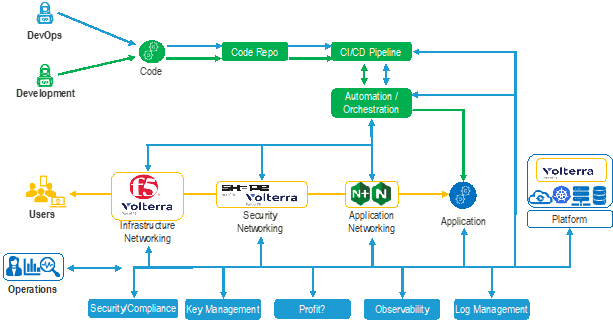
    At the same time, F5 Networks also unveiled an open source NGINX Modern Apps Reference Architecture that gives IT teams access to a complete, fully operational microservices-based application that can be deployed in minutes on a Kubernetes cluster. Based on a modular approach made up of open source components that come pre-wired and pre-integrated, F5 Networks is committing to extending this framework in collaboration with multiple third-party vendors and organizations.
    F5

    Rob Whiteley, general manager for the NGINX product group at F5 Networks, said the company is also committing to modernizing its NGINX proxy software to leapfrog rival open source Envoy proxy software being advanced under the auspices of the Cloud Native Computing Foundation (CNCF). NGINX is still more widely employed than Envoy largely because it is lighter-weight and easier to deploy, but Whiteley conceded that Envoy has more advanced capabilities.

    Envoy, of course, is at the core of the Istio service mesh. F5 Networks supports both Istio as well as a service mesh it has developed on top of NGINX. Depending on the number of application programming interfaces (APIs) that an organization needs to support, an IT team might make use of proxy software, ingress controller or an API gateway for a service mesh to manage them.

    Finally, F5 Networks said it will participate in the Kubernetes ingress project and that it is joining the gateway API community as its implements its own NGINX-based gateway controller to ensure its proxy software and Kubernetes remain tightly aligned in the future.

    In general, Whiteley said F5 Networks also is making a commitment to be clearer about where the line between the open source and commercial editions of its offerings is drawn. As a rule, the open source editions are designed for developers and small teams while the commercial version is designed to scale within enterprise IT environments. The overall goal is to promote innovation without enabling cloud service providers to reap all the revenue benefits of F5’s research and development by creating a service based on that open source software, said Whiteley.

    As part of that effort, F5 Networks is expanding the number of open source projects it supports to make it easier for developers to contribute code beyond the core NGNIX proxy software, said Whiteley.

    It’s not clear to what degree F5 Networks will be able to rally the open source community to advance additional projects beyond NGINX. The company is promising to provide additional details at an unspecified future date. However, Whiteley said there is still plenty of room for innovations not only in emerging technologies such as service meshes but also proxy software that is already widely employed within many enterprise IT organizations. Especially since most of them are embracing microservices-based applications that will ultimately change every aspect of IT.

  • Doing Devops: URL Management

    Doing Devops: URL Management

    A fairly common task for operations folks is managing URLs. URL management either uses redirection or rewrites to manage things like vanity URLs or marketing campaign URLs or even just getting users to current URLs from old, deprecated ones. The business purpose behind the need to manage URLs aside, the process for doing so can become quite unwieldy and time consuming.

    That’s because traditionally URL redirection and rewriting is a layer 7 proxy or web server function that requires modification of a configuration file. For example, here’s a simple URL rewriting configuration excerpt for Apache:

    01.RewriteEngine On
    02.RewriteBase /books
    03.# If there's a cookie called thgtp-pre-version set,
    04.# use its value and serve the page
    05.RewriteCond %{HTTP_COOKIE} thgtp-pre-version=([^;])
    06.RewriteRule ^guide-to-node$ %{REQUEST_FILENAME}-%1.html [L]

    The key here is that it’s in the configuration file. This is just one rewrite rule. Imagine needing hundreds of these rules and then imagine them being changed on a weekly or even daily basis. Not only is this likely not the job you signed up for, it’s inevitable that at some point you’re going to fat finger a rule change and you know what that means. Yup. Apache no start. And you get to figure out where it is.

    In some architectures, rewrite/redirect rules are simply made to be part of the web server configuration. Each and every web server has to have its configuration file updated when a single rule changes. More modern approaches take advantage of proxies, which greatly minimizes the number of instances of Apache (or whatever proxy you’re using) that need to be updated.

    Regardless, it’s a pretty mundane and boring thing to do, and honestly, the whole process of having marketing (or whoever) kick off a request for a new rewrite/redirect rule and having the ticket make its way to your desk probably takes more time than it does to enter the rule and type restart httpd.

    So how about we leverage some programmability in the network to automate this bad boy and, if you want, hand off the tedious management of the URLs to the people who have ownership of them (business and marketing folks)?

    Programmable Proxies 

    I’ve explained before about programmable components, particularly those in the data path, and one of those components can be described as simply a “programmable proxy.” Proxies are not unfamiliar to dev or ops, so I’m going to assume we’re good on that front. The programmable piece comes in when you basically move all the logic that’s encoded in the configuration file (like rewrites and redirects) into a programmatic environment instead. So rather than configure the behavior of the proxy, you’re going to code the behavior of the proxy instead.

    So how does that help, youri-managementu might ask? Well, for starters it makes the phrase “infrastructure as code” ring a heck of a lot more true because, well, it really is code. That means it becomes an artifact like any other piece of code and gets managed like code. That means simpler rollbacks and version control.

    Second, it means if you’ve got a robust enough environment you can extend the logic to include data sources like a database (SQL or NoSQL, your choice) that manage a mapping of old URL to new URL. And if it’s in a database, it’s a pretty simple thing to have someone put a pretty HTML form in front of it that enables business folks to manage that list.

    The actual execution is straightforward: the proxy receives the request for one URL, say www.example.com/TVad and queries the database, gets back the real URL, say www.example.com/marketing/tv/2014 . It’s not that much different than a configuration-based approach, with the exception that you’re able to dynamically determine the mapping rather than hard-code it in a file.

    Now, what the proxy does with it is up to you. You can send a redirect to the client with the “real” URL, or (a better choice if you care at all about performance) rewrite it and send it on to the right server.

    A programmable proxy should be a key tool in every devops practitioner’s back pocket. With both network and application fluency, a programmable proxy provides the foundation for a variety of architectural patterns that rely on dynamic evaluation of application-layer requests in real time. The programmable proxy is well-suited for these tasks because it can be inserted into the data path nearly transparently, and doesn’t require special networking (or perhaps more importantly, the cooperation of the networking teams).