Tag: Plutora

  • Plutora Releases Test Environment QuickStart Bundle – Techstrong TV

    Plutora Releases Test Environment QuickStart Bundle – Techstrong TV

    Bob talks about Plutora’s new “Test Environment QuickStart Bundle”. It provides an easy, immediate fix to the Achilles’ heel of software development: environments that cause delays, produce bugs, and waste time and effort. The video is below followed by a transcript of the conversation.

    Alan Shimel: Hey, everyone. Welcome to another Tech Strong TV segment. I’m really happy to be joined today – I don’t know if he’s actually been on Tech Strong TV with us, but I’ve spoken to him many times; it’s my friend Bob Davis from Plutora.

    Hey, Bob, how are you? 

    Bob Davis: I am great, Alan. It’s so good to be here. I haven’t had the pleasure of being on the Tech Strong TV spotlight and it’s great to be here.

    Shimel: Fantastic to have you. So, Bob, our audience has been fed a steady diet of Plutora for years already, right? So most of them know Plutora, one of the leaders in the value stream management space, a DevOps pioneer leader. But I don’t know if they really know you. I’d like to introduce them to Bob Davis. 

    So why don’t we start there? Give them a little bit of your history, Bob.

    Davis: Sure thing. Alan, I’ve got a few years under my belt, and I started in the semiconductor business back at Intel as a chip designer. And I ultimately said, “Gee, you know, I think I understand why I want to build things bigger, better, faster and cheaper, but I don’t understand the business.” So I went and got an MBA and I moved into more of a product marketing orientation, and from there became a serial entrepreneur. 

    This is, Plutora is my tenth startup. I never joined another large company after I joined Intel, but I found my way into some through acquisitions and so forth: Novell, CA. Always on the software side, always on the, you know, typically the infrastructure, you know, a lot of enterprise IT, networking, compression, security, a lot of that, and ultimately back up in recovery and continuous data protection and those kinds of things, which ultimately led me to really understanding, wanting to understand more about the developer side. 

    And so about five or six years ago I found my way into Plutora and I became chief marketing officer and away I went. Along the way I became a pilot, I play golf, and love the water. So I’ve got a lot of things. And six grandchildren, so good stuff.

    Shimel: Six children. God bless you, man. Whoo. You know, I’ll tell you off camera; I don’t even want to get into it now.

    But anyway, that’s great, man. It’s great to have you here. And it’s interesting, ’cause you know what, a lot of people will hear “Bob Davis, CMO Plutora” and say, “Ah, he’s a marketing guy.” Well, yeah, but you’re a marketing guy who started off designing chips at Intel when a lot of people watching this were playing computer games, not even computer games, Show & Tells or whatever the heck they were. Right?

    Davis: Yeah. Well, I’ve always been on the product side and I’ve always been more on the “What’s the next idea?” In fact, the best example of that was right around 2000 – you know, we started Kaseya. 

    Shimel: Oh, I remember that.

    Davis: So I was the original founder of Kaseya and started that in my kitchen and it’s …

    Shimel: Really?

    Davis: Yeah. To being what it is today. And there wasn’t even a managed service provider market at the time.

    Shimel: No, I remember that early on. Because I had started a company called StillSecure and in 2005 we pivoted into MSSP. ‘Cause I just thought MSSP was the way to go. It was too hard for too many companies; they needed an MSSP. Actually Kaseya bought friends of mine, Carl and Billy Austin, they’re serial entrepreneurs as well. They were acquired by Kaseya. And then of course Kaseya was acquired, what was it, a year or two ago maybe? 

    Davis: Yeah, Inside Venture Partners bought Kaseya in 2013, which is when I left actually.

    Shimel: Right. Oh, okay.

    Davis: That’s when the new management came in. And we sold the company and kind of went off on our own journeys. I went to a company called Atlantis, which we were doing hyper-converged storage, and then ultimately Dalibor Siroky, CEO of Plutora, found me and brought me over to Plutora in 2017. 

    Shimel: Very cool. So, Bob, we were talking off camera a bit. We’re at an interesting sort of boundary layer here again. I think many of us are let’s call it cautiously optimistic that we are going to emerge from our kind of COVID cocoons and venture out again en masse. 

    Davis: Yes.

    Shimel: Many of us are already.

    Davis: Yes. 

    Shimel: The interesting thing is the world we left two years ago is a different place today than it was two years ago. We’ve learned a lot of things, we’ve experienced a lot of things. Digital transformation – no pun intended – has transformed many a business – many a business model. For us in the tech industry, for our audience, you know, the way they shop for products, try products, use products, measure flow in terms of value stream and stuff like that, it’s really changed in two years. They’re different. You can’t put your foot in the same water twice, right? And so companies like Plutora – someone once said that, I’m pretty sure. 

    But companies like Plutora, they’ve had a change. You’ve had to adapt. And you guys have. You have that sort of a whole new program you’re coming out in market with. Let’s talk about it.

    Davis: You bet. You know, in the beginning, right in the beginning of the pandemic, early pandemic, early 2020 we saw as the world was trying to find its axis again we saw an incredible increase in people wanting to learn. So they spent the first part of that 2020 just in this learning mode. And value stream management was one of the things that people were really focused on learning. And the notion of being able to say “Wow, if I could really see a pipeline, a value stream from the beginning to the end and understand if I’m getting better.” And that was really the question that the CIOs were asking, “I’ve spent millions of dollars on these tools. Am I getting better?”

    The point I’m making is that everybody was trying to understand how they could tell if they were getting better. And all these flow things became almost an MBA project or a PhD-type project to really understand all that’s possible. And that was awesome and we got a lot of interesting traction from that. 

    What we found, however, is that that transformation is a daunting transformation and the world changed around everybody. We went from distributed teams to distributed teammates. So now that autonomous team was distributed in and of itself, and the communication and collaboration became very difficult to achieve. So processes, organizations were changing. So many things changing all at once that people were really slowly doing like they’d be happy to go to an event, sit on a virtual show. What do I need to understand to get better?

    That’s not what’s happening today. Some of it, sure. Some of it still happens. But people are moving to more execution. They want to get value. They want to start seeing the value of that journey and they want to see the value in real-time. They don’t want to see it a year from now; they want to see it right now, this year. So we have seen our customers struggle with saying “How can I get started in value stream management? I may not even want to go all the way to the end of the value stream management journey, depending upon my specific tastes.”

    So we’ve developed an entire program around doing just that. How can we get people into a value stream process mentality, into a value stream platform, and do so quickly so that they can value right away. And so we have this program called the Quick Start Program and we released in January the first of several Quick Start products. This one is on environment management, which is a core component of value stream platform that Plutora sells. And in so doing we’re able to provide people solutions to a very complex test environment problem in three or four weeks, whereas today it can take 30 days just to configure and make an environment available on some of the prospects that we’re talking to.

    So in the time it takes to get an existing manually configured test environment ready for a test event you can have a full test environment management program and go from manual management of test environments to an automated process very quickly. Now I see value. Now I can see value in terms of the efficiency of utilization of expense and test environments. I can see better quality. I can see saving tons of money. 

    We find that people with average levels of releases, well UMA did a study and they came out and said the average number of releases in an enterprise environment was 76 a year. That was in a survey. They did a survey and they came back and said that was the average. There was certainly a distribution, but that was the average. And if you’re manually managing your test environments you’re losing money. They determined based on all the issues of managing these things almost $1.5 million a year you’re wasting. 

    And so we can save you that with a product like this. So imagine I’ve got a bottleneck in my DevOps tool chain, the Achilles’ heel of my tool chain is waiting for test environments as I shift left and try to test earlier. I solved that problem, I removed the wait states there, I become more efficient, I save money, and I can do that in about three to four weeks worth of setup. And now I’m rolling. Wow, I’m getting value. Now I go to the next problem and so forth. And I get quick starts, I can come into the platform pretty soon. I’ve got a full value stream management platform down the road. I’ve gotten value every step of the way and I never had to really think about the prospect of doing the whole thing. It’s like one step at a time; every journey is one step. So it’s like let’s give people the ability to get value in that same way, one step at a time. 

    And that’s really, it’s been met with tremendous success already. We’ve seen a lot of responses, a lot of people wanting more information, and our SDR team is very busy fielding calls on it. So it’s been a real successful launch so far.

    Shimel: That’s great. You know, Bob, I think part of the reason for its success is there’s two kind of trends you’re riding there. First of all it’s this, I call it “deliver delight,” but I mean that’s just two words, right? It goes to when I was an entrepreneur founder of companies we were hiring enterprise salespeople who sold to the C-levels and all that stuff. In today’s world we hire DevRel evangelists, and the idea is get the software into the hands of the people who are going to use it, deliver delight, and if it works they’ll tell their bosses and so forth to buy it. So it’s a different sales model. But it’s become dominant, especially in DevOps cloud native, you know, the kind of markets we play in. So this really is kind of playing into that. 

    Davis: Totally.

    Shimel: It’s delivering delight. Because synonymous for delivering delight is delivering value. 

    Davis: Yes. Well, that’s the point, right? Now it’s the whole point of value stream management in the first place. You know, it’s interesting; it’s really an agile approach to delivering the value stream management solution. There’s a parallel there. You know, saying “I’m going to buy a value stream management platform and implement it” is a little like deciding I’m going to build a waterfall process. ‘Cause it’s everything at once, this is what I want to do.

    Shimel: No, it’s like trying to eat an elephant.

    Davis: Exactly. 

    Shimel: You’ve got to eat it one bite at a time. [Laughs] That’s the only way you can eat it.

    Davis: Right. Well, you’re crossing – you know, by the very definition value stream management embraces both, you know, everything from the ops person on the far right to the strategic planning office on the far left, and so you’ve got lots of people, you’ve got lots of moving parts. It’s hard. We actually have found hard when we market the product we get the interest from the pain point, I’m having trouble. In this case I’m having trouble managing my environment. If you’re selling the entire platform that environ manager, in order to take advantage of that feature, has to sell the platform to the planning person, to the ops person, ’cause they’re all going to get affected. 

    There’s value there, but they’re like, “Show me.” Now we’re giving them a tool they can do that. It’s an on ramp into the platform, a smaller bite of the apple, as you said, an agile approach to delivering value stream management and value at the pain point level. And so we’re doing everything around it to make it super-clear if you have this pain, this is what it looks like in our product when you solve it, and you can get there by the end of the month. Does that sound reasonable? And it’s way cheaper.

    And so that’s the other thing, these platforms can be expensive. But what if I can buy something that’s in my sign-off authority, so it’s more approachable to me? The whole notion of S-a-a-S is all about product life growth and let me get something in my hands for free and try it out and then I can grow from there. That’s the beauty of what so many people have enjoyed with S-a-a-S-style software products. 

    Value stream management is hard in that sense, ’cause it’s complicated. There’s integrations into the tool chain, there’s process changes as people evolve from more legacy processing to DevOps tool chains and DevSecOps tool chains and so forth. There’s that. There’s organizational change, budget-holder changes, people moving from silos and project-oriented things to product-oriented things. So we’ve run into prospects that get so frustrated, they want the solution but there’s a lot going on in the organization. We’re answering that question.

    You can each have had a success, show the value, and go from there. It’s a great on-ramp. It’s a freemium approach almost in a complicated environment and its value stream management, and we think it’s really going to be awesome when people can have multiple. We’ll do probably deployment, we’ll have a quick start for master deployment plans. You know, Jeff was on in November talking to you about our progressive release management and some of the new stuff that we did with the Insights dashboard. That’s another screaming for of Quick Start, “Hey, wouldn’t it be cool if you could get this up and running very quickly?” 

    So all of those things is where we’re headed. We started with environment management and it was made available on the 18th of January and it’s already in the market, so we’re excited about it.

    Shimel: So no pun intended, but where can we get a quick start on this Quick Start? [Laughs] Where can we go, Bob? 

    Davis: Well, we have, there are online demos. You know, there are all kinds of spots on our website. We have a spot where you can say “Talk to me and you can sign up for that and have it by the end of the month.”

    Shimel: So just go to Plutra.com and check out the stuff for Quick Starts. 

    Davis: Yep. There’s a banner right on the top of the home page that will take you right to the information on it.

    Shimel: Love it. Good stuff.

    Davis: Yep. It’s all right there.

    Shimel: Hey, Bob, we’re about of time. I want to thank you for coming on and telling us about the Plutora Quick Start program. You know, the first one, as you mentioned, came out the 18th. Any timeframe on subsequent quick starts?

    Davis: We’re going to bring out the next one in the beginning of the next quarter, so right around April. 

    Shimel: Excellent, man.

    Davis: So you heard it here first, Alan. 

    Shimel: Well, that’s why we’re here. Thank you for letting us know. We’ll be watching. Good luck with this one. Maybe we’ll see you show up on one of the Plutora webinar workshops that you guys do with us so often. Love to have that.

    Davis: We’re going to do that.

    Shimel: Cool stuff. All right. Bob Davis, CMO Plutora here on Tech Strong TV. We’re going to take a break right now. We’ll be right back with our next guest. 
  • Plutora Enhances VSM Platform with Release Insights

    Plutora Enhances VSM Platform with Release Insights

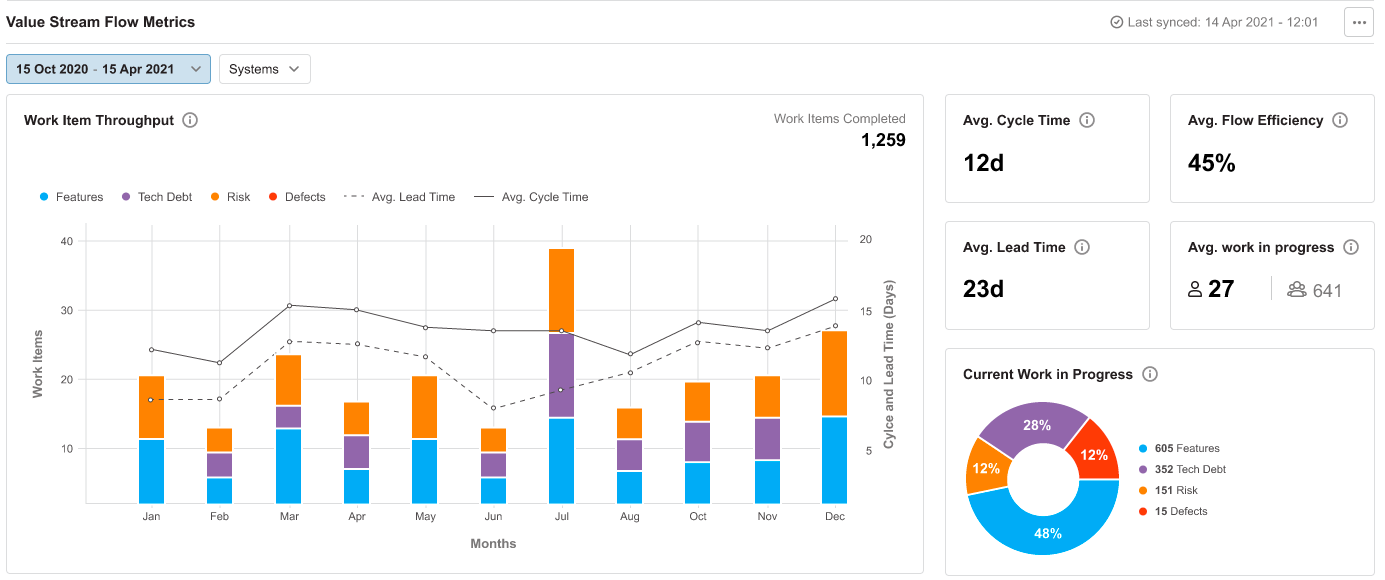
    Plutora has enhanced its value stream management (VSM) platform to provide dashboards that enable DevOps teams to better optimize application delivery.

    Jeff Keyes, vice president of product marketing and strategy for Plutora, said dashboards added to the platform will make it possible for application release managers to leverage predictive analytics to manage application delivery in a more progressive way rather than always having to react to an unexpected event.

    To enable that approach, Plutora has revamped its release insights dashboard that surfaces problem areas and hot spots in addition to adding analytics that track both software builds and larger project initiatives.

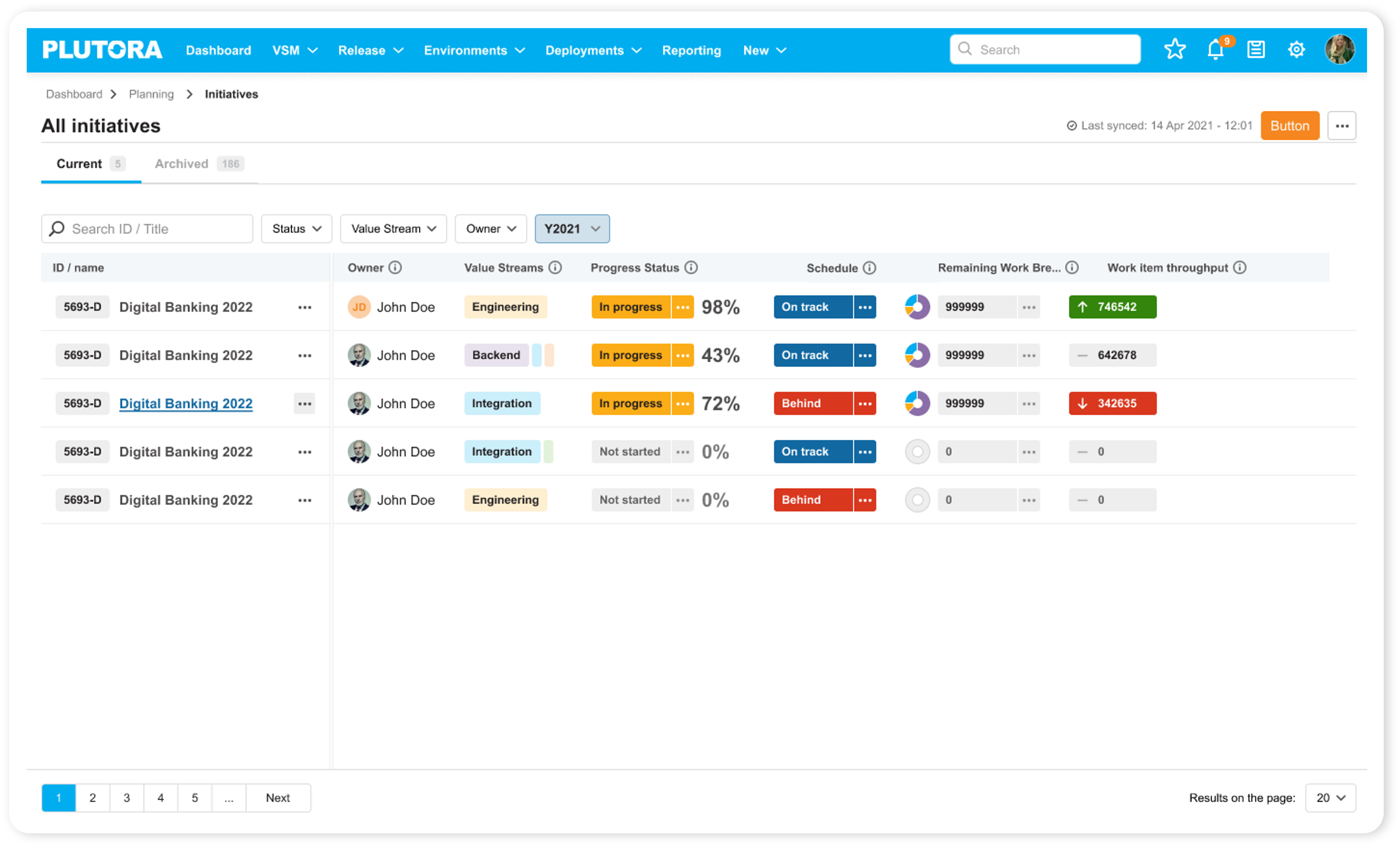
    That latter capability is especially critical for executives that currently find it challenging to keep track of multiple software development initiatives, especially those that may have fallen behind schedule without senior leaders being aware of the implications, said Keyes.

    While VSM platforms are typically used by senior IT and business leaders to keep track of how software deadlines are impacting key performance indicators (KPIs) for the business, Keyes said it’s become apparent that application release managers need access to more advanced analytics to optimize application deployment schedules. The Progressive Release Management capability surfaces insights via dashboards in the Plutora platform; that makes it simpler for application delivery managers to optimally orchestrate allocation of resources.

    Release managers, of course, already have access to a wide range of platforms for automating the application delivery process. However, Keyes said, those platforms don’t provide enough insights into how to optimize application delivery across a DevOps workflow made up of disparate tools and platforms. Plutora enables release managers to employ value stream flow metrics and more traditional DevOps metrics to reduce cycle times and improve overall DevOps throughput.

    Keyes said once organizations are provided with that insight, they should also be able to reduce the overall fatigue level many DevOps teams currently experience by removing friction within those workflows. In fact, that fatigue level is a major reason why there is so much turnover in many DevOps teams, he noted.

    It’s not clear how many organizations have a dedicated application release team, but optimizing the software delivery process is a major challenge for almost every DevOps team. While many organizations routinely make use of continuous integration (CI) tools to build applications faster, continuous delivery of applications has proven to be a more elusive goal. This is largely because each platform on which applications are deployed tends to be unique. As a result, many DevOps teams still rely on spreadsheets to manually manage application deployments.

    However, as the pace at which applications are being built continues to accelerate, it’s clear that application delivery is becoming a bottleneck. VSM platforms provide a means of applying analytics to optimize a process that can then be used to make better-informed decisions that might convince more organizations to automate application delivery. That assumes, of course, that the organization had the foresight to invest in a VSM platform capable of surfacing those insights in the first place.

  • Plutora Dives Deeper into Value Stream Analytics Data

    Plutora Dives Deeper into Value Stream Analytics Data

    Plutora announced today it has extended the capabilities of its value stream management (VSM) platform to include a common object data model that more efficiently normalizes data collected from multiple DevOps tools and platforms.

    Jeff Keyes, vice president of product marketing and strategy for Plutora, said the goal is to expand the level of scale and depth at which the Plutora analytics engine embedded within the Plutora Platform can analyze flow metrics.

    VSM has emerged as a distinct DevOps discipline that provides a framework for enabling organizations to optimize workflow across DevOps environments in a way that allows them to accelerate application development. The core concept traces its lineage to lean manufacturing methods that continuously measure each step of a process to improve production.

    As organizations develop a deeper appreciation for their dependency on software, the level of interest in understanding how software is constructed has increased. Organizations, for example, want to better understand the impact of missed software development deadlines on revenue, which a business might not be able to generate as quickly as anticipated.

    Plutora is making a case for a dedicated analytics platform that pulls data from multiple platforms. Alternatively, more value stream analytics capabilities are now being embedded in everything from project management software to continuous integration. Plutora contends, however, that navigating multiple value stream dashboards surfaced by different tools that make up a DevOps workflow is not as simple or effective as relying on a single platform that collects data from every tool employed.

    Metrics that track lead and cycle times for projects as well as overall throughput become much easier to surface and comprehend, noted Keyes.

    One way or another, more transparency is coming to DevOps workflows. Historically, collecting this data has been challenging because it required DevOps teams to manually collect data from each tool being used. In effect, DevOps teams were wasting time copying and pasting data from one tool into an analytics application.

    As it becomes simpler to aggregate all that data, the data model provided by Plutora makes it simpler for multiple analytics tools to analyze the same data. A business user, for example, may prefer to analyze data using the Tableau analytics platform that is now owned by Salesforce.

    In general, analytics is being applied more widely across software development processes because organizations need to increase productivity while simultaneously reducing costs. It will be up to each organization to decide to what degree they may want to use that data to better train DevOps teams versus simply using it to remind those teams to stay focused on a specific set of key performance indicators (KPIs).

    In the meantime, the number of requests for reports being made to DevOps teams should decline as the process of collecting metrics becomes more automated. The challenge now will be making sure everyone reading those reports has the same firm understanding of what’s actually possible to achieve using not only the resources at hand, but also how any additional DevOps expertise might positively impact that equation.

  • The Digital Transformation of Decision-Making

    The Digital Transformation of Decision-Making

    The ability to make effective business decisions has historically relied on factors such as experience, qualifications, talent and, in many cases, luck. Strategic and tactical choices are also informed by ‘borrowing’ the insight and knowledge of others. In many situations, ‘follow the leader’ can be an effective approach, and one need only study any sector of industry or commerce to see organizations everywhere mimicking each other, with competitive advantage based on relatively small acts of incremental innovation.

    Today’s ambitious businesses have many more options at their disposal to inform decision-making than previous generations. The extent, for instance, to which businesses can now collect, store and analyze data has been transformed by improvements in technology. The result is many businesses are now sitting on enough data for advanced analytics to inform smarter, more efficient decisions.

    The Role of Advanced Analytics

    Stepping back for a moment, advanced analytics is a set of tools and techniques that use existing data to develop insights to inform business decision-making – in particular, improving the accuracy of predicting future events based on certain actions. In practical terms, it is particularly useful when organizations are planning to implement a new business activity, where it is employed ahead of legacy processes that simply can’t deliver the same levels of insight.

    Online shopping is a prime example. When a consumer clicks on various items on a website, they will often be given other suggestions – sites often will present this information with the words ‘Frequently bought together,’ for example. This is based on what has already been viewed and uses advanced analytics to predict what else the shopper might be interested in. It’s just one of many ways retailers now rely on advanced analytics to intelligently cross-sell, and as many people will know, it’s very effective.

    In a wider sense, advanced analytics can be used in a huge variety of scenarios, irrespective of industry, market or type of customer. In doing so, businesses stand to reap a number of potential benefits, including:

    • Smarter decision making. By generating data based on strong logic and reliable information, advanced analytics can draw on both past and present data to make more reliable, more confident choices about what to do in the future.
    • Focused knowledge. By understanding the factors that improve business outcomes alongside those that are negligible, leaders can focus their attention and investment on what is more likely to deliver the desired impact.
    • Risk management. In an era of heightened risk, and the need for greater risk management, advanced analytics can identify risk based on available data, helping to inform business models that minimize risk, or help businesses make decisions based on insight rather than hope. This can also help improve governance and mitigate regulatory and compliance risk.
    • Strategy automation. Because advanced analytics takes care of analyzing data, teams have greater flexibility and time to focus on wider strategic considerations, which can help make the business better.

    Advanced Analytics in Action

    Advanced analytics employs various techniques across an ever-increasing range of use cases. For example, data mining is applied to ensure organizations make use of the most relevant data, extracting what is useful from the raw data. This data can then be subjected to further analysis for a multitude of objectives, such as understanding customers better or building more effective strategies.

    In addition, ‘big data’ analytics can be applied to both structured and unstructured data, and can be particularly helpful when the data generated isn’t in a proper format, or for organizations with massive data volumes to process.

    Then there’s predictive analysis, where machine learning algorithms are applied to current and past data to identify relationships and patterns. The algorithms then build a prediction model that can inform decision making. In general, the more data that is available, the more accurate predictions will be. It can’t, however, deliver 100% accuracy, and random, unpredictable factors such as a mass healthcare crisis illustrate the obvious limitations on predictive analysis.

    Taking this a step further, prescriptive analysis helps determine the best way to implement a business decision. Even when a decision is close to being made, there can be more than one possible implementation path to follow. Prescriptive analysis uses current and past data to suggest possible outcomes before actions are set in stone, recommending the best implementation options.

    Advanced analytics is a rapidly growing niche of the technology industry, regularly described by industry experts and commentators as among the most important, transformational IT trends. Given the pivotal role of decision-making across every organization, this perhaps shouldn’t come as a surprise, and for businesses everywhere, it’s now only a question of when they apply it to improve their fortunes, not if.

  • Plutora Recognized in Gartner’s 2020 Market Guide for DevOps Value Stream Management Platforms

    Plutora announces its inclusion in Gartner’s 2020 Market Guide for DevOps Value Stream Management Platforms

    Plutora, a leading provider of value stream management (VSM) solutions for enterprise IT, today announced it has been identified as a Representative Vendor in the Gartner Market Guide for DevOps Value Stream Management Platforms. Designed to assist infrastructure and operations leaders responsible for DevOps initiatives, Gartner’s market guide focuses on the market definition, rationale for the market and market dynamics.

    According to the Gartner report, “organizations lack end-to-end visibility into product delivery and struggle to improve their flow of value. I&O leaders, together with application leaders, must implement a DevOps value stream management platform and analyze value stream metrics to optimize the overall health of product delivery.” And thus, these platforms “will be key investments that enable them to assess and monitor delivery pipelines and remove constraints to continuously improve business outcomes.”

    “To us, being recognized as a Representative Vendor by Gartner in the 2020 Market Guide for DevOps Value Stream Management Platforms is a testament to what we are building here at Plutora and validation of the work we are doing to provide the utmost value to our customers,” said Dalibor Siroky, co-founder and CEO at Plutora. “To be competitive in today’s constantly changing landscape, it’s essential for organizations to concentrate on driving successful outcomes and increasing business value. We look forward to continuing to help organizations with their digital transformation journey of becoming a software driven business.”

    The Market Guide for DevOps Value Stream Management Platforms states that “I&O leaders responsible for DevOps initiatives, in partnership with application leaders remove impediments in product delivery by investing in a DevOps value stream management platform (VSMP) that provides consolidated insights into performance, quality and value of products.” According to Gartner, “by 2023, 70% of organizations will use value stream management to improve flow in the DevOps pipeline, leading to faster delivery of customer value.”

    The Plutora platform provides customers with a control tower overseeing the entirety of their software delivery people, processes and tools independent of methodology, automation or tool vendor. Plutora customers who leverage the platform have experienced improved velocity, increased quality and optimized value.

    Plutora is offering a complimentary copy of the Gartner September 2020 Market Guide for DevOps Value Stream Management Platforms to any organization or individual that would like to access it: Read it here.

    Gartner Disclaimer: Gartner does not endorse any vendor, product or service depicted in its research publications, and does not advise technology users to select only those vendors with the highest ratings or other designation. Gartner research publications consist of the opinions of Gartner’s research organization and should not be construed as statements of fact. Gartner disclaims all warranties, expressed or implied, with respect to this research, including any warranties of merchantability or fitness for a particular purpose.


  • Capgemini Introduces ‘Smart Foundry’

    Innovative DevTest environment management solution powered by Nutanix and Plutora capabilities bolsters speed-to-market for financial services institutions

    PARIS–(BUSINESS WIRE)–Capgemini today announced the launch of ‘Smart Foundry,’ its end-to-end DevTest1 environment management solution, powered by the Nutanix Hybrid Cloud Infrastructure and Plutora’s Value Stream Management (VSM) platforms. Smart Foundry integrates with Capgemini’s SmartQA platform to deliver multi-premise, cloud-agnostic, and domain-centric testing solutions for application deployment. The solution can deliver DevTest environments across on-premise, private and public clouds based on budgetary and reuse needs, and service level agreements. Smart Foundry can accelerate time-to-market by as much as 60%, lower costs by up to 40%, and reduce environment-related defects and provisioning delays by as much as 80%. Capgemini’s Smart Foundry solution is initially tailored to meet the needs of Financial Services organizations and will be rolled out to other industry sectors in the future.

    “Smart Foundry is designed to bring in intelligent integrations, more automation and self-provisioning capabilities to expedite ‘efficient route to live’ along with ‘effective QA’ in the Software Development Lifecycle”

    According to Capgemini’s World Quality Report 2019-20, the widespread adoption of agile and DevOps methodologies, the need for Quality Assurance (QA) orchestration and its impact on enterprises, is higher than ever before. The report concludes that there is a need for an integrated and intelligent ecosystem for DevOps2 and QA to realize business benefits.

    The new solution incorporates cutting-edge technologies and practices such as service virtualization, container management, interactive configuration management databases, chaos engineering, observability, and auto-healing. Smart Foundry was designed as a reference architecture that seamlessly integrates with Capgemini’s SmartQA platform and a wide range of test data, automation, and reporting tools leveraging machine learning and artificial intelligence capabilities.

    “Smart Foundry is designed to bring in intelligent integrations, more automation and self-provisioning capabilities to expedite ‘efficient route to live’ along with ‘effective QA’ in the Software Development Lifecycle,” said Ajay Walgude, Vice President, Capgemini’s Financial Services. “To do this, it is essential that a highly automated and intelligent test environment and test data management platform is implemented. We teamed with Nutanix and Plutora, who deliver next-generation technology, to achieve these goals. This is not just an engineering solution. Capgemini has leveraged its deep domain experience across sectors to build industry-specific environment solutions to address functional and non-functional testing requirements using Smart Foundry.”

    To provide a cloud-like experience, Capgemini chose the Nutanix Hybrid Cloud infrastructure platform to power, secure, and orchestrate DevTest environments. Additional Nutanix solution components that are incorporated into the solution include: Nutanix Calm which simplifies and automates deploying DevTest environments with detailed blueprints; Nutanix Karbon for Kubernetes management; unified storage to support the block, file, and object data needs of diverse applications; and Nutanix Beam which provides cost management capabilities.

    “Many organizations struggle with maintaining visibility and managing overheads for their DevTest environments, due to over-reliance on manual processes and the lack of standardization,” said Manoj Gupta, Vice President of Systems Integration at Nutanix. “Capgemini’s Smart Foundry, built on industry-leading Nutanix Hybrid Cloud Infrastructure platform software, gives organizations a standardized, high-performing, continuous testing solution with measurable benefits such as shorter development lifecycle, improved software quality, high developer productivity, and significant cost savings.”

    “Software drives innovation and it has always been our intention to help organizations to shape their business through amazing software and stay competitive through continuous innovation,” said Jeff Keyes, Vice President of Product, Plutora. “By bringing Plutora’s Value Stream Management (VSM) and environment provisioning capabilities to Capgemini’s Smart Foundry, we believe the resulting visibility provides for a holistic environment management solution. To compete in today’s constantly changing landscape, it’s vital for organizations to focus on driving successful outcomes and increasing business value, and the importance of VSM in that pursuit is essential when building a holistic environment management solution like Smart Foundry.”

    Plutora offers a complete pre-production environment management solution that provides internal and external environment teams a central place to collaborate on and view environment bookings and configurations. As part of Capgemini’s Smart Foundry, Plutora gives users the ability to select from a list of available Nutanix Calm Blueprints and the system orchestrates the build of the appropriate environment, automatically. Plutora also allows users to create a Change Request that will orchestrate the provisioning of synthesized test data.

    Capgemini will host a FinServ Meet Up session at Nutanix’s upcoming Global .NEXT Digital Experience, on Wednesday, September 9th at 11:35am-12:15pm PDT and Thursday, September 10th at 12:20pm-1:00pm CEST. Participants can register to attend the free event and learn more about Smart Foundry.

    About Capgemini

    Capgemini is a global leader in consulting, digital transformation, technology and engineering services. The Group is at the forefront of innovation to address the entire breadth of clients’ opportunities in the evolving world of cloud and digital platforms. Building on its strong 50-year+ heritage and deep industry-specific expertise, Capgemini enables organizations to realize their business ambitions through an array of services from strategy to operations. Capgemini is driven by the conviction that the business value of technology comes from and through people. Today, it is a multicultural company of 270,000 team members in almost 50 countries. With Altran, the Group reported 2019 combined revenues of €17billion.

    Visit us at www.capgemini.com. People matter, results count.

    _________________________________________

    1 A DevTest environment is a non-production environment used for development and testing needs.

    2 DevOps is a set of practices that combine software development and IT operations.

  • Plutora Recognized as a Leader in Value Stream Management Solutions by Independent Research Firm

    Noted for great release plan visibility, strong common data model and governance capability

    SANTA CLARA, Calif.–(BUSINESS WIRE)–Plutora, a leading provider of value stream management (VSM) solutions for enterprise IT, today announced that it has been positioned as a Leader in The Forrester Wave™: Value Stream Management Solutions, Q3 2020. Designed to assist application and delivery leaders in selecting the right solution for improving software development, Forrester Research assessed the 11 most significant vendors in the category against 30 criteria relating to product functionality and market strategy.

    According to the Forrester report, authored by Christopher Condo, “the VSM tools market has evolved rapidly as have prospective buyers of VSM tools. AD&D planners, engineers and release experts understand VSM and want it to help them plan, create and deliver software experiences that align to both the businesses and customers’ needs.”

    Plutora believes that it was ranked as a leader based on the strength of its current offering, the category in which it received the highest score possible in seven criteria. Plutora was also recognized for:

    ● Visibility – great release plan visibility to connect various toolchains and disparate processes

    ● Common Data Model – recognized as strong and for providing excellent extensibility

    ● Governance and Compliance – offers strong governance capability which allows for the commanding of complex workflows

    ● APIs – recognized by customers as straightforward and allows for the connection of various toolchains, providing visibility into disparate processes

    Forrester’s Wave Report is based on rigorous analysis, backed up by highly structured methodologies. The Forrester team conducted primary research to develop a list of vendors that met the criteria for the evaluation and definition of this market. These vendors were then assessed based on the defined criteria and where they stand in relation to each other.

    “We feel that being included as a Leader in the Forrester Wave is a testament to what we are building here at Plutora, and that it is the strongest validation yet of the work we do to provide the utmost value to our customers,” said Dalibor Siroky, co-founder and CEO at Plutora. “To compete in today’s constantly changing landscape, it’s vital for organizations to focus on driving successful outcomes and increasing business value, and we believe that Forrester recognizes the importance of the VSM market in that pursuit. Many organizations are still at the beginning of their digital transformation journey to becoming a software driven business, and we look forward to continuing to help them recognize and fulfill that vision.”

    VSM provides complete portfolio and pipeline visibility that allows teams to achieve smooth handoffs, governance and compliance and successfully facilitate collaboration, even in the increasingly distributed world we’re experiencing today. With VSM tools like Plutora, organizations can gain clear visibility of the waste that is slowing down the organization and measure the impact of the improvements on the business – allowing for full digital transformation growth.

    Additional Resources:

    ● Find the full Forrester Wave Report here: The Forrester Wave™: Value Stream Management Solutions, Q3 2020

    ● Find more information on Plutora’s value stream management capabilities here

    About Plutora:

    Plutora, the market leader of value stream management solutions for enterprise IT improves the speed and quality of software development by capturing, visualizing, and analyzing metrics throughout the delivery process. Plutora manages and orchestrates releases across mixed methodologies, manages hybrid test environments, and manages go-live events. The Plutora Platform ensures organizational alignment of software development with business strategy with complete visibility, control, and contextual analytics, guiding continuous improvement through the measured outcomes of each effort.

  • DevOps Chat: Value Stream Management in the Enterprise with Plutora

    DevOps Chat: Value Stream Management in the Enterprise with Plutora

    Doing anything at enterprise scale brings with it a whole new set of requirements. With potentially thousands of requirements across hundreds of applications and releases, it can be a daunting challenge to pull together all the DevOps activities across a large enterprise. This has given rise to the new term Value Stream Management (VSM.)

    Like Salesforce for managing the sales pipeline, VSM is about IT seeing across all its initiatives, teams and projects. Are high-value requirements making it into production systems? Is DevOps making the expected impact at enterprise scale? Are VSM tools well integrated into the DevOps toolchain? Or are teams slowed by extra or unnecessary work? You must keep a handle on it all but we don’t want the medicine to be worse than the disease.

    In this episode of DevOps Chat, we explore VSM with our guest Bob Davis, CMO at Plutora. Plutora tackles the VSM challenge at some of the largest banks, financial institutions, telecom and mobile carriers, insurance, hotels and internet technology companies.

    Transcript

    Mitch Ashley: Hi, everyone. This is Mitch Ashley with devopsy.kinsta.cloud and you’re listening to another DevOps Chat podcast. Today I’m joined by Bob Davis, chief marketing officer at Plutora. Our topic is an interesting one. We all talk about DevOps in organizations, but how do you achieve high performance DevOps. Bob, welcome to DevOps Chat.

    Bob Davis: Hi, Mitch. It is great to be here. Thanks for including me in your agenda for the DevOps talks.

    Ashley: The honor is mine. Appreciate you being here, Bob, definitely. Would you start–have you introduce yourself. Tell us a little bit about what you do as chief marketing officer and just a little bit about Plutora.

    Davis: Absolutely. I’m a two and a half year veteran of Plutora, having come in shortly after Plutora got its first round of funding, which was very exciting for all of us and we really were launched on the path of providing a better outcome for folks transforming into DevOps and that’s what Plutora does. Plutora is a company that provides a SaaS platform, large enterprises, your typical brick and mortar of the past, banks, the insurance companies, et cetera.

    These folks come to us and we work with them to provide the ability to visualize their entire pipeline to become better software developers ultimately and to corral the morass of tools that they’ve assembled in their transformation and really make sense out of them, make them efficient and make the organizations successful, and that’s what we do.

    Ashley: I’m especially interested to talk with you on this topic because when you look at your customer list you have some very well-known names in Fortune 500, Fortune 1,000. It isn’t just a bunch of other startups. It’s people that other–

    Davis: That’s correct.

    Ashley: –companies and other people would recognize. So handling financial transaction, a lot of that, telecommunications, et cetera. So you come at this with a unique perspective and when we think about DevOps we’re thinking about that central core of team of bringing developers and operations together, but to really just scale it across an organization at an enterprise level, that’s a much different problem. What do you see as the challenge as you work with customers? Why do they come to you saying, “We can get it this far, but we need to get further and here’s what we need to solve”?

    Davis: It is no question that that particular request from prospects and customers alike is the number one thing we hear, that is they’ve embarked on the transformation to DevOps. They’ve started maybe with automating testing. They’ve started by providing maybe a CI server and that automated deploying capability somewhere. That’s where they’ve begun their journey and they started with that automation and they’ve immediately found that while they’ve got gains there on that part of the developmental pipeline, the overall performance did not increase as was expected. They’re basically standing there going, “What am I doing wrong?”

    The big problem people have really surround this word visibility. The lack of visibility results in tremendous issues all around the development process, not just for developers, not just for ops, but for every one from the program office to the security guys to the governance and audit people and so forth as we deal with people where those kinds of things are really important. Traceability, auditability, these are–software is running very sensitive businesses and those things are very important.

    So without visibility, in order to build those things in messes up my DevOps process. I’m going along the path. I’m ready as a developer to move into a test cycle and all of a sudden the security guy says, “Hey, I need to check that for security issues,” and he’s coming to the party late and all of a sudden there’s a two week delay. People get frustrated and CIO’s are saying, “We’ve invested millions in tools and we’ve invested millions in organizational changes to adapt to agile and DevOps. We’re getting worse, not better, why?” And that’s the problem.

    Ashley: When you say visibility, to me if I peal that word apart, I think what you’re really saying is it’s not necessarily visibility by the DevOps team itself always, but it’s the intersection with all those other parts of the organization, the policy parts of the company, the audit part of the company, the security part of the company. It’s all the other people that are involved in that business tool chain, if you will, of getting product out the door. You can’t just do it alone. Maybe yes, if you’re a three person in your basement start-up, sure you can. But when you’re talking about scaling this in an enterprise level, they have processes for stopping and checking things. Is it ready to go in production? Has it been checked for security? All those things. Is that what you mean by visibility?

    Davis: It is and part of understanding the scope is to understand the scale of what these enterprises do. We talked to one group in a large insurance company in the Midwest that had 35 applications, that’s it. That doesn’t sound like a lot.

    Ashley: Yeah. It doesn’t.

    Davis: But that week, the week I was there they had 1,600 releases in process to be released that week. When you peal that down and what are 1600 releases in the context of 35 apps? Thirty-five apps, an application might have a whole portfolio of releases that need to be managed. So this visibility of the understanding of where my application is in the development cycle from the time that it starts to be an idea to the time it releases.

    So that process to know what features are being released, where they’re being tested, what versions are they being tested with, when are they ready for a user test, when are they ready for preproduction final test, all those steps along the way have different tools, different teams often, required shared resources like environment, and they depend on other teams in the group and other people’s efforts within those teams to meet at the end point at the same time because, like I said, a particular release is going to have multiple different teams, different project teams.

    So the visibility is across an entire pipeline first of all from the beginning of requirements to the time it gets released, but the visibility is also between pipelines to understand where dependencies are, to understand when other things that might affect my ability to release, like security, like audit, how those things come into play. I’ve got to have visibility across all that so that I can participate and predict when something is going to come out. That’s really important. If I’m building–for example, if I’m building a check cashing app and I’m a major financial institution, part of my development team is an iPhone app and I’ve got a team that’s building that and they’re following the rules of Apple and they’re following the rules of UI and they’re looking at how I can do forms and they’re doing all that.

    On the backend there’s a data base that’s probably sitting on a main frame which has incredible security around it and it has to be upgraded to be able to provide the ability to process that automated mobile cash check. And that’s probably being done, like I said, on a main frame with a different development cadence. Maybe it’s got a release schedule that’s once every six months and this is app is supposed to be out in two weeks. How do I coordinate that and how do I bring the security people in to do that right?

    So in order for that to be the case I’ve got to have a single system of record. I’ve got to have automated disability and dashboards to alert people as to when things are coming. I’ve got to be able to take information that’s being generated from multiple different places, multiple different applications, multiple different application methodologies, and correlate them in a way that gives me concise single page dashboard views of where things are so I can answer the question, “When will this release go out?” So those are all the kinds of things we do.

    Ashley: Well, let’s take that word visibility and turn it another 90 degrees and look at it this way, which by the way, I think most enterprises would kill to have, what’d you say, 36 apps? That’s a side point. Anyway, if you took visibility–

    Davis: Well, that was one–just to be clear, that was one group. That was one group.

    Ashley: Oh, one group. Okay. I thought you meant the whole enterprise. I’m like wow. I know a lot of companies that ____ “How do you do that? Where’s the course for that? Sign me up.” So anyway, take that visibility word. I think a big part of what you’re talking about is it’s not just a tool chain for CICD going from development all the way through deployment. It’s also the planning, the scheduling, the coordination of releases. It’s coordination of getting information to people who maybe it’s not just the information, but the exceptions ’cause you’re doing that many releases that frequently that often.

    You don’t wanna read 20 reports every day on the security compliance of every release that’s going out the door. You wanna see what’s the five things I need to be aware of that’s holding something up. So there’s a lot of coordination planning and scheduling that kind of activity that you guys focus on that’s I think more unique in what you do.

    Davis: I’m really glad you brought that up, Mitch, because that’s something that’s coming on the horizon quickly, but has typically not been considered. When people talk about DevOps, even Agile and DevOps, when they talk about software delivery pipeline, very often what they’re actually talking about is check-in to production. The clock starts when I start to check my code into my source code repository. All development tools, whether it’s automated testing CI servers, CICD pipeline, management systems, et cetera, they’re all built around that second half and backend of the process.

    To me the real issue goes back to the initial requirements planning. There’s some really nice tools about – on the enterprise agile planning side that have come up that are pretty mature. The PPM market itself has been around and good long while and there’s some really interesting and great products that allow me to establish the priority of my development work, establish the priority with my development teams, and to do that based on the strategy of the company, the budget allocations of the company, the expected value returned by the applications and projects in question whether it’s revenue or whether it’s cost savings.

    And I set that up and I say, “Here’s my portfolio. This is the priority. I’ve got one ____ applications that I’m going to be driving. That’s my priority. Go.” And the teams all drive and they’re confident they’re building according to the priorities of the company. They enter into the pipeline and I lose visibility. Boom. It’s gone. While that product is being developed things happen. Scope has to change. I might have to pull features out that are particularly thorny, from a development point of view, in order to meet my schedule. Decisions have to be made.

    Do I pull that out or do I keep it in ’cause it’s so critical and I accept a delay? How do I answer those questions if I can’t tie that back to the epic and the strategy, the theme, if you will, on the safe vernacular? How do I answer that question unless I can unequivocally understand how that connects back to the original idea of the application? The input is clear. I prioritized it right. Am I really ____? Am I getting better? Are people using the product? How are the NPS scores and how do those impact?

    There’s all kinds of questions that you can ask that really define whether I’m doing better ’cause fast for fast sake is not that interesting. Fast to get to the value faster, big deal, and understanding that value. That’s why I year ago Forrester started to talk about value street management, the measure of success is ultimately is the business benefiting from the effort. Without the kind of visibility we’re talking about that whole effort is compromised.

    Ashley: In different capacities I work with a group of CIO’s. I work with developer community. And a common theme across that is now that I think DevOps is taken the barriers of the organization, something that we all get rid of and start working together more closely in a true value chain or true pipeline chain is all the communities are struggling or want to know more – how do they more effectively communicate with the business side and with the C suite.

    And not to make this about me, but I was on a podcast here recently and that question came up and I said, “Well, if you’re a developer you want your CEO’s attention, say ‘I have an idea that will increase revenue, bring us new revenue streams, cut cost, get us to market faster,’ any one of those business terms and they’ll immediately put you on the calendar.” I think that’s where you’re going and where the analysts are going with this value stream management.

    Davis: Totally. That’s exactly where they’re going and that’s the key question that people wanna answer. It involves velocity. It involves quality. It involves all the things that people wanna talk about with respect to DevOps, but it has to be done in the context of an awareness of the impact on the business. It’s – in many respects when I first came to Plutora and I was talking to the founder and CEO about what Plutora did, my first reaction was, “This sounds an awful lot like Sales Force for IT.” The problem is very much similar to that problem.

    System of record, like what Sales Force provides, inside this platform, our platform, for example, that connects all the dots and automatically serves up the kind of metrics that the C suite wants to find out about what’s going on with the developer not having to change the tool they’re working on. If they’re using Jira, if they’re using Jenkins, if they’re using Selenium, whatever tool they’re using they can continue to use that tool, but the platform, the management platform will take all that information and correlate it and provide visibility to management on exactly what the value is that’s being delivered. and the metrics of what’s the cycle time of getting released.

    When I have a bug, how fast to fix it? If it’s a said one, what’s my meantime to repair? Am I getting better at quality, et cetera? These are all the kinds of things that guys wanna know and they wanna compare the scope of release that went to production with the scope of that release that went into planning and see how well they did on all kinds of levels. To be able to have the information to the C suite and everybody in between flow up to them naturally, without having the practitioners do anything out of ordinary to their normal day to day jobs, you have this perfect scenario.

    You have this catwalk, if you will, across the software manufacturing process that gives the management the ability to see it without having to change the way the developers go and the information that can be served up, I can establish stakeholders. I can have a security stakeholder, the audit stakeholder, whatever my organization unique needs are. Let’s be clear, software is the competitive differentiator of organizations these days.

    Ashley: It rules the world, right?

    Davis:It rules the world and it’s–yeah. It’s for better or worse and as it becomes more of the thing, you can’t just be a bank that happens to use software. You have to be a software company that is choosing to be in the banking business.

    Ashley: Yep. Technology company.

    Davis: And if you–yeah. You’ll be out of business.

    Ashley: Well, Bob, I appreciate you spending some time on the podcast. I know we could go a lot longer talking about this. Maybe sometime at Half Moon Bay at Barb’s, there we can grab something sometime.

    Davis: That sounds like a great plan, man. Any time. Any time you can always hit me up there.

    Ashley: Food and something healthy to drink, yummy. Yeah. Of course.

    Davis: There you go.

    Ashley: Well, I’d like to thank you, Bob Davis, CMO from Plutora, for joining us today. You’ve listened to another DevOps Chat podcast, I’d like to also thank you, our listeners, for joining us. This is Mitch Ashley with devopsy.kinsta.cloud. Be careful out there.

    — Mitchell Ashley

  • Todd Scallan Joins Plutora Determined to Launch Company to New Levels of Growth

    As Chief Product Officer, Scallan is tasked with keeping his finger on the pulse of the market and his foot on the pedal of momentum

    Santa Clara, Calif. – April 23, 2019 – Plutora, leading provider of value stream management solutions for enterprise IT, today announced the appointment of Todd Scallan as the company’s chief product officer. Leading the product team, Scallan will capitalize on Plutora’s current success as the leader in the emerging category of value stream management and focus on accelerating that momentum by implementing the mechanisms, decision making and processes to achieve significant customer growth.

    “Plutora solutions are for enterprise-class companies that have enterprise-class challenges and Todd is the perfect addition to help us focus intently on those opportunities,” said Dalibor Siroky, CEO and co-founder, Plutora. “We’re an organization that creates its own success, year after year, by evolving with market shifts and staying ahead of customers’ demands. Now, with Todd’s diverse background and insights added to our ranks, our position in the market becomes stronger and our vision extends further. It’s a win for us to have him on our team.”

    Scallan joins Plutora after previously working at Flipboard, Axcient, Interwoven and Segue Software. He brings experience in all aspects of SaaS operations, beyond just product delivery. With an overall understanding of what it takes to build a SaaS product and grow a business, Scallan will be a vital asset accelerating adoption of Plutora by marquee logos of big banks, healthcare companies, major telcos and other customers of that caliber.

    Scallan will be responsible for ensuring that Plutora delivers a product to market that aligns with the needs of enterprise IT and reflects the direction the value stream management category is headed.

    “Plutora is at an inflection point in its maturation as an organization. It’s beyond the startup stage trying to find its place. We know where we’re going and we want to get there quickly. What makes this organization special, in my view, is that we have a head start in terms of the vision that’s in place here,” said Scallan. “My challenge isn’t to reinvent the wheel, it’s to make sure our product is aligned with the vision and strategy that is already in place and execute on that vision for the future.”

    About Plutora:

    Plutora, the market leader of value stream management solutions for enterprise IT, improves the speed and quality of software creation by capturing, visualizing and analyzing critical indicators of every aspect of the delivery process. Plutora orchestrates release pipelines across a diverse ecosystem of development methodologies, manages hybrid test environments, correlates data from existing toolchains, and incorporates test metrics gathered at every step. The Plutora Platform ensures organizational alignment of software development with business strategy and provides visibility, analytics and a system of insights into the entire value stream, guiding continuous improvement through the measured outcomes of each effort.

    For more information, visit us http://www.plutora.com/.

  • Opportunity Knocks: Survey Highlights Substantial Cost Savings and Long-Term ROI from Test Environment Management Solutions

    Study finds that despite enterprises needing test environment management capabilities and the potential savings they bring, there is a staggering lack of adoption and maturity.

    SANTA CLARA, Calif.–(BUSINESS WIRE)–Plutora, leading provider of value stream management solutions for enterprise IT, today announced the full findings of a new EMA report, sponsored by Plutora, titled EMA 2018 Test Environment Management Survey. The study demonstrates the immediate cost savings that test environment management (TEM) tools provide, yet finds that only four percent of large enterprises have fully integrated TEM processes into organizational DNA.

    One of the most striking findings that emerged from the survey is the scale of test environments in enterprises. There is an average of 188 test environments per enterprise, with the highest total count at 685, and the average spend to support test environments is $682,000 per year. Test environments of this number sprawl and become complex, which directly impact the ability to manage them.

    Enterprises are missing out on the advantage of TEM tools

    Despite the scale at which enterprises are standing up and utilizing test environments, the adoption of tools to manage and maintain them is strikingly low. Nearly a quarter of respondents in the survey are not using a commercial TEM tool with two-thirds employing their own ad hoc TEM process. This has a significant impact because when the maturity of commercial TEM tools is compared to that of in-house, non-commercial tools, the difference is unmistakable: commercial TEM tools are more advanced and in-house tool users lag in all the measurements of TEM maturity.

    Of those utilizing TEM tools, key functionalities respondents are looking for include provisioning and deployment of test environments, integration with configuration management tools and integration with ITSM tools as their top three priorities.

    The study also shows that organizations already embracing TEM tools, and looking to mature, recognize the need to develop an even more automated and scalable approach to TEM. They also have a need to integrate the process with existing tools for development, testing and deployment in order to implement a more effective way to manage TEM activities. While those currently using in-house TEM tools are looking for automation, scalability and to transition away from the ad hoc TEM processes they are currently using.

    Payback on TEM investment occurs immediately and across the entire application lifecycle

    Whatever stage of maturity TEM tool integration is at in an organization, one of the key metrics to understand is the cost savings that can come from optimizing management and embracing the capabilities of commercial tools.

    Through faster provisioning, reduced number and cost of test environments, and improved quality, organizations can save between $600 and $4,000 per test environment and ultimately reduce the development and test time, saving close to $10,000 for each release.

    No matter what the total of overall production releases is, the payback on TEM investment will occur almost immediately. Also, if these savings are viewed as cost avoidance, ROI will be realized in one or two months.

    Additionally, the analysis finds that TEM technology users have not fully embraced the full range of capabilities that robust TEM tools provide. While users are seeing the benefits from many of the capabilities like the deployment of test environments and capacity planning, there is still opportunity for growth in adoption of other capabilities like verifying and maintaining the health of test environments and integrating with CI/CD tools.

    “TEM is a technology that every enterprise should be using to the fullest,” said Stephen Hendrick, research director, EMA. “At the core of TEM there is no inefficiency. Environments are spun up exactly as they need to be. Developers and testers can be productive immediately. And ultimately, there is less developer time wasted making for less ambiguity and inconsistency when it comes to what is actually being developed and released. This is reinforced when we totalled up the cost savings, and confirmed our suspicions – using TEM tools can save the average enterprise over a million dollars a year. Organizations, and developers, would jump at the chance to reallocate this budget to projects that move the business forward and it is within their reach through the advancements of TEM tools.”

    “This research demonstrates that any organization that isn’t making the effort to fully embrace the advantages of commercial TEM tools is missing out,” said Bob Davis, CMO, Plutora. “In today’s software-driven environment, enterprises that address any single inefficiency in its application lifecycle can gain competitive ground, but if you can bring about a series of time-saving, effort-reducing and quality-enhancing elements to the process that TEM tools provide, you can realize enormous benefits. It’s an easy lift with a huge payoff.”

    Resources

    About Plutora:

    Plutora, the market leader of value stream management solutions for enterprise IT, improves the speed and quality of software creation by capturing, visualizing and analyzing critical indicators of every aspect of the delivery process. Plutora orchestrates release pipelines across a diverse ecosystem of development methodologies, manages hybrid test environments, correlates data from existing toolchains, and incorporates test metrics gathered at every step. The Plutora Platform ensures organizational alignment of software development with business strategy and provides visibility, analytics and a system of insights into the entire value stream, guiding continuous improvement through the measured outcomes of each effort.

    For more information, visit us http://www.plutora.com/.