Tag: Perforce Software

  • How DevOps Strategy Is Evolving with Jim Cassens

    How DevOps Strategy Is Evolving with Jim Cassens

    Perforce Software CEO Jim Cassens dives into how the company’s overall approach to DevOps is evolving in the wake of a series of acquisitions.

    Cassens talks through the company’s recent spate of acquisitions and how thoughtful integration—not just portfolio expansion—is driving value for customers. He also highlights the growing role of synthetic data, AI-enhanced testing and how automation is shifting the responsibilities of development teams.

    A recurring theme is how generative AI is disrupting—not replacing—traditional developer roles. Cassens sees AI as a force multiplier, taking on repetitive, low-level tasks while freeing developers to focus on higher-order problems. But with that shift comes a challenge: How do early-career engineers gain the hands-on experience they need when entry-level work is being automated? That’s a question Cassens believes employers, not just universities, will need to answer.

    They also delve into the pressure DevOps teams face as pipelines become more brittle and overloaded. Cassens warns that the current approach to automation and scripting isn’t sustainable in a world where AI can flood pipelines with code at unprecedented volume. Organizations will need to rethink how they structure CI/CD, data management, and even pipeline observability.

    Finally, Cassens touches on the human element behind every digital transformation. As leaders weigh new tools and AI-powered workflows, he advises them to consider the fear and uncertainty many team members may be feeling—and to support them through education and open communication. The DevOps landscape may be changing fast, but people, not just platforms, will determine how successful the transition is.

  • Sustainable IT and Data Innovation: Driving the Future of DevOps

    The worlds of sustainable IT and data innovation are converging, and two upcoming events are set to showcase the latest developments in these critical areas of sustainable IT and data innovation. The SustainableIT Impact Awards & Symposium and the DevOps + Data Impact 2024  promise to bring together industry leaders, experts, and practitioners to explore how technology can drive positive change in both business and society.

    Inaugural Impact Summit & Awards, SustainableIT.org

    Sustainability Takes Center Stage

    Sustainable IT has become a key focus for organizations across the globe, as the environmental impact of technology comes under increasing scrutiny. The SustainableIT Impact Awards & Symposium will be held in Austin, Texas. It aims to celebrate the institutions and individuals who are leading the way in this field. The event, organized by the nonprofit SustainableIT.org, will feature a range of awards, including the Environmental Award, which recognizes success in reducing energy consumption and emissions across technology infrastructure, and the Governance Award, which celebrates institutions that have woven sustainability into their decision-making processes.

    Meanwhile, the DevOps + Data Impact 2024, presented by Perforce and Delphix, also in Austin, will dive deep into the world of data management and its role in driving innovation. As enterprises grapple with the challenges of managing and leveraging vast amounts of data, the conference promises to offer valuable insights and solutions. Attendees can expect to learn about the latest trends in data analytics, security, and compliance. Plus they will gain insights on strategies for optimizing data management to drive business success.

    Perforce’s Acquisition of Delphix: Driving Sustainable Data Management

    Perforce’s recent acquisition of Delphix, a leading provider of DataOps solutions, reflects the growing importance of data management in the DevOps landscape. This strategic move aims to help customers automate and accelerate their DevOps pipelines while promoting sustainable IT practices. As Perforce CEO Jim Cassens noted, “Data is at the heart of how enterprises operate today and essential for successful software development, but accessing and managing that data is extremely challenging. Many teams do not have rapid access to solid, high-quality test data.”

    By integrating Delphix’s capabilities, Perforce seeks to address these challenges and enable more efficient and sustainable data management practices. As Cassens stated in a blog post announcing the acquisition, “Another unique ability of the Delphix platform is how it virtualizes data and ultimately reduces storage footprints, which is good news for sustainability and operational costs.”

    Bridging Sustainable IT and Data Innovation

    The convergence of these two events points to a broader trend in the DevOps world: the need to balance sustainable IT and data innovation. Organizations are increasingly recognizing that sustainability efforts can drive efficiency and innovation. Accordingly, robust data management can support environmental goals.

    As the DevOps landscape continues to evolve, look for more initiatives that emphasize balance with AI-driven energy management in data centers, sustainable IT and software development practices, and circular economy approaches to IT hardware. Certainly, the upcoming events in Austin serve as a barometer for these trends, offering a glimpse into how industry leaders are navigating the complex intersection of technology, data, and sustainability. By attending these events and engaging with the insights they provide, DevOps teams can position themselves at the forefront of sustainable innovation, driving both business success and positive environmental impact.

  • Perforce Charts Testing Course After BlazeMeter Acquisition

    Perforce Charts Testing Course After BlazeMeter Acquisition

    Perforce Software has acquired BlazeMeter from Broadcom as part of an effort to extend the scope of its testing tools beyond the Perfecto tools for testing mobile and web applications it acquired in 2018.

    Broadcom gained control over BlazeMeter after it acquired CA Technologies in 2018. CA Technologies acquired BlazeMeter in 2016. Terms of the latest acquisition involving BlazeMeter were not disclosed.

    Tim Russell, chief product officer for Perforce, said BlazeMeter adds a complete platform that spans everything from load and performance testing to application programming interface (API) testing. The goal is to enable DevOps teams to push continuous testing further left as part of an effort to accelerate the development and deployment of applications, added Russell.

    The need for continuous testing has become more pronounced as more organizations launch multiple digital business transformation initiatives, noted Russell. The real challenge will be finding ways to embed continuous testing within DevOps processes at a sufficient level of scale, added Russell.

    In fact, the quality of the digital experience those applications provide ultimately determines the degree to which those efforts are likely to succeed, which Russell noted is why so many enterprise IT organizations are reengineering their application testing processes.

    In general, organizations are taking two paths to shift testing further left. Some are giving application performance testing tools to developers to employ during DevOps sprints while others are trying to bring application testers into the application development process earlier. In some cases, organizations are doing both as part of a comprehensive effort to discover issues before applications are deployed in a production environment. Those issue are naturally more expensive to fix after an application has been deployed.

    Perforce, for now, expects to continue to make BlazeMeter and Perfecto available as a set of complementary cloud-based services with some cross-pollination of capabilities occurring over time, said Russell.

    In the longer term, it’s apparent that more artificial intelligence (AI)-based analytics will be embedded within cloud-based platforms that can collect enough data to build meaningful models of development processes. IT teams should also expect to see testing tools make greater use of computer vision algorithms to surface issues.

    One away or another, the entire application testing process is about to become a lot more automated as more organizations are simultaneously building multiple applications. That may not necessarily reduce the need for either a developer or tester to create and manage that process, but it does mean the amount of testing time required for each application should continue to steadily decline in the months and years ahead.

    Hopefully, all that effort will lead to better application experiences being provided to end users more consistently. There is nothing quite as frustrating for any application development team than to discover that 90% of the functionality of an application is not being used because end users are not able to easily surface it. Worse yet, of course, is when an application turns out to be too slow once it is deployed. In either case, it’s difficult to regain that initial end-user enthusiasm for any new application experience after it’s been lost, simply because no one thought through all the use cases that should have been tested much earlier in the application development life cycle.

  • Perforce Melds Artifact Package Manager with Version Control Platform

    Perforce Melds Artifact Package Manager with Version Control Platform

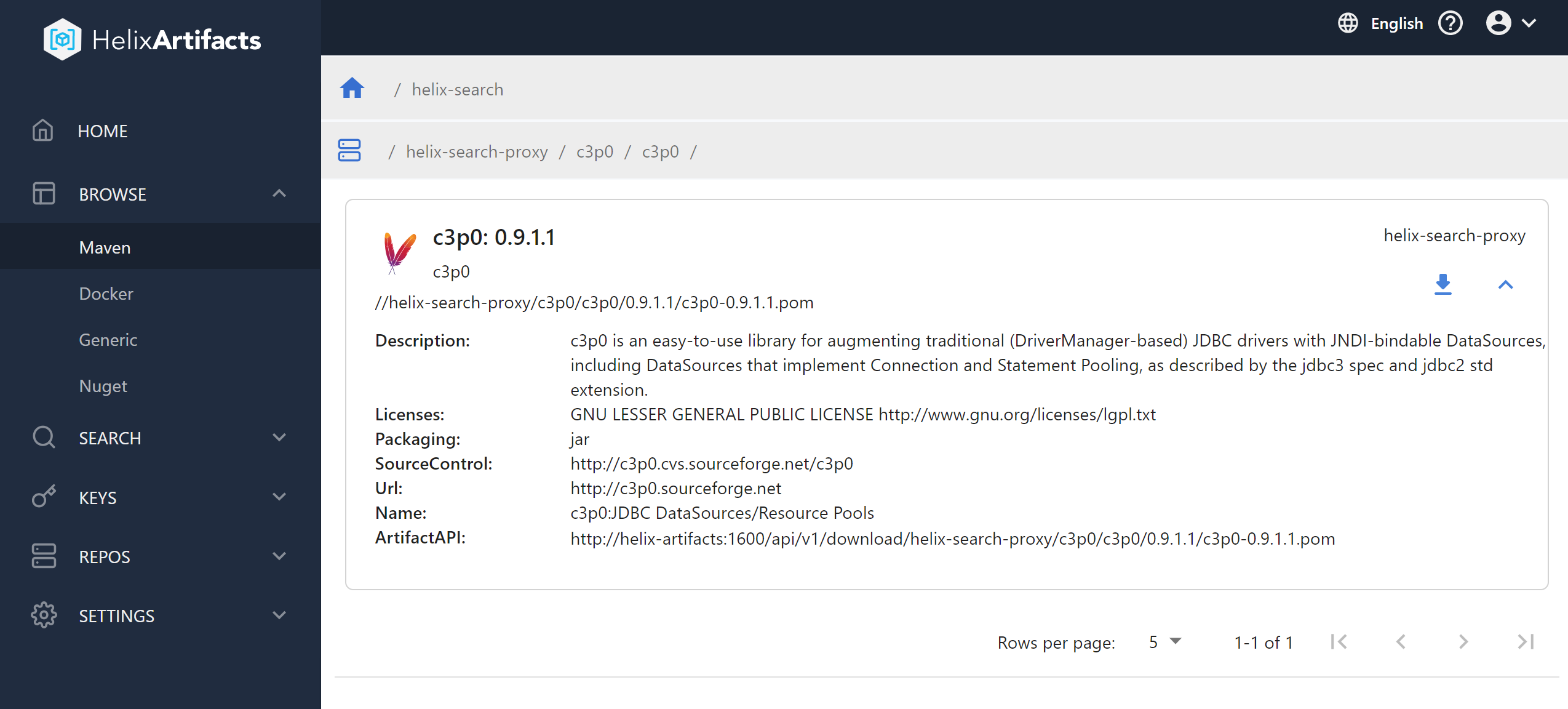
    Perforce Software has added a universal package manager, dubbed Helix Artifacts, to its portfolio that enables users of its Helix Core version control platform to store and track source code.

    Gerhard Krüger, product manager for Helix Core digital asset management at Perforce Software, said the goal is to enable DevOps teams that employ Helix Core to access a package manager without having to exit Helix Core.

    That approach also provides a more secure and cost-effective way to store, consume and distribute artifacts that also serves to improve developer productivity, he added. The ability to manage artifacts on top of a version control platform also means DevOps teams will not need to set up additional storage infrastructure or configure separate security permissions just to distribute software packages, noted Krüger.

    Perforce

    Helix Artifacts is a self-hosted package manager that functions as a translator for packages such as NuGet, Maven or Docker that enables them to communicate directly with Helix Core as well as build systems and integrated developer environments (IDEs). Helix Artifacts is made available via a per-server subscription model that costs substantially less than rival approaches to managing artifacts, Perforce Software claims.

    Most DevOps teams are trying to strike a balance between employing best-of-breed tools to build applications and the need to reduce complexity and, ultimately, cost. As such, any time a tool becomes a feature of another platform that a DevOps team uses, there will be a review of the processes being employed. Many DevOps teams are trying to reduce the amount of time they spent maintaining tool integrations.

    There’s also now a lot more focus on software supply chain security. Each new tool generally creates yet another set of credentials that need to be protected as cybercriminals continue to aggressively attempt to inset malware into applications before they are deployed in a production environment. It’s not clear to what degree DevOps teams are looking to consolidate toolchains, but given those rising security concerns, it’s only a matter of time before security teams start to ask why the DevOps toolchain attack surface is so wide.

    In the meantime, the number of organizations that have widely embraced DevOps best practices across the enterprise continues to steadily grow. Over the past decade, most organizations have had at least one application development team embrace DevOps. However, as the pressure to build software to drive digital business transformation initiatives has steadily increased since the onslaught of the COVID-19 pandemic, the need to apply DevOps best practices to accelerate application development has become more pronounced. As a result, more organizations than ever are looking to standardize their application development efforts on a smaller number of platforms to reduce friction.

    It’s too early to say whether the rate at which applications are being developed and deployed since the start of the pandemic has actually increased. The one thing that is certain, however, is the bulk of organizations are now trying to accelerate like never before.

  • How to Improve Code Quality, Efficiently, with Static Analysis

    How to Improve Code Quality, Efficiently, with Static Analysis

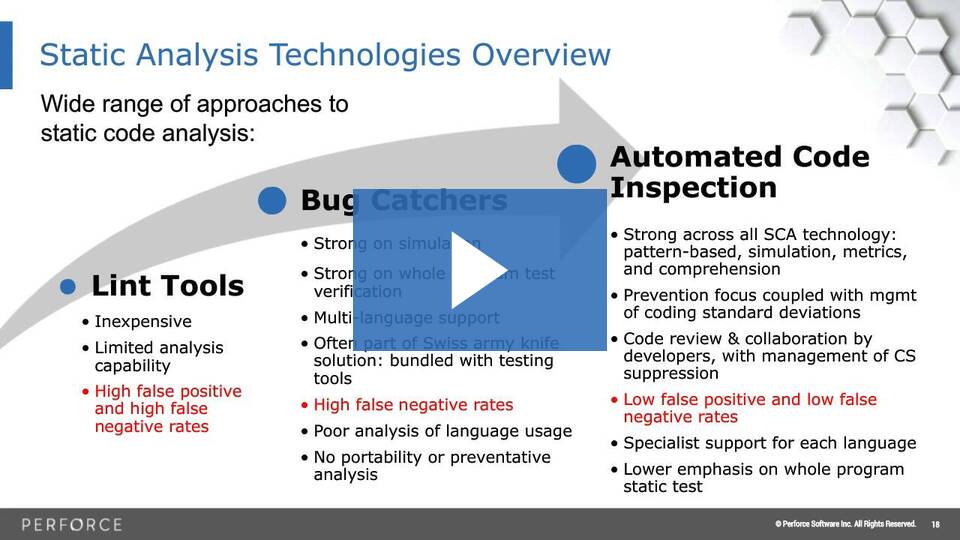
    As hard as they try, no programmer is perfect. Testing and manual code reviews cannot find every problem in their code, so software vulnerabilities and bugs persist.

    Unfortunately, the amount of software errors will only continue to grow as your systems get larger and more complex. Which begs the question: How can you find all of the critical problems present in your code while still releasing a quality product on time? Simple: Use a static code analysis tool.

    In this webinar, we will discuss the following topics:
    1. Why bug-free software is difficult to achieve.
    2. Why automated software tools are the most effective solution.
    3. How safe, secure and reliable software can be achieved at lower costs.
    4. How static code analysis and manual code reviews can work together.

    In addition, we will also provide examples of software vulnerabilities that are easily missed by manual code reviews.


    To read more, please visit: https://www.perforce.com/webinars/qac/how-improve-quality-static-code-analysis

  • What Is IEC 62443?

    What Is IEC 62443?

    IEC 62443 helps to protect industrial automation and control systems from security breaches. Read on to learn more about the standard.

    What You Need to Know About IEC 62443

    IEC 62443 is a set of security standards for the secure development of Industrial Automation and Control Systems (IACS) that provides a thorough and systematic set of cybersecurity recommendations. The security standard is used to defend industrial networks against cybersecurity vulnerabilities.

    The IEC 62443 Security Levels

    A central part of IEC 62443 are security levels (SL), which are used to assess the cybersecurity risks to each system. An additional benefit of security levels is that they help you to understand how to best address the identified cybersecurity risks. There are five security level values, which range from 0 (the minimum level of risk) to 4 (the maximum level of risk).

    The 7 Security Level Foundational Requirements

    For each security level, there are seven specific foundational requirements that must be met. These requirements help you to ensure that each IACS has the right security and safety safeguards.

    The seven foundational requirements for a security level are:

    1. Identification and Authentication Control
    2. Use Control
    3. System Integrity
    4. Data Confidentiality
    5. Restricted Data Flow
    6. Timely Response to Events
    7. Resource Availability

    In addition, each foundational requirement has multiple conditions that must also be met, depending on the safety level.

    What You Need to Know to Comply with IEC 62443

    An essential part of complying with IEC 62443 is using a static code analysis tool. Static code analysis tools automatically identify vulnerabilities and defects as you code. In addition, IEC 62443 requires that a static analysis tool be used to enforce secure coding standards, such as CWE, CERT, and OWASP. By using secure coding standards, you ensure your software is secure and safeguarded from vulnerabilities.

    To read more, please visit: https://www.perforce.com/blog/kw/what-is-iec-62443

  • SAST vs DAST: What’s the Difference?

    SAST vs DAST: What’s the Difference?

    One of the most effective practices for ensuring that your software is secure and safeguarded against security vulnerabilities is using the right secure coding tools — like SAST and DAST.

    The Key Differences Between SAST and DAST

    Both SAST and DAST are used to find software security vulnerabilities in your code. However, these DevOps tools are used at different times during the development process.

    Here are the key differences between SAST and DAST.

    SAST:

    • White Box Security Testing
    • Source code is required.
    • Vulnerabilities found earlier in development and are less expensive to fix.
    • Unable to identify timing- and environment-related issues.
    • Generally, supports all kinds of software.

    DAST:

    • Black Box Security Testing
    • A running application is required.
    • Vulnerabilities found later in development and are more expensive to fix.
    • Can identify run-time and environment-related issues.

    The Main Advantages of Using SAST Tools

    The main advantages of using SAST tools include the following:

    • SAST tools find coding issues by looking for known vulnerability patterns in internationally recognized coding standards for quality, safety, and security — such as CERT, OWSAP, and CWE.
    • SAST tools detect and fixes defects early in development. This leads to lower costs to fix defects.
    • SAST tools often features a Shift-Left approach, which enables analysis to be done anywhere — including on your desktop and in your CI/CD pipelines.
    • SAST tools are easy to automate, able to effectively scale to your project, and automatically provide the highest levels of code coverage.
    • SAST tools provide fast feedback along with the exact location of vulnerabilities and their cause.

    The Main Advantages of Using DAST Tools

    The main advantages of using DAST tools include the following:

    • DAST tools analyze the entire application as it runs within the full system environment.
    • DAST tools are able to “look inside” your application and dynamically analyze execution logic and live data.
    • DAST tools are language and source code independent.
    • DAST tools check for memory consumption and resource use.
    • DAST tools attempt to break encryption algorithms from outside of your program.
    • DAST tools verify permissions to ensure the isolation of privilege levels.
    • DAST tools check for cross-site scripting, SQL injection, and cookie manipulation.
    • DAST tools test for vulnerabilities in third-party interfaces.
    • DAST tools understand arguments and function calls.
    • DAST tools record application execution for post-mortem test failure analysis.
    • DAST tools catch hard application failures.
    • DAST tools perform unattended script-based dynamic analysis. In order for an effective security program, you will need both a SAST and DAST tool.

    To read more, please visit: https://www.perforce.com/blog/kw/sast-vs-dast

  • DevOps Challenges and Version Control: What the Survey Results Tell Us

    DevOps Challenges and Version Control: What the Survey Results Tell Us

    Putting DevOps into practice is an ongoing experiment for many organizations. Developers often struggle with continuous integration (CI) or continuous delivery (CD) performance, testing delays and other bottlenecks. While not the answer to everything, version control—that long-established foundation of software development toolchains—has become a central part of DevOps, particularly DevOps at scale.

    This is underlined by the results of “DevOps Challenges and Version Control,” a recent survey conducted by devopsy.kinsta.cloud on behalf of Perforce Software, which provides some interesting insight into their experiences. This includes the role of version control systems within DevOps in practice, plus the top challenges the companies surveyed face.

    A total of 467 people from organizations across the globe responded, with roles ranging from DevOps engineer to QA analyst and CTO. Before we look at the challenges and issues they face—not just with their version control system but DevOps in general—first let’s look at the good news: Most version control systems are a good fit for their current DevOps initiatives.

    For instance, more than half of all respondents said the most important features of their current version control system are:

    • Improved collaboration.
    • Improved CI.
    • Better support for distributed teams.
    • Quality.
    • Faster commits.

    These were followed by compliance/security, at 48 percent. These jibe well with the main DevOps challenges they also cited:

    • CI/CD issues (a third cite CI/CD workflow streamlining as their top priority).
    • Prioritizing backlog and development projects.
    • Managing build artifacts and containers
    • Developer complaints about slow commits and merges
    • Working with open source software.

    These are all things that VCS can help fix.  For instance, these days, most version control systems transactions are automation for CI, rather than user requests.

    CI Challenges

    So far so good, but users want more from their version control system. Almost a third would like better integration with the software development toolchain. Other improvements on the wish list include security with fine-grained permissions, handling large files or repos and file access for teams in multiple locations or working remotely and improved CI performance.

    CI is critical to good DevOps and giving developers real-time feedback theoretically improves quality, but if the version control system’s speed and performance does not match demand, then bottlenecks are created. The last thing anyone wants is developers sitting around waiting for builds to happen. The survey’s respondents said testing (28 percent) and waiting for code reviews (23 percent) were the two points in CI that slow everything down the most.

    People Want More from their Version Control Systems

    So, what’s the answer? Version control that combines speed and performance, of course, but also built-in automated code review to alleviate the frustration of time spent waiting for tests and other tasks. Given that 64 percent are based in multinational locations, 7 percent work remotely and a mere 29 percent work in the same office, clearly the version control system needs to support dispersed working environments, too. In many situations where the version control system is being used for multiple artifact types and not just code, this needs to be covered, too.

    Likewise, most respondents have Git somewhere in the organization and understandably so: it is open source, users can get started with Git quickly and it is suited to small teams. However, Git struggles to scale, and, given some of the challenges that respondents quoted, this is clearly something many are experiencing. Enterprise strategies are emerging that give developers the Git interface they’re familiar with, but also the scalability, global replication and high performance for moving files and performing builds.

    With so many perceived challenges cited, it is no surprise that almost half of all those surveyed said they plan to replace their existing version control system. The top reasons cited were scalability issues, poor cross-platform integration and lack of DevOps support, plus the perennial pain point of license costs.

    Understandably, switching version control systems can seem daunting, but equally, based on the survey’s responses, many organizations are clearly living with systems that are expensive to maintain and have productivity issues that are getting in the way of, rather than supporting, DevOps. Conversely, choosing version control system strategies and tools can tangibly and positively impact on achieving DevOps success.

    — Tim Russell