Tag: operations team

  • Solving the DevOps Accountability Problem

    DevOps accountability is the idea that both the development and operations teams have equal responsibility for success. But putting this approach into practice has been a thorn in the side of DevOps teams for the past decade, largely due to outdated organizational structures that place responsibilities on a single employee or team.

    These outmoded structures restrict the lean flow of operations needed for DevOps and contribute to costly downtime when issues arise. But redistributing functions across the organization can help solve this problem. 

    For cross-functional teams that rely on organization-wide collaboration, redefining the org chart can clarify ambiguities about accountability and help organizations overcome internal obstacles.

    Legacy Organizational Structures

    Many organizations have not instituted an organizational structure that reflects a shared accountability model. This is partially due to leadership’s assumption that large teams work faster and more dynamically. In reality, after a team exceeds nine individuals, the rate of return diminishes and people are more likely to assume someone else on the team will take responsibility for a task. As a result, accountability falls through the cracks.

    Additionally, there is frequently an imbalance in assignments and responsibilities between junior and senior employees. When senior employees take on the majority of important or interesting tasks, junior employees can feel overlooked and less responsible for their team’s success. This is both an individual and a company-wide issue; younger workers tend to bring fresh perspectives and insights—they can also adapt more quickly to unprecedented changes and issues.

    Picture a team consisting of a line manager and team members, with a structure that places all major responsibilities on the manager. If the manager happens to be out of the office when an issue arises, the team would have to wait for their boss’s return to resume operations.

    But the consequences of single-point accountability go far beyond lost time and downtime costs. When employees feel like they don’t have a significant stake in a project, they feel less aligned with the organization’s overall purpose and are less likely to be engaged.

    DevOps is most effective when teams are built around a common goal rather than around the performance of individuals. If an employee can’t see the impact their work is having on the overall organization or project, it can create blind spots and disconnect between the business and its people. Shifting business frameworks is no easy feat, but with the right strategy, it can improve how tasks and responsibilities are allocated in your organization.

    Three Ways to Switch up Your Org Chart for Greater Accountability

    The days of allowing responsibilities to fall on a single employee are over. But to successfully embrace a shared accountability approach, you need to reimagine your entire organizational chart. Beyond de-prioritizing seniority and minimizing team sizes, consider these three initiatives to help settle DevOps accountability issues:

    1. Blueprint your organizational structure around products. Organize your work structure around products—not projects. Traditional project management models rely on passing responsibilities between specialized teams, which can slow down innovation and degrade the quality of work. With an organizational structure built around products, you can build a cross-functional team with all necessary skills for each system. For example, if you have a team that’s accountable for the payroll system, all necessary expertise you need to keep that system running smoothly is based on a single contact point.
    1. Redistribute talent. The product-oriented approach requires changing up talent distribution across teams. Let’s say you have a 24-person team for a single SaaS product and seven of those team members have similar skill sets and backgrounds. In this instance, you could move several of those workers to a different team where their skills are in demand.
    1. Establish hybrid workplace environment norms. Face-to-face communication has always been a critical part of successful teams. But in light of the COVID-19 pandemic, workplace norms are evolving and organizations need to adapt to new ways of working. Many teams are no longer able to participate in informal knowledge sharing and other typical in-office interactions, so it’s critical to identify new norms for your team. Initiate conversations about applying DevOps concepts in a hybrid world, along with creating rules of engagement and accountability that are realistic for remote work.

    The Great Redistribution

    As technology advances, so should your organizational structure. To optimize efficiencies and ensure products reach the market on time, consider rethinking your org chart. In practice, this will enable you to more seamlessly adopt a culture that celebrates shared responsibility and employees who feel they have a stake in your product’s future.

  • How to Overcome Resistance to DevOps Implementation

    How to Overcome Resistance to DevOps Implementation

    The number of businesses adopting DevOps to make software releases happen faster without compromising on software quality continues to grow. Within the next five years, the DevOps market is expected to reach almost $13 billion. If you are among those who’ve decided to make a shift to DevOps, you are likely to experience resistance coming from the departments involved in a software development life cycle (SDLC), and even from end users, at the start of your DevOps journey.

    In this article, we will outline the reasons why your employees may resist the DevOps approach and show how to overcome their resistance.

    About DevOps Approach Implementation

    Among the benefits DevOps brings are the fast provision of new infrastructure, quick and reliable delivery of software updates, fewer post-release errors due to the implementation of continuous testing and the alignment of testing and production environments, etc. DevOps implementation requires efforts in establishing tight collaboration between the development, QA and operations teams, as well as adopting new tools and methodologies, such as containerization, IT infrastructure automation, continuous integration and continuous delivery (CI/CD) tools.

    A new approach calls for project managers, developers, infrastructure management, QA and operations teams to leave their comfort zones and get used to new working conditions. However, each stakeholder has reasons to resist DevOps implementation and requires a tailored approach to overcome them.

    The Resistance of Project Managers

    Why They May Resist

    Project managers (PMs) are the first to face the changes when the DevOps approach comes into force. Their resistance originates from a range of new duties, new responsibility and knowledge they need to add to their playbook, such as:

    • Persuading development, QA and operations teams involved in SDLC in the DevOps necessity.
    • Establishing constant collaboration between developers, the QA team and the operations team.
    • Getting familiar with DevOps-specific tools and techniques (CI/CD, continuous monitoring, version control tools, etc.) as well as cloud computing technologies like AWS, Azure, Google Cloud Provider (GCP).

    How to Overcome Resistance

    PMs should become DevOps evangelists as they will be the ones who will contribute the most to overcome the resistance of other parties involved. A CIO should provide a PM with sufficient training on all DevOps-related aspects. Such training should include the management of the development, the QA team and the operations team in the context of close collaboration between them. It should also provide the PM with the understanding of DevOps methodologies and tools–containerization, infrastructure as code (IaC), continuous integration and continuous delivery (CI/CD), cloud technologies, etc.

    The Resistance of Developers

    Why They May Resist

    Developers may resist DevOps adoption due to the following reasons:

    • They are not excited by the necessity to work with infrastructure engineers closer and deal with operational issues if the operations team is not competent enough to address them on their own.
    • They are comfortable with the technology stack they’ve chosen for a particular project and not accustomed to caring about how familiar the other project team members are with these tools and technologies.

    How to Overcome Resistance

    PMs should embrace their soft skills to establish a mutual understanding between developers and infrastructure engineers. They should also make sure infrastructure engineers can work with the tools and technologies developers may use within the DevOps approach, e.g., Docker, Jenkins, by providing them with relevant training.

    The Resistance of a QA Team

    Why They May Resist

    A QA team may feel concerned about a faster SDLC DevOps implementation, since it entails less time for testing. Test engineers now need to acquire new skills prescribed by automation across the entire SDLC. In particular, they face the need to learn new tools for automated testing (Selenium, Appium, fMBT) and API testing (JMeter, Postman).

    How to Overcome Resistance

    To make QA engineers less risk-averse, QA managers in cooperation with PMs, should provide them with appropriate training (tools for automated testing and API testing) and show the advantages DevOps may bring. An opportunity to increase test engineers’ qualification level, less effort on testing activities than required with manual testing are among such benefits.

    The Resistance of an Infrastructure Department Manager

    Why They May Resist

    In the pre-DevOps times, an infrastructure department manager was responsible for controlling the design, configuration and delivery of infrastructure for development, testing and production. With DevOps on board and the IaC approach implemented, the infrastructure manager may feel as if they lose control over the IT infrastructure provisioning and management. What’s more, the scope of the infrastructure manager’s responsibilities extends greatly since they’ll need to run the infrastructure department as a competency center.

    How to Overcome Resistance

    A company’s CIO should explain the infrastructure manager their new responsibilities upfront. The infrastructure manager should stay assured that they change the area of control, not lose it. Within DevOps, the infrastructure department manager has to transform their approach to work. They must be able to help a PM correctly arrange the development, QA and operations team for each particular project taking into account project complexity and size. The infrastructure manager must be able to proactively deal with the cases when the team members involved in software development lack qualification for a project, and not wait until the lack in teams’ competencies results in the project prolongation, for example.

    The Resistance of Operations Engineers

    Why They May Resist

    With DevOps in place, the operations team will have to coordinate their efforts with developers and the QA team from the very beginning of the project, as well as regularly report to the PM on the tasks completed, which is not the usual work approach. To be able to work in the DevOps environment, operations engineers will also have to get familiar with a range of IT automation, version control and other tools. What’s more, the operations staff’s responsibilities will now include the provision of the information on the IT infrastructure functioning to business and technical stakeholders.

    How to Overcome Resistance

    To help an operations team adapt to the DevOps culture, the infrastructure department manager should deliver training to make operations engineers familiar with new tools and technologies they will need to use, e.g., version control systems (Git, Team Foundation Server), software deployment automation tools (Chef, Puppet), etc. A PM, in their turn, will need their soft skills to increase the operations team’s willingness to work in close alignment with development and QA teams.

    The Resistance of End Users

    Why They May Resist

    It may sound surprising, but even the primary beneficiaries of the DevOps approach implementation may resist the changes DevOps brings. There are two reasons for it:

    • The time available for software acceptance testing gets reduced due to a faster SDLC.
    • Acceptance testing becomes automated, and end users hardly trust automated tests.

    How to Overcome Resistance

    To dispel end users’ DevOps-related doubts, PMs must do their best to earn their trust by establishing strong communication with end users. If, for example, end users know software testing covers critical software functionality and the probability of post-release errors is minimized, their confidence in software reliability and the overall trust in the DevOps approach rises.

    In a Nutshell

    Each party involved in software development has its reasons to be suspicious when the DevOps approach is coming on board. New duties, close collaboration, the necessity to apply new tools and other DevOps-related changes may make project managers, developers, QA engineers, IT infrastructure managers, an operations team and even end users resist the new approach.

    To overcome the resistance, a company’s CIO should maintain open communication with each party involved in SDLC, explain their new duties and listen to their concerns. It’s essential to make sure each team member realizes what changes and advantages DevOps brings into SDLC. To ensure they have the necessary knowledge and skills, appropriate training should be provided to project managers, developers, QA team, IT infrastructure manager and the operations team.

    — Andrei Lipnitski

  • Scalability in the Age of DevOps: A Must for Success

    Scalability in the Age of DevOps: A Must for Success

    DevOps seems to be an emerging topic “du jour” in the world of software development. And like it or not, it is showing no signs of slowing down. If used correctly, DevOps can be helpful—from making teams (developers and testers) work seamlessly to automating routine tasks, DevOps has proved its awesomeness in just a few years. So what is helping make DevOps a huge success? Scalability!

    Technically speaking, scalability is something that defines the exact capability of the system, and it has to increase frequently to accommodate the ever-changing needs of the world. As customers rely more heavily on your services, achieving hyper-scale is becoming more crucial. To ensure scalability, you may need to redesign or rethink, your different processes and systems.

    Say, for instance, customer demand seems to have reached its apex. Preparing comprehensive strategies that focus on scalability has become prime importance.

    To get the most out of your application, invest in DevOps-related time and dollars. With the introduction of the cloud, developers are focusing on building features and products while ops (operations) are making sure everything stays in sync. At the same time, many traditional ops functions have been outsourced to cloud providers.

    Scaling DevOps    

    Here are some best practices that can assist you in creating scalable, secure and high-performance deployments.

    Be Vigilant

    With the increase in the adoption of visualization, networks are more complex and heterogeneous, and so are the security risks associated with them. The only way left to manage these networks is by automating key management functions. Here is when DevOps comes into play. But for that, the method must be included with security as a key component, or the volume and pace of network would eventually change—several technologies such as SDN and virtualization will skyrocket the level of IT risk like never before. Another challenge is that security is still considered as an afterthought. And so-called business inhibitors are seen advising an organization on what can’t be done instead of how to do things securely. This is an area where security, developers and operation teams must foster a level of trust, or collaboration won’t exist. The only way to do this is incrementally and with vigilance.

    Watch Changes Carefully

    Considering DevOps as a collaborative mindset enforces professionals to come up with faster and more efficient ways to deploy, operate and upgrade applications. When new releases are delivered, several tools can ensure consistent configuration of infrastructure and software components. These tools also can be used to remediate security concerns by constantly validating the proper application of security’s best practices and taking automatic countermeasures.

    Ease of Use

    Automation and repetitiveness are what DevOps is all about. Fortunately, there are a few tools that are capable of automating the building and configuration of VMs. However, make sure you have the adequate horsepower to run this capability, either in-house—which is trickier to scale dynamically—or in the cloud, if your product is amenable to that. At the end of the day, it’s all about how you make your product installation and configuration easy.

    Managing Gateways

    While building any new goal or coming up with the best culture between development and operation teams, keep certain gates between functions to ensure that the production environment remains stable. Try to structure it in such a way that operations include development discussions and daily scrums. By doing this, operations teams simultaneously will understand what changes will be made in future releases. By integrating automation in both testing and operations, you will be able to find issues before they reach production. In addition, you’ll realize cost efficiencies and better quality operations.

    Conclusion

    In today’s fast-paced development environment, a well-thought preparation strategy for mass scalability is a must to make the entire process smooth and easy. DevOps reduces lead-up anxiety by getting a head start on planning, so you have more time to enjoy the fruits of your labor. Adding scalability in your strategy enables you to experiment and try new things without fearing failure. Testing new approaches ahead of time to see what does or doesn’t work will only help you learn and make your scalability efforts that much more effective for the future, as your company continues down the path of hyper-growth and hyper-scale.

    — Herman Morgan

  • Different Organizations, Different DevOps Outcomes

    Different Organizations, Different DevOps Outcomes

    The main motivation behind inventing DevOps platform was to help close collaboration between developers and IT operations. Basically, DevOps emerged as a great platform to bring closer together developers and beneficiaries of the app development process. DevOps initiates a cross-disciplinary practice spanning across development and operations.

    The ultimate benefit of the DevOps approach is removing the barrier between development and deployment of software applications in specific business processes. Regardless, not all businesses reap the benefits of DevOps platform.

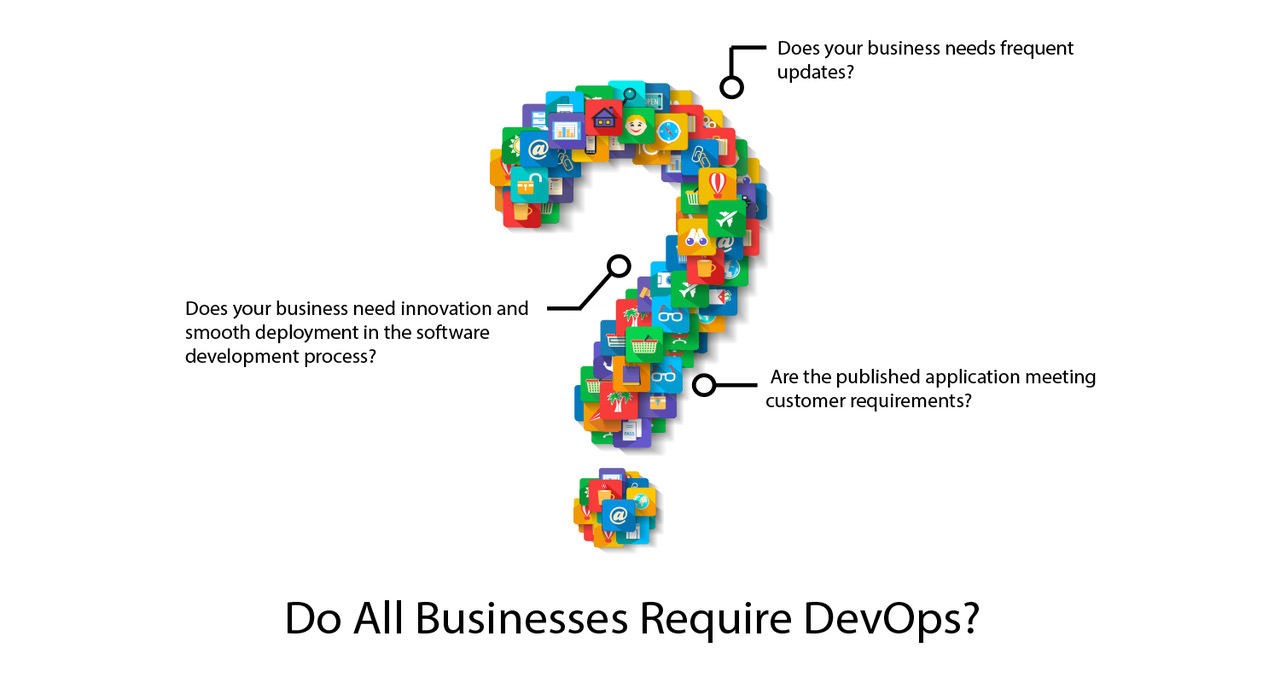
    Does DevOps really suit all businesses of different sizes and niches? What are the key considerations for utilizing DevOps platform? These are the questions we will try to answer through this article.

    Do All Businesses Require DevOps?

    The common and widespread consensus is that any software development company geared for innovation must embrace a DevOps environment. Any business that considers innovation and smooth deployment in the software development process—a key factor in their long-term growth strategy—should take advantage of the benefits of a DevOps platform. Whenever any service provider needs to adopt new strategies to keep pace with the evolution in the software space, DevOps will come as an irreplaceable platform choice.

    Despite this consensus and widely accepted perception, there are different opinions in the market. Many industry experts believe that to reap the benefit of the platform you need to have a dedicated DevOps team in place. If you have a DevOps culture and in-house DevOps team in your company, you can gain a competitive advantage.

    The Key Benefits of DevOps

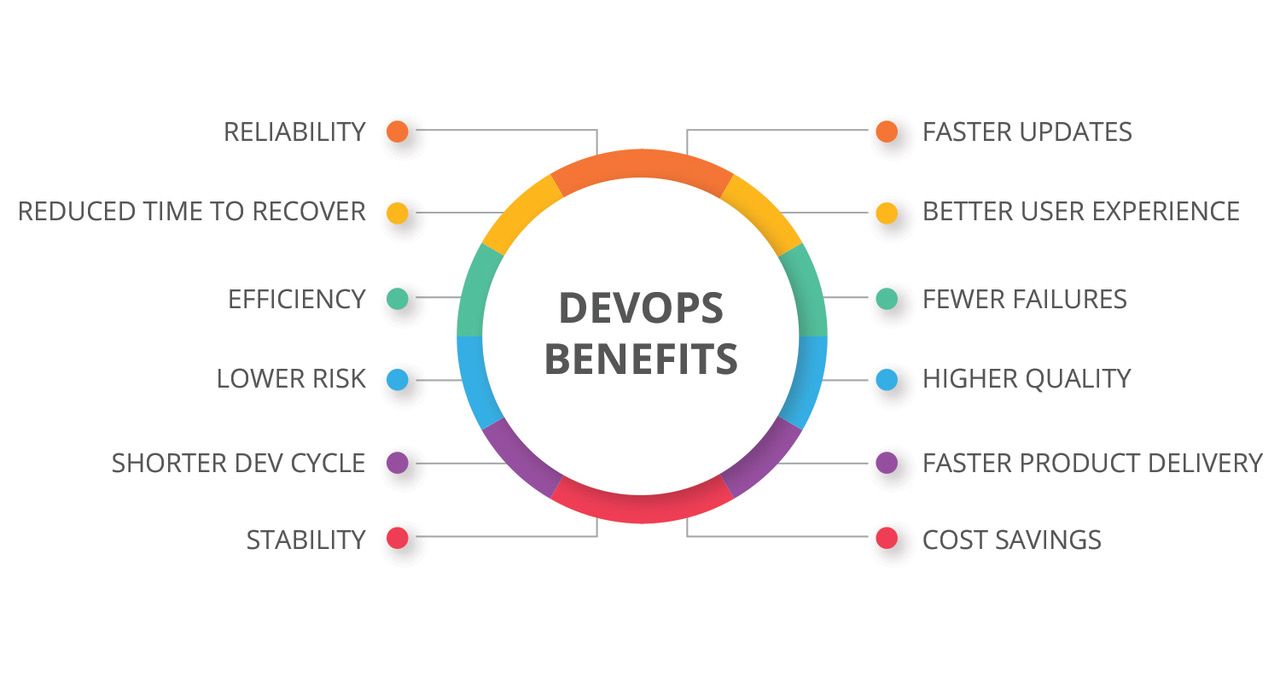
    The main benefit of DevOps is faster delivery of software with much-improved quality. There can be several other benefits depending on the industry.

    While some companies refer to the huge reduction in downtime since they adopted DevOps culture, there are still many others who simply give credit to the platform because of its integrated approach that makes the process more agile and fast-paced.

    For most companies, the domino effect of getting better software at a faster speed ends up delivering sustainable growth and revenue opportunities.

    Here’s a look at the role of DevOps platform across three types of businesses: small companies and startups, midsize companies and large business houses.

    Small Companies and Startups

    In smaller companies and startups where resources and human capital remain under-supplied, the responsibilities ascribed to developers, engineers and deployment professionals often tend to get blurred or overlap. Because of the scarcity of human resource, developers and engineers are often assigned multiple responsibilities. Naturally, in such companies, it is common to see cross-functional teams ready to engage into various development projects with ease. This makes them ideal business organizations to embrace and grow with DevOps culture.

    Midsize Companies

    As the companies tend to grow bigger in size and resources, they have a bigger (and often unbreachable) divide between verticals such as operations and development. In such organizations, staff are less likely to be open to cross-functional responsibilities, as many have been in the same job doing the same tasks and feel settled. This brings in a stagnant organizational process, where strong departmental divide rules the business process outcome.

    This stagnant work culture makes such companies less appropriate candidates to implement DevOps environment. For these companies to reap the benefits of a DevOps platform, mass organizational changes should be brought in the team structure. Building a separate cross-functional DevOps team to handle some focus projects can also be good practice for them.

    Large Companies

    Large companies enjoy the luxury and abundance of resources, and this makes them much better-placed compared to other organizations. Companies such as Amazon, Facebook, Google and Microsoft have the diversity, huge experience and robust abilities to bring together cross-functional specialists from development and operations to work on ambitious projects. These organizations are known for having product-oriented units, comprising specialists from both development and operations.

    Apart from their cross-functional expertise, product-focused approach and abundance of resources to roll on new projects, large companies also can make a big difference to the teamwork and motivation through a highly unified vision and strategic long-term objectives shared by every member of each team. This is why large companies always stand as suitable candidates to embrace DevOps approach and environment for their projects.

    Fixing the Right DevOps Strategy: 3 Things to Consider

    Beyond the organizational differences and core strengths and weakness for embracing a cross-functional DevOps approach, we must look into the key aspects that make a right strategy for any organization to incorporate DevOps into their scheme of things. Question is, despite the shortcomings and lacking, how can you embrace DevOps environment and reap the benefits? Here we provide some clues:

    • Making Change a Habit. Some strategists believe that any organizational change will face a lot of friction, causing substantial harm to the immediate business outcome. But there should be no reluctance to change for this. Rather, by bringing constant changes, people get used to the friction and pain and it becomes normal. This is one way to replace traditional IT mindset with DevOps.
    • Starting Small with a Neat Team. Obviously, finding the appropriate and credible skilled employee for your DevOps projects is not always easy. This is why it is advisable to create small startups or units, in which sharing the common vision and embracing a cross-functional approach becomes the order of the day. On top of that, do your best to bring out the best from your team and hire some experienced ones with knowledge of DevOps.
    • Continuous Development Mindset. We all know how the DevOps platform always focuses on continuous development approach. It is easier for the software developers to embrace such approach, but for operations staff, you have to slowly make them think of infrastructure as evolving and slowly building components. That’s something challenging but not impossible.

    Conclusion

    DevOps has emerged as the most promising development approach for modern software developers. Though for many development companies the friction emanating from strict role divides is becoming an obstacle, the positive push by DevOps for cross-functional approach looks indomitable.

    — Atman Rathod