Tag: open source

  • Grafana Labs Adds Visual Tools to Simplify Prometheus Queries

    Grafana Labs Adds Visual Tools to Simplify Prometheus Queries

    At its GrafanaCONline event, Grafana Labs today announced an update to the open source Grafana dashboard. The update adds visual query tools to make it easier for IT professionals of any skill level to launch queries against the Prometheus monitoring platform or the company’s Grafana Loki log aggregations framework.

    In addition, Grafana said the open source edition of Grafana OnCall, a scheduling and paging application, is now also available as open source software that can be used in on-premises IT environments. Previously, Grafana OnCall was only available as part of the managed Grafana Cloud service.

    Archana Kesavan, director of product marketing for Grafana Labs, said version 9.0 of the core Grafana platform makes Prometheus monitoring more accessible. Prometheus is being advanced under the auspices of the Cloud Native Computing Foundation (CNCF). It is most widely used in Kubernetes environments, but can also be used with monolithic applications. The latest version of Grafana adds support for an exemplars overlay for traces and Prometheus sparse histograms.

    Other capabilities added with this release include a dashboard preview and title search capability, support for envelope encryption by default, an expanded navigation bar and a revamped heatmap panel that renders more quickly than its predecessor.
    ‘

    Finally, the alert system that Grafana Labs first introduced as an option is now a default setting.

    Kesavan said in addition to making it easier to launch queries, the Grafana Labs approach also limits the ability of a poorly constructed query to impact clusters running Prometheus.

    In general, the adoption of Prometheus has risen alongside Kubernetes. At least initially, DevOps teams that adopt Kubernetes often employ Prometheus to monitor the platform. Less clear is the degree to which IT teams will continue to rely on Prometheus once cloud-native applications are deployed in a production environment. Many IT teams already have a monitoring platform they employ that they choose to extend to Kubernetes environments. Conversely, however, some organizations are opting to replace legacy tools with the Prometheus monitoring platform to monitor both Kubernetes environments and legacy monolithic applications.

    At the very least, Prometheus has established a de facto standard for collecting monitoring data from Kubernetes environments that can be queried by a wide variety of tools.

    One way or another there will soon be fleets of Kubernetes clusters deployed across the extended enterprise that will need to be monitored. DevOps teams will naturally need to decide for themselves how best to monitor those clusters and, ultimately, observe them in a way that enables queries to be launched and issues surfaced before they become a major problem.

    In the meantime, DevOps teams might want to consider consolidating many of the monitoring tools they use today as part of an effort to streamline operations. Rather than having to correlate events across a dozen tools to determine the root cause of an issue, the goal should be to have enough tools to ensure verification without spending hours sorting through conflicting reports.

  • Eclipse Foundation Opens Marketplace for OpenJDK Binaries

    Eclipse Foundation Opens Marketplace for OpenJDK Binaries

    The Eclipse Foundation this week opened an Adoptium Marketplace through which DevOps teams can access Java binaries based on the OpenJDK specification. OpenJDK was created based on the Java standard edition (SE) of the programming language and virtual machine.

    Mike Milinkovich, executive director of the Eclipse Foundation, said the goal is to make it easier for IT teams to access open source binaries via a vendor-neutral marketplace that complies with the Java SE Technology Compatibility Kit (TCK) that was created to make sure runtimes based on OpenJDK conform to the original Java specification.

    The marketplace has been set up in collaboration with the Adoptium Working Group that was set up by the Eclipse Foundation to govern OpenJDK, an open source implementation of the Java SE originally created at Sun Microsystems and later acquired by Oracle.

    Members of The Adoptium Working Group include Alibaba Cloud, Azul, Huawei, IBM, iJUG, Karakun AG, Microsoft, New Relic and Red Hat. That group created an Eclipse AQAvit project to test binaries for compliance with the Java SE TCK specification.

    OpenJDK is a reference implementation used by multiple vendors to create their own binaries, which are only guaranteed to be compatible with the standard until the next update arrives; updates are released approximately every six months. The Eclipse Adoptium project will make it simpler for developer teams to identify which binaries are compatible with specific implementations of OpenJDK. Ultimately, the goal is to encourage developers to build applications using frameworks that make use of new OpenJDK features as they are added to the platform versus continuing to rely on older binaries.

    Java remains the dominant language for developers working in enterprise IT organizations. Over the last few years, however, OpenJDK has gained traction as organizations adopted an open source implementation of the specification that enabled providers of application development frameworks to reduce licensing costs.

    It’s not clear at what rate enterprise IT organizations are replacing proprietary editions of Java with OpenJDK. However, during an economic downturn, more organizations tend to rely on open source software. Many organizations are also now looking to build microservices-based applications using Java frameworks based on OpenJDK runtimes.

    It’s obviously taken quite a bit of time for the OpenJDK community to put together a vendor-neutral marketplace. In the meantime, a wide range of other programming languages gained traction in the enterprise. There is still a lot of dependency on Java for building backend applications and services, but it’s more common than ever to see frontends that access those backend applications and services being built using, for example, a framework based on JavaScript.

    Java, of course, isn’t going away any time soon. The sheer number of enterprise developers that rely on it to build applications will ensure its continued longevity. The important thing to note, however, is that as more open source platforms are employed, the pace at which the overall community will innovate should continue to accelerate.

  • JFrog Launches Blockchain Project to Secure Open Source Software

    JFrog Launches Blockchain Project to Secure Open Source Software

    At its swampUP event, JFrog today launched Project Pyrsia, an open source project that uses a blockchain platform and Sigstore Cosign and Notary V2 cryptographic signature software to secure software packages. In addition to JFrog, other contributors to the project include Docker, Inc., DeployHub, Futureway and Oracle.

    Stephen Chin, vice president of developer relations for JFrog, said Project Pyrsia will enable organizations to establish a chain of provenance for open source software components stored in a secure network of repositories.

    In effect, Project Pyrsia is making use of decentralized Web3 technologies to secure the open source supply chain, noted Chin. That approach to validating the integrity of software components using a blockchain platform will ensure that any software component being employed by developers has not been compromised, he added.

    Ultimately, the goal is to contribute Project Pyrsia to the Open Source Security Foundation (OpenSSF), an arm of the Linux Foundation that, as a consortium, is looking to coordinate efforts to better secure open source software. JFrog’s own research efforts identified more than 20 different open source software supply chain attacks, with two of those involving zero-day threats for which there was no immediate software patch available. Cybercriminals are targeting open source projects because any malware that gets included will later show up in any number of downstream applications. Their ultimate goal is to activate that malware at a time of their choosing.

    Securing open source software became a more urgent issue following the discovery last year of the zero-day Log4Shell vulnerability that impacted Java applications. Many developers routinely reuse open source software, but many of those projects are maintained by a small number of programmers that voluntarily contribute their time and effort to build components that others are free to use. Like any other developer, the amount of security expertise those individuals have is limited; the onus for making sure that software is secure falls on the organizations that decide to deploy it. The trouble is, many developers assume that software is more secure than it really is. Initiatives like Project Pyrsia are part of a larger effort to make it simpler for maintainers to secure open source software.

    It’s not clear whether security concerns are prompting organizations to review the amount of open source software they consume. Most organizations are more dependent on open source software than they realize, because most packaged applications will include open source components. Whenever a zero-day vulnerability is discovered, organizations can spend months looking for all the instances of an open source component that might be vulnerable.

    In theory, increased focus on open source software should lead to greater adoption of DevSecOps best practices that reduce the number of vulnerabilities in production environments. In the meantime, more scrutiny of open source software components is necessary, considering that they are employed by almost every organization.

  • Datadog Adds Support for OpenTelemetry Protocol

    Datadog Adds Support for OpenTelemetry Protocol

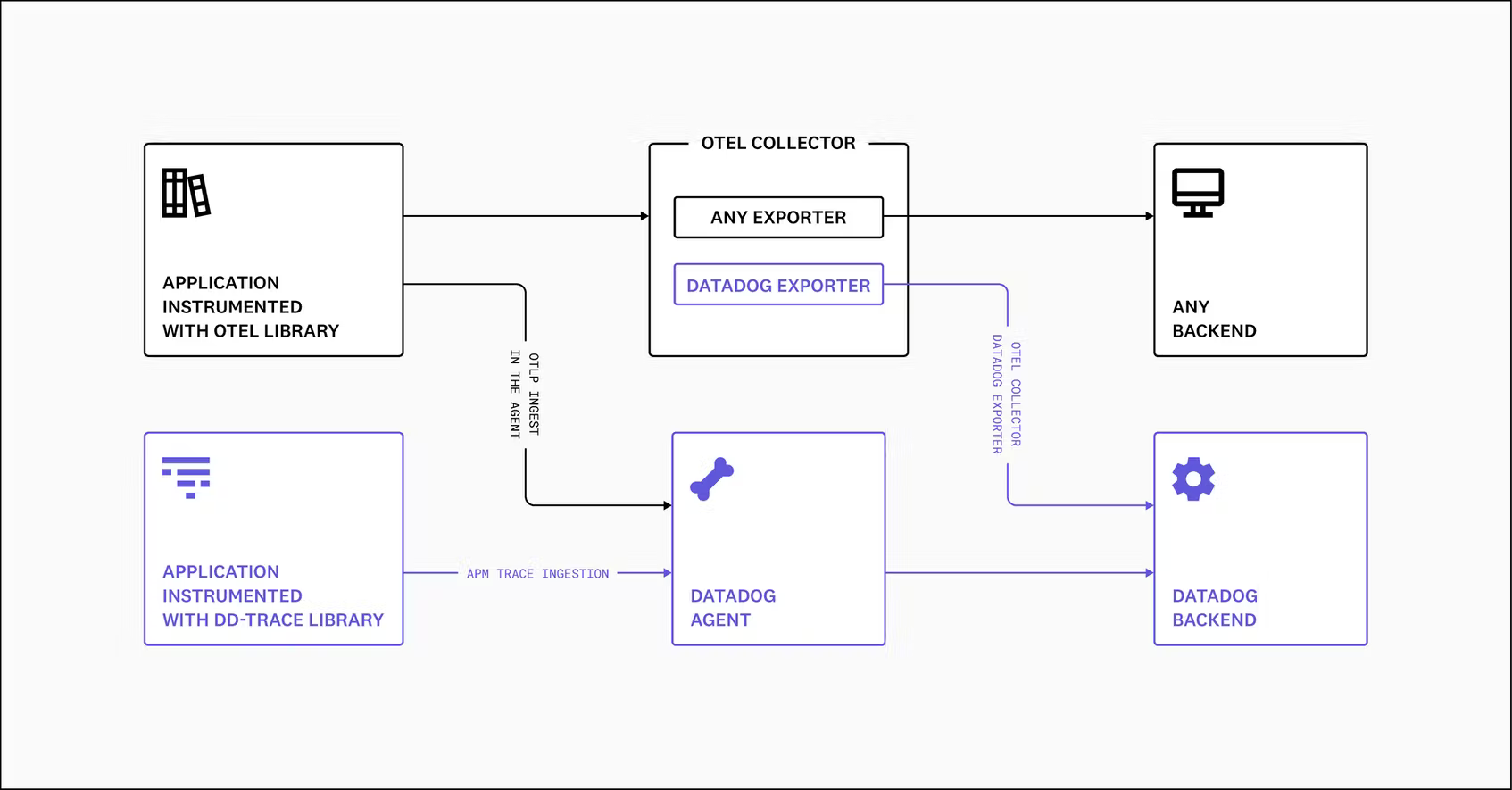
    At the KubeCon + CloudNativeCon Europe 2022 event, Datadog announced it made support for the OpenTelemetry Protocol (OTLP) generally available in the agent software it provides to instrument applications.

    Ilan Rabinovitch, senior vice president of product and community at Datadog, said that capability eliminates the need to install a separate OpenTelemetry collector to aggregate metrics, logs and traces from applications instrumented using the open source OpenTelemetry libraries being advanced under the auspices of the Cloud Native Computing Foundation (CNCF).

    The Datadog Agent can already collect application profiles, network data and infrastructure metrics via more than 500 integrations provided by Datadog. OpenTelemetry extends that capability with a set of application programming interfaces (APIs) and a wire protocol for instrumenting applications.

    Datadog is the latest in a series of providers of observability platforms that added support for the OpenTelemetry project that continues to gain momentum. The goal is to make it less costly to instrument applications using open source agent software that surfaces a consistent set of interfaces. Previously, each observability platform provider developed their own agent software that DevOps teams would need to install. Datadog is making a case for agent software that, in addition to collecting data from existing applications, is now compatible with the OLTP protocol created by contributors to the OpenTelemetry project.

    The issue that DevOps teams will need to come to terms with is that while OpenTelemetry agent software is free, many of them have already installed proprietary agent software to instrument applications. That agent software can often provide additional context that is not yet available in OpenTelemetry. History, however, shows that, in time, open source projects with larger numbers of contributors will outpace the ability of any single vendor to innovate.

    One way or another, DevOps teams will be instrumenting more applications as more microservices-based applications are deployed. The dependencies that exist between microservices make it too difficult to manage an application environment without additional instrumentation. The goal within many DevOps teams is to eventually replace the hodgepodge of monitoring tools that track a limited set of pre-defined metrics with an observability platform that not only aggregates metrics but enables DevOps teams to launch queries and surface IT issues before they become a major issue. In some instances, the rationalization of monitoring tools will help justify the acquisition of an observability platform.

    Observability, of course, is one of the core tenets of any set of DevOps best practices. Achieving it, however, has always been a challenge. Rabinovitch said an observability platform that regularly surfaces critical IT issues without requiring DevOps teams to launch queries to search for anomalies will eventually win the battle for observability supremacy.

    In the meantime, there is already no shortage of observability platforms. The challenge will be determining which one enables the highest level of instrumentation at the most reasonable cost.

  • DevSecOps Deluge: Choosing the Right Tools

    DevSecOps Deluge: Choosing the Right Tools

    In the last few years, DevSecOps has become the security process of choice for many forward-thinking enterprises. 

    These organizations have come to understand that fixing bugs in the latter stages of product and application development offers no favors to anyone but cybercriminals. So, they have overhauled traditional processes and united development, operations and security teams to form DevSecOps where the teams now work in tandem, cooperating to embed security into the entire process of application and software development.

    The benefits of this are clear; finding and fixing bugs early closes doors on cybercriminals while bringing peace of mind, cost savings and better products to customers. However, one of the challenges many organizations face when transitioning to DevSecOps is making the process seamless, ensuring it doesn’t slow down the software development life cycle, make security checks more cumbersome or cause frustration among teams. 

    Security teams need to ensure their DevSecOps program is delivering value to the culture of the organization while speeding up time-to-fix, capturing the right metrics, and categorizing and prioritizing issues based on their risk so that nothing goes live that could cause major damage.   

    Additionally, they also need to select the correct DevSecOps toolkit to carry out application security testing while ensuring the tools easily integrate into software development and can be used across multiple projects. When identifying tools for testing, DevSecOps teams are often overwhelmed by the huge range and volume available, which makes choosing which ones to use and learning how to use them a minefield, even for those with the right training and know-how. 

    A DevSecOps automation program needs lots of technical tools and cultural aspects to come together to make it work. Security teams need static analysis tools to check the code, third-party library analysis to check the dependencies, separate analysis to check the infrastructure-as-code (IaC) configuration, scanners to check containers for issues, tools to test the running system, cloud security checks and infrastructure testing for patches and ports. They also need to match these tools up to the right technology each team is using and keep up with the constant changes.

    Given all of these complexities, how can DevSecOps teams overcome these challenges and build out an effective DevSecOps program with the correct toolset? 

    Here are some top tips to help them along the way.

    Keep Security Processes Flexible 

    Your teams are going to be using different technology stacks, different languages, frameworks, and so on. If you tie your process too tightly to a few tools, it’ll be harder to slot in new checks when things change. Remember that the aim is a consistent, repeatable security process with the right visibility—the technical tools feed into that, but they are not the whole process. What security checks will you need in 12 months that you don’t have now? What about 36 months? These are questions that must be asked continuously. 

    Automation is Your Friend

    If development pipelines are running smoothly and automatically, then any manual security steps are not going to fit in with the process. Automating security tools together—from orchestrating their running to aggregating their responses and managing issues—will save a lot of time and give you the results you need in line with your releases.

    Keep an Eye On Your ROI

    It’s very common for big-ticket commercial tools to be underused; you have the licenses for repeated testing and you have frequent code drops, but the processes or the integrations mean testing isn’t applied as often as needed or the results take time to collect and process. Explore ways to bring commercial tools easily into the existing processes.

    There’s No Such Thing as a Free Lunch

    The open source community provides great security tools, but remember: There is a cost associated with the time it takes your teams to use them and to manage the outputs. From developers learning how to run them to the time it takes to actually run them or extract the results or manage false positives—these aren’t free. A ‘free’ tool that costs two hours of work every release might not be worth it.

    DevSecOps is All About Collaboration

    Weaving security checks into development processes, CI/CD pipelines, ticketing systems and sprint meetings help security to be part of the development process, but not every developer is—or wants to be—a security expert. Think about how the aims of development and security can meet in the middle. How can developers include security without much effort or thought? How can security help supply the tooling and help triage issues in developer pipelines? How can the process conform to auditors’ tools and with correct profiles, not just turned down to zero to avoid reporting issues? How can security add value at scale to help developers fix issues faster regardless of the tooling being used?

  • Observe, Inc. Dives Deeper Into Observability

    Observe, Inc. Dives Deeper Into Observability

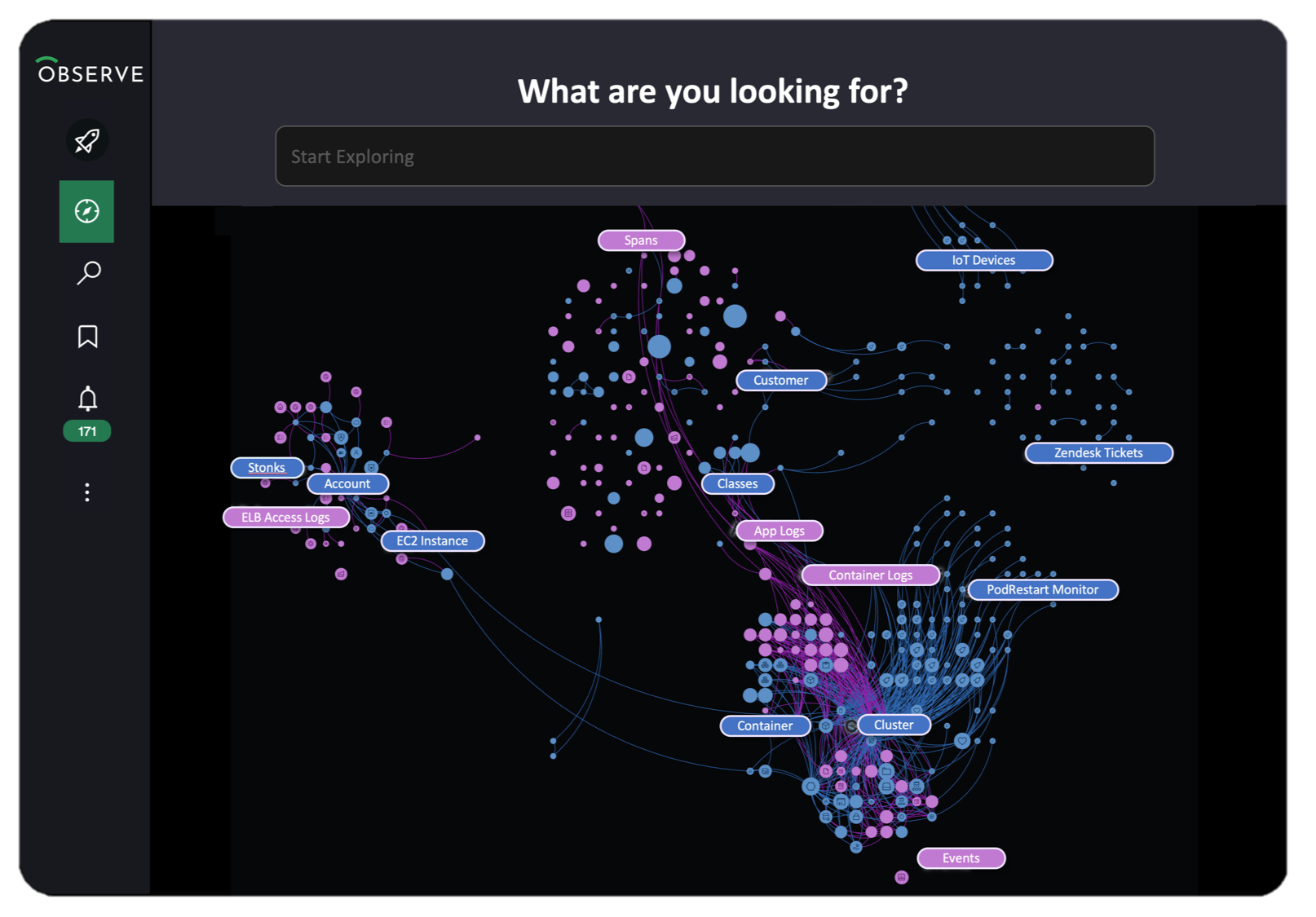
    Fresh from picking up an additional $70 million in funding, Observe, Inc. announced this week it has added multiple tools, dubbed Data Universe Maps, to its observability platform to visualize all datasets and surface underlying event data.

    The company also added pre-built applications for Kubernetes, Amazon Web Services (AWS) and Jenkins environments with editions for Google Cloud Platform (GCP) and Microsoft Azure planned for later this year. Observe Apps are intended to make it easy for IT teams to ingest data that is surfaced via pre-built dashboards that will generate alerts when issues arise.

    Finally, Observe, Inc. has added dashboards that provide transparency into its usage-based pricing model. IT teams can now more easily determine how many credits are consumed by both users and specific datasets to help contain costs.

    Observe, Inc. CEO Jeremy Burton said those tools are crucial because in the absence of tools to control data costs, most organizations will soon discover that observability is unsustainable.

    Of course, it’s not clear yet how many organizations are moving beyond monitoring metrics to embrace observability and launch queries to discover the root cause of performance issues. Many organizations don’t have the level of expertise required to structure such queries. However, as more organizations struggle to investigate and remediate issues impacting customer experience, interest in observability platforms is rising, noted Burton.

    Burton said thus far, as a startup, Observe, Inc. has expanded its customer base by a factor of three to now include 50 organizations, which has resulted in a five-fold increase in the number of monthly active users of the platform. The platform is now ingesting more than 40TB of data each day, with more than 25 million queries each day launched across nearly one trillion rows of more than 10 petabytes of data. Capital One is included among the investors in Observe, Inc.

    At the core of the Observe platform is a graph engine that makes it simpler to uncover the relationships between machine data that is ingested into the platform.

    Going forward, Burton said Observe intends to add support for distributed tracing using the open source agent software created by the OpenTelemetry project that operates under the auspices of the Cloud Native Computing Foundation (CNCF).

    Change within enterprise IT organizations happens slowly. Many will be using legacy monitoring tools alongside observability platforms for years to come. However, there is an opportunity to rationalize monitoring tools as the capabilities of observability platforms continue to expand.

    In the meantime, IT environments will continue to become more complex as more modern applications based on microservices and constructed using containers are deployed. These applications, over time, are generally more resilient than monolithic applications; given all the dependencies between microservices, determining the root cause of a performance issue can be a major challenge. As a result, it may be just a matter of time before this new class of applications ultimately forces the observability issue in the enterprise.

  • Novu Raises $6.6 Million to Build Open Source Notification Infrastructure for Developers

    New solution creates a state-of-the-art notification experience for customers that until now was reserved for offerings from only the largest tech companies 
    TEL AVIV, May 11, 2021 — Novu, the leading open source solution for notification infrastructure for developers, today announced it has raised $6.6 million in seed funding led by Crane Venture Partners, Eniac, Entrée Capital, Ariel Maislos and a variety of individual angel investors. Novu’s open source infrastructure removes the time and complexity of building and maintaining these systems and delivers a state-of-the-art notification experience for users.

    “Notifications are the primary channel of communication in most digital business offerings and can have a very positive – or negative – impact on customer engagement and retention,” said Krishna Visvanathan, co-founder and partner, Crane Venture Partners. “We’re excited by Novu’s innovative use of open source to deliver a competitive solution to developers and engineering teams who can simply plug this into their existing systems without having to build from scratch.”

    The complexity and domain expertise required for building product-to-consumer or user communication is increasing because of burgeoning channels, digests, languages and user preferences, among other factors. In the time of proliferation among communication channels and more, the task of orchestrating product notifications has fallen on the engineering teams to solve. Novu provides the standards, tools and best practices to implement meaningful product communications while saving engineering teams time otherwise spent on building again and again. Developers can quickly set up robust infrastructure to enable product-to-consumer communication across email, SMS, notification centers, Slack and more while maintaining full visibility of their systems.

    “As engineers, we’ve built notification systems from scratch at all of our previous companies. After speaking with other engineers, it was evident that there is no off-the-shelf solution available,” said Tomer Barnea, co-founder and CEO, Novu. “Novu is a turn-key, open source foundation for engineering teams who will be able to dramatically improve the notification experience for their users. All of this enables a consistent and easy channel for communications between enterprises and their users.”

    Because Novu is open source, it provides visibility and extendability for engineers to create their own custom workflows. Novu customers will benefit from the collective wisdom and collaboration among a worldwide open source community.

    About Novu
    Novu is the only open source notification infrastructure. It’s simple to use and can be embedded in any product platform. Its management dashboard allows developers to understand exactly what is happening and enhances communications between enterprises and their customers for a long-term relationship. For more information, please visit https://www.novu.co/

  • OpenSSF Adds Open Source Package Analysis Tool Prototype

    OpenSSF Adds Open Source Package Analysis Tool Prototype

    The Open Source Security Foundation (OpenSSF) has made available a prototype of a package analysis tool that has already identified more than 200 malicious packages uploaded to PyPI and npm software components.

    Caleb Brown, an OpenSSF maintainer of the project, said the goal is to understand the behavior and capabilities of packages available on open source repositories. It also tracks how packages behave over time to make it easier to identify when previously safe software began to act in a suspicious manner.

    Most of the malicious packages detected are employing dependency confusion and typosquatting techniques, Brown said. They usually contain a simple script that runs during installation and provides a few details about the host to an external command-and-control system. Most of these packages are not exfiltrating meaningful data except the name of the machine or a username, but they make no attempt to disguise their behavior. The issue is that any one of these packages could have done far more damage, noted Brown.

    Future goals for the project include detecting differences in package behavior over time; automating the processing of the package analysis results; storing the packages themselves as they are processed for long-term analysis and improving the reliability of the pipeline. As such, the OpenSSF is looking for application developers and cybersecurity researchers to contribute to the project. The expectation is that many providers of application security tools will incorporate the package analysis tool within their offerings rather than requiring each vendor to create their own version of the same tool, said Brown.

    The OpenSSF has launched a series of initiatives to improve the overall state of open source security. Most recently, it added an Alpha-Omega Project to automate security testing processes for open source software using a $5 million initial investment provided by Microsoft and Google. The core challenge is that many organizations are dependent on open source software projects created and maintained by just a handful of volunteer maintainers and contributors. The individuals that created those projects don’t always have a lot of cybersecurity expertise. In fact, many of them would argue that the onus for securing open source software is on the organizations that use what amounts to free software. It’s not the responsibility of the contributors and maintainers to, for example, drop everything and immediately create a patch to address a zero-day vulnerability.

    It’s not clear how easily open source software could be compromised by cybercriminals that insert malware into downstream applications that rely on that code. However, in the wake of a series of high-profile breaches, it’s safe to assume that more cybercriminals than ever are trying to compromise open source software projects. While some organizations may opt to limit their dependency on open source code that has not been properly vetted, there is no way to entirely avoid using open source code. The challenge is finding a more efficient way to ensure the integrity of that code for all concerned.

  • Everything You Need to Know About Cookiecutter

    Everything You Need to Know About Cookiecutter

    Cookiecutter is a templating library for creating project boilerplates in any programming language. When individuals, teams and organizations create projects, they must follow consistent standards so that those projects are easily readable and searchable. Templates accelerate the code writing process, too, since developers are able to spend less time on setup and can get straight to the actual implementation. 

    Cookiecutter is a Python package, easily installable with pip or other package managers. It enables you to create and use templates for microservices and other software projects. It is a command line tool that doesn’t require knowledge of Python to use. Cookiecutter is widely used among software engineers, researchers, data scientists and other technical roles.

    Creating a template is simple and requires updating a cookiecutter.json file. Using a template requires running the cookiecutter command with the appropriate directory to create a new project.

    Here’s an example template for a Python package that the Cookiecutter team maintains. To use the template, install Cookiecutter first and then run the following command in your terminal:

    Cookiecutter https://github.com/audreyfeldroy/cookiecutter-pypackage.git 

    Go through the series of prompts and voila! In just a few moments, you have the skeleton of a completely functional Python package. Swap out the template for something else and you could just as easily spin up a mobile app, a data science notebook, or any other project on your favorite cloud service. There’s an entire community with thousands of templates to choose from.

    Creating custom templates to fit your and your organization’s needs is also simple and powerful. We’ll cover how to do that below.

    Who is Cookiecutter For?

    Cookiecutter is for individuals, teams and companies to standardize their project development process and accelerate new project creation.

    Example use cases include:

    • Learning a new framework: Cookiecutter lowers the barriers to entry for developers unfamiliar with a particular framework. You can find an expert’s template for a framework you’re learning and quickly get started with a configuration that is known to work.
    • Onboarding: Standardization makes collaboration much more manageable. New team members can immediately follow best practices without the risks of copying, pasting and trying to edit just the correct variables.
    • Enforcing standards in an organization: Consistent foldering, file-naming conventions and other patterns enable large teams to maintain an organized codebase.

    Cookiecutter Features

    Templates

    The heart of a template is the cookiecutter.json file, which might look something like this:

    {

      “full_name”: “Alice Cookie”,

      “email”: “foobar@example.com”,

      “project_name”: “Django Boilerplate”,

      “version”: “0.1.0”

    }

    These key-value pairs determine the prompts a developer needs to answer when using a template. The command line interface iterates over the keys, prompting a developer to set the various parameters. If a developer does not specify something, Cookiecutter uses default values.

    A template needs to have files and directories worth copying and reusing, such as the skeleton code for a particular framework. Cookiecutter uses these inputs to modify the template. To connect this boilerplate to the inputs, Cookiecutter uses the Jinja2 templating language. With Jinja2, Cookiecutter identifies all instances of the text {{cookiecutter.variable_name}} and replaces that boilerplate with the actual value of the variable. This works both within files as well as for file and directory names.

    Loops and Conditional Logic

    Jinja2 is very powerful and can do much more than just text substitution. It comes with control structures including for loops and if statements. It even has macros that are analogous to functions in programming languages. Since all of Cookiecutter’s templating uses Jinja2, it can leverage the same control flow features. This opens up enormous possibilities. For example, you could prompt a developer to specify which device types for which they are building an app and have unique behaviors depending on the response.

    Hooks

    Pre/post-generate hooks let you run Python or shell scripts before and/or after generating a project. Inputs from the template prompts are fair game within hooks and work similarly to the way they would elsewhere in the project with Jinja2 syntax. This means you can run a script to validate a developer’s responses to the prompts. Other applications of hooks include cleaning up unwanted files or otherwise using logic that would be complicated by just using Jinja2.

    What Are the Limitations?

    By design, templates are prescriptive with regard to a project’s setup, presenting all kinds of advantages as discussed above. On the other hand, a template might be opinionated in a way that does not align with either an individual developer’s or an organization’s preferences. In that case, it may be worth choosing another template or revising an existing one. Forcing a template in a situation that doesn’t make sense is less-than-ideal.

    What Are Some Alternatives or Extensions?

    Boilerplate for Specific Frameworks

    While Cookiecutter is compatible with almost any framework, some frameworks do have custom boilerplate that is readily available. If you were to start a React app, for example, there is a great boilerplate available to use as a starting point, and other communities often maintain similar ways to get started. Boilerplate is not incompatible with Cookiecutter, and you’ll find templates from popular boilerplate that you can use, too.

    Cruft Keeps Templates Organized

    As with any new process, there is some overhead involved to stay organized with Cookiecutter. When a team starts to manage dozens of templates or more, it’s especially important to keep templates up-to-date. Cruft works alongside Cookiecutter to not only make projects but to update existing ones as a template evolves. Cruft also has template validation capabilities to ensure projects match the latest version of a template.

    Learn More About Cookiecutter

    The Cookiecutter community has lots of resources to help you dig deeper.

  • Secure Software Summit: Measuring and Mitigating OSS Risks

    Secure Software Summit: Measuring and Mitigating OSS Risks

    Measuring and mitigating the security risks in open source software is becoming a major issue in the software development community. Attacks on open source software (OSS) are on the rise; open source supply chain attacks grew 650% in 2021—a staggering number.

    2021 and early 2022 saw significant attacks which impacted more than 1,000 organizations. The most prominent recent OSS attack was the Log4Shell vulnerability disclosed in December 2021. Attacks on the OSS supply chain and on OSS impacted nearly every single software organization on the planet. Everybody is scrambling to continuously patch systems as new vulnerabilities continue pouring in.

    To properly navigate this environment and keep our systems safe, we as a community need to understand the security risks of OSS and be better prepared to handle them, collectively and individually. 

    Open Source Risks

    There are a number of risks that make OSS more vulnerable without proper security measures. 

    OSS is Free; OSS Security is Expensive

    To start, we must recognize that open source software may be free to download and require no payment, but it comes with a massive security cost. 

    A significant portion of open source software is developed by volunteers in their free time. Most of the prominent open source volunteers actually have full-time jobs, and the code they contribute to projects like the Log4j logging libraries are written on nights and weekends; on their own time and not on the company dime. Not surprisingly, security isn’t high on their priority list. They don’t have the resources to invest in a secure development life cycle or have the time and bandwidth to maintain their code. This may mean that security vulnerabilities remain unaddressed for long periods of time, sometimes indefinitely. 

    All Bugs are Shallow, but There Aren’t Enough Eyeballs

    In software development, Linus’s law states “…given enough eyeballs, all bugs are shallow.” However, this is only true if those eyes are looking in the right place. In the case of open source, all code is open but there aren’t enough eyes paying attention to it to spot all the bugs. In addition, organizations may not consider the security consequences of their decision to consume a particular piece of open source software and adding it as a dependency. Dependency trees become more and more complex; harder and harder to monitor and secure, as you keep adding more third-party components to a core codebase. Each new dependency might bring additional nested dependencies—perhaps hundreds or thousands, depending on the size of the library added or the role it plays in the application architecture. For example, the Kubernetes project—one of the most successful and widely adopted OSS projects—has several thousand dependencies, many of which have additional secondary and tertiary downstream dependencies. 

    So Much Code. So Many Choices. Not all are Good.

    The beauty of the open source ecosystem is that there is a solution for everything. The problem with the open source ecosystem is that there’s not just one solution, but several dozen. For example, if you need a JSON parser for your application, there are several to choose from. If your application is running a critical service or infrastructure, then picking the right JSON parser—one that is secure and comes from a responsible project or maintainer—becomes very important. A JSON parser will serve as a critical component for your application, so it will impact the security of your entire system. If you chose the wrong JSON parser, you might pay a big price down the road in security risk and subsequent breaches. 

    Proposal: An Entry Gate Security Risk Assessment

    One potential solution to enhance OSS code security is the creation and implementation of a security risk assessment gate as part of your OSS ingestion pipeline. Putting this process in place will help you understand whether consuming a certain piece of software is high risk and avoid software that does not meet your risk criteria. 

    Here is an example of how this might work. Consider five different JSON parser libraries in GitHub, all of which have a high number of stars and appear to be highly rated. How can we assess the risk of these libraries and quickly and easily eliminate ones that are too risky? One of these JSON libraries is hosted under a user account. Most of the commits are done by a single developer without reviews. This alone indicates that using this library in a critical system presents a high risk. This lone developer could commit malicious code without review. The maintainer’s token access could be leaked, allowing attackers to insert malicious code. The developer might also turn over committer control of their library to a malicious actor without notifying users (who might not pay attention to the notification anyway). Identifying this risk required no more than a few minutes of review of the repository and cost little in time or effort. 

    A Broader View of Security Posture for OSS

    More broadly, we need to understand the full security posture of an organization or developer and their open source code prior to adding it to critical systems. Because OSS is a complex ecosystem and many pieces of OSS are complex, the risks they generate are similarly complex. Our traditional, myopic view of these risks is that we just need to find all the security vulnerabilities in our codebase and fix them. This does not resolve all risks and may lull us into a false sense of security.

    We need to understand the full comprehensive security posture of an open source project. That involves understanding a broad range of risks beyond code vulnerabilities. Here are some of the key risks to consider beyond ensuring that your codebase is well-secured and patched. 

    Supply Chain Attacks on the Build Pipeline

    Attacks like SolarWinds and CodeCove taught us that supply chain risk is a very big deal and that tools are just as much at risk as code. Attackers have found it much easier and much more reliable to attack build pipelines, rather than finding vulnerabilities in code.

    Security Risks Revealed by Continuous Security Testing 

    Continuous security testing is critical to maintaining the security of a codebase. There might not be code vulnerabilities today, but as developers continuously modify code and iterate on applications, vulnerabilities may be introduced. This can mean testing code as part of the CI/CD process with every new code push. For example, we have found numerous critical bugs in OpenSSL libraries. All were caught on a master or main branch and never made it to a production release. 

    Project Maintenance and Capabilities

    One of the really big risks with open source is the quality and frequency of project maintenance. Issues raised may not be addressed in a timely fashion. Maintainers of a project may have a long backlog of issues, indicating that they are not actively maintaining a project. It is not uncommon for critical open source projects used in millions of applications and comprising a significant dependency to the global software supply chain to not have been updated in a year or more. In addition, maintainers of OSS projects may not know how to respond to security incidents and fix security vulnerabilities. This is particularly true if the maintainers do not work at a large organization, do not have cybersecurity or secure development experience or have never suffered through the toil and trauma of addressing a major vulnerability in their code on short notice. 

    Tools for Measuring and Addressing Supply Chain Risk

    A number of efforts are underway to create free tools to help developers and application security teams better measure and address supply chain risk programmatically and analytically. 

    SLSA—Supply Chain Level for Software Artifacts

    As a tool to help organizations better address software supply chain risks, Google created a novel framework that we call Supply Chain Level for Software Artifacts (SLSA). The project has been underway at Google for more than a decade and has been open sourced as part of the OSSF. Contributors include VMware, Citibank and Datadog, among others. Google hopes to standardize SLSA and make it an industry benchmark for evaluating supply chain risk. Right now, SLSA is focused primarily on build process risks but the hope is to expand it in the near future to other areas, such as vulnerability and maintainer risks.

    OSS Security Scorecards Project

    In order to scale the process of assessing, identifying and mitigating risks in OSS, we need robust automation. In 2020, as part of the OSSF, Google released a new project called Open Source Security Scorecard. The project aimed to automate the analysis and trust aspect when evaluating the security posture of open source code. Further, the Scorecards can provide specific security recommendations. The Scorecard process can incorporate many other automated tools, including checking against vulnerabilities using the Open Source Vulnerability (OSV) database and running dependency checks using open source dependency trackers like Dependabot. The scorecards project also makes it easier to report new vulnerabilities and get those to the right people in a project. 

    Conclusion: What is not Measured is not Mitigated

    No one denies that OSS has become crucial to the vast majority of applications running the world’s technology foundation. The span of OSS continues to grow, as more and more languages and frameworks emerge and specialization increases. No one wants to reinvent the wheel and rewrite fresh code to perform the same tasks with every new application. The model of reuse, dependency and distributed software development works and speeds innovation. That said, the open source community and the supply chain used to build OSS need a more rigorous approach to reducing risk. Given the scope of the problem, automation and standardization are helping to scale toward the stated goal. We are in the early stages of creating the tools and infrastructure to automate the risk identification, measurement, assessment and mitigation processes. Security frameworks like SLSA and new processes like entry gating new OSS code with security scorecards will direct organizations down that path and move us toward a more secure open source future.

    About Secure Software Summit
    The Secure Software Summit brought together the world’s leading innovators, practitioners and academics of secure software development to share and teach the latest methods and breakthroughs on secure coding and deployment practices. If you are about developing, releasing and securing software, delivering new features fast and building things right from the start, click on the link below to get access to all of the sessions from this summit.

    https://go.shiftleft.io/secure-software-summit-2022-replay