Tag: open source

  • The Great CentOS Linux Migration: How We Got Here and What’s Next

    The Great CentOS Linux Migration: How We Got Here and What’s Next

    The recent news regarding Red Hat’s decision to limit access to the source code of their Red Hat Enterprise Linux (RHEL) distribution has garnered considerable attention. In order to understand the ramifications and subsequent changes, it is important to look back at CentOS, its historical alignment with RHEL and the options moving forward.

    CentOS Then and Now

    Starting in 2004, right from its inception, every iteration of the commercial RHEL offering triggered a corresponding release of CentOS. These iterations mirrored RHEL, albeit with modifications to eliminate the Red Hat branding and other minor updates. The presence of open source CentOS Linux facilitated swift installation of a free RHEL variant, rendering it accessible for diverse purposes spanning from development to production environments.

    In January 2014, Red Hat joined the CentOS project. Under a new CentOS governing board, they became the main sponsor and driver of the CentOS project. They continued to be an open source downstream alternative to RHEL.

    On December 8, 2020, the CentOS project and Red Hat set a new end-of-life (EOL) date for CentOS Linux 8. They shifted focus and investment into a new Linux distribution, CentOS Stream, with a rolling release model. EOL means that the community stops releases regardless of the severity of a bug or a vulnerability. Today, CentOS versions 6 and 8 are already EOL, and version 7 is the last, with EOL set for June 30, 2024. This announcement immediately sparked new projects to fill the CentOS gap. New open source projects such as Rocky Linux and AlmaLinux took off quickly, gaining contributors, sponsors and users.

    Fast forward to June 21, 2023, when Red Hat announced it would no longer publicly publish RHEL on git.centos.org.

    Previously, the source code was accessible to all, and it was used by various RHEL-compatible alternative open source projects such as Rocky Linux and AlmaLinux. It also affected other distributions, including Oracle Linux, which was a RHEL derivative for many years. All of these open source Linux distributions offered an alternative for applications; they were equally compatible with both free open source Linux and the commercial RHEL offering.

    According to the 2023 State of Open Source Report, 15% of all organizations and 20% of large organizations globally still have CentOS Linux deployed in their environments. Organizations have to move off EOL CentOS 6 and 8 and, in less than a year, off CentOS 7. Running EOL versions of any software can pose a substantial risk and cause failure in IT internal and external compliance. New vulnerabilities are constantly disclosed, and without updates or patches to CentOS, it is critical to plan for the “Great CentOS Linux Migration.”

    CentOS Migration Planning and Challenges

    Migration can be challenging. If organizations have legacy applications, they might encounter significant challenges making them work properly on a different Linux distribution. Even a small change in the individual packages that form the Linux distribution can impact and delay testing. While every application is different, and many are not dependent on low-level Linux functions, others could be significantly impacted. The number of CentOS deployments and applications has an exponential impact on the migration efforts. Evaluating different Linux distributions also takes time and will depend on the use cases, the skills developers have within each organization and the results of testing. The actual installation of a new Linux distribution is the easy part—the testing of all the layers on top of the operating system is what will take time. Some might be straightforward while others will require significant changes. Those are the reasons why it is helpful to stay with compatible distributions that will minimize the migration challenges.

    As organizations navigate the CentOS EOL and the migration period, it will be helpful to find options to extend CentOS long-term support. This means finding the expertise to generate patches that address newly disclosed high-severity vulnerabilities post-EOL. In other words, organizations must expand the community’s long-term support to address security.

    Wait for What’s Next

    The biggest question about alternative distributions is how closely they resemble RHEL. Are they going to continue to be bug-for-bug compatible? Or are there enough differences to no longer consider them application-compatible? The Rocky Linux Enterprise Software Foundation announced its plan to access RHEL source code and its intentions to continue to be bug-for-bug compatible. AlmaLinux OS Foundation announced a different approach. It is working with the CentOS Stream community while maintaining binary compatibility. This means not strictly bug-for-bug but focusing on applications to continue to be compatible.

    It is possible we’ll see other potential changes from Red Hat with regard to the access to RHEL’s source code. Today, it’s only available to customers under a commercial license agreement.

    The big test will be the next minor version, RHEL 9.3. It will be interesting to review the corresponding 9.3 versions of Rocky Linux, AlmaLinux, Oracle and others, including SUSE, who announced their intention to offer an open source compatible Linux distribution. The analysis and comparison of how applications run with the new minor version will reveal how close they are to RHEL.

    To mitigate uneasiness, organizations have to plan and test alternatives. Finding post-EOL support and patches will allow organizations to have a runway for migrating CentOS to different Linux distributions.

    As everyone in the industry with CentOS deployments waits for the next release or the next few releases, extending long-term support becomes a very viable solution. It is wise to make sure security and IT compliance aspects are addressed. Perhaps more open source Linux distributions will appear in the near future and offer another alternative to CentOS Linux.

  • Rebellion Against Changes to Open Source Terraform License Mounts

    Rebellion Against Changes to Open Source Terraform License Mounts

    A segment of the community that has embraced open source Terraform software, originally developed by HashiCorp to provision infrastructure as code (IaC), has published a manifesto calling on the company to reverse recent changes made to licenses that determine how the software can be used.

    If that demand is not met, the group plans to launch its own fork dubbed OpenTF under the terms of the previous license that governed the usage of Terraform.

    Pawel Hytry, CEO of Spacelift, a provider of a platform for orchestrating the management of multiple IaC tools, said the issue comes down to restrictions that Hashicorp has put in place restricting use within platforms that have embedded it, in addition to limitations on how Terraform can be used in production environments.

    HashiCorp is shifting from a Mozilla Public License v2.0 (MPL 2.0) to a Business Source License (BSL) v1.1 in all future releases of its software including Terraform, Vault, Consul, Boundary, Nomad, Waypoint, Packer and Vagrant, as part of an effort to maintain maximum control over its intellectual property.

    This shift will have a chilling effect on Terraform innovation because fewer individuals and organizations will want to contribute to advancing the tool, said Hytry.

    However, Hytry added, historically HashiCorp has not been perceived as not being overly receptive to contributions from external developers, so the bulk of the code used to create Terraform has come from developers working for HashiCorp.

    It’s not clear to what degree this firestorm impacts DevOps teams, but the fragmentation of open source projects stemming from issues that come down to revenue streams is increasing as it becomes more difficult for vendors that create open source software to continue to increase the number of subscription services for the support they provide. Red Hat, for example, recently decided to no longer make the source code for the Red Hat Enterprise Linux (RHEL) edition of its operating system available. The decision led to Oracle, SUSE and CIQ pooling their resources to create a fork of RHEL that they promise will be compatible with future updates to RHEL.

    It remains to be seen how many vendors might throw their weight behind OpenTF. HashiCorp, in addition to having partners that built the business on the open source edition of Terraform, also has plenty of rivals that offer IaC tools.

    It may be a while before this conflict is resolved, but for now, the situation remains fluid, said Hytry. DevOps teams that make extensive use of Terraform will need to monitor events to make sure any future usage of Terraform complies with BSL terms that supporters of the manifesto claim are at this point too vague.

    In the meantime, organizations that rely on open source software should brace themselves for any abrupt changes to licensing terms that may be forthcoming in more challenging economic times. In fact, one of the hidden costs of using open source software is the different terms and conditions under which it is licensed. Resources to monitor each additional instance of open source software for compliance, with terms and conditions that are not always as simple or clear cut, need to be dedicated to a task that doesn’t make any meaningful contribution to return on investment.

  • OpenELA Commits to Building RHEL-Compatible Operating Systems

    OpenELA Commits to Building RHEL-Compatible Operating Systems

    CIQ, Oracle and SUSE are pooling their collective efforts to form the Open Enterprise Linux Association (OpenELA), a trade group committed to developing Linux distributions compatible with Red Hat Enterprise Linux (RHEL) by providing open and free Enterprise Linux (EL) source code starting later this year.

    EL is the base operating system that RHEL and SUSE Linux Enterprise, Oracle Enterprise Linux, Ubuntu from Canonical and Rocky Linux from CIQ are built upon.

    The effort is a direct response to a decision made by Red Hat to no longer make the source code for RHEL available to organizations that want to build RHEL-compatible platforms based on a Linux distribution. In place of RHEL, the code to enable downstream distributions of Linux that would be compatible with RHEL will be provided. The initial OpenELA will be on RHEL versions EL8, EL9 and possibly EL7.

    Wim Coekaerts, executive vice president of software development at Oracle, said there have already been instances where organizations migrated from one distribution of Linux to another. The goal of OpenELA is to reduce fragmentation that might occur with RHEL source code no longer available to the open source community.

    Alan Clark, a member of the SUSE office of the CTO, added that this approach will preserve the flexibility organizations have today as it is specifically applied to RHEL-compatible platforms.

    It may be a while before RHEL-compatible distributions of Linux based on EL are available, but the time and effort required to replace the operating system is much less than in prior years. It’s not clear to what degree IT organizations are concerned about the Red Hat decision, but if they are, they will need to decide to what level they will swap out operating systems versus deploying a different distribution of Linux for new application environments going forward.

    Conflicts involving various forks of projects continue to be an issue for the open source community. Mostly those forks are created because of differences in business models, but other factors play a role including the pace of innovation and, regrettably, personality conflicts among maintainers of open source software projects.

    Regardless of the root cause for creating multiple distributions of any given project, each variant adds complexity that DevOps teams need to navigate. Dependencies on specific versions of open source software can create issues when specific capabilities are not available on another platform that a DevOps team is using to deploy an application. As a result, some organizations prefer a proprietary platform such as Windows simply because they perceive navigating the compatibility issues they may encounter to be more challenging than they can handle.

    The trade-off is that open source software drives innovation faster as the pace at which contributions are made accelerates over time. It’s like most democratic processes—it’s a little messier than any other form of governance.

  • System Initiative Open Sources Digital Twin Tool for DevOps

    System Initiative Open Sources Digital Twin Tool for DevOps

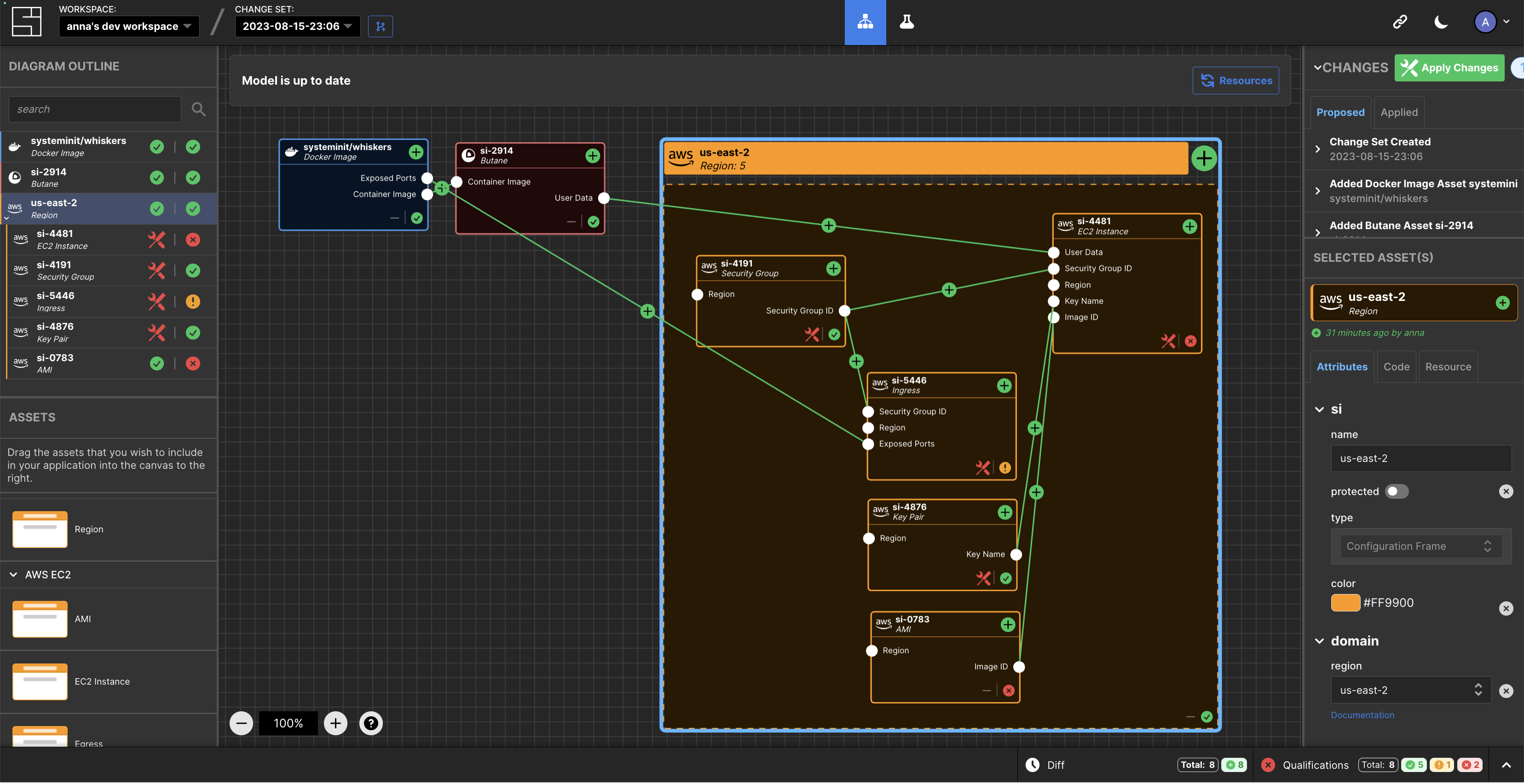
    System Initiative (SI) today announced it is making the digital twin tool it developed to manage DevOps workflows available under an open source Apache 2.0 license.

    Company CEO Adam Jacob said the approach will enable third parties to contribute to a project that is still early in its development cycle while SI provides commercial support via a subscription service.

    SI has developed a tool that creates a digital twin of a DevOps environment that provides a level of abstraction that makes it simpler to manage complex workflows at scale.

    At the core of that effort are models of IT environments created by the SI platform accessed via a visual interface. The automation framework built into the platform uses the relationships between models to infer configuration dynamically and generates typescript code that a DevOps team can then apply to automate a task.

    Feedback loops are provided in real-time to give insight into the viability of a configuration, in addition to eliminating the need for state files to track and ‘plan’ versus ‘apply’ stages.

    This approach streamlines a lot of the complexity that creates bottlenecks in DevOps workflows in what heralds the arrival of a new DevOps 2.0 era, said Jacob.

    In general, SI is making a case for an alternative approach to managing DevOps as the existing platforms and framework are fundamentally broken, added Jacob. Models that create digital twins of DevOps environments represent the arrival of a new era of software development and deployment, he noted.

    As more organizations realize their dependency on software to drive digital processes many are then looking to improve the productivity of developers and the DevOps teams that support them. Unfortunately, many DevOps teams are supporting DevOps workflows using custom code that varies widely in quality. Rather than rely on a DevOps engineer to write code, the SI digital twin tool will create code that can be applied more consistently to create DevOps workflows programmatically.

    One of the reasons few organizations today have fully automated DevOps across the application development and deployment process is that it’s simply too difficult to achieve using legacy tools and DevOps platforms. It’s not clear to what degree a digital twin approach to managing DevOps will resolve that issue, but when coupled with the arrival of artificial intelligence (AI) capabilities the way DevOps is managed is clearly about to transform.

    It may take a while for that transition to occur, but DevOps teams that have historically embraced automation are at the very least going to aggressively experiment with technologies that promise to eliminate much of the drudgery that makes DevOps more tedious than need be. The issue, as always, will be determining which technologies live up to the current level of hype being generated in a way that can be easily adopted.

  • Latest Redis Update Streamlines Management of Platform

    Latest Redis Update Streamlines Management of Platform

    Redis made a unified release of its namesake data store available today for consistent deployment across all supported platforms. Previously, the pace at which upgrades were made was staggered across different offerings only as they became available.

    At the same time, Redis is moving to unify client libraries used to access its open source data store by working directly with the community maintainers of the five most popular client libraries—Jedis (Java), node-redis (NodeJS), redis-py (Python), NRedisStack (.Net), and Go-Redis (Go).

    Other capabilities added to version 7.2 of the platform include support for auto-tiering, to more easily migrate less frequently accessed data to less expensive storage devices. This is managed via an enhanced interface for the Redis cluster management and data integration tools, available in preview. Both make it possible to consume data in real-time from another data source, such as a SQL database. Developers can also take advantage of triggers and functions to build those types of applications.

    Redis is also previewing a search tool for vector data used to create generative artificial intelligence (AI) applications. Rather than employing a separate vector database to build these applications, the Redis platform supports this data type to enable generative AI applications to run alongside other classes of applications accessing the same data.

    Redis CEO Rowan Trollope said collectively these efforts will help DevOps teams reduce costs and streamline the management of upgrades to the platform and updates to applications accessing it.

    Most organizations initially adopt Redis to provide a layer of cache using a data store that runs in-memory. However, as more applications are developed many organizations wind up using Redis as their primary database for applications that require a lot of interactivity, noted Trollope.

    While developers primarily make that architectural decision, the overall management of the Redis data store falls to DevOps teams that will now find it easier to streamline workflows across multiple instances of Redis running in the cloud, or on a Kubernetes cluster, added Trollope.

    Of course, in some cases, organizations still rely on database administrators and data engineers to manage those workflows, but as DevOps continues to evolve, more instances of data stores are being incorporated into workflows managed by a DevOps team. The ultimate goal should be to align DevOps and DataOps best practices to increase the productivity of developers and data science teams building generative AI applications using vector data to customize an existing large language model (LLM).

    Regardless of the motivation, what’s clear is the volume of data that needs to run in-memory continues to increase substantially. As that shift continues to occur, more latency-sensitive applications are being deployed. Maintaining the performance of those applications across a highly distributed enterprise environment with multiple service dependencies requires a level of DevOps expertise that is still difficult to find and retain.

  • The Cyber Resilience Act Threatens the Future of Open Source

    The Cyber Resilience Act Threatens the Future of Open Source

    The European Union (EU) is currently considering approval of the Cyber Resilience Act (CRA), a proposed regulation that is a major threat to the future of the global open source industry. While the intention of the act is to enhance cybersecurity (which is extremely welcome), its current form lacks clear liability exemptions for many open source developers and maintainers, which could be a death knell for open source in the EU and which could spark additional, global implications.

    The CRA regulation for the EU was proposed on September 15, 2022, by the European Commission. The intent is to improve cybersecurity and cyberresilience in the EU through common cybersecurity standards for products with digital elements. In theory, this is welcome. But there are some notable areas that many open source developers and industry organizations are concerned about.

    Modern applications are comprised of 90% open source code; penalizing open source developers would lead to a fragmented community and hinder important projects across various sectors, including critical infrastructure, health care and even military systems.

    The seemingly purposeful omission of exemptions for open source would put undue onus on open source foundations and maintainers and poses a serious risk to not just EU innovation and security but global collaboration. Something we, and many others in the industry, have tried to raise awareness about over the past six months. Unfortunately, the EU has largely ignored the industry’s voice. Holding open source developers whose components end up in commercial products liable for security issues will stifle innovation and harm the EU economy without providing a substantive improvement in security.

    This legislation is slated for a vote on July 19 in the parliament’s Industry, Research and Energy (ITRE) committee, where it will then be sent on to the full parliament. And, if nothing is done, it could be adopted without even a vote in a plenary session by the Parliament itself. I feel strongly that if the open source industry doesn’t take a stand now, it will become law and the open source community as we know it will be no more.   

    There are two main problems with the proposed CRA: It discourages commercial support of open source and imperils vulnerability disclosure.

    CRA Discourages Commercial Support of Open Source

    The revised CRA offers new cybersecurity requirements for hardware and software products, much like the U.S.’s National Cybersecurity Strategy does. It calls for software vendors and producers to understand what components are in their software and to be able to recall software that is affected by a vulnerability. But, unlike the recently released details for the U.S. strategy, it seems to be trying to call out certain open source projects from foundations and large companies. By doing so, it potentially impacts every open source project, which creates a web of issues.

    It goes without saying that open source projects rely heavily on volunteers, individual contributors and small teams who often work without significant resources or financial support. The support that foundations and contributors do get often comes from commercial entities who have adequate resources to provide developer time to give back to the community.

    The current CRA text only excludes OSS software that has no commercial activity around it. Unfortunately, it defines commercial activity in part, this way:

    “where the main contributors to free and open-source projects are developers employed by commercial entities and when such developers or the employer can exercise control as to which modifications are accepted in the code base, the project should generally be considered to be of a commercial nature.”

    This can be read to mean that if the main contributors are not unemployed, then the project is commercially tainted. It does not clarify what was probably intended—that the employer fully controls the project here.

    Additionally, it says:

    “Accepting donations without the intention of making a profit should not count as a commercial activity, unless such donations are made by commercial entities and are recurring in nature.”

    The first part is acceptable, but recurring donations from commercial entities are the upside of contributing back to open source. This may force the projects to reject large contributions to avoid becoming “tainted,” and will likely cause commercial entities to enact further bans on OSS contributions and pull their support entirely.

    Further, if the CRA is passed without proper exemptions, these developers and maintainers may face legal risks and liabilities for vulnerabilities found in code used in commercial products. The OSS developers have no visibility into how and in what instances their components are used; only the final manufacturer of the product has this visibility.

    The potential legal risk, without an upside, would discourage OSS developers from contributing to and maintaining open source projects. This situation not only undermines the spirit of open source but could bring about an open source crisis and isolate the EU from the rest of the world. Non-EU open source producers will avoid the EU market, meaning no access to Linux, Apache, Kubernetes and many other projects. Repositories like Maven Central, npm and PyPi may be prompted to ban EU consumption to avoid being considered a distributor. EU projects concerned about liability could pull their source code off the internet, and EU businesses may be forced to halt contributions to open source projects.

    CRA Imperils Vulnerability Disclosure

    The regulation also would require that vulnerabilities be disclosed to the European Union Agency for Cybersecurity (ENISA) within hours of discovery, whether or not a fix is available. This would make it difficult to conduct coordinated disclosure—where researchers give vendors time to develop security patches before vulnerabilities are disclosed publicly. This would increase the chances that bad actors will develop exploits for the vulnerabilities before they are fixed, putting every company that uses that software at risk. This would be an unfortunate outcome for a law whose purpose is to improve security of software.

    What Can we Do?

    As I mentioned earlier, time is of the essence since this measure is moving quickly and faces a vote this week. We need the community to take immediate action. GitHub and other industry bodies need to publicly oppose the proposed measure. EU developers, maintainers and others need to ask their European Parliament Members (MEPs) to investigate further and bring the voices of the open source community to the discussion.

    Legislators need to understand the importance of collaboration and the role of the global developer community in driving open source innovation. Open source projects underpin much of the software we use every day. It’s the lifeblood of the internet. Legislation that deters contributors would interfere with the open source community’s ability to maintain existing projects and deliver new software, impacting the tech industry, hurting the EU economy and compromising overall software security.

  • Adopting a Low-Code GraphQL Approach to Build a Core Data Platform

    Adopting a Low-Code GraphQL Approach to Build a Core Data Platform

    Our education platform has relied on an outdated monolithic legacy application for years. It’s an outdated system built of a single service layer on top of a database designed for use cases that have evolved over the last decade. But we’re using the wealth of data in the monolith as a foundation for our current projects, thanks to our newly adopted tools.

    With our product line continually expanding, our need for a centralized API that can sit over commonly used data has become even more critical. This includes data related to our customers’ organizational units, purchased products, licensing information, and student, teacher and class rosters, among other things.

    The stakes are high since we have multiple downstream clients depending on us. Our goal is to move some functionality and data out of the main system while making sure our design is flexible enough to adapt to future product changes. We envision a hub-and-spoke model where all our products interact through a central hub to access shared data. Efficiency, security and reliability are all top priorities. Because we’re a small team, we need to move fast and be open to new ideas. That’s why we’re using a low-code backend solution to minimize manual coding and maximize our productivity.

    A few months ago, we adopted a tool called Hasura. Its core value proposition is that it places a production-grade GraphQL API over any database, saving teams months of recurring effort in building, shipping and maintaining their APIs. We put the open source Hasura community edition to the test and found that it lived up to its claims. In this article, we’ll show you how it worked for us and how it can work for you too.

    Converting GraphQL to SQL

    Before a team can convert GraphQL to SQL, they must undergo a data modeling phase. After this data modeling phase, backend teams must complete some unavoidable tasks. One of these tasks is to build an API that allows clients to read and mutate data. Hasura provides this instantly, freeing engineers from the toil of writing basic CRUD APIs. Hasura compiles a GraphQL string into a GraphQL abstract syntax tree (AST), which is then compiled into a SQL AST. This abstraction lets us do powerful things, like using a bulk GraphQL mutation to transactionally and atomically insert or update data. GraphQL provides a flexible way for us to query our data in the form of a graph. This means that, as engineers, we get to focus more on business logic.

    API Federation, Aggregation and Composition

    Hasura’s support for remote GraphQL schemas enables us to design a service-oriented architecture in which Hasura functions as an API federation/composition layer and delegates to other Go microservices that provide specialized business logic for a particular domain. This ability to federate doesn’t just end at remote GraphQL schemas—Hasura also supports remote data sources, opening multiple possibilities for how we traverse through the graph and explore relationships in our data, including how we might join remote databases to each other or to remote APIs (REST or GraphQL).

    In greenfield projects, teams typically spend months crafting a fully-featured API, a common language that all clients can share. With Hasura, we get this in seconds and can spend that saved time writing automated tests or implementing business logic.

    Developer Dashboard

    Hasura’s Dashboard/Console improves developers’ experience. Using the dashboard, developers can craft experimental GraphQL queries and mutations against our local instance of Hasura. The embedded GraphQL playground makes it a breeze for new developers joining the team to introspect and discover our API. We can also visualize our database schema in the UI directly and make changes to it with a few clicks of a mouse (if needed), generating source-controlled SQL migration scripts like you’d find in other web frameworks.

    Observability

    No production-ready system would be complete without observability, or the ability to gauge a system’s internal state based on external output, usually in the form of logs, traces and metrics. Hasura ships logs and traces to our New Relic telemetry platform for each database operation, allowing our team to identify bottlenecks and receive early alerts of unexpected or degraded system performance.

    Authorization

    Hasura’s role-based authentication support allows us to check an additional box on our production-readiness checklist. Clients with certain roles may have permission to execute specific GraphQL API operations or access particular database tables. Hasura can derive a client’s role in one of two ways: Either the client will send Hasura a JWT auth header (which includes a signature containing claims providing the client’s role), or Hasura will refer to an external webhook which, in turn, makes the auth decision. Without Hasura, we would need to write and maintain the code to perform all of this work.

    Change Data Capture

    The last way Hasura enables us to build our core platform is through change data capture (CDC), or the process of tracking changes to a database. Hasura provides this in the form of event triggers, which function like a transactional outbox system. When a record is inserted, updated or deleted, a bona fide database trigger will record this event in a table. Then, a reliable process in Hasura will guarantee that the event is delivered at least once to its intended webhook (one of our microservices). This is tremendously useful for our team since we need to sync data from our new database to the older legacy database.

    There are many tools we could use for CDC, such as AWS SQS or Kafka (some of which we use downstream to integrate our platform with individual products), but having this feature baked into Hasura makes the process simpler, as it frees us from having to provision any new infrastructure or deal with the complexities of bringing on additional tools.

    Conclusion

    For the Teaching Strategies platform modernization team, we’re just getting started. As we continue to evolve and improve our product, we’re considering Hasura for finer-grained authorization, such as attribute-based access control (ABAC) over coarser role-based access control (RBAC). We will also investigate real-time streams so other systems, such as users’ browsers, can see data changes as fast as possible.

    Using the functionality and features of Hasura community edition outlined above, our team is well on the way to building a strong core platform. By leveraging this tool, we can meet our milestones faster and provide even more support for educators and caregivers, making their lives easier.

    Interestingly, Hasura is a combination of the programing language Haskell and the Sanskrit word asura—or demon.  As far as tech choices go, this one feels much more like a guardian angel.

  • Forking RHEL! Oracle and SUSE Join the Fight ¦ Silverman Sues AI Firms

    Forking RHEL! Oracle and SUSE Join the Fight ¦ Silverman Sues AI Firms

    Welcome to The Long View—where we peruse the news of the week and strip it to the essentials. Let’s work out what really matters.

    This week: SUSE announces a Red Hat Enterprise Linux fork after Oracle said a similar thing, and Sarah Silverman says OpenAI and Meta have stolen her words. (more…)

  • JFrog Adds Curation Capability for Open Source Software Components

    JFrog Adds Curation Capability for Open Source Software Components

    JFrog today announced it is adding a curation capability for open source software to its portfolio that will use metadata generated by binaries to identify malicious packages and software components that have licensing issues.

    Sharan Hiremath, senior product manager for JFrog, said JFrog Curation is an extension of the JFrog Artifactory binary repository that the company provides to enable organizations to manage their software supply chains.

    JFrog Curation also validates software packages against JFrog’s Security Research library of recorded Critical Vulnerabilities and Exposures (CVEs) and publicly available information to help establish a trusted repository of pre-approved, third-party software components.

    That approach automatically employs the JFrog Xray scanning tool to eliminate the need to individually scan each package before developers employ them, said Hiremath.

    Making sure open source software components are secure is often problematic because developers download them from public repositories that are frequently targeted by cybercriminals. There have now been more than 100,000 instances of malicious software packages discovered in repositories in the last year alone, noted Hiremath.

    In addition, cybercriminals have become adept at creating fake repositories that mimic legitimate repositories; that can result in developers downloading software components infected with malware.

    JFrog Curation takes the shift left concept of application security to the next level by automatically blocking the use of risky open source software packages, noted Hiremath. The JFrog platform will also surface advice on how to remediate any vulnerability discovered, in addition to creating an audit trail to enable organizations to comply with various regulatory mandates.

    While open source software components reduce the cost of application development, from a cybersecurity perspective, it’s the wild, wild West, noted Hiremath. Organizations are trying to bring more discipline to the way software is constructed by adopting DevSecOps best practices, but they need an approach that doesn’t introduce any additional friction into the application development process, he added.

    JFrog Curation addresses that issue by addressing cybersecurity and compliance issues before any open source component becomes part of the build, said Hiremath.

    As regulations to hold organizations more accountable for the security of the software they deploy are being proposed around the world, it’s only a matter of time before organizations must revisit the security of their software supply chains. Cybercriminals have already proven how adept they are at injecting malware into software components that could be used in thousands of downstream applications. In the eyes of regulators, organizations that don’t scan open source software for malware and vulnerabilities are engaging in reckless behavior that will warrant stiff penalties.

    The challenge is that, after giving developers free rein to develop software any way they see fit, organizations are now faced with a challenge that is as much cultural as it is technical. Automated processes will naturally play a key role in curbing aberrant behavior in application development, but there is, as always, no substitute for some good old-fashioned common sense.

  • Roadie Adds Scorecard Tool to Backstage SaaS Platform

    Roadie Adds Scorecard Tool to Backstage SaaS Platform

    Roadie today made generally available a tool that automatically tracks and reports how software development teams are performing against engineering standards defined by a DevOps team. The Tech Insights tool is an addition to Roadie’s implementation of the open source Backstage developer portal and is delivered via a software-as-a-service (SaaS) platform.

    Roadie CEO David Tuite said Tech Insights is a proprietary tool that Roadie developed as an extension to its platform. Tech Insights provides scorecards that track software assets in the Backstage catalog and ensure they are meeting predefined quality and compliance targets.

    Tech Insights comes with built-in, pre-defined data sources; alternatively, DevOps teams can define them using external application programming interfaces (APIs) or files in a repository. A rule known as a Check can then be created to validate whether a project complies with the engineering standards defined by the DevOps team. Each DevOps team can create an unlimited number of scorecards.

    In addition, teams can create prompts and notifications to warn engineers when they are about to make a change that will violate an engineering standard. DevOps teams can also employ gamification techniques to show teams how their performance compares to others.

    While Roadie is now adding its first proprietary tool to the platform, Tuite said the company remains committed to enabling organizations to migrate their instance of Backstage to another environment should they ever deem it necessary, he added.

    Originally developed by Spotify, Backstage makes it possible to create and manage a catalog of blueprints that developers can readily consume rather than requiring them to repeatedly build these capabilities themselves. The goal is to create scaffolds that developers can consistently reuse across multiple application development projects.

    Spotify has since donated Backstage to the Cloud Native Computing Foundation (CNCF). However, Backstage currently requires a significant amount of DevOps expertise to set up and maintain, an issue that Roadie is addressing by making it available as a SaaS platform that can be accessed by any application development team, said Tuite.

    The concept of a self-service portal through which developers can address their own needs may not be new, but as an open source project, Backstage is lowering the cost of improving overall developer productivity. At the same time, many organizations are now embracing platform engineering as a means of centralizing the management of DevOps.

    Ultimately, every minute developers spend on tasks other than writing code is one less minute they are spending writing the business logic that drives an application. Measuring developer productivity is, of course, an inexact science. No one knows for sure when inspiration might strike, but if developers are busy maintaining code that they created to provision infrastructure, it’s less likely they’ll be struck by a flash of brilliant insight that improves and application. The easier it is to spin up a development environment, the more likely that inspiration will one day turn into code that runs in an actual production environment.