Tag: on-premises

  • IBM Adds Lower-Cost Linux Mainframe to Portfolio

    IBM Adds Lower-Cost Linux Mainframe to Portfolio

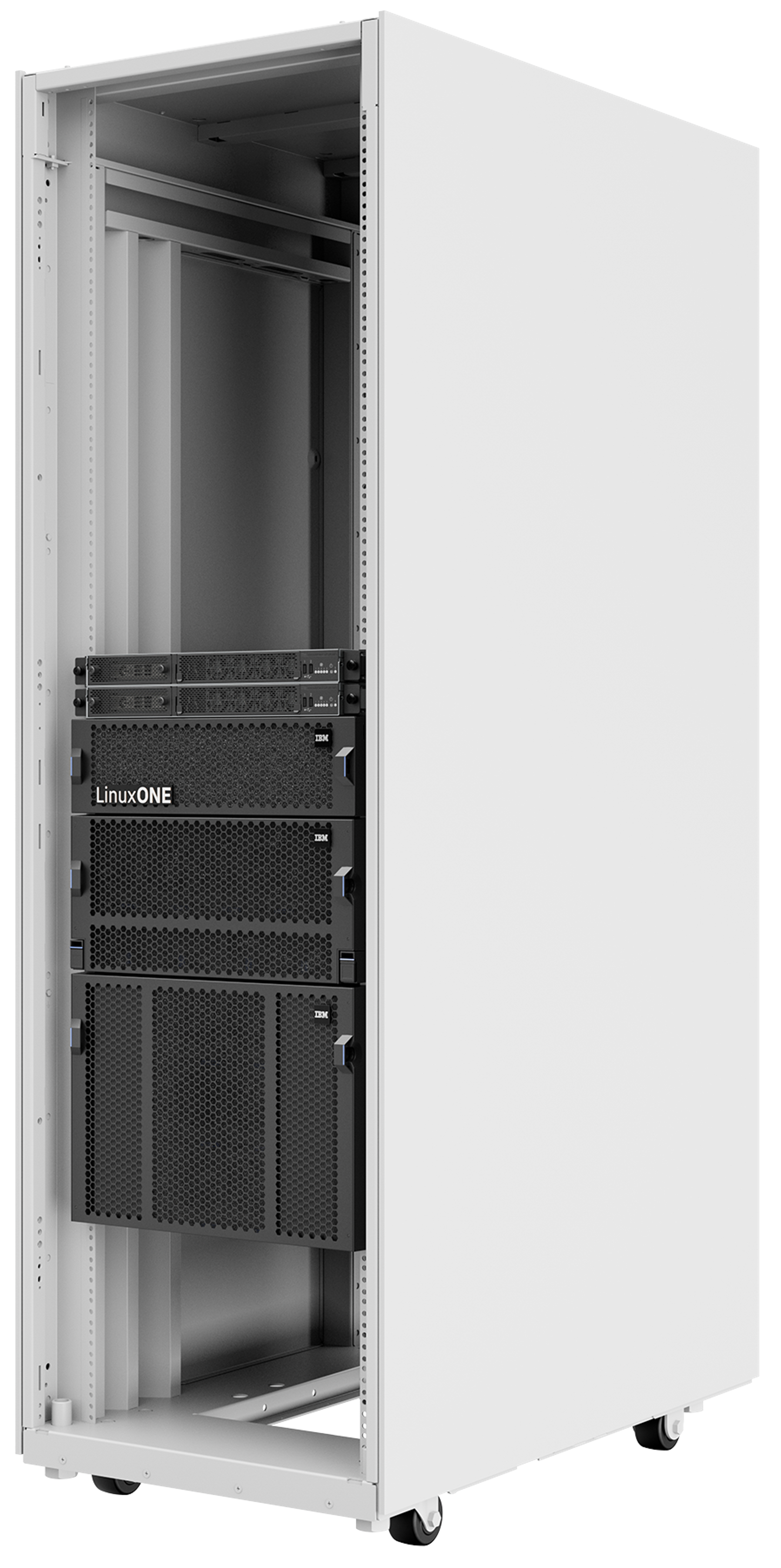
    IBM today made its most aggressive move yet in its quest to make mainframes running Linux more affordable, launching an entry-level platform starting at $135,000.

    The IBM LinuxONE 4 Express is a pre-configured rack system that is based on the same 5.2Ghz IBM Telum processor that IBM uses in its Z16 series of mainframes.

    In addition, the platform supports IBM Secure Execution, which is designed to thwart any attempt to decrypt data in the future using quantum computers.

    IBM claims organizations that move Linux workloads from x86 servers to an IBM LinuxONE 4 Express can save over 52% on their total cost of ownership over five years.

    The overall goal is to make it simpler for organizations to consolidate workloads that otherwise would need to be deployed across a distributed computing environment, she added. That approach ensures higher levels of availability for workloads that are increasingly processing massive amounts of data using two levels of physical and two levels of virtual cache in a way that consumes less energy, noted Tina Tarquinio, vice president of product Management for IBM Z and LinuxONE.

    The IBM LinuxONE 4 Express also includes an integrated accelerator for running artificial intelligence (AI) inference engines using more than 6 TFLOPs compute capacity per chip.

    IBM expects that as more organizations process sensitive data to drive AI applications, there will be increased interest in deploying applications in more secure on-premises IT environments, said Tarquinio. Mainframes provide a more cost-effective way to achieve that goal at a time when DevOps teams are embracing methodologies such as platform engineering to centralize the management of workloads, she added.

    At the same time, increased reliance on automation is making it simpler for IT teams to rely on multiple types of platforms to optimally process workloads. That capability enables IT teams to make platform decisions that are based on fit-for-purpose best principles more easily, noted Tarquinio.

    It’s not clear how many organizations will now be able to afford a mainframe when the initial cost of an x86 server is still much lower. But in the face of ongoing economic uncertainty, it seems more organizations are willing to consider all their options. The issue is that adding additional X86 servers is often viewed as the path of least resistance to increasing compute capacity.

    Naturally, each IT team will need to decide what path forward makes the most sense for them, but as workloads continue to become more data-intensive, it’s clear that infrastructure requirements are changing. The more data that needs to be processed, the more challenging it becomes to maintain service level agreements that are based on maintaining specific levels of application performance, noted Tarquinio.

    The challenge now is determining where best to run those workloads across an increasingly hybrid cloud computing environment that continues to offer more options as IT platforms evolve and expand.

  • Dell Taps Microsoft to Simplify Hybrid Cloud Computing

    Dell Taps Microsoft to Simplify Hybrid Cloud Computing

    Dell Technologies, in collaboration with Microsoft, today unveiled a platform that tightly integrates an on-premises IT environment with the Azure cloud.

    Caitlin Gordon, vice president of multi-cloud product management for Dell Technologies, said the Dell APEX Cloud Platform for Microsoft Azure is the first instance of a hybrid cloud computing platform designed specifically to address that requirement using a Premier Solution of the Microsoft Azure Stack hyperconverged infrastructure (HCI) platform that Microsoft added to its portfolio today.

    The Premier Edition of Microsoft Azure Stack HCI makes available an instance of that platform that provides a more turnkey management experience than the existing editions, said Gordon.

    In the face of increased economic headwinds, more organizations are looking to lower the total cost of managing IT by reducing the number of control planes that need to be managed. Each platform that an IT team typically supports today has its own control plane that requires IT staff to manage it. Reducing the number of control planes creates an opportunity to reduce the total headcount currently required to manage multiple IT platforms.

    It also serves to streamline workflows in a way that enables DevOps teams to reduce the current level of friction encountered when managing multiple IT platforms, noted Gordon.

    At the core of Microsoft’s approach to hybrid cloud computing that Dell is embracing is Arc, a management framework that makes it possible to manage Azure cloud instances alongside on-premises IT environments. In terms of the ability to manage hybrid cloud computing environments, Microsoft is significantly more advanced than any other cloud service provider, said Gordon.

    It’s not clear whether IT organizations are embracing HCI platforms running an instance of the same core stack of software that Microsoft relies on to provide Azure services. If IT organizations expect to lower the cost of managing IT, there is no doubt they will need to modernize on-premises IT infrastructure. The older the platform, the more expensive it becomes to automate using various third-party frameworks.

    Regardless of the approach, IT teams need to reconcile the need to invest in automating workflows that span multiple IT platforms. Over time, those investments will reduce the total cost of IT, but getting the required funding to start that process will require IT teams to make a strong case for increasing the return on investment (ROI).

    In the meantime, the number of workloads running both in the cloud and at the network edge is only going to increase. At the same time, the bulk of existing workloads continue to run in local data center environments. Most IT teams will be required to find additional ways to automate the management of all those environments simply because the cost of adding additional IT staff to manage highly distributed computing environments as scale will otherwise be prohibitive.

    As such, the issues that IT teams are facing today may be a matter of not if the management of IT will become more automated but how soon.

  • Fire at Data Center Causes Chaos | 20% Costlier Cloud

    Fire at Data Center Causes Chaos | 20% Costlier Cloud

    Welcome to The Long View—where we peruse the news of the week and strip it to the essentials. Let’s work out what really matters.

    This week: A South Korean conflagration leads to a ridiculously long outage, and the price of public cloud is skyrocketing. (more…)

  • Despite Cloud Adoption, Enterprises Demand On-Premises Software

    Despite Cloud Adoption, Enterprises Demand On-Premises Software

    A recent report from Dimensional Research reveals that the demand for on-premises software is equal to that of public cloud. The report, which was commissioned by Replicated, a company specializing in on-premises software modernization, queried 405 participants in software development, executive, product management, sales and services roles to determine the needs, usage and challenges of on-premises software.

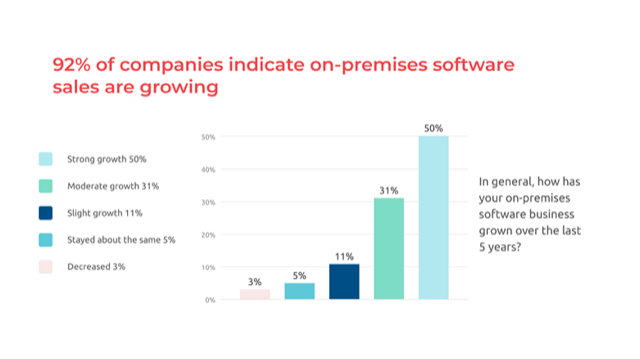
    The report revealed that some 90% of companies surveyed said their on-premises sales of software solutions continue to rise, while 70% that do not currently offer on-premises solutions intend to in the near future. 

    “In the past few years we’ve experienced a steady increase in interest from leading global companies who see that modern on-prem software delivery through containers and Kubernetes can make data protection and security much easier,” said Grant Miller, co-founder and CEO of Replicated. “Coupled with growing customer demand, it’s a win-win scenario for any industry.”

    While Miller’s view may be optimistic, the survey also revealed that the majority (65%) of companies cited privacy compliance as the top reason for using on-premises software delivery; an indication that the market is being influenced by cybersecurity issues more than any other factor. However, 54% also stated uptime and reliability were a primary driver for on-premises solutions, while 45% noted the importance of integration.

    The report indicates that enterprises, which have cited digital transformation and a movement towards the cloud as critical factors over the last two years, may also be thinking more about on-premises solutions in light of cybersecurity and compliance concerns. This, in turn, means that DevOps has the potential to gain even more traction in the enterprise. 

    While the report mentions the merits of an on-premises software strategy, it does raise the question of why more enterprises have not moved in that direction already. That hesitation to re-embrace on-premises software can mostly be attributed to perceived complexity, time commitments and the cost of engineering resources to make it happen. 

    Complexity is further highlighted by 74% of survey respondents reporting that it would take more than a week to install and configure on-premises software, and 29% stated an install could take over two months. For the 16% that claim they can rapidly install and configure on-premises software in less than a week, the potential for growth in the market is notable. 

    While the future remains somewhat uncertain, the report from Dimensional Research runs counter to other reports, such as a Synergy Research Group report that revealed in 2019, spending on cloud platforms edged past the resources spent on acquiring servers and software for on-premises data centers. “60% of the servers now being sold are going into cloud providers’ data centers and not those of enterprises,” said John Dinsdale, a chief analyst at Synergy Research Group, confirming the trend. “Clearly, companies have been voting with their wallets on what makes the most sense for them.”  Dinsdale said the growth of cloud infrastructure will continue to accelerate aggressively over the next five years. 

    Although conflicting observations tend to add to the market confusion, one thing is certain – DevOps shops have market opportunities to service customers deploying both to the cloud and on-premises software.

    on-premises

  • Morpheus Data Adds Midmarket Edition of Hybrid Cloud Platform

    Morpheus Data Adds Midmarket Edition of Hybrid Cloud Platform

    Morpheus Data announced today it is adding a more turnkey edition of its hybrid cloud platform aimed at midmarket IT organizations.

    Priced starting at $16,000, Morpheus Essentials can be deployed on VMware, Nutanix, Amazon Web Services (AWS), Microsoft Azure and Google Cloud Platform (GCP), with support for Kubernetes planned.

    At the same time, Morpheus Data is updating its core platform to add support for a Plug-in Framework that provides integrations with nearly 100 cloud services without requiring DevOps teams to write code. The company is also adding support for a shopping cart capability through which third-party applications can be automatically deployed as a service.

    Finally, Morpheus Data is adding scanning tools based on the security content automation protocol (SCAP) to make it easier to embrace best DevSecOps practices.

    Brad Parks, chief marketing officer for Morpheus Data, said the goal is to reduce the level of friction IT organizations encounter when trying to centralize the management of public clouds and on-premises IT environments. With more organizations than ever now managing two or more clouds alongside an on-premises IT environment, the need to unify the management of those platforms has become more pressing, he noted.

    The current state of the economy requires IT organizations to reduce the number of management consoles they need to master for each platform, which Parks noted reduces the cost of IT labor because organizations no longer need to designate a specialist to manage each platform employed. The Morpheus platform also enables IT organizations to set up guardrails that enable DevOps teams to self-service their own requirements regardless of platform within the context of policies defined by IT operations teams, he added.

    Of course, the Morpheus Essentials edition of the hybrid cloud platform might also appeal to smaller units within larger IT organizations that need to manage a range of platforms that as yet may not be as widely employed as the platform the rest of the enterprise has standardized on.

    It’s not clear to what degree IT organizations may finally be moving to centralize the management of IT just yet, but the rise of edge computing may finally force the issue at a time when most IT teams continue to work from home to help combat the spread of the COVID-19 pandemic.

    Nevertheless, IT teams are prone to be protective of their individual fiefdoms. As such, convincing them to give up a specific platform console in favor of a platform that can be applied more widely can be a challenge. There always will be a trade-off between the capabilities available in a management console that was created for a specific platform and a management console designed for multiple platforms. The issue IT leaders will need to determine is to what degree a missing capability might have a meaningful impact on the productivity of the IT team.

    Regardless of the platform selected, the one thing that is clear is as IT becomes more complex to manage the current status quo is not likely to hold.

  • 3 Lessons in Network Visibility from the A-List

    3 Lessons in Network Visibility from the A-List

    The network can be host to multiple performance killers. Here are three worth noting

    Like Ed Sheeran as a secret stormtrooper in “Star Wars: The Rise of Skywalker,” some cameos are hard to spot. They can appear out of nowhere halfway through the film or remain a complete mystery until behind-the-scenes footage reveals the masked actor.

    The same can be said for guest appearances on your network. It’s tough to spot the hidden malware, application interactions, network delays and other “cameos” popping up, especially when organizations today are grappling with the complexities of public, private and hybrid cloud infrastructure and multi-tier applications. To adequately support a robust and secure digital infrastructure, you need network and application-layer visibility.

    With movie awards season upon us, I invite you to sit back, relax—pop some champagne, if you’d like—and I’ll tell you about three cameos that can be easy to miss in the network environment, and what you should do about them.

    Hidden Malware

    At a pivotal moment in the Oscar-nominated “Joker,” the evil protagonist studies a tape to prepare for his appearance on a popular TV show. On the tape, he sees a comedian appear on the same show—played by Justin Theroux. It’s a blink-and-you’ll-miss-it cameo from Theroux, very much like hidden malware traversing the network without detection.

    Whether they’re sophisticated or non-targeted, high-volume criminally motivated attacks can move throughout the network without your knowledge and cause enterprises significant damage and cost, to the tune of $6 billion by 2021. Emotet, described by the Department of Homeland Security as one of the most costly and destructive instances of malware, likely comes to mind as one of the most pertinent examples. It has the ability to move laterally through the organization, spread other damaging malware and constantly evolve.

    Spotting hidden malware requires network visibility that spans the entire distributed digital infrastructure, as well as having access to network data to ensure visibility for all security and performance tools. Specifically, organizations need reliable access to data in motion to tap into traffic across cloud and on-premise infrastructure and traffic flowing across 5G and 100GB networks. This type of pervasive visibility allows enterprises to keep up with the speed at which networks and businesses run, as well as with security demands.

    Interactions Between Applications or Microservices

    When Brad Pitt’s character in “Once Upon a Time in Hollywood” unknowingly ends up at the Manson Family compound, he comes across Dakota Fanning, who plays a key member of the infamous cult. Their meeting is short but meaningful, and sets the stage for additional character development and exchanges down the line. Interactions between applications or microservices are just as meaningful, with 80% of network traffic consisting of such communication on average.

    Understanding these interactions is critical for guiding digital transformation (DX) efforts, which are a top priority for 87% of business leaders. Among the goals of DX are streamlining business processes, cutting costs, improving productivity and introducing new business models that redefine industries—or build new ones. These are ambitious goals, and they’re ultimately realized through new digital applications built on intricate microservices-based architectures that need to be managed and secured.

    Only with a clear view, and the right kind of data, can you understand the applications’ interactions, performance and security characteristics to accelerate DX. And the only way to get to this view is to look at the data in motion on the network. The ability to isolate specific applications or microservices communication streams for deeper inspection allows infosec teams to easily understand access patterns and put in place effective micro-segmentation strategies. Application developers, too, can benefit from this by better understanding communication bottlenecks between applications and microservices, as well as troubleshoot them.

    Traffic Bottlenecks

    The latest rendition of “Little Women” follows a non-linear storytelling structure, constantly jumping between two timelines. It can be jarring to viewers when the girls’ father returns from war, revealing himself as the actor Bob Odenkirk. While this moment is meant to be an intimate glimpse into a family coming together after a long separation, it brings the movie-watching experience to a standstill, since the audience associates Bob Odenkirk less with a serious scene and more with his previous comedic roles.

    Networks today are similarly prone to experiencing abrupt slowdowns or bottlenecks that limit network performance and waste bandwidth. Managing the network to ensure constant availability is a major challenge when data volumes are growing exponentially. It’s estimated that about 1.7MB of new information will be created every second for every human being on the planet this year. This data explosion paired with digital transformation technology investments and lightning-fast 5G and 100GB networks has led to a very complex enterprise infrastructure setup—and network blind spots across physical, virtual and cloud environments.

    The solution lies in having the right kind of data to help you understand network and application performance. By analyzing the network traffic, you get immediate actionable data points that can be used to address trouble spots.

    Whether we’re talking big screen or enterprise network, surprise cameos are common and they are easy to miss—and this is particularly problematic when things like malware and bottlenecks pose a threat to network security and speed. For the NetOps and infosec pros tasked with complex infrastructure development, implementation, maintenance and security, you need a clear line of sight into what’s happening within the network. Armed with insights on traffic patterns (both cloud and on-premises), delays in data flow and insecure areas, you can use this intel to write the screenplay (or plan) to support a robust and secure digital infrastructure.

    — Shane Buckley

  • Microsoft Extends Azure Reach to On-Premises IT Environs

    Microsoft Extends Azure Reach to On-Premises IT Environs

    Microsoft today at its Ignite 2019 conference previewed an Azure Arc management service that extends the reach of the Microsoft cloud to on-premises IT deployments.

    Azure Arc will be made available on both local Windows and Linux servers as well as Kubernetes clusters or an instance of Kubernetes that Microsoft is making available on Azure Stack for on-premises IT environments. With these announcements, Microsoft is, for the first time, extending its hybrid cloud computing strategy beyond systems running a version of the Azure operating environment on an on-premises IT environment.

    Jason Zander, executive vice president for Microsoft Azure, told conference attendees Azure Arc creates an opportunity for IT organizations to extend the best DevOps and cloud management practices employed on Azure to on-premises IT environments. Rival cloud service providers, he noted, are only paying lip service to hybrid cloud computing.

    In addition to extending the Azure management plane to on-premises IT environments, Microsoft today extended its portfolio of edge computing platforms capable of running instances of Azure Stack to include previews of commercial series and rugged series for Azure Stack Edge. Configurable with graphical processor units and field-programmable gate arrays (FPGAs) capable of running machine learning algorithms in harsh environments, the ruggedized instance of Azure Stack Edge even includes a portable server designed to be carried in a backpack.

    To complement those systems, Microsoft is also previewing a range of additional services for Azure Stack, including a fully managed, real-time data ingestion service designed to stream millions of events per second from any source to build data pipelines the same way the company does on the Azure cloud; a cloud database management service for Microsoft SQL Server and Postgres; and an Arc-enabled application programming interface (API) management platform.

    While Microsoft generally would prefer organizations to adopt Azure Stack as an on-premises extension to Azure cloud, not many organizations have the robust modern server infrastructure in place required to run Azure Stack. Azure Arc is an effort to extend the reach of Azure to multiple types of edge computing platforms without requiring organizations to deploy yet another operating system. Alternatively, organizations can employ a diverse range of Kubernetes distributions, of which there are now more than 70 that have been certified by the Cloud Native Computing Foundation (CNCF). Most organizations at this stage have yet to standardize on a single distribution of Kubernetes.

    It’s unclear what the appetite is for extending the management plane Microsoft created for its Azure cloud to on-premises environments. However, as the scope of the hybrid cloud management challenge facing organizations grows as various new forms of edge computing manifest, Microsoft clearly sees an opportunity to increase the scope and reach of its cloud platform strategy. Each edge computing instance is essentially a smaller instance of a cloud platform for which most IT organizations will not have the tools required to manage at scale. In fact, many IT organizations might not even attempt to deploy workloads at all on those platforms without something equivalent to Azure Arc to manage and secure those environment first being in place.

    — Mike Vizard

  • VMware Drops Managed Cloud Onto Dell EMC Appliances

    VMware Drops Managed Cloud Onto Dell EMC Appliances

    At the Dell Technologies World conference, VMware today announced it will make available an instance of its managed cloud platform on appliances from Dell EMC in the second half of this year.

    VMware Cloud for Dell EMC is a turnkey platform that combines VMware compute, storage and networking software in a single offering managed and updated by VMware on behalf of its customers. It is similar to VMware Cloud for AWS, a managed service that VMware provides for Amazon Web Services, said Wei Wang, director of product marketing for VMware.

    VMware Cloud for Dell EMC represents the first commercial instance of Project Dimension, an initiative launched last year that promised to make available a software-defined data center (SDDC) as a managed service for on-premises IT environments in an effort to “ruthlessly automate IT.” In addition to supporting VxRail appliances from Dell EMC, VMware plans to make available instances of Project Dimension on other platforms, Wang said.

    Pricing for the managed service initially will be based on a flat monthly subscription, but Wang said VMware plans to provide a metered option that will enable customers to pay for VMware Cloud for Dell EMC on a pure consumption basis.

    In the meantime, VMware Cloud for Dell EMC, coupled with VMware Cloud for AWS, will provide IT organizations with a consistent control plane across a hybrid cloud computing environment based on vSphere, vSAN and NSX software that virtualizes compute, storage and networking, noted Wang. VMware is already managing infrastructure running more than 25 million workloads on AWS, a number that is expected to increase substantially as it rolls out instances on Project Dimension on additional public clouds including Microsoft Azure and on-premises IT environments.

    By opting to rely on VMware to manage IT infrastructure, organizations should be able to shift more of their own internal IT resources toward developing and deploying more applications. The VMware approach also potentially reduces the scope of the operational challenge many organizations now face when trying to manage virtual compute, storage and networking software in tandem.

    The challenge those organizations will face is implementing a set of best DevOps practices that match the cadence of the updates being made to the IT environment by VMware. It’s not clear to what degree organizations will want to relinquish operational control over IT infrastructure to VMware. Historically, roughly a quarter of all IT is consumed as a managed service usually provided by an IT services firm, but as vendors such as VMware begin to offer those managed services, the number of organizations that might switch to the model may increase.

    Many organizations already rely on cloud service providers such as AWS to manage infrastructure on their behalf. This latest offering essentially extends that same concept to on-premises IT environments.

    The degree to which organizations will save money by relying on a managed service is going to be difficult to quantify. In some cases, relying on a managed service might prove more expensive, while in other cases the savings on IT administrators alone might pay for the service. Whatever the path chosen, the number of workloads that will running on IT infrastructure managed by vendors such as VMware will increase sharply in the months and years ahead.

    — Mike Vizard

  • Red Hat Tightens CloudForms Integration with Ansible

    Red Hat Tightens CloudForms Integration with Ansible

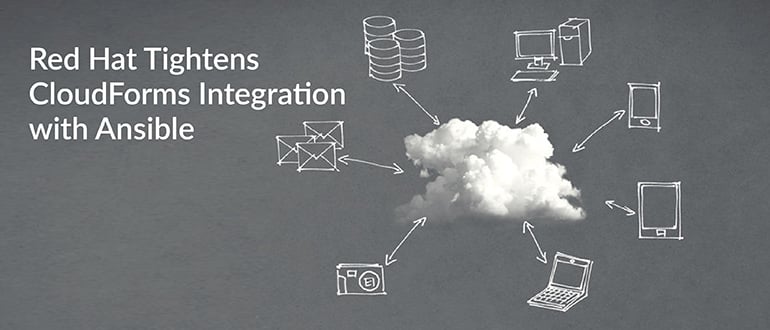
    Red Hat has tightened integration between CloudForms, its tool for managing IT infrastructure on-premises and in the cloud, and the its Ansible framework for automating IT operations.

    Pete Cruz, product marketing manager for management for Red Hat, said version 4.7 of Red Hat CloudForms and Ansible together promise to make it easier to manage multiple IT environments running on-premises and in the cloud using a common set of tools. Most IT organizations today are trying to manage at least one public cloud alongside their existing IT environment. Rather than having to master a separate framework for each IT platform, IT organizations can employ multiple Red Hat tools and frameworks to unify the management of multiple clouds and their internal IT operations, said Cruz.

    Version 4.7 of Red Hat CloudForms now makes it possible to execute Red Hat Ansible Tower workflows directly from CloudForms deployed on-premises. Those workflows can already be extended to include multiple clouds.

    With this release of Red Hat CloudForms, Red Hat is continuing its effort to extend its reach into the management of networks and servers. CloudForms is now integrated with Lenovo Clarity, a set of systems management tools, and Nuage Networks’ Virtualized Services Platform (VSP). Integration with networking platforms is becoming increasingly pivotal because internal IT organizations are now being asked to be as agile as a cloud service provider, said Cruz, noting it’s not especially useful if an IT organization can spin up a virtual machine in a matter of minutes but must wait weeks as network services are provisioned manually.

    Red Hat is trying to lay a foundation on top of which best DevOps practices can be extended across multiple IT environments. With each additional cloud service an organization adds, the less agile the internal IT organization becomes, unless it finds a way to centrally manage all the platforms being employed using a common set of tools, noted Cruz, and the only way to effectively manage IT at that level is to rely on automation frameworks.

    Unfortunately, the number of organizations that are haphazardly embracing multiple clouds seems to outnumber greatly the number of organizations defining a strategy for unifying the management of hybrid clouds. But as the operational costs of managing multiple clouds becomes more apparent, the pressure to unify the management of multiple public clouds and on-premises IT environments inevitably will rise.

    In the meantime, savvy IT leaders are trying to ensure their organizations don’t become overly dependent on any one cloud service provider. The deeper an IT organization dives into the management frameworks provided by cloud service providers, the more difficult it potentially becomes to move an application workload, should the need arise. It does not follow that because a workload was built on one platform it never will move off that platform.

    Naturally, Red Hat, which is scheduled to be acquired by IBM, is not the only vendor with an eye on the rising need to unify the management of hybrid clouds. But the one thing that is certain is that even before the deal closes, Red Hat is aligning its portfolio to specifically address that opportunity.

    — Mike Vizard

  • Microsoft Puts Upgrade Plan in DevOps Motion

    Microsoft Puts Upgrade Plan in DevOps Motion

    Microsoft this week at its Ignite 2018 conference made it clear DevOps teams will have their hands full upgrading both databases and operating systems this Fall.

    Erin Chapple, corporate vice president for Windows Server, announced Windows Server 2019 will become generally available next month. As is the case with Windows Server 2016, there are three editions: Standard, Data Center and Essentials. The latter offering is for small businesses.

    However, the suite of management tools the company provides for its operating systems will not be available until early next year.

    Microsoft is putting the finishing touches on Windows Server Software Defined (WSSD) 2019, which provides another approach to combining compute, storage and networking on top of a hyperconverged infrastructure platform. That offering is expected to come bundled on a wide variety of hardware platforms early next year. Organizations looking to shift from a legacy rack-based approach of managing their data centers to a more modern HCI approach will have to wait for WSSD 2019 to become available.

    The company is simultaneously pushing forward with a public preview of Microsoft SQL Server 2019. In addition to adding support for faster queries and persistent storage in memory, Microsoft SQL Server 2019 packages the Hadoop Distributed File System and Apache Spark in-memory computing framework with a relational database. Microsoft is also making it possible to run SQL Server 2019 on Kubernetes clusters running on either Linux or Windows deployed on-premises or in the cloud. While the company has broadly embraced Kubernetes, its support for Kubernetes on Windows Server is not expected to be generally available until 2019.

    Microsoft also announced that a General Purpose service tier for the Azure SQL Database Managed Instance is slated to become available next week. That capability gives DevOps teams the option to deploy SQL Server databases either in a public cloud or on-premises.

    Microsoft touts the ability to run Windows Server on-premises and in the cloud as a core element of its hybrid cloud computing strategy. Right now, however, the most widely employed platform running on the Azure cloud is Linux. The company is also pushing another approach to hybrid cloud computing based on Microsoft Azure Stack, an on-premises edition of the cloud framework the company employs to drive its public cloud. An edition of Kubernetes is available in beta on Microsoft Azure Stack as well.

    Microsoft earlier this month revamped its AzureOps tools to make it easier to manage all those variations on its public cloud. But those tools have yet to be extended to on-premises environments.

    Of course, there’s no requirement that says any approach to a hybrid cloud using Microsoft technologies requires Azure. Windows Server and SQL Server both are already widely deployed across multiple public clouds. The challenge DevOps teams will face is managing all the different versions of Microsoft operating systems and databases that potentially will be strewn across an extended enterprise. It’s unlikely any organizations will be able to upgrade operating systems and databases in one wholesale effort.

    — Mike Vizard