Speaker 1: This is Techstrong TV.
Alan Shimel: Hey everyone. We’re live back here at KubeCon. I hope you’ve been enjoying our coverage today, Mitchell Ashley, our CTO and a GM of Techstrong Research. And I have been kind of splitting the duties. Just we’re that booked with people. I don’t know, there’s over 10,000 people here. I’m going to guess there’s 12 to 15,000 people.
Alex Burkhardt: Yeah, there’s a lot of people.
Alan Shimel: … At the event. Maybe more I’ll know more. I’ll find out tonight. But anyway, let me introduce you to our next guest. His name is Alex Burkart. Alex is with Observe Inc. Alex, welcome to Techstrong TV. Thanks for being here with us at KubeCon.
Alex Burkhardt: Yeah, thanks Alan. I appreciate you guys taking some time to talk to me today.
Alan Shimel: Absolutely. So let’s start with this. Let’s start with Alex.
Alex Burkhardt: Yeah.
Alan Shimel: What do you do at Observe?
Alex Burkhardt: Yeah, so at Observe I run our technical customer facing team. We call it field engineering. And we work with customers from the first interaction when they’re in the sales cycle to figure out if observes a great solution for them, all the way to success and renewal and helping them realize value from their investment in our partnership.
Alan Shimel: Okay. I mean, so you’re at that role, but let’s tell a little bit about more your personal journey.
Alex Burkhardt: Oh yeah. So I started as a computer scientist actually in the Navy.
Alan Shimel: Really?
Alex Burkhardt: Yeah. I went to the Naval Academy, got a computer science degree, and they said, that’s great, go drive some ships.
Alan Shimel: Such is life in the Navy, what do you expect?
Alex Burkhardt: And then my journey brought me to Silicon Valley after I did some cybersecurity work for the Navy. And what I love more importantly than anything else is helping people find a way to use technology to solve a problem that makes their life better.
Alan Shimel: Excellent. Now, when did you come to Observe?
Alex Burkhardt: I’ve been at Observe for more than three years now. Yeah, I was employee 28. I think if my numbers are right, pre customers, in fact.
Alan Shimel: Really early.
Alex Burkhardt: I think when I started, we signed our first customer.
Alan Shimel: Good for, good for you. Good for them. So we don’t have to assume, I know for a fact there are people out here who don’t know, Observe from, have never observed Observe. Tell them. How would you describe what Observe is and does to our audience?
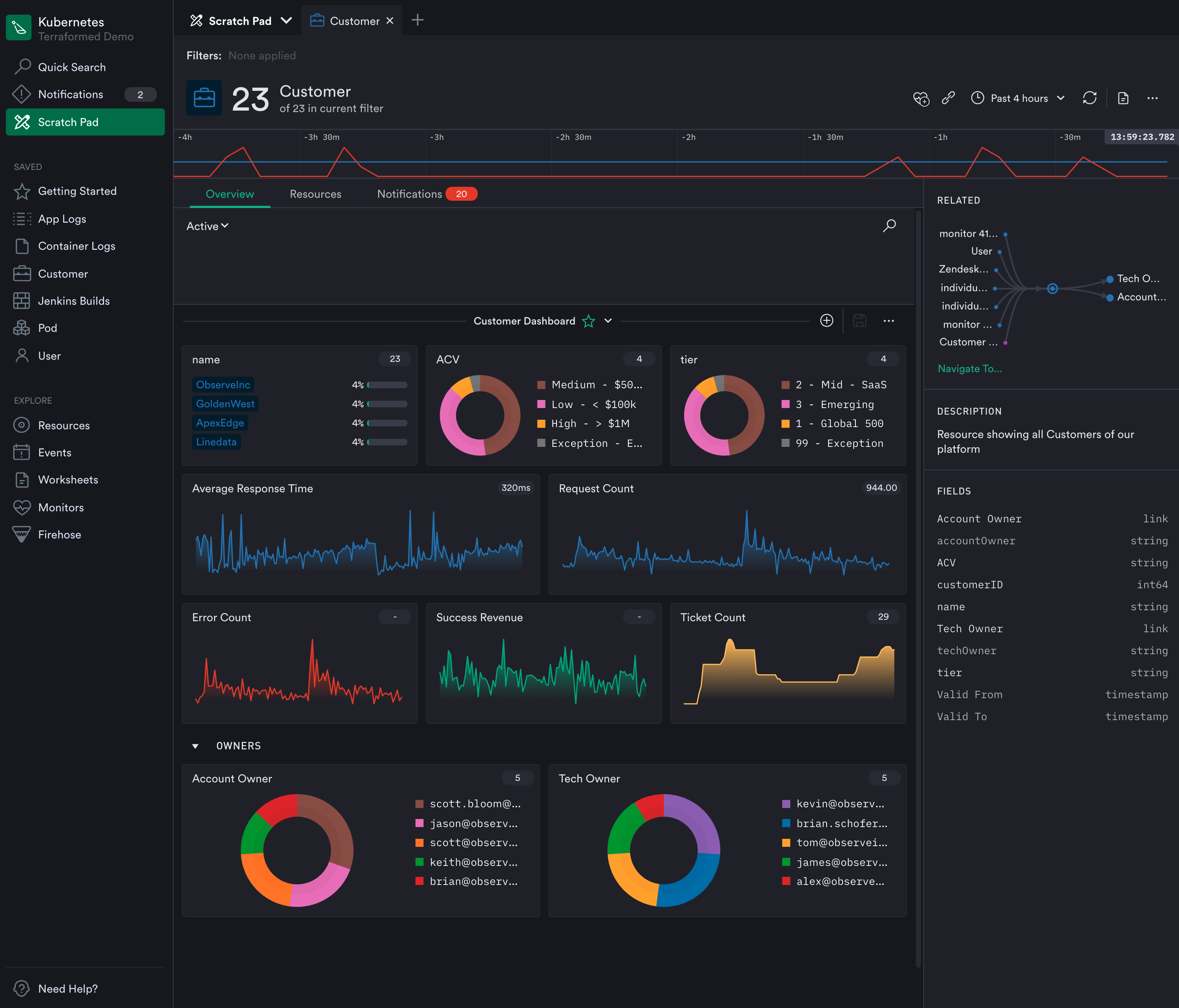
Alex Burkhardt: That’s a great question, Alan. So at Observe, what we realized is observability is a data problem. So we started by building a data company. What we wanted to figure out is can we bring a solution to market that allows customers to send any data they’d like to correlate it and interact with it in a way that allows them to get more value out of it more quickly. And what we’ve done is we’ve brought a solution to market that unifies the observability tooling into one platform that allows you to send logs, metrics, traces, and any other type of data structure or unstructured that you’d like to keep in your observable universe into one tool, one data store.
Alan Shimel: Love it. And before we jump into news and stuff, for people who want to just say, hey, I’d like to just see what their website is, what’s the URL?
Alex Burkhardt: Yeah, our website is www.observeinc.com.
Alan Shimel: So it’s observeinc.com.
Alex Burkhardt: Observeinc.com. We are Observe Inc technically. So observeinc.com.
Alan Shimel: Makes sense to me. All right, we’ve got all that out of the way, Alex, let’s jump in. Now, you guys recently announced some new product feature releases. Why don’t we jump in right there and see what’s that about?
Alex Burkhardt: Our last release was called Hubble, and Hubble is significant for a couple of reasons. One, naming after the Telescope, one of the things that we want to do is help people elevate their observability. And that came in two specific forms.
Alan Shimel: I get it. I just got to ask, is the next release called Web?
Alex Burkhardt: We have considered other satellites, and in fact, we had Erica on our launch. She was actually a NASA scientist.
Alan Shimel: Very cool. All right.
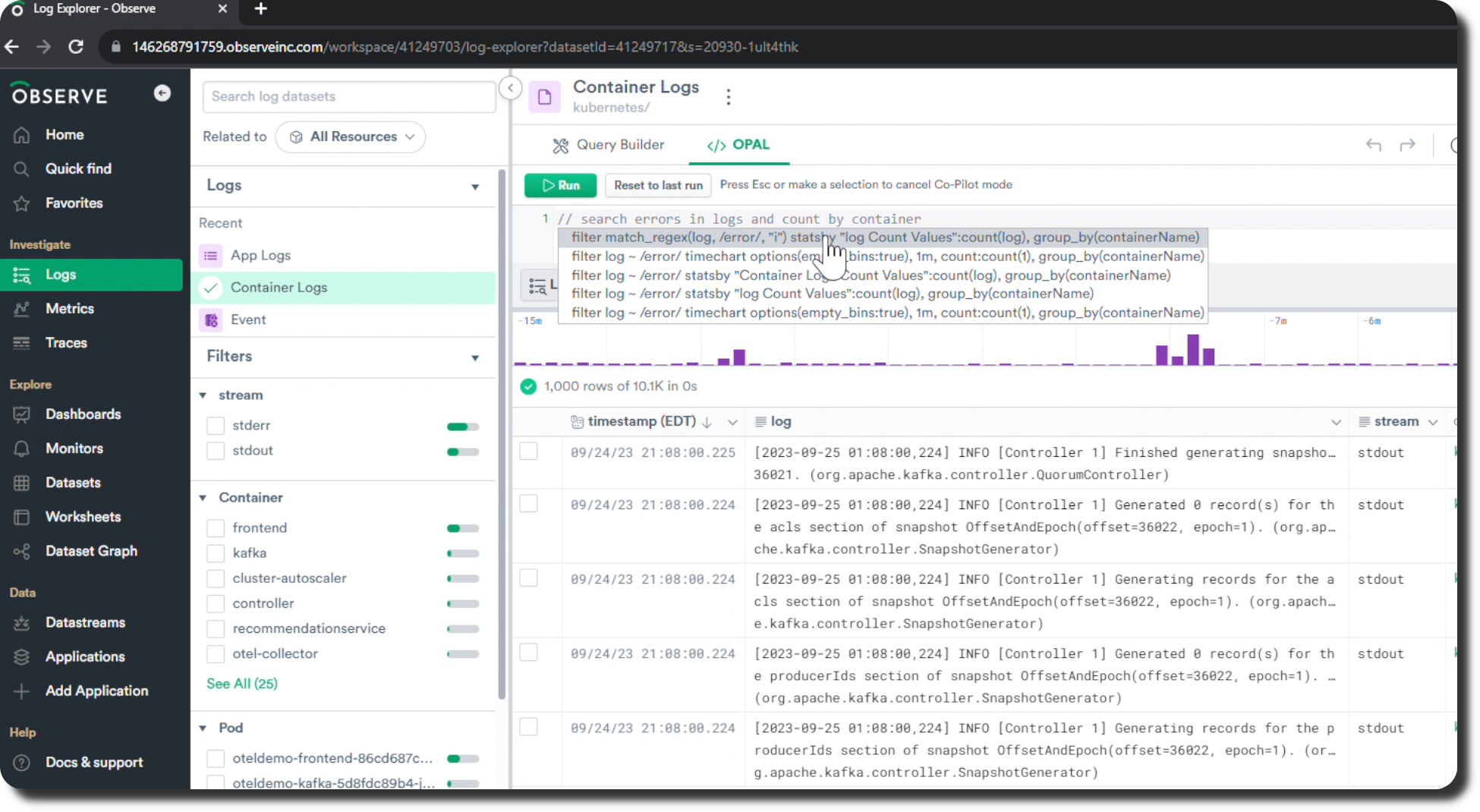
Alex Burkhardt: One of the things that we know is very important to our customers is if we bring a solution to market and it’s very, very powerful, is it easy to use and are we taking advantage of the latest and greatest technology that’s emerging in the market? On the ease of use side, one of the things that this Hubble launch and we did, we call it a launch included, was the recognition that when we introduced our logs in our metrics and our tracing explorer, we’ve seen an enormous increase in users engaging in the platform. And we supercharge that by adding one additional layer, which is how we leverage GPT or AI in our platform. And that happens in four specific locations. We have a chat bot that allows you to get guidance on how to use the tool, will actually allow the AI to write any of our query language for you if you’d like to do that. We call that copilot.
We also have two cool functionalities in terms of making your data more actionable. You can click on a field and observe and ask Ollie or Ollie GPT specifically to explain what an error means and it will actually return an answer that helps you stop having to copy and paste into Google and do outside investigations. The last thing that’s most interesting is we leverage GPT to allow users to separate out their data and do those hard parsing and Reg X challenges that no one likes writing Reg Xs and anyone that has written them knows that regx101.com is their friend, and we wanted to kind of bring that into the product and make that easy for customers to use.
Alan Shimel: Very cool. Very cool. Now this was released not here at the show, it was released earlier in the month.
Alex Burkhardt: October 4th.
Alan Shimel: What’s been the feedback?
Alex Burkhardt: Well, we’ve more than doubled our monthly active users since we’ve released that.
Alan Shimel: Really?
Alex Burkhardt: Yeah.
Alan Shimel: Since October 4th?
Alex Burkhardt: Technically since late September. But yes.
Alan Shimel: Wow.
Alex Burkhardt: It’s really simple. We listen to our customers and we really care about what they say and how they experience ourselves on our platform. And when we say we’re focusing on ease of use, we mean it.
Alan Shimel: So the entrepreneur in me just has to ask you.
Alex Burkhardt: Okay.
Alan Shimel: What were you waiting for?
Alex Burkhardt: It’s very easy to make very quick, bad decisions. It’s a lot harder to take a data-driven approach to how to build a product better. And when we approach any problem at Observe, and it’s built into our culture as we first of all figure out this is an important problem, how can I measure the impact I can make on this problem? And that’s how we measured usability. Now for AI, we kind of knew that it was going to be something special and it could help. We’re still figuring out exactly how to measure the impact there, but every decision we make at Observe is grounded in what’s best for our customers and how do we help make the market better.
Alan Shimel: So how much of this phenomenal growth in such a short period of time do you think is just attributed to riding the AI wave, if you will?
Alex Burkhardt: That increase in active user growth actually wasn’t tied to the AI release. It was more to the ease of use functionality that we brought. And I think that’s important for any product, but more specifically, one as powerful as ours. When you’re solving big data problems, people get exposed to big data. And one of the things we thought very deeply about is how do we take the experience that a user has to have to get to the outcome they want and narrow that down and give them an obvious path to go through so that they don’t have to deal with all of the problems if they just want to come in and check their logs and see what’s not working. Sometimes it’s the simplest question of, hey, is it easy to do this in the tool? And when we decided ourselves that it wasn’t easy enough, then we started making some really serious changes and that was backed by every single one of our customers agreeing with us back in the active user growth.
Alan Shimel: Sure. That’s fine. That’s phenomenal, man. Alex, I can’t look for those out here. This is impressive. Let’s talk a little bit about KubeCon here now. I mean, it’s only day one of the expo floor open and everything. What are you hearing from the crowd, from the attendees?
Alex Burkhardt: Yeah, that’s a great question. This is my second KubeCon. I was new to it last year when we were in Detroit, and I really love this conference, Alan.
Alan Shimel: Yeah, it’s great. It’s a great community.
Alex Burkhardt: It’s a great community. It’s a great conference. And frankly, when people come up to our booth and want to talk to us, they want to talk about what we do. There’s not a lot of tire kickers. Everyone that’s here seems to be operators, people that are experienced and steepen the problem. And I love whenever someone comes up and talks to us. I think the other thing I’ve seen in this particular venue specifically, the room is packed. It’s crowded, so crowded that I think that we’re going to have to have a bigger footprint next year.
Alan Shimel: Observers or the whole?
Alex Burkhardt: Both.
Alan Shimel: Yeah. Well, the problem is there’s a pretty big convention center. I mean, short of breaking into sort of a two different exhibit halls, which RSA used to do that. Now it’s one big continuous one. It’s hard. The other thing I will tell you, so we do the North American and the European. So in Amsterdam in the spring, they actually said, look, I think it was 12,000 was the number. At 12,000 they stopped selling tickets. They did a waiting list and a lot of people didn’t get to the show. They were on the waiting list. As anti-business as that sounds, I wouldn’t be surprised if they did something similar.
Alex Burkhardt: Yeah, that makes sense. I mean, the quality of conversations and the quality of attendee keep the quality super high. And you asked about some of the conversations we’re having when people come by. It’s a variety of things and a couple of themes that I see. I’m curious if other people that have come on the show have said the same, but people continue to talk to us about saving money. They want to do more with less.
Alan Shimel: That’s the big thing today.
Alex Burkhardt: [inaudible 00:09:23].
And I think they also want to figure out, do we need all of the tools? Is there a way we can both get some hard dollar savings and some soft dollar savings. By compressing some tooling and aligning teams we’re also seeing a lot of push and the DevOps teams are getting more involved in security conversations as well. Which I guess-
Alan Shimel: No, no, that there’s no doubt.
Alex Burkhardt: As a former security practitioner, if you had asked me five years ago if I thought these two markets would converge, I would not have said yes. Now I think it’s inevitable.
Alan Shimel: I think it’s already happened, right? So there’s a lot of convergence going on. There’s security with DevOps into what we call DevSecOps. But there’s also, there was a time, and I’ve been going to these conferences now before Covid, so I don’t know, four or five years. There was a time where cloud native was very developer-centric, not as much centric, but it was very distinct from DevOps. There was DevOps and there was cloud native and then there was security. So you look at a company like ours, right? We have devopsy.kinsta.cloud, cloud native now, security boulevard.
And I always knew there was an inherent overlap between them, but we’ve seen much more than an overlap now. We’ve seen a conversion around this with security being a primary concern of people. And you don’t do cloud native today without doing DevOps.
Alex Burkhardt: Agreed.
Alan Shimel: And everything getting pushed out today, especially Greenfield, not Brownfield stuff. It’s predominantly probably 85% or better cloud native.
Alex Burkhardt: Yeah, I think that’s another thing I’ve seen too as well. Many, many customers are adopting the cloud native terminology, setting goals in those languages and words.
Alan Shimel: Now, multi-threaded, no doubt. Container based, the whole cloud native thing. And now what I think we’re starting to see and we see, look, you’re naming your company’s Observe. It’s not just the architecture and development being cloud native, but the cloud native aspect of the operations of ops. Forget dev, forget dev ops, ops.
Alex Burkhardt: It even touches revenue. So one of the things that we see very often is do the nature of how our platform can process data. We take technical telemetry from a customer’s application. We also take business data. Sometimes customers ask us, how can you Observe, help us give our customers a better experience? Well, one of the ways is we can tell you when a particular customer is hurting, when a customer has a challenge or help you reframe all these very deep technical jargon and things that are happening into the context of how does this impact the customer’s experience? How am I able to get proactive? Is what I’m doing in my infrastructure plan having a net positive impact on my customers, on my users?
And those are questions that previously companies I don’t think they thought they could answer. And when they start working with us, they start seeing a path to that. And I love that. We have some customers even completely away from the DevOps side, that send us shipping data just because they want to know, can I make a support dashboard for my low level support employees so that they can be more efficient with their time and our data? It’s such a cool convergence. I agree with you. I love that word convergence.
Alan Shimel: It really is. Let’s talk a little bit about observability though too. So over the last two years, so there was a KubeCon in LA during around Covid time that was a little dicey. Then there was the one in Europe, then got canceled. Then there was Detroit, then Amsterdam here. We’ve really seen the observability market just explode, right?
Alex Burkhardt: Yeah.
Alan Shimel: Prometheus. What’s the other, I’m drawing a blank. The other big observability open source. OpenTelemetry.
Alex Burkhardt: OpenTelemetry. Yes. Everyone-
Alan Shimel: I think of the second and third biggest projects of the gazillion projects in CNCF now. Right?
Alex Burkhardt: That’s such a good point. I remember when OpenTelemetry was OpenTracing and it was still kind of a fractured project. If you asked us three years ago if we thought that open telemetry would be the way, we weren’t super sure a year into that. So two years ago we were like, yeah, this is the direction. It’s solid.
Alan Shimel: No doubt about it. You look and you can’t see this at home guys because all you’re seeing is here, but there’s a-
Alex Burkhardt: All our beautiful faces.
Alan Shimel: … Big floor out there, but so much of it is based now on this. Really good stuff, really good stuff.
Alex Burkhardt: I think the other thing, observability as a vernacular is kind of emerging even at the higher level in the business. By definition observability is, can I tell something about a system by looking at its outputs? And one of the things as we’re moving closer to cloud native is more and more systems have outputs and that kind of builds on that data problem I mentioned and why we were founded. So I look forward to seeing how this problem space changes in the next year.
Alan Shimel: Oh, I think we’re just, look, when you start, you guys are already doing it with gen AI and stuff. You start adding gen AI to this stuff, we start putting more focus on it. We’re in for an interesting times. What’s the Irish proverb? May you live in interesting times.
Alex Burkhardt: Yes.
Alan Shimel: Definitely interesting times. Anyway, Alex, thanks for joining us here live at KubeCon. This is Observe Inc. So let me again observeinc.com. Check it out. Hey, they’re doing amazing things. This new release, something that gets twice as many new visitors right? In a couple of weeks, a month. It’s got to doing something right.
Alex Burkhardt: Yeah.
Alan Shimel: All right, we’re going to take a break. We’re live at KubeCon in Chicago. I think we have one or two more videos before we wrap for today. We’ll be right back.