Tag: Nexus

  • DevOps for Small Organizations: Lessons from Ed

    DevOps for Small Organizations: Lessons from Ed

    Ed was demoralized. He had just heard a speaker who would change his life. He knew he needed to change, and he knew what the end goal was. He just didn’t know how to get there. He needed fresh air. He needed endorphins. What better way to do that than go on a six-hour run through some of the seedier neighborhoods of Vegas to the edge of the desert.

    Ed Ruiz (@eruiz06) is the senior director of IT for the Association of Schools and Programs of Public Health (ASPPH), and I heard him share lessons learned from his conversion to DevOps during the marathon All Day DevOps Conference (free, online).

    Here’s where his journey started. Earlier that year, ASPPH recognized a need to modernize its membership structure. The organization had ballooned from 31 to 106 members. Ed had a staff of 10, supporting 54,000 students and 13,000 faculty serving in 141 countries. ASPPH was steeped in following the Microsoft Enterprise handbook, deploying via the waterfall method every thee to six months, and recognized it needed to update its IT infrastructure.

    There, among the glitter and glam of a ballroom on the Strip, Ed heard DevOps Evangelist Andi Mann (@AndiMann). Ed was glued to what Andi had to say. “This is what our organization needs,” he thought. But he quickly became demoralized because he didn’t know how to lead the drastic change.

    During Ed’s run following Andi’s keynote, he realized he need to start with a vision. Spoiler alert: Ed was successful, but not without a few hiccups. Ed shared four lessons he learned during the session to help the rest of us pursuing our DevOps journey.

    1) Articulate a Vision. Your team needs to understand what the organization does, why it is important, and how this change allows the organization to be more effective.

    2) Start with Culture and Sharing. The DevOps mantra emphasizes the equal importance of Culture, Automation, Measurement and Sharing (C.A.M.S.). Too often people are drawn to automation and measurement first. It is what they know. It is the DevOps tools that are fun to implement. According to Ed, overemphasis on tools is a huge mistake. DevOps is called DevOps because it is implementing a culture of sharing between development and operations. Automation and measurement are tools to facilitate sharing, but if your team isn’t on board with culture and sharing, DevOps will fail.

    3) Prune the Bad Apples. We all know that person (they go by many names: Dr. No, Negative Nelly, Milton). You don’t want that detractor in your organization. When Ed decided to keep a  Dr. No on his team because of his technical acumen, it took half of Ed’s team quitting before he realized the bad apple needed to be pruned from the tree. Dr. No’s negativity was contagious and led to poor morale that was eroding the culture needed for success. Ed’s advice? You can teach skills, but you can’t teach a positive attitude. Hire for the attitude first.

    4) Leadership Buy-In is Essential. Priorities and budgets will change and setbacks will happen. When you have buy-in from the leadership, it creates room to fail. You can pick yourself back up and take another step toward your vision.

    We don’t know what else happened in Vegas over those five days, but we do know Ed came home a changed man and he changed his organization. We all can take some lessons Ed learned and apply them to our own transition to DevOps.


    http://https://www.youtube.com/watch?v=Kv6PJTp3uq4&feature=youtu.be


    You can watch Ed’s full presentation from the All Day DevOps conference here (30 minutes).  The other 56 presentations from the All Day DevOps Conference are available online, free-of-charge here.

    — Derek E. Weeks

  • Confessions from Fannie Mae, Liberty Mutual and Capital One

    Confessions from Fannie Mae, Liberty Mutual and Capital One

    Learn from real-world stories from presenters at the All Day DevOps conference …

    True Story

    Over the past few years, Fannie Mae transformed the way in which it delivered software. Deploys increased from 1,200 per month to 15,000 per month.  At the same time, productivity increased by 28 percent while costs were reduced by 30 percent.

    But, how did Fannie Mae do it?

    During the All Day DevOps conference, more than 13,500 practitioners from around the world came together to learn from their peers in the industry. Barry Snyder, senior manager of DevOps at Fannie Mae, was one of 57 practitioners who shared his real-world journey through his enterprise transformation.

    Choke Point or Checkpoint?

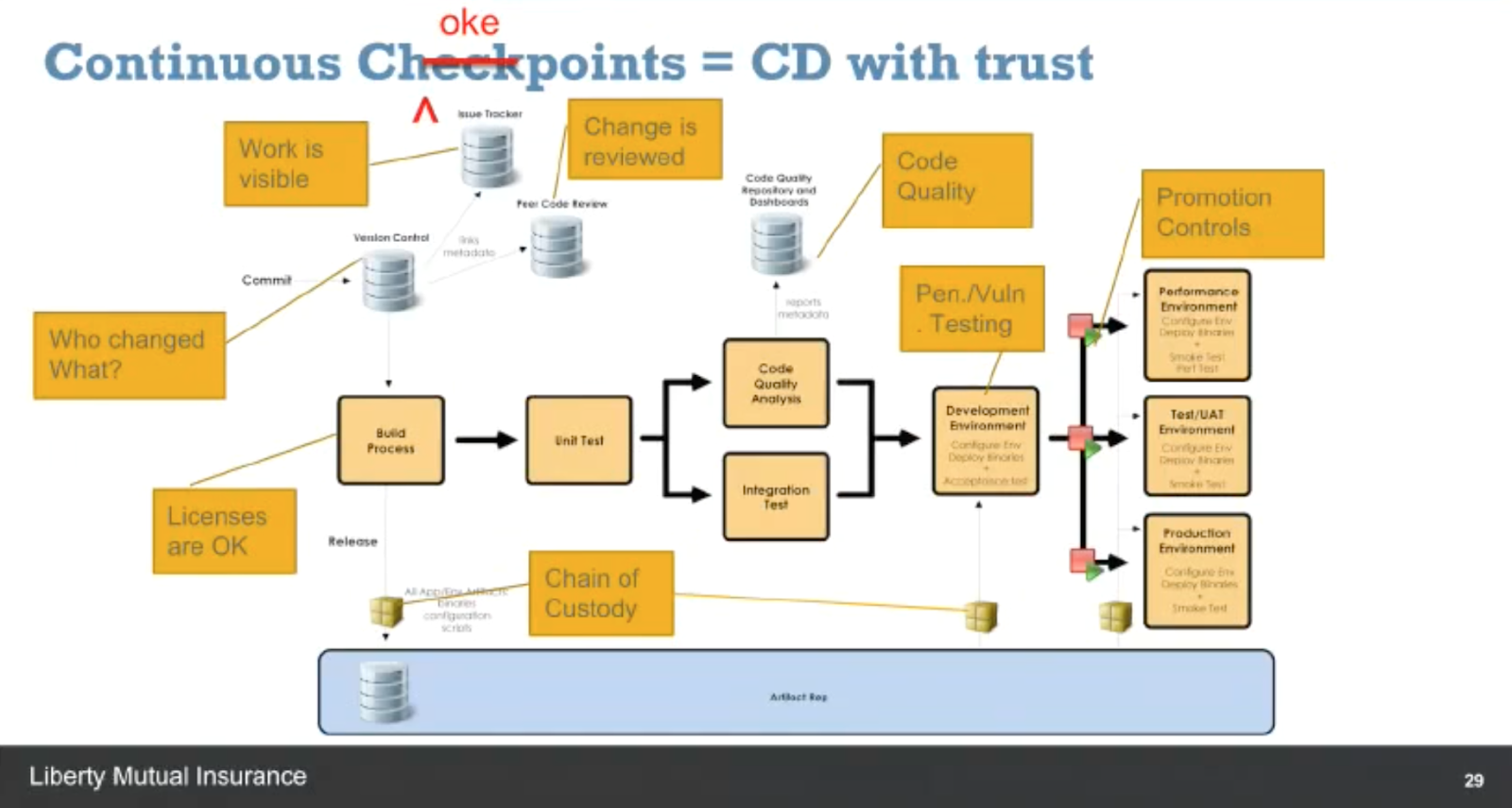
    Eddie Webb, director of Software Delivery Platforms at Liberty Mutual, also shared his organization’s journey into DevOps.  Eddie described how Liberty Mutual evolved its organization, tool chain and processes to go from 20 percent of builds being deployed to 60 percent over the past 18 months. He described how the company documented its value delivery chain and identified all of its choke points in the continuous delivery process that would need to be automated to achieve its new velocity and quality targets.

    Screen Shot 2016-12-05 at 11.35.04 AM.png

    Run the Gauntlet

    The All Day DevOps conference recorded more than 57 practitioner-led sessions (30 minutes each) including those from Barry and Eddie. Every session is now posted online and is free to watch. The conference itself had three tracks: CI/CD, Automated Security and Modern Infrastructure, including:

    • Application Secret Management with KMS – Andrey Utis of Capital One
    • Getting out of the Job Jungle with Jenkins – Damien Coraboeuf of Clear2Pay
    • Serverful Computing – Taking One for the Team – Paul Czarkowski of Blue Box Group

    One of the best ways to learn about DevOps is to hear from the experiences of others who have run the gauntlet. Take 30 minutes this morning, at lunch or at home this evening to watch your first online session with All Day DevOps On-Demand.

    — Derek E. Weeks

  • DevOpsSec: Survival is Not Mandatory

    DevOpsSec: Survival is Not Mandatory

    Deming, the patron saint of DevOps once advised, “It is not necessary to change.  Survival is not mandatory.”

    To survive, application development teams are constantly pressured to deliver software even faster.  But fast is not enough.  The best organizations realize that security, quality and integrity at velocity are mandatory for survival. Hence, DevOpsSec

    My aim here is to leave you uncomfortably amazed.  While the pace of development has changed significantly, our processes to secure our applications has not changed enough.  It is as if a wildfire has raged uncontained for years now but we have failed to take notice.

    Maybe that sounds a bit crazy, but once I share a little background on what is happening, you’ll understand why innovation in this arena is critical for survival (when it comes to your applications).  If you are aiming to ramp up your own Rugged DevOps or DevOpsSec practices, this is critical reading material.

    Skyrocketing Usage, Plummeting Visibility

    Open source component use in development is skyrocketing, and for good reason.  Over 17 billion open source and third-party components — across the major development languages — were downloaded last year helping development teams accelerate release timelines and deliver more innovative solutions to market.  To better imagine the impact of this download volume, you need to understand that there are an estimated 11 million developers responsible for the billions of downloads.

    While the magnitude of usage is amazing it has obscured a vast majority of the risks.  Of the billions of downloads recorded last year, 1 in 16 components downloaded had known security vulnerabilities.

    Screen Shot 2015-11-30 at 1.23.55 PM

    While we have seen 30x growth of download requests over the past seven years, we have also witnessed huge growth in the number of organizations improving the speed of consumption and efficiency of their downloads using repository managers.

    In the past 18 months since I joined Sonatype, we have seen active instances of repository managers like Nexus, Artifactory, and Archiva grow from 40,000 to over 70,000 installations, with users in the millions — also for good reason.  Development teams want to ensure faster, more reliable builds.  They also need a private and safe place to house and share their own proprietary components as well as assembled applications, images and other binary outputs.  The repository manager has established itself as a parts warehouse for software development.

    All is Not Moonlight and Roses

    1 in 16 may not sound like a lot until you recognize that many organizations are downloading over 250,000 components every year…some of the largest organizations consume millions of them.  If you have not calculated this in your head yet: 250,000 / 16 = 15,625.

    Screen Shot 2015-11-30 at 1.24.07 PM

    Couple this fact with the remarks in the 2015 Verizon Data Breach and Investigations Report stating that applications were the most often exploited attack vector by hackers.  As a developer community we are electively sourcing known vulnerable components for use in our applications and those applications are now more vulnerable to attack.  

    Your Repository Manager Should Serve and Protect

    If bad components are getting in, why not just stop them at the front door?

    Easier said than done.   Current approaches to preventing such behavior are ineffective.  For some, “golden repositories” are used to house approved components — but components approved once are rarely vetted again for newly discovered vulnerabilities.  For other organizations, OSS Review Boards mandate reviews and approval for all new components — but these organizations are poorly staffed to match the volume and velocity of consumption leading to workarounds by development teams.  And while developers themselves would much prefer to use the best quality, highest integrity components when designing an applications, they are never allocated sufficient time to investigate the vulnerability status of every component required for their latest build.

    Sparking Innovation

    When current approaches fail, inspiration often sparks innovation.  

    Enter, a new invention: a repository firewall.  Think of it as a repository manager with a guard at the front door.  Every component that gets downloaded by a proxy repository is automatically evaluated against the parameters development, governance and security teams establish.  Does it have an AGPL license, include a known security vulnerability, or is it incredibly outdated?  The repository firewall allows organizations to download “good” components while it blocks and quarantines “bad” component downloads.  Using a repository firewall can keep your repository manager and development lifecycle safe and secure – in an instant, automatically.

    The first repository firewall of its kind is called Nexus Firewall.  It couples software supply chain intelligence about component quality, security, and risks with automatic evaluations against personalized policies for approving or rejecting new downloads.  Evaluations can also be applied later in the development lifecycle where staging repositories are in use.

    Screen Shot 2015-11-30 at 1.12.58 PM

    Imagine the result: 16 out of 16 downloads, or 250,000 out of 250,000 downloads are now of the best quality.  Everything flowing into your application development lifecycle contains the highest quality components.  You are instantly compliant with established policies.  Your applications are less vulnerable to attacks.  You are automatically reducing risk.

    Next up in this series, I will share insights about Repository Health Check reports (free to use).  Used by over 15,000 organizations, they can offer organizations the first clue as to whether or not your team could benefit from a repository firewall.  


  • DevOpsSec: 1 in 16 Chances

    DevOpsSec: 1 in 16 Chances

    The quantitative research summarized below, covering over 7,000 repositories across nearly 100 countries, highlights some of the challenges with quality at modern development velocities, especially important for DevOpsSec practices. By leveraging automation in your repository manager, you can improve application quality and reduce unplanned work while lowering exposure to risk. While this practice supports DevOpsSec initiatives, at its core, it is simply a focus on “building quality in”.

    (Written as a collaboration between me and Mike Hansen, Head of Products at Sonatype; Mike wrote the better parts.)

    Innovation and Risk

    Repository managers like Nexus, Artifactory and Archiva have been serving software components for development teams and their tooling for years now.  We can measure over 70,000 active repository manager installations across the globe today.  Use of a repository manager improves build performance and reliability while also providing a secure, private location to host open source, third party, and proprietary components needed across continuous delivery and DevOps tool chains.

    Industry averages show software development organizations electively downloading over 240,000 components a year from public internet repositories.  While these components accelerate development and increase innovation, the vast majority of components go through little to no vetting process to determine if known security vulnerabilities, risky license types, or outdated/unsupported are being used.
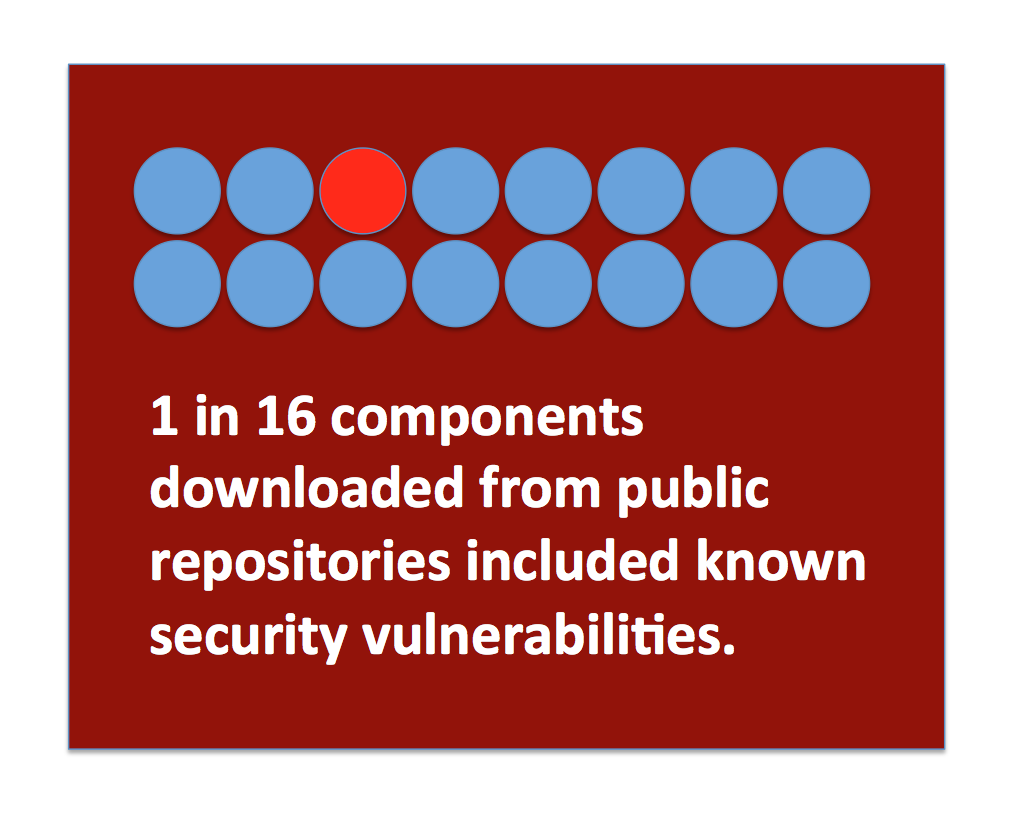
    DevOpsSec: tracking known vulnerabilities requires better hygiene.

    Earlier this year, researchers found that 1 in 16 downloads includes a known security vulnerability. That accounts for over 15,000 elective downloads of components with known security vulnerabilities per organization, per year.

    Why the Focus on Repository Managers?

    Repository managers like Archiva, Artifactory, and Nexus have become a critical piece of the DevOps toolchains and are commonly used across the entire application lifecycle. It is effectively a binary parts warehouse for your applications. Given how integral this warehouse has become, software supply chain intelligence and automation can be used to significantly reduce unplanned work and eliminate avoidable risk.

    To understand this opportunity, let’s take a quantitative look at the world’s software development ecosystem.

    Global Visibility

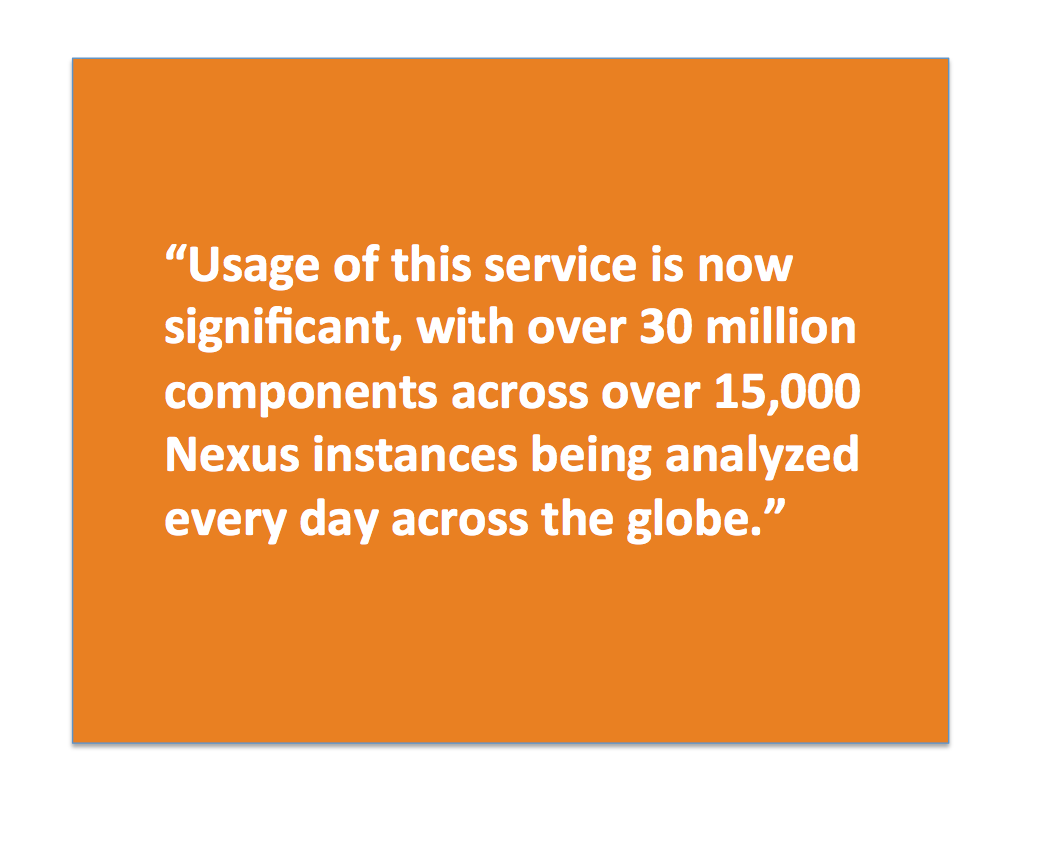
    Not long ago Sonatype introduced a free feature in its Nexus Repository Manager that is providing new data on the health of software supply chains.  This features, called Nexus RHC (Repository Health Check) – offers a simple way to get basic visibility into what OSS is flowing into development via your repository manager.  RHC provides a summary of components in the repository that have known security vulnerabilities and risky license types. Usage of this service is now significant, with over 30 million components across over 15,000 Nexus instances being analyzed every day across the globe.DevOpsSec: identifying known vulnerabilities.
    There are also around a million developers using those repositories. With the law of big numbers working for us, we can gain a statistically valid view into the behaviors of the modern software development ecosystem. The findings are quite telling.

    The Data

    We analyzed over 7,000 repositories containing 500 or more software components using the RHC service during the past 90 days. These repositories are representative of those used by development teams in medium to large organizations. The question was straightforward: To what extent are bad things flowing in, causing downstream rework and creating avoidable risk scenarios?

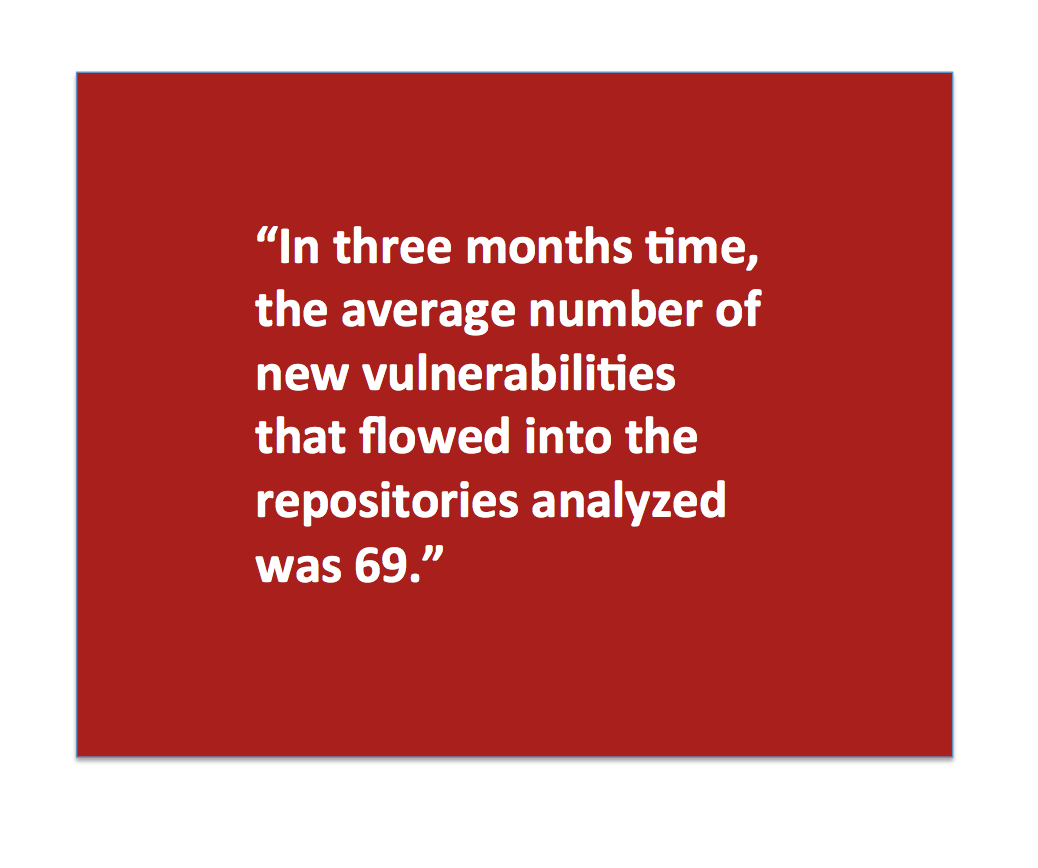
    In three months time, the average number of new vulnerabilities that flowed into the repositories analyzed was 69. That is an average of 23 vulnerabilities per month, which is a little more than one every weekday. If you only include higher risk vulnerabilities – those with a CVSS score of 5 or greater – the average number was 48, or about 16 per month. That is a little less than one every weekday. For a sense of the kind of vulnerabilities in this higher risk category, the Heartbleed bug had a score of 5, the lowest risk in this grouping.
    DevOpsSec: tracking known vulnerabilities.

    These are not isolated instances or outliers. In the set of repositories analyzed, 98.3% consumed at least 1 vulnerable component and 97.7% consumed at least 1 higher risk (CVSS >= 5) component. In a period of just three months, nearly every repository consumed something the organization running it would rather not have, and that is only with respect to known vulnerabilities. There are plenty of other attributes that are worthy of consideration given availability of the corresponding data.

    Whether or not security is of particular concern, the real point is that a lack of visibility and control combined with an abundance of supply has led to inferior quality parts routinely being used by the world’s development organizations, adding avoidable risk and slowing us down.
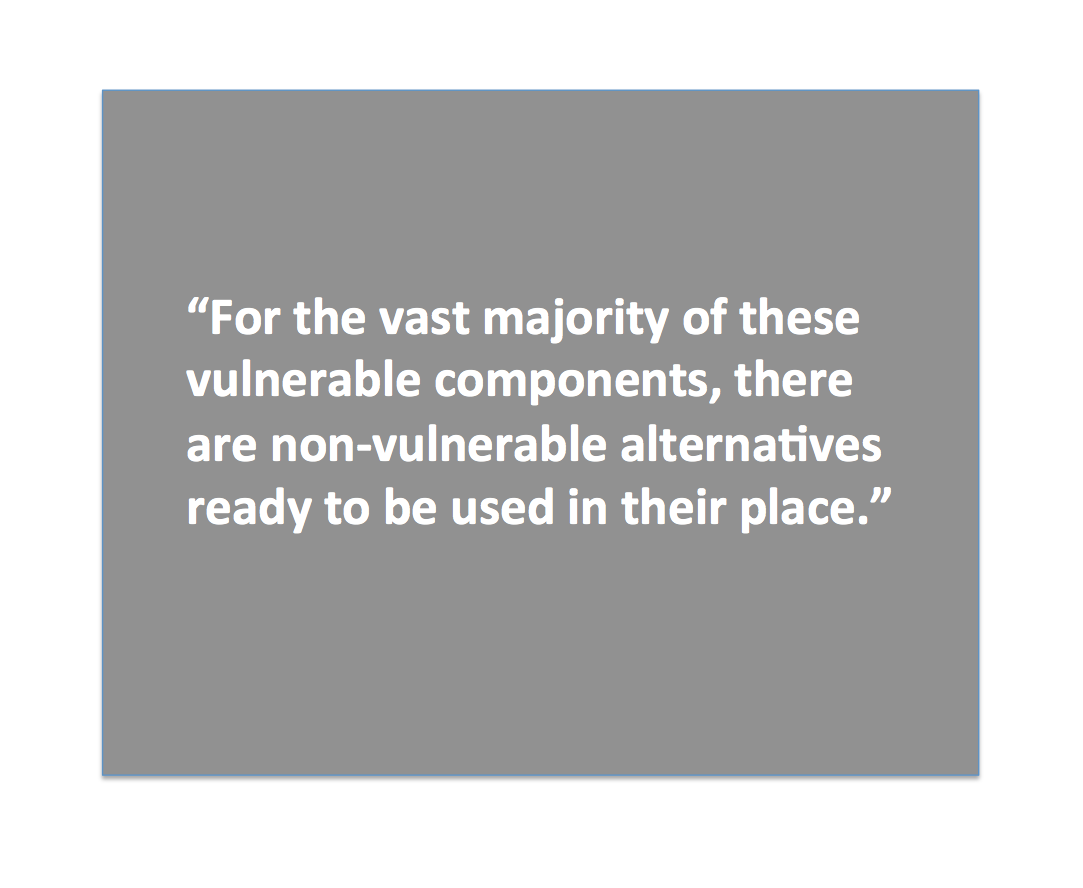
    Image title

    Going (Way) Beyond Security


    The consumption of vulnerable components is a quantifiable problem that we used to illustrate the current challenges that every organization has with open source component selection. However, security vulnerabilities are only one of the many dimensions.
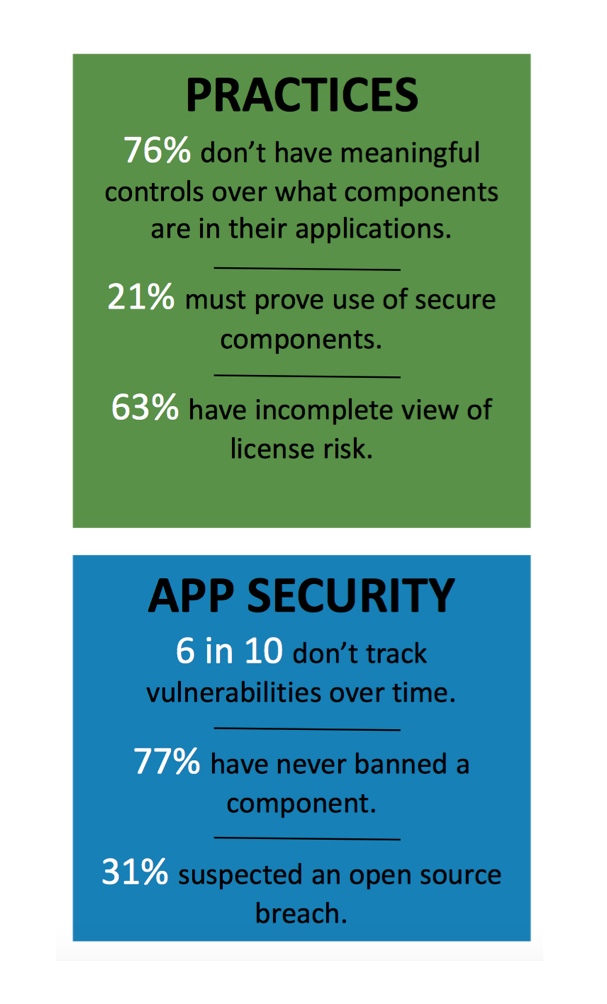
    DevOpsSec: Surveys show the need for improved OSS governance.Others include architectural aspects such as rules covering component age and popularity, intellectual property coverage with rules related to open source licensing and technical debt controls associated with technology stack selection.  Introducing more formalized vetting processes coupled with software supply chain intelligence and automation will yield significant overall quality and efficiency benefits for an organization, allowing them to operate with a lower risk profile.

    Yes, A Firewall for Repository Managers

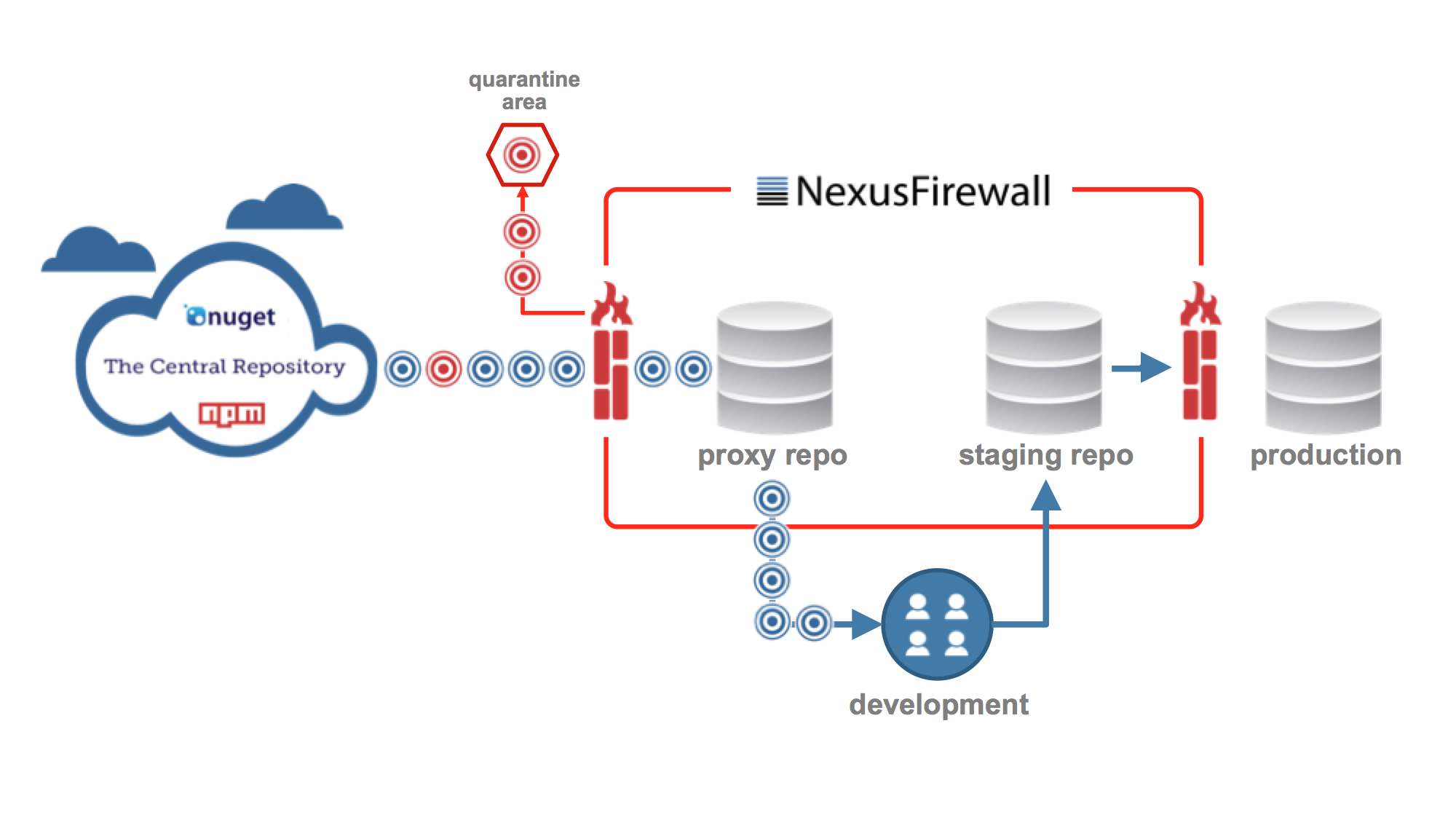
    In November, Sonatype became the first company to introduce a “firewall” for use with repository managers.  Called Nexus Firewall, the solution offers perimeter quality control for software development. Similar to a network firewall, it leverages rules you define that automatically shield an organization from unacceptable software components entering and another set for stopping them from exiting your application development. The basic concept looks like this:
    Nexus Firewall: shifting DevOpsSec further left than ever before.

    In order to build quality in from the beginning, this solution represents a “shift (far) left” innovation.  The Nexus Firewall improves speed and reduce risk through the quarantine of components with known vulnerabilities. With a repository firewall in place, organizations can shield your application development from waste and risk by automatically blocking unacceptable software components inbound and preventing release of applications containing such components outbound.  1 in 16 downloads with known security vulnerabilities could be reduced to zero in 16.

    The firewall also goes beyond blocking, providing organizations with the visibility and data needed to make ideal decisions for open source component selection early, significantly reducing waste related to rework and eliminating avoidable risk.

    For DevOpsSec, Shift (Far) Left to Build Quality In

    The consumption of these unacceptable or, at a minimum, inferior components is unnecessary.  For the vast majority of these vulnerable components, there are non-vulnerable alternatives ready to be used in their place. The challenge is that it has been historically difficult for developers to understand these risks and even harder to avoid them.  Few developers have countless hours to commit to researching vulnerabilities in the components they use and fewer more want to rely on colleagues in security, legal, or audit teams to spend hours or weeks to return with “go” or “no go” vetting decisions.

    The volumes and velocity of component consumption we see today validates that any form of manual review process or automated workflows outside of the development teams will be quickly outpaced.  DevOps and Continuous Delivery processes need to rely on automatic intelligence to help developers select the highest quality components and avoid those with known risks.  When known security vulnerabilities and other risks are identified, software supply chain intelligence will be required to guide developers through the identification and selection of safer, higher quality components.

    An example of the kind of information made available is shown below.
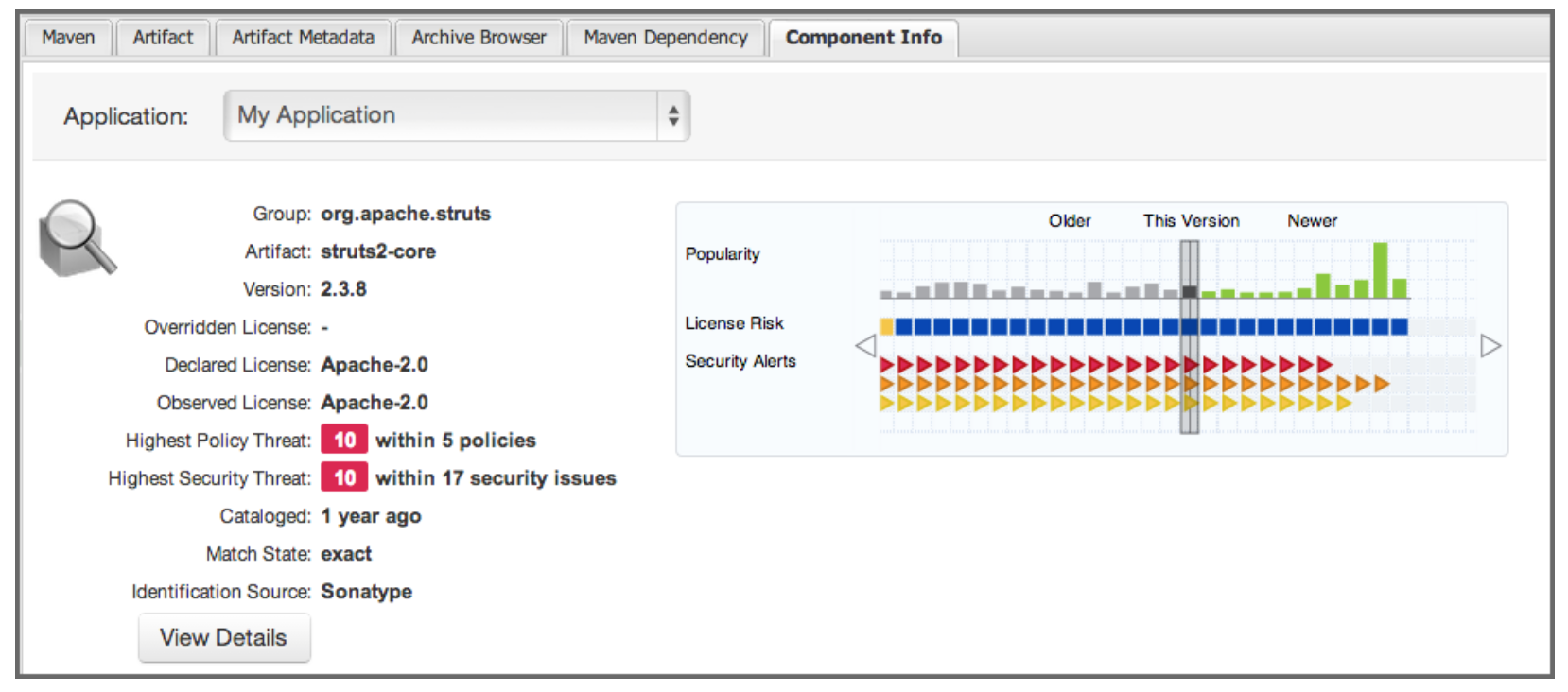
    DevOpsSec: Identify the best components that meet policy guidelines from the beginning.

    The information is divided into two areas. On the left side is component data, which includes details related to the component itself. To the right, there’s a graphical display of any security or license issues, as well as popularity data for each version of the component displayed. Selecting different versions updates this information accordingly, including whether or not a particular version passes the established criteria.

    A Must for DevOpsSec: Quality at Velocity

    Simply by enabling a repository firewall, organizations can immediately improve quality and reduce waste and exposure to risk. None of this comes at the expense of development speed.

    The repository firewall automatically quarantines components that do not pass your rules preventing quality issues from entering the software being developed, immediately reducing risk and avoiding wasteful rework at some later point. Quality is improved, efficiencies are gained and risk is reduced, all through automation and all at the speed of modern development.

    One of my favorite reference books is Continuous Delivery by Jez Humble and Dave Farley.  Let me share a few of their words to help remind us of the importance of innovations and practices that allow us to bring pain forward.  Jez and Dave remark:

    “The techniques that we describe in this book, such as continuous integration, comprehensive automated testing, and automated deployment, are designed to catch defects as early in the delivery process as possible (an application of the principle “Bring Pain Forward”).  The next step is to fix them  A fire alarm is useless if everyone ignores it.  Delivery teams must be disciplined about fixing defects are soon as they are found.”

    Well said Dave and Jez.  Well said.

     

  • DevOps Leadership Series 2015

    DevOps Leadership Series 2015

    We recently hosted the 2nd annual “DevOps: Wine-ing, Not Whining” event in San Francisco to bring together a number of thought leaders and leading practitioners in the DevOps field.  We traded stories from the trenches, formed new insights, and offered visions of the future.

    This week, I’ll be sharing videos captured from the event that highlight key themes from our conversations. We call it the DevOps Leadership Series.

    Screen Shot 2015-05-15 at 11.19.59 AM

    You’ll get to hear:

    In the next few weeks, I’ll be on the west coast at the Velocity Conference and on the east coast covering DevOps Days DC.  I’ll be capturing more insight from DevOps thought leaders at these events.  If you are planning to attend one of these events, let’s capture your DevOps perspective for the series.  To participate, please leave a comment below or catch me on @weekstweets.

    Today, we’ll start the series with Gene Kim on important themes for DevOps in 2015:

    [youtube http://www.youtube.com/watch?v=0IXrnhcRNUk]


    PART 2 of the series is now available at: 

    https://devopsy.kinsta.cloud/2015/05/19/devops-leadership-series-software-supply-chains/

  • 31 Reference Architectures for DevOps and Continuous Delivery

    31 Reference Architectures for DevOps and Continuous Delivery

    At QCon London, David Farley (@davefarley77) told the audience that “continuous delivery changes the economics of software delivery”.  I could not agree more.

    If you have been drawn to the evangelists like David Farley, Jez Humble, and Gene Kim, you’ll know that high performance IT organizations are seeing a massive payoff in their continuous delivery investments.  Industry leaders big and small are sharing noticeable results:

    • 8x more frequent production deployments
    • 50% lower change failure rates
    • 12x faster service restoration times when something went wrong

    5 Principles

    How are they achieving these results?  They are following a few key principles that David and Jez outlined in their seminal book, Continuous Delivery (highly recommended).  The principles outlined in their book and in David’s QCon presentation are as follows:

    • Deliver fast
    • Automate almost everything
    • Keep everything in version control
    • Build quality In
    • Empower the team 

    Reference Architectures for DevOps and Continuous Delivery

    In their book, they also provide insight to continuous delivery tool chains and processes which highlight build tools, CI platforms, testing suites, artifact repositories, and many other components. There are numerous examples of reference architectures available, and each of them vary in levels of detail, tools highlighted, and processes followed.  Yet, there is a constant theme among the tool sets: Jenkins, Maven, Nexus, Subversion, Git, Docker, Puppet/Chef, Rundeck, and Sonar seem to show up time and again.

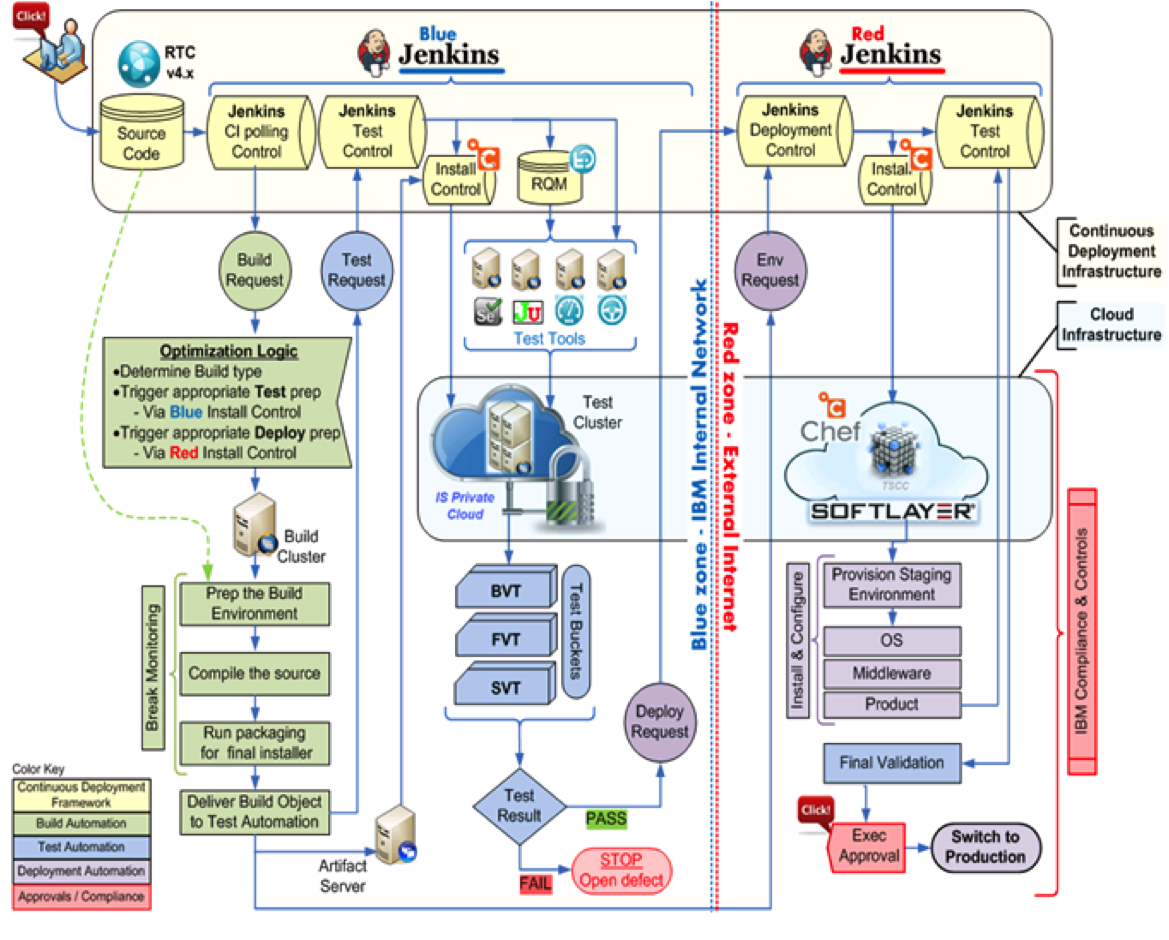
    To help you along your continuous delivery and DevOps journey, I have compiled a set of 31 reference architectures created by users across the continuous delivery and DevOps communities.

     CD and DevOps tool chain

    Each architecture is accompanied by a link to the original presentation or blog where the architecture was referenced to ensure you have access to the full context of the discussion. You can also freely download the presentation from SlideShare where we now have over 7,000 views.

    Offer to help others: If you have a reference architecture to share, please consider posting a link to it in the comments section below.  I am sure others would love to see it and learn from it.