Tag: mobile development

  • Bitrise Tightens Mobile DevOps Integration With AWS Cloud Services

    Bitrise Tightens Mobile DevOps Integration With AWS Cloud Services

    Bitrise this week will tighten integration with its DevOps platform for building and deploying mobile applications and the application development services provided by Amazon Web Services (AWS) cloud.

    Announced at the AWS re:Invent 2023 conference, the goal is to provide easier access to automated building, testing and release management capabilities provided by AWS as part of an effort to increase overall efficiency.

    Bitrise CEO Barnabas Birmacher said those capabilities will streamline workflows for a Bitrise Mobile DevOps platform that has been specifically designed for building and deploying mobile applications that typically need to be updated frequently.

    Based on a continuous integration/continuous delivery (CI/CD) platform developed by Bitrise that can be deployed in an AWS cloud computing environment, the integrations will make it simpler to build and run mobile applications at scale, noted Birmacher.

    The goal is to reduce the total cost of building mobile applications while at the same time improving developer productivity for mobile applications that have to be thoroughly tested before being made accessible via an application store, he added.
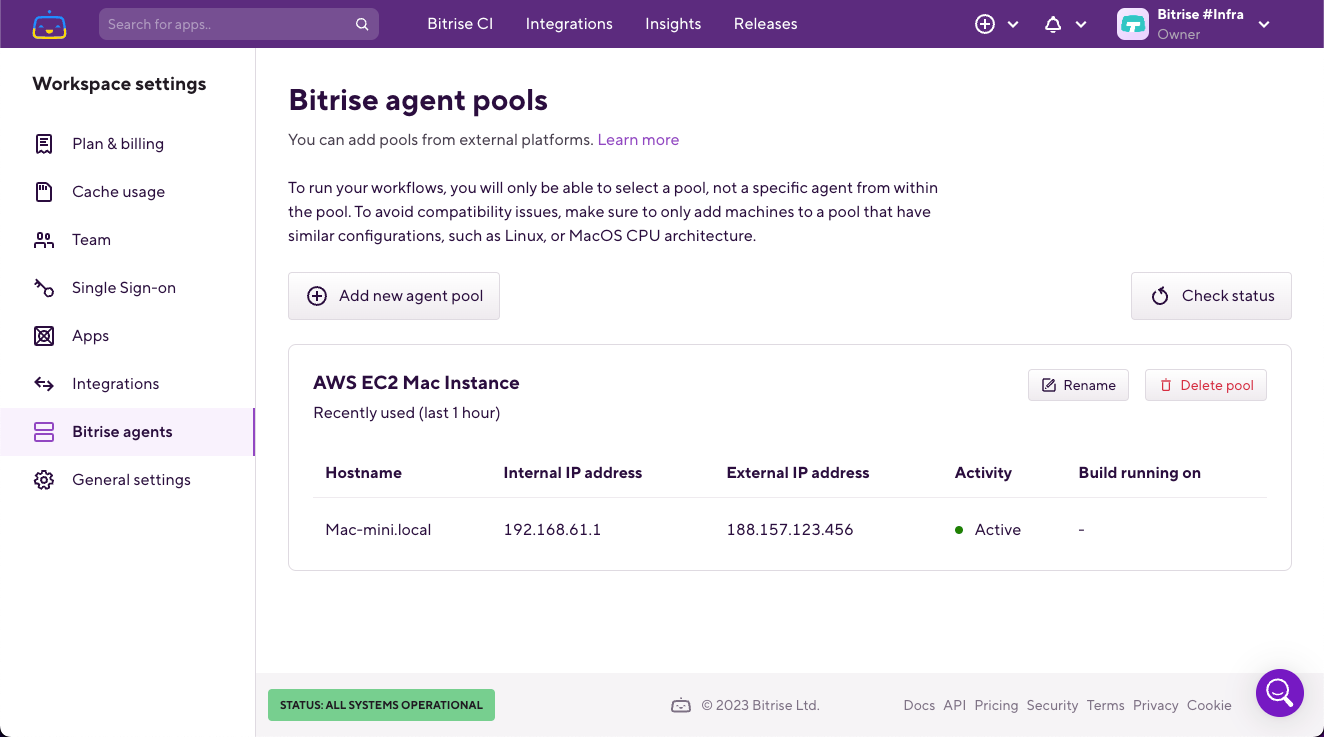
    It’s not clear how many organizations will prefer to have a dedicated CI/CD platform for building and deploying mobile applications versus using the same CI/CD platform they might already be relying on to build and deploy other applications. Bitrise claims to have more than 6,000 customers, including Reddit, WISE, Equinox and Philips Hue.

    As the percentage of mobile applications that make up an organization’s portfolio continues to increase, the pace at which those applications need to be updated lends itself better to a CI/CD platform optimized for those types of applications, said Birmacher.
    In fact, a recent survey conducted by Bitrise found 62% of respondents have been adversely impacted by manual processes that slowed the rate at which mobile applications were deployed and updated. The survey also found (44%) of respondents reported their release approval process is mostly or entirely manual, with only 9% having fully automated application releases.

    The survey also found that nearly two-thirds of organizations (66%) have deployed applications that can’t be opened in two seconds or less, which is widely considered the accepted level of performance required for mobile applications. In addition, three-quarters of organizations (75%) required more than two days to address bug fixes.

    Many mobile apps have become increasingly mission-critical thanks to digital business transformation initiatives. Consequently, the amount of focus on them within most organizations is high; any issues that arise are likely to be noticed at the highest echelons of an organization. That level of attention can easily put pressure on DevOps teams, mainly because the general expectation among end users is that mobile applications will be regularly updated with new functionality. However, if release processes are largely manual, regularly improving the user experience can become problematic.

    Each IT organization will need to decide for itself how best to go about building and deploying mobile applications, but the one thing that is certain is adjustments to DevOps workflows will need to be made as a lot more of these applications are continuously built, deployed and updated.

  • Why Aren’t Enterprises Developing More Mobile Apps?

    Why Aren’t Enterprises Developing More Mobile Apps?

    We live in a mobile age, and enterprise IT leaders recognize it. But even though 64.5% of enterprises say that mobility is a top IT priority, most won’t deploy more than five mobile apps this year, according to a December study from Enterprise Mobility Forum. That’s a very small number, especially considering that large organizations manage an average of 163 apps, according to an Okta study. It begs the question: Why so few, especially given the strong demand for a mobile experience from employees, customers and partners?

    There are many barriers to enterprise mobile app development and deployment, but the biggest is simply a lack of time and resources. Modern organizations rely on web apps for critical internal processes, and development teams are expected to continuously roll out new capabilities. When presented with a choice between releasing new functionality or converting old web apps to iOS or Android, enterprise developers don’t have the resources to do both. Releasing new features will almost always win out, especially since a single conversion to mobile could require months of developer-hours and hundreds of thousands of dollars.

    What’s more, mobile development skills for the two biggest operating systems—iOS and Android—are already in short supply and specialized mobile security skills are even more scarce. So, even if the team is willing, it may not possess the expertise to create a secure app.

    Lack of a Robust Mobile Infrastructure

    Mobile apps require a robust infrastructure to support them and it differs significantly from the web app infrastructure that most organizations already operate. For example, to distribute and manage mobile apps on its own, enterprise IT has to set up a proprietary app store, and they’ll need to install enterprise device management software on all devices, including employees’ personal phones. Employees’ devices will initially warn them that the software is not trusted, requiring a number of steps to bypass, plus there are serious privacy concerns. Who would willingly give their employer access to all activity on their personal mobile device?

    Finally, regarding SaaS applications, if the vendor doesn’t provide a native mobile version, obtaining the binary to convert it to mobile in-house is almost impossible. And while many SaaS applications incorporate responsive design, mobile browsers provide poor performance and lack features such as persistence and push notifications.

    “Our customers have dozens of web and cloud services that they need to integrate into their enterprise mobile environment,” said Marcelo Nascimento, head of cybersecurity at TIQS Consultoria Brazil. “But the lack of mobile development resources or access to mobile binaries from app makers has halted their progress.”

    Public App Stores and PWAs

    Thankfully, there are solutions to each of these challenges. For instance, enterprises no longer need to manage distribution and management in-house. Increasingly, Fortune 1000 companies are using public app stores to distribute their internal employee-facing apps, according to a December study conducted by Appdome. Going this route eliminates the need to set up a proprietary app store and place management software on personal devices.

    When it comes to converting web apps to mobile apps, traditional progressive web apps (PWAs) can provide a fast, cost-effective solution. But PWAs and web clips have their limitations.

    Ideally, enterprises would be able to create hybrid apps, because they can provide both the benefits of the PWA for rendering web and cloud service apps along with a high-performance user experience and persistence. Platforms are available to conduct the conversion in minutes with no manual coding and some are able to incorporate strong security. As a result, an organization can rapidly convert web apps into mobile apps and distribute them via any distribution method, from private UEM and MAM stores to Google Play and the Apple App Store.

    So there’s no reason enterprise IT needs to shy away from providing everyone a mobile experience. With auto-build systems to create secure hybrid apps, enterprises can overcome most of the barriers and deploy secure mobile apps at scale.