Tag: mobile application development

  • Report Surfaces DevOps Challenges for Mobile Applications

    Report Surfaces DevOps Challenges for Mobile Applications

    An assessment of 1,600 DevOps teams involved in building and deploying mobile applications found that 62% were adversely impacted by manual processes that slowed the rate at which these applications were deployed and updated.

    Based on the Mobile DevOps Assessment (MODAS) created by Bitrise, a provider of a continuous integration/continuous delivery (CI/CD) platform for building and deploying mobile applications, the metric measured the creation, testing, deployment, monitoring and collaboration phases of building and deploying applications.

    The survey also found (44%) of respondents reported their release approval process is mostly or entirely manual, with only 9% having fully automated application releases. Only 22% of teams said they’ve been able to complete internal release processes in less than an hour.

    The survey also found that nearly two-thirds of organizations (66%) have deployed applications that can’t be opened in two seconds or less, which is widely considered the accepted level of performance required.

    In addition, three-quarters of organizations (75%) required more than two days to address bug fixes. Only 21% of teams said that they had implemented some form of app performance monitoring to keep track of bugs, the report found.

    Daniel Balla, chief strategy officer for Bitrise, said MODAS applies many of the concepts from the DevOps Research and Assessment (DORA) metrics that Google now oversees. Those metrics, however, are not specifically designed to assess mobile application development initiatives, he noted.

    It’s not clear what percentage of applications DevOps teams are building today are deployed on mobile devices. But given the emphasis on digital business transformation initiatives, many of these applications are increasingly mission-critical to organizations. The general expectation among mobile application end users is that apps will be regularly updated with new functionality. However, if release processes are largely manual, regularly improving the user experience can become problematic. In addition to the increased likelihood that mistakes will be made, manual processes are often the reason why a vulnerability was introduced into an application environment.

    DevOps teams will also need to also consider the level of scale that will be required to support mobile app development, noted Balla. Many of the tools that developers rely on today to build applications were not necessarily designed to enable developers to build and deploy mobile applications at scale, he added.

    Finally, most enterprise applications need to run on multiple devices, so the tools used to create these applications can’t focus on applications that can only run on one platform, said Balla.

    Regardless of the approach to building and deploying mobile applications, the amount of focus on them within most organizations is high; any issues that arise are likely to be noticed by the highest echelons of an organization. That level of attention can easily put pressure on DevOps teams that frequently work on multiple projects. The challenge and the opportunity now is to create a set of DevOps workflows optimized for mobile applications that almost by definition require much more frequent updates than any other type of application.

  • Let the Machines Do It: AI-Directed Mobile App Testing

    Let the Machines Do It: AI-Directed Mobile App Testing

    AI has been in the news a lot lately. We’ve all heard a lot about ChatGPT and you’ve no doubt encountered the end result of a variety of other advances in AI technology of late, such as Lensa. But there’s also a much quieter and less visible shift happening behind the scenes during the development of your favorite apps—AI-directed mobile app testing. Let’s take a look.

    Behind the Scenes

    It’s no secret that every product, no matter the industry, goes through a gauntlet of tests before it’s unleashed on the general public. This goes for everything from a simple object like a cardboard box, for example, to a far more complex product, such as the latest electric vehicle.

    The same goes for the mobile apps on your phone. And if you haven’t given that much thought, then good! It means that the QA team behind the app’s functionality did its job, producing a seamless experience that functioned without a hitch, exactly as you wanted and expected.

    But that’s not always the way it goes, and mobile app testing is only growing more complex. That’s a growing problem that AI will eventually resolve.

    If your app didn’t perform as expected, you—and many other users like you—may delete it and move on to the next app that promises to do the same thing. While this may not seem like a big deal to you as the user, it’s a total disaster for the tireless teams working behind the scenes to ensure a successful app launch or update.

    The adage ‘You only get one chance to make a first impression’ is very true in the mobile app market. It’s a big, crowded and cutthroat mobile app world out there, and users simply have no incentive to put up with an app that doesn’t do exactly what it’s supposed to do. After all, for every single app, there are often several others standing by to scoop up your unhappy (former) users.

    This issue is by no means restricted to small development teams strapped for resources. I’m sure you can think of some high-profile software releases from major companies that have launched in a disastrous state over the past few years (particularly in the tremendously profitable arena of video games).

    So why is it that some teams cut corners when it’s time for testing, only to dearly wish they hadn’t?

    Well, the answer is pretty simple: Up until very recently, mobile app testing has traditionally been time-consuming, complex and bewildering, all too frequently delaying releases and flabbergasting QA teams.

    To understand this ongoing problem, let’s take a look at what this kind of mobile app testing entails and how this landscape has recently started to shift, as well as what’s on the horizon to make it all more efficient.

    Cutting Corners = Consequences

    Once upon a time—in an era that seems like it was really just yesterday—software testing was performed manually, entirely by hand. This was possible because quality assurance personnel only needed to consider a very limited set of variables: There were only so many use cases and form factors to consider, and programs were only expected to do so much.

    It’s hard to imagine testing a modern app manually and having the result be effective. The approach is only reasonable under very limited circumstances. Nowadays, teams use automated tests, which save them a tremendous amount of time, effort and resources.

    Yet these automated tests come with their own problems. Most of these automated tests are hand-coded, meaning that they must be set up and adjusted by specialists with a background in computer programming. Such specialists are not only costly and in demand, but they’re also needed for later aspects of the software development cycle, such as developing new product features and overseeing other aspects of production.

    And this is where companies start to cut corners and miss problems and issues, both large and small. Instead of what is known as shifting left (that is, testing as early in the cycle as possible), many teams, unfortunately, view testing as a burden or afterthought. Only when things go haywire and they have a full-blown crisis on their hands does the need for rigorous app testing become apparent.

    Testing, Machine-Made

    This is where machine learning and artificial intelligence enter the picture. For several years, we’ve known that testing performed by machines will be more and more necessary to handle increasingly complex apps, and it won’t be long before the cost associated with the complex testing scenarios will simply become too much for many developers.

    Fortunately, advances continue to appear on the horizon. These include the much-discussed no-code revolution, which abstracts away much of the noise associated with software development and opens the door to a much wider testing base.

    AI- and machine-learning-based testing is also on the horizon, yet there’s a significant challenge that must be overcome before this can happen at speed and scale. To develop mobile app tests with true intelligence and maximum efficiency, machines must be capable of autonomously completing the following steps:

    1. Comprehension: Draw from the ability to understand what’s changing in an app. For example, the machine must be able to detect differences and issues in a signup sequence or a checkout screen change.
    2. Impact analysis: The machine must know what test cases can cover that change. This sort of identification can be quite tricky.
    3. Test case generation: Next, the machine must possess the ability to generate test cases related to steps one and two. To do this, the machine must draw from several data sets. These include:
      1. Extent test collateral/test cases with product code
      2. Data from actual customer usage so that numbers one and two above may be identified
      3. What user environments look like, including information like how many users are active in the United States and in Europe
      4. Automatic execution: Perhaps the most crucial need is that the machine can perform testing entirely by itself. With the ability to self-execute tests, we’ll have reached a new era in testing.
      5. Reports: Before the testing cycle can begin again, the machine must be able to produce detailed reports that make sense to its human handlers. When it comes to test results, the more detail the machine can provide in as approachable a manner as possible, the better.

    Problems and Solutions

    Some testing platforms are now capable of many of the tasks I highlight above, and quality assurance teams that move away from self-coding tests and toward the future of testing stand to benefit from these solutions (particularly when their competitors do not).

    Partially enabled by AI and ML, no-code solutions provide a stopgap solution until machines can really get a handle on the above five steps. At this point, it’s really just a matter of time: We can already see glimpses of a wholly automated testing cycle where human input is limited and machines do the heavy lifting.

    It’s easier than ever to imagine a world where there’s no need for testing to be an afterthought and software disasters have become a thing of the past.

  • CircleCI Adds CI/CD Service for macOS Development

    CircleCI Adds CI/CD Service for macOS Development

    CircleCI today added a dedicated continuous integration/continuous delivery (CI/CD) edition of its namesake platform for developers building applications on the macOS platform.

    Jim Rose, CircleCI CEO, said this offering is aimed at developers that either want dedicated resources to speed up their build processes or have to address compliance and security requirements that prevent them from using shared infrastructure via the existing CircleCI cloud service.

    Most of the developers building applications on macOS platforms are creating applications that will ultimately be deployed on Apple iOS devices, noted Rose. Given the popularity of those devices, the number of organizations using CI/CD platforms to accelerate creation and updates of those applications has increased, Rose added. CircleCI estimated there are now more than 30 million developers building applications on the macOS platform that would benefit from a CI/CD platform running on dedicated bare-metal infrastructure accessed via the Amazon Web Services (AWS) cloud. CircleCI’s dedicated host provides secure access to 50% more cores and more than twice the storage capacity than is available via a CI/CD platform running on top of virtual machines.

    Other capabilities provided by CircleCI include the ability to monitor the performance of apps being developed for multiple platforms in the same pipeline. Many applications deployed on iOS are also deployed on other platforms such as Android, Windows or Linux, noted Rose.

    CircleCI also provides access to testing tools that the company recently added to its portfolio of DevOps tools. Those testing tools are especially critical given the stringent requirements developers face when trying to get approval to make their iOS applications available via the Apple Store, said Rose.

    Developer productivity is, of course, a major issue for organizations trying to strike a balance between automating software development tasks and the art that goes into building applications. While developers appreciate automation, they don’t necessarily want to feel they are working in a factory. Given the demand for their expertise, many developers will simply jump ship when they feel software development processes have become overly onerous. While many managers tend to believe they have a handle on measuring developer productivity, there is often too much focus on, for example, how many lines of code are written versus the business outcomes achieved.

    A recent CircleCI survey also found that more than half (52%) of respondents don’t allow their software developers to choose their own tools. While there is a clear need for a consistent approach to building and deploying applications, organizations will find it challenging to attract and retain the best developers if they don’t allow them to experiment with different tools.

    One way or another, however, the rate at which developers can build and deploy applications is rising as DevOps best practices are adopted. It’s not clear that organizations are going to be able to absorb all that software but, in the wake of the COVID-19 pandemic, the appetite for mobile applications that drive digital business transformation initiatives has never been greater.

  • Transform Mobile DevOps into Mobile DevSecOps

    Transform Mobile DevOps into Mobile DevSecOps

    Mobile developers are mostly focused on adding new features and functionality to their apps. Security features—such as RASP protection, obfuscation, encryption, jailbreak/root prevention and MiTM prevention—are usually addressed at the end of the development cycle if they are addressed at all. Unfortunately, most apps ship with significant vulnerabilities. One internal app test showed that most apps can be cracked within 15 minutes, and a recent academic study found that 67% of the malicious app installs came from the Google Play Store.

    An Appdome global survey of more than 10,000 smartphone consumers released in August 2021 showed that this approach—features over security—is an enormous mistake. Nearly two-thirds (63%) of consumers say they value security as much or more than features when it comes to mobile apps. Nearly three-fourths (73%) said that they would stop using a mobile app if it left them unprotected against attacks.

    The survey revealed a big shift in consumer sentiment. For the first time in recent history, consumers are on the security team’s side! They expect strong protection from threats and fraud. But meeting these expectations is extremely challenging for development teams, because DevOps and security are so often at odds. 

    Here’s why: Nearly all the work done in DevOps is automated, from GitHub to Jenkins to Fastlane, while almost all security work is manual. Sure, security software development kit (SDK) vendors position themselves as an alternative, but buyer beware. Implementing a security SDK is never just a couple of lines of code. It’s still a brittle, manual process that does not offer a guaranteed outcome.

    Mobile app security solutions available today don’t fit into the automated delivery model that is DevOps. The only way to automate security and make it fit within the DevOps workflow is to stop trying to squeeze it in at the end of the Dev cycle. As a result, security does not have a seat at the mobile app development table today. And as long as security is manual and cannot be seamlessly plugged into the existing DevOps workflows, it will remain an afterthought, at best.

    The Encryption Example: Why Security is so Hard

    As an illustration, let’s take a look at incorporating mobile encryption, an absolute necessity to protect data against harvesting, theft, interception, deception and trickery. For every type of data inside the app, developers must choose the right combination for each component of the encryption model, including encryption algorithm/protocols, cipher suites, key strength, key derivation technique, key protection and safeguarding. It has to match both the security and performance requirements for a highly variable set of data format characteristics. Even small errors or mismatches could slow app performance or render the app unusable. On the other hand, the app may perform well, but the encryption may be too weak to provide sufficient protection. 

    It’s complex, time-consuming work that developers don’t want to have to do twice. That’s why they tend to wait until after the app is built to add encryption. Unfortunately, this means all the network information is stored in the app unencrypted, and if a bad actor gets their hands on a UAT version of the app, the “keys to the kingdom” are in the clear, ripe for the picking.

    The demands on DevOps to get new releases out of the door quickly are high. Security is often seen as a negative force that holds back innovation and delays release, especially when it’s left until the very end of the software development life cycle (SDLC). The term DevSecOps is used to describe a security-focused, continuous delivery SDLC. But that should involve much more than penetration testing. Identifying issues isn’t enough. Security needs to be built into the development cycle without slowing down release times or creating uncontrollable costs.  

    The only way to incorporate security into DevOps and to achieve DevSecOps is to imbue security with as much automation as development currently enjoys. By using an automated, no-code platform that builds security directly into the app, security can become a natural part of the DevSecOps workflow. Plus, security can be consistently applied with documentation that demonstrates protection. It’s the only way to enable developers to get their secured mobile apps into the hands of their end-users at a rapid pace, align all stakeholders to a common shared set of objectives and outcomes and eliminate the sources of friction commonly found between DevOps and security teams. 

  • Perforce Acquires 21 Labs to Advance Mobile App Testing

    Perforce Acquires 21 Labs to Advance Mobile App Testing

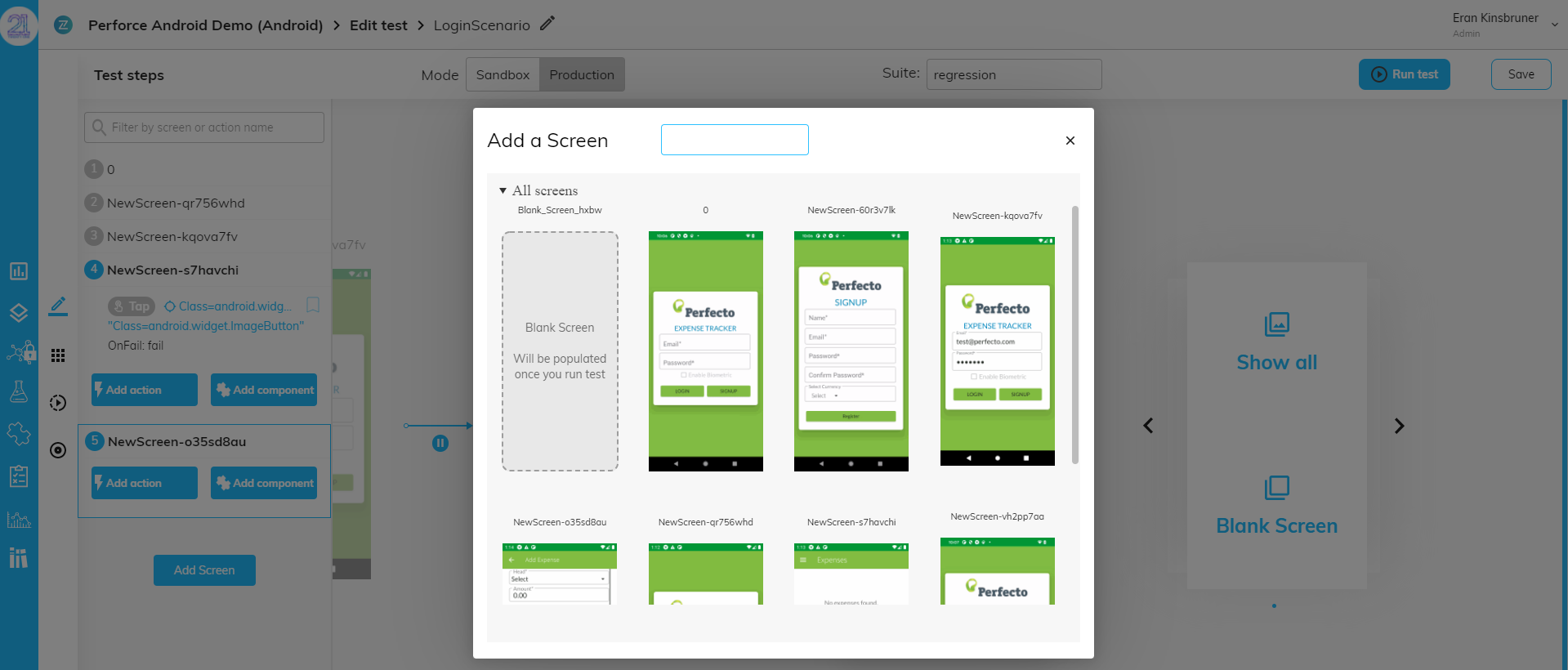
    Perforce Software announced today is has acquired 21 Labs, a provider of a suite of tools that leverages artificial intelligence (AI) to provide a no-code approach to testing mobile applications. Terms of the deal were not disclosed.

    Tim Russell, chief product officer for Perforce Software, said the 21 Labs tools complement a set of similar AI-based tools for testing web applications that the company makes available via its Perfecto portfolio. The company also makes available Virtual Devices, a service that makes it feasible to test mobile computing devices at scale using Apple iOS and Google Android emulation software. Perforce acquired Perfecto in 2018.

    21 Labs developed a test automation platform that uses algorithms to observe interactions within a mobile application that are then used to generate tests. That approach sharply reduces the need for a developer or professional application developer to employ scripts to generate those tests, said Russell.

    The next step will be to integrate 21 Labs with the test recommendation engine that Perforce already makes available via its Perfecto testing platform, added Russell.

    Perforce

    As the rate at which applications are developed accelerates, Russell noted, application testing has become a major bottleneck. The shift toward scriptless approaches to application testing will make it possible for organizations to quickly vet applications to ensure quality without having to slow down the rate at which they are being deployed. That’s especially critical at a time when mobile applications are often at the core of any digital business transformation initiative.

    It’s not clear to what degree application testing will be automated, but it’s apparent that as AI becomes more advanced, the need for many of the routine tests conducted by professional developers today will be eliminated. In theory, that should afford professional developers more time to conduct complex tests, while more routine tests are automatically run as an extension of a DevOps workflow.

    Application testing, of course, has always been the first thing to suffer whenever developers are pressed for time to make a delivery deadline. However, the sooner any issue is discovered, the less expensive it generally is to fix. At the same time, end users are not generally patient when it comes to mobile applications that don’t work as advertised. External-facing mobile applications, especially, need to provide a compelling experience the first time they are fired up. At the same time, internal digital business processes that are accessed by end users and business partners now need to be accessible from anywhere.

    Arguably, it’s harder to provide a great application experience on mobile computing devices than it is on a desktop platform, which means there should be even more testing of mobile applications before they are deployed in a production environment. The days when developers experimented on end users by rolling out minimally viable applications are coming to an end, as end user expectations continue to rise. DevOps teams that don’t adjust to that new reality may soon discover just how critical testing has become to their own job security.

  • Adobe Adds Tools for Building Custom Applications

    Adobe Adds Tools for Building Custom Applications

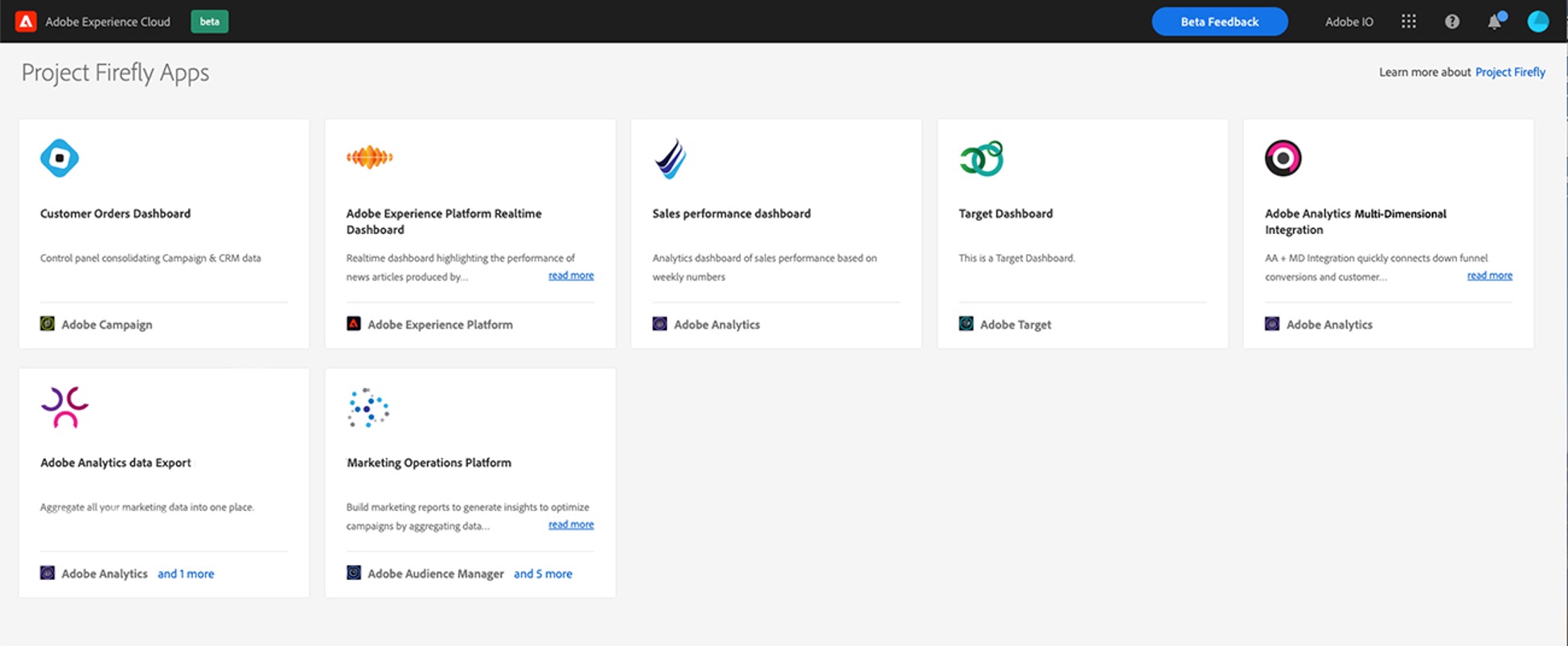
    Adobe this week launched a series of tools intended to make it easier to build custom applications that can be deployed on a serverless computing platform on the Adobe Experience Cloud.

    Announced at the online Adobe Developers Live event, the Project Firefly framework promises to make it easier for developers to build cloud-native applications that leverage the open source Apache OpenWhisk serverless computing framework.

    The Firefly framework will make it easier for developers to, for example, invoke Adobe Analytics capabilities from within a custom application using functions, said Jason Woosley, vice president of developer experience and commerce for Adobe.

    Adobe this week also launched React Spectrum, an open source collection of libraries and tools for building interactive applications using the React framework. Based on JavaScript, React Spectrum makes it easier to build front-end interactive applications in a way that scales consistently.

    Finally, Adobe added Adobe Experience Platform Launch Server Side, which makes it easier to collect data via Adobe Web and Mobile software development kits (SDKs).

    Woosley said interest in building custom applications on Adobe Experience Platform has accelerated in the wake of the COVID-19 pandemic. Organizations of all sizes moving timetables for digital business transformation initiatives forward to engage customers online. Those initiatives frequently begin with marketing applications that are extensions of the software that Adobe makes available via its cloud platform, he said.

    Once those applications are built they also typically need to be integrated with any number of back-end systems that act as systems of record for the business. Those tasks have become easier for developers to accomplish using any number of application programming interfaces (APIs) that providers of those platforms expose.

    Most of the digital business applications are being built by professional developers employing best DevOps practices, Woosey said. As the Adobe strategy for enabling developers to build applications evolves, Adobe it evaluating to what degree it needs to embed DevOps capabilities within its cloud platform, he noted.

    The Adobe Experience Cloud platform provides organizations with access to a series of applications that they can extend using Firefly, which eliminates the need to build every custom application from the ground up. As digital business transformation projects become a higher priority, the rate at which organizations need to build and deploy these applications has increased to the point where many of those organizations require a systematic approach based on best DevOps practices to build, deploy and update applications at scale.

    It’s not clear to what degree the rise of digital business transformation initiatives will eventually act as a forcing function for adopting DevOps more widely within organizations. However, given the strategic importance of many of these projects, it appears all but inevitable that most organizations will need to modernize the way applications are built and deployed if they hope to remain relevant. In fact, embracing best DevOps practices is nothing less now than a matter of survival for many of those organizations.