DAOPS Foundation recently hosted its “Global DevOps Development Forum” in Santa Clara, California. The meetup, which was held May 13, was hosted by Jeff Liu, a DevOps expert from Google, and drew DevOps experts from Tencent, JFrog and JD.
The topics of this meeting were the history of DevOps and the introduction of DevOps capability maturity model. Liu shared the theme of DevOps’ development and current situation: Before the advent of DevOps, the lack of communication between development and operations teams always made it difficult to solve problems when they happened.
Since 2007, a movement to combine development and IT operations has occurred in Europe, and people are increasingly aware of the importance of combining the two. With the development of the movement, the scope of this concept is also expanding. It is no longer simply the communication between developers and IT operations personnel, but has been extended to the entire development life cycle, from the beginning of the process to the automation through deploying solutions in incremental build systems. The term “continuous delivery” is now used, especially for dynamic applications deployed on the internet. DevOps capability has become the focus of many enterprises’ transformation; we need to continue to move forward in the repeated failures and find out the suitable transformation path for ourselves.
 During the meeting, Liu invited experts from JFrog shared their understanding of DevOps and expectations for the future.
The meeting was also the opening ceremony of DAOPS Foundation. Liu and Kohsuke Kawaguchi attended the meeting as governing board members. Alan Shimel, editor in chief of devopsy.kinsta.cloud and another board member, was unable to reach the scene for personal reasons, but sent a welcome via video recording. As partners in future course development of DAOPS Foundation, Jayne Groll, CEO of DevOps Institute, also sent her founding wishes.
About DAOPS Foundation
As an international organization, DAOPS Foundation hopes to gather experts from home and abroad to work together to improve the IT engineering efficiency (R&D efficiency) of enterprises in different industries around the world and to assist enterprise transformation. This is also called Advanced Software Engineering Model (ASEM), which based on DevOps framework. DAOPS Foundation introduces ASEM.
Future tasks of DAOPS Foundation:
- International DevOps Capability Maturity Model and ASEM output
- Open Source Product Promote
- GNSEC-Global Next Software Engineering Conference
- Lesson based on DevOps Capability Maturity Model and ASEM
- Enterprise DevOps Promotion Program
- Technical Publication
DAOPS Foundation conference attendance:
- Participate in Cloud Expo-Hong Kong, May
- GNSEC Taipei Station, June
DAOPS welcomes your participation as co-founders or individuals. If you are passionate about DevOps or AIOps and are enthusiastic about the future development of DevOps and AIOps, we sincerely invite you to join our team to contribute to the future development of DevOps and AIOps.
Any questions, please contact DAOPS Foundation via email or look for us on Twitter.

 book recommendations including, “Continuous Delivery” by Jez Humble, “Release It!” by Michael Nygard and “The Phoenix Project” by Gene Kim.
 e Linear, Parallel and Layered (with artifact promotion and release channels). Linear is the simplest pattern, which works for simple applications. With a parallel pattern, you start to parallelize where possible; however, that might create dependencies and make it difficult to reorder. The layered pattern encourages parallelizing but prevents direct dependencies between stages.
 others. Gary used the Microservices example to demonstrate how to do continuous delivery with loosely related applications or services.
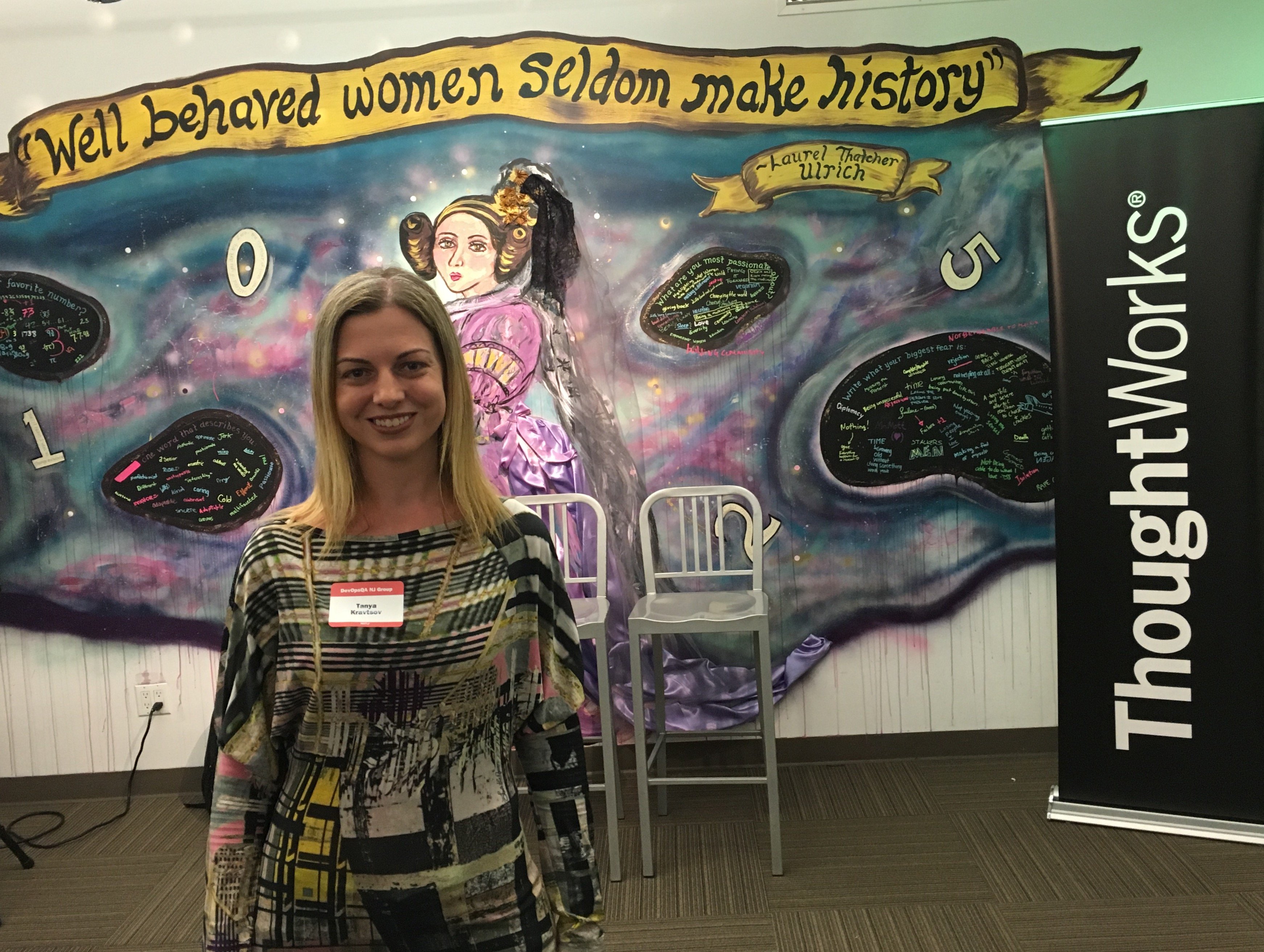
 ur November Meetup on Jenkins Workflow with Kishore Bhatia and Isaac Cohen from CloudBees as speakers. The venue was provided by
 o automate and scale pipeline steps and tools and solve common pipeline problems such as Parallelism, Branching, Looping, Restarts, Checkpoints, Manual Input, etc. Jenkins Workflow is mostly open source with some advance features offered via enterprise edition by CloudBees. Workflows can be defined in one concise script, with a groovy-based DSL and 15 simple keywords.
 At the end of the session, Kishore and Isaac gave us a glimpse of Jenkins 2.0 release which includes focus on Continuous Delivery use cases and UI/UX improvements.

 touched upon big data saying that the term “big data” is a misnomer, it should be “huge data” instead.
 Next, Shawn gave an exciting overview of MongoDB, starting with how it got started and deep diving into the functionality. MongoDB is a cross-platform document-oriented database. While MongoDB is classified as a NoSQL database, it also supports relational structures. Instead of breaking up data into multiple relational structures, MongoDB can store it in the small number of documents. Shawn went thru the reasons why divelopers like Mongo, which include the following 1) it was built by developers for developers, 2) very easy to setup, 3) availability, 4)automatic partitioning of data, 5) view of the data is abstracted out from the application. MongoD
 B does not have transactions or joints and should not be used for transaction based banking data, but it’s a great tool for storing log data, user profiles, user-generated content and location based data. Shawn also covered Rich Query model and how Mongo can be used for real-time analytics. If you would like to learn more about MongoDB, you can reach Shawn at shawn.mccarthy@mongodb.com

 chael gave a great introduction to Environment Automation by giving a live demo of BCMT – Bash Configuration Management Tool – which he developed to demonstrate 2 critical concepts – Idempotence and Convergence. Idempotence means that multiple applications of the same action do not have side effect on the system state while convergence means to bring system state in line with a defined polic
 erprise. Puppet Enterprise offers everything available in Open Source edition, plus support, training and a web based GUI. Puppet allows to automate provisioning for physical machines, as well as VMs, Docker containers, and AWS instances. One of the reasons Puppet is so powerful is due to the variety of the existing modules that are available from Puppet community.