Tag: mabl

  • mabl Adds Load Testing Tool to Test Automation Suite

    mabl Adds Load Testing Tool to Test Automation Suite

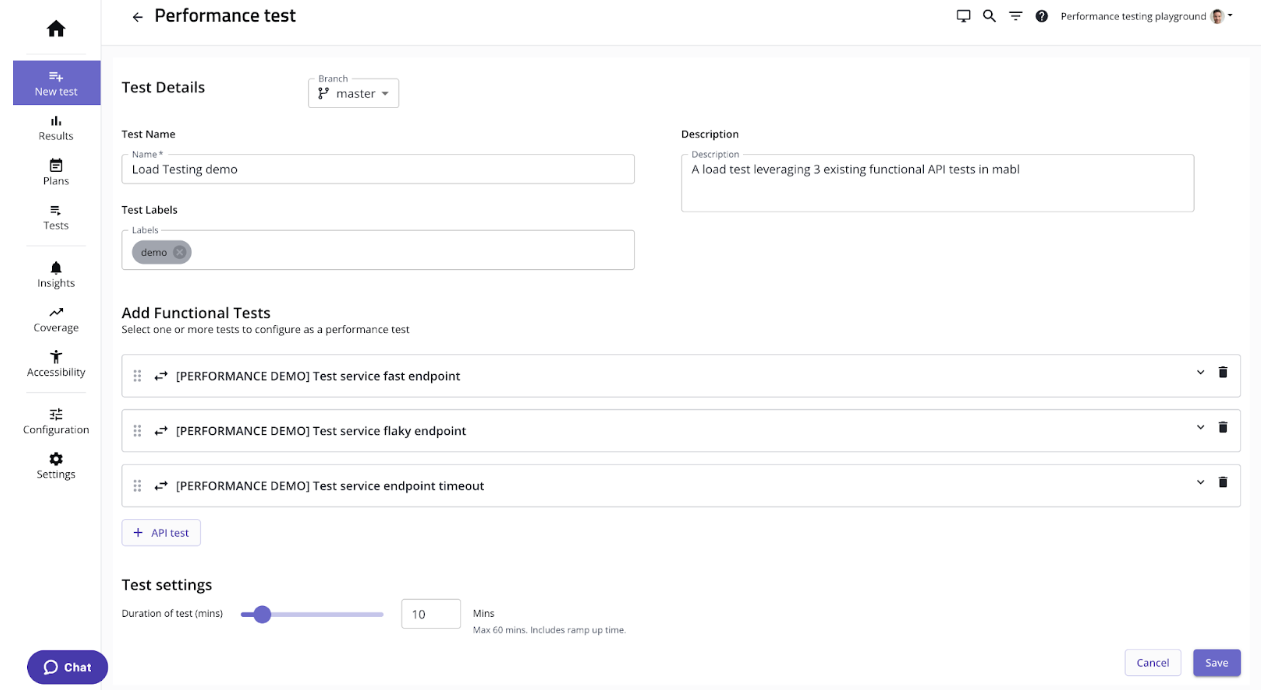
    mabl today added a load testing capability to its portfolio of application testing tools that it makes available via a software-as-a-service (SaaS) platform.

    That capability promises to make it simpler to streamline testing within a DevOps workflow by making available load testing tools that measure application peformance alongside existing mabl tools accessible via a test automation platform.

    Dan Belcher, mabl CEO, said the goal is to make it simpler for developers to run functional and non-functional tests as early as possible within the software development life cycle.

    It’s not clear how much responsibility for testing is shifting left toward developers, but as it becomes simpler to run these tests it is more likely they will be run, noted Belcher. One of the core issues that plagues application development today is the inadequate level of testing. That issue is largely because it takes too much time to create and run relevant tests, he added.

    mabl streamlines that process using a test automation platform based on a low-code tool that makes it simpler to create and manage the testing process. Those tests can be configured to run independently or be integrated with a DevOps pipeline, noted Belcher.

    Shifting testing further left toward developers doesn’t eliminate the need for a dedicated team of testers, but it should reduce the number of routine errors being made. That reduction should free those development teams to focus more of their time and effort on more complex quality assurance (QA) issues, said Belcher.

    Of course, more testing processes will become automated as artificial intelligence (AI) continues to evolve, so most organizations will soon find themselves revamping those processes. In theory, SaaS platforms that aggregate testing data should be in a better position to apply AI models to testing. That’s critical because the pace at which even more complex applications are being built and deployed shows no sign of slowing down.

    In the meantime, DevOps teams should assume they will soon be held more accountable for security issues that arise after an application is deployed. It may be a while, but the number of legislative initiatives focused specifically on application security has increased; it’s only a matter of time before laws that hold organizations liable for security are going to be passed. At the same time, the level of tolerance application software consumers have for issues that arise because some trivial mistake led to, for example, a SQL injection attack, is dropping. The expectation is that application testing is soon going to be a lot more thorough than it has historically been.

    The issue, of course, is that too many development teams tend to view security requirements as obstacles to be overcome rather than as intrinsic elements of the QA process that is supposed to ensure expectations are consistently met and exceeded.

    At this juncture it’s clear that application testing is going to improve. The only thing left to determine now is how much friction will be experienced on the way to achieving that goal.

  • mabl Makes Move to Automate Accessibility Testing

    mabl Makes Move to Automate Accessibility Testing

    mabl today made available in beta an automated accessibility testing capability that it added to its software-as-a-service (SaaS) platform for testing applications.

    Dan Belcher, mabl co-founder, said given the increased accessibility requirements included in various compliance mandates, there is a greater need to address these issues as early as possible in the application development life cycle. Otherwise, organizations could find they are liable for failing to comply with accessibility requirements outlined in, for example, versions 2.0 and 2.1 of the Web Content Accessibility Guidelines (WCAG).

    At the same time, providers of applications that don’t address accessibility are also likely to find themselves called out on public social media forums, noted Belcher. The damage to brand reputation can be considerable, he added.

    The SaaS platform mabl created makes it possible to create reusable tests using a low-code engine dubbed axe-core. Those tests can then be inserted, as appropriate, into a DevOps workflow. That approach allows a dedicated testing team to create tests in a way that doesn’t need to occur on a DevOps platform, said Belcher.

    Regardless of regulatory requirements, Belcher said there is a clear need to include end users with disabilities within a digital universe that continues to rapidly expand. Unfortunately, as a whole, the software industry is only just starting to make accessibility a first-class concern, he added.

    The goal should be to enable fast feedback via accessibility regression tests that address, for example, contrast check, said Belcher. However, it’s not likely those tests are going to eliminate the need for periodic audits by accessibility subject matter experts as an application continues to evolve, he noted. Those reviews would address everything from the user interface to the overall performance impact, noted Belcher. It may possible, however, to one day address 50% of the accessibility issues identified in the WCAG guidelines via automation, he noted. Scanning code as it is being developed will prevent a backlog and a buildup of accessibility debt that would be much more costly to address after an application is deployed, added Belcher.

    In general, Belcher said, it’s not likely automation is ever going to entirely eliminate the need for dedicated testing teams. Testing platforms such as mabl are designed to enable a finite testing resource to keep pace with an accelerated rate of application development, he added.

    Accessibility is, for all intents and purposes, a subset of any comprehensive software quality review. The sooner development teams realize that fact the less likely they will find themselves apologizing in the future for not coming to that realization earlier.

  • Big Gains Are Made In The ‘Last Mile’ of DevOps

    Big Gains Are Made In The ‘Last Mile’ of DevOps

    A new study by mabl found a correlation between complete, fully automated test coverage and a significant increase in customer happiness and DevOps maturity. In contrast, those with moderate DevOps maturity and nearly automated testing coverage tend to experience a sharp decline in end-user satisfaction.

    Mabl recently released its 2021 State of Testing in DevOps Report, a study that highlights the state of DevOps adoption and quality testing throughout the software industry. According to Dan Belcher, co-founder, mabl, the study results clearly show that true business returns are made in the last mile of DevOps adoption.

    I recently met with Belcher to hear his viewpoint on the major takeaways. Below, we’ll explore these and other insights from the 2021 State of Testing in DevOps Report.

    State of DevOps Maturity

    Nearly one in four teams have a mostly mature DevOps methodology and automated process. Still, a significant portion, 52%, are still aspiring or striving to fully embrace a mature DevOps model. A small percentage, 11%, have a fully automated DevOps software development pipeline in place. The bulk of teams are still using manual deployment processes and disparate frameworks, limiting the potential for full automation.

    Interestingly, non-technical barriers remain the most common inhibitor to realizing a completely automated development pipeline, found the report. Out of these obstacles, reluctance to change was the most common barrier, cited by 29% of respondents. Other challenges to DevOps adoption include budgetary constraints, DevOps not being a company priority and internal politics.

    When added up, non-technical roadblocks account for 82% of the problems that hinder complete DevOps adoption. On the one hand, this depicts the cultural challenges associated with introducing DevOps in an organization. On the other, it could signify the wealth of DevOps packages and open source tooling available to manage areas like automated deployment and version control. The report found GitHub, Jenkins, Gitlab, Azure Pipelines and BitBucket among the five most commonly used DevOps Tools.

    Although it’s growing rapidly, continuous delivery is still an emerging trend; almost half of developers still deploy code less than once a month. Only 15% of teams are deploying code daily or multiple times per day. This echoes findings from CDF’s State of Continuous Delivery Report, which pegged this figure at 11%.

    Fully Automated Testing

    Testing is a critical component of the software life cycle. With the need to ensure functional applications and high-grade security, automated testing is helping teams discover more errors earlier in the development process. According to the report, the most popular test types include UI or functional tests, unit tests, regression tests, integration tests and end-to-end tests. Non-performance tests and visual testing ranked lower. Naturally, the teams that have implemented fully automated pipelines are automating more types of these tests.

    In general, it appears test automation aligns with DevOps maturity. The report found that those with fully automated testing experienced significant net customer experience gains. For example, 72% of teams that were automating regression testing indicated their customer happiness is pretty good or amazing, whereas this figure sank to 6% at companies not automating regression testing. And 80% of teams with high test coverage report high customer happiness, whereas only 30% of teams with low test coverage report high customer happiness. Nonetheless, much has yet to be fully automated—similar to the state of continuous deployment, the bulk of teams rely on a combination of automatic and manual testing approaches.

    In terms of tooling preferences, Selenium ranked as the most popular option for functional testing, with 41% of developers using it. The report also found migration toward Cypress, Smartbear and other functional testing tools. Interestingly, the report also uncovered a noticeable lack of adoption when it came to automated API testing—only about one out of three are automating their API tests. Postman, SoapUI, internal tools and ReadyAPI are among the most popular tools for running manual API tests.

    As I’ve covered before, APIs are surging in use across digital transformation initiatives. Web APIs are an increasingly common mechanism for delivering data to partners and consuming third-party software-as-a-service (SaaS). Full API testing coverage will be essential to audit the entire end-to-end digital experience. Low-code API testing is one way to reduce barriers to auditing the highly technical area of integration.

    Key Takeaways

    DevOps success is a ‘last mile’ problem. There is much variance in DevOps maturity and testing coverage. It’s pretty flat until you reach that last point, when breakthrough results occur. “Success in DevOps is a ‘last mile’ problem,” said Belcher. “The difference between 90% and 100% of the way there is dramatic.”

    Quality really matters. Though much tech discussion focuses on increasing delivery speed, code quality is just as important. “This isn’t about speed at all costs, it’s about innovation with velocity and quality,” said Belcher. “Quality engineers are just about as key to success as developers writing code.”

    DevOps success is less about technology and more about people. As the report found, the majority of the roadblocks to DevOps maturity are non-technical. “The things holding us back, as an industry, are more about leadership and figuring out our processing than introducing more technology,” said Belcher.

    Breaking down role silos is still fundamental to DevOps. Some see DevOps as instrumental to opening collaboration between roles. Simultaneously, there is the idea that new tooling dashboards will arm individual developers with complete ownership to develop, test and deploy software (known as full cycle development).

    Belcher believes that the full cycle momentum has been misinterpreted to mean developers alone have full accountability. Instead, he frames developers as a pitcher on a baseball team; leading the game, but utterly incapable without the rest of the team. Similarly, disparate roles should be working together, said Belcher. Reaching that ‘last mile’ of DevOps is not only about CI/CD or full cycle development; it’s about working together as a group.

    I’ve only scratched the surface of many findings from The State of Testing in DevOps. The report queried 600 quality engineers and software development professionals and offers loads of additional insights on the state of DevOps, testing, CI/CD and more. You can view the full results here.

  • Survey Finds Biggest DevOps Obstacles are Organizational

    Survey Finds Biggest DevOps Obstacles are Organizational

    A survey of 600 IT professionals published this week by mabl, a provider of a test automation platform, finds the biggest barriers to adopting DevOps practices are more closely related to organizational issues rather than any technology.

    The survey identified non-technological issues as the main inhibitor to DevOps by a wide margin (82%). Only 11% of respondents said their organizations has fully implemented DevOps practices, while another 24% said they were most of the way toward achieving that goal.

    The top two barriers to adoption are slow processes and speed of adaptation (29%), followed by budget and funding (21%). Only 18% identified technology limitations as an issue.

    Nearly half of respondents (46%) said they have been able to implement continuous integration, while more than one-third (36%) said they have also been able to achieve continuous delivery. Just over a quarter (27%) said they have also achieved continuous deployment. However, only a third of respondents said they deploy new code at least once per week. Almost half still deploy less than once per month. The number of teams that deploy new code daily or multiple times a day (15%) is roughly equivalent to those that deploy code on a quarterly basis (16%).

    The most widely used DevOps tools are GitHub (34%) and Jenkins (33%), followed by GitLab (21%), Azure Pipelines (20%) and Bitbucket (19%).

    In terms of testing, the most widely automated tests are user interface (UI)/functional and unit tests at 42% each, followed by regression at 41% and integration at 35%, respectively. The most widely used functional testing tool is Selenium (41%), followed by Cypress at a distant second place (14%). The most widely employed tool for testing application programming interfaces (APIs) is Postman, followed by SoapUI (21%) and homegrown tools (17%).

    Dan Belcher, co-founder of mabl, said that while it’s clear most organizations still have a long way to go before they fully embrace DevOps best practices, it’s now more a question of degree rather than if. As organizations realize the extent to which they are dependent on software today, the focus on both quality and ensuring timely delivery will increase. The stakes involved in software delivery these days have never been higher, noted Belcher.

    Nevertheless, the survey makes it clear how resistant to change organizations are. Some organizations have been building software the same way for decades. The only thing more difficult than convincing IT and business leaders there is a fundamental need for change is driving that change all the way down to individual developers and IT operations teams.

    Competitive pressure, however, will inevitably force the issue. If rivals are delivering better application experiences that create a business advantage within the context of a digital business process, an organization will have to adapt. Otherwise, their fate will be, over time, to fade away or be acquired. Equating DevOps with that existential threat may be a challenge, but unless that connection is made it’s only a matter of time before organizations that aren’t embracing DevOps best practices will slide toward irrelevance.

  • Mabl Supports Open DevOps with New Native Jira Integration

    Agile teams transitioning Jira to the cloud can now seamlessly integrate automated testing and issue tracking into their DevOps pipeline.

    Released Wednesday, April 28, 2021 – Mabl, the leading intelligent test automation solution for high-velocity software development, introduced a new native Jira integration in support of Open DevOps from Atlassian. The combined power of these two solutions enables users to harness the compute power and scalability of the cloud with a convenient way to promote collaboration between quality and development teams on issue tracking and fast resolution.

    “There’s no question that the flexibility, security, and scalability of the cloud enables a wide variety of new capabilities that supercharge agile software development,” says Izzy Azeri, co-founder at mabl. “Jira is one of the most popular tools among quality engineers, and this new native Jira integration ensures that high-velocity teams can continue to deliver high quality applications as they move workflows with Jira to the cloud.”

    This new Jira integration – coupled with the additional native integrations with Bitbucket and Bamboo – builds on a long-standing partnership between Atlassian and mabl. Both companies are driven by their mission to unleash innovation in the software industry, and now with Open DevOps, teams have the tools they need to plan, track, test, and release best-in-class software.

    “Teams shouldn’t be forced to consolidate tools – they should have the flexibility to use the best tool for the job,” added Suzie Prince, Head of Product for DevOps. “That’s why Atlassian is laser focused on making sure Jira integrates with the tools they already use in Open DevOps – regardless of the tool.”

    The enhanced Jira integration gives mabl users the ability to:

    • Easily collaborate on finding and fixing software
    • Improve visibility into issues by displaying detailed test results directly in Jira
    • Quickly triage reported issues with comprehensive mabl test
    • Re-run existing tests locally to reproduce, debug and fix issues

    The new Jira integration is immediately available to all mabl users and also available in the Atlassian Marketplace. Start a free trial to see for yourself how you can combine the power of automated testing and Jira’s issue tracking in the cloud to deliver high quality applications without slowing down development.

    About mabl

    Mabl is the intelligent test automation company that empowers high-velocity software development teams to integrate automated end-to-end testing into the entire development lifecycle. Mabl users benefit from a unified platform for easily creating, executing, and maintaining reliable tests that result in faster delivery of high quality applications. That’s why customer-centric brands like Splunk, NCR, jetBlue, Dollar Shave Club, Charles Schwab and many other enterprises rely on mabl for testing their business critical apps. https://www.mabl.com

  • Mabl Partners with VeriServe to Expand Distribution in Japan

    Pioneer in software verification offers quality testing expertise to help meet growing demand for mabl’s intelligent test automation software


    BOSTON – March 15, 2021 – Mabl, the leading intelligent test automation company for quality engineering, today announced VeriServe Corporation, a global leader in software verification and validation, is an official reseller of mabl in Japan. This new commercial partnership unites two organizations focused on helping software teams ensure that software meets high quality and reliability standards.

    “We are thrilled to be working with VeriServe, one of Japan’s premier software testing and QA service,” says mabl co-founder Izzy Azeri. “VeriServe’s expertise and dedication to software verification and validation complements mabl’s intelligent test automation capabilities perfectly, and we’re excited to include them as our newest reseller serving the rapidly growing needs of quality-centric brands in Japan.”

    Adoption of mabl’s AI enabled low-code test automation software has grown rapidly in the past year. In 2020, the company increased its Japanese customer base by 425% and revenue by nearly 500% while expanding its community in Japan to over 650 members. The company also recently welcomed Presidio Ventures, the corporate venture capital arm of Sumitomo Corporation, as a strategic investor.

    “Mabl is one of the most advanced and easy-to-use test automation tools I’ve ever seen,” says Hayato Yabusaki, Test Engineer at VeriServe.

    Yoshiki Ito, Test Automation Evangelist at VeriServe said “When I used mabl I could easily see how it helps test engineers be more productive and creative. We are excited to partner with mabl to help our customers improve the quality of their applications and improve team efficiency.”

    Visit https://www.mabl.com [https://www.mabl.com/japan] to learn more about mabl’s intelligent test automation for web, mobile, and API or start your free trial today.

    About mabl

    Mabl is the intelligent test automation company that empowers high-velocity software development teams to integrate automated end-to-end testing into the entire development lifecycle. Mabl users benefit from a unified platform for easily creating, executing, and maintaining reliable tests that result in faster delivery of high quality applications. That’s why customer-centric brands like LOB – a Rakuten Group Company, note, Riot Games, jetBlue and many other enterprises rely on mabl for testing their business critical apps.

    h ttps://www.mabl.com.

    About VeriServe

    VeriServe is a global leader in software verification and validation. As a software verification pioneer, they have served more than 1,000 companies and supported the development of everything from smartphones and digital cameras to vehicles, aircraft and enterprise systems. With more than 35 years at the forefront of software quality, VeriServe continues to deliver unparalleled service to cutting-edge organizations in manufacturing, healthcare, aerospace and more. https://www.veriserve.co.jp/en/

  • Mabl Adds Beta of Desktop Continuous Testing Tool

    Mabl Adds Beta of Desktop Continuous Testing Tool

    Mabl today announced availability of a beta version of a desktop tool for creating tests that can be applied to browsers and application programming interfaces (APIs) using a low-code tool.

    Dan Belcher, co-founder of Mabl, said the goal is to make it simpler to streamline testing processes as responsibility for application quality assurance (QA) continues to shift left within the context of a DevOps workflow.

    Mabl provides a low-code tool for testing desktop and mobile browser applications, alongside the APIs they invoke, using an Electron tool that generates tests in a way that eliminates the need to write scripts. Previously available only via a software-as-a-service (SaaS) platform, Belcher said the desktop platform will make it simpler for developers to test code as they develop it on a local machine.

    Developers using the desktop tool can now also manage and run tests instantly via command line interface, versus having to completely exit from a project to invoke a separate testing tool, Belcher said.

    The Mabl testing tools are already integrated with multiple continuous integration/continuous delivery (CI/CD) platforms, such as Bitbucket and Bamboo, as well as the GitHub repository.

    In the longer term, Belcher said it is clear organizations will need to involve more developers in QA testing, as the rate at which applications are being built and deployed continues to increase. Testing teams, on their own, can no longer keep pace with the rate of change, Belcher noted.

    The challenge is achieving that goal in a way that creates the least amount of friction possible, Belcher added. The Mabl platform and desktop application make it feasible for developers to test both web and mobile applications without taking too much time away from developing application code, said Belcher.

    Testing has become a major DevOps issue because, as developers assume more responsibility for applications after they have been deployed in a production environment, they naturally want to vet applications more thoroughly. Issues that arise after an application is deployed simply result in less time available to write new code. There will always be issues that need to be addressed, but the more of them that are resolved as part of a QA process integrated within a DevOps workflow, the more productive an application development team will be.

    Unfortunately, testing is often given short shrift; it primarily occurs at the back end of the application development life cycle. Developers are typically behind schedule, so there is a natural tendency to reduce the amount of time allocated to testing in the hope of making an application delivery deadline. The vicious cycle that ensues is that, inevitably, there are more bugs to fix after an application has been deployed, simply because not enough testing was done during the original development cycle.

    Of course, some development teams have become conditioned to fixing bugs as part of an agile development process that, too often, encourages them to push known issues off to the next sprint. The trouble is, in the absence of continuous testing, it’s not long before all those known bugs start to pile up. It’s not uncommon for applications to be riddled with bugs that development teams – with mixed success – attempt to address all at once. The earlier those issues are addressed, the less stress there will be later for all concerned.

  • Mabl Introduces Native Desktop Application with API and Mobile Test Automation Capabilities

    New low-code test automation for APIs and mobile web browsers enables high-velocity software teams to scale test coverage in a seamless, unified platform.

    BOSTON – February 24, 2021 – Mabl, the leading intelligent test automation company, today announced the beta release of their new native desktop application that empowers users to easily automate testing for desktop browsers, mobile browsers, and APIs. These added capabilities further the company’s mission to offer the leading SaaS solution that enables high-velocity software teams to accelerate innovation while achieving exceptional quality engineering.

    “The new desktop app streamlines my workflow since I don’t have to worry about sessions or cookies impacting my tests,” says Chris Skopec, Software Test Engineer at SmugMug. “Combined with the addition of mobile web and API testing, the streamlined user experience will make it even easier for us to keep quality front and center.”

    With the desktop app, mabl’s low-code interface for test creation and maintenance requires up to 80% less effort than alternatives, improving collaboration and significantly reducing the programming expertise required to write and maintain automated tests. As a result, software teams can avoid testing bottlenecks and harness the power of test automation to achieve the full potential of DevOps.

    New capabilities include:

    Desktop app: The desktop application – built with Electron – provides users a low-code interface to create, execute, maintain, and analyze results of all their automated tests. Eliminating the need to jump between multiple UIs, users can now more efficiently run their browser, API and local web tests, in the cloud or locally through a single unified experience.

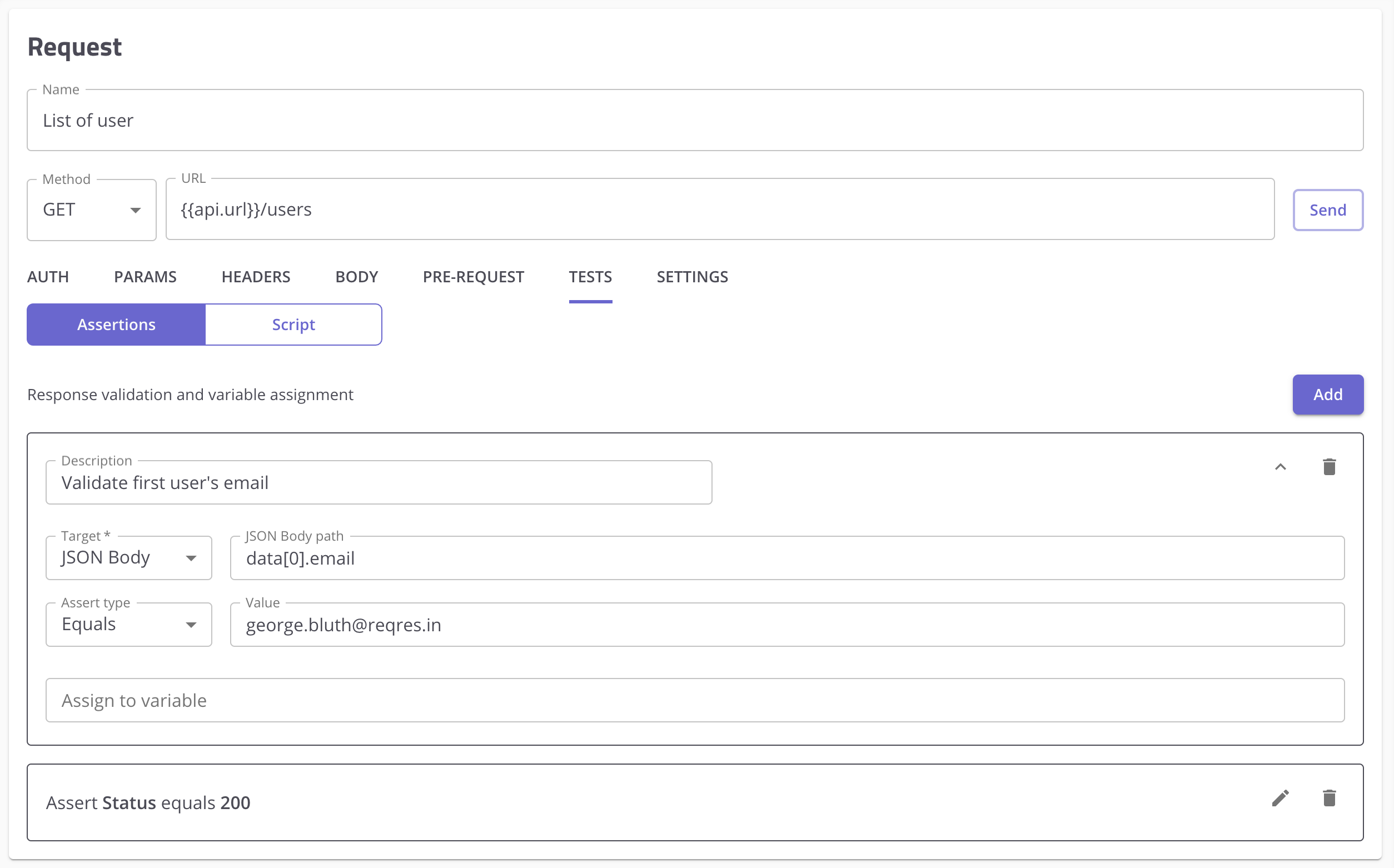
    API testing: mabl’s end-to-end API testing functionality improves test coverage by enabling users to easily validate API workflows alongside browser-based workflows in a single unified platform. Users can author and maintain API tests using mabl’s low-code interface or import and export Postman collections to leverage existing automation investments.

    Mobile web testing: New to the mabl platform, the desktop app includes support for mobile web testing. Users can validate responsiveness by creating and running tests across browsers and mobile device profiles in the same unified experience.

    “With the addition of the desktop app, mabl is the simplest, most capable intelligent test automation solution on the market,” says mabl co-founder Dan Belcher. “Quality professionals now have a seamless, low-code solution for their browser, API and mobile web testing needs, enabling them to automate even more routine tasks and focus their talent on higher-level quality initiatives.”

    Mabl users can automate web application tests faster than ever; and improve collaboration among cross-functional team members to not only run better tests, but lead with a culture of quality. Join us at one of our local Experience Tour events to learn more about this latest release, and to hear real-world success stories from mabl customers.

    About mabl

    Mabl is the intelligent test automation company that empowers high-velocity software development teams to integrate automated end-to-end testing into the entire development lifecycle. Mabl users benefit from a unified platform for easily creating, executing, and maintaining reliable tests that result in faster delivery of high quality applications. That’s why customer-centric brands like Splunk, NCR, jetBlue, Dollar Shave Club, Charles Schwab and many other enterprises rely on mabl for testing their business critical apps. https://www.mabl.com.