Tag: legacy code

  • IBM Previews Generative AI Tool for Converting COBOL to Java

    IBM Previews Generative AI Tool for Converting COBOL to Java

    IBM this week announced it will preview a generative artificial intelligence (AI) tool for converting COBOL code running on mainframes into Java. The preview will be available next month during IBM’s TechXchange learning event, IBM said.

    Kyle Charlet, CTO for Z software at IBM, said watsonx Code Assistant for Z makes use of large language models (LLMs) that IBM has trained to both convert and optimize Java code for z/OS running on IBM mainframes.

    Rather than converting COBOL into Java code line for line, the watsonx Code Assistant for Z improves the syntax of Java code generated using object-oriented techniques, he noted.

    IBM’s watsonx.ai code model, which will have knowledge of 115 coding languages, is based on 20 billion parameters that will eventually be applied to other programming languages such as PL/1, added Charlet.

    That model is the same core LLM that IBM used to create Red Hat Ansible Lightspeed, a tool to generate code for an IT automation framework that is scheduled for release later this year. In the future, IBM will also most likely employ generative AI to convert REXX code into Ansible code, said Charlet.

    IBM expects the final offering will combine generative AI tools with its existing Application Discovery and Delivery Intelligence (ADDI) inventory and analysis tool to streamline the modernization of legacy mainframe applications.

    The goal, however, is not to move COBOL applications off the mainframe. Java applications created using watsonx Code Assistant for Z will still call the same data sources, such as an IMS database or CICS transaction processing system, as the original COBOL application.

    That approach will make mainframes more accessible to a wider pool of developers that know Java, which should increase the overall pace of innovation for application development, noted Charlet.

    There are billions of lines of COBOL code currently running on mainframes that, in one way or another, need to be modernized as the pool of developers that know COBOL continues to shrink. Generative AI will make it easier to quickly assess, update, validate and test code, which should accelerate code conversion efforts that otherwise would take years to complete, said Charlet.

    It’s not clear how quickly organizations might move to modernize COBOL applications, but as the time and effort to do so decreases, so should the cost of modernizing legacy code. Most organizations still running z/OS on mainframes are committed to the platform, but if they can transition to Java, the overall cost of building and maintaining mainframe applications should decline.

    In the meantime, it’s not likely that AI will replace developers. IBM recommends that developers further optimize the Java code generated by watsonx Code Assistant for Z.

    Most developers are already using some form of AI to accelerate application development. The next wave of AI will see more widespread use of LLMs that are optimized for specific tasks and that generate more reliable results. After all, the quality of any output from an AI model is always directly related to the quality of the data used to train it. The narrower the set of vetted data, the more trustworthy the AI becomes—the opportunity for erroneous data to create AI hallucinations is a whole lot less than any general-purpose AI model could achieve with customization.

  • IBM LLM AI: COBOL to Java ASAP ¦ ARM IPO is GO!

    IBM LLM AI: COBOL to Java ASAP ¦ ARM IPO is GO!

    Welcome to The Long View—where we peruse the news of the week and strip it to the essentials. Let’s work out what really matters.

    This week: Translating legacy COBOL code to a slightly more modern language, and Arm will go public (again) next month. (more…)

  • vFunction Automates Conversion of Java Apps to Microservices

    vFunction Automates Conversion of Java Apps to Microservices

    vFunction has developed an eponymous platform capable of automatically converting a monolithic application written in Java into a set of microservices. The startup is emerging from stealth mode today.

    Fresh from raising $12.2 million in seed funding, vFunction CEO Moti Rafalin said the company’s platform employs dynamic analysis, static analysis, data science and automation to enable IT teams to reengineer, in a repeatable fashion, the source code used to create monolithic Java applications.

    As part of that process, vFunction also detects and eliminates code that is no longer executed to reduce the footprint of an application, minimize security risks and overall maintenance tasks.

    The vFunction platform is deployed as a server that communicates with agent software injected into the legacy monolithic application. The server then creates a microservice that is scanned by additional tools to determine how best to optimize it to run on, for example, a Kubernetes cluster based on the Red Hat OpenShift platform, said Rafalin.

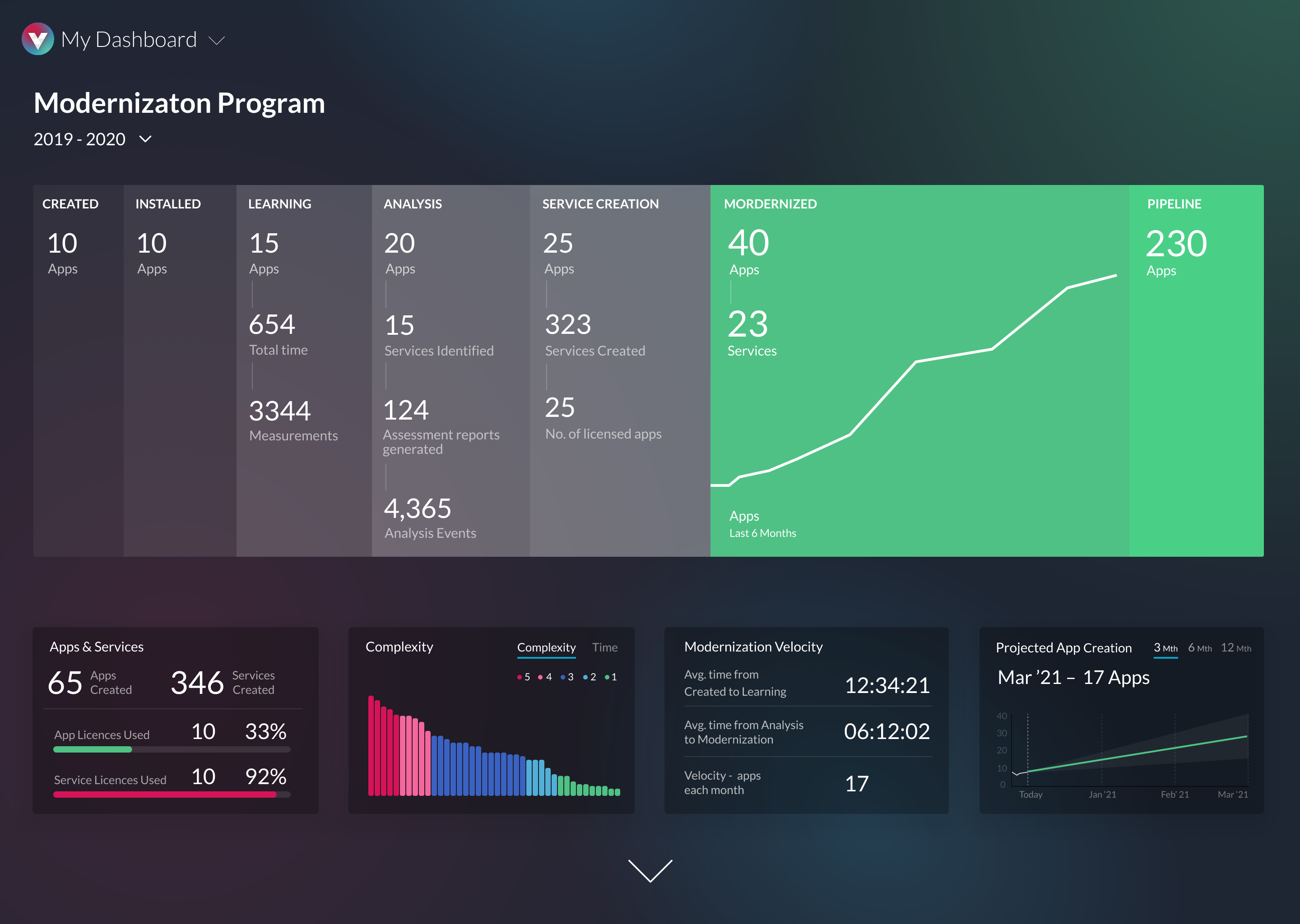
    IT teams can also employ vFunction to determine which monolithic applications are better suited to being converted into a set of microservices that can be automatically extracted into separate compilable projects. Each project comes with an estimated timetable for completion that can be accessed via a Modernization Factory Dashboard and Application Complexity Assessment tool provided by the platform.

    Rafalin said most monolithic applications are made up of large amounts of ‘spaghetti code’ that was added over multiple generations by different development teams. Manually analyzing that code as part of an effort to refactor a legacy application would require weeks of effort, Rafalin said. As such, the rate at which most organizations are re-engineering applications is extremely slow, he said.

    In fact, it’s not unheard of for IT organizations to to start, but quickly abandon such because the time and effort required proved too costly. vFunction claims its automated, domain-driven processes accelerate manual refactoring by a factor of ten, resulting in a savings of anywhere from $300,000 to $500,000 per application.

    Pricing for vFunction is based on a per-application model. The company has also established alliances with system integrators such as HCL Technologies, Tata Consulting Services and Wipro that are regularly contracted by IT organizations to refactor their applications.

    Of course, not every monolithic application needs to be converted into a set of microservices. However, most monolithic applications have components that would be easier to maintain and support as a distinct microservice. Organizations, in general, are embracing microservices to build applications that are more resilient. In the event a microservice becomes unavailable, requests for services are rerouted to another microservice to make sure the application degrades gracefully, rather than crashes altogether. The challenge is that, over time, the dependencies that can exist between hundreds of microservices can be more challenging to manage than those of the monolithic application being replaced.