Tag: Jenkins

  • New Relic Extends Observability Reach to More DevOps Platforms

    New Relic Extends Observability Reach to More DevOps Platforms

    New Relic today expanded its ecosystem by adding integrations between its observability platform and a wide variety of DevOps and cybersecurity tools. The New Relic observability platform now integrates with offerings from Atlassian, Amazon Web Services (AWS), CircleCI, Confluent, GitHub, JFrog, Lacework and Snyk and the open source Jenkins continuous integration/continuous delivery (CI/CD) platform.

    Peter Pezaris, senior vice president for strategy and experience at New Relic, said the goal is to make it simple to share analytics based on telemetry data collected from IT operations environments with the tools organizations rely on to build and deploy applications.

    In total, there are now more than 500 integrations with the New Relic observability platform, he noted.

    Only 27% of respondents to a recent New Relic survey reported that they have achieved full-stack observability and only 5% claimed they have a mature observability practice in place. A third (33%) of respondents also said they still primarily detect outages manually or based on complaints from end users. More than half (52%) of respondents said they experienced high-business-impact outages once per week or more and 29% said they take more than an hour to resolve those outages.

    On the plus side, nearly three-quarters (72%) of respondents expected to maintain or increase their observability budgets next year, with more than half (52%) expecting observability budgets to increase over the next year.

    Observability, in one form or another, has always been a tenet of any DevOps practice. For the most part, the best that could be achieved until recently was continuous monitoring of a set of pre-defined metrics. With the arrival of observability platforms, it’s becoming much simpler to not only monitor metrics but also launch queries that surface issues long before an IT service can be disrupted.

    An observability platform achieves that goal by making it possible to query logs, metrics and distributed traces in a way that surfaces patterns that have not been pre-defined. In effect, an observability platform makes it simpler to debug application environments where the number of dependencies that exist between services are becoming too complex to track or decipher manually.

    Of course, those applications will need to be instrumented using agent software capable of generating the data observability platforms require. Fortunately, open source projects such as OpenTelemetry are helping to drive down the total cost of instrumentation by making agent software more accessible to a wider range of application developers.

    It’s not clear how quickly IT teams will be embracing observability platforms, but there is now a clear opportunity to narrow the divide between IT operations teams and application developers, noted Pezaris. As each DevOps platform makes it easier to collect data via application programming interfaces (APIs), richer telemetry data can be collected, he added.

    In the meantime, as application environments continue to become more complex in the cloud-native era, most DevOps teams will need additional tools. Existing legacy monitoring tools don’t make it easy to discover, for example, which microservice might be adversely impacting the overall performance of an application because calls are being rerouted. The frustrating thing, as always, is that it can take days or weeks to pinpoint an issue that might take only a few minutes to fix.

  • CloudBees Demos Orchestration Capabilities of ReleaseIQ Platform

    CloudBees Demos Orchestration Capabilities of ReleaseIQ Platform

    At the online DevOps World 2022 event today, CloudBees demonstrated for the first time the capabilities of the application release management platform it gained last month through the acquisition of ReleaseIQ.

    Shawn Ahmed, chief marketing officer and interim chief product officer at CloudBees, told conference attendees that the ReleaseIQ platform will provide application development teams with visibility into precisely how their code is making it into production environments.

    Armed with those insights, it then becomes possible to understand exactly how the way commits are made during a build process are, for example, creating a workflow bottleneck, he added.

    The ReleaseIQ platform is designed to enable DevOps teams to both create and maintain pipelines using a no-code tool. That enables greater transparency into workflows via dashboards that also provide optimization recommendations.

    CloudBees already provides a Flow orchestration engine within its continuous delivery platform. However, ReleaseIQ provides a similar capability across multiple continuous integration/continuous delivery (CI/CD) platforms using a SaaS platform that is more accessible. ReleaseIQ can also be integrated with multiple platforms including CloudBees CI, Jenkins, CircleCI, GitLab, Bamboo, ArgoCD and others.

    Naturally, the current level of DevOps maturity varies widely by organization. However, as more organizations realize how much they depend on software to drive digital business transformation processes, the need to further automate application development and delivery becomes more apparent. While CI is widely used today, the number of organizations that have consistently implemented CD to automate application release management is still fairly limited. The underlying infrastructure that software is deployed on typically has a unique set of application programming interfaces (APIs) that each CD platform needs to support. Platforms such as ReleaseIQ provide a higher level of abstraction that simplifies managing the pipelines that deliver software.

    CloudBees is essentially positioning ReleaseIQ as the orchestration engine for both unifying pipeline management and, ultimately, enabling value stream management across increasingly complex application development environments. It may take a while to fully realize that ambition, but with the acquisition of ReleaseIQ, the company is now pursuing a more cloud-centric approach toward enabling DevOps teams to, for example, more easily reuse pipelines.

    DevOps teams, of course, have created a lot of scripts over the years to provide orchestration capabilities. The issue is that those scripts tend to be brittle in the sense they don’t scale especially well over time. They also tend to be poorly documented and challenging to maintain if the script writer leaves the organization. It’s not uncommon for new members of a DevOps team to replace a script with one they wrote simply because they’re more familiar with how it’s constructed.

    More than a decade after the launch of the Jenkins CI/CD platform, there are still plenty of manual DevOps processes that should be more automated. A no-code orchestration platform may prove to be a significant step toward automating a wide range of tasks that consume more time than they should.

  • CloudBees Acquires ReleaseIQ to Advance DevOps Orchestration

    CloudBees Acquires ReleaseIQ to Advance DevOps Orchestration

    CloudBees announced today it has acquired ReleaseIQ, a provider of an orchestration platform for automating software delivery via a software-as-a-service (SaaS) platform.

    Sacha Labourey, chief strategy officer for CloudBees, said the addition of ReleaseIQ to the CloudBees platform will provide more visibility into and control over software delivery on an end-to-end basis.

    CloudBees already provides a Flow orchestration engine within its continuous delivery platform. However, ReleaseIQ provides a similar capability across multiple continuous integration/continuous delivery (CI/CD) platforms using a SaaS platform that is more accessible.

    The ReleaseIQ platform is designed to enable DevOps teams to both create and maintain pipelines using a no-code tool. That enables greater transparency into workflows via dashboards that also provide optimization recommendations. That capability makes it much simpler to troubleshoot software deployments.

    Labourey said that while ReleaseIQ can be integrated with multiple platforms including CloudBees CI, Jenkins, CircleCI, GitLab, Bamboo, ArgoCD and others, the primary focus will remain on the open source Jenkins platform that still owns the lion’s share of the DevOps market. The overall CloudBees goal remains to employ automation and remove as much friction as possible from DevOps workflows as part of an ongoing effort to improve developer productivity, he noted. CloudBees, however, regardless of the level of DevOps maturity within any organization, is committed to meeting customers where they are versus requiring them to rip and replace existing investments, Labourey added.

    The overall level of DevOps maturity may vary widely both within and between organizations. However, as more organizations realize the extent to which they depend on software to drive digital business transformation processes, the need to further automate application development and delivery becomes more apparent. While CI is widely used today, the number of organizations that have consistently implemented CD is fairly limited. The underlying infrastructure that software is deployed on typically has a unique set of application programming interfaces (APIs) that each CD platform needs to support. Platforms such as ReleaseIQ provide a higher level of abstraction through which managing the pipelines that deliver software becomes simpler.

    In general, most organizations are trying to strike some level of balance between centralizing the management of DevOps workflows and enabling development tools to adopt whatever tools they prefer. It’s not uncommon for application development teams to independently adopt any number of tools that ultimately need to be integrated with a DevOps toolchain. Each of those tools, however, contains metadata that needs to be shared with a centralized orchestration engine that automates a range of tasks across multiple pipelines based on the metadata collected from each tool.

    There are, of course, still a lot of manual DevOps processes that should be automated. CloudBees is positioning ReleaseIQ as the orchestration engine for both unifying the management of pipelines and, ultimately. enabling value stream management across increasingly complex application development environments. It may take a while to fully realize that ambition, but with the acquisition of ReleaseIQ, a new foundation is being laid.

  • DevOps World 2022: A DevOps Retrospective

    DevOps World 2022: A DevOps Retrospective

    With the seminal IT conference DevOps World 2022 in Orlando September 26 to September 29 upon us, I think about the pivotal industry conferences and events critical to my path to the cloud, DevOps and cloud-native. It brings me to this brief retrospective, highlighting some of the most significant influences that still guide my path today.

    I highlight these for you as conferences, books, emerging development tools, and changes in infrastructure delivery all played critical roles in my completely rethinking of how we create software through DevOps.While leading IT for a global R&D industry consortium from 2010 to 2016, I was unknowingly in the middle of a significant shift from designing network protocols to entirely moving to the cloud, creating self-service development portals and automating the development process.

    This journey began partly when a friend and colleague, Alan Shimel, creator of the then-new devopsy.kinsta.cloud site, said, “Check out this thing called DevOps … and you gotta read this book!” Looking back at my Amazon order history, I see I first purchased The Phoenix Project in November 2013. The book immediately became the main topic of discussion among my engineering team. While we didn’t label it as a DevOps tool then, Jenkins established the basis of our DevOps toolchain across multiple software-based research projects. Other technologies, including Artifactory, Maven, Git, GitHub, Bamboo and OpenShift, for example, quickly followed, enabling us to spin up development environments for many new software projects. In less than a year, we completely retooled IT from a significant bottleneck to becoming the easiest path to creating new software projects by equipping teams with DevOps, development tools, environments and cloud platforms.

    Jenkins World (now DevOps World) helped me understand the central roles CI and CD played in creating automated workflows and delivering software more quickly from development into test environments. The first AWS re:Invent helped me rethink the cloud, from a data center scarcity mindset to making compute, storage and bandwidth resources harnessed through automation and a credit card. I wrote my first post about DevOps in 2014, The DevOps Journey, where I did my best to make sense of precisely what DevOps is.

    As I go back and reread that post, I’m surprised how much of those thoughts still apply in 2022. Today, I continuously read many technical books, learn from thought leaders and attend influential conferences, including this year’s DevOps World. I wonder what will change how we think about and create software again in the next decade!

    If you can, join us in Orlando for DevOps World. Techstrong.TV will be broadcasting live from the event; if you can’t make it, we’ll keep you updated on all of the developments announced there. Also, join us in November for our own DevOps Experience virtual event, which will highlight DevOps Everywhere: The Edge and Beyond. Hope to see you soon!


  • Who Controls Your Build Process?

    Who Controls Your Build Process?

    We have come a long way in a short time in IT, and are currently in a ‘digestive’ state, where we take a bit of a break and prepare for the next wave of changes. Okay, not really a break, just a change in what we’re looking at.

    In the old days, CPU, memory speed, network throughput and disk access times would be in constant flux; one would be the server performance bottleneck and, when that was resolved, another would be the bottleneck. We’re in that kind of relationship right now. The majority of organizations are now using DevOps and our focus is currently on DevSecOps along with multi-cloud. Along the way, by unwritten consent, vendors have started calling Kubernetes “cloud.” This is totally amusing to me as a pundit, because Kubernetes is really a “cloud killer.”

    All public clouds are based upon the premise that they will have massive lock-in. And Kubernetes breaks that premise—unless an organization uses a cloud vendor’s customized version of Kubernetes; then they have other issues. No, I’m not blind, I am well aware that there are other reasons that cloud lock-in occurs, but there is a difference between “We chose this bit of custom functionality, well aware it locked us into our chosen vendor,” and “The act of using this vendor locks us in.” Multi-cloud and repatriation are things that would not be popular enough to talk about if not for tools like Kubernetes.

    So the next bit, IMO, is that once cloud portability is an established fact at most organizations, we’ll circle back to another iteration of build management. Many organizations are still on CI/CD iteration 1.0 and using Jenkins to manage their build process. While companies like GitLab and Atlassian have taken a bite out of the Jenkins-as-build-management phenomenon, they are also solid lock-ins through value add, and both of these vendors (plus most others in wave 2.0 of DevOps-centric build management) are heavily invested in the cloud. While the ability to build in the cloud is a very good thing, the requirement that a tool which is central to your toolchain be run from the cloud is not.

    That means we’ll be circling back to visit this issue again. And probably sooner rather than later. There is no denying that budgets are going to decrease for the bulk of us in the coming months, and I have no idea when they’ll rebound. That means that recurring expenses—like mandatory monthly subscription fees—will take a hit in B2B the same as they are in B2C. Don’t shy away from those assessments. Actually look objectively at your monthly payment plans and determine the ROI of each subscription your organization uses. Years ago, organizations centralized and reduced the number of development tool subscriptions they managed; this is just a continuation of that process in modern times. Spend your organization’s money where it will reap the most rewards instead of “where we always have.”

    You also want to make sure that you trust the company in charge of your builds, and that you believe they are stable. Over the years, we’ve seen several examples of companies that appeared stable when they were not; actually making the assessment is important.

    You’re building and maintaining the systems that keep the organization online and productive. Don’t hesitate to cut the fat. And don’t hesitate to maintain control. If the tool and its lock-in are forcing the org to work in ways that don’t fit the culture, look at alternatives.

    In short: Keep your options open. We know that money will be tighter in the near future, so let’s be sure we’re set up for that and retaining control of our build process. And keep rocking it.

  • How to Securely Manage Secrets Within Jenkins

    How to Securely Manage Secrets Within Jenkins

    The continuous integration and continuous delivery (CI/CD) pipeline is a fundamental component of the software delivery process for DevOps teams. The pipeline leverages automation and continuous monitoring to enable seamless delivery of software. With continuous automation, it’s important to ensure security for every step of the CI/CD pipeline. Sensitive information like access credentials is often necessary at various stages of the pipeline. Securing this information is vital to maintaining a strong security posture. This post discusses how to secure secrets within Jenkins CI/CD pipelines.

    Using Secrets in CI/CD Pipelines

    As previously mentioned, CI/CD pipelines often need access to sensitive information like passwords and API keys. Hardcoding them in plaintext represents a critical security risk and violates auditing guidelines in most compliance frameworks. A mechanism to make use of these credentials without exposing them unnecessarily is important for automating software delivery.

    The collection of tools and techniques used to store, manage, and access these credentials securely is known as secrets management. Secrets are broadly used in IT, DevOps, and cloud environments.

    Secrets include:
    ● App-generated passwords
    ● System-to-system passwords
    ● API keys
    ● Private encryption keys
    ● One-time passwords
    ● Certificates
    ● Privileged account credentials

    CI/CD pipelines integrate multiple configuration management platforms, requiring secrets to enable service-to-service communication. These platforms also need secrets to authenticate entities requesting access to SSH servers, databases, HTTP services and other resources.

    The Purpose of Secrets in CI/CD

    Secrets are used to manage access permissions for entities within the CI/CD pipeline. Some use cases include source control management, infrastructure connection, collaboration providers and verification. Let’s discuss each of these use cases in more detail.

    1. Source Control Management
    Version control systems, such as Git, foster collaboration between multi-personnel teams. These systems help maintain cohesive application development by managing and storing code contributions from multiple developers. Since source code can comprise some of an organization’s most valuable assets, it is important to properly authenticate and manage access permissions for Git repositories.

    Secrets management systems are important in securing credentials used to connect contributors’ machines to the repositories. The secrets themselves are not stored within version control, as malicious users can access them and orchestrate security attacks. Instead, they are stored in special, sensitive files that are designed to be excluded from the repository’s storage and logs.

    2. Infrastructure Connection
    CI/CD pipelines are often composed of different services residing on multiple hosts distributed across a disparate infrastructure. These hosts constantly communicate with each other, as well as with services through API calls, to achieve the required application functionality. Secrets such as API keys and system-to-system passwords enable a secure connection between the infrastructure running these services, allowing for multi-tenant and multi-cloud CI/CD pipelines.

    3. Collaboration Providers
    CI/CD pipelines encompass collaborative activity across multiple development, operations and quality assurance environments. These teams rely on multiple tools and frameworks to collaborate and share information. Using secrets for collaboration helps teams ensure secure communications and provides a layer of trust between both parties.

    4. Verification
    Identity verification is a crucial element of CI/CD and application security. Secrets are used to ensure security and privacy for CI/CD pipelines by connecting applications to identity and access management (IAM) solutions. These solutions provide an external database of user roles and permissions, letting users log in to the applications without exposing their credentials within the CI/CD pipeline.

    Examples of Secrets Usage in CI/CD

    To set the stage for improving secrets management, it’s helpful to understand some simple use cases. In this section, we’ll provide some basic examples of CI/CD configuration that requires access to sensitive credentials or other data for functionality.

    1. AWS Credentials
    As one of the leading cloud SaaS platforms, AWS is a common choice for most cloud-based infrastructures. Interacting with the AWS API to provision and query resources typically requires the use of a secret key/access key credential pair. Protecting these credentials is critical to maintaining the security of an AWS account.

    2. Infrastructure-as-Code (IaC)
    Modern application architecture often depends on infrastructure as code (IaC) to deploy the underlying systems that the workloads run on. Codifying this configuration makes it much easier to maintain a repeatable, scalable and secure infrastructure. In the course of provisioning this infrastructure, engineers will often need to deploy sensitive information to the nodes, such as SSH keys and API credentials. Automating infrastructure provisioning via IaC and CI/CD is a common pattern and managing secrets is an important component of that workflow.

    3. Environment Variables
    Environment variables, a common convention for configuring processes on a computer, see consistent usage in most CI/CD pipelines. The ability to dynamically set values and retain them for consumption by other processes and scripts is a powerful abstraction when dealing with CI/CD workflows. In many cases, sensitive values will need to be passed via environment variables, again highlighting the need for effective secrets management.

    Securing Secrets Within Jenkins

    Jenkins requires access to a large number of credentials to interface with all the platforms and applications that make up a complete CI/CD pipeline. Jenkins ships with a default credentials plugin that offers a built-in secrets store. It also comes with the credential binding plugin which enables the binding of credentials to environment variables.

    Storing secrets in the Jenkins controller enables applications in the pipeline to reference secrets multiple times, even when they’ve only been created once. While the Jenkins credentials plugin offers a simple way to store and manage secrets, any Jenkins administrator and pipeline author can access them. Therefore, DevOps teams should ensure proper configuration of access rights to keep the CI/CD pipeline secure.

    This section discusses some of the available options for securing secrets in Jenkins.

    Types of Secrets Jenkins Accepts

    Credentials supported by the Jenkins secrets plugins include: Secret text, username/password pairs, secrets file, SSH username and certificates. For a limited number of secrets, these can be stored individually, whereas a large number is typically best managed with a credentials file.

    Managing Secrets in Jenkins

    If you’re ready to inject secrets safely into your Jenkins pipelines, follow these best practices.

    1. One-Time Passwords (OTPs)
    One-time passwords help prevent user account takeovers by ensuring that a username-password combination can not be used more than once. While the account retains the username throughout, the user is sent an OTP every time they log in. This keeps Jenkins administrators’ and users’ accounts safe, preventing secrets from being exposed to unwanted individuals.

    2. Avoid Hard-Coding Secrets
    Remove any secrets that have been hardcoded into CI/CD configuration and Jenkinsfiles. This keeps sensitive credential information away from the pipeline, making it inaccessible to malicious actors.

    3. Reduce Attack Surface by Storing Secrets in Multiple Jenkins Files
    Storing secrets in multiple files helps enforce the principle of least exposure for credentials. This makes credentials available to the minimum number of applications and users possible.

    4. Use Authorization Controls to Manage Secrets Permissions
    Developer teams should configure security checks to ensure the application requesting resource access has the properties of a valid application. These applications should be able to access various resources based on permissions assigned in RBAC policies.

    5. Follow the Principle of Least Privilege
    Only grant permissions to applications that absolutely need access to secrets within the pipeline. Teams should consistently audit permissions to maintain the principle of least privilege throughout the pipeline’s lifecycle.

    Managing and Storing Secrets

    This section walks through three basic examples of actually using Jenkins with secrets and the Akeyless secrets management platform.

    ● The first example will highlight a completely insecure example: Using plaintext environment variables to store sensitive credentials.
    ● The second example will focus on using native Jenkins features and plugins for secrets management.
    ● The third example will show some of the benefits of using a third-party tool for secrets management.

    Plaintext example
    To get started, we’ll create a basic “freestyle” project in Jenkins, and connect it to a GitHub repository:


    Figure 1: Project creation

    Regardless of how we choose to manage our secrets in code, it makes sense to use the Jenkins built-in mechanism for credentials to access the GitHub repository:

    Figure 2: Configuring GitHub credentials

    Our actual code will be a very basic Python application that makes an API call. The API requires a simple API key in the form of a text string for authentication:

    #!/usr/bin/env python
    import os
    import requests
    api_key = os.environ[‘API_KEY’]
    response = requests.get(“https://thedogapi.com/v1/breeds?api_key={}”.format(api_key))
    print(response)

    Jenkins provides the ability to configure environment variables; however, without additional plugins, they can only be set globally to the Jenkins environment or instance:
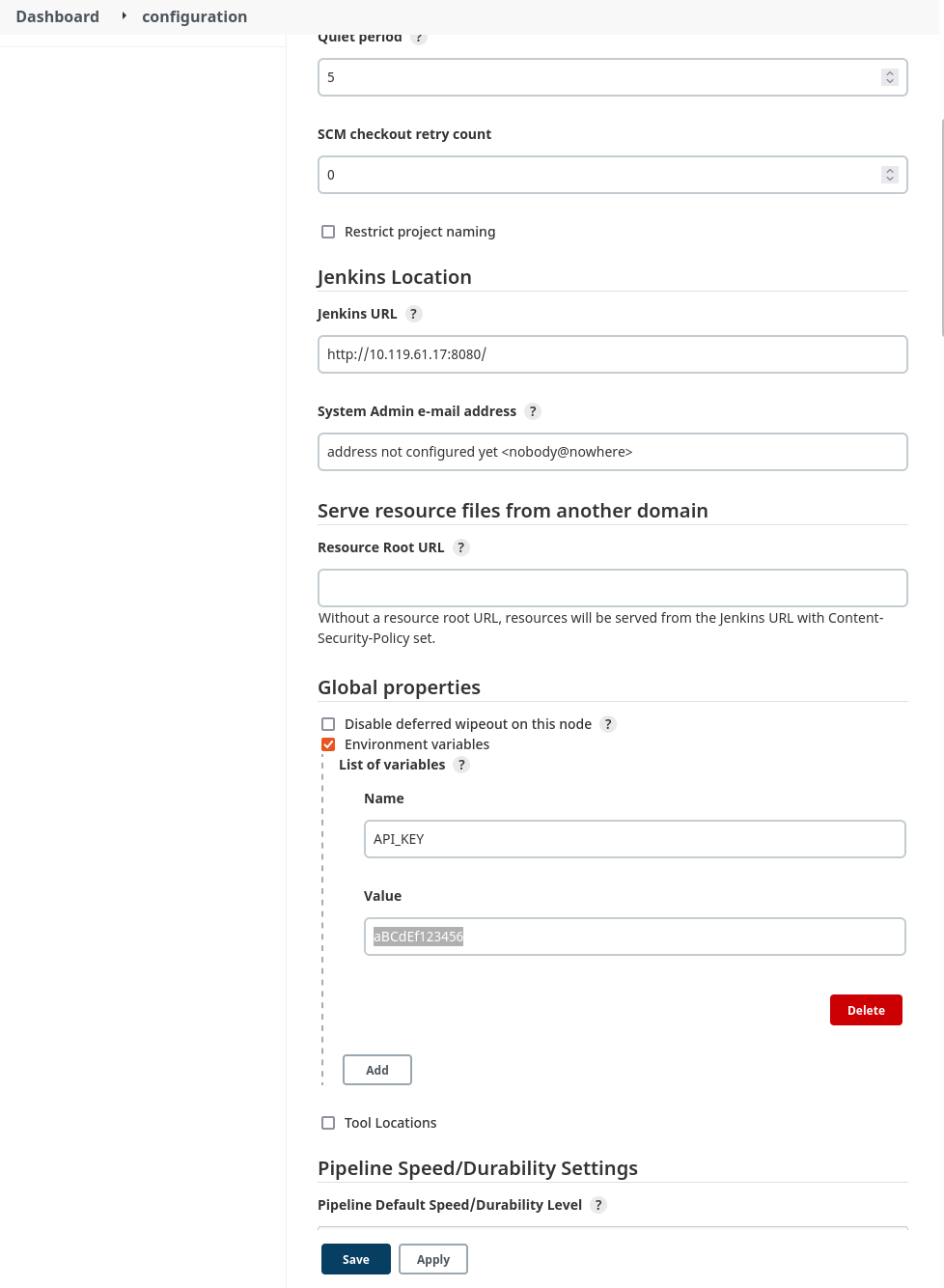
    Figure 3: Configuring a global environment variable

    The code will read the API key from the environment variable that was just configured. Here’s the configuration for the build steps:
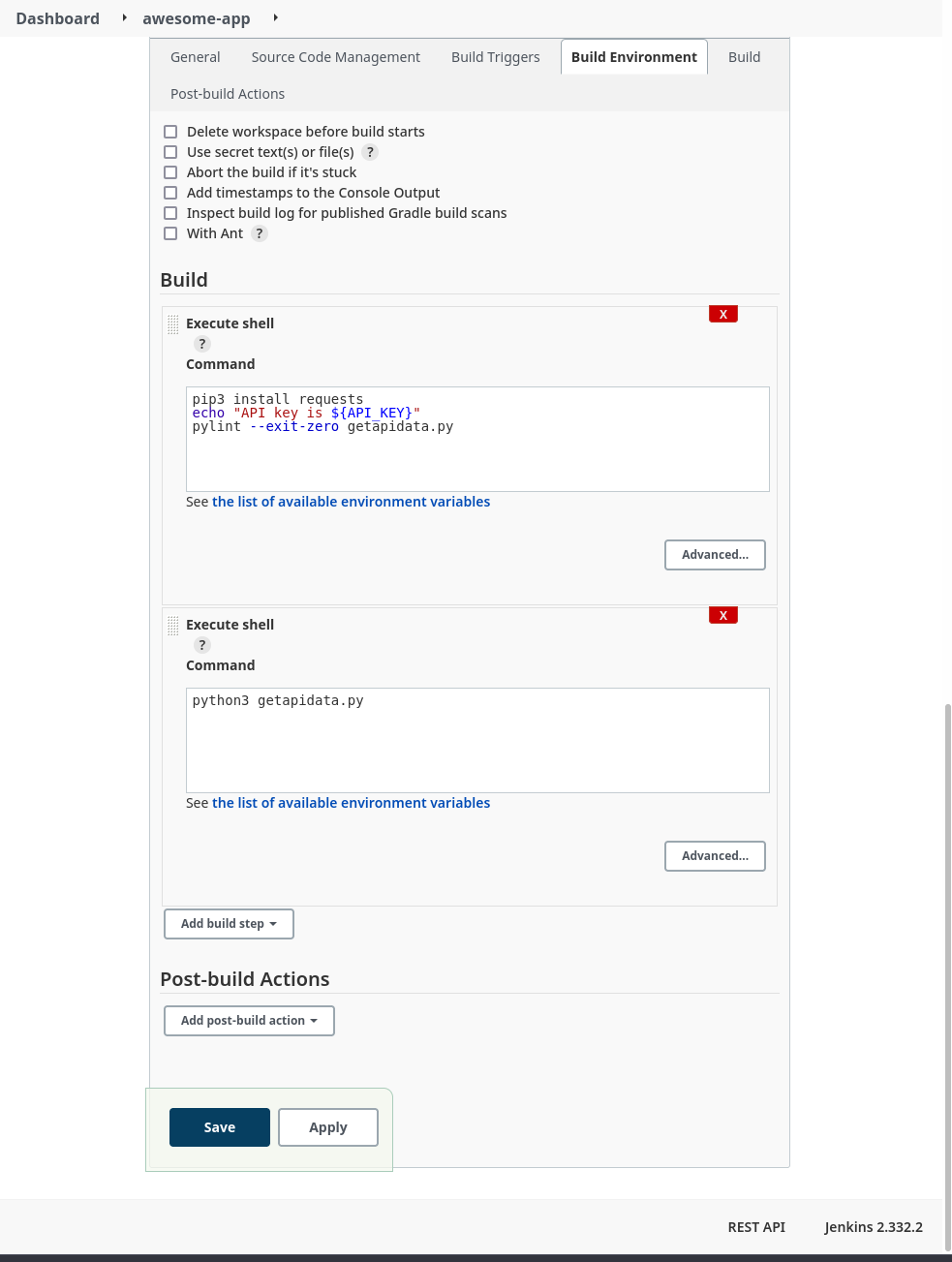
     

    Figure 4: Build configuration

    The build steps run some simple linting and then actually execute the code. Here’s a look at part of the log from a successful build:


    Figure 5: Build log with exposed secret

    The API key has obviously been exposed in a plaintext log with a simple directive in one of the build steps. A minor misconfiguration could potentially cause a breach or compromise.

    Jenkins Secret Text Example

    Now we can try to improve the security of our build environment by using the built-in credentials handler:


    Figure 6: Configure build environment to use secrets

    In this example, we’ll use a simple “Secret text” credential binding to store the API key:


    Figure 7: Adding a secret credential

    Next, we configure our build job to use the new credential variable:


    Figure 8: Updated build configuration

    Now, after running another build job, we check the build logs again:
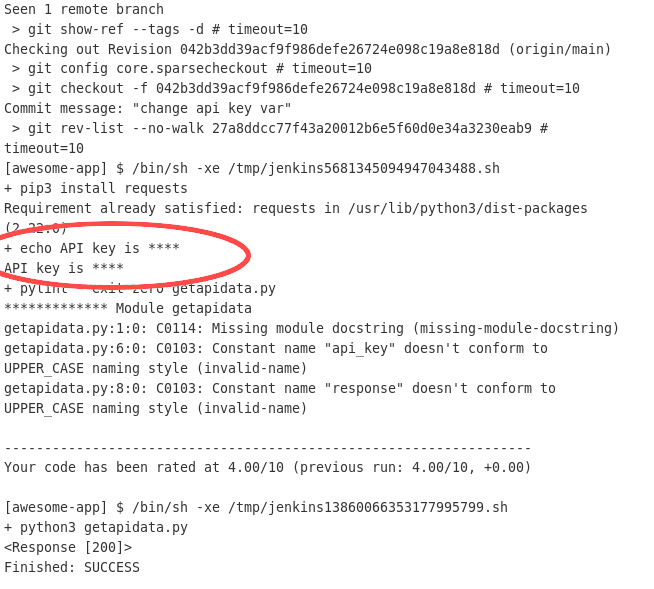
     

    Figure 9: Build job with obfuscated secret

    Even though we configured the build step to print the variable contents to the log, the Jenkins credential handler knows that the value is sensitive and obfuscates the actual value in any log or output.

    Although this measurably improved the security of the build, there are some caveats. While this works well enough for a small Jenkins deployment with a limited number of users, managing access and correct permissions scoping for multiple users and teams across a large, distributed Jenkins architecture quickly becomes complicated and difficult to manage effectively. In addition, the secret value stored in the credential variable is still accessible to every Jenkins instance in the cluster, as well as any user with the appropriate permissions.

    If any node is compromised, secrets across multiple deployments and contexts could be at risk. Users still have to manually secure and configure Jenkins infrastructure that now doubles as secrets storage. What if there were a way to use sensitive credentials without ever having to store them in Jenkins itself?

    Secrets Management Tool Example

    Let’s try using Akeyless to manage our secrets. Since we’re integrating with a Jenkins deployment, we can follow the documentation for working with Jenkins. Akeyless integrates with the publicly available Hashicorp Vault plugin, so it’s simple to get Jenkins set up.

    Next, we’ll create a free account with Akeyless, and configure a secret:

    Figure 10: Creating a secret in Akeyless

    Figure 11: Creating a secret (cont).

    The next step is to create an Access Role that has permission to access the secret that was just created:

    Figure 12: Create a role

    Now we need to give our Access Role the correct permissions to view the secret:

    Figure 13: Giving the role permissions

    The last thing we’ll need to create on the Akeyless side is an authentication method. This is how we can give external entities, like our Jenkins deployment, the ability to make API calls to Akeyless and retrieve secrets:

    Figure 14: Create an auth method

    Once the authentication method has been created, be sure to save the Access ID and key by downloading the CSV file; the values will not be displayed again otherwise. Finally, we need to associate our newly created role with this access method:

    Figure 15: Associating the auth method with the access role

    The next step is to configure the Jenkins build environment according to the Akeyless documentation referenced in a previous step:

    Figure 16: Jenkins build configuration with Akeyless

    Now we’ll run another build, this time configured to utilize the Akeyless vault we’ve configured:

    Figure 17: Build log with Akeyless configuration

    In the logs, there is now a step present where Jenkins retrieves the secret from the Akeyless Vault. The credential value is also still obfuscated in the build log. We’ve now got a working, third-party secrets management platform integrated with our Jenkins instance.

    It may seem like extra steps just to achieve the same outcome, but an external tool focused entirely on secrets management is a powerful abstraction. Jenkins is a CI/CD tool first and foremost, with secrets management provided as an add-on. In that context, it will never be able to provide the first-class features, management capabilities, and security guarantees that a dedicated secrets management platform can:

    ● Managed infrastructure with SLA guarantees
    ● Zero-knowledge encryption
    ● Intuitive, accessible secrets management and organization
    ● Integration with industry-standard DevOps tools and platforms

    A tool like Akeyless also does away with having to manage complex, self-hosted infrastructure. We were able to have a working secrets endpoint in just a few clicks.

    Conclusion

    Since security is a top consideration for CI/CD pipelines, it is important to follow best practices when using secrets in Jenkins. Jenkins pipelines rely on secrets for identity verification, collaboration, and infrastructure management. CI/CD secrets management presents a challenge for most teams because of how complex it is to implement access control at a granular level.
    With a secrets management tool, Jenkins users get a centralized and secure resource to manage the many credentials that are required to operate CI/CD pipelines. They benefit from using a simplified, standardized approach to access all secrets they need, without worrying about security. Simply put, a secrets manager accelerates DevOps workflows.

    Meanwhile, security teams benefit by gaining full visibility into where secrets are, and how they are used. With automated processes and centralized access policies, a secrets management platform helps security teams stay compliant with security regulations as well.

  • What Donuts Teach Us About DevOps and Delivery Risk

    What Donuts Teach Us About DevOps and Delivery Risk

    Today, most DevOps teams do not think too much about their approach to risk. Usually, the typical attitude focuses on what to add to reduce risk further. In other words, “Can we add more tests? Can we deploy more carefully?” More tests, more processes and less risk are all obviously good things. Or are they?

    As a programmer, I’ve seen a lot of projects where there are so many tests and so many processes that they actually become counterproductive. Those ‘overheads’ presumably do reduce risk, but nobody knows by how much. I call this attitude ‘blind risk avoidance.’ This line of avoidant thinking usually builds up over time as we react to failures. It’s a very natural reaction.

    But when risk avoidance becomes your standard modus operandi, your delivery cycle gets slower and slower over time. Your team starts to feel they are trapped in molasses but, as time goes on, they not only gradually train themselves to tolerate this but to actively justify that it’s a good thing. In the meantime, nobody pays attention to the fact that your software is losing a competitive edge and that you’re being out-innovated and out-executed by others. Nobody pays enough attention to engineering team attrition; losing people as they drop off, one-by-one to move to more modern software development teams with less baggage. The ultimate conundrum lies here: If you move too fast, you break things. But if you move too slowly, your business and your team are doomed.

    So what is the optimal approach for DevOps teams to take when it comes to risk? The truth is, neither extreme is desirable. Blind risk avoidance leads to a failure of value delivery. On the other hand, blindly ignoring risk means crashing and burning.

    The ideal balance lies in not avoiding risk entirely or ignoring the reality of risk. Instead, a sensible middle ground can be found in taming risk.

    Moving forward, DevOps teams and developers must focus on taming risk to deliver software confidently with data-driven actions, speed and quality. 

    Automation Can Reduce Operational Overhead

    Taming risk should become a larger part of DevOps culture. One of the most famous ways this approach has been adopted is by Google’s site reliability engineering (SRE) team. 

    Google’s SRE team embraces two key principles when it comes to taming risk: Automation for reduced operational overhead and structured and rational decision-making for better, data-driven choices.

    To explore this mindset of risk-taming at Google, let’s dive into how the SREs use automation to slash waste, save time and reduce repetitious, low-value tasks and tests. 

    At Google, SREs are software engineers with an extremely low tolerance for repetitive, reactive work. (Aren’t we all?) But here’s the difference at Google: Thanks to a workplace culture of taming risk, operations that do not add value to a service are avoided or automated away.

    The vast majority of DevOps teams hold the same beliefs as Google: That automation cuts down on waste and saves everyone time.

    We all know automation allows for lower operational overhead, frees up software engineers to proactively assess and improve the services they support and boosts team morale. No one wants to spend their time or energy on repetitive, low-value tasks. Automation frees up DevOps teams to expend their energy on what matters most: Continuous quality.

    Bottom line? Automation is integral to the idea of taming risk. Automation of repetitive, low-value tasks is the perfect way to embrace a mindset of taming, not avoiding or ignoring risk entirely.

    Data-Driven Decisions

    Another way that Google’s SRE team tames risk is through structured and rational decision-making based on data. 

    Data-driven decisions are crucial to the success of any software engineering team, project or mission. Without proper data and feedback, there’s no way for software engineers to make the best, most calculated decisions and mitigate risks. 

    A data-driven decision methodology can—and should—be applied to DevOps testing cycles. 

    Another key aspect of data-driven decisions that speaks directly to the concept of taming risk? Service level objectives (SLOs).

    A service level objective is an element of a service level agreement that measures the performance of the service provider. SLOs are created (and agreed upon) between the service provider and the customer and help to mitigate disputes between providers and customers.

    Now, let’s take the concept of SLOs and apply them to engineering and QA teams.

    In traditional organizations, engineering and QA are forced to interact intentionally with a healthy amount of tension. One team produces software and the other team tears this software down. While this kind of necessary and healthy conflict between teams can lead to better results, the inherent push and pull between engineering and QA can create an excess of interorganizational infighting.

    Engineering teams will always advocate for more velocity or blind ignorance of risk, above all else. On the flip side, QA will always advocate for quality, or blind avoidance of risk, above all else.

    Of course, neither side is entirely correct (nor incorrect).

    Instead, the solution to this tension lies somewhere in the middle: The taming of risk, not ignorance or avoidance of risk. This is where an SLO, or the numeric target that represents ‘somewhere in the middle,’ comes into play. For engineering teams focused on velocity and QA teams focused on quality, creating an SLO—a happy medium to work toward with regard to risk—will create a more balanced workplace culture. In short, this approach can be considered a taming of risk.

    ‘Donut’ Slow Velocity

    Now, we’re finally going to get to the donuts. To demonstrate how embracing a mindset of taming, not avoiding, risk can create better, happier and faster DevOps teams, let’s take a look at Krispy Kreme Donuts.

    Krispy Kreme churns out millions of delicious, hot, glazed donuts every single day. However, during production, it’s inevitable that one or more of those donuts will be flawed. (I know, you’re asking, “Is there really such a thing as a flawed donut?!” For the purposes of this analogy, let’s say yes, there is.)

    One common donut defect occurs when the donuts bunch up on the production line and clog it.  Now, let’s assume this common error is caused by the speed of the line. If the Krispy Kreme team attempts to solve this problem by pushing the line even faster, tolerance gets smaller and the risk of even more smashed, defective donuts only rises. That’s certainly not a solution to this issue.

    On the other hand, if the Krispy Kreme team slows down the donut production line speed, there will be a smoother—albeit slower—operation.

    Is Krispy Kreme better served by slowing down its entire production line and sacrificing its velocity to eliminate the risk of a potential defective donut? Of course not! 

    If that’s not true, then is Krispy Kreme better served by cranking up their production line speed to go as fast as possible, regardless of the risk of defective donuts? Again, of course not!

    For sweet success, Krispy Kreme must embrace a mindset of taming risk. By baking careful measurement and an iterative feedback loop into their donut production process, Krispy Kreme is better able to create delicious, high-quality donuts at an optimal speed, producing some flawed donuts. This balance of speed with quality creates the best economic outcome and the mindset and measurement allow for a constant evolution to risk-taming in the future. As the production line changes, the optimal speed also needs to evolve.

    DevOps teams should take this same approach. Tame the risk without sacrificing speed and quality. ‘Donut’ slow velocity to fix a few minor issues!

    If you’re still not convinced, here’s another way to think about taming risk that is decidedly less delicious than warm, glazed donuts: Taxes. 

    The IRS balances velocity and accuracy during tax season as they process millions of tax reviews. While suspect returns are flagged for audits, the IRS simply cannot catch every single flawed tax return. It’s not economical or even possible to run detailed audits on every single problematic tax return, every single year.

    So, instead, the IRS tames its risk with automation and data-driven decisions. The IRS focuses on creating and using methods to detect patterns that correlate with flawed tax returns. Then, once these data-driven problem returns are detected by automation, experts can devote their precious time and mental energy to tackle the biggest of the problematic returns. 

    Again, this approach to taming risk creates an inherent balance between quality and speed and allows for an evolution of the process as economic activities and laws evolve.

    Whether you love eating donuts or doing your taxes, the bottom line is clear. Most organizations need to balance potential risks with maintaining speed, quality and team morale. DevOps teams are no different. 

    How to Tame Risk in DevOps Teams

    So how can we, as DevOps teams, tame the risk?

    The basic idea here is to do smarter testing, not just more testing. The good news is that if you have a reasonable level of automation, the data coming out of your existing automation can make your testing smarter. Approaches like predictive test selection can let you spend your computer hours more meaningfully, allowing you to improve speed and quality at the same time. Approaches like flaky test insights can let your precious engineering resources focus on the most impactful effort to improve the quality of tests.

    The Power of Taming Risk

    What is the right balance between speed and quality? This is the constant question DevOps teams face. But, here’s how I answer this riddle: Taking calculated risk is the most logical and rational approach in the workplace.

    It’s easy to avoid risk. Anyone can skirt around potential pitfalls by avoiding new solutions and sticking to the same old methodologies. But it’s so much more satisfying to take a calculated risk rather than ignore or avoid the risk outright. 

    If you want to improve the velocity and the happiness of your DevOps team, it’s time to embrace a new mindset: Tame the risk, gain control.

  • Best of 2021 – 11 Open Source DevOps Tools We Love For 2021

    Best of 2021 – 11 Open Source DevOps Tools We Love For 2021

    As we close out 2021, we at devopsy.kinsta.cloud wanted to highlight the most popular articles of the year. Following is the eighth in our series of the Best of 2021.

    DevOps isn’t just a cultural shift — it requires great tools to come to fruition. Below, we’ve pulled together a list of some of the most well-loved DevOps tools available today. But, throwing loads of money into fancy SaaS solutions can quickly gobble up the cloud budget. These DevOps tools all are open source, and enable everything from container builds and orchestration to microservices networking, configuration management, CI/CD automation, full-stack monitoring and more. Here are some of our favorite open source DevOps tools for 2021.

    1. Kubernetes

    With the ubiquity of microservices and container-based software, it’s no surprise that Kubernetes tops this year’s list of open source DevOps tools. Kubernetes, adoption of which rose by 48% in 2020, is used to orchestrate containers. Instead of releasing microservices manually, Kubernetes can automate deployment, maintenance and scaling of groups of containers in production. Kubernetes, sometimes written as K8s, is hosted by the Cloud-Native Computing Foundation (CNCF).

    2. Docker

    Docker, the software, is a free and open source platform used to build, ship and run an application as a lightweight container. Containers package up the binaries, libraries, configuration files and dependencies required for a program to run. Over the past decade, containers have played a key role in agile development, and Docker containers led the revolution. At its core is the Docker Engine. Docker Hub is also an excellent resource for finding and sharing prepackaged functions as containers. Also, to plug container vulnerabilities, it may be helpful to use open source container auditing tools like Docker Bench or Anchore.

    3. Istio

    Microservices are a handy development style, yet they bring new development and architecture concerns. Namely, how do we apply networking policies like security, encryption, observability and telemetry elements consistently across all our services? Well, service mesh is one answer. Service mesh places a sidecar proxy next to each container and abstracts these networking capabilities to a control plane. Istio is one such open source service mesh that has seen widespread adoption. Istio is built on Envoy, opening it up to plugins and extensibility options. We should also mention Linkerd and Kuma as viable open source service mesh alternatives.

    4. GitHub Actions

    GitHub is arguably the most popular source control and software collaboration platform on the planet. The GitHub platform itself, based on Git, has seen some significant updates in the past few years. Most notable is the GitHub Actions capability. GitHub Actions enable software packages hosted on GitHub to accept inputs and trigger other processes. This could help automate some cool DevOps workflows within GitHub, such as code reviews, branch management or CI/CD processes — the combinations of possibilities here are endless. GitHub Actions are, essentially, YAML files hosted in GitHub repositories that leverage GitHub webhooks. Though this is more of a feature than an open-source tool, we feel it’s important to include here. Actions is free for public repositories with a limit of 100 actions.

    5. Jenkins

    A big part of the DevOps philosophy is finding ways to automate and deploy new iterations more efficiently. Part of this goal is creating a streamlined continuous integration and continuous delivery (CI/CD) pipeline. Jenkins is an open source automation server with hundreds of plugins to automate the building, deployment and testing of software projects. Although GitHub Actions could theoretically replace a CI server in the future, CI tools like Jenkins, CircleCI, TravisCI and GitLab Community Edition still are preferred by many DevOps teams.

    6. Prometheus

    Metrics and alerting systems are crucial for site reliability engineers to visualize applications and react to issues. Prometheus, a graduated CNCF project, is a well-loved open source monitoring solution. A Prometheus server collects time-series metrics by scraping HTTP endpoints and generates a system to interact with this data, offering deep querying, visualization, storage and other capabilities. Check out this Awesome Prometheus list for Prometheus introductions and additional resources.

    7. Ansible

    Ansible is all about automation. Ansible, an open source project sponsored by Red Hat, can be used to automate things like cloud provisioning, networking, deployment, configuration management and other tasks. Ansible has a simple yet effective architecture that is relatively easy to assemble — all you need is a text editor and command line. You describe your infrastructure in a text document and organize your desired states in a playbook. For an example in practice, see how OpenIO uses Ansible. “Ansible is our standard tool not only to deploy the OpenIO core, but also our WebUI, OIO-FS and all upcoming options,” writes Cédric Delgehier, Ops at OpenIO.

    8. Chef

    Chef is another infrastructure-as-code (IaC) solution for automating your configuration management. Chef uses Ruby to automate server configurations and works well with all major cloud service providers (CSPs). This can be very useful when creating and provisioning large quantities of machines. Like other automation tools on this list, the user describes their components and their states in a declarative format. In Chef, these are known as “recipes,” which can be grouped together into “cookbooks.” You can’t diss Chef for not being on-theme!

    9. Terraform

    Terraform is another IaC tool that can be used for initiation of building, versioning and further automation using configuration files. “Terraform is a tool for building, changing and versioning infrastructure safely and efficiently,” as it is described on GitHub. Terraform follows an “execution plan” that a user creates with high-level syntax. One unique aspect of Terraform is its emphasis on versioning — this allows you to version the blueprint of your service just as you would your software.

    10. JAMStack

    As I’ve covered before, JAMStack combines JavaScript, APIs and markdown for constructing web-based applications. While more of a “headless development” methodology than a single open source tool, JAMStack projects are often built using open source components. For example, JAMStack often leverages open source headless content management systems such as Ghost, Strapi and/or Netlify CMS.

    11. ELK Stack

    ELK Stack is the union of three open source projects maintained by Elastic: Elasticsearch, Logstash and Kibana. With these three components, developers can take in and log data from any source and create helpful visualizations. This centralized logging is enabled with a NoSQL database for storage with Elasticsearch, processing and data collection with Logstash and visualization with Kibana. Increased visibility is vital for data analysis and helps identify errors to reduce mean time to recovery (MTTR).

    Rounding Out The DevOps Toolchain for 2021

    Programming isn’t only about shipping quality code, it’s about efficient execution. This drive to improve operations across the board is truly putting Ops into everything. With awesome open source DevOps tooling, it means more and more architects can adopt a DevOps approach within their deployment models.

    DevOps as a practice, as well as its underlying technology, is always evolving. In 2021, a lot of effort is being placed on wrangling the effects of introducing a microservices development style. We’ve noticed the maturation of container orchestrators and service mesh, as a result. Blueprinting infrastructure-as-code and creating automated, repeatable configurations is another must-have for implementing automated build and release pipelines. Not to mention, many no-code and low-code platforms are opening up DevOps capabilities to non-programmers, albeit from a proprietary perspective.

    It’s also helpful to note that some popular open source DevOps tools have been acquired — like Docker and Chef — blurring the lines between their business and their open source roots. When it comes to open source tools, it’s a good practice to adopt vendor-neutral tools with solid community support representing diverse stakeholders. This will help future-proof your project. Even though open source is “free,” users must ensure the benefits outweigh the time-to-onboard as well as the operational overhead of self-hosting.

    DevOps tools are beneficial to automate software deployment. Here, we’ve attempted to list some of the most exciting tools to help automate that process. Of course, many new tools are emerging in the DevOps space, and we have hardly scratched the surface. Do you have a favorite DevOps tool that’s not mentioned above? Let us know in the comments below!

  • CI/CD Is Still All About Open Source

    CI/CD Is Still All About Open Source

    One of the lessons I’ve learned in my years at the helm of devopsy.kinsta.cloud is that the heart of DevOps is CI/CD. And at the heart of CI/CD is open source. While the names have been changed to protect the innocent (and the obsolete), these lessons are as true today as they ever were. CI/CD is still all about open source.

    When we first started devopsy.kinsta.cloud, folks said that DevOps was just a symptom; CI/CD was the cure. For many of you, that cure was delivered via open source—probably using Jenkins. Jenkins, which itself was a fork of the open source Hudson project, was created by Kohsuke Kawaguchi.

    Jenkins was a CI tool at heart and later morphed into a CI/CD tool. Many people think that this fork in the road may have hurt the continued evolution of continuous delivery in the long term. But that is an argument for another devopsy.kinsta.cloud article (or maybe even a panel discussion at an upcoming DevOps live event).

    Regardless of where you stand on that issue, as an open source project, it is hard to argue with the success of Jenkins. Driving a lot of that success is the Jenkins plug-in architecture. There are literally thousands of plugins that allow Jenkins to work with just about anything. That is the engine that powered Jenkins, yes; but its secret superpower was and is open source.

    That said, Jenkins has grown a bit long in the tooth over the years. It’s not that it doesn’t do what it always did, it’s that what we do and how we do it has changed. Microservices, Kubernetes and even cloud have changed the very fabric of the tapestry in front of which Jenkins sits. The open source community that supports Jenkins should receive enormous credit here: It has tried mightily to keep up with the many changes. 

    Jenkins X sought to bring Jenkins to Kubernetes, for instance. But ultimately, nothing lasts forever and, as it says in the Bible, “For everything there is a season, and a time for every purpose under heaven: A time to be born, and a time to die.” Now, I am not saying Jenkins is dying, but I think its time as the leader of the pack is behind it.

    The good news is there are a host of new CI/CD tools that have risen to fill the vacuum left by Jenkins. Some of them are entirely open source; some are based on open source. Solutions such as Buildkite, Harness, Codefresh, GitLab, GitHub, CircleCI, JFrog and Tekton to name but a few. 

    Another major development has been the rise of GitOps. Weaveworks has led the way in adoption, not to mention coining of the term GitOps itself, but clearly, they are not alone. What these solutions all have in common, though, is open source.

    I used to think it was sort of a chicken-or-the-egg question when it came to CI/CD and open source. But I realize now that it is not. I firmly believe that, if not for open source, CI/CD would not be the force it is today. Make no mistake, it is truly a force. CI/CD has become the dominant method for software development.

    Of course, you could say “Why stop at CI/CD? Open source has become the dominant software development foundation in observability, OS, cloud and so much more!” Yes, I agree—we are living in the open source age. This rising tide may in fact lift all boats, including CI/CD.

    This wave is forcing all vendors to either go entirely open source or at least support open source. What’s more, for the foreseeable future, I don’t see that changing. Open source has also wrought other changes in the market. How software tools, including CI/CD, are distributed and consumed. Who is hiring enterprise software salespeople anymore? Doing large POCs? No, open source has resulted in getting software into the hands of developers and DevOps teams directly and delivering delight. If your product works, they buy it. If it doesn’t work, they won’t, either—and they will let you know, too!

    This meritocracy is another benefit of open source and is helping to speed the development of better, next-gen CI/CD tools in the market. And at the end of the day, we are all better off for that.

  • ReleaseIQ Adds Orchestration Tool for Multiple Instances of Jenkins

    ReleaseIQ Adds Orchestration Tool for Multiple Instances of Jenkins

    ReleaseIQ has launched an orchestration framework for the open source continuous integration/continuous delivery (CI/CD) environment that makes it possible for DevOps teams to orchestrate pipelines across multiple instances of Jenkins.

    Seetharam Param, ReleaseIQ CEO, said ReleaseIQ Essentials for Jenkins is an implementation of an existing orchestration platform that enables DevOps teams to orchestrate pipelines across heterogeneous CI/CD platforms.

    The challenge is that organizations that have standardized on Jenkins typically have multiple instances being used by not only different IT operations teams but also owners of, for example, ancillary quality assurance processes. ReleaseIQ Essentials for Jenkins provides an alternative approach to the orchestration tools that CloudBees, the original developer for Jenkins, provides, said Param.

    Jenkins today is being advanced independently of CloudBees as an open source project managed by the Continuous Delivery (CD) Foundation, which is an arm of the Linux Foundation. Founding members of the CD Foundation include CloudBees along with Alauda, Alibaba, Anchore, Armory, Autodesk, Capital One, CircleCI, DeployHub, GitLab, Google, Huawei, JFrog, Netflix, Puppet, Red Hat, SAP and Snyk.

    ReleaseIQ Essentials for Jenkins optimizes execution of jobs and pipelines and also provides DevOps teams with a no-code graphical interface to build pipelines.

    DevOps teams can also import and execute Jenkins pipelines and jobs in addition to being able to pre-merge pipelines.
    Finally, DevOps teams are provided insights based on key metrics the platform automatically tracks on their behalf. Those metrics make it possible to quickly discover and fix pipeline issues across multiple Jenkins instances via console log aggregation, noted Param.

    It’s not clear to what degree DevOps teams that have standardized on Jenkins might swap out one orchestration tool for another. However, Param said more organizations are either wary of becoming locked into a specific CI/CD platform or now find themselves in a position where they need to continue employing multiple CI/CD platforms from different vendors. The ReleaseIQ platform provides a means for orchestrating pipelines regardless of how many different CI/CD platforms are employed, noted Param.

    It’s clear the need to embrace orchestration tools is becoming more pronounced. DevOps teams are spending too much time manually maintaining DevOps pipelines. The need for tools to automate the management of DevOps workflows is becoming critical as the number of application development projects that are simultaneously being launched continues to grow. Arguably one of the reasons that DevOps processes are not as widely embraced as they might be is the level of expertise required today to manage all the pipelines that make up a workflow.

    Of course, the level of DevOps maturity varies greatly by organization. It’s not uncommon for even different teams within the same organizations to have significantly different levels of proficiency. The challenge and the opportunity now is to provide those DevOps teams with tools that operate at a high enough level of abstraction to make DevOps accessible to every IT professional regardless of the level of programming expertise they may or may not have.