Tag: Jenkins World

  • DevOps World | Jenkins World 2019 Training is Best in Class

    DevOps World | Jenkins World 2019 Training is Best in Class

    Do you work on Jenkins pipelines? Are you responsible for implementing CloudBees tools in your development environment? Do you manage a DevOps team? Is your organization ramping up DevSecOps capabilities?

    If you answered yes to any of these questions, you should be attending the training sessions coming up at DevOps World | Jenkins World, a premier global event for Jenkins users and DevOps practitioners. The event is devoting two full days to educating attendees on the finer points of these topics listed above. The conference itself is taking place Aug. 12-15 in San Francisco’s Moscone Center and the training is scheduled for Monday and Tuesday (August 12 and 13).

    Conference attendees will have plenty to do throughout the week. The final two days will feature an agenda packed with keynotes, industry-focused thought leader sessions, an awards ceremony and, if that’s not enough, an after-party with a superhero theme. In-between sessions, there will be time to walk the expo floor, to get a glimpse of the latest and greatest technologies in the space and do some networking with some of the other 2,000 enthusiasts attending the conference.

    Training will be front and center early in the conference. Professionals with varying levels of experience—those just getting started and those with a substantial background in their subjects—can take advantage of trainings targeted just for them. They can sharpen their skills, gain new perspectives and walk away with certifications that will help them advance in their careers.

    Anybody who’s been in the business for a while will confirm: Well-trained teams are a big asset in DevOps. The field is expanding rapidly and changing every year, and DevOps practitioners need to devote themselves to continuous learning to keep pace with modern software development. At DevOps World | Jenkins World, they can learn about best practices ranging from authorization to security, build management and interfacing with cloud services.

    While training sessions are available to purchase at a nominal cost, attendees can receive a free Jenkins certification exam voucher—a $150 value—for the Certified Jenkins Engineer (CJE) and Certified CloudBees Jenkins Platform Engineer (CCJPE) exams. Attendees can choose to sign up for an onsite exam at the conference or use it at a later date.

    For a full rundown of the conference’s training offerings, check out the Training and Certification page.

    Now, let’s take a quick glimpse at what’s being offered.

    Jenkins Training

    Jenkins, the world’s leading open source automation server, is celebrating its 15th anniversary this year. A lot has changed during that time. A community has grown around the technology resource, adding new tools, new plugins and new best practices year after year.

    While the community dedicates itself to sharing information and educating its members, the DevOps World | Jenkins World conference provides the perfect setting to get the targeted training members to get the most out of Jenkins in their work environments.

    DevOps World | Jenkins World has four separate certification courses designed to build attendees’ Jenkins skills. There are introductory and intermediate courses that will position them to become more proficient in specific areas important to their own career development. Attendees can learn about Jenkins pipeline fundamentals—everything from the structure of a declarative pipeline to the use of features to finish the pipeline. They can also take advantage of an intermediate session with lectures about shared libraries and Docker agents and follow-up lab exercises. Jenkins Admin courses get learners started on the Jenkins dashboard and configuration practices and then branches out to cover more advanced concepts such as scaling Jenkins, managing different functions and more advanced uses of Docker and Kubernetes.

    There’s a second track that covers concepts connected to continuous delivery with Jenkins X. The Jenkins X project, introduced by CloudBees, provides a resource to educate community members on cloud-native processes. This course explores ways to take advantage of Jenkins X, showing attendees how to create a fully operational continuous delivery pipeline using containers, Kubernetes, Jenkins X and many other tools.

    CloudBees Training

    If you work with CloudBees technologies in a DevOps environment, the CloudBees Core Fundamentals course is a great place to advance your skills. Attendees need to take Jenkins Admin Fundamentals and Intermediate classes to really leverage the concepts covered here. They’ll learn how to optimize the CloudBees Core product suite to successfully scale CD and DevOps in their organizations. They’ll also learn about key proprietary features in CloudBees Core to enhance the capabilities of Jenkins, including enhancements for authorization and security that provide the control and administration needed to master key aspects of the pipeline.

    DevOps Training

    This course is more advanced—a certification for DevOps leaders of all kinds. To take the course, you don’t have to be an official leader of a DevOps team. Teams need leaders of all kinds. Whatever your position on the team—be it tactical of strategic, as a designer, implementer or motivator—you can play a leadership role. This course will teach the finer points of managing people and situations in a DevOps environment. It will build leadership skills—showing how to align and collaborate to break down silos and evolve the organization. It will present real-life scenarios and case studies to prepare team members to thrive in a fast-paced DevOps and Agile environment. Completion of this certification positions learners to complete the DevOps Leader exam successfully.

    DevSecOps Training

    It took a while for organizations to start integrating security into DevOps environments. Security was once considered an afterthought in—or even a hindrance to—DevOps processes. But now, DevSecOps is taking hold, and organizations need to build the skill levels to make the discipline successful.

    This course offers attendees the training they need to gain a DevSecOps Engineering Certification. It outlines DevSecOps as a concept, reviews key best practices DevOps teams need to adhere to and explains how DevOps security practices differ from other security approaches. The course will teach practical steps on how to integrate security programs into DevOps practices and highlight how professionals can use data and security science as the primary means of protecting the organization and customer. Completion of the course positions attendees to successfully pass the DevSecOps Engineering Certification exam, which is offered on the last day of class.

    Learn more about the training and workshops available. Then register with code DWJW20 and get 20% off your registration.

    — Jason Farmer

  • 6 Reasons to Convince Your Manager to Send You to DevOps World |Jenkins World

    6 Reasons to Convince Your Manager to Send You to DevOps World |Jenkins World

    This year’s DevOps World | Jenkins World will take place Aug. 12-15 in San Francisco, at the Moscone Center.

    Now, chances are you don’t need any real convincing to attend this event. DevOps World | Jenkins World is, after all, the premier annual conference for DevOps- and Jenkins-related content. You’ve experienced it yourself, or heard others talking about past years’ events—how the conference is packed, year after year, with sessions given by experts, multiple keynotes from industry leaders, hands-on training, plenty of time for networking, a themed after-party and all kinds of other cool things to take advantage of. This year, the event is going to be bigger than ever.

    But, maybe you need a little help convincing your manager to authorize your trip. If so, we’re here to help. We’ve pulled together a list of selling points you can bring to your manager to show the incredible value a trip to DevOps World-Jenkins World can generate.

    You Can Turn Yourself into a DevOps Leader

    As we all know, DevOps is more than a technology, more than a process; it’s a culture that needs to be nurtured and fed. It needs DevOps leaders to advance that culture. Sending you to DevOps World-Jenkins World can turn you into a DevOps leader.

    You can start by taking a DevOps Leader course that will equip you with the skills and knowledge you need to successfully complete the DevOps Leader certification exam. But it goes beyond one specific course. There are other courses focused on DevSecOps, Continuous Delivery with Jenkins X and best practices connected with the use of CloudBees Core. There are sessions addressing topics ranging from DevOps culture to DevOps theory versus practice. Immersing yourself in all the DevOps content here will raise your knowledge level to new heights.

    You’ll Sharpen Your Automation Skills

    If your organization is using Jenkins, your manager knows how important is the role technology resources play in automating key aspects of the software delivery process. Management is constantly pushing teams to brush up on Jenkins and related DevOps tools—how they work, how to get the most out of them, how to fix problems, etc. Any resource that will help advance the collective knowledge of the group will be welcomed with open arms.

    DevOps World | Jenkins World offers a treasure trove of educational sessions that will help you advance your CI/CD knowledge and Jenkins expertise. Training includes intro and intermediate sessions on Jenkins administration and Jenkins Pipeline. The courses build on each other and propel learners toward the expertise needed to pass the Certified Jenkins Engineer exam. You’ll be bringing back knowledge you can apply to your organization on day one.

    There are also sessions on automated release orchestration and on a number of the DevOps tools and technologies widely used throughout the industry.

    You’ll Hear From the Masters

    It’s one thing to watch a video or read a book by one of the industry’s giants. It’s quite another to see the expert live and maybe even have a conversation with them during the show. DevOps World | Jenkins World offers this kind of access. Jenkins founder Kohsuke Kawaguchi (KK), CloudBees CEO Sacha Labourey and Redmonk analyst James Governor are some of the speakers who are sure to enlighten and entertain. Bring home stories of how KK challenged the crowd to think differently or what Redmonk’s Governor really thought of a commonly held DevOps practice.

    You’ll Gain a New, Broader Perspective

    With more than 100 sessions to choose from, it goes without saying that you can learn a lot of new things. Beyond the basic workshops and presentations, you can take in talks about everything ranging from DevOps in the public sector to machine learning in “continuous everything” environments. Want to hear the 10 attributes of the DevOps elite? How the auto industry is embracing continuous delivery? How Verizon followed a high-availability model using Jenkins? It’s all here. And you can bring the knowledge back to your organization, sharing it in one-on-one meetings, in presentations or in general thoughts about initiatives for next year.

    You’ll Build Your Network

    What happens when you put 2,000 or so DevOps enthusiasts in one place? They’re going to do the same thing sports fans and car fanatics do: talk loudly and animatedly about the topic they love. DevOps World | Jenkins World attendees will share stories about epic fails and debate a long list of best practices.

    Know what else they’re going to do? Exchange Twitter handles or vCards. This can be hugely valuable, not just to you but to your organization. Imagine your manager, needing help, asking you if you know anybody who knows this technology, understands this issue or has access to some hard-to-find resource. You tell your manager you can help; you met someone at the show who knows all about this. You picked up dozens of Twitter followers now engaged with you or your company and would love to help.

    You’ll Be Giving Back to Your Organization

    Building on the last item: Your manager wants this trip to be valuable—for you, for her and for the organization. You want the same thing. It’s your job to highlight how you plan to use your time wisely at the show to directly benefit your company.

    Get creative. Talk about frustrations, pain points, staffing needs, business opportunities—you name it, you can solve it. DevOps World | Jenkins World has the content and the structure to be a resource for your organization. Detail your expenses, and stress how this is a work trip designed to enhance the organization’s overall knowledge base.

    When you have successfully made your case and received approval to attend, register with this code: DWJW20 and get a 20% discount off your registration.

    — Heidi Gilmore

  • DevOps World-Jenkins World 2019 San Francisco: Agenda is Live

    DevOps World-Jenkins World 2019 San Francisco: Agenda is Live

    We are under two months away from the largest Jenkins gathering of the year. From Jenkins users, to maintainers, contributors, mentors and those new to Jenkins this event will have something for everyone.

    This year’s DevOps World – Jenkins World 2019 San Francisco has moved to a larger venue to facilitate the growth. From August 12 – 15, 2019 the event will take place at the Moscone West Center. The event boasts 100+ sessions, and will offer training, hands-on workshops, onsite certification, contributor summit and much more. Conference attendees can expect to be inspired while learning the latest innovations from industry leaders. Attendees will learn the value that digital transformation has in delivering software more efficiently, more quickly and with higher quality.

    DevOps World - Jenkins World

    We are excited to announce most of the agenda for DevOps World Jenkins World San Francisco is now live. We will continue to fill out the agenda with more sessions, trainings/workshops, and activities. Below is a small sampling of sessions from some of our favorite Jenkins contributors:

    Jenkins Configuration as Code: try it & start contributing! Ewelina Wilkosz

    Jenkins Configuration as Code is an open source Jenkins plugin that allows users to keep complete Jenkins configuration in a simple configuration file (yaml format). In the talk, I’ll briefly present the history of the plugin, the vision for the future and current status. Then I’ll move to the demo section where I’ll show how easy it is to configure and run Jenkins with the help of the plugin.

    Thinking about Jenkins Security – Mark Waite & Wadeck Follonier

    Jenkins security concepts, authorization, authentication and auditing, secure builds, agent security, configuration and administration security, auditing, and security best practices.

    Docker and Jenkins [as Code] – Dr. Oleg Nenashev

    The Configuration as Code plugin is a new milestone which enables managing Jenkins configurations via YAML. Together with Docker, this plugin offers many ways to produce ready-to-fly Jenkins images for any environments. In my talk, I will describe official master and agent images offered by the Jenkins project. What’s inside them? How do you configure images with JCasC and Groovy hooks? How do you use these approaches together? And, finally, how do you simplify packaging of custom Jenkins images and define the entire system [as code]?

    Can Jenkins be the Engine of Mobile DevOps? – Shashikant Jagtap

    In this talk, we will explore the following topics:

    • How mobile DevOps is different than web DevOps
    • Challenges in mobile DevOps ( iOS and Android)
    • How Jenkins fits in mobile DevOps and CI/CD pipelines
    • What Jenkins misses for mobile
    • How we can make Jenkins better for mobile apps

    Creating a CI/CD Pipeline for Your Shared Libraries – Roderick Randolph

    At Capital One we run tens of thousands of CI/CD pipelines on Jenkins, leveraging the Jenkins Pipeline shared libraries extension to enable code reuse and decrease time to market for dev teams. A code change to our shared library goes live immediately and is consumed the next time a team triggers their project’s pipeline. So, why do we have such high confidence that a code change to our library won’t break a team’s pipeline? The answer: we’ve developed a fully automated CI/CD pipeline for our shared library.

    During this talk, you will learn how to create a fully automated pipeline for your shared libraries including how to develop tests, create canary releases, monitor for issues and quickly rollback changes to your shared library to achieve rapid delivery while minimizing any impact on dev teams.

    How Jenkins Builds and Delivers Jenkins in the Cloud – Brian Benz & Tyler Croy

    Want to know how Jenkins builds Jenkins? Catch this session to see the real-life implementation of Jenkins’ development (at ci.jenkins.io) and delivery infrastructure in the cloud as it evolved from a mix of platforms to multi-platform VMs, containers and Kubernetes on Microsoft Azure. Expect a frank discussion of issues that were encountered along the way, how the architecture has evolved and what’s on the roadmap. We’ll share important tips and tricks for implementing your own Jenkins infrastructure on any cloud, based on Jenkins’ own implementation experience.

    Declarative Pipeline 2019: Tips, Tricks and What’s Next – Liam Newman

    Are you using Declarative Pipeline? Are you considering using them? Are you just curious? Well, we’re going to help you get more out of Declarative Pipeline with less complexity and less effort. We’ll walk through some best practices, point out some tricks you might not have known, warn you off some common mistakes, review what’s changed in the last year and give you a preview of what we’re working on for Declarative Pipeline going forward.

    Say Goodbye to Hello World, Say Hello to Real World Delivery Pipelines – Brian Benz & Jessica Deen

    Are you tired of “Hello World” and hypothetical demos? So are we! In this code-heavy, deeply technical session, you’ll learn more than just tips and tricks. You’ll learn best practices and how to start from absolute zero. Whether you’re using Jenkins, Azure DevOps, a mixture of the two, or another CI/CD tool, you’ll learn how to create multiple build and release pipelines using real world code hosted on open source platforms such as GitHub.

    For the complete agenda see DevOps World – Jenkins World 2019 San Francisco.

    Feel free to use discount code JWFOSS for 30% off your pass.

    Hope to see you there!

    Additional resources

  • DevOps World | Jenkins World 2019: Made for Developers

    DevOps World | Jenkins World 2019: Made for Developers

    As a software developer, you might have attended some conferences in the past where the tough topics get breezed over, and there’s not enough technical information to answer your really detailed questions. Well, DevOps World | JenkinsWorld is not that kind of event! Our sessions get into the tough technical questions and get very specific, digging into what works and what doesn’t, how to configure systems for maximum success and how to pull together the best cutting-edge technologies into your DevOps pipeline. Below is just a sample of these interesting and engaging sessions from CloudBees’ staff, partners and customers. If you consider yourself a highly-technical member of the DevOps universe, these are the kind of sessions you’ll want to add to your agenda! If you aren’t registered yet, get started here.

    Who broke the build? — Using Docker to improve local testing and release faster No one wants to be responsible for breaking the build, so how can developers avoid being that person?

    This session will include a brief history of build testing challenges and what difference Docker can make for better, more streamlined builds.

    Ram Mohan Rao Chukka – Appfire – Principal Software Engineer
    Can Jenkins be the engine of Mobile DevOps? There is no doubt that Jenkins has become the engine of DevOps for web apps, but what about for mobile? The mobile DevOps process can be a headache; learn how Jenkins can help. Shashikant Jagtap – XCTEQ Limited – Director
    Smart and stable automated testing using AI based Dynamic Locators One of the biggest problems with UI-based test automation is maintenance. Many tools, frameworks, and approaches already exist to try to solve this issue, but they have had limited success. AI may be the answer to this problem. In this session, learn how AI and AI-based dynamic location strategies can help with UI-based test automation, Raj Subramanian – Testim – Developer Evangelist
    How Jenkins builds and delivers Jenkins in the cloud Want to know how Jenkins builds Jenkins? Catch this session to see the real-life implementation of Jenkins’ development and delivery infrastructure in the cloud as it has evolved from a mix of platforms to multi-platform VMs, containers, and Kubernetes on Microsoft Azure. Brian Benz – Microsoft – Cloud Advocate
    Faster Git This session will review and prioritize techniques to manage large git repositories, including reference repositories, narrow refspecs, and more. Mark Waite – CloudBees – Technical Evangelist
  • Sessions Highlight Security at DevOps World | Jenkins World 2019

    Sessions Highlight Security at DevOps World | Jenkins World 2019

    Security, security, security!  Everyone is always talking about it, but are we doing anything about it?  It’s daunting, it’s a huge topic, where do you even start? Start with this selection of sessions at this year’s DevOps World | Jenkins World event, geared to help you make real, tangible improvements to the security of your source code infrastructure. It doesn’t have to be overwhelming or confusing; experts from Fugue, Contrast Security, and CloudBees can help you out with practical examples and automation approaches that improve your security posture without magnifying your workload.

    Using Chaos Engineering for Resilient Cloud Infrastructure Security Infrastructure misconfiguration is the top cause of cloud data breaches today due to human error, a lack of policy controls in CI/CD pipelines, and threat actors. These malicious actors are often able to find and exploit the vulnerabilities caused by misconfigurations before legitimate cloud tools can. As a result, security teams can only react to the exploit instead of preventing it. One way to avoid reactionary security is to perform misconfiguration simulations and identify security gaps before threat actors do. This session will cover how cloud misconfigurations happen and how to avoid them. Ricardo Green – Fugue – Senior Solutions Architect


    Thinking about Jenkins Security This session is a condensed version of a training course accompanied by demonstrations of important security concepts and best practices for protecting Jenkins. Mark Waite – CloudBees – Technical Evangelist
    Automating Application Security for Modern Software Traditional approaches to application security slow down software development and deployment while the shortage of skilled security staff makes many tasks unmanageable. This session will cover how automation can help with software vulnerability detection and exploit prevention, as well as how to incorporate it into the CI/CD process and Jenkins pipeline. Robert Statsinger – Contrast Security – Senior Solutions Architect

    — saleem

  • DevOps World | Jenkins World 2018 San Francisco: Video Interviews, Day 2

    DevOps World | Jenkins World 2018 San Francisco: Video Interviews, Day 2

    The recent DevOps World | Jenkins World 2018 San Francisco conference offered a bevy of interesting conversations with folks from all corners of the DevOps space, from testing to automation to security and beyond. All of those conversations are available for viewing on DevOpsTV.

    My two days in the Broadcast Booth on the show floor at the conference was busy, busy, as a number of attendees stopped by for a quick chat with Jayne Groll, CEO of DevOps Institute, or me. Topics ranged from the growing influence of artificial intelligence to the importance of testing and DevSecOps. Below is a recap of the Day 2 video interviews (Day 1’s recap is available for viewing here):

    Contrast Security Discusses DevSecOps

    Mahesh Babu of Contrast Security stopped by to discuss his company’s technology, which helps an app protect itself through agents that constantly monitor the code to see in real time any problems within the application.

    Smart Bear Talks AI and Testing

    Daniel Giordano of SmartBear chatted with us about how his company is using artificial intelligence technology in its testing products to test things beyond objects such as images and charts.

    Perfecto’s Kinsbruner Debuts Continuous Testing Book

    Eran Kinsbruner of Perfecto talked with us about the launch of his book, “Continuous Testing for DevOps,” which he wrote in conjunction with CloudBees.

    JFrog Offers Take on DevOps Culture

    Baruch Sadogursky of JFrog discussed the challenges in DevOps with respect to culture and ways companies are finding ways to make the cultural change.

    Electric Cloud Offers Technology Update

    Electric Cloud’s Sam Fell stopped by the Broadcast Booth and offered up an update on the company’s technology stack and its potential impact on the development environment.

    IT Methods Talks Cloud Adoption

    Paul Goldman of ITMethods talked with us about the evolution from on-premises to cloud deployments and the various reasons why organizations are making the change.

    Go2Group Offers Service Provider Perspective

    Mike Maheu of services provider Go2Group discussed the trends his company is seeing regarding organizations that are undergoing DevOps adoption, including the tooling and practices.

    Services Provider Zivra Talks DevOps’ Global Impact

    JJ Alvarez of Zivra, CloudBees’ Partner of the Year, talked with us about the global expansion of DevOps and the recent surge of Latin American and South American countries adopting DevOps principles.

    SauceLabs Talks Testing and Security

    Clint Sprauve from SauceLabs stopped by to discuss the correlation between testing and security in DevOps as companies struggle to maintain quality in their application development process.

    Releasing the Gitcracken

    James Quigley of Gitcracken talked with us about the role of his company in helping developers improve their coding performance and productivity and increase the comfort level of less-experienced developers.

    Twistlock Talks Kubernetes

    Matthew Barker of Twistlock discussed the impact of Kubernetes on application development and trends he’s seeing in the Kubernetes space as a whole.

    Pivotal’s Approach to DevOps

    Pivotal’s Nima Badiey schooled me on his title and chatted about how his organization approaches DevOps with its customers, especially large enterprise companies that have legacy systems and mindsets.

    NowSecure Talks Mobile Development

    NowSecure Chief Mobility Officer Brian Reed discussed trends in the mobility space, including the use of mobile app projects as a “gateway to DevOps.”

    — Charlene O’Hanlon

  • DevOps World | Jenkins World 2018 San Francisco: Video Interviews, Day 1

    DevOps World | Jenkins World 2018 San Francisco: Video Interviews, Day 1

    DevOps World | Jenkins World 2018 San Francisco has come and gone, but not without leaving a multitude of new connections and fascinating conversations in its wake. Case in point: the myriad video interviews now available on DevOps TV.

    During my two days at the conference, the broadcast booth in the exhibit hall was humming with folks from all over stopping in for a quick chat with Jayne Groll, CEO of DevOps Institute, or me. Topics ranged from the growing influence of artificial intelligence to the importance of testing and DevSecOps. Below is a recap of the Day 1 video interviews (Day 2’s recap will post next week):

    Twistlock Talks Container Security

    Keith Mokris of Twistlock kicked off the day’s conversations with a discussion about security in the DevOps and container space, including the challenges organizations have in creating and deploying cloud-native apps.

    Plutora Discusses Integration Challenges Among Companies

    Bob Davis of Plutora stopped by to talk about the struggles his company sees organizations having in integrating their legacy systems with newer technologies such as cloud, as well as scaling their DevOps initiatives enterprisewide.

    QA Symphony Recaps Tricentis Merger

    DJ Frank, sales engineer at QA Symphony, discusses his company’s recent merger with Tricentis and the role of automation in digital transformation, no matter how far along organizations are in their journey.

    AppliTools Talks Digital Transformation

    James Lamberti of AppliTools chatted with DevOps Institute’s Jayne Groll about the role his company plays in digital transformation, specifically how it solves the problem of broken UIs and their impact on the customer experience.

    KPMG Highlights Need for Right Toolchain in Transformation

    Mark Shank and Mike Wolf of KPMG discussed with Groll business transformation beyond tooling in determining the right approach to modern delivery and DevOps.

    American Express’ DevOps Journey

    Durga Dabberu of American Express and Groll discuss his company’s journey to DevOps and how Amex has transformed as a result.

    XebiaLabs Talks DevOps Beyond ‘Dev’

    Patrick Bishop of XebiaLabs chatted with Groll about trends in the DevOps space and cultural challenge many organizations face in adopting DevOps methodologies.

    WhiteSource Talks Security’s Role in Transformation

    Dan Gross of WhiteSource and Groll discussed his company’s role in helping organizations transform using open source technologies within the boundaries of security.

    Tricentis and the Evolution of Testing

    Wayne Ariola of Tricentis and Groll chatted about the transformation of testing as a competency across the DevOps spectrum.

    Red Hat Talks Cloud-Native, Kubernetes

    Red Hat’s Ari Livigni discussed with Groll the shift toward cloud-native Jenkins and using Kubernetes as their platform of choice and how Red Hat is adapting to this new paradigm.

    Infostretch and the Continuous Economy

    Infostretch CEO and co-founder Rutesh Shah discusses the “continuous economy” and his company’s role as a provider of continuous testing.

    DevOps from the Service Provider Perspective

    Harris Kirk of Walters Kluwer, a service provider focusing on the legal, tax, finance and healthcare industries, outlined how his company is using DevOps to help its clients work more effectively.

    So many conversations, so little time! Check back next week for a recap of the Day 2 video interviews.

    — Charlene O’Hanlon

  • How to Convince Your Manager to Send You to DevOps World | Jenkins World 2018

    How to Convince Your Manager to Send You to DevOps World | Jenkins World 2018

    The largest gathering of Jenkins users and DevOps practitioners is less than a month away. DevOps World | Jenkins World 2018 will be held in two locations this year, Sept. 16-19 in San Francisco and Oct. 22-25 in Nice, France. With exciting keynotes from industry influencers including Dr. Nicole Forsgren, CEO and chief data scientist at DORA, and James Governor, analyst and co-founder of RedMonk, there will be tons of learning and networking opportunities. There will even be a “Westworld” themed party, making it an event you do not want to miss.

    So now that we’ve convinced you to attend, you need to convince your manager why they should send you to DevOps World | Jenkins World 2018. Don’t worry: There are lots of good reasons why attending would be beneficial to you and your company. Once you have successfully convinced your manager to attend DevOps World | Jenkins World, don’t forget to register! To sweeten the deal, you can enter the promotional code just for devopsy.kinsta.cloud readers: JWDEVOPSCUST. That code gets you 20 percent off your registration.

    Keep Learning

    With more than 70 sessions offered in San Francisco and 50 sessions in Nice, all presented by DevOps and Jenkins experts, DevOps World | Jenkins World provides a chance to learn from DevOps leaders. Be sure to emphasize to your manager the importance of learning from the very best in the DevOps community, in training and workshops and, of course, in the breakout sessions. From Jenkins founder Kohsuke Kawaguchi to CloudBees CEO Sacha Labourey and the aforementioned industry influencers, your manager will greatly appreciate the knowledge you bring back to the office from experienced industry experts.

    You should definitely take advantage of some outstanding training opportunities to enhance your continuous delivery, Jenkins and DevOps knowledge. Available training sessions include Jenkins Certification Training, Jenkins Fundamentals, DevOps Leader Certification Training, CloudBees Core Fundamentals, CloudBees Core on Kubernetes and Value Stream Mapping for DevOps. Additionally, you will receive a free Jenkins exam with the purchase of a full conference registration. That is a huge value-add for both your resume and your organization!

    Build Your Network

    DevOps World | Jenkins World brings together thousands of software development experts, thus providing numerous networking opportunities. The conference gives you the opportunity to learn of challenges other organizations in the industry have faced and how they’ve overcome them. If they have already solved a challenge you are just starting to tackle, you could walk away with knowledge that more than pays for the cost of the conference. Conference attendees can also share success stories that may inspire your organization’s next big win. Make it known to your manager that you will be exposed to people like you, who have similar business needs and challenges, whom you will be able to connect with and learn from.

    Invest in Your (and Your Company’s) Future

    As we previously mentioned, with the industry continuing to innovate and evolve, having the skill set to keep up with these changes help make you a valuable asset to your team. When convincing your manager to let you attend, make sure you also present how this knowledge will help push you and your team forward, ultimately propelling your entire organization forward. Highlighting the potential ROI of this opportunity will help your manager better justify the cost to send you to DevOps World | Jenkins World. Detail exactly how much airfare and lodging will cost, but also note what kind of impact it will have on the organization’s bottom line. The ROI will be evident—make that clear!

    We would like to think we have provided some pretty solid justifications for you, but if you still need an extra boost, we have also created an email template to use when sending all this over to your manager for review. Once your boss gives you the green light, go register!

    — Alan Shimel

  • DevOps World | Jenkins World 2018: Q&A with CloudBees CEO Sacha Labourey

    DevOps World | Jenkins World 2018: Q&A with CloudBees CEO Sacha Labourey

    Jenkins World has come to hold a regular spot on the calendars of the software development community. As the conference, and the industry, have grown over the years, the event has transformed—which is aptly the theme for this year’s event—into DevOps World | Jenkins World. CloudBees, the premier sponsor, also extended it for DevOps practitioners in Europe—specifically to Nice, France.

    In this Q&A, CloudBees CEO Sacha Labourey talks about the changes to this year’s conference and offers attendees a sneak preview.

    Gilmore: Why is Jenkins World changing its name to DevOps World?

    Sacha Labourey: Our goal with the change to DevOps World, was to scale the topics covered to create an event where people can meet and learn from each other and enhance their knowledge of not only Jenkins but the entire DevOps landscape. Although Jenkins remains a very important focus of the event, with the tremendous growth in DevOps adoption we wanted to expand Jenkins World to include a breadth of industry topics, such as cloud native, DevSecOps, software value streams and the more practical DevOps adoption use cases.

    Not only is the DevOps World | Jenkins World conference bringing together the best of both DevOps and Jenkins, but we’ve extended all of the learning opportunities for IT practitioners across the globe by introducing our first conference in Europe—in Nice, France, in October. Similar to what we’ve created in San Francisco, we’re hoping the event provides many opportunities for attendees to learn, network and explore in order to optimize their DevOps initiatives.

    Gilmore: What can attendees expect from this year’s event?

    Labourey: With the new name and additional location, attendees will get even more out of DevOps World | Jenkins World 2018. We’ll be hosting more than 70 sessions at the San Francisco conference and more than 50 in Nice, covering a variety of DevOps and Jenkins topics from security, pipeline automation, containers, DevOps adoption and continuous delivery best practices. Additionally, the workshops and training that precede the conference offer attendees the opportunity to get certified as a DevOps practitioner or Jenkins Certified Engineer, deploy applications to a Kubernetes cluster, learn how to get the most out of Jenkins Pipeline and also do a deep dive into what’s coming with Jenkins X.

    We have some amazing keynotes lined up for both conferences. Kohsuke Kawaguchi, CTO at CloudBees and Jenkins founder, will provide an update on the latest and greatest of Jenkins which is always cool to hear. Dr. Nicole Forsgren, CEO and chief scientist at DORA, will take the stage in San Francisco, sharing her insights into the key leadership, technical, architectural and product capabilities that drive positive outcomes based on the “2018 State of DevOps Report.” In Nice, you can catch James Governor, analyst and co-founder of RedMonk, who will be discussing why he’s devoted to putting developers first. Christina Noren, chief product officer at CloudBees, and I will also be keynoting in both locations.

    Here’s a glimpse of some of the conference sessions on the agenda:

    • Measuring and Quantifying DevOps Outcomes
      Panel discussion led by Chris Condo, Forrester
    • Mission Possible: Eliminating DevOps Security Roadblocks
      Jason Vanderhoof, CyberArk
    • Managing Hundreds of Jenkins Instances at the Eclipse Foundation
      Mikaël Barbero, Eclipse Foundation
    • Delivering Enterprise Architectures: Perspectives from Duke Energy and Wolters Kluwer
      Dwayne Culbertson, Duke Energy
      Harris Kirk, Wolters Kluwer
    • The Build That Cried Broken: Building Trust in Your Continuous Integration Tests
      Angie Jones, Twitter

    Gilmore: What are you looking forward to the most about DevOps World?

    Sacha Labourey: Jenkins World, and now DevOps World, is always the highlight of the year for me. I am excited to meet and learn from so many innovators in the DevOps industry and amongst the CloudBees’ partner ecosystem. The process of software delivery is in an era of rapid growth and tremendous innovation. In the last year, we’ve seen the rise of Kubernetes, more and more a desire for actionable metrics to measure the DevOps initiatives that have been adopted, and DevSecOps is coming on stronger than ever. This has inspired us to create expanded learning opportunities at DevOps World | Jenkins World 2018 that reflect the interests of people within the industry so that we can continue to foster learning and the advancement of software delivery. I’m thrilled to see this come to life every year—and proud that CloudBees and our sponsors make it all happen.

    I’m especially looking forward to hearing some of the cloud native sessions, since that’s a newer topic this year. We also have put together several DevOps experience panels from real-world practitioners who will be sharing their successes in the field—and maybe even more importantly, their failures. We learn the most from failure and sharing those experiences can help others avoid doing the same things.

    With two events this year, it means the DevOps World | Jenkins World fun will extend further into the fall! I hope devopsy.kinsta.cloud readers will join us in San Francisco or Nice. If they do, they can get 20 percent off their registration using the devopsy.kinsta.cloud special code: JWDEVOPSCUST

    — Heidi Gilmore

  • Electric Cloud and the Deployment Dashboard

    Electric Cloud and the Deployment Dashboard

    As my regular readers know, I started a series on companies that I found intriguing who were going to Jenkins World both late (a couple weeks before the event started), and ad hoc. That meant that companies I talked to on a regular basis came to mind, simply because I knew what they were up to, and whether or not they were going to Jenkins’ World.

    It turned out to be a popular few blog posts, both with readers and customers, but I was only able to fit three in before it was late enough in the event that publishing more would not achieve the goal of the series: telling you all about interesting bits to check out.

    But as these things go, the more I paid attention, the more interesting stuff I found. So I’m going to do a few “What you might not have seen at Jenkins’ World” posts to kind of get a chance to talk about other ideas that hold interest.

    Today, I’ll focus on a vendor I’ve followed but never actually used. That’s rare for me; generally speaking, if I’m writing about the product, I’ve used it. And no doubt I’ll snag a free license and put it through the paces, or have one of my coworkers do so. But for now, I’m covering them because I find what they’re doing to be of interest.

    The vendor is Electric Cloud. For those unaware, its ElectricFlow tool is in the same application release automation/continuous delivery (ARA/CD) market space that XebiaLabs (which I also wrote about at Jenkins World) XL Deploy is in. But the point of this blog is not to compare; since I have used both of XebiaLabs’ mainstream products and not Electric Cloud’s, a comparison would be unfair. I only mention XebiaLabs to help those just starting to research understand where Electric Cloud fits.

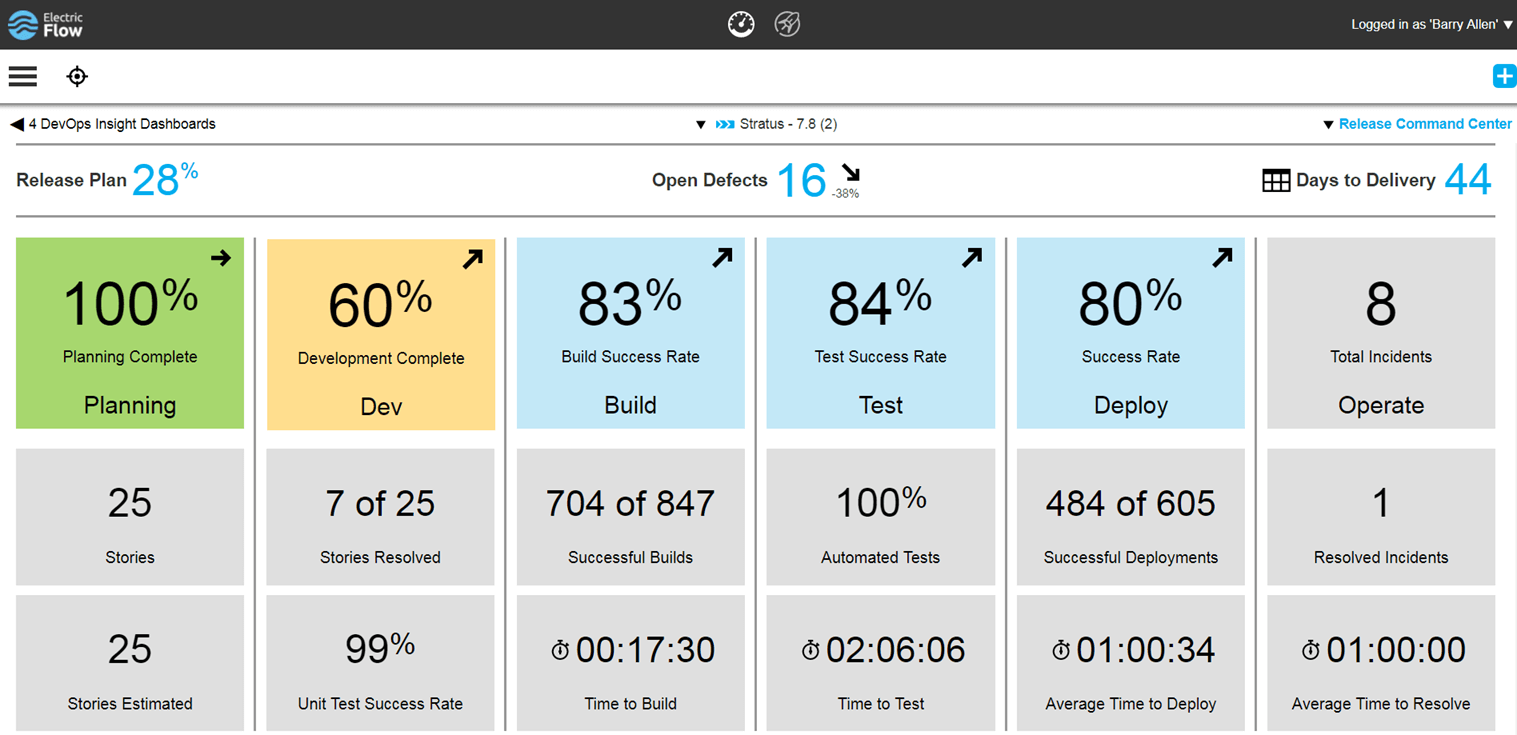
    dashboard
    Electric Cloud’s new dashboard

    Electric Cloud’s big bit at Jenkins’ World that intrigued me was its updates to ElectricFlow to allow better reporting. We all know when a build breaks, we have great systems on the AppDev side to notify the source of the breaks and project management of the issue. But as has traditionally been the case within IT, getting that information out to business leaders who have an interest in the application is spotty, at best. Combine that with the fact that what and how it is reported can vary project to project, and there always is a bit of confusion among the business about status of projects. This confusion translates to asking IT management about status and then, when IT management is wrong and a deadline is either missed or features are dropped from release at the last minute to meet the deadline, bad blood is created between AppDev/IT and the business. Since everyone at an org should be one team pulling toward success of the business, this bad blood is not good for anyone.

    It appears, from its release (I really wish I’d been at Jenkins’ World to poke the corners of this), that Electric Cloud has begun the process of bridging that gap. The growing number and complexity of toolchains means inputs are coming in from several vectors that can give indication of the status of a project. Instead of having IT management (or business management, at some orgs) run around and try to collect these disparate datasets and determine tracking for a project, Electric Cloud has begun the process of automating status collection/aggregation.

    The dashboard pictured above is a critical piece of this solution. Imagine giving business leaders access to a dashboard that doesn’t just cover the current step of a project, but tries to aggregate status from all of the steps in the DevOps life cycle. Basing this information upon release means that, over time, a library will build up that business leaders can reference to gauge this projects’ status against that of other projects, and make their business decisions based upon standardized inputs.

    This data already exists across IT, but this is the first solid attempt I have seen of a vendor tying it all together and presenting it in a manner that IT and the business can discuss with an eye to delivering. The more involved business leaders are in the process, the less friction will result, and this effort seems to be getting them more involved. While there is still much to do—note that unit test success rate is shown in the above screen capture, but unit test coverage isn’t, for example—this is a good solid start to setting up an easy-to-reference dashboard to show the business side what is going on with the project.

    There is also an API that can be used to set inputs to the dashboard that are not yet directly supported. While DevOps teams have plenty to do—and don’t really need to be developing plugins for tools that are supposed to improve quality while reducing workload—the ability to plug in whatever you need is useful for those shops where it is a priority.

    If you’re looking for a toolset that can give more information about what’s happening in your toolchain, it’s worth checking out the changes Electric Cloud has implemented, and I’ll be trying to make time in the next few weeks to give the tool a run and see how it works out. Though I see it as inevitable that the other ARA vendors will continue to increase their offerings also, sometimes it is worth checking into the early bird.

    — Don Macvittie