Tag: IT service management

  • Techstrong Group Launches Techstrong ITSM Community Platform to Bridge the Gap Between Agile, DevOps and ITSM

    Techstrong Group Launches Techstrong ITSM Community Platform to Bridge the Gap Between Agile, DevOps and ITSM

    Techstrong Group launches new ITSM site to empower organizations to navigate the complete IT life cycle with greater efficiency, quality and agility.

    Boca Raton, FL, February 28, 2024 — Techstrong Group, the power source for people and technology, today announced the launch of its latest community site, Techstrong ITSM. This new venture seamlessly integrates Agile, DevOps and IT service management (ITSM) methodologies into a unified resource for IT professionals, offering a holistic approach to managing the complete IT life cycle.

    “We recognized a critical gap in the current IT landscape: The need for a cohesive strategy that encompasses Agile’s adaptability, DevOps’ efficiency and ITSM’s reliability,” said Techstrong Group CEO Alan Shimel. “The mission of Techstrong ITSM is to offer a comprehensive resource that facilitates understanding, adoption and integration of these methodologies across the entire IT life cycle.”

    Techstrong ITSM offers a wealth of resources designed to empower IT professionals, managers and organizational leaders:

    • Educational Content: Articles, tutorials and case studies provide insights into best practices, challenges and solutions for integrating Agile, DevOps and ITSM.
    • Tools and Resources: Access to tools, templates and frameworks facilitate the practical application of these methodologies across the IT life cycle.
    • Community Engagement: Forums and discussion groups foster a community of continuous learning and improvement, allowing professionals to share experiences, advice and support.

    Techstrong ITSM offers a platform for organizations to enhance their IT capabilities and drive innovation in the digital era.

    For more information, read Alan Shimel’s blog or visit the Techstrong ITSM website.

    About Techstrong Group
    Techstrong Group is the power source for people and technology. Techstrong Group accelerates understanding of technologies that drive business. With a broad set of IT-related communities and offerings, Techstrong Group is the only media company serving the needs of IT leaders and practitioners with news, research, analysis, events, education, certifications and professional development. Our focus is DevOps, cybersecurity, AI, digital transformation, cloud and cloud native. Techstrong Group business units include: Techstrong Media (devopsy.kinsta.cloud, Security Boulevard, Cloud Native Now, Techstrong.ai, DigitalCxO, Techstrong ITSM, Techstrong TV and Techstrong Group Podcasts), Techstrong Research and Techstrong Learning. For technology providers, Techstrong business units offer many ways to share their stories, expand their audience and grow their business.

    Techstrong Group is based in Boca Raton, Florida. For more information, visit us on the web and follow us on LinkedIn.

    Contact
    Veronica Haggar
    veronica@techstronggroup.com

  • PagerDuty Previews Generative AI Copilot for ITSM

    PagerDuty Previews Generative AI Copilot for ITSM

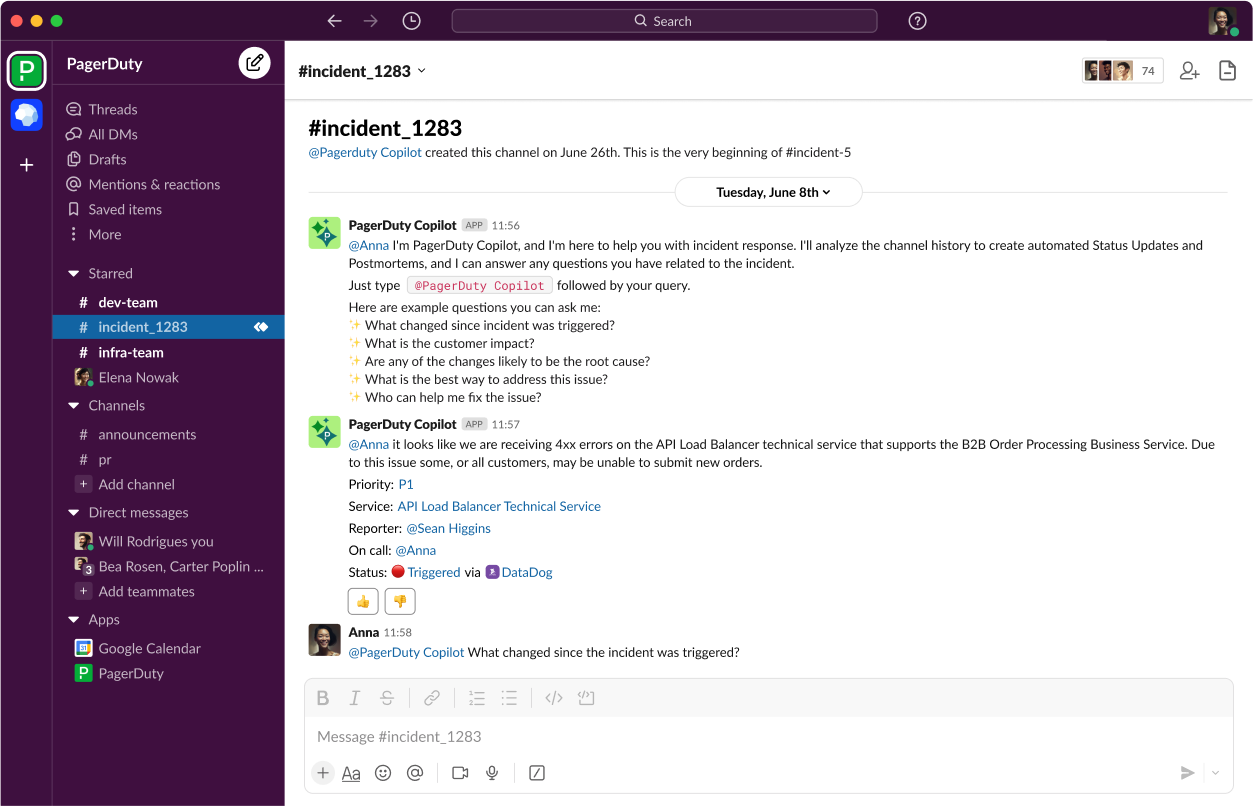
    Under an early access program, PagerDuty, Inc. is making available a tool that brings generative artificial intelligence (AI) capabilities to its IT service management (ITSM) platform.

    Jonathan Rende, senior vice president of products for PagerDuty, said PagerDuty Copilot for the PagerDuty Operations Cloud extends previous investments in machine learning algorithms the company has made as part of an ongoing effort to apply AI to ITSM.

    Designed to be invoked via Slack, PagerDuty Copilot makes use of multiple large language models (LLMs) to automate tasks ranging from providing summarization of IT incidents to creating code to automate workflows. PagerDuty plans to transparently swap LLMs in and out of its platforms as AI advances continue to be rapidly made, noted Rende.

    PagerDuty Copilot provides a level of abstraction for invoking AI models along with appropriate guardrails that make it simpler to manage IT operations without IT teams needing to have AI expertise, said Rende.

    The overall goal is to boost the productivity of IT operations teams by eliminating much of the drudgery and toil that conspires to make working in IT tedious, noted Rende. AI technologies are not likely to replace the need for IT personnel as much as they will enable IT teams to focus on tasks that add more value to the business, he added.

    It’s now only a matter of time before generative AI capabilities are pervasively applied across both ITSM and DevOps workflows. Less clear is the impact those capabilities will have on the best practices currently relied on to manage those workflows as more tasks are automated. Ultimately, however, AI should make it easier for more organizations to embrace those best practices as the level of skill and expertise required to manage IT at scale is reduced.

    In addition, the whole concept of issuing tickets to manage tasks tracked by a central system of record may need to evolve simply because AI has automated requests for service. There will naturally need to be some system of record for tracking requests. Still, ultimately that process will be managed via copilots rather than by a ticket created by an end user that is then tracked via an ITSM platform.

    Savvy IT teams, in the meantime, are already moving to determine which tasks and workflows will be automated in anticipation of AI becoming more widely embedded in ITSM and DevOps platforms. Roles and responsibilities within IT teams will inevitably evolve as AI increasingly automates mainly mundane tasks, such as creating reports that many IT professionals would rather not spend time writing.

    The biggest IT management platform challenge in the future might not necessarily be adjusting to AI as much as it will be orchestrating requests that are likely to be generated by multiple types of copilots that have been embedded into almost every application.

    One way or another, AI is about to transform how IT operations are managed. As disruptive as those advances will be, AI, more importantly, will also enable organizations to manage IT at levels of scale that were previously unimaginable.

  • DevOps and ITIL Integration: Driving Collaborative Agility in ITSM

    DevOps and ITIL Integration: Driving Collaborative Agility in ITSM

    Businesses face continuous pressure to deliver high-quality IT services efficiently. One emerging integration to meet these goals is between DevOps and IT service management (ITSM), more commonly known as DevOps+.

    DevOps+ is becoming more than a trend and has emerged as a powerful collaborative approach to meet these challenges. By combining the strengths of DevOps’ agile software development practices and ITSM’s structured service management approach, organizations can foster better collaboration, enhance agility and improve overall service delivery efficiency.

    DevOps and ITSM Symbiosis

    DevOps and ITSM traditionally operated as separate frameworks with distinct focuses. DevOps emphasizes rapid software delivery and collaboration between development and operations teams. On the other hand, ITSM-based ITIL (information technology infrastructure library) provides best practices for ensuring service stability, reliability and adherence to governance and compliance.

    Integrating DevOps and ITIL creates a symbiotic relationship, allowing organizations to leverage the best of both worlds. DevOps+ encourages a cultural shift, breaking down silos and promoting cross-functional communication. This collaboration enhances the entire software development lifecycle, leading to faster feedback loops, accelerated innovation, and increased responsiveness to business needs.

    Enhancing Agility and Speed

    DevOps+ integration brings greater agility and speed to IT service management. Organizations can streamline the release process by automating deployment pipelines and implementing continuous integration and continuous delivery (CI/CD) practices, reducing time-to-market for new features and updates. Agile development methodologies enhance the adaptability of ITSM processes to meet evolving business requirements effectively.

    Ensuring Stability and Reliability

    While agility is crucial, it must not compromise service stability and reliability. ITIL’s best practices provide a strong foundation for maintaining service quality. By incorporating ITIL processes such as incident management, change management and problem management, organizations can effectively manage risks, reduce service disruptions and ensure the stability of critical IT services.

    Leveraging Automation and Orchestration

    Automation is central to both DevOps and ITIL. Through integration, organizations can leverage automation and orchestration tools effectively. Automated testing, infrastructure provisioning and configuration management improve efficiency and consistency across the ITSM lifecycle. This enables teams to focus on higher-value tasks, reducing manual errors and operational overhead.

    Emphasizing Customer-Centricity

    DevOps+ puts the end-user experience at the forefront of service delivery. By continuously seeking customer feedback and measuring service performance, organizations can better align their offerings with user expectations. A customer-centric approach fosters higher satisfaction, loyalty, and competitive advantage.

    Breaking Down Barriers to Change

    Change management is vital in ITIL, ensuring that modifications are planned and controlled. In the context of DevOps+, change management becomes more adaptive and responsive, facilitating a culture that embraces change as an integral part of the development process. This promotes experimentation, reduces resistance to change, and accelerates innovation.

    Challenges of DevOps and ITIL Integration

    Despite the numerous benefits of DevOps+ integration, organizations may encounter challenges during implementation:

    Cultural Shift: Merging DevOps and ITIL requires a cultural shift. Overcoming resistance to change and fostering collaboration between traditionally separate teams can be challenging but is crucial for success.

    Process Alignment: DevOps and ITIL have different processes and terminologies. Aligning these methodologies while preserving their individual strengths can be complex.

    Skill Sets: Integrating DevOps and ITIL necessitates upskilling teams in both domains to operate effectively in the integrated environment.

    Tooling and Automation: Adopting suitable tools and technologies that support DevOps+ practices and integration is vital but may require significant investments.

    Metrics and Performance Measurement

    Measuring the success of DevOps+ integration is essential to understand its impact and effectiveness. Key performance indicators (KPIs) can help monitor progress and identify areas for improvement.

    Deployment Frequency: The frequency of software deployments indicates the efficiency of the integrated approach. Higher deployment frequency implies faster and more reliable releases.

    Mean Time to Resolve Incidents (MTTR): MTTR measures how quickly teams can resolve incidents and restore services after disruptions occur. A reduced MTTR demonstrates improved service reliability and faster incident resolution.

    Customer Satisfaction Scores: Measuring customer satisfaction provides insights into how well the integrated approach meets end-users’ needs and expectations.

    Continuous Improvement and Feedback Loops

    Continuous improvement is at the core of DevOps+. Establishing feedback loops and conducting regular retrospectives empowers teams to identify areas for improvement and implement iterative enhancements to processes and practices.

    Implementing DevOps+ integration requires a well-structured roadmap. For example, assessment and planning help leaders evaluate the organization’s current ITSM practices to understand how DevOps and ITIL principles align and define integration vision and goals.

    Additionally, your continuous optimization efforts allow you to continuously monitor performance metrics, gather feedback, and conduct retrospectives to identify improvement areas, leading to better team collaboration and communication. Fostering cross-functional collaboration between development, operations and other relevant teams is easily accomplished. To meet these goals, encourage regular meetings, schedule joint planning sessions and enable shared documentation to ensure everyone is aligned on goals and progress.

    When this happens, leverage automation tools to streamline manual processes and increase efficiency. Implement continuous integration and continuous delivery pipelines to automate software deployment and testing. Automation enhances consistency, reduces the risk of human errors and adds a new layer for measuring and evaluating to continuously measure the performance of the integrated approach using defined KPIs. In this vein, you can regularly review progress against the initial vision and goals to ensure the integration aligns with organizational objectives.

    Next, as the DevOps+ integration proves successful in pilot projects, gradually scale and expand it to other teams and departments. Share the success stories and best practices to encourage broader organizational adoption.

    Conclusion

    In conclusion, the integration of DevOps and ITIL, known as DevOps+, marks a transformative approach to IT service management. By combining the agility and rapid deployment of DevOps with the stability and reliability of ITIL, organizations can drive collaborative agility and achieve efficient service delivery.

    DevOps+ integration requires overcoming cultural barriers, aligning processes and upskilling teams, but the rewards are immense. With clear metrics to measure success, organizations can continually optimize their DevOps+ approach to meet customer needs and adapt to evolving market demands.

    As technology evolves, DevOps+ integration will remain at the forefront of cutting-edge IT service management, empowering organizations to embark on a journey of innovation, efficiency and excellence.

    By embracing DevOps+ as a guiding philosophy, organizations can cultivate a culture of collaboration, continuous improvement and customer-centricity, laying the groundwork for a prosperous future in the dynamic world of IT service management.
  • BMC Looks to Advance ServiceOps Approach to Managing IT

    BMC Looks to Advance ServiceOps Approach to Managing IT

    During an online BMC Exchange event, BMC announced it expanded its portfolio of IT management offerings as part of an ongoing effort to unify traditional IT service management and DevOps processes under an integrated ServiceOps framework.

    The latest additions to the BMC portfolio includes an update to its Control-M workload automation platform that adds observability tools for monitoring application and data workflows along with additional integrations for cloud services such as AWS Glue, Google Cloud Dataflow and Function and Microsoft Azure Data Factory and platforms such the data lake from Databricks.

    BMC is also making available a preview of a Control M Python client that will extend the reach of the workload automation platform to the code data science teams employ to build artificial intelligence (AI) models.

    In addition, BMC is adding a BMC Helix Digital Workplace studio to make it easier for IT teams to customize the software-as-a-service (SaaS) platform it provides for IT service management (ITSM). Finally, BMC is also making available a version of BMC Helix that is optimized for communications service providers.

    BMC CEO Ayman Sayed said overall the current emphasis on digital business transformation is driving a need to converge the management of multiple IT platforms as organizations reinvent how core processes work across their organization. It’s not possible to drive that level of reengineering across multiple IT platforms without centralizing the management of those platforms using a ServiceOps framework that unifies DevOps and existing ITSM platforms, he noted.

    At the same time, Sayed said organizations need to invest more in artificial intelligence to automate IT operations, also known as AIOps, to augment IT staff that is hard-pressed by the need to manage both emerging and legacy IT platforms. The latest investment BMC has made in AIOps came earlier this month with the acquisition of StreamWeaver, a provider of a set of tools that make it easier to collect massive amounts of data that can be used to more easily train AI models.

    It’s too early to say to what degree IT management processes might become unified. In addition to centralized IT teams, most organizations have business units that often drive their own IT initiatives. However, as organizations realize how many platforms a digital process needs to access the need to centralize the management of IT becomes more apparent. The issue each organization will need to determine is the degree to which that centralization needs to occur.

    It’s clear in the wake of the COVID-19 pandemic that many IT organizations have never been more agile. In some cases, those IT teams are now able to drive a rate of change that is too fast for many businesses to even absorb. In fact, it’s arguable that entire businesses will need to adopt DevOps principles to manage that rate of change.

    In the meantime, IT teams will need to take a harder look at how much time is being spent on manual tasks that could be automated in a way that enables them to be lot more productive than they are today.

  • DevOps Deeper Dive: ServiceNow and DevOps, One Year In

    DevOps Deeper Dive: ServiceNow and DevOps, One Year In

    It’s now been a year since ServiceNow launched its DevOps integration initiative. Since then, thanks to the arrival of the COVID-19 pandemic, the way organizations manage IT has utterly changed. With more employees now regularly working from home, more organizations have shifted toward relying on IT service management (ITSM) platforms that, like ServiceNow, run in the cloud.

    At the same time, the overall IT environment has become more complex as a greater number of applications based on microservices that span everything from containers to serverless computing frameworks are deployed in production environments. Most of those distributed applications are being built and deployed by DevOps teams who are finding it necessary to collaborate more with IT operations teams who still rely on ticket-based workflows to manage jobs and tasks.

    As organizations invest more in digital business transformation initiatives fueled by these applications, the pressure has intensified to bridge the cultural divide that has long existed between traditional IT operations teams and application development teams that have embraced best DevOps practices.

    At the core of that divide is a desire on the part of DevOps teams to automate IT process management. Tasks that once required IT personnel to implement manually increasingly now are being automated by developers employing tools and platforms that expose both APIs and command-line interfaces (CLIs). Not every IT task can be fully automated just yet, but with the rise of machine learning algorithms and other forms of artificial intelligence (AI), a great leap forward is clearly being made.

    In fact, the rise of AI coupled with a need to more aggressively reduce costs are motivating organizations to investigate how they can better unify the management of IT, said Judith Hurwitz, principal analyst for Hurwitz and Associates, an IT consulting firm.

    “It’s a major change,” said Hurwitz. “There’s a lot more focus on the issue of managing errors.”

    ServiceNow is investing in AI to address that issue, including partnering with providers of DevOps platforms to gain access to the data required to train AI models. That effort will simultaneously improve the developer’s experience at a time when organizations need to accelerate the rate at which applications are being developed, deployed and updated, said RJ Jainendra, vice president and general manager for IT business management and DevOps at ServiceNow.

    “The change management process is becoming automated,” he said.

    ServiceNow, which has more than 1,000 customers and contract values in excess of $1 million, is not the only provider of an ITSM with similar ambitions. Not only are providers of rival ITSM platforms moving down the same path, but new entrants have also emerged in the form of vendors that are extending DevOps platforms into the realm of ITSM. Atlassian, for example, has launched an ITSM initiative aimed specifically at DevOps teams looking to eschew a ticket-based approach to IT in favor of workflows that are managed directly by DevOps teams.

    As the responsibility for managing IT end-to-end continues to shift left toward DevOps teams, many won’t embrace ticket-based workflows. Eventually, DevOps platforms and legacy approaches to managing IT using tickets will converge. ITSM platforms are still the systems of record for recording IT events, so integration between DevOps and ITSM platforms is required.

    In the meantime, replacing IT processes that employ ticket-based workflows which adhere to frameworks such as ITIL will not be easy, said Mitchell Ashley, CEO and managing analyst at Accelerated Strategies Group.

    “Ticket-based workflows are incredibly sticky,” he said. “It’s not a question of undoing them as much as it is unraveling them.”

    In fact, Ashely said a ticket-based approach to managing IT may be too deeply ingrained in the psyche of IT teams to be replaced.

    “Ticket-based systems are a lot like email,” said Ashley. “They will be with us forever.”

    As long as ticket-based approaches to managing IT workflows remain in place, however, the potential for culture clash across teams that have divergent approaches to managing IT will remain high.

  • Mattermost Offers DevOps Command Center in the Cloud

    Mattermost Offers DevOps Command Center in the Cloud

    Mattermost today launched Mattermost Cloud, a software-as-a-service (SaaS) platform for managing DevOps workflows using pre-built playbooks that comes integrated with a wide variety of third-party developer tools.

    Chandar Venkataraman, executive vice president and chief product officer for Mattermost, said Mattermost Cloud enables IT teams to take advantage of a single-tenant DevOps platform that they don’t have to maintain in a way that forces developers to give up their preferred tools.

    In contrast, other DevOps platforms that are managed as a service require developers to make use of a narrow range of tools provided by the platform vendor, he said.

    Built on top of an instance of Kubernetes, the single-tenant capability also ensures that any data or artifacts stored on the platform remain private. The Mattermost Cloud Professional edition, available today, provides a full set of collaboration and DevOps features, while the Mattermost Cloud Enterprise edition, currently in beta, adds dedicated single-tenant cloud infrastructure, enterprise-grade secure network topology and strict data residency options.

    By building the platform on Kubernetes, he noted, it becomes much easier to scale the Mattermost Cloud platform up and down as required.

    Mattermost Cloud is essentially a DevOps command center that provides single pane-of-glass pre-built workflows that address most common DevOps processes. IT teams can add their own custom workflows as their DevOps processes mature, Venkataraman said, noting plugins for Jira, Opsgenie, PagerDuty, GitLab, GitHub and Jenkins are already available.

    The cloud platform also includes a pre-built best-practices incident management playbook to enable DevOps teams to address issues as they arise rather than trying to resolve them using a legacy ticket-based approach to IT service management (ITSM), he added.

    Venkataraman noted Mattermost doesn’t expect DevOps processes to supplant existing ITSM platforms based on ITIL-frameworks. However, many DevOps teams are looking for ways to resolve incidents within their existing workflows using, for example, a messaging platform versus a workflow designed for IT support staff.

    In general, Venkataraman said, many organizations that are relatively new to DevOps don’t want to manage the underlying platform. At the same time, he noted there are also many IT organizations that want to allocate more resources to writing code versus managing a DevOps platform.

    Each IT organization will need to decide when it makes sense to stand up their own platform for managing DevOps workflows and playbooks instead of building and maintaining their own control plane. Many of those IT teams are already making use of artifact repositories and continuous integration/continuous delivery (CI/CD) platforms that are accessed via the cloud, so a DevOps command center is only one more logical extension.

    Just as importantly, isolating the DevOps command center from the rest of the underlying DevOps platforms ultimately makes it easier for IT teams to switch out tools and platforms over time as they best see fit. The challenge now may be in finding a way to decouple workflows that are deeply intertwined with a specific platform.

  • Atlassian Launches ITSM Platform

    Atlassian Launches ITSM Platform

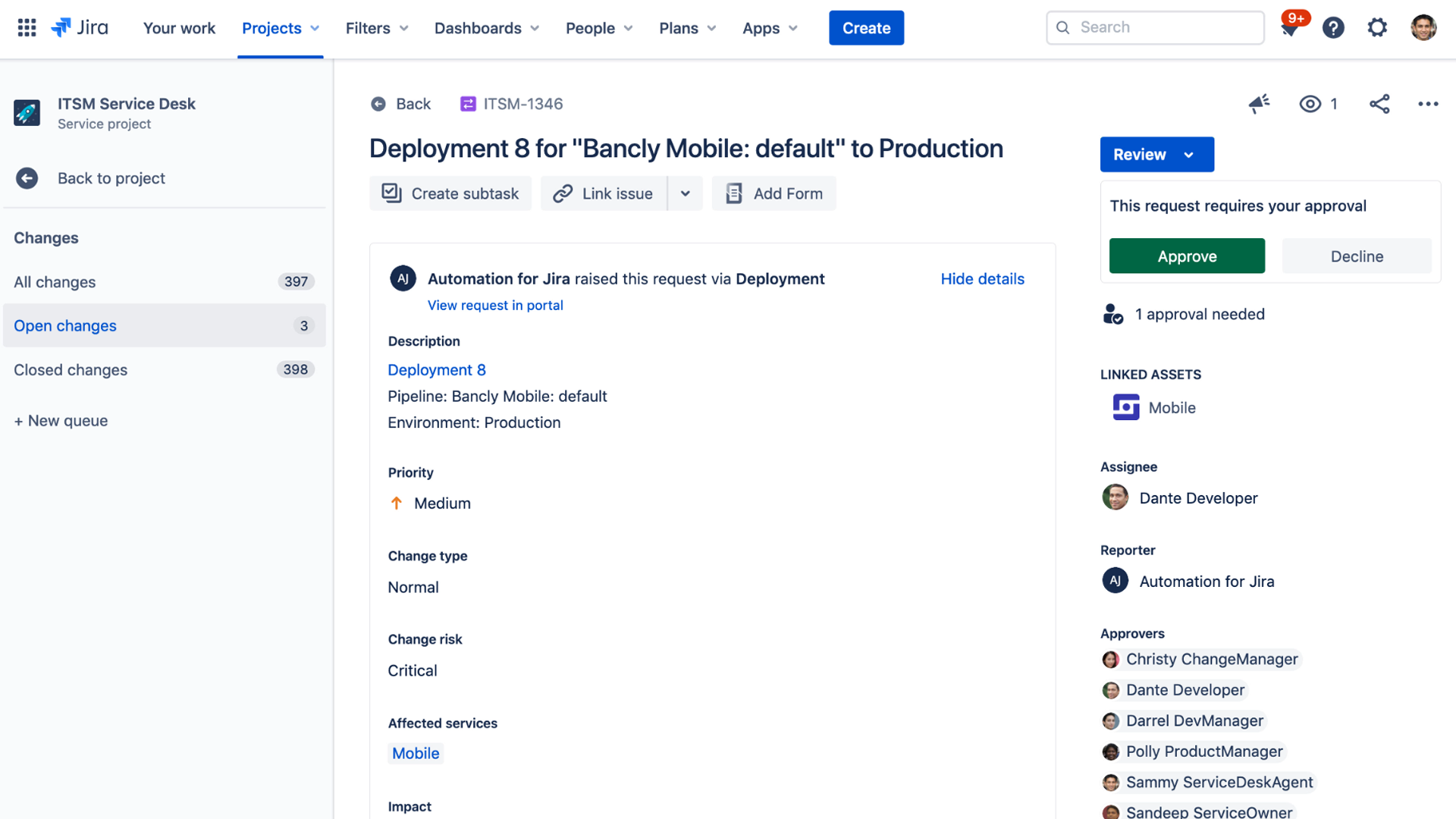
    Atlassian today extended its footprint in IT service management (ITSM) with the launch of Jira Service Management, a cloud-based platform designed to bridge the divide between DevOps and ticket-based approaches to managing IT.

    Edwin Wong, head of product for IT at Atlassian, said Jira Service Management builds on Opsgenie, an IT incident management platform. The goal is to provide an ITSM platform to better manage IT at a higher velocity by enabling developers to address IT support processes more easily, he said.

    Going forward, Jira Service Management will add asset and configuration management and conversational ticketing capabilities that Atlassian gained via the recent acquisitions of Mindville Insight and Halp, he added.

    Jira Service Management currently provides support for on-call scheduling, alerting, incident swarming from Opsgenie along with deeper integration with Jira Software for project management, the Bitbucket repository and Confluence collaboration software.

    IT team cans also leverage capabilities such as bulk ticket actions along with machine learning algorithms to intelligently categorize similar tickets, noted Wong.

    Jira Service Management replaces the Jira Service Desk platform that many development teams already use to manage incidents. The goal now is to provide a platform that makes it easier for developers and IT administrators to collaborate more easily to resolve issues, he said. There are currently more than 25,000 organizations that employ Jira Service Desk, which Wong said provides the base of customers from which Atlassian intends to drive convergence of DevOps and ITSM workflows.

    Most legacy ITSM platforms were designed for IT administrators. However, as IT continues to evolve developers are assuming responsibility for applications end-to-end. That transition requires a different approach to ITSM that provides deeper integration with DevOps tools that enable developers to resolve issues without requiring IT organizations to convene a “war room” meeting for each incident, said Wong.

    The launch of Jira Service Management comes at a time when more organizations are starting to transition ITSM to the cloud. With most IT staff working from home either full- or part-time to help combat the spread of the COVID-19 pandemic, organizations need ITSM platforms that are easily accessible from anywhere.

    Each IT organization will need to decide to what degree they need to converge DevOps and ITSM workflows. The goal should be to enable developers to resolve issues efficiently when required. There is still a need for ticket-based approaches to managing IT that are based on the ITIL framework. However, organizations are discovering that ITIL-based frameworks don’t enable the level of agility required to quickly resolve incidents involving custom application software.

    Regardless of the path forward, ITSM is entering a new phase as organizations start to appreciate how dependent they are on software. The days are coming to an end when end users log into an ITSM platform to create a job ticket that is addressed by an IT administrator who would contact a developer if necessary. What’s required is a more proactive approach that immediately alerts developers whenever there is an issue. The challenge is enabling that level of support in a way that creates the least amount of friction possible.

  • ServiceNow Extends DevOps Integration Reach

    ServiceNow Extends DevOps Integration Reach

    ServiceNow today announced it has added four new integrations with DevOps platforms to its IT service management (ITSM) platform delivered via the cloud.

    The four integrations add native support for Microsoft Azure Pipelines, a Jenkins Plugin, GitHub Actions and GitLab pipelines. A continuous integration/continuous delivery (CI/CD) Spoke capability on the ServiceNow platform makes it possible for developers to build automated pipelines using the Flow Designer tool.

    Marcus Torres, vice president of product platform management at ServiceNow, said these latest integrations build on a DevOps integration initiative that ServiceNow launched last year. Rather than building its own DevOps platform, the company has opted to focus on integrating ticket-based ITSM processes with DevOps processes as the management of IT continues to evolve and mature.

    In some cases, best DevOps practices for rapidly deploying applications is an absolute requirement, he noted. However, there are plenty of IT processes that are still best served by a ticket-based approach based on best practices defined within the widely adopted ITIL framework.

    Since the initiative was launched, the number of organizations that are employing the low-code ServiceNow App Engine platform to build custom workflows that integrate DevOps platforms is also steadily increasing, said Torres. ServiceNow will continue to add other integrations with DevOps platforms based on customer demand with each successive update to its platform.

    Torres said early tensions between ITIL and DevOps proponents are subsiding in favor of a more practical approach, which seeks to leverage the best of both approaches. The goal is to enable developer agility in a way that internal IT teams can support more reliably. The goal is to reduce to mean time to resolution whenever an incident arises from a recent change to the IT environment in real-time, noted Torres.

    Overall, the rate at which IT management platforms have shifted to the cloud has accelerated in the wake of the COVID-19 pandemic. With more IT professionals working from home, remotely accessing management platforms via virtual private networks (VPNs) has shown itself to be cumbersome at best.

    Longer-term, that shift to cloud will also enable IT teams to leverage artificial intelligence (AI) and robotic process automation tools to automate most low-level IT processes. The challenge IT organizations face today is on-premises IT management platforms are not able to aggregate enough data to automate IT processes reliably. However, AI capabilities will not replace IT administrators, but rather free them to address a wide range of more complex challenges, said Torres.

    Arguably, more IT organizations are re-evaluating their existing IT processes now than at any other point in IT history. The shift to supporting employees who will be working from home much more frequently is seminal moment. Each IT organization will need to determine its own best path forward, but the one thing that is for certain now is, like it or not, there is no going back.

  • ServiceNow Extends Reach Into DevOps Ecosystem

    ServiceNow Extends Reach Into DevOps Ecosystem

    ServiceNow this week, as part of a massive Paris update to its core software-as-a-service (SaaS) platform for managing IT operations, has extended its DevOps integration efforts by adding connectors for Microsoft Azure DevOps (ADO) and Atlassian Jira platforms.

    Pablo Stern, senior vice president for IT workflow products at ServiceNow, said those connectors are the latest in a series of moves that ServiceNow is making available to bridge the divide between traditional IT service management (ITSM) and DevOps processes.

    ServiceNow this week also announced it adding a Process Automation Designer tool to its App Engine platform for building applications on the ServiceNow platform. IT teams will be able to use that tool to create workflows spanning ITSM and DevOps processes, noted Stern.

    In addition, ServiceNow announced enhancements to its Flow Designer and IntegrationHub tools to simplify the building of workflows, and unlocked a Source Control function across its application portfolio.

    Finally, Service Now is now bringing third-party data into the ServiceNow Service Graph and Configuration Management Database to make it easier to integrate ServiceNow tools with those from partners such as SolarWinds.

    Stern said the ServiceNow strategy is not to build a DevOps platform, but rather to foster interoperability across what has become a broad DevOps ecosystem. Most IT teams are now trying to create workflows that span traditional ticket-based approaches to manage IT processes and DevOps teams that routinely leverage programming tools to automate those processes, so the goal is to enable each organization to strike a balance between those approaches as they best see fit, said Stern, citing JP Morgan as a customer using ServiceNow connectors to DevOps platforms to achieve that goal.

    Very few IT organizations are relying on DevOps processes end to end to manage IT. Organizations have been managing IT using processes based on the ITIL framework for several decades. The challenge they face is ITIL-based processes are not often agile enough to support digital business initiatives that typically require rapid responses to any event, especially when the application involved generates revenue for the business. Every second of downtime or sub-optimal performance impacts the bottom line. Minimizing disruptions to those applications requires more reliance on both automated DevOps and DevSecOps processes.

    Naturally, the arguments over the merits of DevOps versus ITIL approaches to managing IT will remain unabated for years to come. Proponents of ITIL approaches often note there are applications that are so critical to the business that a more deliberate approach to rolling them out and updating them is an absolute requirement.

    Regardless of IT philosophy, it’s clear IT and DevOps processes will be employed side-by-side for many years come. The number of IT operations professionals who have the programming skills required to automate IT processes is still fairly limited compared to the total population of IT administrators. As such, IT teams might want to focus less on the debate itself in favor of determining where they are on the maturity curve when it comes to managing IT. Once that’s determined, it then becomes a lot easier to discern the next step in their IT journey.

  • Tricentis Extends Testing Reach to ServiceNow Applications

    Tricentis Extends Testing Reach to ServiceNow Applications

    Tricentis has extended the reach of its portfolio of testing tools to now include software-as-a-service (SaaS) applications from ServiceNow.

    Martin Klaus, vice president of product marketing for Tricentis, said testing has become a larger issue because in addition to patch updates ServiceNow is now on a cadence to deliver to two major updates to its platform a year.

    More IT organizations are now leveraging the ServiceNow platform to build and deploy custom applications. Rather than build an entire application from the ground up, many organizations are accelerating digital business application deployments by extending functionality already provided by a SaaS application provider. All the updates regularly made to those applications create a testing automation challenge that can be addressed using Tricentis Test Automation for ServiceNow, said Klaus.

    Deployed natively on the ServiceNow platform, Tricentis Test Automation for ServiceNow provides access to capabilities such as point-and-click recording, real-time playback of tests and automatic test case creation, he said. The goal is to speed up the testing process for ServiceNow applications by running hundreds of tests generated by machine learning algorithms in seconds versus what previously would have required days to complete, Klaus added.

    At present, there are more than 6,200 enterprise customers running ServiceNow applications, many of which are employing DevOps processes to build and extend ServiceNow applications. ServiceNow has also extended its DevOps focus via alliances with providers of DevOps platforms.

    The bulk of the use cases for ServiceNow involve IT service management (ITSM). However, ServiceNow as of late has been expanding its focus on digital business applications by, among other things, adding additional workflows applications, including a workplace contact tracing application aimed at human resources (HR) teams.

    The more ServiceNow applications an organization adds, the more complex the testing challenge becomes, especially as workflows start to extend across SaaS applications from different providers. For example, it’s not uncommon for organizations to build and deploy custom applications spanning ServiceNow and SAP platforms, said Klaus. Tricentis provides a set of testing tools that can be applied across both multiple SaaS application platforms as well as the custom applications a DevOps teams builds and deploys on their own, he noted.

    As organizations depend more on digital business applications, disruptions caused by updates to the underlying software components upon which a workflow depends becomes a bigger issue. In many cases, it’s not employee productivity that is affected. Organizations are now driving revenue through digital business applications that can’t be generated if the application isn’t available. As a result, there’s a growing focus on testing updates to digital business applications.

    It’s hard to say to what degree SaaS application platforms will become part of a larger DevOps pantheon. However, the number of applications being built and deployed using low-code/no-code tools that extend these platforms has increased. There might even come a day soon when the backlog for deploying these applications becomes a bigger issue than it is today. In the meantime, it’s clear many DevOps teams are going to have to expand their definition of what constitutes a deployment platform.