Tag: it automation

  • Chef Extends IT Automation Reach

    Chef Extends IT Automation Reach

    Chef, at its online ChefConf 2020 event today, launched Chef Compliance and Chef Desktop as well as additional enhancements to the tools it provides for application deployment automation.

    John Wyss, vice president of product for Chef, said Chef Desktop enables IT teams to write their own configuration and compliance requirements as human-readable code using YAML files to manage and secure entire fleets of endpoints via a centralized console. It includes pre-written configuration code and curated content that can be employed to both audit and harden desktop operating systems.

    IT teams will now avail themselves of a zero-touch process for enrolling and provisioning endpoints while at the same time automating software deployment and management, Wyss said. That includes being able to enforce security policies using configuration profiles, data encryption and system updates.

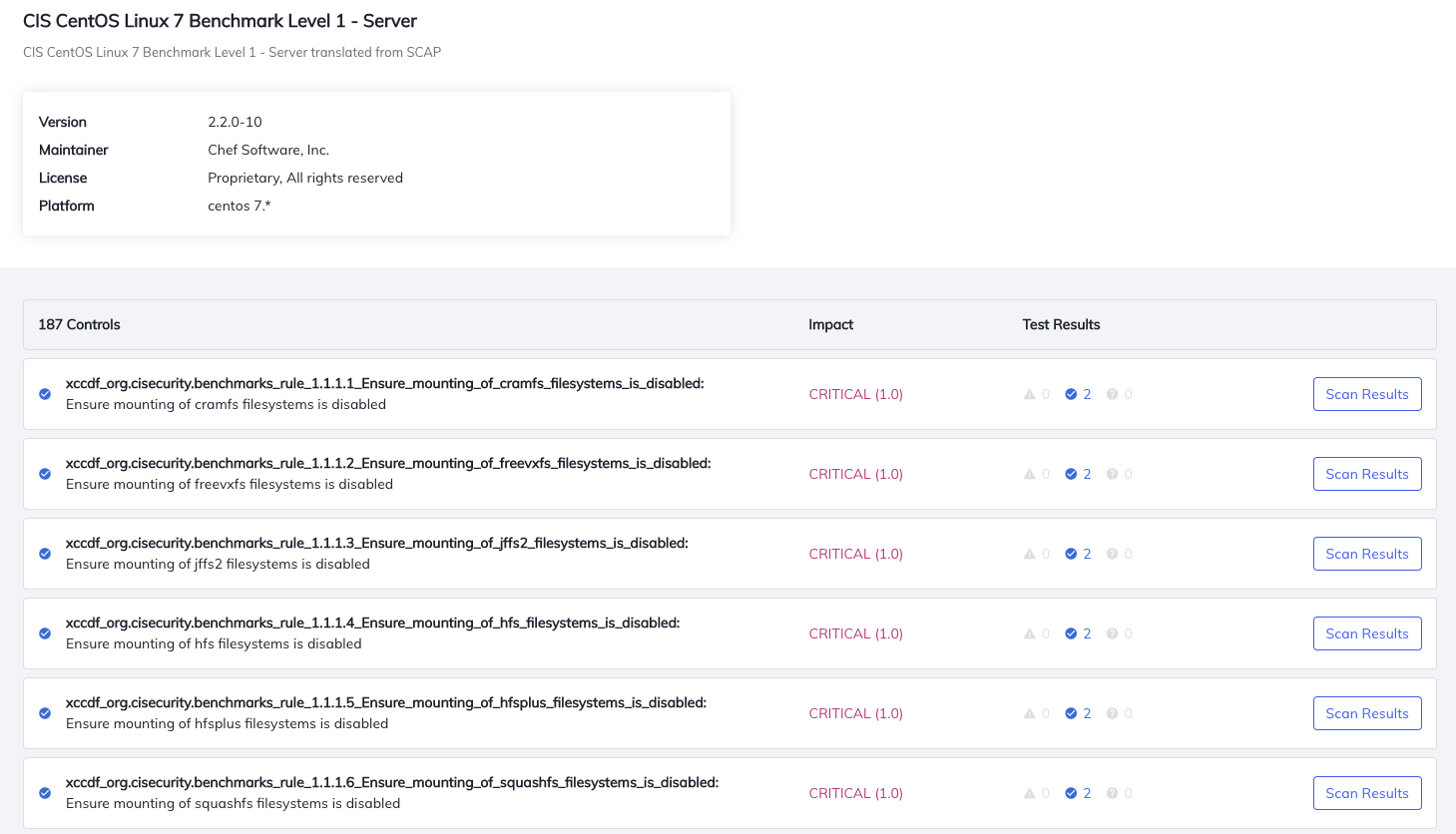
    Chef Compliance, meanwhile, is built on top of Chef InSpec, an open source framework for testing and auditing applications and infrastructure. Chef Compliance takes Chef InSpec further by including tools to automatically audit IT environments based on the specifications defined by the Center for Internet Security (CIS) and Security Technology Implementation Guide (STIG).

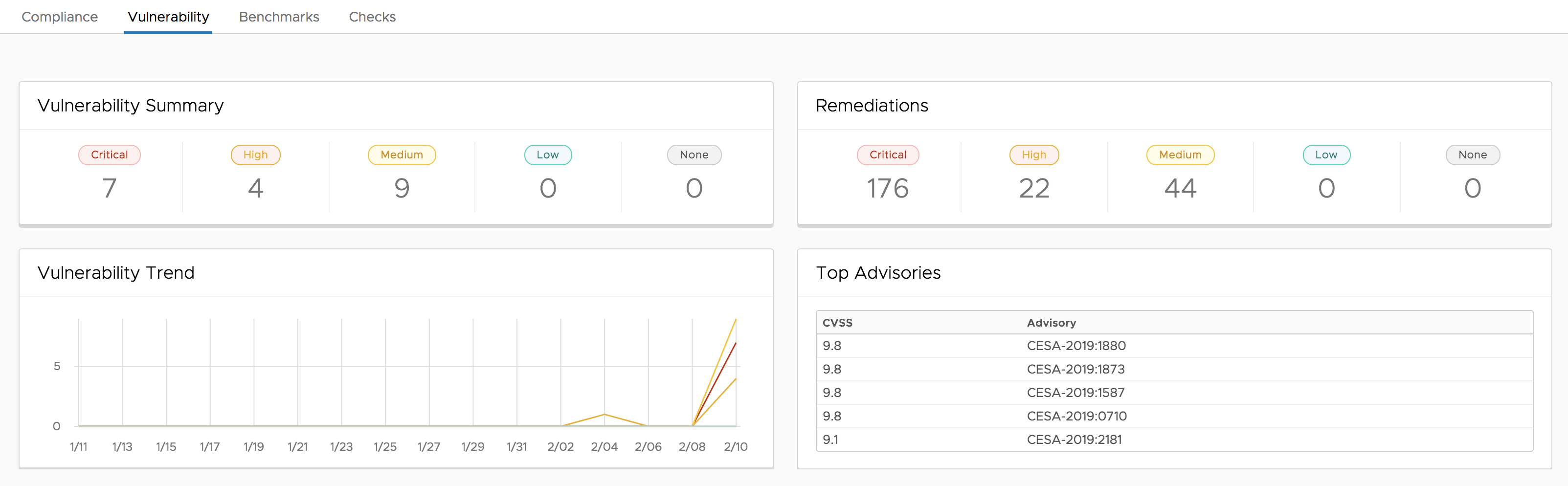
    Those audits can then be applied to automate the remediation process without having to write code if IT teams so choose, said Wyss. The goal is to provide DevSecOps teams with a unified language for managing security and compliance, he added.

    Finally, Chef has updated Chef Enterprise Automation Stack to include analytics to filter and update views for disconnected services and receive real-time health-check messages and status alerts. Chef has also added rapid rollback, package cleanup and layered container support, and has made it easier to manage package settings and deploy packages across multiple platforms.

    Collectively, these capabilities should make it easier for DevOps teams to reduce process friction across the entire DevOps life cycle.

    In the wake of the economic downturn brought on by the COVID-19 pandemic, interest in IT automation is on the rise. Many organizations are either freezing IT headcount or, worse, yet, reducing the size of their IT staff. At the same time, IT environment is becoming more complex, especially if most employees continue to work from home. IT teams now need a common set of tools for managing not only application deployments on servers or in the cloud but also endpoints. Ultimately, that approach should also go a long way toward reducing the total cost of IT.

    In fact, in the wake of the downturn more organizations than ever are receptive to automating IT processes. What was once viewed as potentially an existential threat to the existence of the IT staff has become the only way to manage IT at scale, at a time when cutbacks are broad-based. Organizations that don’t find a way to automate the management of IT are likely to incur significantly higher costs than those that do. Arguably, the issue is no longer what to automate and when, but rather how much and how soon, as both applications and the end users accessing them become ever more distributed.

  • Chef Updates Tool for Managing IT Infrastructure as Code

    Chef Updates Tool for Managing IT Infrastructure as Code

    Chef today updated its tool for automating the management of IT infrastructure as part of an effort to further eliminate the need to rely on manual processes that generally fail to scale.

    John Wyss, vice president of product for Chef, said Chef Infra 16 adds a Unified Mode that provides a more streamlined means of executing policies and adds support for YAML, which means IT teams can now employ Chef to automate the management of infrastructure without having to write code.


    In addition, Chef has made it easier to update legacy instances of cookbooks built using Chef and added support for Arm processors.

    Interest in automating the management of IT infrastructure is expected to accelerate considerably in the wake of the economic downturn brought on by the COVID-19 pandemic. Many IT teams are likely to be considerably reduced in size. The remaining IT staff will need to automate the management of IT at much greater degrees than ever before. Much of that infrastructure soon may also be residing in a public cloud rather than in an on-premises IT environment.

    Of course, Chef is not the only way to automate the management of IT infrastructure. However, IT professionals who master Chef typically are able to create workflows that automate a wider range of tasks.

    As an early pioneer of using code to manage infrastructure, Chef has been making a case for employing the Ruby programming language to make it easier to manage IT infrastructure at scale. While adoption of Chef largely has been limited to IT professionals who could master Ruby, Wyss noted those individuals who have mastered Chef will be in much higher demand as organizations look for IT professionals who have the skills required to manage tasks that otherwise would have required a much larger staff.

    It remains to be seen to what degree IT professionals might embrace IT automation frameworks further. Many have developed their own scripts to automate a task. The challenge IT organizations have encountered is that those scripts are usually poorly documented and generally fail to scale. Automation frameworks provide a means to consistently manage IT infrastructure at scale in a way that is easily repeatable.

    In the meantime, the debate of who inside the IT organization will automate the management of infrastructure continues to rage. Some IT organizations want developers to be responsible for the entire stack as part of an effort to reduce headcount, while other organizations prefer to have developers for a variety of reasons focus all their energies on writing application code. Regardless of who automates the management of infrastructure, the one thing that just about everyone agrees on is that legacy processes for managing IT infrastructure that typically involve many rote mundane tasks are no longer the way to work.

    In fact, increased reliance on IT automation might accelerate the adoption of best DevOps practices because the frameworks required to automate the management of the underlying infrastructure might have been put in place already by the IT operations team, noted Wyss. Otherwise, the DevOps team itself has to put those IT automation frameworks in place with or without the help of the rest of the IT operations staff, which is a current state of affairs that many DevOps teams would just assume live without.

  • Red Hat Extends Scope of Ansible Tools

    Red Hat Extends Scope of Ansible Tools

    Red Hat today announced it has extended the analytics capabilities it makes available for instances of the Ansible IT automation platform and has made the Ansible Automation Services Catalog now generally available.

    In addition, Red Hat has increased the number of certified playbooks it makes available from both the company and third-party partners within the Ansible Content Collections. That repository now houses more than 1,200 certified Ansible Modules.

    Announced prior to the Red Hat Summit, which is taking place online this week, these offerings are part of a series of cloud services the company has developed to foster the adoption of Ansible to automate a wide range of processes.

    Tom Anderson, vice president for the Red Hat Ansible Automation Platform at Red Hat, said that as Ansible is employed to automate more IT processes, more IT teams want to better understand how the playbooks being created using Ansible are being used within their organizations. The latest updates to the Ansible Analytics module add the ability to filter analysis by Red Hat Ansible Tower cluster, by date and between organizations. IT teams can also discover job statistics by total runs, total time, average time, success rate, most failed tasks and the failure percentage of that task.

    At the same time, the Ansible Services Catalog makes it easier to access curated playbooks that have been vetted thoroughly, he said.

    Anderson noted Ansible continues to gain traction because it provides a declarative approach to automating IT processes that can span multiple platforms. Interest in automation has increased substantially in the last several years. The challenge that many organizations now face is that as various providers of platforms have made IT automation tools available, organizations now are managing multiple islands of automation, he said, adding Ansible provides a means to unify IT automation under a common open source framework.

    The pace at which organizations have been automating the management of IT is expected to increase substantially in the weeks and months ahead. In the wake of the economic downturn brought on by the COVID-19 pandemic, organizations that are reducing IT staff will look to automate processes to enable the remaining IT employees to manage more efficiently IT environments that continue to grow in size and complexity.

    That increased reliance on automation should also advance adoption of best DevOps practices, as more IT operations teams embrace managing IT infrastructure as code.

    Ansible, of course, is not the only platform capable of automating IT processes. However, because of its reliance on a declarative approach, Ansible is more accessible to IT operations staff who lack programming skills. In theory, DevOps teams are increasingly taking control over the management of IT infrastructure using programmatic tools. However, there are still many IT organizations that prefer to have access to IT infrastructure centrally managed by IT operations teams that typically make resources available to developers via a self-service portal. However, while there may be a debate over who will automate IT processes, the one thing everyone does agree on is the time to do so is now more than ever.

  • VMware Makes vRealize Automation Framework Available via the Cloud

    VMware Makes vRealize Automation Framework Available via the Cloud

    VMware this week announced it has made a software-as-a-service (SaaS) edition of its vRealize automation platform generally available.

    Taruna Gandhi, senior director for product and technical marketing at VMware, said VMware vRealize Operation Cloud will make IT automation more accessible to a broader swath of organizations that might not be able to implement IT automation on their own.

    The vRealize Operations Cloud service provides all the same capabilities as the on-premises edition of vRealize with the added benefit of being integrated with other VMware Cloud services, including VMware Cloud on AWS.

    In general, Gandhi said VMware is seeing increased adoption of IT automation frameworks occurring in three phases. In the first phase, IT teams are automating internal processes primarily for their own benefit. In the second phase, IT operations teams set up self-service portals for developers. In the third phase, organizations embrace DevOps processes to provide developers with the equivalent of a cloud computing experience spanning both on-premises and public cloud computing resources.

    Most existing VMware customers are still in the first or second phases, but over time Gandhi said VMware expects organizations to adopt DevOps practices as part of a more aggressive effort to reduce costs during the current economic downturn brought on by the COVID-19 pandemic while accelerating the rate at which applications are deployed and updated.

    The VMware vRealize Operations Cloud will play a significant role in accelerating that transition because it makes IT automation available as a service rather than a platform that needs to be deployed and maintained by an internal IT department. The beta test for vRealize Operations Cloud spanned dozens of customers that put more than 130,000 virtual machines under management across 120-plus vCenters and more than 10 VMware Cloud on AWS deployments, Gandhi said, noting the next phase will to see IT organizations begin to centralize the management of multiple cloud silos that have sprung up over the last several years within most organizations.

    There are, of course, no shortage of options these days when it comes to IT automation frameworks. VMware is making a case for vRealize as a natural extension of the VMware management tools that many organizations employ to manage VMware virtual machines that are widely used across most enterprise IT environments. VMware is now extending the reach of those tools to enable IT teams to also manage containers and even rival virtual machine platforms, noted Gandhi.

    Most of those IT organizations are now struggling to manage IT environments that have become more complex at a time when the pressure to employ higher levels of automation to rein in costs is rising sharply. It remains to be seen how IT organizations will respond to that imperative as pressure to either cap or reduce IT headcount continues to mount. Of course, not every sector of the economy is experiencing the same pressure. There are high-growth segments involving, for example, educational or entertainment services. Regardless of industry, however, it’s clear IT teams are being asked to do a lot more sooner with either the same or fewer resources.

    — Mike Vizard

  • IT Automation Tools Are No Longer Enough

    IT Automation Tools Are No Longer Enough

    As Chris Gardner—who conducted the Forrester Wave on Infrastructure Automation Platforms—stated, “Infrastructure automation isn’t just on-premises or in the cloud. It’s at the edge and everywhere in between.” And that’s because, well, it needs to be.

    It shouldn’t come as a surprise to anyone reading this that IT automation is a must-have for organizations today. With infrastructure spread across on-premises data centers, multiple clouds and a multitude of technologies, the complexity of IT long ago outgrew manual management. Automation is the only way to keep pace with constantly changing environments that need enhanced security, greater compliance and be easily adaptable to changing business and market conditions.

    Because of these needs, the market has been relatively quick to adapt and embrace automation technology. According to a recent study by Forrester Research, 56% of global infrastructure technology decision makers have implemented/are implementing or are expanding/upgrading their implementation of automation software. Many of these IT organizations have a trusted tool in place and have been automating scripts and tasks for years.

    Along with outgrowing managing infrastructure by hand, the industry is also quickly outgrowing automation tools. The automation market has now reached a point of maturity where an automation tool alone is not enough. In order for automation to continue to have an impact on an organization and keep pace with the speed IT changes, organizations need a platform that allows them to create a culture of automation.

    Automation as a Trait, Not a State

    Typically, when an organization acquires a new technology, they try to adapt it to their needs and how they work. Automation technology, along with most technology tools, does exactly that—it lets you adapt it to how you want to use it, and performs tasks as desired. But ultimately, successful automation comes down to more than just supporting task execution. Enterprises have realized that they need to support the behavior of automation in order for it to continue to scale.

    As opposed to automation being a state, use automation as a trait—something that is done naturally without thought. The analogy we like to use is one of learning a new language. When you learn conversational Spanish, your mind still thinks in English, then translates what you want to say into Spanish based on what you have learned. Yes, you improve over time, but when you start to dream in another language, that is when it has become second nature. It is no longer something you have to do, you just simply do it.

    When automation becomes second nature, that is when it can make the biggest impact and will help address a continually evolving infrastructure. As a discipline, automation is not technology-specific. As much as we talk about the technology behind it, it actually has little to do with automation. The technology itself is the easy part, the part that is reliant on a tool. Many have reached a point of maturity with using tools and are now working toward IT staff viewing automation akin to testing or documentation—while we may not always do it, we know we should. 

    Having automation become second nature is easier said than done, and something organizations are struggling with, realizing that a tool alone will not support this effort. It doesn’t provide the coordination and collaboration that is desperately needed to unlock the next level of automation capabilities. We need more than a tool to continue to scale automation and spread it to new areas of IT.

    The Next Phase of Automation and What to Look for

    There are multiple personas within an organization that are paramount to successful business-wide automation, and, to be blunt, automation must cater to all of them. Between developers, those trying to simply consume automation or sys-admins executing automation of mundane tasks, they all need something that works for them—but can also work consistently across these personas. Organizations need a common automation language across the entire enterprise and the hybrid cloud that creates a standardized experience for solving problems (and solving them only once). 

    Not only that, but they need a repository or catalog where everyone can find an answer to what they need, along with easily accessed integrations. Part of why automation is growing so rapidly is because of how many technology vendors have embraced the concept and, in turn, are working with automation vendors to integrate their technologies and make them easier to use.

    To continue to spread automation to new areas of a business, organizations need a single repository to more securely search and find necessary modules. Additionally, having a shared repository helps create an automation community within an organization. It brings different personas together to find what they each need, fosters collaboration and ultimately encourages sharing automation specific to their organization. It also provides a place to find integrations that they may not even have been aware they needed.

    When preparing for the next step in their automation journey, organizations should look for automation platforms that provide access to analytics, specifically those that can tell you how your automation is being used and where. As the adage goes, knowledge is power, and the more you know about your automation, the more successful it can be. More importantly though, if you are trying to create it as a behavior, analytics let you track and measure progress. It allows you to better understand what is working, what groups are thriving and what areas need improvement. Using automation analytics enables organizations to create a system for enabling standardized practices. 

    On the whole, a successful automation initiative needs a supporting automation platform to provide coordination and embrace collaboration between different groups. Simplification is also essential for making automation more accessible across these groups, especially in the face of competing needs and varying levels of engagement. Scaling automation successfully applies both to technologies, as well as the users that want to benefit from automation.

    Strategy for 2020

    There is no such thing as a perfect tool, and don’t let anyone try to tell you otherwise. The good news is it’s not about having a perfect solution, it’s about the experience that can be gained from a solution. Every organization is unique and there is no one-size-fits-all option.

    What is needed when developing an automation strategy that takes organizations into the future is a foundation for growing that automation. Automation platforms offer so much more than a tool alone, allowing it to be more easily scaled and being leveraged how the organization needs. It may never solve all problems but will take away a lot of the efforts. You need to find a vendor that is not selling a tool—but selling automation as a whole.

    — Richard Henshall

  • SaltStack Updates Enterprise IT Automation Framework

    SaltStack Updates Enterprise IT Automation Framework

    SaltStack has partnered with Tenable.io to make it possible to pull vulnerability data into the enterprise edition of its namesake IT automation framework.

    In addition, version 6.2 of SaltStack Enterprise now integrates with the IT operations analytics platform from Splunk to make it possible to configure the Splunk Universal Forwarder to index and analyze events generated by the SaltStack framework.

    The SaltStack Comply compliance management module has also been updated to include content for Windows Server 2012 and Windows Server 2019 platforms that has been certified by the Center for Internet Security (CIS).

    Finally, SaltStack Enterprise 6.2 optimizes communications between the Salt Master and the SaltStack Enterprise Operations Framework by adding an intermediate SQLite database layer to queue events. SaltStack says IT organizations should see 20 times-plus improvement in event processing throughput. SaltStack has also added the ability to forward SaltStack events to any Salt Returner, such as a SQL database or local file, to improve performance and maintain high availability.

    Mehul Revankar, a senior product manager for SaltStack, said with this update to the enterprise edition of its open source framework the company is leveraging partnerships to enable IT systems to create closed-looped systems. For example, vulnerabilities identified by Tenable.io now can be automatically remediated using SaltStack Enterprise.

    Revankar said the goal is to make it easier for IT teams to create an IT process that can be automated at the push of a button. As IT environments become larger and more challenging to manage, IT organizations will need to automate more processes at scale, he said. To achieve that goal, SaltStack is simplifying the process to connect to a wider range of third-party platforms that house the type of data required to automate a closed-loop process.

    Naturally, organizations that have embraced DevOps principles are at the forefront of IT automation. Revankar said that as teams of IT professionals converge to drive DevOps and DevSecOps processes, the greater the willingness to employ IT automation frameworks becomes. The goal is to automate as many processes to inject a level of agility that serves to accelerate the rate at which applications are deployed and updated. The challenge organizations have always faced in IT automation is the time it takes to integrate an IT automation framework with relevant data sources.

    Revankar also noted resistance to IT automation among rank-and-file members of the IT operations team is declining as the number of applications that need to be managed increases. Most organizations can’t find or afford to retain enough IT personnel to manage IT operations at the level of scale now required. As such, the need to automate as many rote IT processes as possible has become apparent to all. That’s especially critical in the case of vulnerability management, where the amount of time it takes to patch an application directly correlates to a specific level of risk.

    There is, of course, no shortage of options these days when it comes to IT automation frameworks. In fact, the decision concerning which IT automation framework to employ now has as much to do with the number of sources that framework can pull relevant data from as much as it does the reliability of the automated processes that framework enables.

    — Mike Vizard

  • Latest Chef Habitat Release Embraces On-Premises IT

    Latest Chef Habitat Release Embraces On-Premises IT

    Chef today announced that the Chef Habitat automation framework for building and deploying applications can now be used in on-premises IT environments.

    Mike Krasnow, a senior product manager for Chef, said version 1.5 of Habitat makes it possible to now store applications packages and their dependencies locally in addition to the cloud. In addition, pre-built application packages and dependencies from the Builder service can be deployed across multiple on-premises instances.

    An Applications tab in Chef Automate now shows the service groups and instances that are deployed to make it easier to understand what’s deployed where and the health of each service. Both the Habitat Builder installer and the application dashboard are integrated with Chef Automate, which uses the same installer as Chef Habitat.

    Finally, the Habitat Supervisor module is now more stable, easier to configure and manage, and provides improved support for Windows applications.

    Krasnow said Chef has seen a 300% increase in the use of the software-as-a-service (SaaS) instance of Chef Habitat in the last year. Organizations that have embraced Chef Habitat include Alaska Airlines, Rakuten, and Walmart. That rate of adoption should increase now that an on-premises edition is available, he said, including among IT organizations in highly regulated industries that are not allowed to employ cloud services. In fact, at least 70% of all application workloads are still deployed in on-premises IT environments.

    Chef Habitat appeals most to organizations that have embraced best DevOps practices to programmatically deploy applications, said Krasnow. There are rival automation platforms that make use of declarative approaches to automation that appeal more to IT generalists. However, he noted, organizations that want to empower DevOps teams tend to prefer a more programmatic approach.

    For more than a decade now Chef has been driving adoption of IT automation. However, it’s only relatively recently that organizations have been employing IT automation at scale as part of their efforts to embrace best DevOps practices. As interest in IT automation frameworks has risen, so too has the number of options. Some organizations are even employing multiple IT automation frameworks within different business units. They may one day standardize on a single IT automation framework, but many DevOps teams will simply opt to employ the IT automation framework the members of their team already know. If the members of that team in charge of IT operations don’t have a lot of programming expertise, chances are high they will opt for a more declarative approach. DevOps teams that have developers who deploy applications on their own are likely to prefer a more programmatic approach.

    Regardless of the platform chosen, it’s clear the days of manually deploying applications using custom scripts are coming to an end. IT organizations now require an industrial approach to managing IT as a factory. The biggest challenge achieving that goal is no longer the technology but rather the culture of the IT organization.

    — Mike Vizard

  • Red Hat Unveils Ansible Platform

    Red Hat Unveils Ansible Platform

    At the AnsibleFest 2019 conference, Red Hat this week announced the general availability of the Red Hat Ansible Automation Platform that combines several IT automation technologies into a single subscription.

    Built on top of Red Hat Ansible Engine, the platform also includes Red Hat Ansible Tower, a management console, and Red Hat Network Automation, an instance of Ansible designed to automate the management of network resources.

    Red Hat is also providing access to a software-as-a-service (SaaS) analytics application that enables IT teams to monitor how deeply Ansible has been adopted within any IT environment. That application also provides access to Ansible Content Collections, a packaging format that streamlines the management, distribution and consumption of Ansible content, and Automation Hub, a repository for certified content packaged using Ansible Content Collections.

    Richard Henshall, product manager for Red Hat Ansible Automation, said with this offering Red Hat is trying to make it easier for enterprise IT organizations to implement Ansible at scale. Most of the time the Ansible framework is adopted from the bottom up within an IT organization. Red Hat Ansible Automation is intended to make it easier for enterprise IT organizations to centrally deploy and manage all their instances of Ansible, he said.
    Although it’s not possible to know how many instances of the open source IT automation framework have been installed, Henshall noted there are already more than 4 million Ansible nodes that are tied to a paid support subscription from Red Hat. Most of those instances involve organizations that have adopted a declarative IT automation framework as part of their overall DevOps strategy, he said. While IT organizations don’t necessarily have embrace DevOps to employ Ansible, Henshall said there is a strong correlation.

    Much of that success can be tied to the fact that as a declarative framework Ansible doesn’t require IT operations teams to learn how to program to manage IT operations at scale. That approach has allowed IT teams to adopt the open source framework to meet the demands for more agile approaches to managing IT infrastructure stemming from developers who have embraced best DevOps practices.

    In addition, IT infrastructure vendors such as Cisco Systems, NetApp and F5 Networks have begun to embed Ansible within their server, storage and networking platforms. As those vendors sell the latest edition of their offerings, the number of IT organizations exposed to Ansible should begin to substantially increase.

    Henshall said the biggest issue now is expanding the scope of Ansible deployments. Most organizations initially wind up using Ansible to automate disaster recovery before moving on automate additional existing processes. Red Hat is now trying to encourage those teams to create new processes that previously would not have been possible without an IT automation framework, he said.

    Ansible may not be a de facto standard in the enterprise just yet, but it’s well on its way. Of course, there are still many IT professionals for one reason or another still tend to resist relying on IT automation frameworks. There are also several rival IT automation frameworks that have been embraced by DevOps teams. But when it comes IT automation, it’s clear Ansible is starting to emerge as the path of least resistance.

    — Mike Vizard

  • With YAML Support, Puppet Dives Deeper Into DevOps

    With YAML Support, Puppet Dives Deeper Into DevOps

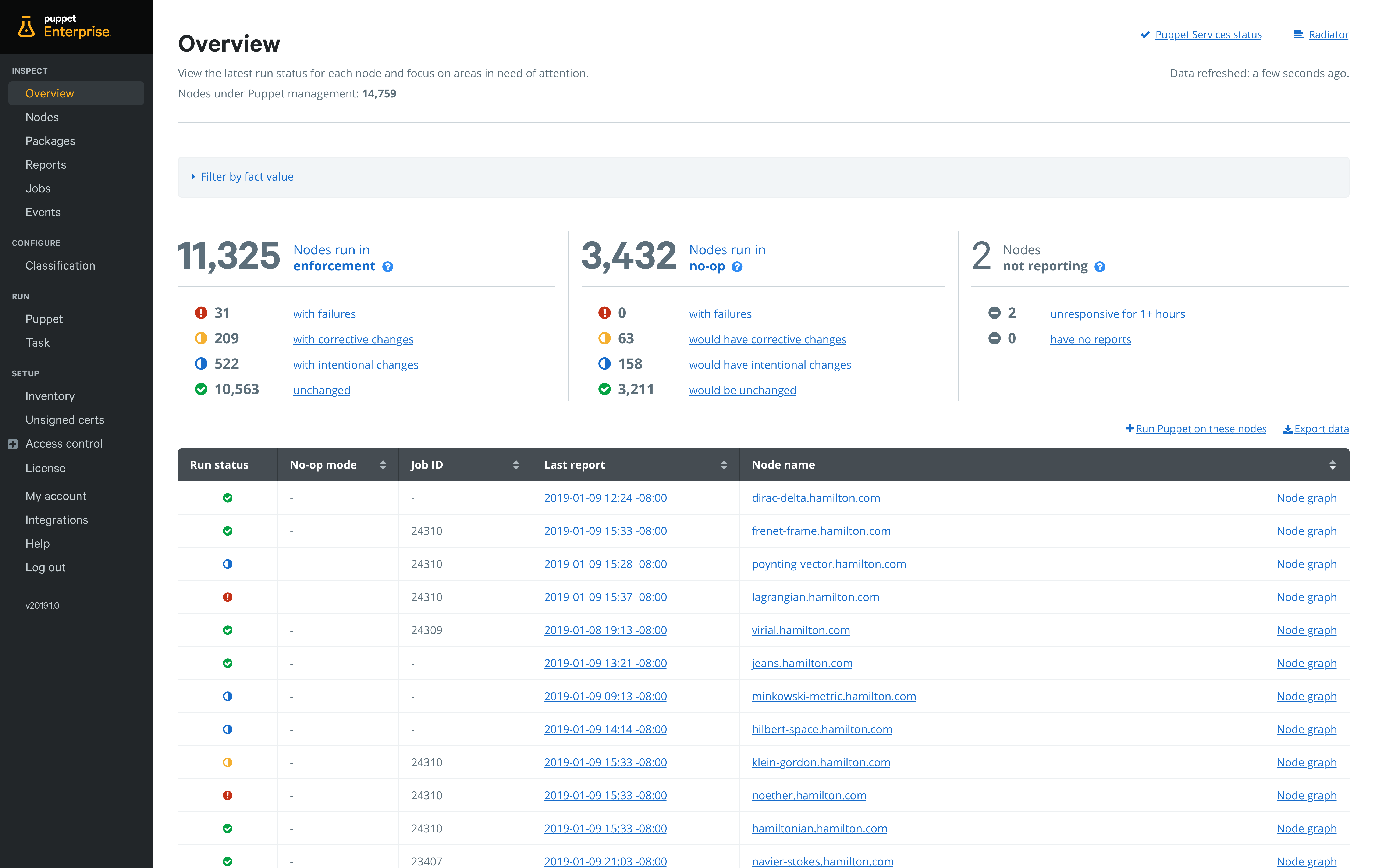
    Puppet this week announced an update to Puppet Enterprise that adds additional DevOps capabilities, including integration with Bolt, an open source agentless task runner that Puppet employs to make IT automation more accessible to IT administrators.

    Matt Waxman, vice president of products at Puppet, said adding integration with Bolt will make it easier to integrate DevOps processes that rely on YAML to deploy applications.

    Available this month via a Puppet Enterprise 2019.1 update, Bolt provides an agentless approach to automation that enables IT teams to execute existing commands and scripts written in any language within the context of an IT automation framework that is designed to be accessible to the average IT administrator, Waxman said.

    At the same time, Puppet is providing the ability to set up pipelines for deploying automation code directly from within Puppet Enterprise. Rather than having to set up a separate continuous integration/continuous deployment (CI/CD) platform, Puppet is embedding the capability it acquired from its purchase of Distelli in 2017. In doing so, Puppet is making it possible to accelerate deployment of automation software in a way that doesn’t  require every change to be approved by a master Puppet administrator. Default pipelines guide organizations new to continuous delivery practices through setting up their first pipeline in less than 30 minutes.

    Puppet is also including an Impact Analysis capability that enables teams to assess the impact of a proposed Puppet code change before it is deployed.

    One of the issues that has held back adoption of DevOps practices has been the simple fact that most IT administrators have limited programming skills. By making available an IT automation framework that provides the ability to manipulate YAML files at a higher level of abstraction, it should become easier of organizations to incorporate IT administrators into any set of DevOps process they care to define, Waxman said.

    Puppet via this upgrade is also extending the reach of the agentless Bolt framework to include support for network devices running Cisco NX-OS and Cisco IOS, as well as firewalls from Palo Alto Networks. As network operations continues to be more integrated with DevOps processes, IT organizations increasingly need to be able to apply workflows across compute, storage and networking platforms, Waxman said.

    The challenge many IT organizations now face in terms of achieving that goal is each provider of a platform creates their own automation framework, which winds up creating islands of automation across the enterprise. Longer term, Waxman said that, in addition to invoking the application programming interfaces (APIs) that many platforms already expose, Puppet will be working toward integrating domain-specific automation frameworks with its cross-platform framework.

    Overall, Waxman said Puppet remains committed to providing a mix of agentless and agent-based approaches to IT automation based on the nature of the IT tasks that need to be automated. It will be up to each IT organization to determine when to employ one of those options. But regardless of the path chosen, Puppet is clearly trying to make its core automation platform a lot more accessible to everyone in IT.

    — Mike Vizard

  • VMware Doubles Down on IT Automation

    VMware Doubles Down on IT Automation

    VMware this week moved to inject application and operating system monitoring capabilities into the VMware vRealize cloud management platform to make it easier to employ dashboards to map the relationships between applications and the underlying IT infrastructure they run on.

    In addition, VMware enhanced its capacity optimization tools to enable IT teams to run “what if” scenarios based on the amount of IT infrastructure available both on-premises and in the cloud. The company also embedded integrated compliance and automated drift remediation capabilities into VMware vSphere.

    Finally, VMware added support for VMware NSX Data Center network virtualization software to the VMware vRealize Automation platform, and instances of Kubernetes clusters can now be seen by VMware vRealize Network Insight tools.

    Taruna Gandhi, director of product marketing for the VMware Cloud Management business unit, said these efforts are part of a continuing initiative to drive intent-based computing that leverages automation across a software-defined data center (SDDC).

    VMware views application and operating system monitoring capabilities as being critical tools for making informed decisions about those intents, said Gandhi. However, these tools are not intended to replace the need for classes of management technologies such as application performance management (APM) platforms, she said. Instead, VMware envisions using dashboards to more efficiently troubleshoot issues based on metrics gathered by Telegraf agents embedded in VMware vRealize. In effect, IT teams will be able to identify anomalies faster versus wasting time in “war rooms” trying to prove the innocence of any element of an IT stack.

    VMware is pursuing a dual strategy where DevOps and automation are concerned. The VMware vRealize framework can be invoked either through application programming interfaces (APIs) or a graphical user interface (GUI), which tends to appeal more to traditional VMware administrators who don’t have extensive programming skills but still need to respond to rapidly changing IT operation environments.

    Thanks to automation, operational costs are falling considerably, according to VMware. A report from Forrester Consulting commissioned by VMware found organizations that have adopted vRealize have seen a 30% productivity improvement and a 93% reduction in unplanned work. That same report also noted that, thanks to capacity optimization, VMware customers have also seen a 20% reduction in hardware cost savings, a 10% reduction in storage costs, and a 50% reduction in database software licensing costs.

    In most cases, VMware is employing machine learning algorithms to automate IT operations whenever possible within its cloud management suite. But Gandhi said VMware is hesitant to embrace the term “AIOps” until it becomes clearer how employing machine learning algorithms represents a new class of IT management tools rather than an ongoing set of enhancements to existing management frameworks.

    Whatever the outcome, it’s apparent that algorithms are here to stay. How much they will be employed to advance adoption of best DevOps practices across the enterprise, however, remains to be seen.

    — Mike Vizard