Tag: IoT

  • Developer Tooling for Emerging Technology

    Developer Tooling for Emerging Technology

    2020 has brought a seemingly endless amount of problems, but software developers have responded with solutions. Despite all of this year’s change, one thing remains true: Software is being used in a multitude of ways to tackle some of the world’s most pressing challenges. And developer creativity is helping to progress exciting new areas of technology innovation; specifically, internet of things (IoT) and edge computing, 5G and autonomous vehicles.

    The barriers to entry for development in these new areas has lowered in recent years. It’s now just as cost-effective to get started on an IoT hardware project as it is to build a web or mobile application and learning how to get started with the hardware is as easy as searching for “how to raspberry pi” on YouTube. The issue is, once you get started and begin shipping units, you’ll come to realize that developer tooling for emerging areas of technology is lagging behind the curve. The market for tools that monitor and test web and mobile applications is healthy and diverse, but tooling for IoT/edge, 5G and autonomous vehicles has yet to see the same surge. And as projects become more complex, how do you keep up with both automated and manual testing? How do you ensure that firmware updates don’t “brick” devices out in the field? Fixing a bug in a website can be deployed in a few minutes, and in some cases, customers won’t even notice. Shipping new versions of software to devices is a little more tricky.

    One of the biggest areas of change in this sector is innovation in CPUs. For the longest time, engineers could write software that worked on either Intel- or AMD-based CPUs—and the majority of software that exists today can run on either of those platforms. However, IoT devices make heavy use of the newest player in the CPU space: Arm. Most people don’t realize it, but anyone with either an Android or iPhone smartphone in their pocket already has a device running an Arm processor. Arm processors work especially well in low-power environments, such as those you find in IoT. The biggest problem that engineers face with this new CPU is that the majority of developer tooling isn’t suited for them. It’s all been built with either Intel or AMD CPUs in mind.

    We are only beginning to realize the possibilities of these emerging technologies—and developers will be the ones paving the way, building the solutions that will power our future. As they continue to evolve and create new unstructured data sources, companies will need to invest in the tools that enable developer teams to not only keep pace but also innovate.

    The tools I’m referring to will be the ones that let developers seamlessly deliver software across any environment—from IoT devices to private or public cloud to embedded systems to 5G. CI/CD platforms are one way to accomplish this. But there’s a misconception when it comes to selecting CI/CD providers: that developers must choose between the security of on-premises environments and the scale of public cloud. A hybrid cloud approach to CI/CD is an effective way to test and deploy software at scale without compromising the security of a company’s most valuable resource: its source code.

    For so many teams and companies, this was the year of throwing out the playbook and rewriting the road map. The window of opportunity for true software innovation has never been more open. Whether it be in IoT, 5G or autonomous vehicles, developers are moving fast to change the world. They need developer tooling that will help them deliver on those ambitions.

  • How to Choose the Right IoT Cloud Provider

    How to Choose the Right IoT Cloud Provider

    The flexibility and scale of cloud-native development makes it an obvious choice for IoT initiatives. That’s partly because IoT engineering tends to be more complex, requiring seamless interoperability between software, hardware, a UI, together with connectivity and data handling capabilities. Typical IoT initiatives are compute-intensive too, again making them a good fit with the functionality a cloud-native development platform can provide. The right cloud platform can help accelerate the launch of an IoT project and reduce the risks associated with rollout. Simultaneously, cloud-native development should also increase efficiencies through the development cycle, which both speeds things up and lowers costs.

    Considering the significant benefits of cloud-native engineering, what, if any, are the downsides? For those new to engineering in the cloud, there is a learning curve involving a few new variables that need to be taken into consideration to avoid disruptions and vulnerabilities in the software development and operations environment. Furthermore, selecting the right cloud tools can be confusing. The cloud giants (Microsoft, Amazon Google, and IBM) all have comprehensive offerings. In addition, dozens of specialist providers compete alongside them with targeted sector-specific solutions.

    An IoT platform should help to minimize risk and ensure quality digital service delivery from end-to-end. It should provide organizations with tangible benefits that amount to a head start in engineering terms: built-in tools and capabilities that cut effort, costs and time required. Many specialist vendors offer attractive packages that address IoT solutions needs without requiring too much customization. However, engineering teams must also take into account how the IoT solution integrates with their organization’s wider digital offering. IoT systems deliver the most value when they are closely aligned with the rest of the business. As a result, data handling and data integration become critical factors in the decision-making process.

    More generally, IoT platforms offer some very attractive services to help companies get started in setting up their IoT solutions. There are trade-offs, however, which often come later down the line in the form of pricing, technical constraints, complexity and vendor lock-in. When it comes to evaluating cloud platform providers for IoT, there are a number of factors every organization needs to keep front of mind.

    1. Is there a cloud platform name that keeps cropping up in conversations with your trusted influencers? Enterprises should seek recommendations, then follow up to ensure providers can share examples and evidence to back up success stories.
    2. Pay attention to scalability. Cloud providers will dazzle prospective clients with how many millions of connections they can handle. Can they show consistently high uptime? Can they help you make the job of scaling easier? Can they monitor the performance of devices?
    3. Finding a cloud platform that can meet your IoT solution needs is your primary concern. But longer-term, it is worth asking how well the platform accommodates changing use cases.
    4. How will your IoT system handle regular updates? These come in the form of system integrations from the IoT platform vendor and firmware updates that you will want to push out to your connected devices.
    5. The new IoT environment will need to seamlessly manage data, so businesses need to consider how they will ensure that happens. When approaching the challenge of data management, they will need to evaluate if they have the skills and resources in-house to work alongside their IoT cloud provider to ensure success, or if additional external support may be required.
    6. Congratulations, your role is now to own, manage and secure millions of data points! How will your IoT cloud platform work alongside your existing security practices to bolster security and privacy in the IoT system?
    7. Established all-rounders or small specialists? Proprietary or open source? There are many factors to weigh up, including the trade-off with ease of setup, where enterprises feel the benefits immediately, but potentially at the expense of future constraints such as vendor lock-in.
    8. It’s important to read the small print when it comes to disaster recovery options. A whole host of environmental factors can impair the ability of an IoT system to function. This is an opportunity to examine how DR planning is handled right from the get-go, and to question a provider’s track record when it comes to outages.
    9. The difficulty businesses most often have in budgeting for their IoT platform support is failing to account for how their needs change. A pricing model that seems great upfront can prove costly in the long run. Try to anticipate the changing needs and ask what kind of pricing flexibility the IoT cloud platform can offer.

    While there are undoubtedly many factors to consider before undertaking cloud-native IoT development, cloud engineering confers many significant benefits. Nowadays the right IoT cloud platform is much more than hosting and accessing resources in the cloud. Cloud-native computing enables companies to take advantage of the most up-to-date techniques and services. These include PaaS, multi-cloud, microservices, agile methodologies, containers, CI/CD, data engineering, IoT, AI, and machine learning, but the list could go on. With the right IoT cloud partner, companies can harness the latest technical capabilities to progress toward their strategic business goals. Embracing cloud-native engineering helps organizations accelerate digital delivery as well as achieve scale, increase reliability and improve efficiency.

  • Twilio Expands Scope of Cloud Services Portfolio

    Twilio Expands Scope of Cloud Services Portfolio

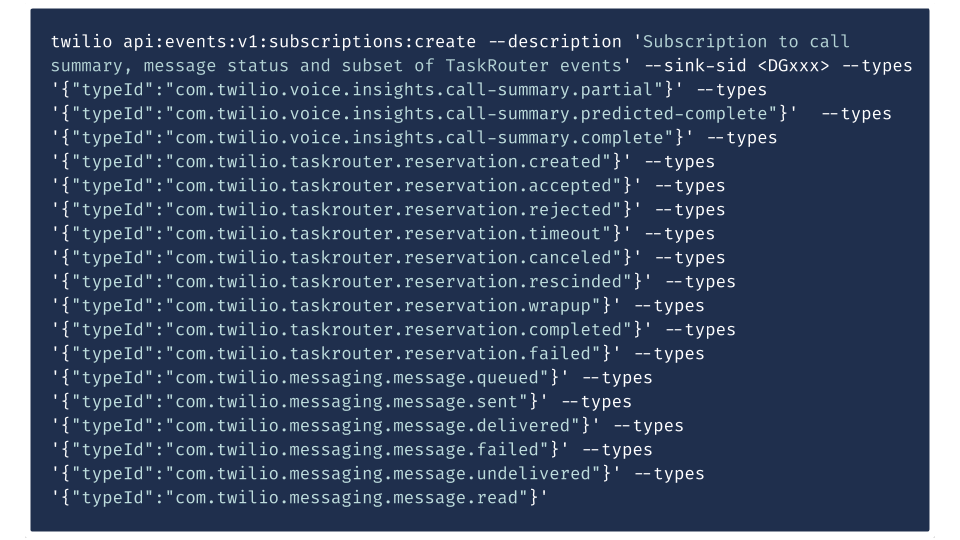
    Twilio today at its online SIGNAL 2020 conference launched Twilio Video Web RTC Go, a free toolkit that makes it easier to embed video within an application, and exposed an Event Streams application programming interface (API) through which the management of streams of messaging and voice can be centralized using the Amazon Kinesis platform.

    At the same time, Twilio debuted Twilio Frontline, a mobile application that enables all incoming and outgoing customer conversations occurring over any channel or medium to be sent to a single application running on an IoS or Google Android device.

    Finally, Twilio also launched Microvisor, a turnkey connectivity and device management platform for developers building and updating internet of things (IoT) applications.

    Quinton Wall, senior director of developer marketing at Twilio, said Twilio Video Web RTC Go will play a critical role in enabling organizations to take control of digital business applications that now typically include a video stream. Rather than having to rely on a video service provided by Zoom, for example, an organization can provide an interactive video experience under their own brand by invoking application programming interfaces (APIs) that connect applications to Twilio Video running on the Amazon Web Services (AWS) cloud.

    In a similar vein, Twilio Frontline enables organizations to also take control of the communications channels that end customers are likely to employ. It may not be feasible to require every customer to employ a specific communications channel but at the very least all communications occurring over WhatsApp, SMS/MMS, webchat and other channels can be centralized, noted Wall. The Events Stream API, which will be expanded to include other processing engines other than Amazon Kinesis, enables developers to apply that same capability within their own applications.

    Twilio is also making it easier to build and deploy applications in IoT environments via a Microvisor platform through which Twilio provides constant monitoring of vulnerabilities and applies security patches to both IoT devices and any associated cloud components. Developers can also debug and update devices remotely and push out code updates as often as they see fit.

    Developers can also reuse any existing embedded code and develop IoT applications in the language and embedded OS of their choice using the TrustZone hardware isolation technology made available by Arm on processors that are widely employed in IoT devices.

    Collectively, Twilio is making a concerted effort to convince developers to programmatically invoke a range of cloud services that are exposed via an API. Rather than employing separate services for each video, audio, text or in the case of IoT application an IT management function, Wall said the goal is to enable developers to spend more time on writing code versus integrating external services.

    In general, the point where applications that don’t include embedded collaboration tools, including video, are considered antiquated has arrived. End users that have become accustomed to using services such as Zoom expect to be able to instantly communicate with the owner of that application or other end users. Twilio provides those capabilities in a way that doesn’t require developers to rely on a service such as Zoom that introduces yet another brand into the application environment, noted Wall.

    It’s too early to say just how capabilities such as video will be surfaced within applications. However, the one thing that is certain is video is now expected to be pervasive both inside and out of application environments.

  • Balancing UX and Privacy With IoT

    Balancing UX and Privacy With IoT

    As more IoT devices track data to improve customer UX, privacy concerns are becoming more prevalent. How can developers strike a balance?

    The internet of things, or IoT, is a system that has changed the way we perceive technology. While it has made the usage of technology easier than ever, it does come with its own set of problems. Being such an interconnected network, IoT’s main threat is its ability to pose myriad security and privacy problems.

    In this article, we seek to discuss how and why privacy is becoming a rising challenge in the world of IoT. By understanding how our privacy and security will be affected, we can take the right measures to reduce our vulnerability to these threats and secure our lives.

    How Interconnected Are Devices?

    IoT devices come with several technical capabilities, most of which have been researched and optimized only to the extent of their functionality. Today, IoT connectivity is available in a growing number of devices and equipment. Smartphones can connect to the internet and several household appliances, which also allows people to control these items remotely. Transportation departments have begun to hash out more advanced vehicle-to-vehicle communication, focusing on improving driver and passenger safety on the road. SmartGrid interconnected technologies allow electricity providers, managers and users to monitor and control electricity use in homes, offices and places of business. Today, several people are also making rampant use of SmartHome technologies to control appliances and home security systems and use fitness trackers to control their movement as monitor their eating and sleeping habits. These trackers are connected to their smartphones for better data aggregation.

    All of these connected devices pose a question: With so much data collection and data tracking being carried out by these devices, aren’t we compromising on our privacy and security?

    How IoT Affects Privacy

    When we consider the compromised privacy of individuals, we are talking about each individual’s loss of control over personal information. When people invest in these interconnected devices, they are not entirely aware of how much of their personal information is tracked and saved by the manufacturer in a bid to improve user experience.

    An individual can lose control if someone hacks into their smartphone or computer and remotely operates other devices. There’s no doubt that our smartphones carry a majority of our information. They are linked to our bank accounts, email accounts and even systems that need authorization. In fact, experts predict that there would be about 31 billion connected IoT devices by the year 2021. Usually, hackers employ methods that are undetected, so more connections would mean an increase in hacking activities as well.

    The data collected from an individual’s smartphone or laptop can give hackers a detailed look into their activities, including internet searches and purchasing power. The information is typically used to work on user experience, but also can be used to target particular products to the individual. Sometimes, this data is even sold to other organizations that are looking for a target audience to sell their products.

    Rising Challenge of Protecting Data

    Data is constantly being stored, transmitted and processed by different companies with the help of IoT devices. With more entry points to access data in the form of smart TVs, speakers, lighting systems, printers and more, your data is more vulnerable than ever.

    IoT vendors, therefore, should have dedicated compliance and privacy rules that alter and anonymize personal data before it is stored. The aim is to prevent the data from being able to identify an individual. Cached data and data that is no longer needed should be disposed of in a secure and organized manner.

    Stored data also must meet compliance with legal and regulatory mandates. This must extend to mobile devices, web presence, cloud applications and any other means by which the data from IoT devices are accessed and managed.

    Affordability of Protecting Data

    Yet another concern among IoT developers is the ability to provide enough security for their services. Limited budgets and manpower constraints can prove difficult for establishments to heed to privacy and security concerns. The reason so many loopholes exist is due to the fact that so many manufacturers focus solely on getting the app out into the market to attract funding without considering the damage that could follow.

    With more and more people concerned with their data privacy, organizations must implement more security checks to avoid ruining their brand authority and trustworthiness due to a data breach.

    Conclusion

    Users today are more connected than ever, which means privacy and security concerns must be top of mind for developers. Manufacturers may argue that data collection is essential to the development of their products and the IoT market in the long run, but there must be more focus on the security of the data and personal privacy concerns. Data collection should be done in a monitored manner, with compliance to regulations from the onset. A recent survey noted that 92% of global consumers want more control over how their information is collected. The same number of people also want to enforce punishments for corporates that violate their privacy. IoT developers, therefore, must strive to find a happy medium that balances security and privacy with user experience.

  • Chef Adds Support for Arm Graviton 2 Processors on AWS Cloud

    Chef Adds Support for Arm Graviton 2 Processors on AWS Cloud

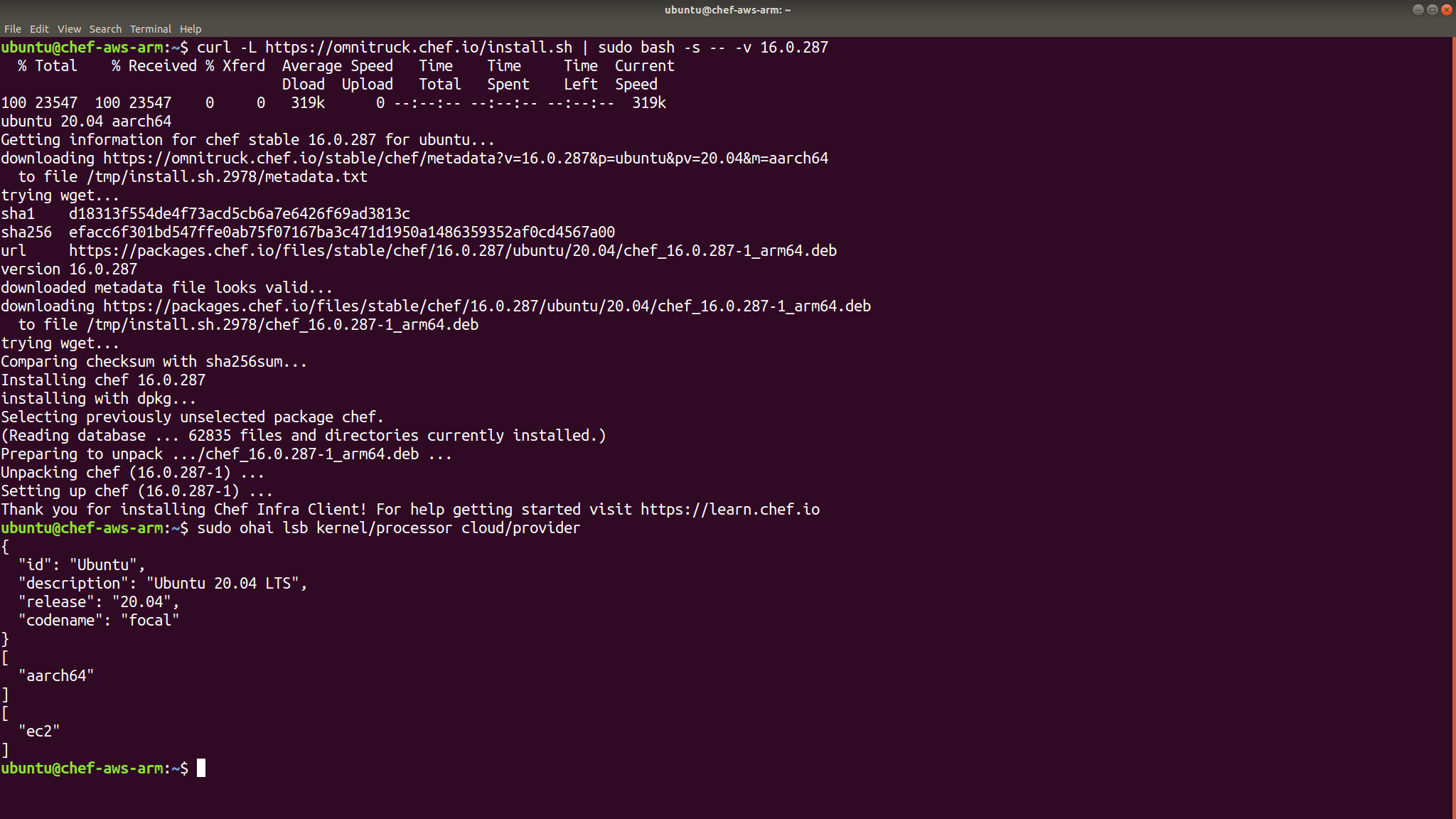
    Chef announced this week that its offerings for managing and testing infrastructure as code now support Graviton 2 processors from Arm on the Amazon Web Services (AWS) cloud.

    AWS this week announced the availability of an M6g instance of processors on its public cloud. Based on a 64-bit Arm Neoverse N1 architecture, the M6g processors were jointly designed by Arm and Annapurna Labs, a unit of Amazon.

    According to AWS, during a preview program platforms such as Honeycomb consumed 30% fewer instances on M6g than the widely employed AWS C5 instances. Treasure Data, a provider of data analytics software, reported a 30% performance increase while seeing a 20% cost reduction compared to similarly sized M5 instances. The Amazon ElastiCache service team found that M6g instances deliver up to 50% throughput improvement over M5 instances on Redis.

    In addition, AWS this week revealed it also plans to add compute-optimized C6g instances and memory-optimized R6g instances based on 64-bit Arm processors.

    The Arm processors in the cloud are expected to provide a foundation for building hybrid internet of things (IoT) applications spanning AWS cloud services and instances of Arm processors that are widely employed in embedded systems. Previously, AWS launched an AWS Greengrass initiative through which it encourages developers to build and deploy cloud-enabled IoT applications on edge computing platforms.

    Vikram Ghosh, vice president of business development for Chef, said DevOps teams can now automate the provisioning of Arm processors using the same Chef tools they employ to provision instances on other types of processors running on the AWS cloud.

    It won’t be long before 64-bit instances of Arm processors start showing up on other cloud computing platforms, noted Ghosh. In fact, between the rise of Arm processors alongside graphical processor units (GPUs) the types of processors readily available in the cloud have never been more diverse, which Ghosh said is driving increased demand for tools to manage infrastructure as code.

    It’s still early days as far as adoption of best DevOps practices to build and deploy IoT applications is concerned. However, the highly distributed nature of IoT applications—which in many cases will need to be updated frequently—lend themselves to being managed more efficiently using DevOps processes. In most cases, these IoT applications represent “greenfield” applications where there is no legacy process in place that potentially would create a culture clash.

    Forecasting demand for edge computing applications in the wake of the COVID-19 pandemic is difficult. However, the general expectation remains that more application code will be moving closer to the point where it is being consumed, especially when 5G wireless networking services become more available. In fact, many of those applications are being built now in anticipation of those networking services being able to connect edge computing applications with backend cloud resources.

    Once those applications are built, the next big challenge will be finding a way to secure and continuously update them. In the meantime, however, the number of edge computing applications being built today in the cloud for edge computing platforms based on Arm processors is about to increase substantially.

  • 4 Things to Do When Running the Iot Zoo

    4 Things to Do When Running the Iot Zoo

    Zoos are fascinating places. In just a few acres you can encounter all kinds of interesting, rare and exotic animals from different parts of the world and from different ends of the food chain. But, what keeps the tigers from eating the zebras or even the visitors? Segmentation. Walls, fences, cages and other barriers that keep every critter safe and well behaved. The same concept is vital to the proper security of Internet of Things (IoT) and operational technology (OT) devices. As these devices proliferate, it is segmentation that keeps them all safe and well behaved.

    Here’s what I mean.

    The modern enterprise consists of a huge variety of network-connected devices that play different roles in making the network operate properly, provide services to customers and partners, and that allow employees to do their jobs quickly and efficiently. Once deployed, however, it can be difficult to track and monitor IoT devices—and you can’t manage what you can’t see.

    Using the zoo analogy, if your devices are allowed to roam freely, some will be forgotten and others will act in unexpected ways. There will be unmanageable chaos. But, if the animals are categorized, monitored, segmented and cared for, the zookeeper can keep things operating in an orderly manner.

    If you are among those struggling to keep your IoT and OT device menagerie in line, I have bad news. Your challenges aren’t getting any easier. According to some estimates, there will be between 41.6 billion and 83 billion IoT devices connected to networks by 2025. Those estimates were made before the outbreak of the COVID-19 pandemic. Now that a Pandora’s box of remote work has been opened, there’s a strong chance trends like distributed workforce, manufacturing automation and mobility will result in a sharp acceleration in the use of IoT devices, pushing those numbers higher. Making matters worse, many of those devices will connect to networks unnoticed, unmanaged and unsecured.

    Healthcare is already among the industries feeling the effects of most sharply. Healthcare organizations rely on connected devices to perform their jobs and deliver the highest quality of care possible. It’s not just medical devices like insulin pumps, EKG machines and ventilators. Sophisticated healthcare facilities rely on connected devices for security monitoring and access control, administration, environmental control and IT operations management. The health, security and usage of non-medical devices can impact patient care so, for instance, IP-enabled elevator systems are needed to transport patients while HVAC systems can impact air quality in operating rooms. Protecting and managing IoT and OT devices is especially important in healthcare organizations post COVID-19, as we will be dealing with the aftermath of a surge of new devices being deployed.

    Right now, roughly 15 million IoT devices are being used by healthcare professionals worldwide. Hospitals use an average of 10-15 devices per bed, collecting and communicating highly sensitive protected health information (PHI). It’s no surprise, then, that 82% of healthcare organizations have had their IoT devices targeted. The risk increases when devices used by medical personnel cross from professional to personal use. A tablet used to enter a patient’s PHI and check email makes the network it’s connected to more vulnerable to phishing scams and ransomware. Unfortunately, with hospitals focused on responding to the pandemic, some malicious actors see it as an opportune time to strike.

    What can be done to mitigate the risk? If I ran the IoT zoo, there are four steps I’d take to figure out what was running wild and wrangle everything into its pen.

    Discover and Inventory

    You can’t manage what you can’t see, so complete, real-time discovery of IoT devices is critical. Step four of segmentation is unachievable without proper visibility and classification of devices. The fidelity of visibility and classification of devices is key, and needs to consider ephemeral assets that may go online and be brought up in a different physical or network location. We’ve seen this situation be exacerbated during the COVID-19 pandemic as new network-connected devices are rushed into service. 

    Baseline and Monitor Behavior

    Once you’ve taken inventory, you need to map how devices communicate and with what. Devices use a variety of protocols and communication patterns. Baselining what is normal is crucial to identify when devices start behaving badly. For example, without proper traffic monitoring, we won’t know that the baboons are attacking the pangolins every night. 

    Identify Risks

    With a baseline for recognizing bad behavior, you can identify anomalies that signal potential compromise, high-risk devices such as those running obsolete operating systems and devices with medical or FDA-advisories. The fragile, rare or highly valuable animals can be managed differently than a common “low value” asset, like a sparrow. Look out for solutions that tout their cybersecurity prowess with threat alerts but without providing ways to resolve the issues.  

    Segment and Secure

    Finally, with devices visible and categorized, and associated risks identified, your next step is to secure them. Since you cannot deploy endpoint agents, devices need to be properly secured using appropriate segmentation policies. The key is doing this in an automated manner that is scalable and operationally feasible, and uses the infrastructure that the organization has already invested in—networking products, firewalls and network access controls (NAC).

    And, with apologies to Dr. Seuss, I’ll leave you with a final thought:

    It’s an IoT zoo, said the young CIO, but the people who run it, don’t know what to do. 

    If I ran this zoo, said the young CIO, I’d make a few changes. That’s just what I’d do. 

    The monitors, HVACs and all of that stuff, are not secure or well managed. It’s not good enough! 

    I’d ID and segment, assign policies, too. The old ways just don’t cut it. Time for something new!

  • Accelerating IoT by Switching Gears to 5G

    Accelerating IoT by Switching Gears to 5G

    Unprecedented breakthroughs in technology have often resulted in the emergence of disruptive technologies and outstanding innovations. A major development in one technology always fuels the growth and advancement of several other technology domains and industries that take advantage of it, resulting in a need to transform businesses to address new opportunities.

    The evolution and development of various generations of mobile wireless technologies—mobile phones, mobile application development, eCommerce, banking, transportation, hotels, etc.—have seen a cascading impact on the growth and advancement of various applications. We are about to witness a similar multi-dimensional growth in several industries with the advent of the 5G wireless technology. With speeds that could be at least 10 times faster than 4G networks, 5G is expected to create pathbreaking opportunities for innovation and development in a variety of domains including but not limited to education, IoT, artificial intelligence (AI) and health care.

    5G networks offer three major benefits, bigger channels, reduced latency and scalability, which allow the connection to a large number of sensors and devices. This combination will enable the government and other industries to introduce advanced digital initiatives involving AI, machine learning (ML), Industrial IoT (IIoT) and a variety of other data intensive applications.

    This article focuses on the effect of 5G networks on IoT, and the role that DevOps could play in this mix.

    Where Does 5G Fit with Regards to IoT?

    At a high level, the focus areas for the five generations of mobile network technologies can be summarized as: 1G, voice; 2G, voice and texting; 3G, voice, texting and data; 4G, everything as in 3G but much faster; and 5G is expected to be everything in 4G but extremely faster. 

    IoT devices employ a wide range of wireless technologies such as WiFi and Bluetooth, in addition to cellular technologies such as GSM, LTE, 4G and 5G. In the field of IoT, cellular technologies such as 4G, have helped a great deal with regards to device provisioning and device management. These technologies have also improved and ensured coverage, performance, reliability and security of IoT devices and applications.

    5G brings in a variety of other benefits that are not available with 4G. The speed, higher capacity and low latency of 5G will make it more ideal for simultaneously connecting a large number of devices. Further, additional enhancements made by some 5G service providers aim at expanding the frequencies for data transfer by digital cellular technologies. These features will also make 5G a major enabler in applications that use IoT where real-time performance and decision making are critical. Remote medical diagnosis and remote surgery are some examples where 5G’s ultra-low latency will help improve the virtual and augmented reality experience, making them more powerful tools in the medical industry—especially at a time of crisis like the currently prevalent COVID-19 pandemic. 

    The bandwidth reliability and resiliency offered by 5G will pave the way for several new applications for IIoT systems. For example, factors such as operator productivity in manufacturing, reduction in cost of quality management and enhanced quality through continuous monitoring and improvement, are some examples where IIoT can be made more effective with the use of 5G.

    The volume of real-time data exchanges with IIoT devices will be greatly increased with 5G. This helps with obtaining more frequent and reliable data on several KPIs in manufacturing, worker productivity, root-cause analysis, etc. Predictive maintenance, which is turning out to be a major use case for 5G and IIoT, aims at predicting failures before they occur by leveraging AI.

    The Difference that 5G Makes on IoT Data 

    Prior to the advent of 5G, technology required to offer a higher bandwidth and reliable network connectivity were quite limited and have further prevented from realizing the fullest potential of several edge devices. These devices can potentially generate and transmit large volumes of data that can be processed and analyzed by cloud-based applications. With 5G, there will be a sharp increase in the capture and use of valuable data from edge devices leading to greater insights and predictive analytics on IoT implementations.

    5G technology offers a significant increase in transmission bandwidth, theoretically up to 10 Gbps, as opposed to 4G which only offers 100 Mbps. This increase in bandwidth will result in significant growth in the volume and quality of IoT data and a proportional growth in AI applications leveraging ML and big data. The mass volumes of data created by IoT under the influence of 5G have the power to revolutionize everything, from education to healthcare to manufacturing and even autonomous vehicles.

    With 5G, there will be a surge in the volume of data generated by sensors, cameras, drones and edge IoT devices. Integration of data from different sources will lead to the development of several large data-intensive applications that help draw valuable insights regarding the domains in which they are implemented. The convergence of 5G technology, IoT and data analytics will also pave the way for innovation and several new business opportunities. IoT applications leveraging 5G technology will proliferate wearables, smart home appliances, industrial automation and also future self-driven vehicles.

    All Things Considered

    There is absolutely no doubt that IoT is already taking the world by storm. The power of IoT, when harnessed with the power of 5G technology, will certainly lead to several innovative approaches and open up new business opportunities. Overall, the speed, reliability and low-latency offered by 5G makes it ideal for connecting a large number of IoT devices.

    IIoT devices will find a great use for 5G as they can now collect and report large volumes of real-time data from manufacturing units and sensors, helping companies obtain valuable insights and take well informed decisions. The large bandwidth supported by 5G additionally provides edge devices the ability to transmit larger volumes of data more frequently to applications that can process and use the data effectively for AI and ML.

    We will definitely see the industry witness a sharp growth in IoT, AI and ML applications relatively soon, given the fast growth of 5G and the enhancements that several service providers are already making in this technology.

  • AIoT and Intelligence on the Edge

    AIoT and Intelligence on the Edge

    Recently, one of the biggest convergences is between the fields of AI/ML and IoT, which enables the rise of Artificial Intelligence of Things (AIoT). AIoT combines data collected by sensors and other devices with the intelligence offered by AI/ML to enable real-time, intelligence on the edge. By converging AI/ML and IoT capabilities, AIoT solves two problems by merging them together into one solution. The goal of AIoT is to enable more efficient IoT operations, improve human-machine interactions and enhance how data is managed and analyzed. 

    Edge intelligence allows a high level of data to be processed and analyzed, and for decisions to be made locally, without being sent to the cloud. Take for example a self-navigating drone, instead of relying on a service hosted on the cloud to tell the drone where to go next, the drone itself is now able to decide its own path in the field, even when connections to cloud hosted services are not reliable.

    The evolution of IoT into AIoT progressed in three distinct stages: 

    1. Enabling core capabilities on the edge, including basic sensor development, integration with available devices, etc.
    2. Collecting the data generated from these sensors and storing them in a structured form on a central data store, typically on the cloud.
    3. Realizing the synergy between AI/ML and IoT and combining them together into AIoT.

    In other words, while IoT provided access to a large base of information, AI/ML has brought in intelligence and decision making.

    While great advancements toward AIoT have occurred, there are three main challenges in enabling intelligence on the edge to consider:

    1. Latency: When decision making occurred on the cloud, the only available option for an IoT device was to send the data (say, a captured image from a camera) to a service running on the cloud and get a selected decision from the service. This meant large volumes of data were transferred over slow or unreliable networks, resulting in delays–in many scenarios these delays could be extremely critical.
    2. Cost of computing and data transfer: Apart from the delay itself, the sheer volume of requests would greatly increase the cost of both transferring data back and forth and the cost of computing on the cloud–decreasing the feasibility of these implementations.
    3. Design divergence: While initial AI/ML solutions leveraged the cloud for vast amounts of computing power for training models, advances in the ability to move around or run a trained model (to calculate a decision) caused a divergence between the design of the solution and the hardware needed for the training and deciding components.

    In parallel, AI/ML learning methods also evolved–these became a lot more efficient with regards to computing power usage, and the type of hardware needed for a machine to learn or to decide. Combining AI and IoT was the next logical stage in this evolution.

    Design of an AIoT Solution

    The physical components of an AIoT solution are not that different from a standard IoT implementation; the design of the AI/ML backend also does not change drastically. The changes are to a few specific parts of the core devices on the edge–that are now more powerful–and enable a huge range of flexibility with the scenarios that can be handled, and how solutions are designed using these devices. 

    Impact on Enterprises

    Enterprises looking to benefit from AIoT may need to re-align roadmaps or make a few incremental changes based on their current state of adoption and based on the nature of their solutions.

    For CXOs

    There are four suggested, broad strategies for CXOs based on their level of investment today in the areas of IoT and AI/ML that are depicted in the following graphic.

    Strategies to follow for AIoT adoption depends on current levels of investment.
    • Group 1: Current level of investment in AI/ML and IoT are both high. The best option for these enterprises would be to evaluate the current roadmaps to identify incremental additions/upgrades to edge devices. This would leverage the existing investment in AI/ML and at the same time start demonstrating benefits early without increasing risk.
    • Group 2: Level of investment is higher in IoT compared to AI/ML. These enterprises stand to gain the most by shifting the ratio of investment toward AI/ML while making small changes to the device sets on the edge. They may also need to re-evaluate their current process to consider moving the decision part of the step to the edge.
    • Group 3: Level of investment in AI/ML is higher than investments in IoT. These enterprises would probably need minimal re-alignment with their roadmaps–a quick look at the implementations of the steps that train the ML models would provide the list of actions to take–epics/stories that needed intelligence on the edge can move higher up in the product backlog.
    • Group 4: These enterprises have the maximum freedom with the roadmap their implementations can take. Any product or platform roadmap planning can easily include AIoT epics and stories, with minimal impact to tasks already underway.

    For Architects/Program Managers

    For architects and program leads working on such initiatives within the company, it’s mainly a mindset change in regards to how the solution is designed, including capabilities of the devices on the edge and where the decision-making step in a process happens. Feasibility for scenarios such as the drone automatically calculating its own path instead of relying on a cloud-hosted service are now better than before, and a few demos or proof-of -concept attempts could now move many of these stories from the backlog and bring implementation dates forward.

    Realistic Predictions for AIoT

    While AIoT in its re-imagined, converged form may be new, the two original fields (AI and IoT) that merged to create AIoT are both mature and well into mainstream adoption. The benefits offered by AIoT for enterprises today, combined with the low risk involved with the small incremental changes outlined above and the cost savings that result in moving the decision making to the edge, create a lethal combination that positions AIoT to revolutionize business processes.

    IDC has predicted that the global spend on IoT will reach $1.1 trillion in 2023, up from $726 billion in 2019. Moreover, IDC predicts there will be around 40 billion IoT devices by 2025, resulting in a significant influx of data that will make it increasingly challenging for enterprises to drive operational insights and optimize their analysis of the large sums of data available. AIoT can help solve this problem by bringing increased intelligence to data management and thorough analysis. 

    If it isn’t already, now is an ideal time for AIoT to be a top priority for C-suite IT leaders.

    — Rajamani Saravanan

  • Don’t Let ‘Hindsight 2020’ Be Your DevOps Strategy

    Don’t Let ‘Hindsight 2020’ Be Your DevOps Strategy

    The idea of DevOps originated a little over a decade ago with a desire to ensure efficiency in the overall software development and delivery process. Constant operational hurdles that have been hampering flawless and frequent delivery of applications have led organizations to think beyond and to come up with continuous improvements in their processes and tooling. Thus, DevOps has evolved into a solid practice to aid enterprises with an end-to-end feedback enabled framework that spans across various functions and stakeholders to design, develop and deliver quality software.

    The IT landscape over the last few years has changed significantly. Companies are building secure applications and large volumes of workloads are being transformed to the public cloud. Nowadays, firms are actively applying AI technologies to transform their businesses more than they were just a few years ago. Some companies are still investing heavily on building their own complex AI platforms involving expensive infrastructure, but most companies have realized the value in leveraging AI as a service offered by leading cloud providers.

    Digital initiatives and IoT have further increased the use of cloud-based services and the need for automated deployment and delivery of applications and services. Seamless integration of the CI/CD pipeline for on-premise or deployment to the cloud is possible only with a solid DevOps practice. For organizations that are ambitious and striving to get ahead of the game in order to accelerate the growth of their businesses, DevOps is indispensable.

    To successfully implement some of the current major trends in IT, organizations are required to have a mature DevOps practice in place.  In October 2019, Gartner published its predictions on technology trends for 2020. We’ll pick a few from those to discuss the crucial role that DevOps is expected to play in them, and the critical success factors for companies to be advanced forward.  

    Strategic Trends in IT and the Role of DevOps

    Hyperautomation

    Gartner’s analysis on strategic technology trends for 2020 has hyperautomation as the number one trend. Hyperautomation, which enables organizations to function as autonomous digital enterprises, will be leveraging latest technologies such as 5G networks, intelligent edge devices, advanced data analytics, expanding RPA with AI, etc. Firms aspiring to implement AI and ML on a grand scale will want to take advantage of the diverse range of complex machine learning algorithms implemented on scalable cloud infrastructure and offered as services.

    Instead of recreating everything from scratch, organizations will simply upload their data to the cloud and train algorithms based on their business processes and needs. For hyperautomation initiatives to be successful, organizations need to implement end-to-end fully automated DevOps processes with the relevant tooling to specifically address the varied needs from several perspectives. Speed, agility and ensuring an error-free repeatable process will be basic requirements for hyperautomation.

    On-demand deployment of transient infrastructure on the cloud, driven by infrastructure as code and configuration as code will be a primary requirement for rapid development and testing of artifacts that form components of hyperautomation. Fully automated pipelines for the creation and deployment of containers will become a core requirement not only for hyperautomation but in general for most applications. The involvement of DevOps to manage data virtualization, obfuscation and uploading data to the cloud will become more significant to increase the overall efficiency of the automated CI/CD pipelines for hyperautomation projects. 

    Democratization of IT

    Democratization of technology is about making technology more accessible to common people. Gartner has predicted this to be another major trend for 2020. Smartphones and the internet have already played a major role on this front and have enabled people with the technology, tools and data to help make better decisions. Democratization of technology in the IT world is about enabling the IT community and it gets more and more interesting day by day.

    With container technologies such as Docker Desktop that can run on a user’s laptop, a developer now has access to pre-configured container images of various operating systems and other platforms that can be pulled from container registries within seconds. Cloud services such as IaaS, SaaS and PaaS add to this by providing more independence to the development teams apart from making the entire process agile and faster. Democratization at these levels also leads to setting a different level of expectations on the overall velocity of development and delivery of applications. All these services in isolation, i.e. when not connected together through a strong DevOps process and toolset, will not produce the expected level of agility and speed.

    An end-to-end DevOps process works all the way: from triggering the build of a container image as the code is built, deploying an environment on the cloud, integrating with other components, testing artifacts with automated testing and finally to producing a production-worthy artifact. When IT teams get more democratic, they will run their domain the way they perceive beneficial and produce the best possible outcome with quality and speed to make their teams and the organization successful. DevOps will be the means to achieving that goal.

    Internet of Things

    Edge devices are getting smarter by the day. Mass manufacturing of intelligent controller boards, such as the ESP 8266 and ESP 32, is making it extremely cheap to build edge devices with data storage and processing capabilities locally within the device itself instead of communicating with a cloud based central system for command and control. However, such intelligent devices need to be kept up-to-date on security patches, bug-fixes, firmware updates, etc. A solid DevOps framework that integrates testing of patches/fixes, and deploys tested artifacts to remote edge devices is an absolutely essential component of an organization’s IoT ecosystem.

    Some controller boards run light-weight versions of Linux and have the capability to additionally run a Docker engine. This helps ensure consistency through deployment of updated containers via a DevOps pipeline to the edge devices. Convergence of cloud and digital transformation initiatives, especially in IoT over the last few years, has widened the scope of DevOps. Major cloud providers are already offering several services to integrate edge devices with a full-fledged CI/CD pipeline leveraging DevOps processes and tools. 

    Blockchain

    Application developers and IT managers spend a great deal of time either fixing bugs or recovering systems from breakdowns caused by bugs. If best practices, processes and tools are put to proper use, this wasted effort can be greatly reduced and the entire development and delivery process could be made more efficient. Blockchain demands building a strong foundation in IT and raises the need for higher quality in software development, delivery and IT operations on the whole.

    Organizations have to take a closer look at their current capabilities and process maturity before embarking on a journey involving blockchain. Firms that have faced failures with blockchain can certainly vouch for the fact that the failure wasn’t caused by the concept of blockchain or the algorithms that drive it. Rather they had resulted because the rest of the IT systems weren’t reliable enough to keep up with the strict demands of the blockchain systems. DevOps and automation will certainly help improve the security, quality, reliability and repeatable deployment of applications. When the systems that feed the blockchain application go through such increments of improvement, the net effect is that the organization is getting closer to implementing a solid blockchain solution.

    Success Factors

    Firms are moving fast toward the cloud for IaaS and PaaS services. As DevOps, CloudOps and SecOps are converging, CIOs are becoming conscious about building organizations that encapsulate these functions under one leadership in order to set shared goals and ensure synergies across these functions. Organizations with strict compliance requirements and governance would need to involve their operations teams to lay the rules regarding using cloud services.

    Application development teams and users are still dependent on several operations teams to design and implement secure cloud connectivity and to establish the rules around using cloud services. While a strong governance is absolutely essential, there is a high possibility for firms to lose their agility and get caught once again in a mess if these operational processes are not smoothen and streamlined. For the strategic initiatives on implementing the new trends to succeed, it is vital for DevOps to be able to operate without any hurdles.

    Below are a few critical success factors worth considering.

    Dev and Ops in a Box

    Organizational structure plays a key role in determining the success of DevOps. Keeping applications development, DevOps and infrastructure operations very closely aligned with overlapping goals, KPIs and roadmaps is a key to success. Companies that operate these functions independently without proper alignment fail to establish an organization-wide DevOps culture and rarely reap the full benefits of DevOps.

    Full-Stack Engineers for DevOps

    It is important to develop a DevOps culture across the company. At the same time, it is equally important to bring in experts who can evangelize DevOps and take a completely fresh look at how things are done. Experienced DevOps professionals can pin-point areas for improvement, and additionally help accelerate the adoption rate of DevOps. Settling for high-quality resources that have full-stack experience is absolutely essential if you are in for a long run with DevOps. Global companies should seriously consider placing such experienced resources close to the development and operations teams. While it may be cost-effective to recruit resources offshore, that may not be such a good idea if your active development and infrastructure teams are onshore. 

    Trained Internal Resources

    Training internal resources are extremely important in order to carry out the recommendations from experts and to make DevOps a habit. Trained resources have to be deployed immediately to work on DevOps initiatives alongside the experts. To establish synergy and increase collaboration, it is a good idea to send development and operations resources to some common training courses and sessions.

    Wrapping Things Up

    Research organizations are closely observing the direction in which most organizations are moving toward in order to improve their speed, efficiency, agility and their overall ability to provide services that are secure and reliable. Business strategy and technology feed each other and as a result, some key trends in technology emerge from time to time.

    We looked at some of the trends that are going to be prominent in 2020 and the role that DevOps would have in implementing these technologies. Regardless of any specific technology, it is important to automate the integration and delivery of applications. DevOps processes and tooling will help a great deal in accelerating the pace of implementing new technologies and leveraging them in business applications.

    The organization of IT teams and a focus on recruiting the right talents will determine the overall success of DevOps. Training internal staff would help sustain the culture of DevOps in companies and fuel further growth in this space. DevOps will not be an optional function any more. It will be an essential component of the culture, and firms that adapt themselves sooner to this culture will be the ones most successful in implementing the current and future trends in technology.

    — Sridhar Asvathanarayanan

  • 5G Security: Mitigating Threats in the Era of Hyperspeed and Hyperconnectivity

    5G Security: Mitigating Threats in the Era of Hyperspeed and Hyperconnectivity

    5G is one of the hottest industry buzzwords right now, and for good reason. Beyond its ability to deliver massive capacity, it is expected to be one of the fastest and most pervasive technologies of all time, fundamentally changing every sector of the economy.

    In recent years, we’ve lived through 3G and 4G. So what makes this next generation so revolutionary? Put simply, every emerging technology we are collectively excited about—IoT, VR/AR gaming, autonomous cars and smart cities—is enabled through 5G. This is because this next generation of the mobile network will increase the speed of service by extending high bandwidth and connectivity to the edge, a possibility that wasn’t quite there with 4G. 5G will connect everything around us via a network that is 100x faster than our current cellular connection and 10x faster than home broadband service.

    The technology is ready. From a commercial and business perspective, however, 5G implementation is still in its infancy. When it comes to capitalizing on the many use cases 5G offers, what is the holdup? With faster speeds, enormous data capacity, lower latency and more devices connecting and communicating than ever before, the security vulnerabilities are extreme. Given we are in the early stages of 5G deployments, service providers do not even know the full extent of the security concerns; they are just planning for the number of devices joining the network to grow exponentially. With the proliferation of connected personal devices, data privacy concerns have never been higher.

    To understand the potentially detrimental threats to personal safety and data privacy, we must first look at specific use cases enabled through this technology.

    The 5G Effect

    5G is more than just faster speeds—it is unlocking some of the most highly sought-after technologies of the decade. This is because low latency, or next-to-nothing lag time, allows a device asking something of the network to get a response almost instantaneously. For VR and AR gaming applications, this means a seamless user experience. And while sensory video games are good fun, these same principles can carry over to more serious applications in hospitals and other medical settings: By using a VR headset and special glove to control a robot arm, for example, a surgeon may have the ability to operate on a patient offsite.

    This extreme scenario offers two major risks: network lags and hacked equipment. An IoT-enabled hospital may have tens of thousands of “things” that could be compromised. Emergency room devices cannot afford to be starved for bandwidth if an admin printer is clogging the network. Any glitch in the network may lead to a slight delay in action, resulting in dangerous consequences. Additionally, with nefarious entries into the network through the high volume of vulnerable endpoints, the attack may have dire repercussions.

    A hospital is just one high-stakes environment. Now consider the IoT devices connected to a 5G network operating all around us—autonomous cars, energy grids, home security systems, etc.—the smallest glitch or endpoint vulnerability could lead to life-threatening situations.

    Many people do not realize 5G and IoT will have a major effect on seemingly innocuous devices such as refrigerators, thermometers and even light bulbs. While 5G will enable users to check on these types of appliances remotely through a simple app, convenience comes with consequence as these devices can also be usurped by malicious characters. It is important to recognize what 5G can enable, but also how it will all come together.

    Preparing for the Next-Gen

    Here are some tips on how enterprises can develop an effective 5G-ready security posture that encompasses the entire network:

    Invest in automation: 5G security poses its own Catch-22; because connections happen faster, attacks and breaches also happen faster and potentially with much more reach. To mitigate threats, 5G security will require actionable insights at scale. To achieve this, organizations need security systems that detect and automatically enforce security policy from endpoints to edge and every cloud in between.

    Scale up and out: To avoid a massive bottleneck, a proper 5G security posture will require upgrades to both physical and virtual infrastructures. Developing a secure architecture and solution that can keep up with the pace and scale of 5G without slowing it down is a large, but necessary, undertaking. The trick is to build in machine learning capabilities so the network can get smarter. Malware must traverse the network, so why not use all the data that the network already produces to fight it? A network that is constantly learning and updating is the only way to operate in the 5G landscape.

    Be proactive: History has shown us that whenever we expand our computing power and connectivity capabilities, we also expand the threat landscape. Not only that but as we continue to increase our dependency on communications networks and technologies to move tremendous amounts of data, there is greater potential for serious disaster should they be compromised. This is not the time to sit back and watch how things unfold, as major security risks are on the line.

    The use cases for 5G are plentiful. If we can conquer the threats, we can conquer anything the technology enables us to do—and the possibilities are endless.

    — Samantha Madrid