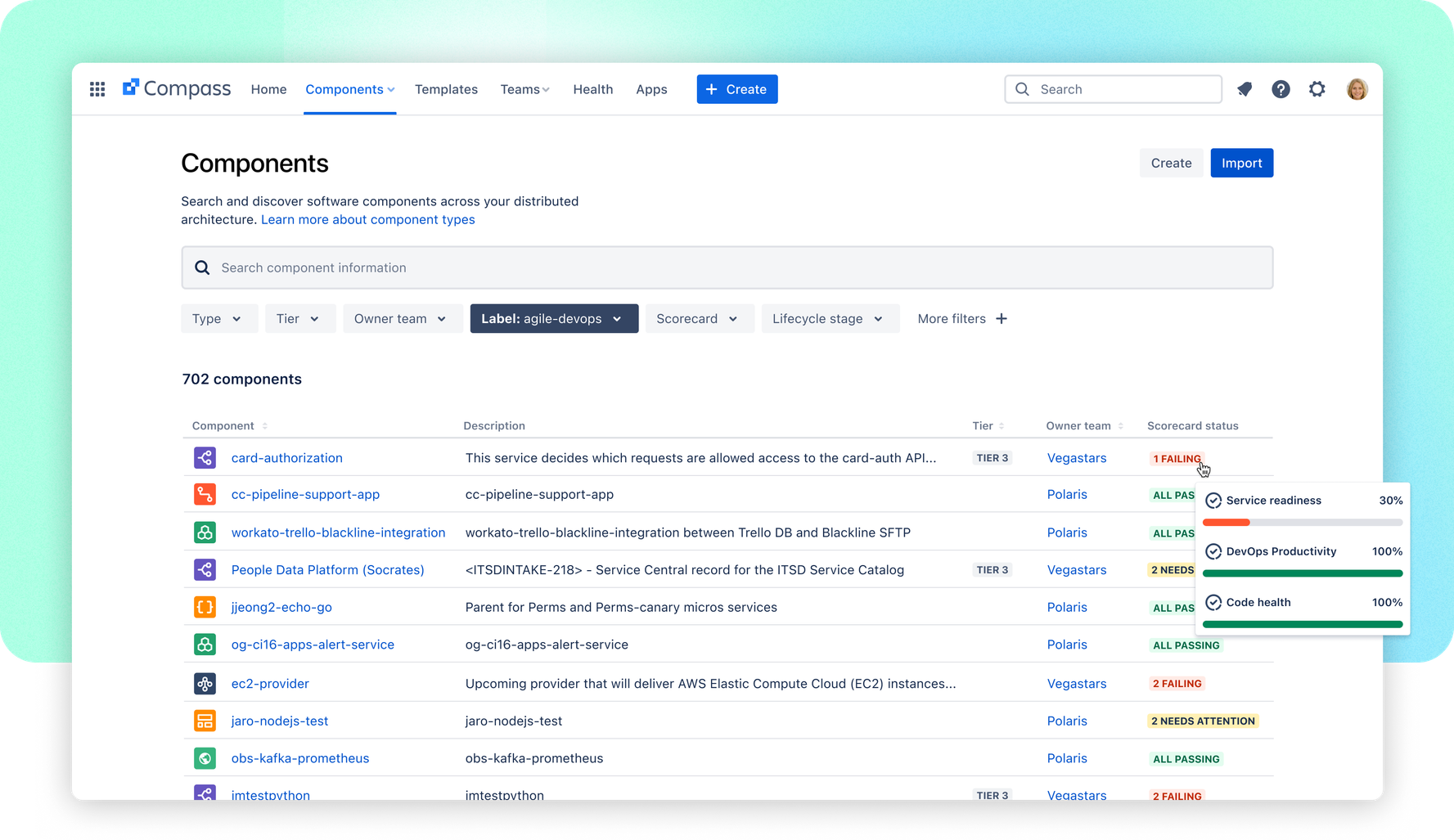
Tag: IDP

  • Survey Surfaces Significant Platform Engineering Gains

    A survey of 100 software engineers working at organizations in the U.S. and Western Europe published today found nearly all (99%) have embraced platform engineering to some degree as a methodology to manage DevOps workflows at scale, with more than half (53%) having done so in the last year.

    Conducted by Port, a provider of a proprietary internal developer portal (IDP) platform, the survey also found 83% of respondents have also incorporated GitOps workflows into their platform engineering practices.

    The survey also found 85% are working for organizations that have either started deploying IDPs or plan to do so in the coming year. However, what constitutes an IDP is not exactly clear, with more than a third (35%) that have implemented one reporting they are relying on spreadsheets to manage their IDP. A little over half (53%) of respondents, in contrast, are using an IDP to provide developers with self-service capabilities for setting up environments to write code that either was custom built, is based on open source Backstage software originally developed by Spotify or a commercial IDP platform.

    Among the 85% of respondents using or planning to use an IDP, the main measure of success is to improve developer productivity (56%), followed by reduced time to deployment (25%). Despite those initiatives, only slightly more than a third (34%) said IDPs are helping DevOps teams enforce software engineering standards.

    Roni Floman, chief marketing officer for Port, said overall, the survey suggests developers are wasting a lot of time on tasks that have little to do with writing code. For example, the survey finds that prior to embracing platform engineering, developers spent three to four hours a day on non-core activities, resulting in weeks being required to eventually deploy software in a production environment.

    The biggest challenge organizations face when embracing platform engineering is convincing developers that a centralized team has their best interests at heart. Many application development teams embraced DevOps as a best practice in the first place to escape the tyranny of a centralized IT team. The issue is that, as a result, many of them now find themselves managing tasks that have little to do with writing code. Platform engineering seeks to strike a balance between giving developers the ability to adopt new tools when they see fit and the benefits of having a dedicated platform engineering team that automates processes on their behalf.

    Unless platform engineering teams find a way to get developers to buy into the effort, however, it’s unlikely they will succeed, noted Floman.

    Each organization will need to determine for itself what level of platform engineering makes sense for them to implement, given their unique culture. In most cases, a platform engineering initiative will start small before increasing in size and scope as momentum is gained. In the meantime, the most important thing any platform engineering team clearly needs to do in the short term is engage developers. After all, the best way to get support for any change to a DevOps workflow is, as always, to convince developers it was their idea in the first place.

  • Internal Developer Platform (IDP) Reference Architectures

    Internal Developer Platform (IDP) Reference Architectures

    If you’ve been following the DevOps space recently, you’ve probably noticed the excitement brewing around platform engineering. Despite uncertainty in other areas of tech, it seems like platform engineering is poised for growth—Gartner even expects that by 2026, 80% of software engineering organizations will have established platform teams.

    The platform engineering idea hinges on an internal tooling system known as an internal developer platform (IDP), which platform teams own and operate and is exposed to developers to improve their efficiency, satisfaction and release fluidity. IDPs have been the talk of the town. But what does an IDP actually look like? What sort of components are they usually composed of?

    Well, at PlatformCon 2023, McKinsey representatives shared a reference architecture for building out IDPs. This framework was modeled after hundreds of internal platforms and could be a helpful benchmark for other organizations as they begin developing and standardizing their internal developer platforms.

    Below, we’ll examine the sample IDP reference architecture and its components. We’ll also have a refresher on the platform engineering concept and offer some expert tips on overcoming potential obstacles while implementing platform engineering and IDPs.

    Why Engineer Internal Platforms, Why Now?

    First, for those new to the idea, let’s explain what platform engineering is. I’ve previously defined platform engineering as “maintaining an internal self-service platform that serves the needs of developer consumers.” The practice doesn’t necessarily supplant DevOps, rather, the experts I’ve spoken to view it as the next evolution.

    This trend is essentially a response to developers overseeing more and more aspects of software life cycle management. Complexity in enterprise-level software delivery workflows has escalated in the last decade, leading to what The State of Platform Engineering Report describes as “increased cognitive load on engineers.” This is negative, as it could lead to shadow operations and burnout.

    The fact is, most developers require the same sort of technologies, which could be standardized across the board. For instance, take the consolidation around containers and Kubernetes, infrastructure-as-code and the need to implement similar build configurations and security policies across applications.

    By outsourcing the maintenance of tools for shipping and running cloud-native applications to a common platform, you take the burden off developers and free them up to code. Also, by centralizing DevOps tooling, you can enforce more governance and build out internal standards. Which should help reusability and overall deployment agility … at least, that’s the promise of it all. 😉

    Sample IDP Reference Architectures

    So, let’s turn to some real-world examples to see how this is being implemented. Mike Gatto, senior DevOps engineer, McKinsey, shared an internal platform reference architecture for AWS-specific environments:

    McKinsey’s Internal Developer Platform reference architecture

    As you can see, the architecture is divided into these subgroups. At a high level, they perform the following functions:

    • Developer control plane: This is the version control, where developers publish their code. They provide a workload specification (in McKinsey’s case, a Score file) that codifies specific configurations.
    • Integration and delivery: This includes the CI pipeline to build application code into a container and publish it to a registry. This notifies the platform orchestrator to initiate a build. Then, resources are provisioned. This area also includes a CD pipeline and infrastructure control plane.
    • Monitoring and logging: This plane includes tools for observability, analytics, and application performance monitoring.
    • Security plane: This area includes tools for secrets management, policies, and security vetting.
    • Resource plane: This plane encompasses cluster management, database tools, networking, and messaging architectures.

    “By separating developer and platform team concerns and allowing them to control the respective areas they’re experienced in separately, without requiring too much overlap,” said Gatto, “we’re making deployments more compliant and better aligned with client initiatives.”

    Humanitec has also created internal developer platform reference architectures for GCP and Azure, displayed below.

    IDP Reference Architecture for GCP
    IDP Reference Architecture for Azure

    PlatformEngineering.org has also expanded McKinsey’s original IDP reference architecture with a tooling landscape that adopts the same umbrella subgroupings but includes other pluggable tools.

    The Internal Developer Platform tooling landscape

    Roadblocks to Developer Platforms

    Starting from a blueprint could be a big help to rapidly construct IDPs. Yet, there will still be some potential roadblocks associated with adopting an internal developer experience platform. One of them is creating common platforms that actually cater well to all environments.

    “You can not and should not try to please everybody,” said Kaspar von Grünberg, CEO and co-founder of Humanitech. “Platform engineering is an 80/20 game.”

    “Platform organizations often face a lot of pressure when it comes to meeting demands for building more services that are both agile and agnostic to cloud and data center environments,” said Venkat Ramakrishnan, VP, product management and engineering, Portworx by Pure Storage. “At the same time, almost all platform engineering teams are understaffed while facing the need to support large application development initiatives and developer teams twice their size.”

    Tips to Get Platform Engineering On Track

    Reference architectures for various clouds could help cater IDPs to different scenarios. But outside of that, it will take a product mindset approach to strategically accept feedback and iterate the platform. This will involve doubling down on developer experience and adopting cloud-native foundations that can scale.

    “Platform engineering teams must consider adopting Kubernetes as it enables them to manage and deploy applications in production at scale, without having to manage applications at the individual level,” added Ramakrishnan. “Additionally, it may not be realistic to expand platform engineering teams alongside growing platforms, so teams should also consider leveraging automation and self-service capabilities to help them better manage projects at scale.”

    Is ‘You Build It, You Run It’ Dead?

    The idea of ‘you build it, you run it’ is starting to look a little antiquated next to the new and shiny platform model. It’s tough to say, but I’ll be keeping an eye on this area to see if all the effort to standardize the internal engineering approach pays off!

  • How Can DevOps Evolve? Platform Engineering

    How Can DevOps Evolve? Platform Engineering

    Kaylee Van De Voorde co-authored this article.

    Has your team adopted a DevOps mindset? Are your engineers using tools like Docker containers, Kubernetes and Terraform? Over the last decade, many engineering teams that adopted DevOps culture and pivoted to cloud-native applications that required rapid scaling may face a new set of problems. 

    DevOps

    DevOps practices have brought operations and software engineering teams together throughout the entire development life cycle, from initial concept through the engineering process to production support. This collaboration paved the way for iterative development: Improving velocity, providing rapid feedback and consequently improving application quality by uncovering bugs and environment requirements earlier without user impact. DevOps automation created a more “blameless” culture that improved trust, collaboration and innovation, which boosted team morale and increased engagement. 

    That said, DevOps teams have encountered many obstacles, including fears of job obsolescence and steep learning curves for every member. Teams that learned how to implement DevOps practices on their projects may have moved more slowly at first while learning how to work together in new ways and adopting new tools.

    What is Platform Engineering?

    So, what is platform engineering? Platform engineering bridges the existing gaps between software, hardware and infrastructure that come with adopting DevOps practices: Automated horizontal scaling, service discovery and cost optimization. Platform engineering makes it even easier and simpler for engineers produce high quality applications quickly by standardizing CI/CD deployments, ensuring that infrastructure is auditable and monitored, automating deployment methods and processes, providing accurate documentation and incorporating FinOps.

    Platform engineering teams can make these improvements available to their teams by creating tools such as an internal developer platform (IDP) that includes APIs that expose internal tools and features within the platform. 

    The Next Evolution

    Evolution does not mean starting from nothing.

    The core tenets of DevOps practices still hold their value; aligning software engineering and operations teams to better create applications that embody business and user functionality and run smoothly within an incorporated infrastructure, automation, security and dedicated site reliability engineering (SRE). Many DevOps teams may already be moving toward an overarching platform engineering culture and simply need to refine their standards. Distinct application teams may already be building similar features to provide platform functionality; a strong indication that a platform engineering team would be beneficial.

    Choosing to create a dedicated platform engineering team has tradeoffs: Building a platform engineering team pulls resources from building applications and new features that the business needs, but application teams could experience an increase in productivity if a separate platform engineering team is created. A dedicated platform engineering team can also provide clear, unified direction and nuanced goals for application teams; this is incredibly important when creating standards and internal tools.

    A platform engineering team is just one way that to advance and improve engineering culture. DevOps teams that may not require platform engineering can continue their growth by refining their existing practices and patterns in their everyday work. 

  • Red Hat Unveils Developer Hub to Boost Dev Productivity

    Red Hat Unveils Developer Hub to Boost Dev Productivity

    At its Red Hat Summit conference today, Red Hat unveiled its Red Hat Developer Hub, a developer portal that provides access to an opinionated set of development tools based on the open source Backstage project.

    The portal pulls together a set of curated tools and resources so that developers encounter less friction and avoid the complexity of numerous optional tools that span disparate vendors. The goal is to increase developer productivity while reducing the volume of optional tools and information that must be sifted through to actually deliver production code.

    Red Hat Developer Hub aims to streamline the development process and allow organizations to maximize existing resources and developer skills while reducing sprawl, said Chris Wright, CTO and SVP for global engineering at Red Hat. This will help organizations maintain application development velocity and drive a consistent user experience for developers based on tools and skills they’re already familiar with, Wright told attendees.

    Rather than building and maintaining their own internal developer portal, Red Hat is making a case for using Developer Hub to deliver a platform approach to addressing the complexity and sprawl DevOps teams face. Red Hat Developer Hub is, in essence, an opinionated and optimized version of Backstage that aims to deliver improved developer experiences across environments, including Kubernetes and container application platforms such as Red Hat OpenShift.

    Developer Hub will offer a single pane of glass to view all available developer tools and resources, developer self-service capabilities and security and compliance guardrails for cloud-native application development that comply with enterprise-wide best practices, according to the company.

    Additionally, Red Hat Developer Hub includes a set of ‘golden path’ templates—pre-defined, pre-architected and supported templates for further accelerating application development.

    The developer hub is based on the Cloud Native Computing Foundation (CNCF) incubating open source project Backstage, originally developed by Spotify and donated to the CNCF in 2020. Backstage is now being advanced by contributions from multiple vendors, including Red Hat.

    Backstage has been gaining traction in cloud-native application environments that are especially challenging to develop using multiple tools. There’s a lot more focus on developer productivity, which Backstage addresses by creating a catalog of blueprints that developers can readily consume rather than requiring them to build these capabilities themselves multiple times over. The goal is to create scaffolds that developers can consistently reuse across multiple application development projects.

    Red Hat has also developed Red Hat Plug-ins for Backstage, a bundle of six plug-ins that integrate various key systems into Backstage, helping to extend the project’s functionality, ensure a consistent user experience and improve workflow efficiency. The plugins can be used across all Backstage installations, providing even more flexibility for developers across platforms and Kubernetes distributions and include:

    • Application Topology for Kubernetes, which enables developers to visualize real-time status of application and infrastructure workloads deployed to any Kubernetes target, including Red Hat OpenShift, with greater consistency.
    • Multi-Cluster View with Open Cluster Manager (OCM), which provides a view into clusters from Open Cluster Manager’s MultiClusterHub and MultiCluster Engine in Backstage.
    • Container Image Registry for Quay, which improves the integration and speed of interactions with Quay registries by providing a view into container image details. This includes security vulnerabilities (CVEs) associated with deployed images.
    • Pipelines with Tekton, which gives users a view into the details of all Tekton pipeline runs and their respective statuses across all services.
    • Authentication and Authorization with Keycloak, which enables platform engineers to load users and groups from Keycloak into Backstage, allowing the use of multiple authentication providers to be applied to Backstage entities.
    • GitOps with Argo CD, which helps track the health and status of the Argo CD status for services within Backstage.

    Red Hat said additional plugins are in the works. Red Hat Developer Hub will be generally available later this year, but Red Hat is offering a ‘test drive’ through the upstream IDP project Janus.


  • flox Unveils More Accessible Instance of Nix Framework

    flox Unveils More Accessible Instance of Nix Framework

    This week, flox launched a more opinionated implementation of the open source Nix framework that programmatically automates package management and system configuration.

    Fresh from raising an additional $16.5 million in funding, flox CEO Ron Efroni said the company will also make an enterprise edition of its namesake flox framework available later this year.

    The Nix framework has been available since 2003 and provides DevOps teams with a portable, fully isolated development, test and production environment along with a catalog and tools for managing software packages. There are more than 5,000 contributors to the platform, but Nix is based on a unique programming language that many DevOps teams have found challenging to master.

    The flox framework provides a higher layer of abstraction for invoking Nix, and provides a set of guardrails to make the framework more accessible to a wider range of DevOps teams, said Efroni.

    That approach will make it easier to share development environments and packages across teams, machines, individual developers and entire organizations. The framework also provides visibility into the software bill of materials (SBOM) for applications used in production environments to enable real-time vulnerability management and detection without scanning, noted Efroni. That capability makes it easier to discover dependencies spanning multiple architectures; many organizations today still try to track dependencies using spreadsheets and tools that don’t serve to make DevSecOps processes simpler to manage, he added.

    It’s not clear how many organizations are using Nix today, but Efroni said that as software development management continues to become more complex across multiple platforms and architectures, there is a clear need for a different approach to enabling portability at scale. The biggest obstacle is overcoming the psychological biases many DevOps teams have developed toward Nix over the last two decades, he noted. A more opinionated framework should reduce the overall fear factor associated with Nix, noted Efroni.

    Regardless of the frameworks employed, it’s become apparent that DevOps teams are struggling under the weight of all the code they must manage, much of it written in multiple programming languages. Many organizations that embraced DevOps early are now finding the platforms they deployed have become challenging to manage and maintain. As application environments become more complex, there is a need to modernize DevOps workflows. Less clear is whether those efforts might be focused on, for example, containers and serverless computing frameworks versus a framework such as flox that is designed to span multiple architectures and platforms.

    It might be a while before IT organizations develop a unified approach to application development and deployment, given all the preferences of individual development teams. However, with the rise of platform engineering, it’s apparent more organizations are trying to strike a balance between developer freedom and the need to reduce the total cost of DevOps. That cost continues to rise as additional software architectures and platforms are employed.

    In the meantime, flox plans to contribute to both Nix and its own more opinionated version of the framework in the hopes of one day making it easier to achieve that goal.