Tag: IaC

  • Nitric Adds Support for Additional Languages to IaC Alternative

    Nitric Adds Support for Additional Languages to IaC Alternative

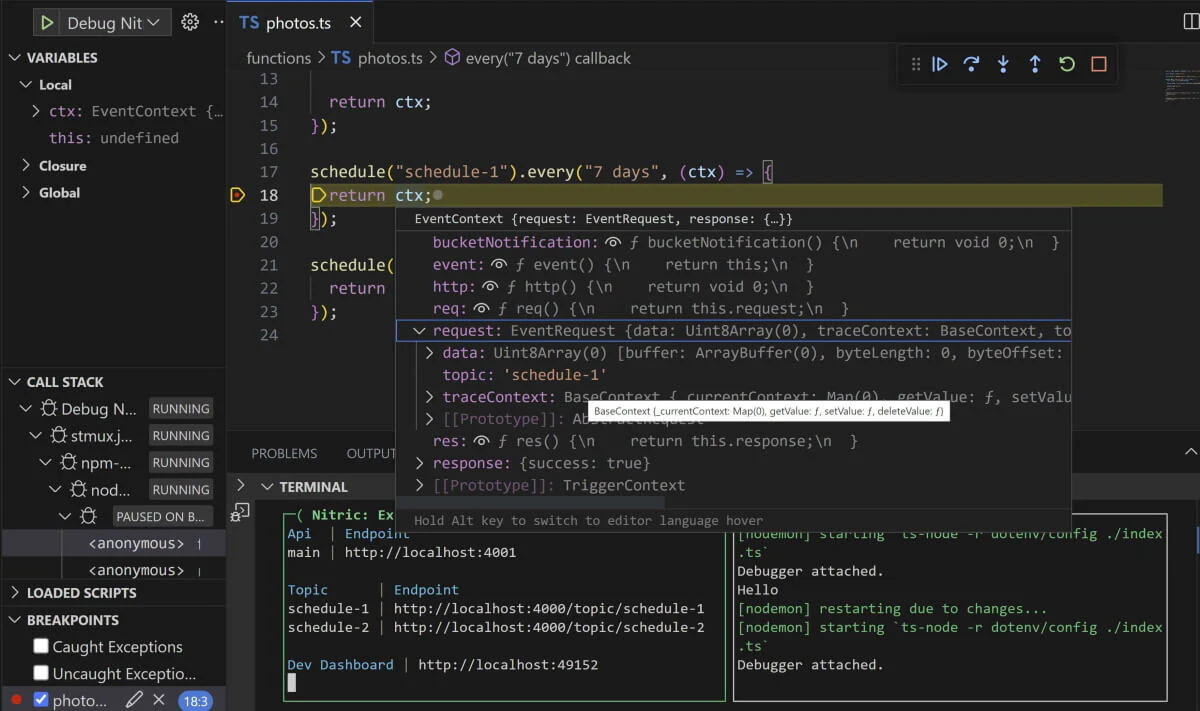
    Nitric today announced it has added support for the Go and Kotlin programming languages to its application framework. The framework automatically creates code to provision infrastructure based on the way the code used to write an application has been developed.

    Rak Siva, vice president of engineering for Nitric, said that approach eliminates the need to rely on developers using infrastructure-as-code (IaC) tools to configure platforms.

    Nitric previously supported JavaScript, Python and C# along with frameworks such as Express, Fastify and Nest.js to enable infrastructure to be automatically configured based on an intent expressed in the codebase enabled by a software development kit (SDK). In effect, Nitric infers how to optimally configure infrastructure. DevOps teams can then choose to either rely on the configurations created by the Nitric framework or customize it to add support for their own policies, said Siva.

    While IaC tools have played a major role in streamlining the application development and deployment process, they are also the root cause of many cloud security incidents. Developers that use these tools typically have limited cybersecurity expertise, so the probability that cloud infrastructure will be misconfigured in a way that cybercriminals can exploit is high.

    Nitric is attempting to take the concept of managing infrastructure-as-code to the next logical level by automating the process so it can be consistently applied and managed, said Siva. That approach provides the added benefit of improving the overall developer experience by eliminating a task that most developers view as a means to a larger end, he added.

    It’s not clear how much of the cloud infrastructure that DevOps teams are relying on to build and deploy applications is misconfigured, but given the varying levels of skill among developers, there are very few organizations that have not encountered a cloud security issue. The challenge is not so much the security of the underlying platforms as it is the shared responsibility model relied on to secure these platforms. Cloud security platform providers assume that organizations that programmatically invoke infrastructure have the expertise required to securely provision it. However, very few organizations can achieve that goal 100% of the time, which results in organization having to make considerable investments in additional tools and platforms to monitor and enforce cloud security policies.

    As more organizations focus their efforts on securing software supply chains, many of them will be revisiting how cloud infrastructure is provisioned. In fact, one of the reasons platform engineering is gaining traction as a DevOps methodology is to improve the developer experience and strengthen application security.

    Cultural change, of course, is difficult. IaC tools such as Terraform are deeply embedded within many DevOps workflows, so any alternative approach to provisioning infrastructure will require time to take hold. However, as regulations that hold organizations more accountable for application security become increasingly more stringent, it’s now a question of when rather than if change will come to how cloud infrastructure is provisioned.

  • The DevOps Pendulum: Agility Vs. Control

    The DevOps Pendulum: Agility Vs. Control

    Managing changes to cloud assets is a universal pain felt by many engineering leaders today, despite all of the advancements in tooling and practices like GitOps. This is because, in reality, it is simply impossible to always have everything completely locked down—we don’t live in a utopia with zero incidents. If your engineering organization prevents any changes from being made through the cloud console or to your infrastructure-as-code (IaC) without complying with strict GitOps practices or change management processes via CI/CD, then it’s likely you have very frustrated developers—developers who can’t troubleshoot or debug in real-time and who have little control in a real-world incident.

    Engineering, like everything else in life, is all about balance.

    The Pendulum Swings

    The pandemic created a whole new mindset and practice for managing distributed and high velocity engineering and operations. Overnight, companies that were not built for remote ways of working had to continue their operations in a global, distributed and asynchronous way that they weren’t completely familiar with. This required a new way to think about software delivery—and it accelerated the DevOps practices that support that delivery. Self-service infrastructure removed barriers for developers to ensure continued performance and velocity.

    At the same time, your cloud cannot be the wild west with everyone creating bespoke infrastructure. It becomes impossible to manage, and misconfigurations can be risky. Guardrails and policy automation have become a hot topic. Today, with tech markets depressed and cloud costs escalating, there seems to be a growing trend toward locking things down again, even at the risk of frustrating developers.

    This begs the question: How can you achieve unencumbered infrastructure for your developers while simultaneously following policies and best practices for compliance, risk and cost? There is a way to find balance.

    Like many aspects of security, we’ve learned that when constraints and barriers are too high, users ultimately find ways to bypass them. This is true for operations, as well. While sometimes it might seem easier to lock everything down than design a better and more balanced way to enable developers to move fast, eventually this approach backfires. This is the exact same evolution the application and cloud-native security industry are undergoing right now.  All the guardrails and controls applied have created too much friction in development processes and developers ultimately bypass them.

    Real-Time Insight is Key

    CloudOps can learn a lot from the disruption the security industry is going through today. In the same way that point-in-time security has been rendered completely useless, non-real-time alerting or eventual alerting to infrastructure drift just won’t cut it when managing an ephemeral cloud. What is really needed is the same kind of real-time and continuous scanning of cloud assets and IaC, similar to what we apply to our systems through monitoring and observability. These solutions became an essential backbone of our business to ensure continuous operations and availability of cloud services.

    As we embrace IaC and the benefits it brings, everything-as-code unlocks greater agility and visibility, enabling you to automatically remediate without locking everything down. As DevOps says, “fail forward and fail fast.” Rather than focusing on never making a mistake, focus on how to fix it immediately. 

    The Solution

    By providing a continuous comparison of actual cloud assets with their desired state through IaC and GitOps, it’s possible to surface configuration drift and policy violations immediately, much like any other kind of breach or major system failure. Failures and incidents are inevitable. It’s unrealistic, and even dangerous, to build systems with an inherent underlying design that prevents you from changing something at the cloud console at 2:00 A.M. during an outage.

    With a locked-down approach, a developer would need to wait for the change management approval during a high-pressure production incident, oftentimes at 3:00 A.M. (because the incident gods of always make them happen in the middle of the night) or on a weekend. We don’t need to look much further than the catastrophic 40-minute and $440 million Knight Capital incident to understand that sometimes time is not on our side and that a delay can have severe consequences.

    Cloud drift has become equally troubling as uptime or any other mission-critical aspect of continuous business operations, and that’s why we need to apply the same principles for monitoring drift in real-time as we do to our CPU and load. This will make it possible to be alerted when your cloud and your IaC are no longer aligned and even flag issues that can be prevented in real-time. You can automate ticket creation and escalation and also triage whether this is something that needs to be fixed in real-time with remediation suggestions provided or open a ticket to fix it later. The choice should be yours, not made by an administrator who has a lot less context about the systems and the ultimate business impact.

    It is Not ‘One and Done’

    Some vendors preach codifying your cloud into IaC and then locking it down so that you’ll never have to do it again. This feels like deja vu; we’ve definitely heard this before. It sounds a lot like the ‘write once, deploy anywhere’ JVM promise that never quite panned out. 

    By going down this path, you’re resigning yourself to never adding new cloud assets or changing your cloud configurations. If there’s one thing we’ve learned about the cloud, it’s that it’s a constantly moving target.  (Read what cloud asset management can learn from the world of finance—another industry in constant flux). If this didn’t work decades ago with the JVM, it certainly won’t work in a dynamic and constantly changing environment like the cloud. That’s a fool’s journey.

    Continuous Cloud Up to Code

    There are major downsides of locking down agility and velocity. This is hard-earned advice, witnessed firsthand from tools like legacy CMDB and startups who have forgotten that cloud is ephemeral—and possibly the reason why we all use it in the first place! So if our cloud is constantly changing and is a continuously moving target, then shouldn’t our tools be built in just the same way to keep up? Solutions built for the rapidly evolving cloud-native era must continuously look for new, unmanaged and changed assets and ensure their cloud infrastructure always follows policies and regulatory standards.  

    Once we are able to find the balance between agility and control, we’ll be able to tap into the benefits of speed and safety (as DORA research shows time and again) that are the benchmark of high-performing teams. Automating cloud asset management can provide governance, policies and control while still enabling the velocity and agility engineering organizations today require. 

    Agility Versus Control

    There’s a minority of people who claim they don’t worry about cloud asset configuration drift because they have everything completely locked down. Zero changes can be done at the cloud console or to IaC without going through GitOps for strict change management processes via CI/CD. I bet they have happy developers—not!

    Life is All About Balance

    Throughout the pandemic, organizations had to make developers happy for fear they would leave. So DevOps went full tilt aiming for self-serve infrastructure for developers to remove barriers to speed and velocity. Now, with tech markets depressed, maybe it’s easier to lock things down even if that risks losing engineers.

    As we embrace IaC and its benefits, you need not live in the stone age of locking everything down. How can you achieve unencumbered infrastructure for your developers while following policies and best practices for compliance, risk and cost? There is a way. 

    The solution? Real-time continuous scanning of your cloud assets and your IaC with continuous comparison can surface configuration drift and policy violations immediately. Emergencies are inevitable. It’s bold/stupid/foolish to think you’ll never need to change something at the cloud console during an emergency or that a developer will wait for change management when production is down at 3:00 A.M. on a weekend. It happens, and you must deal with it. 

  • How AI Transforms DevOps Infrastructure

    How AI Transforms DevOps Infrastructure

    In my recent article Revolutionizing the Nine Pillars of DevOps with AI-Engineered Tools, I explained that the elastic infrastructure pillar involved automated provisioning and management of computing resources, often leveraging cloud-based solutions for scalability and resilience. This includes practices like infrastructure-as-code (IaC).

    In this article, I explain how AI can help manage cloud resources for DevOps by predicting future needs based on usage trends and automatically adjusting resources to optimize cost and performance.

    Here are some common DevOps use cases that IaC practices aim to address, along with potential AI tools that can assist in each scenario:

    Private and Public Cloud Agnosticism:
    • Use Case: Needing to deploy and manage infrastructure across multiple cloud providers or environments without vendor lock-in.
    • AI Tool Example: AI-powered cloud management platforms (e.g., Turbonomic, CloudHealth) can analyze resource utilization, performance and cost across various cloud providers to optimize workload placement.

    Reducing Infrastructure Configuration Bottlenecks:
    • Use Case: Avoiding manual and error-prone configuration processes that delay deployment and cause inconsistencies.
    • AI Tool Example: Intelligent configuration management tools (e.g., Puppet, Chef, Ansible) can automate the provisioning, configuration and management of infrastructure resources.

    Infrastructure Cost Optimization:
    • Use Case: Optimizing resource allocation and minimizing infrastructure costs.
    • AI Tool Example: AI-driven cost optimization platforms (e.g., ParkMyCloud, Cloudability) can analyze usage patterns, recommend resource resizing or right-sizing and suggest cost-saving opportunities.

    Infrastructure Sharing:
    • Use Case: Sharing infrastructure resources securely across multiple teams or projects.
    • AI Tool Example: AI-powered resource scheduling and sharing tools (e.g., Kubernetes with cluster autoscaling) can dynamically allocate and release resources based on demand and workload requirements.

    Infrastructure Quality:
    • Use Case: Ensuring consistency, reliability, and adherence to best practices in infrastructure deployments.
    • AI Tool Example: AI-based infrastructure validation tools (e.g., Terrascan, Checkov) can scan IaC templates, provide security and compliance checks and offer recommendations for improvement.

    Infrastructure Security:
    • Use Case: Integrating security controls and policies into the infrastructure deployment process.
    • AI Tool Example: AI-driven security tools (e.g., Aqua Security, Sysdig Secure) can analyze infrastructure configurations, detect vulnerabilities and enforce security policies during deployment.

    Dynamic Orchestration:
    • Use Case: Needing to dynamically manage and scale infrastructure resources based on workload demands.
    • AI Tool Example: AI-powered orchestration platforms (e.g., Kubernetes with horizontal pod autoscaling) can automatically scale resources up or down based on metrics such as CPU utilization or request latency.

    Integration and Control of Infrastructure with CICD Pipelines:
    • Use Case: Seamlessly integrating infrastructure provisioning and deployment with CI/CD pipelines.
    • AI Tool Example: AI-enabled CI/CD platforms (e.g., Jenkins with ML plugins, Harness) can leverage machine learning algorithms to optimize pipeline execution, provide intelligent recommendations and automate release processes.

    Monitoring Infrastructure Performance:
    • Use Case: Monitoring and ensuring the optimal performance of infrastructure resources.
    • AI Tool Example: AI-powered monitoring solutions (e.g., Dynatrace, Datadog) can leverage machine learning to detect anomalies, predict performance issues and provide actionable insights for infrastructure optimization.

    Rapid Restore of Infrastructure:
    • Use Case: Quickly recovering and restoring infrastructure in the event of failures or disasters.
    • AI Tool Example: AI-driven backup and recovery tools (e.g., Veeam, Rubrik) can automate backup processes, intelligently prioritize data restoration and leverage machine learning for predictive data recovery.

    Challenges With the Transformation to AI-Engineered Infrastructure

    An organization may face a number of challenges when transitioning to AI tools for infrastructure, as follows:

    Lack of Expertise and Skill Set:
    • Challenge: Organizations may lack the necessary expertise and skill set to implement and operate AI tools effectively.
    • Solution: Invest in training and upskilling programs for employees to acquire the required knowledge and skills. Partnering with external consultants or hiring experts in AI and infrastructure can also bridge the expertise gap.

    Data Availability and Quality:
    • Challenge: AI tools heavily rely on high-quality data for training and accurate decision-making, but organizations may face challenges in obtaining relevant data and ensuring its quality.
    • Solution: Implement robust data governance practices to ensure data availability, quality and consistency. Invest in data collection, storage and processing frameworks that support AI initiatives. Data cleansing and preprocessing techniques can be employed to improve data quality.

    Integration Complexity:
    • Challenge: Integrating AI tools into existing infrastructure and workflows can be complex, especially when dealing with legacy systems and heterogeneous environments.
    • Solution: Plan for seamless integration by conducting a thorough assessment of existing systems and infrastructure. Leverage APIs, automation frameworks and standardized protocols to enable smooth integration. Adopt modular and scalable architectures that facilitate the incorporation of AI components.

    Ethical and Legal Considerations:
    • Challenge: AI tools introduce ethical and legal considerations, including privacy, security, bias and regulatory compliance, which can pose challenges during infrastructure transformation.
    • Solution: Develop clear guidelines and policies around data privacy, security and ethical considerations. Perform rigorous testing and validation to detect and mitigate biases in AI models. Engage legal and compliance teams to ensure alignment with relevant regulations and standards.

    Change Management and Cultural Shift:
    • Challenge: The adoption of AI tools often requires a cultural shift within the organization, including changes in mindset, processes and collaboration between teams.
    • Solution: Develop a change management strategy to communicate the benefits of AI tools and address any concerns or resistance. Foster a culture of experimentation, learning and collaboration. Encourage cross-functional teams to work together and share knowledge. Provide ongoing support and training to ensure successful adoption and adaptation to the new tools and practices.

    Summary

    Incorporating AI into IaC practices for DevOps brings transformative benefits that drive efficiency, agility and scalability. By leveraging AI tools, organizations can optimize resource allocation, streamline deployments, enhance security and improve performance monitoring. Embracing AI for IaC empowers teams to automate and intelligently manage infrastructure, resulting in faster time-to-market, cost savings and increased productivity. Unlock the full potential of DevOps by embracing AI and revolutionize your infrastructure management with the power of intelligent automation.

    It’s important to note that challenges and solutions are to be expected when transforming to the use of AI, and the specific context and requirements of each organization may vary. Therefore, it’s advisable to assess the organization’s unique needs and constraints to tailor the solutions accordingly.

  • Pulumi Embeds Terraform Conversion Tool in Platform

    Pulumi Embeds Terraform Conversion Tool in Platform

    At its virtual PulumiUP event, Pulumi this week announced it embedded an ability to convert instances of Terraform into its infrastructure-as-code (IaC) platform via a simple command line interface (CLI) command. In addition, Pulumi added a Review Stacks capability that automatically creates a dedicated cloud environment to review code every time a pull request is opened.

    Pulumi is also making available a beta release of Pulumi Azure Native Provider 2.0, which decreases the size of the software development kit (SDK) by 60%. This is part of an effort to improve deployment times and reduce resource consumption by, for example, removing support for deprecated application programming interfaces (APIs).

    Finally, Pulumi has added support for property names and values to Resource Search for Pulumi Cloud, a search and analytics tool for cloud computing environments. DevOps teams can now additionally search for instances of, for example, versions of databases or specific availability zone as a result.

    Aaron Kao, vice president of marketing for Pulumi, said previously the company made available a separate tool for converting snippets of Terraform code. For the first time, Pulumi is also making available a converter plugin in the Pulumi engine which allows conversion tools from other IaC tools to be used.

    Review Stacks, meanwhile, makes it simpler for DevOps teams to pick up an unfamiliar codebase, make changes to both application and infrastructure code and share a live environment to review that code.

    Pulumi has been making a case for an alternative to Terraform that centralizes the management and provisioning of infrastructure using a set of embedded guardrails. One of the major issues enterprise IT organizations are encountering these days is the number of misconfigurations created when developers use tools like Terraform to provision infrastructure on their own. Those misconfigurations often lead to, for example, ports being left open and cybercriminals exfiltrating data.

    That approach is gaining traction among enterprise customers that are looking to centralize the management of DevOps processes, said Kao.

    In the wake of a series of high-profile breaches, more organizations are now reviewing the security of their software supply chains, including how infrastructure is provisioned. Many of those organizations will need to revisit those processes as pending legislation that requires more stringent requirements for building software eventually become law, noted Kao.

    At the same time, many organizations are also looking to improve the productivity of DevOps teams during an economic downturn that limits the number of full-time employees they might be able to hire. The pace at which software is being developed has not slowed, so there is a greater urgency to do more with less.

    It’s not clear how quickly organizations are centralizing the management of DevOps workflows, but with the rise of platform engineering, there is clearly more interest in defining consistent backend processes that multiple DevOps teams are currently managing individually. The challenge is finding a way to achieve that goal without impeding the pace of innovation enabled by embracing DevOps in the first place.

  • It Is Time for DevOps to Focus on Ops

    It Is Time for DevOps to Focus on Ops

    The advent of both Agile development and DevOps were great steps in improving an IT process that had become ossified, with policies that alternated between resistance to change and trying to do things better/faster. Between them, Agile and DevOps broke the cycle of resistance … but only for development.

    The confusion around CI/CD is a great example. CD is both continuous delivery and continuous deployment. Do you know why? Because up to that point (and even recently), DevOps included Ops in the name but did little with or for operations. I have no doubt that it was originally intended to include everything from build testing to full-on deployment, and we are finally getting there.

    You have no doubt noticed that both operations and security are finally getting DevOps’ attention at critical points. I have been chatting with coworkers about value stream mapping and, if you map the value stream of a software delivery process, you will find that all of the weak points have shifted right. Thankfully, we are also paying attention to them these days.

    From GitOps to infrastructure-as-code (IaC); from cloud-first to policy-as-code (PaC), we are finally approaching the operations side with some level of seriousness. And it is generating results for those involved.

    My two areas of attention these days are DevOps and application security (AppSec). As I’ve written elsewhere, both are benefitting massively from things like policy-as-code. The ability to apply corporate deployment policies, security policies and compliance policies from a centralized location is massive. It is early days, but community contributions to PaC libraries are already massive, making it easier to deploy without recreating that big old list of generally useful policies.

    Given a project, a set of tools and a timeline, you could fully automate the process from the first line of code to running in production, with stops for approval and the specialized steps that still require human interaction (no matter how many public policies are out there, someone with knowledge of your network still has to set up IPs or ranges, for example. Or someone still needs to write the code). Someday, it may be possible to say, “We need a phone app that targets both major platforms and is hosted on Linux that does X, Y, Z,” and it just happens … but we are not there yet, and, IMO, the domain knowledge will be a roadblock for a while. But you can take advantage of what we have to work smarter, not harder. And the organization will be better off for your efforts.

    So keep at it, start to evaluate your processes and consider placing any of the great new DevOps technologies into your path. Let them do some of the grunt work so you can focus on adding value. And for all those coworkers that still don’t get it, thank you. You are keeping them in a job, whether they admit it or not.

  • Cloud Drift Detection With Policy-as-Code

    Cloud Drift Detection With Policy-as-Code

    Cloud configurations can change and change often. Introducing new technologies, releasing new features and supporting new business requirements entail a constant flow of configuration changes in web application development.

    However, drift occurs regardless of how well-designed your IaC implementation is. The term “drift” is used to denote a state in which the actual state of your infrastructure deviates from the configuration.

    This article examines cloud drift detection, why it occurs and how to remediate it.

    Understanding the Problem

    Cloud configurations are prone to change and can change frequently. Businesses often use infrastructure-as-code (IaC) to manage cloud provisioning changes. IaC makes it easier and more reliable for organizations to manage and facilitate changes to the cloud deployment process.

    However, inconsistencies in your IaC deployment process can lead to uncertainty about how and where your resources are provisioned, controlled and protected, resulting in lower productivity. No matter how robust your IaC implementation, drift can creep in.

    Changes to infrastructure that are made independently of the code responsible for provisioning can lead to considerable drift, and if not adequately monitored, can lead to significant security concerns.

    What is Drift?

    In the context of infrastructure and application management, drift refers to the system state in which the actual configuration and state of the system deviate from the intended or expected configuration and state.

    Drift can be caused by software updates, manual changes and incorrect configurations. Drift management is an essential aspect of infrastructure and application management. By detecting and correcting drift, organizations can ensure that their systems remain stable, secure and compliant with their policies and industry standards.

    Configuration Drift: Definition, Causes and Examples

    Configuration drift can creep in over time despite consistently building and configuring your servers. It refers to the state of the system when configuration changes are not in sync with the value previously set.

    For example, configuration drift can occur when you are yet to document the changes made to the production environment. This results in the production and staging environments getting out of sync.

    Some of the other causes of configuration drift are configuration changes because of applying patches and updating network equipment, the addition of new resources to the network and lack of clarity about the desired state of the system.

    You can leverage configuration drift management tools such as Netwrix and Aqua to detect configuration drift.

    Infrastructure Drift: Definition, Causes and Examples

    Infrastructure drift refers to a phenomenon in which the actual state of the infrastructure differs from its desired state because the defined configuration, settings or properties of the infrastructure and the actual state of the provisioned resources differ.

    Infrastructure drift may result from manual changes, updates outside of configuration management processes, conflicting IaC code, changes in network configurations, changes due to security settings and configuration differences during system upgrades and maintenance.

    To detect infrastructure drift, you can take advantage of infrastructure drift detection tools such as Terraform, CloudQuery and driftctl.

    Infrastructure Drift and Configuration Drift: How do they compare?

    Both configuration and infrastructure drift can lead to security vulnerabilities, compliance issues and operational challenges. Although infrastructure drift and configuration drift are related, they aren’t the same.

    Infrastructure drift refers to inconsistencies or discrepancies between the intended or desired state of the infrastructure and the actual state of the resources provided. Configuration drift refers to inconsistencies or discrepancies between the current configuration of a component or system and the intended or desired configuration.

    Infrastructure drift encompasses everything from physical components to virtual components to networks, storage and computing resources. Configuration drift, on the other hand, focuses on individual components or systems within the infrastructure and their configuration settings.

    What is Drift Detection?

    Drift detection in the context of cloud infrastructures typically compares the actual state of resources deployed in the cloud environment with the defined state described in IaC templates.

    Typically, this is automated by tools, scripts or services that analyze and compare configurations, resource states or event logs. These tools are adept at issuing notifications or alerts when discrepancies are detected.

    By detecting discrepancies, organizations can identify and resolve inconsistencies, security vulnerabilities and compliance violations. Consequently, the risks related to security breaches are reduced and remediation actions become easier to implement.

    Why Policy-as-Code for Cloud Drift Detection?

    Policy-as-code provides several benefits when used for cloud drift detection:

    • Early detection of drift: Policy-as-code helps detect drift early detection by comparing the current state of the cloud environment with the desired state defined in the policies. This helps identify problems and solve issues before they escalate to a catastrophic level.
    • Automated enforcement: Policy-as-code enables automated enforcement of policies, ensuring that the cloud environment complies with the defined rules and requirements. This helps reduce the potential risks associated with human errors.
    • Faster remediation: Policy-as-code enables faster remediation by automatically detecting drift and taking the necessary remediation actions such as rolling back changes, updating configurations or notifying relevant teams. This facilitates faster response times and reduces the risks associated with security breaches and downtime.
    • Enforce best practices, policies and guidelines: With policy-as-code, best practices, policies and security guidelines can be implemented automatically, reducing security and compliance risks.

    Steps for Drift Detection Using Policy-as-Code

    Here are the steps that you need to follow to detect and fix drift in your infrastructure:

    1. Define your policies: You should first define the policies that should be used to describe the desired state or the baseline of your cloud environment and cover security and compliance aspects of your cloud environment.
    2. Codify and deploy policies: Then these policies should be codified and stored in the version control system. The next step should be to deploy the policies to your cloud environment using a policy engine.
    3. Identify configuration changes: Once your policies have been deployed, the next step should be to identify any new resources that may introduce risks and compare them to the baseline you’ve defined.
    4. Evaluate and remediate: You should evaluate the state of the environment against the defined policies to detect any drift. As soon as any drift is detected, you should take corrective actions to remediate the issues by rolling back changes, updating configurations or notifying the relevant team members.
    5. Review policies: To ensure that the policies are up-to-date and relevant, it is imperative that you review them often and make changes to policies as needed.
    6. Update and deploy: The last step should be to update the code files and then deploy the solution yet again.

    Build a Successful Drift Detection Strategy

    Maintaining your infrastructure at the desired state, ensuring compliance and mitigating risks associated with configuration drifts requires a successful drift detection strategy. Here are key strategies you can adopt to build a successful drift detection strategy.

    Understand When Drift Becomes a Risk

    Drift can profoundly impact a system’s stability, security and compliance. When your server configuration deviates from its intended configuration, it might stop working or become vulnerable to security threats.

    Most importantly, this might be a significant threat to security if you don’t have proper monitoring in place. To prevent infrastructure drift and update your security tools, it is important to evaluate and communicate your adoption of IaC.

    Detecting Drift: Detecting drift Between IaC and the Cloud

    To mitigate the risks associated with drift, configurations that have been changed in real-time must be identified and reset. You can achieve this programmatically and continuously by comparing configuration changes between IaaS and IaC. Programmatically identifying the configuration changes, i.e., detecting the changes to the configuration using code, is the best strategy to reduce drift-related risks.

    From Drift Detection to Drift Remediation: Responding to drift

    By detecting drift, you’ve won half the battle–you should now devise strategies to remediate it. By keeping an eye on configuration drift and responding to it promptly, you ensure the consistency and reliability of your infrastructure, minimize security risks and keep your system in a consistent state.

    Figure 1: Detect and Remediate Drift in the Cloud

    It’s important to have effective configuration drift response procedures in place to ensure the stability and security of your environment and also keep it effective for change management and control. You can respond to drift in the following ways:

    • Develop mechanisms to detect and report configuration drift
    • Understand the underlying causes of drift
    • Documenting the drift, including affected resources, configuration deviations and impacts
    • Resolve the configuration drift and return the system to the desired state
    • Following change management processes and obtaining approvals prior to implementing changes
    • Monitor the system to ensure drift has been resolved and the configuration remains stable

    Key Strategies for Detecting Drifts Between IaC and the Cloud

    There are a few strategies that can be adopted for detecting drift.

    Detect Configuration Changes That may Introduce Risks

    To identify configuration changes that can introduce risks, you should monitor and analyze changes proactively. Here are some of the key strategies to do so:

    • Create a baseline configuration for your system.
    • Review the system logs regularly for any suspicious or unexpected configuration changes.
    • To capture detailed information about configuration changes, comprehensive logging is helpful.
    • Implement a change management process for managing configuration changes.
    • Take advantage of automated configuration management tools such as Chef, Puppet, Ansible, etc.
    • Leverage threat intelligence to ensure that you are always up to speed on the most recent vulnerabilities, security threats and attack trends.
    • Conduct training to increase awareness about configuration changes’ potential consequences and risks.

    Establish Baselines and Safely Auto-Remediate Drift

    Establishing baselines and safely auto-remediating drift involves setting a reference point for the desired state of your infrastructure and automatically adjusting any detected drift back into compliance with the baseline.

    You can maintain the desired state of your infrastructure, reduce manual effort and quickly resolve configuration drift by establishing baselines and implementing security processes for automatic remediation.

    This minimizes the impact of drift on your systems while improving your environment’s security, compliance and stability.

    Track all Configuration Changes in Your Cloud Environment

    Tracking all configuration changes to your cloud environment is critical to maintaining visibility, accountability and security. It can help you improve visibility, detect unauthorized or unintended changes and maintain compliance and accountability.

    This way, you can proactively manage your cloud infrastructure, identify potential security risks and ensure its integrity and stability.

    Below are the key strategies for tracking cloud configuration changes at a glance:

    • Ensure detailed logging for all cloud components, including infrastructure, applications and security
    • Track API calls and activities within your cloud environment with cloud monitoring and auditing
    • Set up alerts and notifications for critical deviations from established baselines
    • Implement configuration changes through formal change management processes
    • Manage cloud configuration with tools such as AWS Config and Azure Automation

    Managing Drift in Production

    To effectively manage drift in production, it is crucial to consistently observe the configuration and state of production systems, keeping them in line with the policies that outline the desired state.

    Here are a few guidelines to help you reduce production drift:

    • Specify the required state: Define the intended state of the production environment as a set of policies using declarative compliance tools.
    • Monitor continuously: To determine any deviations, use a monitoring tool to monitor the production environment or compare the system’s present state to the desired state to identify any deviations.
    • Identify the root cause: If drift is detected, it is crucial to identify its root cause. You can do this by examining the logs, analyzing system performance or observing the configuration alterations over time.
    • Rectify the drift: After determining the issue’s root, you should address it to align its compliance with the intended state. To do this, you may need to examine logs, examine configuration changes, and analyze system performance.
    • Automate the remediation process: To ensure that drift is automatically and quickly rectified, you should automate the remediation process. To achieve this, you can leverage a declarative compliance tool that can help you automatically implement the changes to bring the system back into conformity with the intended state.
    • Review and update policies: You should review and revise your policies to ensure they are still relevant and useful and stay updated. To achieve this, you may need to adjust the policies to reflect new compliance requirements or shift your business requirements.

    Summary

    By identifying drift in cloud environments, organizations can use policy-as-code to ensure that their cloud infrastructure is safe, compliant and secure. In this way, they can ensure compliance with industry best practices, regulatory standards and internal policies. This reduces the risks associated with configuration deviations and enables enterprises to maintain a secure and reliable cloud environment.

  • Checkmarx Brings Generative AI to SAST and IaC Security Tools

    Checkmarx Brings Generative AI to SAST and IaC Security Tools

    Under an early access program, Checkmarx today made available query builder and guided automation tools that take advantage of OpenAI’s generative artificial intelligence (AI) technologies to make it simpler for developers to resolve application security issues.

    AI Guided Remediation surfaces actionable remediation recommendations for vulnerability issues such as misconfigurations directly from within integrated development environments (IDEs).

    Meanwhile, AI Query Builder makes it possible to use natural language text to create a query for both the Checkmarx static application security testing (SAST) and the infrastructure-as-code (IaC) security tool that creates rules for scanning code. Those rules can be easily fine-tuned or modified and queries for other use cases can easily be added.

    In addition to reducing the amount of time it takes to create a query by 65%, that approach also dramatically reduces the number of false positive alerts that arise based on rules created by a security administrator.

    Checkmarx CEO Sandeep Johri said these additions to the Checkmarx One Application Security Platform are aimed at improving the application security experience for developers. Most developers don’t want to be inundated by alerts that lack any real context, nor do they want to be bothered with remediation details.

    It’s not likely developers will be interested in how AI could help them write more secure code from the start, but the faster a reliable fix is surfaced, the sooner developers can return to writing code, noted Johri.

    In the longer term, Checkmarx will add support for multiple large language models (LLMs) beyond those provided by OpenAI to provide other AI capabilities that are based on more domain security knowledge, said Johri.

    However, despite these advances, vulnerability remediation will not become fully automated using AI any time soon, he added. Instead, it will become much simpler to identify code that has either inadvertently or deliberately introduced a vulnerability, said Johri.

    In fact, generative AI tools such as GitHub Copilot can themselves introduce vulnerabilities into code. As a general-purpose AI platform, the recommendations surfaced are based on a mix of instances of clean and flawed code, Johri noted. There will also be instances where cybercriminals attempt to subvert an LLM that creates code by injecting snippets loaded with malware into the samples used to train a generative AI model.

    On the plus side, however, generative AI tools should narrow the divide that currently exists between application developers and cybersecurity teams as more issues are discovered and remediated before applications are deployed in a production environment. The challenge has aways been surfacing application security issues at the time developers are writing code rather than sending them a list of vulnerabilities to address weeks (sometimes even months) after a developer has moved on to another project.

    Naturally, there is a lot of trepidation when it comes to all things generative AI; one area of certainty is that the benefits far outweigh the risks—especially when it comes to developing secure-by-default applications.

  • Microsoft Adds Slew of Developer Tools to Azure

    Microsoft Adds Slew of Developer Tools to Azure

    At its Build 2023 conference this week, Microsoft announced general availability of an Azure Deployment Environment service that provides developers with a portal through which they can employ infrastructure-as-a-code (IaC) templates based on Terraform or Azure Resource Management files.

    In addition, Microsoft has enhanced Microsoft Dev Box, a workstation environment for developers that run Azure, to include a portal through which they can manage multiple environments.

    Scheduled to be generally available in July, Microsoft Dev Box is also previewing a capability that makes it possible to customize environments using configuration-as-code files stored in a Git repository. Microsoft is also previewing tighter integration between Dev Box and its Visual Studio integrated development environment (IDE) and Windows to further customize developers’ environments.

    Scott Guthrie, executive vice president of the cloud and artificial intelligence (AI) group at Microsoft, told conference attendees these and other tools for building cloud-native applications, along with GitHub Actions, make it simpler than ever to build applications in an Azure cloud service that includes an integrated continuous integration/continuous delivery (CI/CD) platform.

    Microsoft is also previewing GitHub Advanced Security for Azure DevOps that natively embeds automated security checks using scanning tools into the Azure DevOps platform.

    Other additions to the Azure environment include tools for centralizing the management of application programming interfaces (APIs) using an Azure API Center service that is available in preview.

    The Azure Event Grid has also been updated to enable it to use HTTP to pull delivery of discrete events in addition to pushing them.

    Finally, Microsoft is also previewing generative artificial intelligence (AI) capabilities to make it simpler to manage cloud costs by, for example, using prompts to summarize invoices or breakdown costs.

    Microsoft, along with its GitHub subsidiary, is at the forefront of applying generative AI to application development using tools like GitHub Copilot that developers can use to write better code faster. That copilot capability is now being disseminated across the portfolio of applications and services that Microsoft provides.

    It’s not yet clear what the downstream impact of such tools are just yet, but the overall quality of the applications being built should improve as, for example, fewer mistakes are made that can lead to vulnerabilities.

    Obviously, the way application software is built, constructed and secured is about to change in the generative AI era. Thanks to its alliance with OpenAI, Microsoft has a significant head start on rivals building generative AI platforms that can similarly be applied to improve developer productivity.

    In the meantime, DevOps teams should assume the volume of code simultaneously moving through pipelines is about to dramatically increase as developers become more productive. There will inevitably be more opportunities to apply multiple forms of AI to reduce any DevOps bottlenecks that might arise, but it’s clear most of the immediate benefits are being provided to developers.

    One way or another, however, the overall rate at which applications are built and deployed is about to change drastically. The issue is understanding how those advances will impact downstream DevOps workflows that were constructed for a different era of application development.

  • Infrastructure-as-Code Pitfalls in Platform Engineering

    Infrastructure-as-Code Pitfalls in Platform Engineering

    In the context of cloud operations, the last decade was ruled by DevOps and infrastructure-as-code (IaC). But what is true DevOps? Is it developers running their own operations? Is it operators learning development skills to automate infrastructure provisioning using infrastructure-as-code (IaC) tools like Terraform?

    Though DevOps is widely understood to incorporate both of these, software developers are far from fully understanding or operating infrastructure. IaC is purely a DevOps tool. When an organization claims to have automated its infrastructure, they mean automation for the efficiency of the DevOps teams, not automation for developers. Developers are still left waiting on DevOps for days for even small infrastructure changes.

    While there were efficiencies gained by the current DevOps model, there is an increasing acknowledgment that we require a better approach to enable developer self-service. This has led to the platform engineering discipline.

    The high-level goals of platform engineering are:

    • Developer self-service for significant parts of infrastructure updates without DevOps subject matter expertise.
    • Built-in security and compliance controls.

    Infrastructure-as-Code (IaC) Limitations in Platform Engineering

    A DuploCloud survey of 40+ enterprises that have made substantial investments in platform engineering showed that the prevalent approach is for DevOps teams to build a DevOps platform with IaC as a core underlying technology. They create templates for the organization’s use cases and publish them in a CI/CD pipeline or a self-service catalog.

    Here are the top reasons why platforms that build on top of IaC are failing these platform engineering goals:

    1. IaC templates are rigid and not flexible enough to meet changing developer requirements: It is true that DevOps teams can anticipate cloud infrastructure topologies to some extent and have IaC templates for those with a few customizable parameters. But in a microservices world, there are thousands of other workflows and topologies possible based on changing application needs and security controls. Large data centers and edge infrastructure make this even more complex. A manual approach, relying solely on DevOps personnel to constantly build and update myriad combinations in static scripts simply can’t scale.
    2. Scripting tools can’t build life cycle management: In cloud operations, people-triggered changes are only a subset of possible use cases. Many asynchronous operations need to be continuously performed. These range from detection of configurations, from desired state to reverting, or complex configuration scenarios where individual components have to be set up asynchronously and brought together later. It could be as simple as a certain component going down and needing to be restored. IaC is a script that runs when triggered to completion. It has no active life cycle to operate continuously in the background.
    3. Inability to build a concept of an environment: In any orchestration system, users have a concept of the environment they want to build. When they log in to the platform and navigate to their environment, they expect to update as well as view the state and aspects of resources in that environment, be it the provisioning status, metrics, logs, faults, audit logs, compliance posture, etc. They may want to perform debugging functions, such as restarting services, SSHinginto a VM or accessing a resource’s cloud console (S3 Console, for example) using access control boundaries within that environment. For example, in Kubernetes, you choose the namespace to be the environment and management software like Rancher on top of K8S to provide these functions. If we must replicate this same concept across a broad infrastructure-level platform, we cannot do it using only IaC. We need something with a scope that spans all cloud operations, like Kubernetes. Terraform is a configuration updating and management software, not an orchestration system.

    Many platform teams have tried to work around these problems with point solutions by using a disparate set of jobs for certain aspects of life cycle management, building a thin UI shim on top of cloud accounts for visualization of resources while redirecting to other systems like Datadog for logging, metrics and alerts. But for most of the use cases, the DevOps team is still very much in the operations workflow. This completely defeats the concept of developer self-service as well as continuous compliance goals.

    Learning From Other Successful Platforms

    Two recent examples of successful cloud platforms are Amazon Web Services (AWS) in the context of infrastructure-as-a-service (IaaS) and Kubernetes for container orchestration. These are distributed system implementations using higher-level programming languages like Java and Go. You can’t build such complex systems using scripts and jobs.

    Building a true DevOps orchestration platform requires a systems design approach. It also takes expert systems engineers and many years to build and mature, like it did for K8s and IaaS in the Public Cloud.

    Conclusion

    Since platform engineering teams need systems design expertise that is likely outside of the scope of the typical DevOps role, we need the software development function to intervene with distributed systems programmers and many years of investment. Most organizations trying to build in-house platforms don’t have or don’t want to make this type of investment, as it may not be their core business. Megascale tech companies like Facebook, Uber, Netflix, etc. will likely build an in-house solution, as they have the talent and scale, but for the masses, it is likely that the solution will be an off-the-shelf product from an ISV.

    The industry has solved IaaS with public cloud, container orchestration with Kubernetes and observability with platforms like Datadog. The platform engineering category is heading in the same direction.