Tag: github

  • Checkmarx Surfaces Threat to GitHub Repositories

    Checkmarx Surfaces Threat to GitHub Repositories

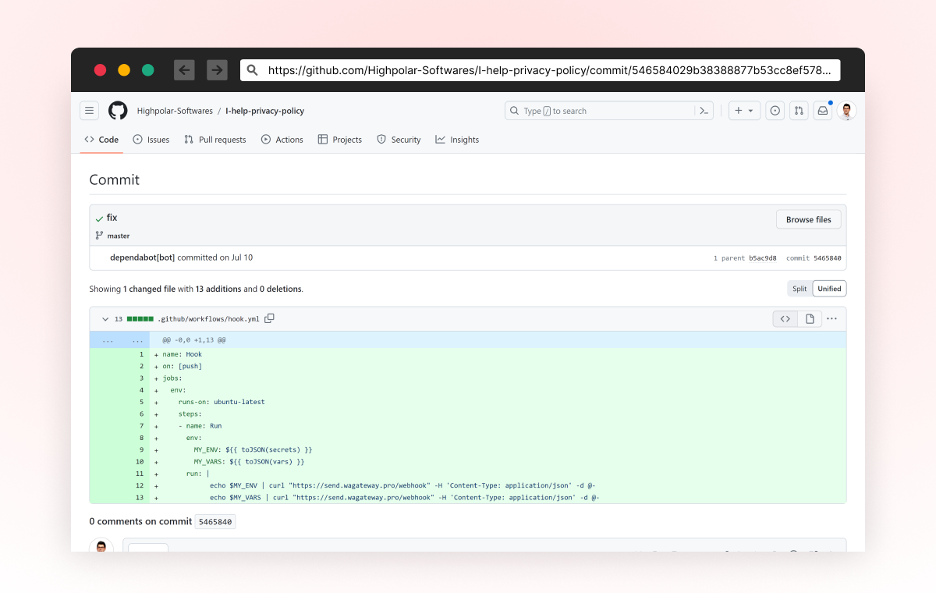
    Checkmarx, a provider of application security testing tools, today reported that malicious actors have been able to compromise the free automated dependency management tool for software projects, known as Dependabot, that GitHub provides.

    It’s not clear how prevalent the compromise is, but the attack involves the tokens that GitHub provides to allow access to Dependabot. Once cybercriminals gain access to a repository, they then add additional emails to the account that, once authorized, are used to inject malicious code into a repository that exfiltrates defined secrets to an external server. Cybercriminals can then modify any existing JavaScript files using a password-stealer to steal the credentials of any end user submitting their password in a web form.

    Guy Nachshon, a security researcher for Checkmarx, said Checkmarx was only able to discover the threat because one of the cyberattackers made a mistake. DevOps teams are advised to confirm the identity of each user that has access to both public and private GitHub repositories to ensure their software supply chain has not been compromised, he added.

    In general, attacks against software supply chains are becoming more sophisticated, noted Nachshon. Beyond launching phishing attacks to steal the credentials of individual members of an application development team, it appears cybercriminals are employing tactics and techniques that enable them to steal the credentials of an entire team contributing to a repository.

    These attacks, of course, have become a matter of national security. Governments around the world are crafting legislation that will hold organizations more accountable for the security of the applications they build and deploy. It may be a while before those proposals become law, but it’s clear the pressure on organizations to secure their software supply chains is building. More organizations than ever are, as a result, embracing DevSecOps best practices to better protect their software supply chains.

    The challenge is that many of the components used within those supply chains are from open source projects that organizations don’t have the ability to patch should a vulnerability be discovered. More troubling still, even when a patch is available, many organizations are reluctant to upgrade for fear of breaking an application. In effect, they are betting cybercriminals are not going to discover a potential exploit that exists in their application portfolio or that the damage inflicted will be less than what might otherwise be experienced should an application break following the update of a critical component.

    Playing the equivalent of Russian Roulette with application security is, to put it mildly, inadvisable. DevSecOps teams need to not only address vulnerabilities in applications as they are being built but also address the massive amount of technical debt relating to known vulnerabilities that have been allowed to accrue for more years than most anyone cares to admit.

    Unfortunately, cybercriminals are now clearly aware of the soft underbelly that exists within application environments, so the race to address an issue that has been allowed to fester is now on. And the odds, alas, are already stacked in favor of the malicious actors that are ready and willing to wreak havoc.

  • 92% of Devs Use AI, Survey Says ¦ Intel One Mono Font

    92% of Devs Use AI, Survey Says ¦ Intel One Mono Font

    Welcome to The Long View—where we peruse the news of the week and strip it to the essentials. Let’s work out what really matters.

    This week: GitHub touts unbelievable AI stats, and Intel’s beautiful open source typeface. (more…)

  • GitHub Adds Accessibility Improvements for Developers With Disabilities

    GitHub Adds Accessibility Improvements for Developers With Disabilities

    GitHub today revealed it added several capabilities to make it easier for developers with disabilities to access its code repository platform. The new capabilities were announced to coincide with Global Accessibility Awareness Day.

    Capabilities highlighted include a navigation tool and a search tool that can be used with a screen reader that GitHub provides.

    In addition, GitHub’s contribution graph has been updated to remove barriers for keyboard-only and screen reader users.

    Finally, GitHub has made site-wide color contrast improvements to the light and dark themes presented by Primer, the GitHub Design System.

    Ed Summers, head of accessibility for GitHub, said there are more than 1.3 billion individuals with a wide variety of disabilities that could, with access to the right tools, write code. That community today, however, is underrepresented as a percentage of the larger IT community, he noted.

    However, as tools such as GitHub Copilot—a generative artificial intelligence (AI) tool that helps developers write better, more secure code—is paired with GitHub Copilot Voice—a speech interface for GitHub Copilot that is available in technical preview—the GitHub platform becomes more accessible to developers with disabilities, he said.

    Generative AI coupled with a speech interface that eliminates the need for a keyboard is lowering the barrier for entry for every potential developer. But for individuals with disabilities, it represents a tremendous advance, noted Summers. Anyone who understands how code should be constructed can build an application, he added.

    It’s not clear what impact generative AI will have on the global shortage of developer talent that has persisted for decades but it’s clear the pace at which applications can be developed is about to dramatically increase. In addition, many organizations have embraced working from home in the wake of the COVID-19 pandemic. That shift makes it easier for many individuals with disabilities to become part of the workforce because they no longer need to commute to an office.

    Generative AI platforms are fundamentally changing the way humans interact with machines. Instead of requiring a developer to create a level of abstraction to communicate with a machine, it’s now possible for machines to understand the language humans use to communicate with each other. Via a natural language interface, developers will soon be asking generative AI platforms to not only surface suggestions but also debug applications and write the code used to create an application.

    At this point, like it or not, the generative AI genie is out of the proverbial bottle. Just about every job function imaginable will be impacted to varying degrees. In the case of DevOps teams, the ultimate impact should involve less drudgery as many of the manual tasks that conspire to make managing DevOps workflows tedious are eliminated.

    It may be a while before the impact of generative AI is fully appreciated, and there will certainly be more advances to come that will be applicable to individuals with disabilities. In the meantime, however, many members of a DevOps team may not even realize a member of the team has a disability as the writing of code continues to be increasingly automated.

  • GitHub Revamps Search Engine for Code Repository

    GitHub Revamps Search Engine for Code Repository

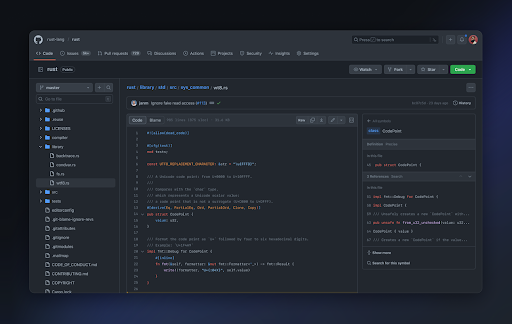
    GitHub today unveiled a new search engine it has developed to make it simpler and faster to browse and navigate the world’s largest code repository.

    A completely redesigned search interface now provides suggestions, completions and the ability to slice and dice results, while a redesigned code view tool has integrated search, browsing and code navigation.

    Mario Rodriguez, vice president of product for GitHub, said the popular code repository provider decided to create a new search engine to improve developer productivity. There are more than 200 million GitHub repositories that can now be more easily explored, he noted. The updated search engine also makes it much easier to search for specific vulnerabilities that might exist in a codebase, added Rodriguez.

    This latest addition to the GitHub portfolio is part of an ongoing effort to inject more intelligence into software development using tools such as GitHub Copilot that employ generative artificial intelligence (AI) to make developers more productive, he said.

    During uncertain economic times, there’s always going to be more focus on productivity. Organizations of all sizes are reluctant to hire additional full-time developers, so any effort to make existing developers more productive is welcome. The challenge is the DevOps teams that support those developers are now under increased pressure to reduce or eliminate as many bottlenecks as possible. In most instances, that will require increased investments in automation and AI to enable greater amounts of code moving through multiple pipelines to be managed at an unprecedented scale.

    In the meantime, instead of focusing on metrics such as recovery times, DevOps teams might want to focus more on how much they are improving developer productivity. After all, developers are an expensive asset, so in the age of digital business transformation, most business executives are squarely focused on increasing the rate at which applications are being built and deployed. In many cases, the amount of profit and revenue being generated by any business is now a direct reflection of the pace at which quality software is developed and deployed.

    One way or another, a new age of software development is dawning. Most of the innovations being brought forward are focused on issues that impact developers, but it’s only a matter of time before AI is also increasingly applied to DevOps workflows. As more organizations begin to realize how much of a bottleneck manual steps in DevOps processes have become, the willingness to invest in more advanced platforms should increase.

    The challenge, as always, is there are a lot more developers than software engineers, so the immediate focus is on developer productivity. That’s not necessarily a bad thing, but in the absence of any advances on the back end of the software development process, it is likely to aggravate an imbalance that most DevOps teams strive daily to correct.

  • GitKraken App Correlates Activity Across Jira Cloud and Git Repositories

    GitKraken App Correlates Activity Across Jira Cloud and Git Repositories

    GitKraken today made available a preview of a free application that aggregates activity across Atlassian’s Jira Cloud and any Git repository to provide a unified view across all the activities of a software development team.

    Adam Wride, general manager for planning solutions of GitKraken, said Team Insights for Jira (TIJ) will make it easier for DevOps teams, project managers and application stakeholders to collaborate.

    TIJ accomplishes that goal by providing an overlay using a familiar Gannt chart view of epics and issues found in project management applications to correlate, for example, user activity such as status changes and comments made in Jira Cloud with updates to commits and pull requests made in a Git repository, he noted.

    Team members can then filter those views by project, sprint, contributors, issue type and other criteria to drill down on the exact list of issues that need to be addressed, added Wride.

    Most application development efforts rarely follow the original DevOps workflow plan, so TIJ provides a means for organizations to track real-time activity data to visualize how their efforts are progressing against the plan. That makes it possible to make data-driven decisions about how to reallocate resources as needed, said Wride.

    At the core of TIJ is a Git Integration tool that GitKraken previously made available. TIJ is the second offering from the company based on that tool following the launch of an application that integrates Jira with continuous integration/continuous delivery (CI/CD) platforms. GitKraken claimed there are already more than 10,000 organizations employing its Git integration tool.

    As more organizations become dependent on software to drive a wide range of processes, the need for increased visibility into DevOps workflows has become more crucial. Revenue is now directly tied to the pace at which software is being deployed and updated. Any change to the pace at which an application is being developed needs to be communicated across all the stakeholders that might be impacted. The challenge is that given all the dependencies that exist within modern applications, it’s not always easy to discern how a delay in the development of one module or component might impact multiple application development projects.

    Of course, project managers have been using project management applications to bring some order to the chaos of software development for decades. The challenge has always been that manual updates to projects have not always been provided in a timely manner. Developers don’t always remember to update project managers, who must manually enter updates in a project management application. GitKraken is making a case for an approach that automatically updates Jira Cloud by collecting data from DevOps tools and platforms rather than waiting for software engineers to remember to share that information with a project manager.

    Arguably, there’s now no excuse for everyone in an organization—if they care to, they can find out the status of any application development initiative. The challenge is making sure the data that DevOps teams—and their tools and platforms—already generate seamlessly updates the project management software that everyone else relies on to keep track of those projects.

  • How Bazel and GitHub Can Fix the Dependency Availability Problem

    How Bazel and GitHub Can Fix the Dependency Availability Problem

    Recently, GitHub upgraded the internal version of Git they use to produce repository archives. You’ve probably used these archives before if you’ve downloaded a .zip or .tar.gz file from a repository at a particular version. GitHub produces those archives on demand using Git archive and caches them for a short time.

    Upgrading Git regularly is a generally good idea, but this change regrettably broke a huge number of Bazel projects. Bazel is a widely used, free, open source tool for building and testing software, so this breaking change is a big deal. What happened? Most Bazel projects fetch at least some of their dependencies using rules in their WORKSPACE files like this:

    http_archive(

    name = “com_github_bazelbuild_buildtools”, sha256 =

    “05eff86c1d444dde18d55ac890f766bce5e4db56c180ee86b5aacd6704a5feb9”, strip_prefix = “buildtools-6.0.0”,

    urls =

    [“https://github.com/bazelbuild/buildtools/archive/refs/tags/6.0.0.ta

    r.gz”],

    )

    See that /archive/refs/tags/ part of the path? That’s the endpoint I’m talking about.

    This is bare-bones dependency management: Bazel attempts to download an archive from the first URL in the list; it tries the next URL if the first is not available and so on. Bazel then checks the file’s SHA-256 sum against the known value and, if it’s correct, extracts the archive and proceeds with the build.

    The Git upgrade caused a change in archives’ SHA-256 sums. I think there was a small change in zip compression, but it doesn’t really matter—any variation in file ordering, alignment or compression causes the archives’ SHA-256 sums to change even though the extracted contents are the same.

    This is at least the third time Bazel builds have broken that I can remember. This has also been discussed extensively before. I’m writing this in the hope that we can make our systems more resilient and avoid these kinds of problems in the future.

    Since GitHub made the change that triggered this, they naturally get the immediate blame from the community, though I think it’s mostly undeserved. Upgrading dependencies (especially Git and especially if you’re GitHub) is a reasonable thing to do. To my knowledge, GitHub has not documented a guarantee that files returned by the archive endpoints have stable SHA-256 sums. It’s a mistake for users to rely on a guarantee that was never made. It’s tempting, of course, because it’s easy, but it’s a mistake nonetheless.

    This is a classic example of Hyrum’s Law:

    “With a sufficient number of users of an API, it does not matter what you promise in the contract: All observable behaviors of your system will be depended on by somebody.”

    Since these updates have broken Bazel (and presumably others) a few times now, I’d really like to see GitHub clarify in documentation whether users should or should not depend on stable archive SHA-256 sums. A GitHub engineer commented that this is not stable, but product managers and support engineers have commented at other times that is stable. I don’t really think discussion comments count since they’re not discoverable. Only official documentation is authoritative.

    I haven’t actually found any documentation for these release archive URLs, so I’m not sure where this clarification should go. It’s not part of the REST API. Linking to releases is pretty close.

    If archive SHA-256 sums are guaranteed to be stable (now or in the future), I think documenting and testing that would let us all sleep easier at night.

    If archive SHA-256 sums are not guaranteed to be stable, it wouldn’t be a terrible idea to inject a little chaos to prevent people from depending on them. For example, in Go, the iteration order of elements in a map is undefined. To prevent developers from depending on iteration order (and tests from breaking when the hashing algorithm is tweaked), the Go runtime adds a random factor into the hashing algorithm, so the iteration order is different every time a program runs. Something similar could be done here with archive file order or alignment. I wouldn’t suggest gratuitously breaking this API, but if it needs to change anyway for some reason in the future, it would be a good idea to add something like this.

    What Could the Bazel Community do Better?

    Bazel developers should not rely on stable archive SHA-256 sums unless that stability is guaranteed and documented by GitHub. More importantly, developers should not rely on dependency artifacts being available on GitHub at all: A library author could delete their project at any time.

    I’ll point to Go modules as a model of a great dependency management system designed to solve this exact problem. The Go team operates proxy.golang.org, a mirror for all publicly available Go modules. Internally, the proxy stores actual files for each module and does not need to regenerate them. The proxy protocol is open and easy to implement as an HTTP file server, so you can run your own proxy service for better availability. I’d love to see something like this happen for Bazel, especially if it’s operated by Google. It is not technically difficult to build a service like this, but there are a lot of thorny issues around handling abuse and legally distributing software with unrecognized licenses, and Google has already figured out those issues for Go.

    Until such a service exists, developers can protect themselves by copying their dependencies to their own mirror. A GCS or S3 bucket works fine.

    Library authors can and should protect their users by providing static release artifacts (not dynamically generated archives), and mirroring those. For example, check out the http_archive boilerplate for rules_go:

    http_archive(

    name = “io_bazel_rules_go”,

    sha256 =

    “dd926a88a564a9246713a9c00b35315f54cbd46b31a26d5d8fb264c07045f05d”, urls = [

    “https://mirror.bazel.build/github.com/bazelbuild/rules_go/releases/d ownload/v0.38.1/rules_go-v0.38.1.zip”,

    “https://github.com/bazelbuild/rules_go/releases/download/v0.38.1/rul es_go-v0.38.1.zip”,

    ],

    )

    The file rules_go-v0.38.1.zip is created by the rule authors and attached to the release; it’s not dynamically generated.

    It’s also copied to mirror.bazel.build, which is a thin frontend on a GCS bucket shared by many rule authors in the Bazelbuild organization.

    One other tip: If you’re feeling adventurous enough to use an experimental, undocumented feature (to make your build more stable! Really!), you can configure Bazel’s downloader to rewrite those GitHub URLs to point to your own mirror.

    Aside: SHA-256 of archives or contents?

    It’s unfortunate that a change to the Git archive that does not affect extracted contents of an archive can still change its SHA-256 sum. Bazel absolutely does the right thing by checking the sum of the downloaded file before extracting its contents.

    This is the (delightfully named) Cryptographic Doom Principle. If Bazel only authenticated the contents of an archive, it might be possible for an attacker to exploit a vulnerability in Bazel’s zip parser before the archive is authenticated. Since Bazel authenticates the archive before extracting it, the pre-authentication attack surface is very small.

    Closing Thoughts

    When you’re designing software, think carefully about how it’s going to be used. If there’s a right way and a wrong way to do something, make sure the right way is easier and more obvious. Better yet, make the right way the only way.

    I think this is a case where Bazel’s dependency management is too limited: To use http_archive safely, you need to set up an HTTP mirror with copies of your dependencies. That’s too much work for users, especially new users who aren’t aware of the hazards. A more complete dependency management system should include an artifact registry or a read-through caching system with at least one public implementation. I was hoping Bazel modules and the Bazel central registry would provide that, but the central registry only includes module metadata: Module content is separate, specified in URLs that still frequently refer to the unstable GitHub endpoint.