Tag: fuzz testing

  • Developer’s Guide to Fuzz Testing

    Developer’s Guide to Fuzz Testing

    Fuzz testing continues to grow in popularity among developers within the open source community. Google’s open source security (OSS) team recently reported finding more than 40,000 bugs in 650 open source projects through the use of fuzz testing. But if you have no clue what fuzz testing is (yet), don’t worry. You’ve come to the right place.

    What is Fuzz Testing?

    Fuzz testing is a dynamic testing method for finding bugs and security issues in software. During a fuzz test, a program or a function under test gets executed with invalid, unexpected or random inputs to uncover unlikely or unexpected edge cases. 

    Value of Fuzzing for DevSecOps 

    As we know, DevSecOps extends the approaches of DevOps and Agile by adding suitable security testing methods alongside every phase of the software development life cycle (SDLC), creating a dynamic and continuous testing process. 

    Part of that testing process can and should involve fuzzing to detect security and stability issues at all phases of the SDLC and empower developers to ship software quickly and securely. For example, to prevent regressions from going live by running automated fuzz tests on every code change.

    Especially in the automotive industry and complex embedded projects, where a lot of untrusted and complicated data gets processed, fuzzing brings excellent benefits to DevSecOps. Indeed, developers can apply fuzzing similar to unit testing to automatically test their security-critical modules for potential vulnerabilities. But with fuzzing on an integration level, they can also cover all the complicated and dangerous edge cases that can occur in the interaction between different modules. 

    Fuzz Testing Benefits

    Fuzzing code generates thousands of automated test cases in a second, with the fuzzer receiving in-depth feedback on code coverage and the program states reached to simulate the interaction of different modules during the execution of the source code. The fuzzer can adapt and mute its inputs based on runtime feedback in the following iterations to maximize code coverage. Some of the benefits are:

    1. (Almost) no false positives: If you find a crash, fuzzing provides you with the error source and the malicious input that caused the issue. So, you can be sure that each finding is a real vulnerability.
    2. Debug reproducible findings: Modern fuzz testing tools will provide you with the input causing the issue, including the source of the error. With this, you already have a lot of helpful information to reproduce the bug and load it directly into the debugger. 
    3. Find issues in forgotten edge cases: Because fuzzing is executing a program with invalid or random input, it also uncovers unlikely and unexpected edge case errors that would not otherwise have been revealed.

    Who Uses Fuzz Testing?

    As cybersecurity regulations and standards continue to expand globally, more and more organizations are extending cybersecurity programs and running automated security testing before they ship software. Whole industries, especially those that involve advanced quality and security regulations, are setting standards for security testing that recommend fuzz testing, including automotive, aviation, finance, healthcare, telco and energy.

    Digging deeper into the automotive industry, for example, a variety of International Organization for Standardization (ISO) and other organizational standards now recommend fuzzing:

    Best Practices

    The most effective way to do security testing, fuzzing included, is to do so continuously. This means integrating fuzzing right into your CI/CD pipeline. Doing so creates quick feedback cycles so developers can fix security vulnerabilities before the code is shipped. Integrating fuzzing tools into code hosting systems like GitHub is also valuable. Doing so allows communication and alerts to be shared across your DevOps team as soon as a problem is uncovered, which helps to facilitate fixing vulnerabilities. 

    What Bugs Can I Find?

    While the practice remains relatively new, fuzzing has already discovered thousands of bugs across different use cases. Bug and vulnerability types discovered include:

    • Remote code executions
    • Injections, which can be triggered by untrusted inputs 
    • Memory leaks: Incorrect memory allocation 
    • Exposure of sensitive data: Accidental exposure of personal data
    • Functional bugs: Inputs that are not being responded to 

    and many more bugs, such as undefined behavior, uncaught exceptions and buffer overflow. Learn more.

    Getting Started

    You can try out an open source fuzzer, like Jazzer (for Java testing) or the CI Fuzz CLI (for C/C++ testing). When you’re comfortable with fuzzing and want to use this approach in more complex environments, enterprise solutions offer added features like API fuzzing, reporting and CI/CD integration. 

    So give it a shot and join the community of open source developers using fuzzing to quickly and securely ship their software. 

  • Google Makes Fuzz Testing Integration Tool Available

    Google Makes Fuzz Testing Integration Tool Available

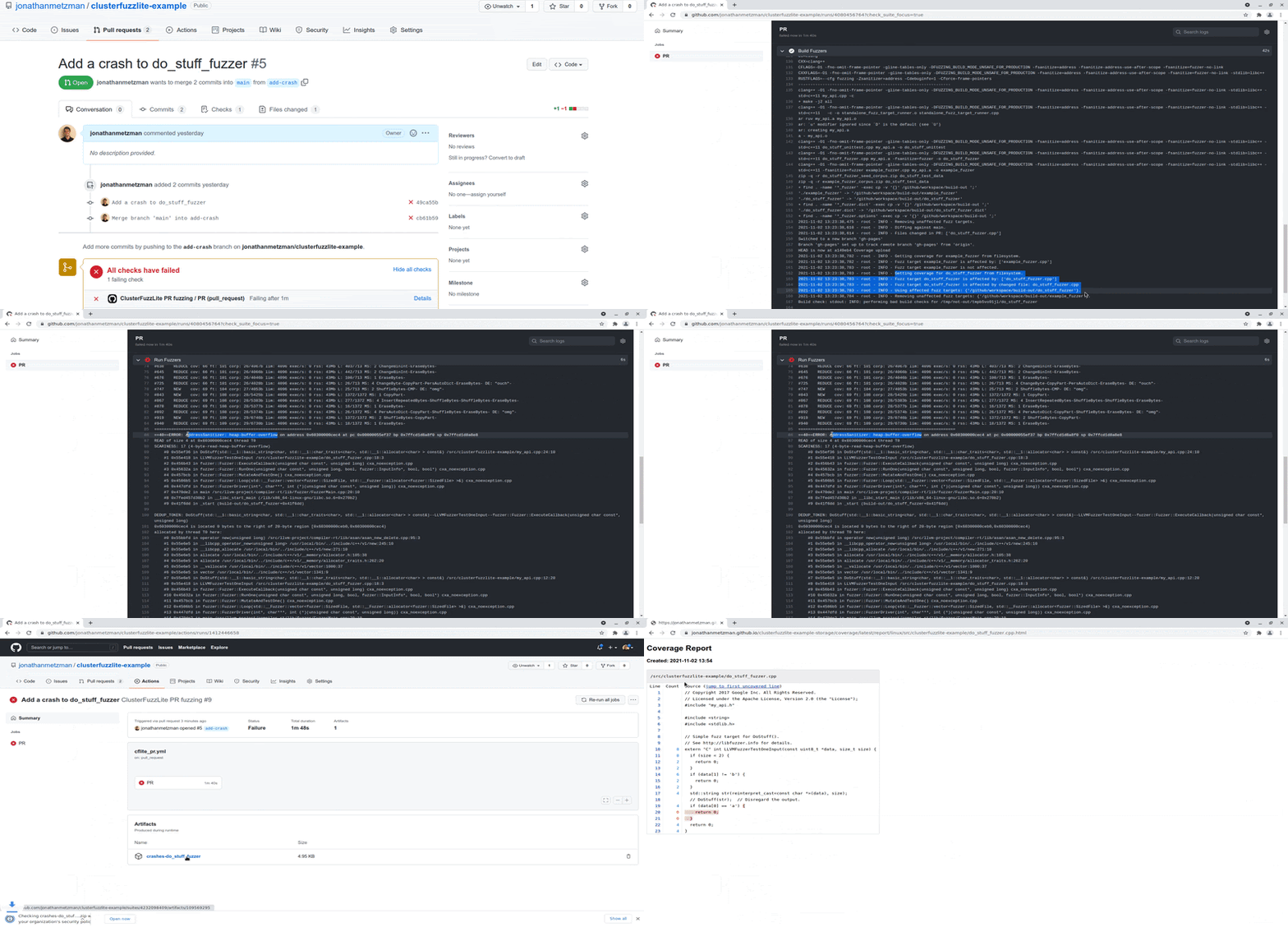
    Google today made available a ClusterFuzzLite tool that makes it simpler to incorporate fuzz testing into a DevOps workflow.

    Fuzz testing refers to an automated software testing technique that involves providing invalid, unexpected or random data as inputs to an application to discover issues such as potential memory leaks.

    Jonathan Metzman, a senior software engineer for Google, said ClusterFuzzLite is a lighter-weight version of a tool that Google makes available to its internal development teams. It is not a fuzz testing tool itself, but rather a tool that makes it easier to surface the results of a fuzz test within a DevOps workflow. Once those results are surfaced, it then becomes easier for developers to address issues before an application is deployed in a production environment.

    Core capabilities enabled by ClusterFuzzLite include continuous fuzzing, sanitizer support, corpus management and report generation tools. The goal is to make fuzz testing more accessible to a broader range of developers as part of an overall effort to embrace DevSecOps best practices, noted Metzman.

    ClusterFuzzLite currently supports GitHub Actions and Google Cloud Build, but Metzman said it is easily extensible to other DevOps platforms. It is designed to run as part of a DevOps workflow by adding a few lines of code to a continuous integration/continuous delivery (CI/CD) workflow.

    Google has already made ClusterFuzzLite available to open source projects, but is now providing additional access for commercial developers. Since its release in 2016, over 500 critical open source projects have integrated into the Google fuzz testing program for open source software, resulting in over 6,500 vulnerabilities and 21,000 functional bugs being fixed.

    In the wake of recent guidelines issued by the U.S. National Institute of Standards and Technology (NIST) that were themselves in response to an executive order issued by president Biden, the number of organizations using fuzz testing is expected to increase now that NIST has determined that fuzz testing is a minimum standard requirement for code verification.

    For several years, Google has been making a concerted effort to improve the security of open source software. The challenge for all developers is finding a way to build more secure applications without slowing down the rate at which they are deployed. Fuzz testing makes it possible to identify issues much earlier in the application development life cycle versus just before an application is deployed.

    Less clear, of course, is whether developers are starting to use these tools on their own or if the increased adoption is because of a concerted effort by their organization to embrace DevSecOps best practices. Regardless of the motivation, however, the overall state of application security should continue to improve as it becomes simpler for developers to invoke more advanced testing tools.

    In the meantime, organizations of all sizes are reviewing how they construct software in the wake of a series of high-profile security breaches. In theory, at least, increased focus on software supply chains should prevent issues from arising after deployment when they become much more costly to remediate.

  • GitLab Adds Fuzz Testing to DevSecOps Toolbox

    GitLab Adds Fuzz Testing to DevSecOps Toolbox

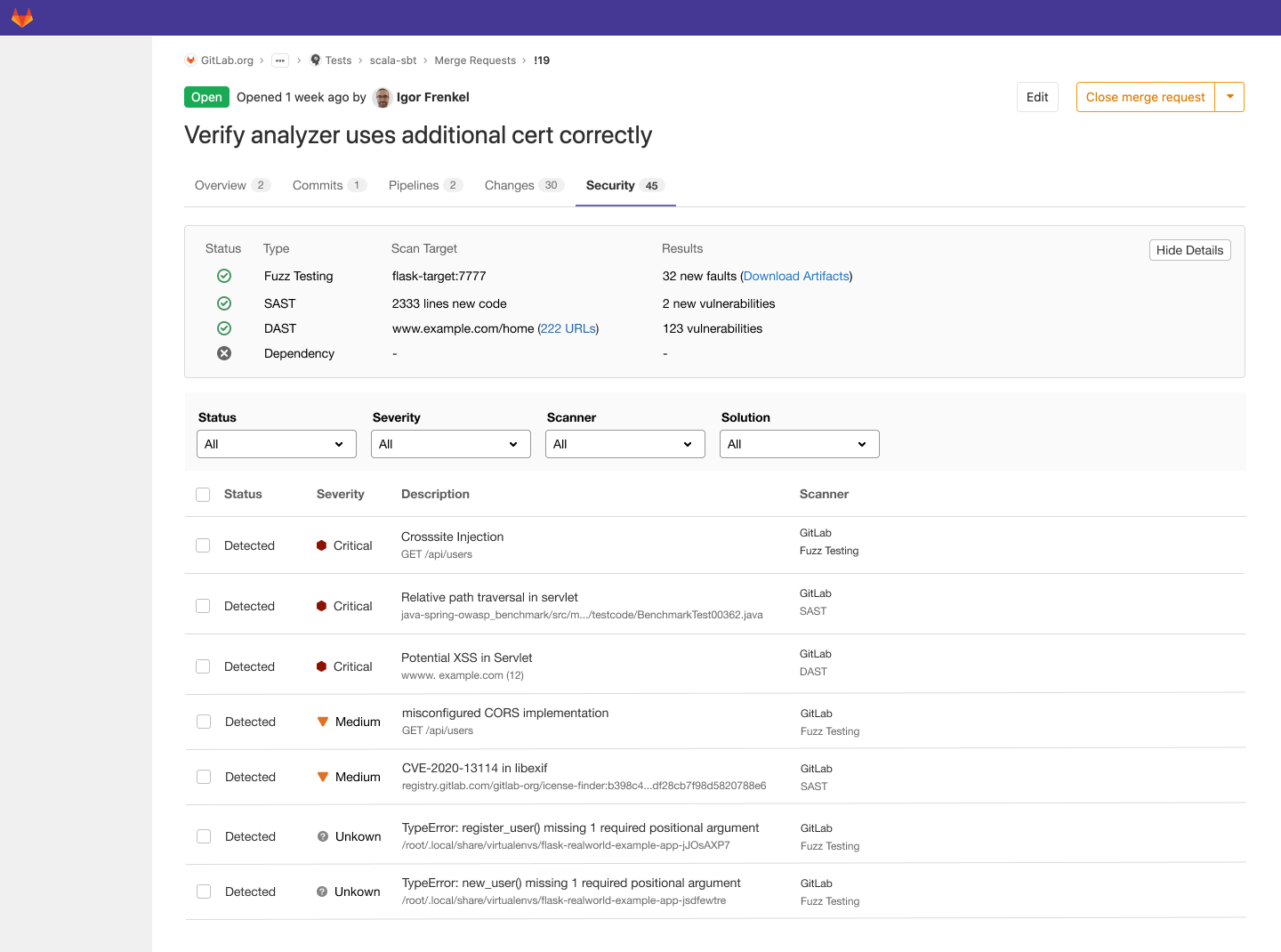
    GitLab today announced it has acquired Peach Tech, a provider of protocol fuzz testing and dynamic application security testing (DAST) API testing tools, and Fuzzit, a continuous fuzz testing tool, as part of its efforts to advance the adoption of best DevSecOps practices.

    David DeSanto, director of product for GitLab Secure & Defend, said the two acquisitions should make it easier for DevOps teams to incorporate both whitebox and blackbox fuzz testing techniques for security testing much earlier in the application development and deployment process.

    Fuzz testing is an automated technique that involves providing invalid, unexpected or random data as inputs to software, which is then monitored to see what happens—if it, for example, crashes or a memory leak is created.

    Peach Tech adds Peach Fuzzer, an automated security testing platform that employs definition files known as Peach Pits to generate the fuzzed data consumed by the test target along with a framework for automating the web application programming interface (API) security testing process.

    Fuzzit provides a service that enables DevOps teams to continuously generate fuzz tests and correlate crashes in a way that can be integrated within a continuous integration/continuous delivery (CI/CD) workflow.

    Once Peach Tech and Fuzzit technologies are fully integrated with each other and the GitLab platform, DeSanto said GitLab Secure customers will be able to automate myriad tasks, from security testing to vulnerability management and remediation.

    GitLab will also employ technologies from both companies to further its ambitions to drive the adoption of interactive application security testing (IAST). The goal is to not only make it easier for developers to employ DevSecOps tools but also understand what issues are being created as applications are developed, said DeSanto. That approach should reduce the number of instances where development teams are continuously making the same mistakes across multiple application development projects, he noted.

    The further left cybersecurity testing is shifted the less stress there will be on chronically short-staffed cybersecurity teams. The challenge is that while most organizations recognize the potential benefits of DevSecOps there hasn’t been much progress in educating developers on what issues to look for and providing them the tools needed to discover and remediate vulnerabilities.

    There is, of course, no silver bullet when it comes to cybersecurity. As long as humans write code there always will be potential issues. However, many more routine cybersecurity issues should be addressed long before an application is deployed within a production environment. To achieve that goal organizations are providing developers with tools that identify cybersecurity issues as they write code in addition to incorporating more security testing into their CI/CD workflows.

    Of course, GitLab is not the only provider of a CI/CD platform focusing on how to foster the adoption of best DevSecOps practices. There’s clearly a race to embed security testing tools within CI/CD platforms that should advance adoption for DevSecOps, if for no other reason than they are becoming easier for developers to discover and employ.