
Tag: full-stack development

  • Gitpod Revamps Dev Automation Tool

    Gitpod Revamps Dev Automation Tool

    Gitpod announced today it refreshed the dashboard for its namesake open source tool for automating the deployment of development environments, in addition to making Microsoft VS Code its default tool for editing code.

    In addition, Gitpod has included support for sudo privileges and Docker images using an advanced user namespace to map and limit access to workloads using a built-in Supervisor capability.

    Fresh off raising an additional $13 million in funding, Gitpod CEO Sven Efftinge said now that it’s clear developers will be working from anywhere for the foreseeable future, the need for a tool to automate setting up a developer environment on a local machine outside of an office has become more apparent.

    Gitpod claims there are now more than 350,000 developers using its tool that creates a Kubernetes pod on each developer machine to deploy a complete application development environment, including the integrated development environment (IDE), plugins, compilers, build tools, code generators, databases and application servers. Gitpod makes use of the version control systems provided within, for example, a continuous integration/continuous delivery (CI/CD) platform as the single source of truth for configuring an application development environment.
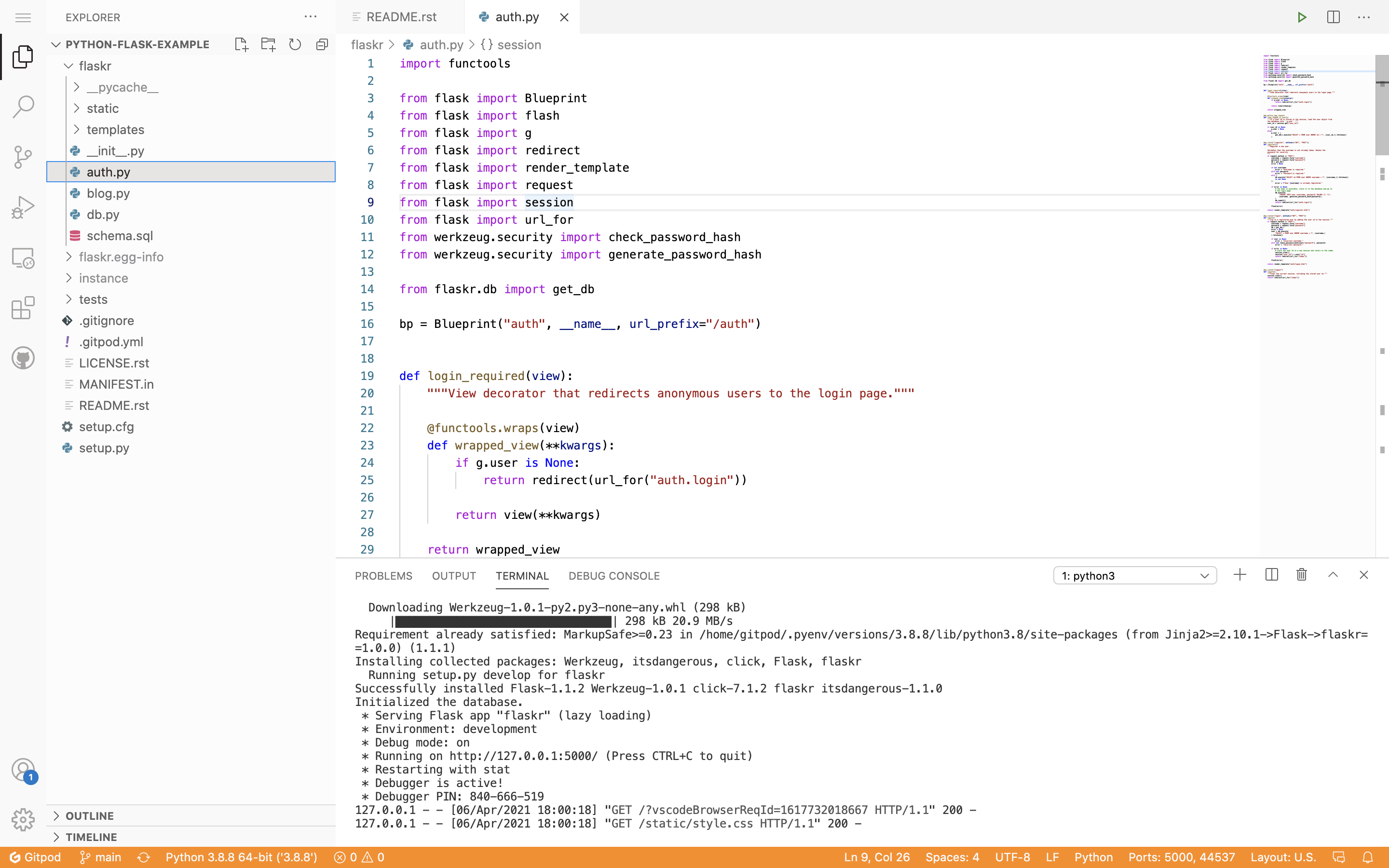
    The overall goal is to eliminate the time developers waste setting up application development environments so they can write code on their own machines. That approach also makes it simpler for developers to collaborate around the same application development environment regardless of where they happen to be physically located.

    Efftinge said Gitpod provides DevOps teams with a tool to automate setting up development environments across any Git repository that is the equivalent of the Codespaces tool that GitHub recently made available. Rather than having that capability for only one repository, Efftinge noted that most developers work on projects that span multiple types of repositories.

    Automating that process also makes it simpler to align development environments with production environments. One of the reasons why code doesn’t work in a production environment when it is first deployed is because the local development environment has been manually configured in a way that doesn’t accurately reflect the production environment. That issue can become even more problematic when developers are working on multiple projects involving, for example, separate microservices constructed using different repositories.

    In the wake of the COVID-19 pandemic and the acceleration of multiple digital business transformation initiatives there’s naturally a lot more focus on automation and developer productivity. Most developers will be working outside the office for the foreseeable future. Of course, most developers have been writing code outside the office for years. The challenge now is enabling teams of developers to develop applications as efficiently as possible, no matter where they are in the world. In fact, now that development teams have become more distributed, organizations are becoming more comfortable hiring developers wherever they find them.

    Eliminating inefficient manual tasks, such as maintaining development environments, is, of course, going to be a prerequisite for making it possible for those developers to, over time, navigate multiple application development projects without ever having met their colleagues in person.

  • Successful Strategies for Hiring Full-Stack Developers

    Successful Strategies for Hiring Full-Stack Developers

    Full-stack development is a complex web programming discipline involving multiple levels of web design and coding.

    Due to the complexity of the skill, it may be difficult to strategize a method of attracting a full-stack developer. Full-stack developers are the full package—they understand the development of both the front end and back end of a web application.

    To hire full-stack developers, you’ll need patience. Full-stack developers are incredibly valued as they bring insight, perspective and technical prowess to the table. Their understanding of software development is complete, making them helpful team members to any and every development team.

    With the right tips, you can find the perfect candidate for your open position. The following strategies will ensure that you attract the best full-stack developers to your company.

    Leverage Tech Communities

    Tech community boards are invaluable resources for hiring managers. They are communities that thrive on the question-and-answer formats along with teamwork and collaboration. They often feature complete profiles of their developers, which will grant you a deeper look into how they interact and cooperate within the confines of their respective communities.

    Stack Overflow and GitHub are perfect examples of all-inclusive development communities. Each allows users to upload code and ask questions. In the case of GitHub, many users frequent the site as early as high school or college. Therefore, you have the chance to watch and document the growth process of your candidate in a way that you never could before. You can also follow the candidate’s question-and-answer history to observe how they learn and how quickly they adjust.

    Each of these opportunities grants the hiring manager intelligence that would have been previously impossible to acquire and will give you a depth of understanding with your candidate that will be vital when making your final decision. These sites give hiring managers an advantage and insight that can be positively crucial when hiring a full-stack developer.

    Write an Enticing Full-Stack Job Listing

    Finding a full-stack developer can be quite a difficult task, as full-stack developers are in short supply. To attract top talent, you’ll need to entice them, make your job opportunity seem unique.

    The job listing should:

    • Include a hook that captures the developer’s attention (e.g. “Work your dream developer job from home!”).
    • List all duties (e.g. database management, front-end web development, back-end engineering).
    • List all tools, libraries and platforms necessary for the job.
    • List the team members who will work with them.
    • Include a concise description of the kinds of projects the team will be working on.
    • List the benefits of the full-stack developer role.
    • Include a summary of what your company does.
    • Have a call-to-action (e.g. attach your resume below; email us for more information).

    Utilize Niche Job Boards

    Full-stack developers have a plethora of technical skills. To find technically skilled people, your best bet is to use job boards such as Dice, Stack Overflow Jobs and GitHub Jobs. If you researched and connected with people through online tech communities, then it should be even easier to leverage these tech job boards.

    Some other niche job boards that can be helpful for companies looking for dedicated full stack developers:

    • co
    • CrunchBoard
    • Authentic Jobs
    • RemoteOK
    • WeWorkRemotely
    • Top Tech Jobs
    • Startup Hire
    • IT Job Cafe
    • Tech Careers
    • iCrunchData

    Conclusion

    Your company needs to employ helpful hiring strategies to find and hire top full-stack developers. One of the best ways to start your hiring journey is to research, of which this guide is hopefully a part.

    Research includes investigating and interacting with online tech communities. The information you’ll gather will be invaluable during the hiring process, helping you find leads, build connections and write effective job listings. Remember: An enticing job listing is a key to attracting top developers.

    Finally, you’ll want to leverage specialized job boards to find and attract full-stack developers. Use tech and remote job boards to find qualified candidates more quickly and efficiently.

    Hiring full-stack developers can be difficult, but by no means is it impossible. Simply use the strategies above, conduct your own research and start following leads. Sooner rather than later you should find a full-stack developer.

    — Greg Robinson