Tag: framework

  • AWS Saves Ukraine’s Data | WPF ‘is not Dead’ (yet) | Devs Quit for Cash

    AWS Saves Ukraine’s Data | WPF ‘is not Dead’ (yet) | Devs Quit for Cash

    Welcome to The Long View—where we peruse the news of the week and strip it to the essentials. Let’s work out what really matters.

    This week: Amazon S3 is keeping Ukraine’s data safe, we ask if Windows Presentation Foundation is dead, and developers tell us why they switch jobs. (more…)

  • Your DevOps Teams Can Do Better. Here’s How.

    Your DevOps Teams Can Do Better. Here’s How.

    As more organizations focus on digital transformation as the centerpiece of their growth strategy, software developers and IT teams are under heightened pressure to perform—quickly and efficiently.

    That begs two questions: Can we do better? And if so, how can we do better?

    The answers can be elusive, especially for DevOps teams that have over-relied on processes and models that, while previously successful, may not be as relevant for today’s projects. Of course, the point about relevance has been further magnified during the pandemic, when sudden shifts to remote working left many teams scrambling to ensure they had the capacity and infrastructure to support massive work-from-home cohorts.

    Software development and IT operations support teams that are winning by doing better in this new era are truly embracing Agile. And that means taking to heart the definition of “Agile,” which is a mindset of values and principles to continually evolve your way of working (WoW) to ensure your productivity and value are tailored to fit the tasks at hand.

    Conversely, teams that have relied on their go-to framework or approach for every assignment are often missing the boat with respect to efficiencies, effectiveness and even ROI. This is because they aren’t assessing whether their proven WoW is useful for their current projects.

    That can lead to underwhelming results. A report from Digital.ai revealed that while over 90% of software development teams take an Agile approach to their work, a whopping 96% of their digital transformation projects have failed or been delayed. Clearly, that suggests Agile has worked for them in the past, but the nature of digital transformation projects is calling for teams to adapt to new or hybrid approaches that may differ from their go-to WoW.

    Challenging? Yes. Doable? Also Yes

    While there is no quick fix to attain true flexibility amid complexity, the journey begins with the recognition that, yes, you can do better. And to do better—to become an adaptive, lean, responsive and learning organization under any circumstances—there are a number of steps to take to ensure your journey to Agile freedom is successful.

    Here are five that I believe must be considered for DevOps teams to become better and more effective:

    • Consider all options. Agile has been practiced for more than two decades, and literally hundreds of frameworks and approaches have been developed and implemented. If you examine your WoW in a context-driven, pragmatic manner you are more likely to select the best-fitting technique given the situation.
    • Do your homework. Your team leaders may not be familiar with the breadth of the Agile, traditional and hybrid frameworks at their disposal. But there’s help available. Seek out online courses and certifications designed to help organizations and individuals explore and navigate the multitude of Agile frameworks that they may currently be overlooking.
    • Focus on value. It’s great if your gut tells you that your Agile framework is reaping real results, but can you prove it? If your senior leadership has invested in Agile training, coaching and certifications, they’ll demand to see some tangible returns. With well-chosen Agile approaches that match the work required, you will be able to deliver the proof that Agile is driving measurable value that matters. Even further, learning which metrics to use in different situations can help measure this value.
    • Sidestep bottlenecks. By choosing the best WoW for the project at hand, you are more likely to eliminate the wasteful or inefficient processes that can add hours or days to any assignment. Understanding how to unclog these pipes is critical in improving the flow of value to your customers.
    • Motivate with morale. If your team is frustrated and morale is low, productivity, the quality of the work and your retention rate will be, too. But, if you’re able to do Agile well, this can help your teams be happier, more productive and more successful in accomplishing project goals. Ultimately, that means a more joyful customer base, too.

    Conclusion

    In the long run, the framework or approach you choose isn’t as important as your willingness to be open-minded in applying Agile frameworks to projects on a case-by-case basis. As you become more comfortable with new or different approaches, you will promote continuous improvement through carefully considered experimentation.

    That means you’ll become a learning organization, one that is open to change and evolution. With that mindset, your development and IT ops team will do better—guaranteed. Because true agility comes from freedom, not frameworks.

  • SaltStack Updates Enterprise IT Automation Framework

    SaltStack Updates Enterprise IT Automation Framework

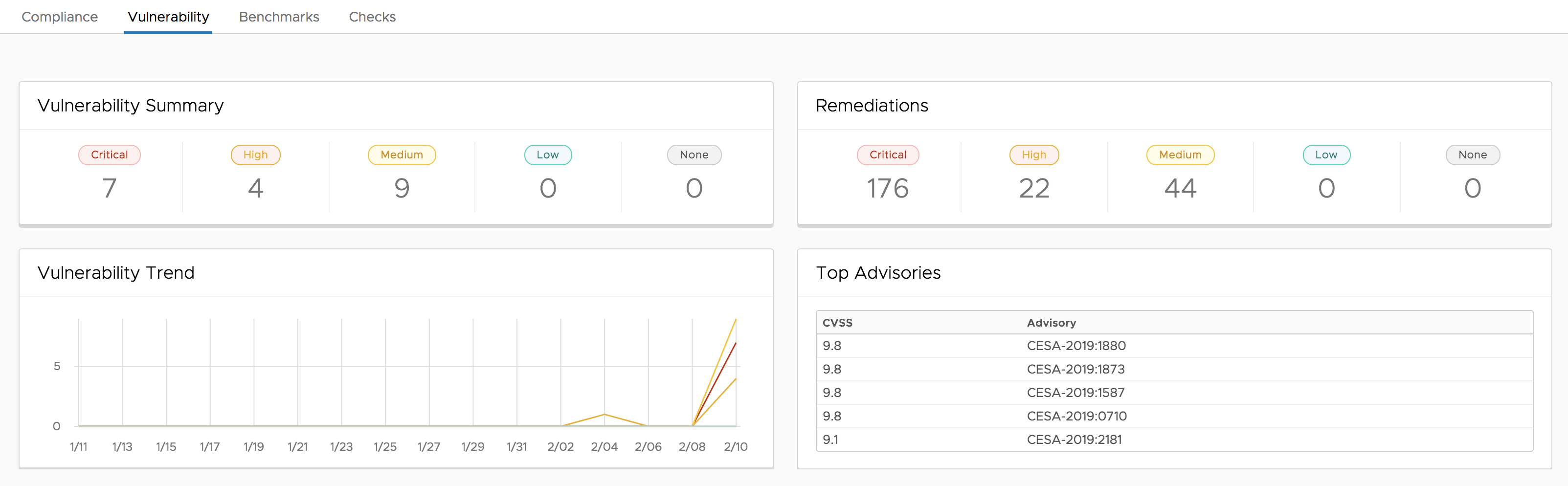
    SaltStack has partnered with Tenable.io to make it possible to pull vulnerability data into the enterprise edition of its namesake IT automation framework.

    In addition, version 6.2 of SaltStack Enterprise now integrates with the IT operations analytics platform from Splunk to make it possible to configure the Splunk Universal Forwarder to index and analyze events generated by the SaltStack framework.

    The SaltStack Comply compliance management module has also been updated to include content for Windows Server 2012 and Windows Server 2019 platforms that has been certified by the Center for Internet Security (CIS).

    Finally, SaltStack Enterprise 6.2 optimizes communications between the Salt Master and the SaltStack Enterprise Operations Framework by adding an intermediate SQLite database layer to queue events. SaltStack says IT organizations should see 20 times-plus improvement in event processing throughput. SaltStack has also added the ability to forward SaltStack events to any Salt Returner, such as a SQL database or local file, to improve performance and maintain high availability.

    Mehul Revankar, a senior product manager for SaltStack, said with this update to the enterprise edition of its open source framework the company is leveraging partnerships to enable IT systems to create closed-looped systems. For example, vulnerabilities identified by Tenable.io now can be automatically remediated using SaltStack Enterprise.

    Revankar said the goal is to make it easier for IT teams to create an IT process that can be automated at the push of a button. As IT environments become larger and more challenging to manage, IT organizations will need to automate more processes at scale, he said. To achieve that goal, SaltStack is simplifying the process to connect to a wider range of third-party platforms that house the type of data required to automate a closed-loop process.

    Naturally, organizations that have embraced DevOps principles are at the forefront of IT automation. Revankar said that as teams of IT professionals converge to drive DevOps and DevSecOps processes, the greater the willingness to employ IT automation frameworks becomes. The goal is to automate as many processes to inject a level of agility that serves to accelerate the rate at which applications are deployed and updated. The challenge organizations have always faced in IT automation is the time it takes to integrate an IT automation framework with relevant data sources.

    Revankar also noted resistance to IT automation among rank-and-file members of the IT operations team is declining as the number of applications that need to be managed increases. Most organizations can’t find or afford to retain enough IT personnel to manage IT operations at the level of scale now required. As such, the need to automate as many rote IT processes as possible has become apparent to all. That’s especially critical in the case of vulnerability management, where the amount of time it takes to patch an application directly correlates to a specific level of risk.

    There is, of course, no shortage of options these days when it comes to IT automation frameworks. In fact, the decision concerning which IT automation framework to employ now has as much to do with the number of sources that framework can pull relevant data from as much as it does the reliability of the automated processes that framework enables.

    — Mike Vizard

  • New Relic Bolsters Serverless Monitoring Strategy

    New Relic Bolsters Serverless Monitoring Strategy

    New Relic has strengthened its ability to monitor serverless computing frameworks by acquiring IOpipe, a provider of a monitoring tool for the serverless computing framework service provided by Amazon Web Services (AWS).

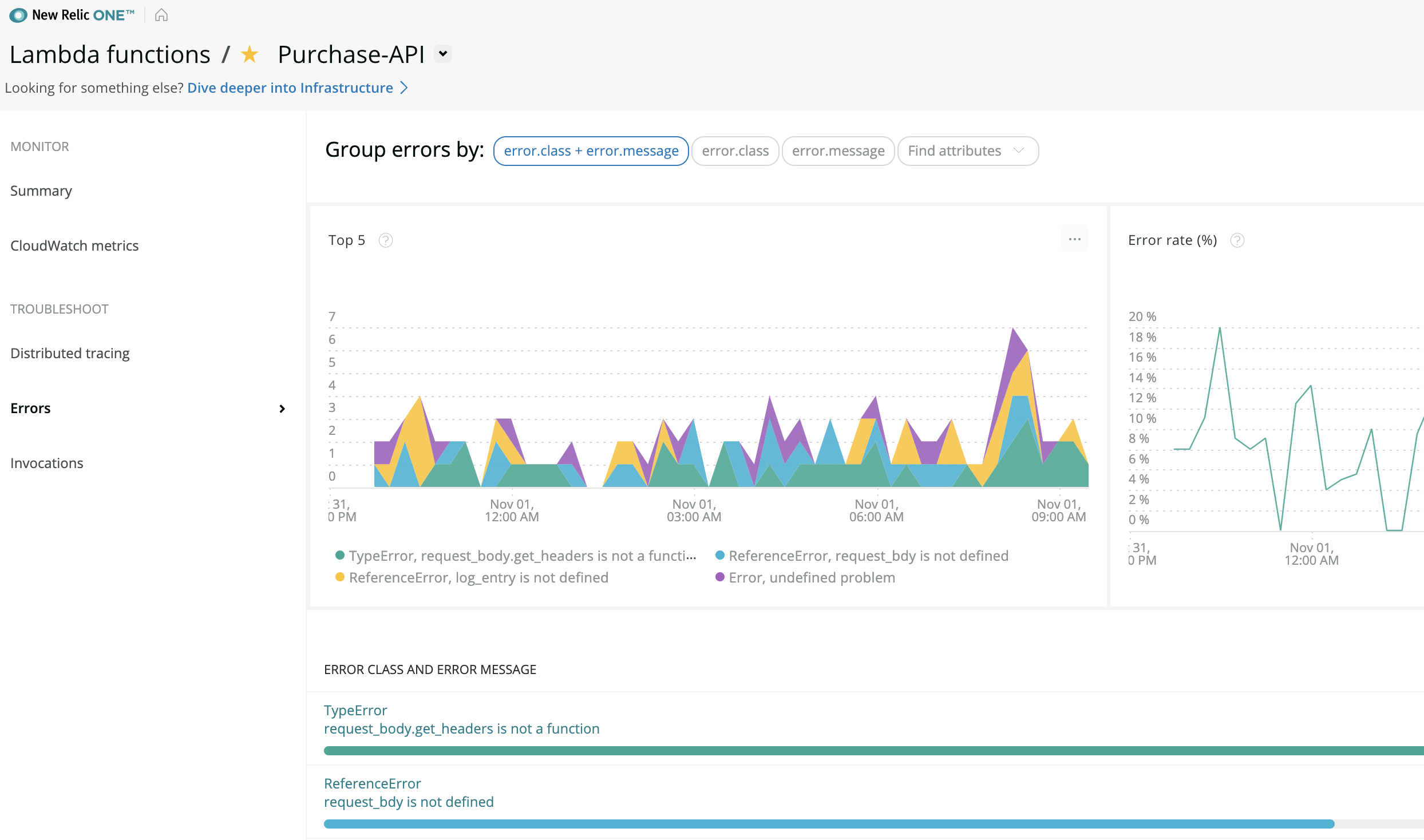
    Andrew Tunall, general manager for serverless and emerging cloud services at New Relic, said IOpipe’s monitoring technology will be used to augment the monitoring tool for AWS Lambda included in the New Relic One platform, which was launched earlier this year.

    New Relic also plans to expand its observability capabilities for serverless computing to other platforms based on customer demand, said Tunall.

    Serverless computing frameworks are gaining traction because they enable developers to write less code within their applications by allowing them to employ functions to call on a cloud service to process, for example, analytics externally rather than within the application itself. The challenge serverless computing frameworks create from a DevOps perspective is they don’t create any logs that can be analyzed. Instead, monitoring tools need to be able to employ distributed tracing tools to analyze the streams of metadata that serverless computing frameworks create based on event-driven architectures. That requirement has forced providers of monitoring tools to extend the capabilities of their core platform to enable the consumption of that metadata.

    Adoption of serverless computing frameworks is already outpacing the ability of many DevOps teams to observe. According to AWS, hundreds of thousands of customers are already doing trillions of invocations a month of AWS Lambda. Gartner has predicted that by 2023, 100% of enterprises using IaaS or public cloud will also use some form of serverless platform-as-a-service (PaaS) capability in production applications, up from 25% in 2019. In most cases, those serverless computing frameworks will be employed to process stateless workloads, while stateful workloads continue to run on a virtual machine or within a container.

    While most of the usage of serverless computing frameworks thus far is on public clouds, it’s only a matter of time before organizations increasingly make use of multiple serverless computing frameworks in on-premises IT environments. There are already more than a dozen different types of serverless computing frameworks, most of which are being made available as open source projects.

    Naturally, the rise of serverless computing frameworks complicates DevOps even further. DevOps teams will now need to build, deploy and update applications that are making frequent external application programming interface (API) calls to potentially multiple serverless computing frameworks. Rather than requiring organizations to acquire separate tools to monitor serverless computing frameworks, New Relic is making a case for extending a single platform to monitor all the various types of IT platforms being employed.

    There’s almost no doubt most organizations will wind up invoking serverless computing frameworks in one fashion or another, but it’s too early to say how pervasive serverless computing frameworks will be. However, DevOps teams will be required to monitor those serverless computing frameworks alongside every other platform already being employed across an increasingly diverse IT environment.

    — Mike Vizard

  • ASF Moves OpenWhisk Serverless Computing Forward

    ASF Moves OpenWhisk Serverless Computing Forward

    The Apache Software Foundation (ASF) announced today that the OpenWhisk serverless computing framework has now become a high-level open source project.

    Matt Rutkowski, CTO for serverless technologies and advocacy for IBM, said with this announcement, organizations looking to implement an open source serverless computing framework on-premises or in a public cloud now can have confidence the OpenWhisk project is sustainable beyond the handful of vendors, including IBM, that launched it.

    IT organizations of all sizes are embracing serverless computing frameworks as a way to invoke application programming interfaces (APIs) to make additional compute resources available on-demand based on an event. For example, rather than having to embed a lot of additional analytics code within their application, developers alternatively might invoke a serverless computing framework such as OpenWhisk to run analytics whenever necessary.

    The most widely used serverless computing framework today is the Lambda service from Amazon Web Services (AWS). However, rival cloud service providers have been embracing various open source alternatives to provide similar capabilities. At the same time, some internal IT operations teams are deploying serverless computing frameworks to provide similar capabilities within an internal IT environment.

    Regardless of the approach, Rutkowski said hooks to serverless computing frameworks soon will become ubiquitous hooks within continuous integration/continuous deployment environments. In fact, DevOps environments are likely to expose multiple hooks to different serverless computing frameworks as cloud computing becomes more hybrid, he noted. Plugging in multiple serverless computing frameworks should be relatively trivial because the difference in application programming interface (API) parameters between different serverless computing frameworks is minimal, he added.

    While interest in serverless computing has been running high, deciding which open source serverless computing framework to embrace has been something of a challenge. There are at least a half-dozen active serverless computing frameworks, with new ones being added regularly while other projects fade away. The Cloud Native Computing Foundation (CNCF) has made a point of not endorsing any one serverless computing framework in the expectation that many will be adopted for various use cases. Instead, the CNCF has thrown its weight behind a Knative project that provides the middleware required to integrate Kubernetes clusters with multiple serverless computing frameworks.

    Those serverless computing frameworks have already had a profound impact on containerized applications. The first generation of containerized applications was largely stateless. Now stateless functions increasingly are being processed via a serverless computing framework, while stateful applications based on containers that tend to run longer are just now starting to be deployed in production environments.

    Of course, the one fact many IT organizations fail to appreciate is that serverless computing frameworks are built using containers. A serverless computing framework is really a higher-level abstraction of a container platform. The challenge organizations will face now is teaching developers when to rely on a more traditional container platform versus invoking a serverless computing framework to run a child process, for example.

    Whatever path those developers choose, the one thing that is for certain is existing DevOps processes will need to be adjusted accordingly.

    — Mike Vizard

  • Yahoo7 Uses DevOps to Speed Website Redevelopment

    Yahoo7 Uses DevOps to Speed Website Redevelopment

    Yahoo7 is a joint venture between Yahoo and Australian entertainment and TV company Seven West Media. Seven is one of Australia’s three major TV networks.

    The company has completely replaced its technology stack and is in the process of revamping its seven consumer sites to take advantage of the new platform. The first cab off the rank is the Be entertainment and lifestyle site, but “the rest will come pretty quickly,” according to CTO Paul Russell.

    “We had an aging website based on a proprietary framework,” he said, which has been replaced with a platform based on node.js and other open-source frameworks, including the Yahoo-backed Screwdriver continuous delivery platform.

    There is also a focus on adopting reusable components across all the sites. It is more efficient to select, for example, an image gallery that gives the best user experience and deploy it across all the sites. That doesn’t mean all the new sites will have the same look; it is still possible to have distinctive layouts for each of them, Russell said.

    A move to cross-functional teams and Scrum “was a pretty big change for us” that took approximately two years, he said. There are three teams, each with four or five developers, a product owner, a tech lead, a Scrum master and a tester. A user experience specialist is added when required.

    The reorganization required “a mindset change,” but having people doing different types of work side by side did help. But the adoption of common KPIs “really has made a big difference,” as it keeps people focused on the things that really matter.

    “We’ve got a fairly mature DevOps model” and the current project is the company’s latest step, said Russell.

    Augmenting Screwdriver with automated performance testing on a range of metrics including latency and the number of requests per second that can be handled captures any problems at the early stages. This was “a really big step for us,” he said, especially as Yahoo7’s news content leads to significant spikes in demand, and also because the entire stack was being replaced.

    The scope of the project meant it was important to have experienced staff (top engineers were needed to pull everything together under Screwdriver, he noted), although some PHP developers were cross-trained for the technical skills required for the new platform. Russell said he is prepared to train people who come with the right attitude, but even though Yahoo7 is regarded as an attractive employer, “it’s definitely a challenge” to get the right people.

    Functional testing is being automated for some of the more complicated parts of the site, such as the video player, to improve confidence in each release.

    Russell believes organizations need to be clear about what they expect to accomplish by adopting DevOps practices, and warns that it requires a change of mindset which is unlikely to be achieved unless the people involved buy into the concept and are all on the same page.

    In particular, the idea of allowing the development team to run releases can be challenging to those used to traditional operations practices, but “it’s absolutely worth it,” he said. For example, the increased release pace means the company can respond more quickly when opportunities arise; Yahoo7 now can deploy two releases per day when necessary.

    There are also benefits from the way the teams take greater day-to-day ownership of the systems they build and run. This—combined, we suspect, with the shared KPIs—brings about a situation where rules imposed from above are largely replaced by good working practices created within the teams.

    A final tip from Russell to anyone considering the adoption of DevOps: You need the right tools and practices in place if it is to be successful.

    — Stephen Withers