Tag: flux7

  • NTT DATA Services to Acquire Flux7 an AWS Premier Consulting Partner

    PLANO, Texas – Dec. 3, 2019 – NTT DATA Services, a recognized leader in global technology services, today announced a definitive agreement to acquire Flux7, an IT services firm that improves business agility through IT delivery optimization and cloud-native application migration and modernization.

    Flux7, an Amazon Web Services (AWS) Premier Consulting Partner, provides cloud implementation and migration, automation, and DevOps consulting services for enterprises with significant experience in the financial services, pharmaceuticals, software, manufacturing and retail industries. As a result of the acquisition, NTT DATA will add a team of highly specialized experts, as well as scalable, proprietary DevOps intellectual property from Flux7, which was recently included on the Inc. 5000 list for the third consecutive year.

    “The acquisition of Flux7 will enhance the value we can deliver in AWS, DevOps, and Agile development capabilities, while aligning with our focus to drive digital services for our clients,” said Bob Pryor, CEO, NTT DATA Services. “With an excellent brand, industry recognition and impressive client base, as well as a strong record of growth, Flux7 is a strategic fit for our business and part of our ongoing strategy of growth through acquisition.”

    Flux7 brings an application-centric approach to cloud implementation projects with a focus on DevOps, Agile application development and migration. Coupled with NTT DATA’s established cloud lifecycle expertise, Flux7’s consulting and implementation capabilities will extend NTT DATA’s strength in public cloud to deliver clients the benefits of the AWS platform.

    “This opportunity will allow Flux7 and our clients to take advantage of NTT DATA’s expanded portfolio and resources, as well as the depth and expertise of a top 10 global IT services provider,” said Aater Suleman, Ph.D., co-founder and CEO of Flux7, who will continue to lead the company’s day-to-day operations as part of NTT DATA. “Access to NTT’s global R&D, applications, infrastructure, and investments in digital transformation and innovation will also enable us to leverage complementary resources that accelerate modernization initiatives for our clients and bring improvements to our employee culture.”

    With the acquisition of Flux7, NTT DATA will strengthen its ability to refactor and replatform applications, while enhancing its modern development practices, such as microservices and serverless application architecture. Earlier this year, NTT DATA was also named a Leader in application modernization and migration services, as identified in the recent The Forrester WaveTM: Application Modernization and Migrations Services, Q3 2019.

    NTT DATA Services, which also recently announced acquisitions of Sierra Systems Group, Inc. and Cognosante Consulting, LLC, is a division of NTT DATA Corporation, a top 10 global business and IT services provider with more than 120,000 global employees, and part of NTT, a $107 billion company recently ranked No. 64 on the Fortune Global 500.

    Layer 7 Capital served as Flux7’s exclusive financial advisor for this transaction. The acquisition is expected to close by Dec. 31, 2019 and is subject to customary closing conditions.

    About Flux7

    Flux7 is an IT services firm helping businesses to improve agility by designing, implementing and transferring knowledge to customers. By collaborating with customers to implement cloud automation using the latest technologies and strategies, Flux7 accelerates projects to support digital software innovation and operational excellence. Founded in 2013, Flux7 has delivered over 400 projects using DevOps strategies to over 170 enterprise companies spanning life sciences, automotive, manufacturing, financial, retail and other sectors. Learn how Flux7 helps businesses bring solutions to market faster.

  • Flux7 Announces Landing Zones For Secure, Scalable AWS Adoption

     Highly automated solutions for migrating essential services and production accounts help enterprises start right, scale fast

    Austin, TX — November 1, 2018 — Flux7, a services and technology company that specializes in extreme automation on top of Amazon Web Services, today announced Flux7 Landing Zones on AWS, a cloud implementation service that provides enterprise companies with a rapid route to a secure foundation in AWS.  Based on proven best practices and lessons learned from hundreds of projects, Flux7 Landing Zones on AWS enable organizations to start application migration to AWS and gain valuable skills through comprehensive training in as little as 10 days. With this foundation, enterprises gain assurance that the infrastructure is secure and configured properly for future scale.

    “Some of the biggest challenges organizations face when getting started in the cloud are overcoming integration obstacles and architecting for scale without compromising security, all while faced with an increasing shortage of cloud architecture expertise and DevOps skills that are needed to effectively shepherd the process,” said Aater Suleman, CEO and co-founder of Flux7. “We created Flux7 Landing Zones on AWS to help customers not only gain modern infrastructure, but also to better understand how to use AWS to meet business and technical goals.”

    Flux7 Landing Zones on AWS can be used to launch an initial pilot project, or to establish a solid foundation in preparation for mass application migration and DevOps at Scale. According to Gartner, “Through 2020, more than 90% of the organizations that plan a cloud IaaS strategy, without first running pilot projects and reviewing lessons learned, will fail to identify benefits, risks and costs correctly.” Gartner, Inc., How to Begin Using Public Cloud Infrastructure as a Service, Lydia Leong, Raj Bala, July 26, 2018.

    An AWS Premier Consulting Partner, the Flux7 Landing Zone solutions build on AWS native services  to deliver configuration-as-code, automated provisioning, infrastructure design and deployment guidance, and includes essential services and production accounts to enable organizations to quickly and securely adopt, implement and operate their AWS environments.   Based on experience with over 300 infrastructure and DevOps projects, the Flux7 Landing Zone solution includes multi account deployment and setup, network design, hardened security and pipeline creation and automation. Landing Zones can be customized to meet enterprise compliance requirements.

    To further help enterprises navigate their journey to cloud, Flux7 also published today a new  white paper titled How to Create a Secure, Scalable AWS Foundation for Successful Cloud Adoption. This white paper is one of several new resources Flux7 has published to help enterprises make informed decisions about DevOps-enabled cloud transformation. Download the paper here.

    Flux7 Landing Zones solutions are part of Flux7’s portfolio of technology and services built on the company’s Enterprise DevOps Framework, a patent-pending method for accelerating IT and process modernization that is bolstered by advanced cloud services to enable transformative efficiencies and breakthrough performance. Flux7 includes leading technology solutions in their DevOps tool chain including AWS, Docker, Kubernetes, HashiCorp, Ansible, Jenkins and others to help customers gain infrastructure and processes to improve scalability and uptime, increase security, reduce maintenance time and costs and to better meet customer demand and market opportunities.

    Learn more about Flux7 solutions at: https://www.flux7.com/solutions/

    About Flux7

    Enterprises bring solutions to market faster and provide better customer experiences with Flux7 services and technologies for extreme automation. Gain access to knowledge experts in cloud, containers, CI/D and configuration management to adopt approaches including DevOps and Agile, in order to improve the security and efficiency with which IT services are delivered. Flux7 customers accelerate DevOps adoption and IT modernization projects through our modular service structure and Enterprise DevOps Adoption Framework and platform which provides guidelines and principles to consistently meet business and technical requirements.  Learn more at https://www.flux7.com, get real-world information about IT modernization and DevOps at https://blog.flux7.com/ or follow us on Twitter @Flux7Labs.


    ###

  • Flux7 Introduces New Solutions to Modernize Common Business Applications

    Flux7 Renovate solutions simplify and accelerate common business application provisioning on AWS Cloud

    AUSTIN, Texas, Aug. 21, 2018 (GLOBE NEWSWIRE) — Flux7, a services and technology company that specializes in extreme automation on top of cloud today announced Flux7 Renovate™,  solutions designed to accelerate modernization projects with best practices-based application deployments on Amazon Web Services (AWS).  While most organizations have plans to adopt cloud, many are unsure of where or how to start. Beginning with a first application provides an opportunity to learn, test and better understand a broader modernization strategy, improving long-term success.

    Based on experience with hundreds of cloud migrations, Flux7 Renovate solutions are pre-defined deployment templates, scripts and consulting services for provisioning infrastructure for common business applications on AWS. By standardizing and automating key application configurations and processes based on best practices, enterprises can reduce migration complexity, meet compliance needs and better manage infrastructures to reduce risk, lower costs, shortening times to market and improve service levels.

    “Many common business applications including CRM, CMS, and Data Analytics are reaching the limits of their capabilities because they simply were not built to withstand the rapid pace of change and the requirements of today’s cloud environments,” said Flux7 CEO Aater Suleman.  “We saw a gap in the market to provide a solution that better fit the needs of enterprises seeking to balance security and consistency with rapid progress.  Flux7 Renovate solutions provide an easy way to migrate key applications to AWS, make minimal code changes and maximize the benefits of a modern runtime platform without extensive re-coding.”

    Flux7 Renovate solutions
    Enterprises can use Flux7 Renovate solutions to speed the mean time to value and gain the benefits of Infrastructure-as-Code instead of simple lift-and-shift migrations. Pre-packaged configurations enable IT operations and development teams to quickly gain value without compiling, modifying the application code, or modifying its features and functions.

    Automated deployments are now available for:

    • Data analytics apps: Cloudera
    • Search services: Solr, Elasticsearch
    • CRM applications: SugarCRM
    • Ecommerce solutions: Magento, SAP Hybris
    • Content Management Systems: Enterprise WordPress Platform, Drupal, Adobe Experience Manager

    Flux7 Renovate solutions are available in bronze, silver, gold and platinum tiers. Each tier provides increased functionality and compliance, moving from simple single account environments with best practices built-in to extreme automation, enterprise-grade solutions.  Flux7 plans to add other applications to the Renovate solutions as customer needs evolve.

    Flux7 Renovate solutions are part of Flux7’s portfolio of technology and services built on the company’s Enterprise DevOps Framework, a patented method for accelerating IT and process modernization that is bolstered by advanced cloud services to enable transformative efficiencies and breakthrough performance. Flux7 includes leading technology solutions in their DevOps tool chain including AWS, Docker, Kubernetes, HashiCorp, Ansible, Jenkins and others to help customers gain infrastructure and processes to improve scalability and uptime, increase security, reduce maintenance time and costs and to better meet customer demand and market opportunities. Flux7 is a Premier AWS Consulting Partner that has helped hundreds of enterprises achieve breakthrough performance through infrastructure modernization  at scale.

    To learn more about Flux7 Renovate please visit: https://www.flux7.com/solutions/

    About Flux7
    Enterprises bring solutions to market faster and provide better customer experiences with Flux7 services and technologies for extreme automation. Gain access to knowledge experts in cloud, containers, CI/D and configuration management to adopt approaches including DevOps and Agile, in order to improve the security and efficiency with which IT services are delivered. Flux7 customers accelerate DevOps adoption and IT modernization projects through our modular service structure and Enterprise DevOps Adoption Framework and platform which provides guidelines and principles to consistently meet business and technical requirements.  Learn more at https://www.flux7.com, get real-world information about IT modernization and DevOps at https://blog.flux7.com/ or follow us on Twitter @Flux7Labs.


  • Flux7 Named to 2016 Modern Infrastructure Impact Awards

    Takes Honorable Mention in AWS Consultant/Integration Partner Category

    Austin, TX (PRWEB) January 22, 2016

    Flux7, an IT consultancy providing cloud architecture and migration services and solutions to help businesses modernize their IT practices, today announced it was named for the second year running to the Modern Infrastructure Impact Awards 2016. Judged by the Modern Infrastructure e-zine editorial staff, in conjunction with users, readers and industry experts, the Modern Infrastructure Impact Awards recognize two products in each of six categories. Flux7 was given Honorable Mention in the AWS Consultant/Integration Partner category.

    The Modern Infrastructure Impact Awards recognize the top cloud and data center products, services and technologies making a difference for IT shops. Voters praised Flux7 for its extremely committed team, highly technical leadership, customer-driven focus and ability to change with the times.

    Aater Suleman, CEO of Flux7 and professor of Electrical and Computer Engineering at the University of Texas at Austin, said, “Our aim is to always set our customers up for success with their AWS infrastructure. As a result, it’s really encouraging to hear customers’ resounding vote for the quality of work and focus on technical excellence that we pride ourselves on at Flux7.”

    Echoing Suleman’s comments was Shilo Rohlman, a software developer at Medallion Learning based in Denver, Colo. who was quoted as saying, “They are very technically capable, up-to-date with the latest AWS technologies, and responsive whenever we have questions or need assistance with our DevOps infrastructure.”

    Focused on optimizing their clients’ AWS infrastructure and training internal IT teams to manage their own infrastructure, Flux7 is one of six award-winning tools and services in essential areas of technology that Modern Infrastructure awarded with the Impact Awards today.

    About TechTarget:

    TechTarget (NASDAQ: TTGT) is the online intersection of serious technology buyers, targeted technical content and technology providers worldwide. Our extensive network of online and social media, powered by TechTarget‟s Activity Intelligence™ platform, redefines how technology marketers view and engage technology buyers based on their active projects, specific technical priorities and business needs. With more than 100 technology-specific websites and a wide selection of custom advertising, branding, and lead generation solutions, TechTarget delivers unparalleled reach and innovative opportunities to drive technology marketing success around the world. To learn how you can engage with serious technology buyers worldwide, visit techtarget.com and follow us @TechTarget.

    ABOUT FLUX7

    Flux7 architects cloud infrastructure frameworks that help businesses to modernize and optimize their IT systems, bridging the gap between a managed environment and independent system management. We enable companies in a wide variety of industries around the world to quickly create production-ready, secure, compliant and highly scalable environments by using automation, DevOps and best practices from hundreds of implementations. Unlike other cloud consulting groups, Flux7 emphasizes the transfer of knowledge to internal IT teams, helping them to become self-sustaining and improving their agility. For more information, please visit http://flux7.com

    For the original version on PRWeb visit:http://www.prweb.com/releases/2016/01/prweb13177197.htm

  • Flux7 New Cloud Infrastructure and DevOps Coaching Solution Helps Enterprises Transition and Prepare for IT Modernization

    Flux7 New Cloud Infrastructure and DevOps Coaching Solution Helps Enterprises Transition and Prepare for IT Modernization

    ‘Engage’ helps IT teams gain hands-on experience for long-term agility, while building cloud infrastructure

    December 1, 2015 – Austin, TX – Flux7, an IT consultancy providing cloud architecture and migration services and solutions to help businesses modernize their IT practices, today announced the release of ‘Engage’. Engage is the first service designed by professional educators and experienced cloud architects that helps enterprises progress their cloud migration and transition to a DevOps model, while coaching IT and development teams to help ensure modern IT knowledge and practices are internalized for long-term business agility.

    Flux7 pushes for enterprise teams to own and manage their infrastructures, because having a third-party in the delivery path defeats the idea of DevOps. Efficient development of technologies requires tight collaboration between Dev and Ops and both sides having knowledge of each other. The best way to adopt DevOps is to internalize the expertise into the enterprise fabric. Engage is designed to achieve exactly that: help companies build an internal DevOps practice.

    Engage mirrors the cloud and DevOps coaching program that new Flux7 engineers receive. Advised by a senior Flux7 solution architect, engineers from the customer’s IT and development teams complete education and cloud deployment projects with personalized guidance and management over a period of four-eight weeks, depending on the size of the project, working only 2-3 hours per day with Flux7. The customer’s engineers complete tasks, while their progress is monitored by Fux7 project managers, and their technical questions are answered by Flux7’s subject matter experts during office hours. As a result, after completing an Engage project, enterprises gain the long-term agility of a highly-trained internal IT team skilled in cloud architecture and a Dev team skilled in Agile and DevOps methodologies, such as continuous integration (CI) and continuous delivery (CD).

    “DevOps is not a subject matter, but a mindset. Thus, we prefer the coaching route over traditional training. An analogy we use is from cooking: To be a professional chef, you have to first work inside the chef’s kitchen, observing operations, doing things yourself and receiving guidance and critique,” said Aater Suleman, CEO of Flux7 and professor of computer design and architecture at the University of Texas at Austin. “Engage is about learning DevOps the same way. We’ve always been committed to providing the tools and infrastructure to help businesses manage their own IT. Now, Engage will help businesses internalize that knowledge about the best tools for DevOps, such as cloud, Docker, Ansible, Jenkins and others.”

    Engage meets the needs of enterprises who are seeking to modernize their infrastructure and evolve the skills of their IT and Development teams, enhancing their existing workforce and reducing the need for hiring new staff. By internalizing cloud and DevOps knowledge and enabling enterprises to build their own DevOps practice within their organization, Engage aims to improve success rates for independently managing modern infrastructure post-deployment.

    Drawing on principles of effective instruction and best practices from academia and professional development, Engage includes best practices learned from hundreds of cloud architecture projects delivered by Flux7’s certified engineers and AWS and DevOps experts. The Engage process and progress is defined collaboratively, based on customer goals and challenges specific to their business. The first company to complete Flux7’s new Engage solution was Consumer Direct, the creator of a leading edge platform integrating consumers with their banks, creditors and other institutions.

    “We had a great experience in being apart of Flux7’s new Engage solution, and it’s ended up to be a win for both parties,” said Chris Peery, CTO of Consumer Direct. “Flux7’s experience in IT modernization, PCI compliance and best practices impressed us. The coaching was hands-on from the assessment all the way through implementation, and our team is very confident in moving forward being able to manage our architecture internally.”

    Unlike other cloud consulting groups, Flux7 emphasizes the transfer of cloud-based infrastructure knowledge to internal IT teams, helping them become self-sustaining and improving their agility. By sharing the Flux7 tool chain, intellectual property (IP) and training methodology, the company helps build tomorrow’s DevOps engineers.

    Flux7 is one of the first consulting organizations to achieve the Amazon Web Services (AWS) Partner Network (APN) DevOps Competency. Launched during the Global Partner Summit at AWS re:Invent 2015, the new competency demonstrates Flux7’s proven success helping businesses be more efficient and agile leveraging the AWS platform and DevOps principles, particularly around CI and CD, as well as configuration management.

    To learn more about how Flux7’s Engage solution helps businesses internalize cloud architecture and DevOps knowledge to achieve successful self-sustaining cloud management, see this link.


    ABOUT FLUX7

    Flux7 architects cloud infrastructure frameworks that help businesses to modernize and optimize their IT systems, bridging the gap between a managed environment and independent system management. We enable companies in a wide variety of industries around the world to quickly create production-ready, secure, compliant and highly scalable environments by using automation, DevOps and best practices from hundreds of implementations. Unlike other cloud consulting groups, Flux7 emphasizes the transfer of knowledge to internal IT teams, helping them to become self-sustaining and improving their agility. For more information, please visit http://flux7.com.

    Media Contact:

    Rose Begonia

    rose@flux7.com

    844-358-9700

  • Q&A with Aater Suleman: Successfully moving to DevOps

    Q&A with Aater Suleman: Successfully moving to DevOps

    For this Q&A on DevOps implementations, we caught up with Aater Suleman, co-founder and CEO of Flux7, an Austin-based IT consultancy that is focused on cloud technology, DevOps, and advanced development. Suleman began his career in hardware architecture and performance optimization, but has spent nearly a decade now working with cloud technologies and is a frequent speaker at DevOps and Cloud development events. Suleman also serves as a member of the faculty of the University of Texas, Austin.

    We wanted to ask Suleman a number of questions regarding what he’s learned from the DevOps implementations he’s been a part of since founding Flux7. He’s that interview.

    DevOps: When you see teams moving to DevOps, what do you think they need to do in order to move forward with good workflow?
    Suleman: A very strong focus on automation and continuous improvement is required. And to succeed there, you need to monitor developer workflows very cautiously.
    Simply looking at architectural diagrams and making plans is not enough. You don’t learn much about an organization from diagrams. You want to look at the IT infrastructure, sure – but you need to break into conversations with developers and IT team members about what they are actually doing day to day. You will learn much more from those interviews. When we interview developers and IT team members, it’s astonishing how much emerges out of these discussions. Companies learn that they really don’t know as much as they thought they did about their employee’s day-to-day activities and workflow.

    DevOps: What are some of the common lessons learned?
    Suleman: One of our clients recently requested that we help them set up Continuous Integration and Continuous Delivery (CI/CD). I insisted that make sure that was what they actually needed. We held conversations with business executives to try to understand their business requirements, and then moved along the rest of the enterprise and IT stack.

    And through that process, it became very clear that while CI/CD would be great, they did not have anyone with the skills to craft automated tests. So even if we put in place a framework for automated testing, there’s no QA person who could write those tests.

    Another thing that became very obvious was that their developers were experiencing a lot of pain in their development environments. They were trying to perform basic testing, but they did not have an efficient way of testing from their laptops.

    The developers were, for instance, logging into a remote server for testing, but the Internet connection to the server was slow enough that the connection would break. It was common for them to press a key and not see a result for a long period of time.

    It was a very frustrating environment for them to be able to get any kind of development done. That’s when the priority actually became to build a robust developer environment for this firm.

    Fortunately, and this is where interviewing team members really benefits, we discovered that one of the developers had actually created a local developer environment. He hadn’t told anybody, and was using it on his own laptop, but had never standardized it for use across the enterprise.

    The interesting story here is that they, despite wanting to move to CI/CD, they were not yet ready. Rven more interesting, they already had a solution to their biggest problem in the company that just nobody knew about.

    DevOps: What do you see as some of the ways enterprises often fail?
    Suleman: DevOps implementations tend to be very buzzword-driven. People have heard of CI/CD, and they want to implement integration testing right away, because everyone’s saying that it’s a good thing.

    But you have to look at your specific needs and where your top issues are right now from a business requirement and delivery standpoint. CI/CD is an excellent thing, and I think it needs to be there for every single team. But what’s also important is to see exactly where your current challenges are and address those first.

    Also, typically, if it’s a mid-size startup that is just beginning to hit the rapid “hockey stick” phase of growth, those tend to make for very interesting assessments. That’s when there’s enough flexibility in the company to make quick changes with very big impact. And that’s why it is also a very important time for companies to do something like this is.

    One aspect of assessments at this stage of the business is whether this infrastructure team really understands the need for the enterprise to have the ability to scale. I’ve seen infrastructure teams make mistakes on both ends of the equation here. At times, the IT teams are overestimating, overvaluing the scaling they need. And they learn from the business team that, while they are scaling, there’s a more important challenge somewhere else.

    The other extreme, at times, is the business teams are foreseeing a huge hockey-stick style increase in demand, but IT is more focused on putting out more features, and deploying more, instead of scaling the infrastructure. We see these kinds of disconnects all of the time.

    DevOps: What are some easy wins enterprises can achieve when it comes to being able to innovate more quickly?
    Suleman: Maintaining uptime and reliability in a DevOps environment also means that your QA team has more responsibility to production-ready and developers also now need to be move out code that’s relatively clean and correct.

    Another aspect is that developers still need an IT playground so that they can innovate. You want to provide them with environments that are local to them, so they’re not afraid to try to build creative stuff. And these environments need to be fast, and they need to be production-like. And they should be completely isolated and easy to recreate so that developers can innovate fast. And if they break something, the cost of a mistake is very low, because that’s the only way you innovate, is by lowering the cost of failure.

    That’s exactly how we did it, actually. So killing and spinning up a new dev environment was done in one minute and twenty seconds. And developers leveraged that capability quite a bit. Many developers are now actually rebuilding the environment multiple times a day. Previous to having an automated development test environment, the developers didn’t innovate as much because they didn’t have the ability to fail fast and cheaply.

  • DevOps and faster feedback: fewer problems, better features (part 1)

    DevOps and faster feedback: fewer problems, better features (part 1)

    As organizations begin to institute DevOps patterns and continuous delivery into their IT shops, one of the most dramatic long-term returns on their investment is that it bolsters the class and consistency of work produced by existing development teams.

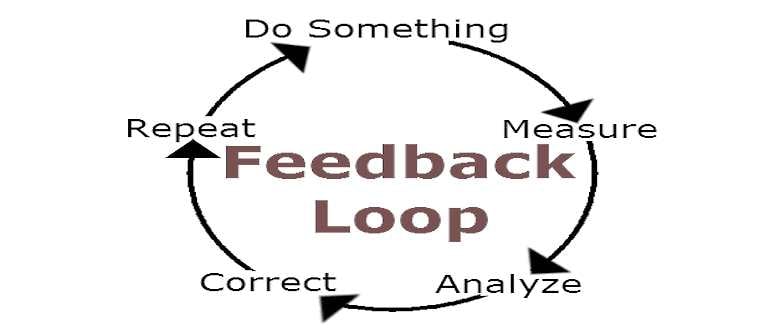
    Organizations that evolve to DevOps don’t necessarily need to hire rock star programmers to boost code and feature quality. That’s because, in the long-run, continuous delivery actually fosters an environment that makes it possible for the developers already in place to learn more efficiently and better improve the day-to-day quality of their work. The secret ingredient to this? Faster feedback loops.

    “Shorter time to feedback is the key difference between DevOps and the traditional waterfall approach,” says Aater Suleman, CEO of Flux7 Labs and a professor in computer systems design and architecture at the University of Texas. “The main challenge with waterfall was the fact that there was a very long loop for feedback, which removed the agility from the picture. It could be a month or longer before developers would actually get feedback about what they’d done.”

    The longer the cycle, the more code to sift through to find problems and the longer it takes to fix issues, says Curtis Poe, a consultant and Agile development coach for All Around The World. Shorter feedback cycles make it easier to find issues quickly and attend to them as soon as possible.

    “Having continuous delivery means that typically very little code needs to be reviewed for failure and as a developer, if I get a bug report  for code I wrote in the last hour, I’m going to be far more efficient in fixing in than for a bug report for code I wrote last month,” Poe says.

    This is true not just for out-and-out failure, but also tweaking for improved performance.

    “When frequent deployments are coupled with  well-instrumented monitoring metrics on all aspects of your application,  small nuances in performance can be detected and teased out for relatively  small amounts of code change,” says Jeff Behl, chief network architect at Logic Monitor. “Developers want quick feedback to know changing this particular small part of code can affect this aspect of the application. The sooner you learn how to optimize the application code, the better.”

    Even more important, fast feedback loops are not only critical for fixing past problems, but making sure they don’t happen again in the future. The shorter the time between when a developer writes code and receives information about how well it did out in the real world, the easier it is for them to learn from those lessons and apply them to future work.

    With longer release cycles, be they quarterly or monthly, there’s often a lot of energy expended trying to find the person who created an offending line of code that broke something, says BLANK. The top triage person will go through the ringer to figure out who broke the code, until they might pinpoint something like, this person made this code commit six months ago that broke the application.

    “Does anyone remember what they were doing six weeks ago? Of course not. But if you were writing code at ten o’ clock and I came by at one o’ clock and told you exactly what was broken and I sent you a zip file that had everything that you needed to do to reproduce that on your desktop do you think you’re going t o be a better programmer?,” Gary Gruver, vice president of quality engineering release and IT operations at Macy’s  said last fall at FlowCon, explaining that every developer wants to do a good job and is typically trying to do the best job that he or she can. “If you can’t provide them that rapid feedback , real-time in an efficiency manner, how do you expect people to get better?”

    In the scenario above, the process of developing the offending code is long gone in a developer’s memory, which means it takes more work for the coder to review their work, remember the project and then mentally link that process to the infrastructure dependencies that were affected by it.  With shorter cycles, devs spend less time remembering what they did and more cognitive work on understanding dependencies and the context in which the code operated. Long-term, that’s going to make for better code from the get-go later on.

    “Developers who can understand how their applications work under additional loads, abnormal conditions, and degraded circumstances, will end up designing better applications and systems, and in the end play a more strategic role at the company,” says Arnold Goldberg, vice president of customer engineering for PayPal.

    According to Goldberg, context in development is critical and the faster, richer feedback provided by DevOps allows developers to better understand how application improvements work in production context. And that is huge for informing best practices.

    “Much of it is specific to the fabric of the existing organic infrastructure that a company has, so it needs to be a pragmatic application of it in the context of the company’s current situation,” he says.

    Faster feedback loops aren’t just about making technical coding improvements, either. These more rapid assessment cycles can also greatly improve features and business value offered by developers. We’ll explain more in part two of this series.