Tag: flow

  • Break Open the Black Box of Software Development

    Break Open the Black Box of Software Development

    If you asked an airline executive what their biggest expense was just a few decades ago, they would’ve easily answered, “Jet fuel.” These days, you’d be hard-pressed to find an executive in any industry that wouldn’t answer with, “Software.” But here’s the difference: With jet fuel, that executive would have told you that they can fly x number of seat miles per gallon/liter of fuel (or pounds of fuel, if we’re being technical). With software development, the expense is becoming more material–and far more variable–but the return on that investment is rarely clear. Over the past decade or more, software development has readily assumed its position as the fastest-growing (and often largest) expense line item in virtually every industry. All companies are adding software experiences to or around their products, and they need the people and tools to build, support and continuously optimize those experiences. And that costs money–a lot of money.

    The problem is that the language, the metrics and the world in which software development exists do not translate into operational or financial terms that business leaders can readily understand.

    “We invested X million dollars into software development last year,” a CFO might say. “And what do we have to show for it?”

    Meanwhile, a technology leader might respond with, “We’re doing X deploys a day!” or, “We wrote X thousand lines of code!”

    They might as well be speaking different languages because, in practical terms, they are.

    And the problem is, that you can’t manage what you can’t measure. To continue our airline theme, software development continues to be a ‘black box’—this hidden-in-plain-sight source of information—that financial executives can’t seem to peek into.

    Why the Black Box?

    It’s not likely that technology leaders are being purposefully elusive toward business leaders–it’s more likely that they simply are not aligned on what, fundamentally, they need to do to speak the same language.

    The question at hand is, actually, “Are these investments we’re making turning into our desired business outcomes?” But the question technology leaders feel compelled to answer is, “What do your people do all day?”

    These are questions that Agile and DevOps don’t solve–translating Agile or DevOps metrics (also known as DORA metrics) into actual, actionable metrics for business leaders to understand. Although these metrics are tremendously useful for teams, using them to steer the business is a mistake.

    Misaligned in purpose and using different language, business leaders and technology leaders talk past each other as software development costs continue to rise.

    But the cost of software development is too high for business leaders to continue to tolerate this ‘black box’ of ever-rising costs. It’s the fiduciary responsibility of financial leaders to understand the value of software investments and figure out how they are affecting business outcomes–or their jobs could be on the line.

    In case this seems like a distant threat, it isn’t: I saw a headline recently about a prominent automobile executive who lost their job because they weren’t able to gain the necessary insight into, and business outcomes out of, their significant software development costs and that was affecting the competitiveness of their entire company.

    It’s happening. And it’s on both business and technology leaders to break that black box open and start speaking the same language.

    The next question, of course, is, “How?”

    How to Bridge the Communication Gap Between Technology and Business Leaders

    For far too long, business leaders have made do with the activity metrics provided by technology leaders–they’ve tolerated this lack of visibility and found other ‘strategic’ ways to justify the rising software development costs. Perhaps they’ve been questioning how A leads to B–how an increase in funding for software development might result in greater customer retention or app usage, for example–but they have not had a tangible way to prove to themselves, much less to investors, whether this is actually happening.

    In order to understand and quantify software development costs, we have to start demanding more from our technology leaders: Working with them to establish realistic objectives and key results (OKRs), and holding them accountable to business metrics that actually relate to outcomes. That means insisting on business results–and not accepting activity metrics in their stead.

    Stable-Fund Products, Not Projects

    Here’s a hard pill for finance to swallow: When it comes to delivering software-enabled customer experiences, it’s not about optimizing costs. It’s much more nuanced than X dollars in equals X dollars out. Funding by projects might help make the numbers neat, but it doesn’t reflect the reality of the business.

    Project-based funding also tends to keep project leaders in a cost-center mentality: It makes it seem as though all resources are fungible; as if the work and the people performing it are interchangeable.

    One of the goals of Agile is to maximize value for the customer. But when we fund by project, we often stop funding a piece of work–declaring it done–before it actually starts generating value. We have this false end date that doesn’t reflect the actual ending of the value that we funded to create.

    Instead, finance organizations should move to the stable funding of products: Funding an outcome and giving teams the ability to stop, change or extend their work to achieve the business outcomes of the product.

    This is a shift that one prominent UK bank has been going through in recent years–from traditional portfolio management to lean portfolio management, including the shift to stable-funding projects. You can learn more about how NatWest Group (formerly Royal Bank of Scotland) has made this shift in this webinar.

    Visualize the Flow of Value with Flow Metrics

    Finally, we have to stop treating the collection of technology metrics and business metrics as two separate, unrelated efforts. Agile and DevOps are great at accelerating the throughput of your software development … but vanity metrics around how quickly teams are delivering are not enough to justify the growing and material investment in software development.

    Finance leaders have the opportunity to be the Babelfish between technology leaders and business leaders. As mentioned above, one way to encourage clearer communication between teams is to use OKRs to naturally tie software development objectives to tangible business results. The more we practice drawing connections between technology and business metrics–the closer we get to finally breaking open that elusive black box.

    A key part of this is communicating operational metrics differently: Developing a core set of metrics for tracking the flow of business value in software delivery, and providing a mechanism that correlates the investment in flow for each product’s value stream with the business results for that value stream.

    Visualizing the flow of value in a software development process may not be as easy as watching value flow on a manufacturing floor–but that doesn’t mean it’s impossible. Thanks to the vast number of data and visualization tools at our disposal, it is possible to make software products and their value streams just as visible as production lines.

    The Flow Framework, created by Dr. Mik Kersten, addresses the pivotal challenge of breaking open the black box of software development and bridging the gap between business and technology to optimize the flow of business value to customers.

    Break Open the Black Box with Value Stream Management

    The black box of software development is, at its core, a communication issue. It’s on both business and technology leaders to bridge this communication gap. Business leaders need to demand more from technology leaders and insist on translating activity into business metrics. Technology leaders need to practice tying their efforts to tangible business outcomes to help justify their growing expenses.

    Of course, it’s helpful to have tools purpose-built to facilitate this visibility and communication.

  • Latest DORA Report From Google Surfaces Raft of DevOps Challenges

    Latest DORA Report From Google Surfaces Raft of DevOps Challenges

    The annual Accelerate State of DevOps 2022 report published today by the DevOps Research and Assessment (DORA) team at Google found the percentage of high performers is at a four-year low, with the percentage of low performers rising dramatically from 7% in 2021 to 19% in 2022.

    Based on a survey of 1,350 DevOps professionals, the report evaluated organizations based on the five DORA metrics: Deployment frequency, lead time for changes, time to restore service, change failure rate and operational performance. The DORA team also identified clusters of DevOps teams ranging from “starters” to “flowing” based on their overall maturity. Only 17% of respondents achieved a ‘flow’ state defined by high reliability, high stability and high throughput characteristics.

    The DORA survey sample shifted this year to include more respondents that are earlier in their careers than in previous reports. However, Claire Peters, DORA research lead at Google, said that while there are a lot of factors that impact those metrics, the current hypothesis is that the COVID-19 pandemic has taken a toll on DevOps productivity as more DevOps professionals continue to work remotely.

    The report noted a marked shift in deployment targets requiring new skills, with 54% of respondents now working with container artifacts.

    Overall, the report finds software delivery performance is beneficial to organizational performance when operational performance is also high. The challenge is the number of organizations that have achieved high operational performance is relatively small. In fact, the report also noted that site reliability engineering (SRE) practices had a negative impact on software delivery performance until an organization achieved a high level of SRE maturity.

    The report also concluded that organizations that built software on and for the cloud tended to have 1.4 times higher organizational performance than those that didn’t. The percentage of respondents using public clouds is 76%, up from 56% in 2021, while the number of respondents not using a cloud stands at 10.5%. Usage of multiple public clouds is at 26%, while 35% reported using a private cloud.

    Less clear is the impact on DevOps teams of shifting application security left. The report suggested the biggest challenge organizations face when it comes to achieving application security have more to do with cultural issues than any technical shortcomings. The report notes that organizations that focus on accelerating software delivery without implementing meaningful DevSecOps best practices find themselves in a vicious counterproductive cycle that results in applications being successfully deployed in production environments less often.

    Peters noted that there is greater developer fatigue because organizations attempt to address security issues either just before an application is deployed or they remediate applications after they are deployed. Organizations that have low levels of security practices are 1.4 times more likely to experience developer burnout.

    The DORA team used both the supply-chain levels for secure artifacts (SLSA) framework defined by Google and the Secure Software Development Framework (SSDF) defined by the National Institute of Standards (NIST) to evaluate organizations. The most widely-adopted practice is application security scanning within a continuous integration/continuous delivery (CI/CD) system, with 63% of respondents reporting these tools are “very” or “completely” established. Preserving code history and using build scripts are also highly established, the report finds.

    In general, Peters said the report suggested the biggest predictor of application security success was whether an organization had a high-trust, low-blame culture focused on performance. Organizations that have these cultures tend to have higher organizational performance. Similarly, organizations with teams that felt supported through funding and leadership sponsorships tended to have higher organizational performance, the report noted. In addition, team stability and positive perceptions about one’s team also tended to lead to higher levels of organizational performance. Lastly, companies that offer flexible work arrangements tended to see higher levels of organizational performance.

    Each organization, as always, will implement DevOps best practices in ways that best fit its internal culture. However, the latest DORA report makes it clear that the more empowered a DevOps team is the more proficient they tend to become.

  • Value Stream Management: Treat Your Pipeline as Your Most Important Product

    Value Stream Management: Treat Your Pipeline as Your Most Important Product

    When it comes to accelerating customer value, it’s dangerous to focus only on the development and delivery of a digital product. For many enterprises, most time is invested before a single line of code has been written. That explains the recent focus on value stream management (VSM)—it’s forcing us to think beyond Agile and DevOps and consider the whole system, not just one stage in a complex process.

    By extending our visibility further upstream where work originates, we can begin measuring the value of creating and protect workflows end-to-end to meet business outcomes sooner. Thinking about how software delivery work moves between all teams in the value stream from request to operation leads us to the significant realization that our tooling pipeline is our most important product and we should treat it as such.

    The Rise of Value Stream Management

    The growth of value stream management in software delivery has emerged because Agile and DevOps are not enough to remain competitive against the breakneck speeds of the tech oligopoly. The progressively maturing practice takes a systematic approach to continuously measuring and improving end-to-end flow to accelerate time-to-value. Consequently, new tooling is emerging as we think end-to-end in how we collaborate and work faster together—and measure our productivity and effectiveness.

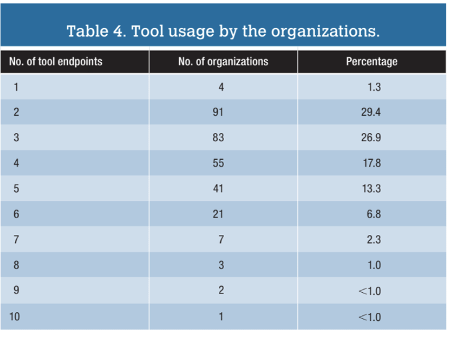
    Measuring and understanding end-to-end flow isn’t easy. Software delivery is highly technical and creative knowledge work that can span thousands (or tens of thousands) of IT practitioners. Information is scattered across heterogenous toolchains comprising discipline-specific tools. In fact, some 42% of large-scale software delivery organizations use four to 10 core collaboration tools for portfolio management, design, enterprise agile planning, testing and ITSM, and dozens of additional tools to support the CI/CD pipeline and operations. 

    Mik Kersten, “Mining the Ground Truth of Enterprise Toolchains, IEEE (Volume 35, Issue 3, May/June 2018, p12-17

    Measuring flow, therefore, involves tracing constituent units of value creation and protection as they traverse all team tooling in the form of artifacts such as activities, capabilities, epics, features, stories, bugs and incidents. Yet for too long we’ve been too focused on “the right side” of the value stream, thinking about how products are built and delivered through Agile and DevOps tools, without visibility on how they’re requested, analyzed, processed and designed. Our ability to support customers is hindered because we don’t know where and why work is slowing down outside of development. Our product pipeline is broken, our visibility fractured.

    A ‘Broken’ Product Pipeline

    Traditionally, CI/CD tools include source code management, build, deploy, quality management and service management. Moving more to the right, you have release management and service management. But too often organizations have ignored integrating tools further to the left such as planning and portfolio management, product management, requirements management and risk management (static and dynamic security scanning tools). This impacts our ability to see and measure end-to-end flow.

    In”Accelerate,” lead time is defined as the portion of the value stream from (last) code commit until deployment. While this is essential to improve, it only covers the time from the build being produced through deployment. We need to account for the time that elapses before it hits a developer’s backlog. To shift IT from a project to a product focus, you need to reduce end-to-end flow time by measuring earlier in the delivery life cycle by “shifting left.” As such, you need tooling across the whole value stream through the ideate, create, release and operate phases. A focus only on optimizing the CI/CD tooling and practices is too narrow a view that produces diminishing returns over time.

    The Great Disconnect Between IT and the Business

    Because of this lack of a holistic view, IT teams don’t feel like they are able to influence the business side of the house, where most of the work in progress (WIP) starts, such as requests for features or application changes. These intake processes many times result in teams taking on too much WIP and neglecting work. Many teams need to “stop starting” and to “start finishing” to deliver business value more quickly. Crucially, this is the area where business leaders have their own processes and where tools are less likely to be used; it’s a world dominated by spreadsheets, documents and PowerPoint presentations. This is where work is least visible and measurable. And this is precisely where we need VSM: to turn the light on starting with the customer needs so we can continuously improve end-to-end flow. This requires a culture shift from both IT and business/product owners. And that requires taking a broader, more holistic view of the tools and practices in the business space.

    Architecting for Flow

    An end-to-end integrated pipeline product can be architected for flow. For example, tools used for visual system management (e.g. Jira, Azure DevOps) are becoming more of a commodity with the real differentiation becoming how they can be integrated with tools used for portfolio, defect and service management, since those are the sources of work that will flow into product-based teams for development of business value and unplanned work. Teams should think about how they can work more closely with business portfolio teams on continuous flow (and funding) because eventually this work will become the next bottleneck that needs to be addressed on the journey to accelerate business delivery capability.

    Keep an Eye on Value Protection Work 

    With end-to-end visibility into work across the pipeline, you can abstract that connected technical data into overarching value stream metrics—known as flow metrics—to identify areas where to run experiments to improve end-to-end flow. Here we mustn’t just focus on work that creates value but protects it, too.

    We should provide our software delivery teams with the psychological safety to devote time to address debt and neglected work. Debt creates a drag on feature velocity because changes become more complex and take longer to make. In addition, with higher technical debt, more time is spent on addressing defects, which starves the capacity to perform feature work. As debt builds, the following is observed:

    • Flow velocity decreases.
    • Flow time increases.
    • Quality decreases as the code base becomes more fragile/costs increase.

    All of these result in reduced happiness for both the customer and the team, increasing the risk of team burnout. There are many cautionary tales of this occurring where market leaders ended up losing considerable market share due to inattention to technical debt. These stories exemplify why it is necessary to observe flow distribution to ensure that prioritization decisions made with the product owners, include providing necessary capacity to address technical debt.

    Applying the concepts of value stream architecture to your end-to-end pipeline is the key differentiator for organizations that are trying to make it through disruptive periods such as today, as COVID-19 widens the gap between those who have mastered software at scale and are thriving and the many enterprises struggling to pivot and adapt in the digital-first climate.

  • Does Agile Methodologies Work for IT Infra?

    Does Agile Methodologies Work for IT Infra?

    Recently, I had a fascinating conversation with my old friend Joe–the name has been changed but the conversation is real and unedited–an IT Infrastructure program manager from a large IT service provider.

    After a bit of chit-chat on weather and football, we started talking about infrastructure in a typical large enterprise.

    Joe: I am not sure how agile applies to infra space, I can understand it works well for software development, but not in IT Infra space.

    Me: OK, why do you think so?

    Joe: Well, we have lots of coupling between components, infra projects tend to be big migration or upgrade moves and highly risky. I know many large enterprises in Europe that we work for and many of them haven’t looked at agile in the infra space.

    Forty minutes and couple of beers later…

    Joe: I have to send four reports every Friday afternoon on status, risks, issues.

    Me: Why do you need so many reports?

    Joe: I can’t share all the same info to the client that I share internally. There are some risks that we manage internally. My client wants the info on Jira and confluence. My regional manager wants it on an internal tool (some five-word acronym that I forget!). My account manager wants it as a PPT, as this is an important account and he says this needs to be tracked closely. My global manager wants it on a different tool, inherited from a previous merger as my employer was recently acquired by another service provider.

    Basically, most of my Friday is spent copy pasting information across these reports. Then I spend most of Mondays reconciling the numbers and responding to follow-on queries, and Tuesdays justifying the cost of resources, change in resource costs because many projects are usually in Amber or Red. I think it usually works well if I have a good PMO.

    Me: How many people do you have on the current programme?

    Joe: We have four PMs and seven infra resources on this infra upgrade and migration programme. There is a different provider who looks at the application changes and they have a team of managers and developers etc. The seven infra resources I referred to are also busy with BAU work.

    Me: So, you have seven part time infra people who are the actual doers, one programme manager, four PMs and PMO, client side vendor manager(s) and you are running half a dozen projects.

    Joe: Yes, as you can see, we can’t be agile in infra.

    Me: Why do you need projects? And, why do you need so many of them?

    Joe: What? No projects? Surely, that’s how it is always done! How do we ensure control, governance?

    — Aditya Vadaganadam

  • DevOps Best Practices: Break Down Silos, Avoid Drift and Optimize for Flow

    DevOps Best Practices: Break Down Silos, Avoid Drift and Optimize for Flow

    In organizations trying to achieve agility with stability and quality, silos (of teams, tools, and processes) create major stumbling blocks to managing configuration drift between pre-production and production systems. Breaking down those silos, improving visibility into configuration drift and facilitating collaboration for improved flow are the keys to overcoming this challenge.

    The challenge of staying in sync when both sides are moving

    Production environments aren’t static. Whether you are applying patches for improved security, optimizing settings for availability and performance, or making changes for a technology refresh, production systems are continuously evolving.  As new releases are being developed, tested, and staged, pre-production environments are continuously evolving too. Ideally you want to develop with production in mind, but that gets harder and harder when both sides are changing and different teams are responsible for different environments and live in their “own worlds.” (e.g. the common split between QA teams, release teams and production operations).

    Even within pre-production, staying in sync is a significant challenge. For example, because applications ride on middleware and middleware settings are unique to each application, keeping systems in sync from QA to staging can be a real challenge.

    QA and staging environments are regularly reconfigured to support multiple releases that are in process at the same time.  The costly way, often employed to minimize changes, is to “protect” QA environments for a certain application or release leading to low utilization and bottlenecks.  The rapid proliferation of mobile applications to front end legacy systems magnifies the challenge by adding another dependency layer.

    Disconnected teams, information, and perspectives (those pesky silos)

    Why are these challenges so hard to overcome if we know the issues?  Many IT teams operate in their “own worlds” with tailor-made but disconnected tools and information resources.  Silos have evolved because they permit the specialization required to deal with the immense, growing complexity IT deals with everyday, but they have now become the biggest impediment to agility and quality.

    For example, the operations team has access to systems management alerts that most others don’t, engineers have access to build systems and scripts that others don’t, developers have access to functional requirements and stories that others don’t, and change approvals are stored in a system of record that only certain people (often managers) have access to – just to name a few silos.

    Coordinating work and sharing information across these silos of teams often equates to lots of meetings, conference calls, and email threads.  This is not the most efficient way to get work done and it’s not particularly effective in sharing information to keep environments in sync.

    “Didn’t you see my email from yesterday with the attachment listing all the middleware settings required for today’s test?”  “Weren’t you in the meeting three weeks ago when I said a Unix server was probably going to be needed in addition to a Windows machine?”  “I told so and so in an instant message on Friday to run this script before he went out on PTO, but he must have forgotten. Who else has root permission to run it while he’s out?”

    Sadly, these kinds of statements are the norm, not the exception, in most IT shops.

    The reality is there is inefficient coordination to manage all the steps and handoffs between application owners, development, QA, release and production functions.  Instead, I recommend thinking about the software development and deployment lifecycle as an “uber change” and “uber collaboration” process that must be viewed and managed from end to end; from business requirements, to development, to QA to staging to production.  All of the different silos of teams must have a way to work together in a unified way with access to critical information from upstream and downstream teams to ensure a smooth lifecycle end to end.

    Automation ≠ DevOps

    The heart of DevOps is collaboration and managing change, yet the conversation often seems to start with automation.  The fallacy here is the belief that we can eliminate the need to collaborate and manage change by removing people from the process and relying on the machine.  This out of balance perspective between the machine and people creates more problems than it solves.

    Automation tools, while important and necessary, are not all that’s needed to truly solve these synchronization and deployment issues. In addition, to have environments only changed by automation tools and never by people during the firefighting of incidents is unrealistic.  You need your people armed with intelligence and tribal knowledge to drive your automations, but all too often we rely on individuals with disconnected perspectives and limited awareness so things get missed or overlooked.

    Automation does what it’s supposed to do, but it makes a critical assumption; what’s being changed is configured how it’s supposed to be configured.  If drift has occurred because critical settings were modified to remediate an incident or compliance issue, without the automation engineer aware of the change, the automated deployment will result in you hearing a loud “boom!”

    As one popular DevOps Twitter handle has said, “To make a configuration error is human – to do it across a thousand servers is DevOps.”  While that may seem like an extreme statement designed for comedic effect, it isn’t extreme to say that thousands of deployments go south every day because systems aren’t configured the way we expect them to be given that the complex software stacks that multi-tiered applications now depend on are touched in so many ways.  Automation alone doesn’t solve the DevOps challenge.

    Negative consequences to business

    Of course, the issues I’m raising here aren’t just IT issues; they are real business issues.  Time to market is typically the number one impacted area. For example, if a two-week development sprint is used to get a business critical need addressed, but then it takes weeks and weeks to get the sprint through the quality cycle and into production due to resource constraints and configuration issues, what have we achieved?  

     Stability and quality are the next big area of impact.  When change is rapidly introduced through new releases and unexpected drift occurs in environments, performance and availability impacts occur.  It is one thing for IT to be perceived as slow and unresponsive to the business, but it is quite another when they are perceived as slow and quality is poor resulting in business impact.

    Just when IT thinks it can’t get any worse, the business asks a presumably simple question, “What happened?”  IT’s typical response, “Let me get back to you on that.”  And then begins a scramble of hours, days or weeks as IT’s best people desperately try to figure out what went wrong.  This is obviously not the best confidence builder for the business.

    Compliance is typically the other casualty as there is often very little awareness of operational policies on the development side of the house so deployment packages and instructions aren’t sensitive to compliance issues.  Building and testing an application without full awareness of policy governance across the whole, multi-tier stack is bound to introduce delays and errors when attempting to deploy in production.

    Visibility, configuration transparency and collaboration; a better way!

    1. Understand drift for the entire application service. Rather than everyone having their own disjointed perspectives on databases, app middleware, network or firewall, and server configurations, provide team members with an understanding from the business service (or application) perspective with direct visibility into the differences between how things should be configured and how they are actually configured for the entire multi-tier application stack.  This enables you to create smarter automations and initiate change processes to bring configurations back in line when necessary rather than waiting for a failed deployment to occur, identifying the root cause, and correcting it while the business waits.
    2. Optimize for flow not individual processes.  As stated in the previous example, making one process faster (e.g. development) without considering its impact on QA, staging and production will generate new constraints downstream.  Instead, view DevOps as one continuous process from goals and requirements all the way through to deployment into production and define success for the team in those terms. When you optimize for flow instead of silos, you will be amazed at how teams share more and collaborate better.

    The benefits of breaking down silos through better visibility, understanding drift and collaboration are significant:

    • faster time to market;
    • quicker ability to react to competitive pressures;
    • deployment with fewer errors;
    • better compliance with policies; and
    • greater productivity for everyone.

     To sum it up, if you break down silos, identify and resolve drift, and manage for flow (while avoiding islands of automation, information, and people) you can unlock agility, maintain stability and ensure the quality your business demands.