Tag: Fiberplane

  • Fiberplane Adds Open Source Libraries to Automatically Collect Metrics

    Fiberplane Adds Open Source Libraries to Automatically Collect Metrics

    Fiberplane today added an ability to automatically collect metrics in real-time and make them accessible either via its namesake notebook software for debugging infrastructure or an open source Grafana dashboard.

    Fiberplane CEO Micha Hernandez van Leuffen said Autometrics is an open source set of libraries the company created to make it simpler for developers to see platform performance metrics using a set of tools embedded within their integrated development environment (IDE).

    The goal is to reduce the cognitive load on developers; today, developers need to first determine what metrics to track, find a way to collect the appropriate data and then launch queries against those metrics to determine the root cause of an issue, said Hernandez van Leuffen.

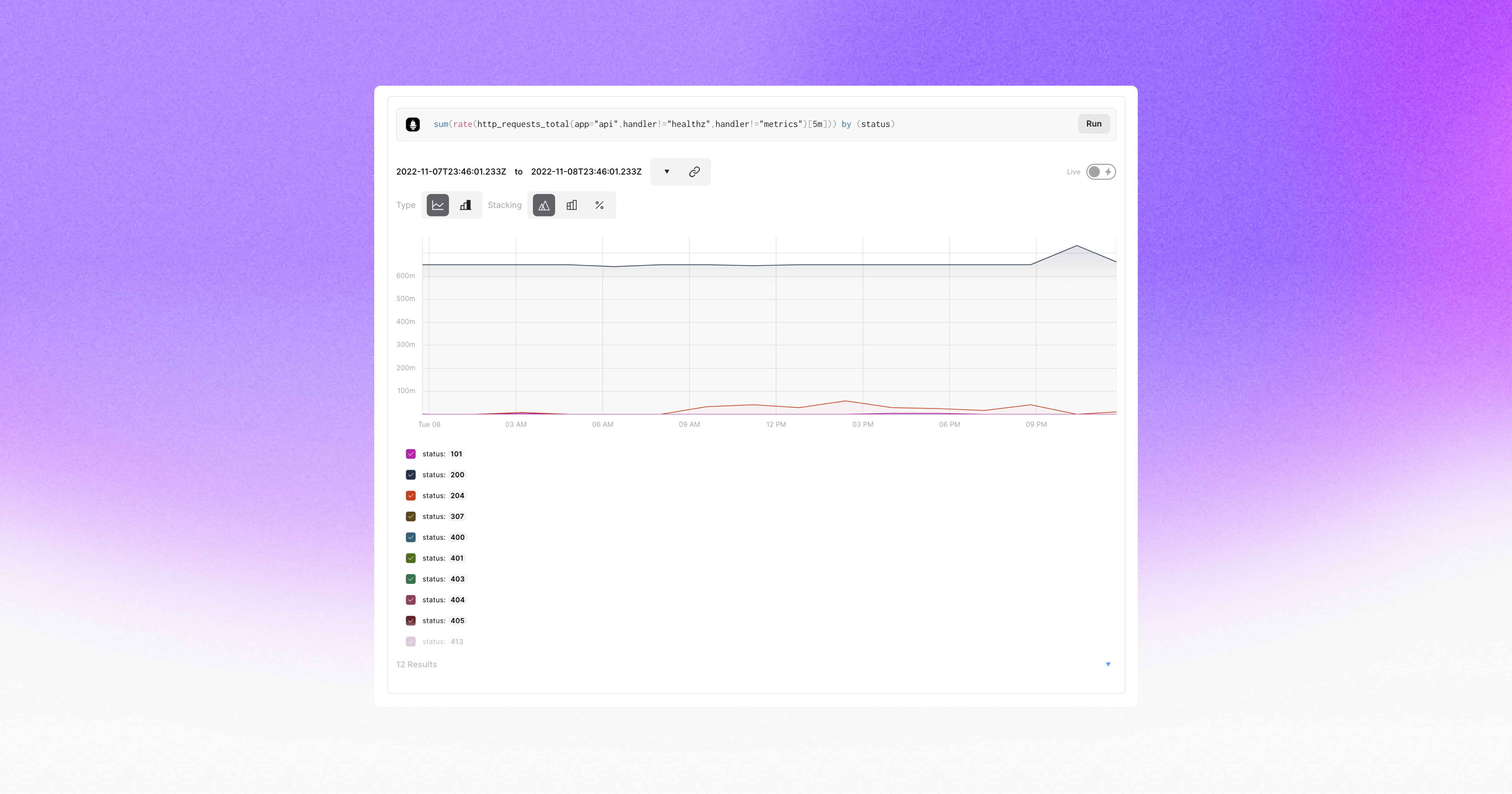
    Autometrics, in contrast, provides access to a set of common queries using the Prometheus programming language (PromQL) against data that has been collected using open source OpenTelemetry agent software, he noted.

    That approach, for example, makes it simpler to track error rates, response time and latency of any function. Links to live charts based on real-time data can also be inserted into the comments section of any document a development team creates.

    The Fiberplane notebook uses the same operational transformation algorithm embedded within Google Docs to enable teams to easily collaborate around a document or spreadsheet. The core platform itself is built in Rust and WebAssembly (Wasm) to make it simpler to integrate Fiberplane as a plug-in into an existing DevOps workflow.

    Autometrics extends that capability in a way that enables DevOps teams to provide developers with instant access to observability data. They can then see how their code is performing on any given platform, which is critical as more responsibility for running applications continues to shift left, said Hernandez van Leuffen. Today, many developers need to wait for an IT operations team to share data collected via an observability platform that was designed to be used by ITOps rather than a developer, he added.

    As observability capabilities become more federated across the entire software development life cycle, it’s critical to make sure developers and IT operations teams can see metrics being generated in real-time. Otherwise, confusion arises because teams are not looking at the same set of metrics.

    Fiberplane address that issue by taking the concept of notebooks—often used by data science teams to collaborate—and applying it to DevOps workflows to reduce the amount of time it takes to resolve any issue. As IT environments become more distributed in the age of the cloud and microservices, troubleshooting issues invariably spans the responsibilities of multiple members of an IT team. In effect, a notebook makes it possible to spin up a virtual war room on demand that enables the members of an IT organization to collaborate—regardless of where they are physically located or which organization they may be employed by.

  • Fiberplane Adds Wasm Plug-in Framework for DevOps Notebook

    Fiberplane Adds Wasm Plug-in Framework for DevOps Notebook

    Fiberplane today announced it is extending the reach of a real-time collaboration notebook designed for DevOps teams by making available tools for building plug-ins based on the WebAssembly (Wasm) framework.

    Micha Hernandez van Leuffen, Fiberplane CEO, said these plug-ins, dubbed providers, will make it much simpler for anyone to connect the Fiberplane notebook to other DevOps tools and platforms.

    The Fiberplane notebook uses the same operational transformation algorithm used in Google Docs to enable teams to easily collaborate around a document or spreadsheet. The core platform itself is built in Rust and WebAssembly. That approach enables a DevOps team to, for example, write and run PromQL queries and display Prometheus charts alongside other data presented via an integrated graph. Wasm makes it possible to run those providers both in the browser and on a backend platform.

    Fiberplane also announced it is open sourcing its Provider Development Kit (PDK), written in Rust, to enable organizations or third-party developers to create additional plug-ins. A Fiberplane Daemon then executes the plug-ins. The overall goal is to provide an open format based on Wasm for consuming DevOps data, noted Hernandez van Leuffen.

    The full open source Fiberplane WebAssembly-based Plugin System includes a Fp-bindgen to provide the bindings generator for building plug-ins, the Provider Development Kit (PDK), a toolchain for building plug-ins, a set of pre-configured plug-ins for Prometheus, ElasticSearch, Sentry, Grafana Loki, Cloudwatch and a generic HTTP provider, the Fiberplane command line interface and the Fiberplane Daemon.

    Fiberplane is essentially taking the concept of notebooks used for collaboration by data science teams and applying it to DevOps workflows. The goal is to improve DevOps teams’ productivity by reducing the amount of time it takes to sort through multiple types and classes of DevOps data to resolve an issue.

    As IT environments become more distributed in the age of the cloud and microservices, troubleshooting issues now invariably spans the responsibilities of multiple members of an IT team. Fiberplane, in effect, makes it possible to spin up a virtual war room that enables the members of an IT organization to collaborate until the issue of the moment is resolved.

    The speed at which any IT issue is resolved has become a crucial metric. Given the complexity of IT environments, it’s inevitable that incidents will arise. Ideally, IT teams would discover those issues before they disrupt the business. However, in reality, the metrics organizations use to evaluate the effectiveness of a DevOps team are often how quickly IT issues are resolved once they are discovered. The longer it takes for a distributed DevOps team to marshal its resources, the more likely it becomes that team will be perceived as being inefficient—regardless of what level of application availability is actually achieved.

    Most DevOps teams have, of course, implemented a wide range of incident management best practices that create a level of muscle memory for responding to a wide range of issues. The trouble is there will always be unforeseen issues that arise. DevOps teams, as a result, need to find ways to quickly focus on an unpredictable issue that they didn’t anticipate.

  • Fiberplane Notebook Tool Fosters DevOps Collaboration

    Fiberplane Notebook Tool Fosters DevOps Collaboration

    Fiberplane today announced it is making available a public beta of a namesake real-time collaboration notebook specifically designed for DevOps teams that need to quickly debug IT infrastructure.

    Fiberplane CEO Micha Hernandez van Leuffen said in the wake of the COVID-19 pandemic, it’s clear that the structure of DevOps teams has permanently changed now that more members of those teams work remotely. The challenge is that the tools provided to DevOps teams to manage IT environments were not designed to foster the level of collaboration that is now required, he added.

    Dashboards that were designed in a different era need to be replaced with tools that make it simpler for DevOps teams to collaboratively debug infrastructure in real-time, noted Hernandez van Leuffen.

    The Fiberplane notebook achieves that goal by using the same operational transformation algorithm used in Google Docs to enable teams to easily collaborate around a document or spreadsheet. The core platform itself is built in Rust and WebAssembly (Wasm), which Hernandez van Leuffen said makes it simpler to integrate Fiberplane as a plug-in into an existing DevOps workflow. Inside a Fiberplane Notebook, DevOps teams can, for example, write and run PromQL queries and display Prometheus charts alongside other data presented via an integrated graph.

    Fiberplane Notebook’s initial integrations are for Grafana Loki, Elasticsearch and Prometheus monitoring tools. It also exposes both an application programming interface (API) and command line interface (CLI) to automate notebook creation based on specific external events, such as monitoring alerts.

    In effect, Fiberplane is taking the concept of notebooks used for collaboration by data science teams and applying it to DevOps workflows, said Hernandez van Leuffen. The goal is to improve DevOps teams’ productivity by reducing the amount of time it takes to resolve any issue, he added.

    As IT environments become more distributed in the age of the cloud and microservices, troubleshooting issues invariably spans the responsibilities of multiple members of an IT team. Fiberplane, in effect, makes it possible to spin up a virtual war room that enables the members of an IT organization to collaborate until the issue of the moment is resolved.

    The speed at which any IT issue is resolved has become a crucial metric. Given the complexity of IT environments, it’s inevitable that incidents will arise. Ideally, IT teams would discover those issues before they disrupt the business. However, in reality, the metrics organizations use to evaluate the effectiveness of a DevOps team are, unfairly or not, how quickly IT issues are resolved once they are discovered. The longer it takes for a distributed DevOps team to marshal its resources the more likely it becomes that team will be perceived as being inefficient—regardless of what level of application availability is actually achieved.

    Savvy DevOps teams, of course, have implemented a wide range of incident management best practices that create a level of muscle memory for responding to a wide range of issues. The trouble is there will always be unforeseen issues that arise. DevOps teams, as a result, need to find ways to quickly focus on an issue that, for one reason or another, were simply too unpredictable to anticipate; they need to expect the unexpected.