Tag: enterprise

  • F5 Looks to Streamline Application Networking

    F5 Looks to Streamline Application Networking

    At its AppWorld 2024 conference this week, F5 announced a software-as-a-service (SaaS) edition of its NGINX application networking portfolio, which are now all available under a single enterprise license.

    Shawn Wormke, general manager for NGINX, said NGINX One will eliminate much of the friction enterprise IT teams currently encounter when implementing NGINX Plus, NGINX Open Source, NGINX Unit, NGINX Gateway Fabric and the Kubernetes Ingress Controller the company provides.

    As part of that effort, F5 is also now making available a unified console across its application networking portfolio that promises to streamline the management of the F5 application networking portfolio.

    Currently available under an early access program, NGINX One creates an as-a-service platform through which enterprise IT organizations can invoke and pay for these capabilities on an as-needed basis, said Wormke. The overall goal is to reduce the total cost of application networking by eliminating the need for IT teams to integrate the various elements of NGINX One on their own, he added.

    In general, application networking has become more complex with the rise of cloud-native applications based on microservices. By reducing the cognitive load required to network those applications, it becomes simpler to make network operations a more natural extension of DevOps workflows, noted Wormke.

    Most organizations have some level of experience with application networking using proxy servers, but as application environments have become more complex, the need for gateways and ingress controllers to provide these capabilities at scale has become more apparent. As a result, more IT organizations are starting to revisit how they are structured. There may always be a need for dedicated networking specialists to manage the physical network underlay, but as other networking services become more integrated with DevOps workflows, responsibility for some networking services is starting to shift further left toward DevOps teams that will either deploy these capabilities themselves or take advantage of a SaaS platform such as NGINX One. The overall goal is to be able to dynamically provision application networking services without having to wait for a network administrator to provision them.

    There are, of course, a lot of approaches to application networking that are now emerging. Regardless of how application networking evolves, however, the rigidity that has characterized the delivery of network services for decades should finally start to fade away. Today, outside of a cloud computing environment, it’s still common for IT teams to provision virtual machines or Kubernetes pods in hours only to wait days or even weeks for network connectivity to be provisioned. As IT environments become more hybrid and more workloads are pushed to the edge, there is a clear need for a more agile approach.

    Each organization will need to decide how best to approach application networking across legacy monolithic applications, microservices and event-driven applications at a time when IT environments have become much more complex to manage. The challenge, as always, is reducing as much friction as possible without unduly raising the total cost of IT to a point where it becomes unsustainable.

  • Innersourcing Open Source Principles in the Enterprise

    Innersourcing Open Source Principles in the Enterprise

    Software development has experienced a seismic shift in recent years, with open source becoming the heartbeat of innovation. A full 90% of enterprise IT leaders say their organization is using open source, according to a Red Hat report. Leading this transformation is GitHub, the ubiquitous platform that not only jumpstarted the open source movement but has also been quietly transforming how enterprises approach development at large.

    But it’s not just tech companies trumpeting the open source creed—academics are on board, too. A paper recently published by the University of Georgia found a hard-to-dismiss correlation between open source innovation and overall business success. “We find a significantly positive association between GitHub activity and future realized net income, suggesting that open innovation is a strong predictor of future earnings,” according to the report.

    I recently met with Chris Reddington, senior manager of developer advocacy at GitHub, to dive into how and why open source is becoming essential for enterprise innovation. According to Reddington, the once-dominant proprietary information mindset is shifting, with open source cultural principles now permeating most companies, a practice also known as innersource. Put simply, open source is now cool in the enterprise.

    Bridging the Open Source-Enterprise Divide

    GitHub’s close ties to the open source space have allowed them to illuminate the parallels between the open source and enterprise worlds. Reddington noted that, nowadays, open source and enterprise aren’t really separate communities but rather intertwined facets of the same software ecosystem. This movement is represented by the open source program office (OSPO) becoming more commonplace in large organizations.

    For an example of innersource in practice, take Porsche, who recently announced the Porsche FOSS Movement to guide internal common values and development principles around open source. We’ve also seen similar large-scale commitments to open source values at Walmart, Spotify, Facebook and others.

    Open source clearly isn’t just for startups—large companies are increasingly seeing an advantage in both using open source software and sharing their own open source components. The growing investment and maturation of OSS initiatives are positive strides, as it’s important to the stability of the free open source software (FOSS) ecosystem as a whole that those using software contribute back to its maintenance, especially to core packages the world depends upon.

    The Power of Innersource

    The study from the University of Georgia brings to light how enterprises increasingly recognize the need to work in sync with their developers and customers to remain competitive. This is a testament to the evolving nature of development—an industry that’s embracing a “team sport” mentality instead of a siloed approach, explained Reddington. And as enterprises align with open source principles, they are discovering the power of innersource, he said. “Innersource is a development methodology where engineers build proprietary software using best practices from large-scale open source projects, like Kubernetes or Microsoft’s Visual Studio Code,” GitHub explained.

    Reddington elaborated on two key elements of this approach:

    • Breaking down silos: The traditional organization-centric structure of projects is being replaced by a more transparent and collaborative approach. Innersource encourages transparency and asynchronous communication, tearing down barriers that previously inhibited efficient collaboration.
    • Engaging responsibly: Reddington emphasized the significance of enterprises giving back to the open source community. Whether through sponsorships, allocating time for engineers to contribute, or open sourcing their projects, companies can foster symbiotic relationships where they benefit from and contribute to the open source realm.

    Essentially, by adopting innersource principles, enterprises foster an environment that promotes collaboration and knowledge sharing, thus enabling innovation to flourish across teams and projects.

    Balancing Open Innovation and Proprietary Software

    One of the most intriguing aspects of this transformation is finding the equilibrium between open innovation and proprietary software. Reddington acknowledged the necessity for businesses to generate profits, which inherently stems from delivering value.

    While reinventing the wheel may be tempting, Reddington highlighted the importance of recognizing existing solutions and incorporating them into ongoing projects. This pragmatic approach maximizes efficiency and enables teams to focus on the unique, value-generating aspects of their work.

    Organizations should also consider what software of their own could be open sourced. From a business perspective, this most likely won’t be the “crown jewels,” said Reddington, but ancillary components that others could benefit from. For example, had it not been for Google open sourcing Kubernetes, Lyft open sourcing Envoy Proxy or Facebook sharing GraphQL, we would not have these standard components for all to use.

    Open Source Movements: Past, Present, and Future

    Over the last decade, we’ve seen significant, more institutional maturation around open source projects. Reddington pointed to the Cloud Native Computing Foundation (CNCF) as a standout. He specifically noted Kubernetes-based Event Driven Autoscaler (KEDA) as a cool project to help scale Kubernetes containers based on the number of events needing to be processed.

    He also underscored the surge of interest in generative AI, evidenced by projects like GitHub Copilot. It will be curious to see how AI assistants incorporate open source at their core, such as open foundational models and community-supported datasets.

    Potential Setbacks To The Open Source and Innersource Movement

    In the dynamic realm of enterprise-scale software development, nurturing innovation can be a complex endeavor. Innersource principles are one way to change the attitude toward development, making it more efficient, collaborative and aligned to the current and future developer experience expectations.

    Yet, this isn’t to say we haven’t had some setbacks recently that could threaten the progress the OSS community has built. For example, HashiCorp recently abandoned its open source license around Terraform in favor of a business source license (BSL). There is also an increasing number of supply chain-related attacks that threaten common open source libraries.

    Gazing Into the Future

    As Reddington aptly summarized, we’re still in the early days of this transformative journey. The developer community’s inclination for experimentation will undoubtedly drive the solutions to the most pressing challenges in open source. And with enterprise adoption on the rise, the future promises more cohesive collaboration, broader adoption of innersource principles and continued innovation driven by open source values.

    Interestingly, we’re seeing more synergy between open source and enterprise domains, which used to feel like separate realms entirely. And it will be interesting to see how businesses continue to balance transparency and proprietary value into the future. No matter what, the lines between them are blurring, enabling companies to harness the power of innersource for enhanced collaboration and innovation.

  • VS Code for Mainframe: The Enterprise Developer Tipping Point

    VS Code for Mainframe: The Enterprise Developer Tipping Point

    Optics matter. At a recent industry conference, a university lecturer reconfirmed what many in attendance already knew, “3270 [green screens] scare off the young generation of developers.” No matter how state-of-the-art the platform or mission-critical the applications, perceptions are formed largely based on optics, and green screens are not a good look.

    Beyond optics, though, a new option offers the promise of a more normalized developer experience (DevX) and DevOps productivity across platforms, along with the staffing flexibility it brings. In short, Visual Studio Code (VS Code) is a big step toward breaking down the mainframe silo.

    VS Code’s extensible, ‘any language, any platform’ design makes it the perfect tool for mainframe developers and with the free and open Code4z extension pack, VS Code is mainframe-ready. Developers are now using VS Code for mainframe AppDev just like their peers, taking advantage of the extraordinary ecosystem and the other many benefits that have made it a runaway success.

    Per my previous article, Git for Mainframe: Back to the Future, combining VS Code with Git (i.e., editor and source interfaces) makes the experience complete.

    So how does Code4z make VS Code mainframe-ready?  Let’s explore the answers from a functional perspective.

    Editing & Debugging

    Mainframe is closely associated with core languages like COBOL, Assembler and JCL, which are often ignored in the world of modern tooling. With VS Code’s extensible framework, however, incorporating these languages is simple and seamless.

    The Language Server Protocol (LSP), which was developed for VS Code, is now an open standard also used by the next generation of browser-based editors, providing a degree of future-proofing. LSP extensions provide a rich editing experience with a wide range of popular features including IntelliSense, which offers capabilities like syntax checking, verb formatting suggestions and variable name completion.

    Code4z offers LSP extensions for COBOL and High Level Assembler (HLASM) while additional extensions are available for languages like JCL, REXX, Db2, and Easytrieve. The extensibility of this technology has already been used to extend syntax awareness to specific language dialects.

    Similar to LSP, the Debug Adapter Protocol (DAP) provides a native interface and layer of abstraction for debug services. Code4z’s debugger extension facilitates the debugging of CICS and batch COBOL programs, an integral part of the end-to-end experience.

    Access & Security

    Mainframe applications, the lifeblood of many businesses, require rock-solid security throughout the entire SDLC. Code4z leverages Zowe, the award-winning open source framework that extends mainframe security and access controls to tools like VS Code. The Zowe Explorer extension, built on the Zowe CLI, provides access to data sets, jobs and USS files and developers also use it to issue TSO and MVS commands and to submit JCL. Zowe Explorer is packaged with Code4z as is a data editor for mainframe data sets including VSAM. This extension is built on Zowe Explorer, again leveraging the extraordinary extensibility.  A Zowe Explorer for CICS is also available.

    Similarly, developers can access a rich and growing set of conformant Zowe CLI extensions via the terminal and scripting.

    Access to SCMs tools is also supported. In addition to VS Code’s native Git integration, there are extensions for Endevor, ChangeMan ZMF, and related tools.

    DevOps Automation

    Since my introductory article a few years ago, Z is for Zowe – the Open Path to Mainframe DevOps, Zowe has enjoyed wide adoption with 69% of surveyed sites either currently using or planning to use it within the year.

    With mainframe teams now using Zowe to adopt modern shift-left practices, scripts for scanning, building, deploying and testing can be run manually by developers from VS Code, in addition to automatic triggers from code commits. This flexibility further empowers developers to own their code throughout the SDLC and beyond.

    With VS Code, mainframe developers can be equipped with more self-service capabilities like Db2 schema provisioning to accelerate the testing process. With capabilities like these, developers can remain in the VS Code experience focused on editing rather than being distracted by low-value infrastructure activities, like requesting and waiting for DBA action.

    Playing the Long Game

    While VS Code is the dominant tool today—almost 3 times as popular as its closest competitor according to Stack Overflow with the lead growing—what is the long-term opportunity?

    Demand for a modern, enterprise-aligned experience spans many domains, from increasing productivity to backfilling retiring staff. Elevating team morale and future-proofing vital mainframe assets ensure this adoption trend will only increase.

    But tools change. Browser-based editors and in-the-cloud collaboration are gaining greater acceptance and the AI-assist excitement is palpable. Bringing mainframe developers onto an enterprise platform ensures mainframe teams will be able to benefit from the same advances as distributed peers. Enabling VS Code and its cloud equivalents demonstrates a commitment to the long-term success of these applications and by reducing the idea-to-production cycle, product owners become champions.

    While not all mainframe developers will embrace VS Code, especially those close to retirement, the vast majority will, as we have experienced within our Broadcom engineering organization. The bottom line is that VS Code makes them even more productive, as illustrated in Confessions of a Career ISPF Programmer.

    Many of today’s developers are proficient with multiple languages (i.e., polyglot) so picking up an additional language like COBOL becomes less daunting if everything else—editor, repo, DevOps processes, etc.—is familiar.

    Getting Started

    For a closer look at the many free and open Code4z extensions, check out the Developer Cockpit, which simulates a COBOL/Db2/CICS developer configuration. And read From VS Code to Mainframe Developer Cockpit for more detailed use cases.

    Most importantly, try it! Code4z is available on the VS Code Marketplace.

    And stay tuned for additional Code4z extensions in the pipeline. There’s never been a more exciting time to be a mainframe developer!

  • Styra Makes Source Code Available for Enterprise Edition of OPA

    Styra Makes Source Code Available for Enterprise Edition of OPA

    Styra is now making the enterprise edition of the Open Policy Agent (OPA) available under a source license that enables IT teams to modify or change the underlying code as they see fit when integrating it with other applications.

    Enterprise OPA is a drop-in replacement for OPA, agent software for implementing policy-as-code that is already available under an open source license. Styra’s enterprise edition provides access to a version that provides better performance, native integrations for a suite of data sources and additional capabilities such as policy decision analysis.

    Previously, Enterprise OPA was only available in either a binary or container format. While these formats enable Enterprise OPA to be widely used, they limited it from being built directly into applications for performance optimization because no access was provided to source code.

    Chris Hendrix, director of product management for Styra, said the source license also provides organizations with an assurance that they will be able to continue to modify Enterprise OPA in much the same way as they modify the open source edition.

    It’s not clear how many DevOps teams are managing policy-as-code within their pipelines, but as application security regulations become more stringent, it’s only a matter of time before most of them do so in one way or another. Styra’s approach relies on a Rego programming language that some DevOps teams have found challenging, however. To make it simpler, the company is working on a low-code approach that would help make Enterprise OPA more accessible, said Hendrix.

    In addition to encouraging more DevOps teams to use Enterprise OPA under a source license, Syra is clearly moving to make it more attractive to replace existing instances of OPA with a more robust implementation licensed from the company. No one knows how many instances of the open source edition of OPA advanced under the auspices of the Cloud Native Computing Foundation (CNCF) are running in production environments. But as those applications become more complex, the need for deeper levels of integration enabled by a faster version of OPA becomes more apparent.

    OPA enables developers to programmatically embed compliance controls without waiting for a compliance team to make them available. That ultimately makes it simpler to ensure that the proper controls have been implemented before an application is deployed in an on-premises IT environment. That capability also makes it easier to document which controls have been applied to make any audit less time-consuming.

    Shifting responsibility for compliance controls to the left also enables DevOps teams to better understand which controls address specific regulatory mandates incorporated into most applications versus which controls might be specific to a specific regulation. Armed with those insights, it then becomes simpler to incorporate policy-as-code within a DevSecOps workflow.

    Hopefully, more applications running in production environments will soon be secure by default. Naturally, one of the first places to start is by making sure the compliance controls needed to achieve a baseline level of security have been pervasively implemented.

  • Don’t Make Big Tech’s Mistakes: Build Leaner IT Teams Instead

    Don’t Make Big Tech’s Mistakes: Build Leaner IT Teams Instead

    One of the biggest narratives in the U.S. concerning the current wave of tech layoffs is the fact that ‘traditional’ sectors have a prime opportunity to snap up new tech teams and IT talent. This has always been a significant challenge for sectors such as banks, insurance and manufacturing that compete with big tech for talent. In 2022, a majority of CEOs (71%) identified skills and labor shortages to be that year’s biggest business disrupter.

    And they were right to be worried. According to Salesforce, three in four workers do not have the digital skills needed by businesses to prepare for the future of work. The temptation in this environment for many traditional organizations is to enter the labor market to build larger tech teams to help drive their modernization programs. However, this may be a mistake.

    Building large, expensive, bloated tech and IT teams is not always the answer. It’s critical that traditional companies learn this lesson from big tech.

    Instead, traditional organizations should consider other avenues to drive their digital transformation ambitions with their lean resources. What does this look like?

    What is the Real Challenge you are Trying to Solve?

    Since COVID-19 hit, U.S. companies have been forced to reevaluate how they work, with remote working becoming commonplace–even for companies who couldn’t imagine themselves working remotely.

    And the challenges have grown as U.S. businesses seek growth to recover lost gains from the last few years. Evanta’s 2022 CIO Leadership Perspectives study found that CIOs rate data and analytics as their second top priority within the IT function. It is clear that business leaders see advancing organizational use of data, analytics and automation as key to reaching enterprise objectives.

    For many organizations, the biggest challenge they face is the unprecedented amount of data generated. Critically, more than 80% of all new data is unstructured and messy. This makes it difficult for data-driven companies to accurately review, gather, analyze and rely on what is mission-critical information.

    Traditional industries such as health care, banking, insurance or the public sector, have even larger concerns because data is increasingly critical to how they build value and deliver services for customers. So, it is important for their IT teams to create a single source of truth and data governance framework across their organizations to ensure the right people and senior leaders have the most accurate information to make smarter decisions.

    For instance, in the manufacturing industry, no-code database platforms can be leveraged to structure daily operational data and visualize insights through digital dashboards for quality assurance, continuous improvement and health safety.

    Additionally, at Baserow, we work with treasury customers at some of the biggest international banks that use no-code platforms to keep track of local legislation around the world by centralizing information in real-time databases available to relevant teams, including compliance.

    Modern organizations depend on their IT teams to accomplish a lot of their goals. So, it is important to provide them with the tools to focus on more complex development projects. No-code tools free your non-technical teams to address their pressing needs themselves without having to wait for budget or resource availability in the IT department.

    Have you Also Considered Upskilling Your Current Team?

    We know from the Salesforce survey that the vast majority of U.S. workers lack the digital skills to support their organizations’ ambitions and needs. This suggests that there is a wider issue within most companies at large. Do businesses need to prioritize upskilling their current team instead?

    A U.S. Gallup report found that 72% of workers are overwhelmingly interested in pursuing additional digital training to prepare them for an increasingly digitilized workplace. Is there room for no-code technologies to supplement the digital capabilities within companies?

    Enterprises are already expanding the responsibilities of application development outside their IT teams as well as increasing the productivity of their existing IT resources by automating and abstracting repetitive developer tasks. Gartner predicted that by 2025, 70% of apps will employ low-code/no-code technology. This trend aligns neatly with the business needs, such as the development of organization-specific applications and tools, because every business’s requirements are different.

    Furthermore, no-code/low-code technology enables companies to drive innovation and shorten the idea-to-market cycle times. The technology’s pre-built components make it easier for end-users and workers to intuitively assemble the templates that solve their complex needs.

    In Conclusion

    U.S. companies that need to fill the IT skills gap should consider how technology can be leveraged to boost productivity and accelerate the speed of innovation while accepting that new technical resources will continue to be expensive and scarce.

    These organizations are better off taking the lead in the democratization of IT within their teams. Only then can they keep up with the speed and agility required in today´s competitive environment.

  • Oracle Makes Java 20 Platform Generally Available

    Oracle Makes Java 20 Platform Generally Available

    At an Oracle DevLive Level Up event, Oracle today announced the availability of a Java 20 update that makes a range of innovations more accessible to application development teams.

    Georges Saab, senior vice president of development for the Java Platform and chair of the OpenJDK Governing Board for Oracle, said the latest version of the venerable programming language builds on previous extensions made to the Java development kit (JDK) that exemplify how the pace of Java innovation is now increasing.

    Specifically, seven JDK Enhancement Proposals (JEPs) are now supported in Java 20, including OpenJDK project Amber for record patterns and pattern matching for switch expressions and statements; enhancements from OpenJDK Project Panama to interconnect Java Virtual Machines (JVMs), features related to Project Loom that streamline the process of writing, maintaining and observing high-throughput, concurrent applications and a Function & Memory application programming interface (API) and Vector API.

    Oracle also revealed Java 20 is supported by Java Management Service, an Oracle Cloud Infrastructure (OCI) native service that provides a single pane of glass to help organizations manage Java runtimes and applications on-premises or on any cloud.

    Finally, Oracle is making available an Oracle Java Universal SE Subscription that provides access to a pay-as-you-go offering that includes entitlement to GraalVM Enterprise, the Java SE Subscription Enterprise Performance Pack, access to the advanced features of the Java Management Service and the flexibility to upgrade at any pace an organization prefers.

    Oracle Java Standard Edition (SE), GraalVM Enterprise and the Java SE Subscription Enterprise Performance Pack are also now available free of charge on OCI.

    Despite the number of programming language alternatives that exist, many enterprise IT organizations remain committed to Java. Rather than opting to retrain developers, it’s simply been more cost-effective to enable developers to continue to build applications using a programming language they already know.

    Java itself, meanwhile, has been experiencing a renaissance after more organizations began contributing to projects once the core platform became available under an open source OpenJDK license. In fact, the Java community is now adopting many concepts pioneered in other programming languages to enable organizations to, for example, drive digital business transformation initiatives that are dependent on legacy applications that are being modernized. As part of those efforts, the rate at which Java applications are being deployed in the cloud has substantially increased.

    As part of those efforts, many organizations are currently in the process of shifting to Java 17. It’s not clear how many organizations will skip Java 17 and jump to Java 20 from previous versions of Java, but DevOps teams should expect to be supporting a wide range of versions of Java for years to come.

    In fact, most organizations will deploy Java applications everywhere from the network edge to the cloud. The one thing all these applications will have in common is they will be written in a programming language that has persevered through two decades and appears to have enough staying power to stick around well into the next.

  • Large Organizations Are Embracing AIOps

    Large Organizations Are Embracing AIOps

    A survey of 265 IT leaders found the primary reason organizations are applying artificial intelligence to IT operations (AIOps) is to improve service and application availability and performance (60%), followed closely by automation of operations (58%) and processes (54%).

    Conducted on behalf of OpsRamp, a provider of an AIOps platform, the survey polled 138 IT leaders working for enterprise IT organizations and 127 representing managed service providers (MSPs). The organizations surveyed generated at least $25 million in revenue and have more than 500 employees. The survey found monitoring/native instrumentation (55%) ranked as the most important feature of an AIOps platform.

    Bill Talbot, chief marketing officer for OpsRamp, said the survey suggested the initial reason organizations appear to be adopting AIOps is to improve monitoring and overall observability as IT teams continue to find simple tasks—such as discovering what is in their IT environments—challenging to achieve.

    Overall, the survey found the greatest IT operations challenge for enterprises in 2023 was automating as many operations as possible (66%), followed by driving greater efficiency and productivity of IT operations teams and processes (61%). Application-to-infrastructure dependency mapping is the top incident management challenge (64%), the survey found.

    The primary operational benefit cited was reducing open incident tickets (65%), followed by reducing mean-time-to-discovery (MTTD) and mean-time-to-remediation (MTTR) tied at 56% and automation of tedious tasks (52%).

    The survey also found 80% of respondents reported it took less than six months to implement an AIOps platform, with more than two-thirds (68%) noting it takes more than six months to hire engineers with the right skillsets for AIOps. Well over 90% of respondents said AIOps is delivering the level of value they expected.

    Despite advances in AIOps, however, two-thirds of respondents said they are concerned about the accuracy of the data being used to train AIOps platforms. A little more than a third (36%) are also concerned about AIOps deployment causing job loss.

    While there has been a lot of initial skepticism concerning AI applications in IT operations at scale, adoption has now crossed the proverbial chasm, said Talbot. IT teams are finding a wide range of static application environments that lend themselves to being automated using machine learning algorithms, he added.

    Less clear, of course, is the degree to which AIOps can be applied to highly dynamic IT environments where changes to code are frequently made. However, the more routine processes that are automated, the more time DevOps professionals will have to manage more challenging issues.

    At this juncture, it’s not so much a question of whether AIOps will be employed to manage DevOps processes as much as it is to what degree. It remains to be seen how generative AI platforms such as ChatGPT might be applied to IT operations, but it’s apparent that AI will automate a wide range of tasks. It’s not likely those capabilities will eliminate the need for humans any time soon, but it does mean that many of the rote tasks that make working in IT tedious may soon disappear.

  • Atlassian Bitbucket CI/CD Cloud Service Aims for the Enterprise

    Atlassian Bitbucket CI/CD Cloud Service Aims for the Enterprise

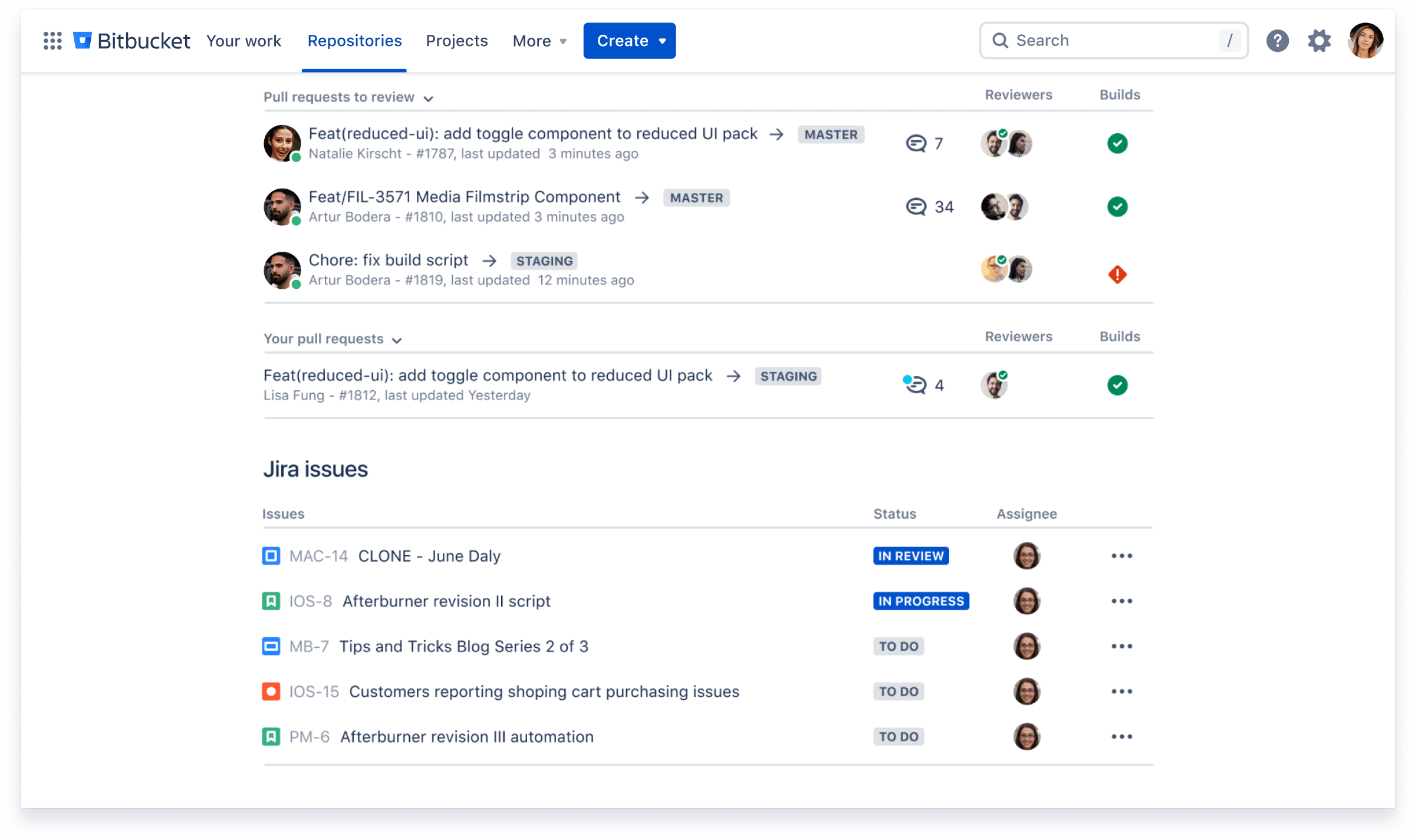
    Atlassian today outlined its strategy to increase the appeal of the Bitbucket continuous integration/continuous delivery (CI/CD) cloud service among enterprise IT organizations. Atlassian said it plans to focus on four core pillars: Performance, management, extensibility and security and compliance, starting with an update scheduled for the third quarter.

    Dan Tao, head of engineering for Bitbucket Cloud and Compass at Atlassian, said the overall goal is to make it simpler to use the Bitbucket Cloud service running on the Amazon Web Services (AWS) cloud at scale as organizations increase the rate at which they build and deploy software.

    Atlassian is still supporting the Bitbucket Server and Data Center editions of the platform, but it’s apparent more organizations are shifting software development to the cloud, he noted. Atlassian is now moving to not only simplify migrations to the cloud by, for example, providing a Bitbucket Cloud Migration Assistant tool, but it is also moving to ensure applications can be developed at scale.

    Achieving that goal includes making use of a more advanced diff algorithm that is four times faster in larger DevOps environments, he added.

    Other planned enhancements include the ability to execute CI/CD workflows via Bitbucket pipelines, the ability to reuse multi-step pipelines across repositories, tighter administration integration with other Atlassian applications, the ability to encrypt data at rest and integration with the Snyk tool for discovering vulnerabilities in software to improve security.

    Finally, the Bitbucket Cloud service will also soon support Bitbucket Mesh, a distributed storage capability that is already employed in Bitbucket Data Center.

    Overall, Atlassian sees the migration to the cloud as a means to not only make DevOps workflows more accessible to a wider range of organizations, but also give organizations that have already invested in DevOps the opportunity to streamline those processes, said Tao.

    Many DevOps teams today maintain complex platforms with custom integrations that they need to maintain and support. Atlassian provides DevOps teams the option to either employ an integrated platform or use connectors it has created as part of the Atlassian Open DevOps framework to make it simpler for teams to use whatever mix of tools they prefer, he added. In either case, the total cost of maintaining a DevOps environment can be significantly reduced, said Tao.

    It’s not clear to what degree organizations that have already invested in DevOps are considering replacing their existing CI/CD platforms. However, as the pressure to accelerate the rate at which software is built and deployed steadily increases, the pressure to further automate DevOps workflows also builds. At the same time, DevOps teams are now being asked to integrate security gateways that require additional custom integrations within legacy platforms that they would need to support alongside existing integrations.

    At the very least, more organizations than ever are weighing their DevOps options. The issue, of course, is that the total cost of switching out DevOps platforms is not inconsequential given the current dependency on existing workflows.