The enterprise technology world is on the cusp of a watershed moment. Two powerful trends that have rapidly matured over the past year are poised to intersect and ignite an explosion of intelligent, network-aware applications. On one side, telecom operators or ‘telcos’ are finally opening up their advanced network capabilities through developer-friendly network APIs. On the other, new AI-powered code-generation platforms are slashing development time and lowering the barrier to creating software. Individually, each of these developments is transformative. Together, they promise nothing short of a tsunami of innovation — with enterprise applications being built at speeds and scales unimaginable just a couple of years ago.
Executives in manufacturing, logistics, retail, pharmaceuticals, utilities, finance and beyond should take note. The era of treating telecom networks as ‘dumb pipes’ is ending. Instead of building applications around the network, businesses can now build applications into the network itself — tapping directly into connectivity, location, security and performance features via APIs. Additionally, thanks to AI-assisted development, doing so no longer requires a legion of specialized engineers or months of coding. The stage is set for a new wave of network-infused apps developed in a fraction of the time traditionally needed, fundamentally redefining how enterprises leverage connectivity.
Telcos Open the Network: From Dumb Pipes to ‘Network as Code’
In the past year, telecom operators worldwide have embraced a bold shift: Exposing their network services as open APIs. This movement gained critical mass with the GSMA’s Open Gateway initiative, launched in early 2023, which now has nearly 80% of the global mobile market participating. The idea is simple but radical — turn carrier networks into platforms that developers can program. Instead of proprietary, closed systems, telcos are offering standardized APIs for tasks such as verifying device identity, checking SIM status, allocating guaranteed bandwidth, retrieving precise device location and more. In effect, networks are becoming available ‘as a service’ to any application.
The momentum is evident across the industry. AT&T in the U.S., for example, kicked off its Network API Accelerator program in late 2023 and publicly launched it in February 2024. AT&T’s vision is to give developers on-demand access to advanced connectivity features, calling it ‘a game-changer for operations and the key to your newest product’. In practical terms, AT&T has offered APIs for security and fraud prevention (e.g., anomaly detection for malware or device spoofing) and IoT optimization (on-demand quality of service for connected cars or smart devices). These are capabilities that used to be buried deep in carrier infrastructure; now they’re as easy to integrate as calling a web service.
In Europe, Orange has been equally aggressive. It created a dedicated business unit called Orange LiveNet in 2025, specifically to fast-track network API offerings. Orange was also a founding member of Aduna, a joint venture between major global telcos (including Vodafone, Deutsche Telekom, AT&T, Telefónica and Verizon) and Ericsson, aimed at providing one-stop, globally standardized network APIs. The goal of Aduna is to ensure an application can tap network functions that work anywhere on any network, uniting many carriers under common interfaces. This kind of collaboration is unprecedented in telecom — operators are aligning so that developers no longer face a fragmented landscape of dozens of different APIs. In short, telecom providers are not just opening up — they’re actively courting developers, running hackathons and seeding ecosystems to monetize their networks in new ways.
Network vendors are facilitating this sea change as well. Nokia, for instance, launched its Network-as-Code platform, inspired by the Open Gateway standards, to help carriers expose APIs in a developer-friendly way. Nokia’s platform abstracts away the complexity of underlying network tech and provides easy interfaces, sandboxes and code libraries so that enterprise software makers can plug into multiple operators’ networks at once. Nokia reported that as of mid-2025, 50+ operators worldwide had joined its network API ecosystem — from Telstra in Australia to Deutsche Telekom in Europe — alongside cloud providers and software integrators.
Crucially, these network APIs are not just about tech for tech’s sake — they enable very concrete, impactful use cases. We’re already seeing examples like banking apps verifying users’ SIM and device instantly via APIs to stop fraud in its tracks; smart city platforms using real-time network data on population density to adjust traffic light patterns; industrial drone controllers reserving a low-latency 5G slice on demand to guarantee safe remote operation of machinery; or event livestreaming services requesting high-bandwidth, low-jitter network quality for specific durations to ensure zero buffering. All of these scenarios treat networks as a programmable ingredient of the applications. Until now, app developers had little control over network behavior, leading to the familiar refrain of ‘going over the top’ of a dumb pipe. That’s about to change. Networks themselves can be plumbed directly into apps, becoming a source of context, security and reliability, beyond just connectivity. This will lead to a fundamental paradigm shift in how we design and build enterprise applications.
AI Code Generation: Software Development at Unprecedented Speeds
If open network APIs remove one historical barrier (access to telecom capabilities), the other breakthrough of the past year removes an equally daunting barrier — the time, cost and skill required to build software. The advent of advanced AI-assisted coding platforms has dramatically accelerated application development and broadened who can create software. In 2024, generative AI proved it can write code effectively, and by 2025, a wave of purpose-built AI coding tools arrived on the scene — offering what can only be described as the democratization of app development.
Consider the example of Replit, a popular online coding platform. In late 2024, Replit introduced an AI-powered coding assistant called ‘Ghostwriter’ or Replit AI Agent, powered by a cutting-edge large language model from Anthropic. The results were astounding: Replit’s president noted that recent advances in generative AI enable even programming neophytes to build software just as effectively as human engineers, without learning a single line of code. Users of Replit can now simply describe an app they want in plain English and watch the AI generate the code, debug it and even deploy the app in the cloud.
Replit is just one example — an entire ecosystem of next-generation development tools is emerging. Cursor and Windsurf are AI-driven code editors that many professional engineers now use to autocomplete complex code and even manage multi-step refactoring tasks automatically. Tech companies such as Vercel have launched AI pair-programming assistants (e.g., Vercel’s v0.dev platform) that can turn a natural language prompt into a fully functional web application interface in seconds. Meanwhile, established players such as GitHub have continually upgraded their Copilot AI and open-source communities have produced specialized coding models (from Python to Rust) to assist developers.
The net effect is that development speed for many tasks is no longer linear — it’s exponential. A prototype that might have taken a team of developers weeks to hack together can now be generated in a single afternoon by one person with an AI co-pilot. Even debugging and testing, which are traditionally time-consuming, are being offloaded to AI; advanced models will suggest fixes or even self-correct errors as they code.
Just as importantly, these AI tools drastically lower the skill threshold. We are seeing ‘citizen developers’ — essentially, domain experts or entrepreneurs with no formal coding training — create real, working apps. Today, it’s increasingly common to see single individuals or tiny startups punch far above their weight by leveraging AI-generated code. In essence, software creation is becoming ‘cheap’, fast and plentiful — a trend with enormous ramifications for enterprises that have long struggled with big IT backlogs and scarce developer talent.
The New Wave: Network-Aware Apps at 100x Speed
When you combine open network APIs with AI-fueled development, you create conditions for an explosion of innovation. Telecom networks, once inaccessible to most developers, are now readily available. At the same time, the ability to prototype and build applications is no longer confined to large engineering teams. This convergence means that a vastly broader pool of innovators can now create intelligent, network-aware solutions — and do so extremely rapidly. We are looking at the strong possibility of a 100x acceleration in the pace at which new enterprise applications come to market.
Why 100x? Consider the friction that’s been removed: A developer (or even a non-developer business analyst) with an idea can ask an AI assistant to build me an application that checks if a user’s phone SIM was swapped recently and alerts our fraud system. Within perhaps a day, they could have a working prototype that integrates an open SIM Swap API from a telco and a dashboard to take action — something that used to require weeks of scoping, coding and telecom integration expertise. Multiply that across countless use cases. A logistics manager might similarly spin up an app tapping a carrier’s device location API to track shipment trucks in real-time, with geofencing alerts for delays — without waiting in the traditional IT queue. A safety officer could quickly craft a wearable-integrated solution that calls a network QoS API to prioritize critical telemetry from remote workers’ devices during an emergency. With minimal coding needed, one’s imagination and business insight become the only limiting factors.
The scale of unlock here is immense. Telco APIs are a rich new raw material — offering data streams and services (location, identity, connectivity guarantees, etc.) that can be embedded into software. AI coding agents are like an army of skilled builders ready to use that material at a moment’s notice. As these two trends intersect, we’re foreseeing an era where every industry starts weaving network intelligence into its digital fabric. Thousands of new applications will emerge — many conceived and built outside the traditional software-vendor channels. Importantly, these won’t be one-off science experiments; they will solve real business problems and deliver concrete ROI, making them highly compelling for enterprise adopters.
Projected Outcomes and Proliferation
One outcome will be a dramatic broadening of who creates enterprise software. Large enterprises will empower more ‘citizen developers’ internally to leverage network APIs safely (with governance) because AI tools help ensure correctness and security in code. Additionally, the vendor landscape could see a burst of startups offering niche network-aware solutions — because the barrier to entry is so low. For telcos, this translates to an explosion in API consumption. Already, the GSMA reports that after the initial wave of security-focused APIs, developers are now rapidly exploring other categories such as Quality-on-Demand (QoD) network slices and edge computing services, which grew from <10% to 25% of API launches in the past year. This diversification suggests that developers are finding creative uses for network capabilities once they have access. We expect use cases to proliferate in areas such as:
- Fraud Prevention & Security: Carrier identity verification, anomaly detection and location confirmation will be widely integrated in banking, e-commerce and healthcare apps to combat fraud and secure transactions. Network-based security, once limited to telecom operations, will become a standard component of application design (e.g., ‘dialing up’ network security when an AI detects unusual behavior).
- IoT and Asset Monitoring: Millions of connected devices and vehicles will interface with apps that can dynamically call network APIs for optimal performance. For example, a connected car software update system can request guaranteed bandwidth from whichever network it’s on, ensuring reliable download of a critical firmware update.
- Immersive Customer Experiences: In media, gaming and retail, apps will leverage network quality APIs to deliver ultra-smooth experiences. Imagine AR/VR shopping or training apps that automatically provision edge computing and low-latency channels when launched, so that a user’s experience is glitch-free. Telecom APIs can even enable new experiences — think of a live concert from your couch in virtual reality, with the app seamlessly invoking a high-bandwidth, low-latency mode from the network for the duration of the show. Enterprises in entertainment and marketing will have entirely new canvases to engage customers once latency and bandwidth become programmable on-demand resources.
- Operational Efficiency and Safety: Many industries will use network APIs to create smarter operational tools. Utilities and field services, for instance, could build apps that know the network status of remote sites or workers and adjust accordingly (e.g., delaying a non-critical data sync if bandwidth is constrained, or conversely boosting priority for an emergency signal). If a worker’s device loses connectivity in a hazardous location, an app could trigger an alarm via the network’s last known location data. These kinds of network-aware safety nets can significantly improve risk management in sectors such as energy, mining or transportation.
Ultimately, as network connectivity becomes programmable, enterprise software can treat connectivity as a flexible element of design rather than a fixed externality. Moreover, with AI as the new superpower in development, the timeline from idea to implementation shrinks dramatically. What used to be a 12-month IT project can become a weekend hackathon output.
A Call to Action for Visionary Enterprise Leaders
For CEOs, CTOs and CIOs in large enterprises, this convergence of open networks and AI development tools should be viewed as a generational opportunity. We are standing at the brink of a transition from business as usual to business at light speed. Those who recognize the potential of network API-infused applications — and set their teams up to experiment and build with them — will lead the next wave of digital transformation. We have the telecom industry investing heavily so that its APIs become ubiquitous and easy to use (indeed, the focus has now shifted from signing up operators to monetizing and delivering real enterprise value through these APIs). We also have the tech industry pouring billions into ever-smarter coding AIs that anyone can leverage. The tools to create the future are increasingly at everyone’s fingertips.
The coming tsunami of network-aware apps will not be a random occurrence; it will be driven by business needs and imaginative ideas from every corner of the enterprise. We will see intelligent applications that seamlessly blend connectivity with AI, cloud and data — from fraud-fighting fintech apps that cross-verify user identities with network signals, to manufacturing control systems that never drop a command because they can mold the network to their needs in real-time. Additionally, all of this innovation will occur at a pace perhaps 100 times faster than we’re used to. The playing field of application development is being leveled and supercharged simultaneously.
In practical terms, executives should begin asking: “How can our products or operations leverage network APIs now that they’re accessible?” and “Where can AI development tools help us iterate faster on these ideas?” As the network becomes an intelligent, programmable platform rather than a utility, entirely new business models can emerge. Enterprises should see advanced connectivity as part of their own product innovation toolkit, not just a cost on the P&L.
The vision being contemplated is exciting: An application world where telecom networks and AI co-create value. We will soon take for granted that our apps know and respond to network conditions, that they tap into carrier-grade security when needed and that they can reach anyone, anywhere with high performance. The pieces are in place today. What remains is for enterprise leaders to seize this moment. The result will be smarter businesses, more responsive services and a leap in digital innovation at a scale and speed that truly earns the title of ‘tsunami’. The network is awakening, and with AI as an ally, the only question is: Are we ready to build the future at 100x speed?



 In reality land, The Line was a patchwork of open-source frameworks, glue code, xml files and a few engineers unlucky enough to be tagged with role of “Build Master.” Woven together by the Build Master, these transformative robots and would take coders’ output, compile it into a workable build that merges all of the developed functionality, run and validate test harnesses against it. Once validated, the newly minted build then would be promoted to the higher-level environment, ultimately moving from dev to test, test to stage and, lastly, from stage to prod.
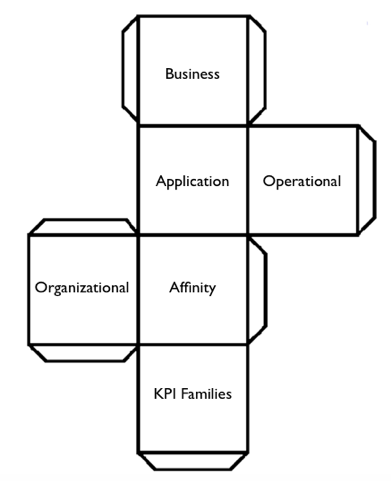 We have begun to see promising beginnings of The Cube pop up within medium and large enterprises through popularizing algorithms and outfitting teams with ubiquitous mission control-style dashboards and screens in team areas. But it is only when these dashboards can integrate and harmonize wide varieties of development, operational and business KPI data that we will be able to claim that we have delivered full and timely context (i.e., “the Right Information”) to the staff sailing the enterprise ship.