Welcome to The Long View—where we peruse the news of the week and strip it to the essentials. Let’s work out what really matters.
This week: The FAA’s NOTAM database gets corrupted, and Threema shows why DIY cryptography is bad. (more…)

Welcome to The Long View—where we peruse the news of the week and strip it to the essentials. Let’s work out what really matters.
This week: The FAA’s NOTAM database gets corrupted, and Threema shows why DIY cryptography is bad. (more…)

When it comes to accelerating customer value, it’s dangerous to focus only on the development and delivery of a digital product. For many enterprises, most time is invested before a single line of code has been written. That explains the recent focus on value stream management (VSM)—it’s forcing us to think beyond Agile and DevOps and consider the whole system, not just one stage in a complex process.
By extending our visibility further upstream where work originates, we can begin measuring the value of creating and protect workflows end-to-end to meet business outcomes sooner. Thinking about how software delivery work moves between all teams in the value stream from request to operation leads us to the significant realization that our tooling pipeline is our most important product and we should treat it as such.
The growth of value stream management in software delivery has emerged because Agile and DevOps are not enough to remain competitive against the breakneck speeds of the tech oligopoly. The progressively maturing practice takes a systematic approach to continuously measuring and improving end-to-end flow to accelerate time-to-value. Consequently, new tooling is emerging as we think end-to-end in how we collaborate and work faster together—and measure our productivity and effectiveness.
Measuring and understanding end-to-end flow isn’t easy. Software delivery is highly technical and creative knowledge work that can span thousands (or tens of thousands) of IT practitioners. Information is scattered across heterogenous toolchains comprising discipline-specific tools. In fact, some 42% of large-scale software delivery organizations use four to 10 core collaboration tools for portfolio management, design, enterprise agile planning, testing and ITSM, and dozens of additional tools to support the CI/CD pipeline and operations.
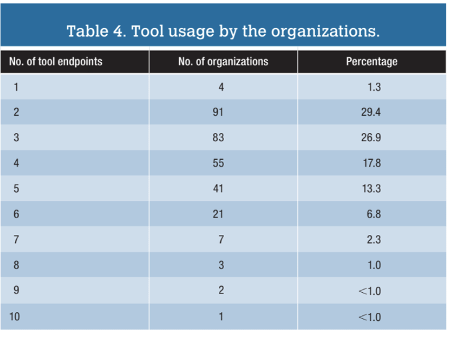
Measuring flow, therefore, involves tracing constituent units of value creation and protection as they traverse all team tooling in the form of artifacts such as activities, capabilities, epics, features, stories, bugs and incidents. Yet for too long we’ve been too focused on “the right side” of the value stream, thinking about how products are built and delivered through Agile and DevOps tools, without visibility on how they’re requested, analyzed, processed and designed. Our ability to support customers is hindered because we don’t know where and why work is slowing down outside of development. Our product pipeline is broken, our visibility fractured.
A ‘Broken’ Product Pipeline
Traditionally, CI/CD tools include source code management, build, deploy, quality management and service management. Moving more to the right, you have release management and service management. But too often organizations have ignored integrating tools further to the left such as planning and portfolio management, product management, requirements management and risk management (static and dynamic security scanning tools). This impacts our ability to see and measure end-to-end flow.
In”Accelerate,” lead time is defined as the portion of the value stream from (last) code commit until deployment. While this is essential to improve, it only covers the time from the build being produced through deployment. We need to account for the time that elapses before it hits a developer’s backlog. To shift IT from a project to a product focus, you need to reduce end-to-end flow time by measuring earlier in the delivery life cycle by “shifting left.” As such, you need tooling across the whole value stream through the ideate, create, release and operate phases. A focus only on optimizing the CI/CD tooling and practices is too narrow a view that produces diminishing returns over time.
The Great Disconnect Between IT and the Business
Because of this lack of a holistic view, IT teams don’t feel like they are able to influence the business side of the house, where most of the work in progress (WIP) starts, such as requests for features or application changes. These intake processes many times result in teams taking on too much WIP and neglecting work. Many teams need to “stop starting” and to “start finishing” to deliver business value more quickly. Crucially, this is the area where business leaders have their own processes and where tools are less likely to be used; it’s a world dominated by spreadsheets, documents and PowerPoint presentations. This is where work is least visible and measurable. And this is precisely where we need VSM: to turn the light on starting with the customer needs so we can continuously improve end-to-end flow. This requires a culture shift from both IT and business/product owners. And that requires taking a broader, more holistic view of the tools and practices in the business space.
Architecting for Flow
An end-to-end integrated pipeline product can be architected for flow. For example, tools used for visual system management (e.g. Jira, Azure DevOps) are becoming more of a commodity with the real differentiation becoming how they can be integrated with tools used for portfolio, defect and service management, since those are the sources of work that will flow into product-based teams for development of business value and unplanned work. Teams should think about how they can work more closely with business portfolio teams on continuous flow (and funding) because eventually this work will become the next bottleneck that needs to be addressed on the journey to accelerate business delivery capability.
Keep an Eye on Value Protection Work
With end-to-end visibility into work across the pipeline, you can abstract that connected technical data into overarching value stream metrics—known as flow metrics—to identify areas where to run experiments to improve end-to-end flow. Here we mustn’t just focus on work that creates value but protects it, too.
We should provide our software delivery teams with the psychological safety to devote time to address debt and neglected work. Debt creates a drag on feature velocity because changes become more complex and take longer to make. In addition, with higher technical debt, more time is spent on addressing defects, which starves the capacity to perform feature work. As debt builds, the following is observed:
All of these result in reduced happiness for both the customer and the team, increasing the risk of team burnout. There are many cautionary tales of this occurring where market leaders ended up losing considerable market share due to inattention to technical debt. These stories exemplify why it is necessary to observe flow distribution to ensure that prioritization decisions made with the product owners, include providing necessary capacity to address technical debt.
Applying the concepts of value stream architecture to your end-to-end pipeline is the key differentiator for organizations that are trying to make it through disruptive periods such as today, as COVID-19 widens the gap between those who have mastered software at scale and are thriving and the many enterprises struggling to pivot and adapt in the digital-first climate.

Ten years ago I had the biggest cultural shock of my career. It wasn’t witnessing poor collaboration across IT development and operations or whatever tech fiefdom you care to mention. Nope, these were minor issues compared to those facing me on a really interesting project – integrating Industrial control systems with IT management.
Working with a team of product managers, coders and sysadmins, our task was to develop a standards-based application for monitoring a physical research facility. When I say monitoring, I’m not only talking about network and systems management, but also managing equipment operating in the ‘real world’ – like manufacturing robots, pressurized compartments, control networks, smart meters, alarms and controllers.
It was a new experience for the team. Not only were we faced with a new set of technical challenges, we had to quickly become familiar with foreign sounding terms (to us anyway), like programmable logic controllers (PLC’s), supervisory control and data acquisition (SCADA) and human machine interfaces (HMI’s). Add to this a very different set of stakeholders – like industrial and plant engineers, and the initiative started off resembling something closer to a multi-language speed dating session (only without translators) than it did a traditional IT development project.
At the time projects like this were a rarity because the worlds of operational technology and traditional IT was seen as separate. Process control and electrical transmission systems ran on separate control networks with proprietary protocols, whereas IT ran on a business network and primarily handed back-office business systems – the two domains were as different as ‘chalk and cheese’.
But all that’s changing courtesy of the Internet of Things and a software-driven economy.
Today, organizations are realizing that standards, unified architectures and software applications can be used to connect and integrate the devices and sensors in the physical world with IT systems – the benefit – more seamless end-to-end business processing.
Take for example manufacturing. If plant production equipment can be better integrated with consumer demand analytics, then optimum maintenance windows can be identified. Similarly in energy and utilities, integrating the physical world of smart meters with back-end IT customer information applications is a must for efficient billing.
This convergence will drive new approaches to developing and operating applications. The DevOps movement with its focus on teamwork and collaboration to shorten delivery cycles while improving quality might just be the answer, but there are some serious challenges to overcome – not least cultural.
You might think you’ve solved the great IT divide with DevOps, but that’s nothing compared to the cultural chasm you’ll need to bridge across the world of industrial operations and IT. And no amount of IT ego will help, which I learnt the hard way when I was once given a sharp lesson in what ‘real-time’ processing actually is business by a group of chemical engineers – boy was I humbled.
Technology beat up aside I believe there are many ways DevOps can help address the challenges associated with connecting and integrating operational technologies – especially:
As operational and information technologies converge, I believe the purview of DevOps will increase considerably. Now teams might include technology constituents from other areas of the business – like engineering and logistics specialists – each bringing new skills to the table that when coordinated with IT expertise in areas like mobility and cloud computing has the potential to drive huge efficiencies.
Application management will change also. Development work will increase, but so too will need to bake quality and resilience into every release. This is especially important because as processes become more integrated (from the factory floor sensor network to a mobile enabled materials management system or from healthcare diagnostic equipment to patient records applications) any minor defect, security issue or performance problem can trigger more catastrophic business failures.
When I look back to my own teams foray into managing ‘real world’ technology, I realize that while we never had DevOps to guide us we still used many principles. Success came when we built a cross-domain business team that maximized a unique set of technical strengths, but also understood each other’s weaknesses.
So DevOps teams take note – as technology convergence accelerates, the goal for many industries won’t be just bridging the IT development and operations divide and releasing more and more software, it’ll also be about developing a new range of end-to-end digitized business processes – from the factory floor to the boardroom – that’s a bigger deal and where success will ultimately be measured.