Tag: employees

  • Study Reveals Pain Points for Enterprise Workers

    Study Reveals Pain Points for Enterprise Workers

    While it may be an afterthought at some companies, C-suite leaders would do well to keep an eye on workforce trends to optimize productivity and work quality.

    A study commissioned by Workfront, a work-management software provider, offers insights into what many enterprise workers consider to be obstacles to getting their work done. You already know that unnecessary meetings and mountains of email are on the list, but you might gain some perspective from some of the study’s other conclusions.

    Released recently, “State of Work 2018-19” was fielded by Regina Corso Consulting in June and gathered some 2,000 responses from U.S. employees who work for companies with at least 500 employees, use a computer on the job and collaborate with colleagues on projects.

    Enterprise Workers Have a Love-Hate Relationship with Automation

    Almost 70 percent of respondents believe that automation will give them more time to do their primary job responsibilities. And 86 percent of U.S. workers believe that the rise of automation will help them think of work in new and innovative ways. But half of the respondents also report that they know people who have already lost their jobs because of automation. Millennials are twice as likely as Baby Boomers to worry that automation will cause them to lose their jobs. Overall, what may be the most surprising data point is that the study’s findings clearly show workers to be generally optimistic about automation.

    Recommendation: Your company needs an expert or a task force out front, reviewing business process in all parts of the company, helping to formulate automation strategy, and finding the best ways to test and rollout automation solutions. Be ahead of the curve enough to give some thought to retraining people whose jobs might be affected for new roles.

    U.S. Workers Need Help to Foster Innovation Within Their Company

    Many are frustrated by the lack of prioritization and/or structure for innovating. Almost 65 percent of the respondents reported that their companies regularly ask employees to think about new ways of doing things. And almost 60 percent said that they’re barely getting their day-to-day work done and don’t have time to think beyond today’s to-do list. Millennials are more concerned with the importance of innovation and more frustrated by their inability to free up time to focus on it than Baby Boomers. Gen X falls in the middle.

    Recommendation: It’s not enough to just tell employees you want them to innovate. Innovation requires a different kind of thinking than tactical day-to-day decision-making. They may need brainstorm sessions. You might need to give them strategic problems to work on. You might need to suggest business processes that need streamlining. But more than anything else, you need to give them permission to take a specific amount of time per week or month to work on this longer-term problem.

    Workers are Skeptical of the Quality of Their Colleagues’ Work

    This has the potential to be divisive. U.S. workers are dubious about the quality of coworkers’ work and rate themselves as being more productive than those around them. Since the majority of respondents answered that way, you have to wonder what corrosive quality of the U.S. workplace is making people think that.

    Recommendations: Workfront offers some suggestions worth passing along: 1. Ask your team members what they think of each other. Use what you learn to guide you in the following steps. 2. Provide visibility into the work that everyone is doing so that team members realize what each member is tasked with. 3. Celebrate success and accomplishment. And spread that recognition around the entire team, if possible. This requires significant effort on the part of management, but the result is pride and mutual respect.

    C-Suite: The Key to Managing Multigenerational Teams

    Workfront has produced the “State of Work” survey for five years. While it hasn’t previously gathered trend information across years, one of the clear trends is the difficulty of managing the several generations in the workplace, each with its own set of priorities, said Chris O’Neal, product evangelist at Workfront.

    “For the first time in history, we’ve got four or five generations working alongside each other in the workforce. We’ve got baby boomers all the way up to gen z,” O’Neal said. “So, every company out there needs to come to terms with the concept of melding together a multigenerational workforce. And there are differences. In broad strokes, the way we look at it is that there are digital immigrants and digital natives. They’re all important; they all bring something to the table, whether it’s experience and leadership to adaptability and just-in-time skills.

    “We believe that this multigenerational workforce needs to be led by an executive team that understands that they have different ways of looking at the world, different ways of working,” he added. “They need to be brought together by shared purpose and shared values within the organization.”

    — Scot Finnie

  • The Case Against Human Employment in the Age of Automation

    The Case Against Human Employment in the Age of Automation

    A few months back, the small Japanese restaurant down the street from me was renovated. The owner redesigned the layout of his business to solve a vexing problem: How to stay in business when faced with a continuing pattern of employees not showing up for work.

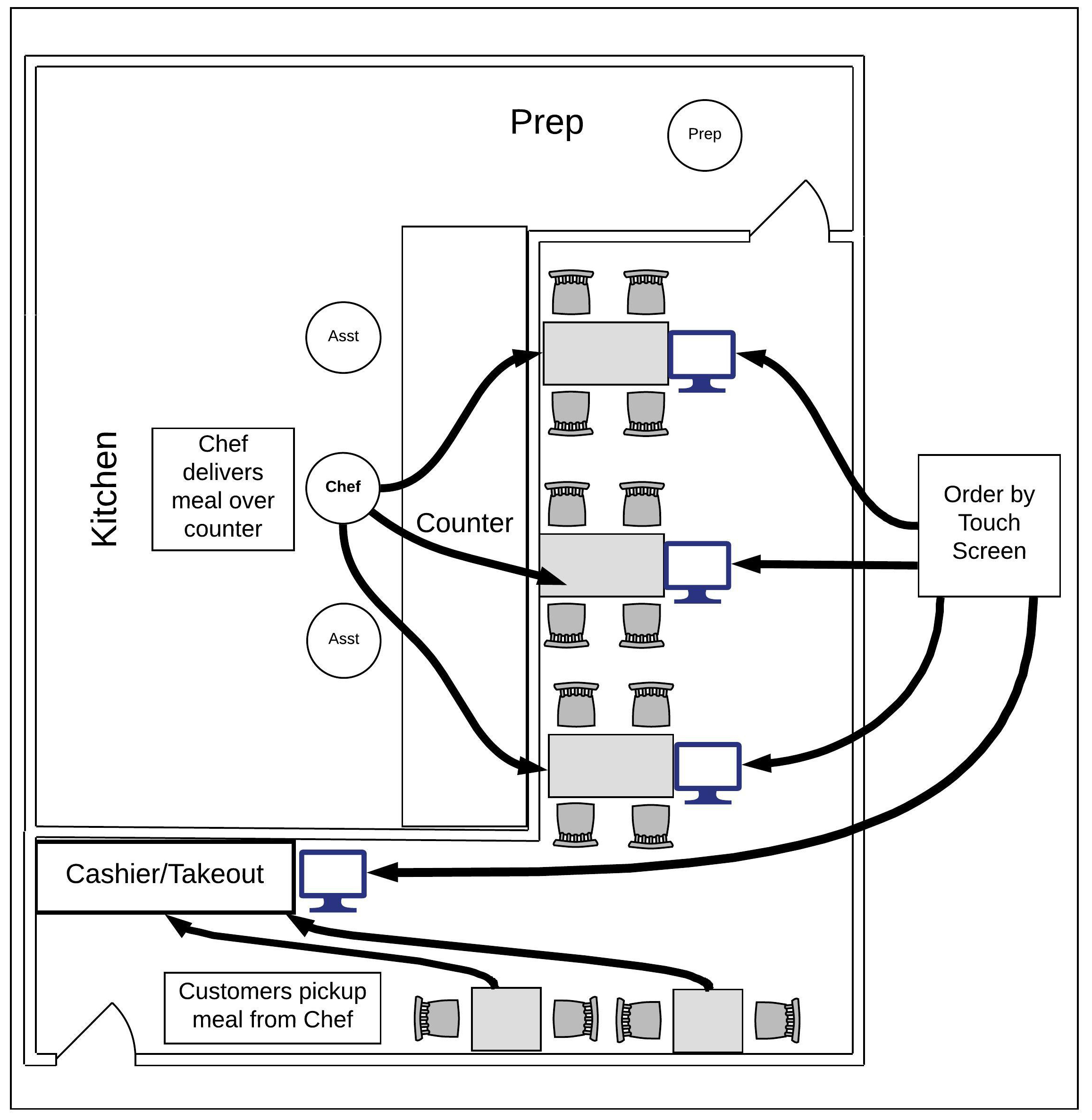
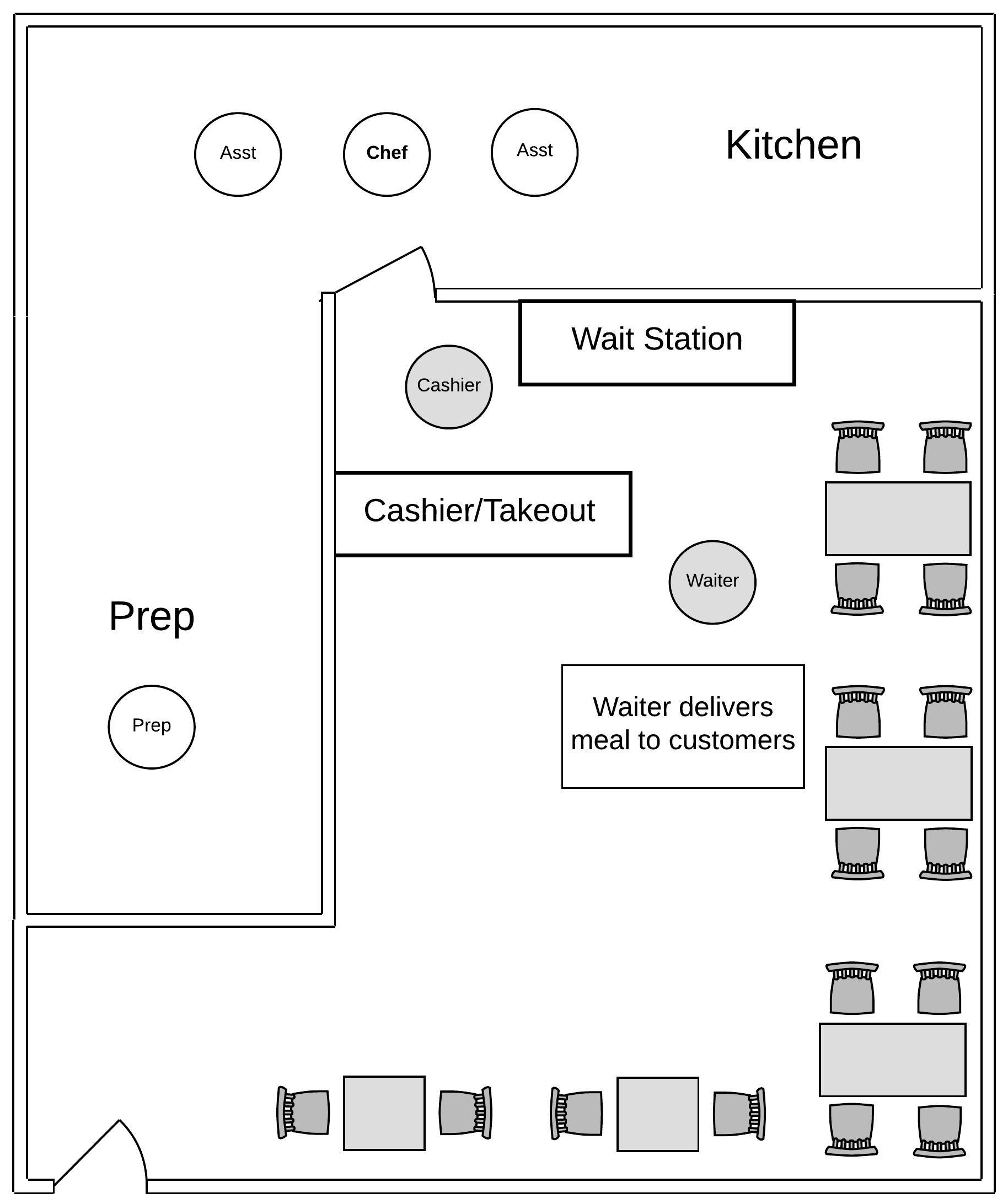
    The layout of his restaurant went from this:

    Figure 1: The pre-automated local Japanese restaurant

    To this one:

    Figure 2: The neighborhood Japanese restaurant after automation

    The new layout eliminates the need for servers. It turns out, the people he hired to take orders and bring food from the kitchen to a customer’s table just weren’t showing up for work. We’re not talking one or two random no-shows; rather, it was habitual behavior among the workforce he hired, mostly high school grads and college students. Each day was turning into a crapshoot. He’d get a text an hour or two before the beginning of a shift reporting some other excuse: sickness, lost dog, whatever. Usually, the note closed with the inevitable, “Sorry, won’t be in today. See you tomorrow.”

    So he automated.


    Related Content: An Unanticipated Obstacle to Full Automation


    The new design is working out well. You come in. He directs you to a table. There’s a touch-screen monitor at each table diners use to place their order. The orders go directly to the kitchen, which is separated from a row of tables by a glass partition. When a dish is ready, the owner (who also happens to be the chef) or an assistant passes the food out to the diner’s table under an opening at the bottom of the glass (see Figure 2, above). At the end of the meal, the owner meets you at the front station where you pay the bill. No more wait staff. No more cashiers. No more “I can’t make it today” texts.

    Automating to Stay in Business

    Removing the servers and using automation was not an easy decision for the owner. His business is not some large-scale, multi-unit corporate enterprise looking to automate away human labor to increase profit margins. This guy has worked seven days a week for 10 years to build his business into a mainstay of the neighborhood. He prefers to employ humans but he can’t. He’s automating because the available human labor is unreliable. He believed that using such an unreliable workforce would eventually put him out of business. He really needed to make the change.

    So he did.

    No Employees, No Employee Retention

    So far, things are going well. However, now the kitchen staff is beginning to join the No Show Club, despite the fact that he is hiring kitchen workers at a rate of $14 an hour—a good wage for kitchen work. What’s causing people to go MIA? Maybe it’s the product. After all, how many California rolls can you make before going nuts out of boredom? Maybe he’s difficult to work for. And I doubt they’re jumping ship to work at Mickey D’s; the Golden Arches is only paying $10 an hour. In any event, the owner has a employee retention problem that, my guess is, he’s going to solve using automation.

    What Does This Have to Do with DevOps?

    At some point, every human being becomes unreliable. Some have poor work habits, but most simply are being human and humans make mistakes. That’s how we’re built. Some of us make a few mistakes, while others make a lot. But, we all make mistakes. Most of us learn from our mistakes, and we still make others. Our human nature to make mistakes makes us inherently unreliable.

    Machine intelligence doesn’t have this problem. It will get things right, eventually. And then, once operating reliably, it’s rare for that intelligence to revert to a state of unreliability. A human can become unreliable at any point in time—taking a sick day, resigning from the job or all the mistake-making that comes with learning a new skill or technology.

    We in DevOps have a lot in common with the owner of my neighborhood Japanese restaurant. Most of us have worked really hard to keep our customers happy and coming back, well beyond the typical 40-hour work week. For the most part, we’ve been successful.

    Our success increases demand. When demand goes up, the complexity of our work increases, as does the need for more reliable operations. But at some point, our inherent human unreliability kicks in. We make mistakes. To keep things going reliably, we automate. Then we move on to the next thing. Fortunately, for the foreseeable future, there will be a “next thing” to move on to.

    Still, intrinsic to our work is a motivation to eliminate human labor from the technical landscape. We have no evil intention. We just want to do the best job possible. Given the choice between a script and a human doing the work, we’re going to choose the script every time. The script will evolve to 100 percent reliability. The human won’t.

    As I said, for now, it’s not really a problem. There will be a next thing to move on to. And, in terms of my neighborhood sushi joint, maybe the out of work no-shows will get the message about the value of showing up at a job on time and ready to work. Or, maybe they won’t. Maybe as automation becomes the standard of labor fulfillment for repetitive work, immature workers will never be given the opportunity to get the experience they need to enable them to master basic employment skills. After all, they’re human and some point will become unreliable. So why hire them at all? Why not get a few computerized gizmos to do the redundant work and then focus on keeping customers satisfied and staying ahead of the competition?

    Having no employees translates into having no unreliable employees. A business without unreliable employees is an efficient business. Efficiency in business is what it’s all about.

    And this, my friends, is the case against human employment in the age of automation.

    — Bob Reselman

  • Finding, and Landing, the Right Job for You

    Finding, and Landing, the Right Job for You

    Following my article discussing the “7 Steps to DevOps Hiring Success,” it seemed fitting that I continue and discuss the seven steps to DevOps job-search success, with the focus on candidates rather than hiring managers.

    Whether you’re a hands-on DevOps practitioner or a lead, VP, director or any other title, in this space you’re in hot demand. However, some of you are reading this and thinking, “What is this guy talking about!? I’ve been searching for a new job for two months and haven’t even got past the recruiter interview to speak with the hiring manager.” Well, this article may be for you—or it may be for someone you know.

    Are You Selling Yourself Correctly?

    Your resume, LinkedIn profile, URL to your personal website and any other methods you may be using, make sure you’re making those first impressions count. Your LinkedIn profile should be up to date with relevant content. Do hiring managers need to know that you worked in a part-time job in the local grocery store 10 years ago? No. They do, however, want to see what you have achieved in your current and previous roles.

    Many who come from systems administration or infrastructure backgrounds aren’t selling themselves correctly. If you have been using configuration management tools such as Chef, Puppet, Ansible or Saltstack, you should include this in your resume. The same goes for container orchestration tools, such as Docker and Kubernetes, continuous integration tools and so on. Don’t create an exhaustive list, but note which you have used and how they allowed you to achieve the goals of the project.

    Market Yourself on the Right Platform

    Don’t bother uploading your resume onto every single job board; this just wastes yours and other people’s time. Definitely upload your resume to the right locations, though. Dice.com, Indeed.com, Ladders.com, Hired.com and Monster.com are some of the go-to job boards. (There are others, of course, and I’d be happy for others to comment with opinions on other job boards through which they have found success.) There aren’t many specialist DevOps recruitment companies out there, but I can drop a shameless plug and mention that my team at Salt are always worth speaking to, whether it’s for consultation on the current market trends or to actively search for your next move.

    Drop Your Ego, Too!

    In my last blog I told hiring managers to drop their ego when it comes to hiring. Sometimes candidates need to drop theirs, too.

    “I won’t consider working at any company that won’t let me wear a batman outfit every day of the year, barefoot and with an automated snack machine that unwraps protein bars before passing them directly into my mouth.” Stop being so entitled.

    Don’t get me wrong: I love freedom of expression and the idea of wearing whatever you want. I’d also love an automated protein-bar snack machine that feeds me! But be open-minded and don’t put roadblocks in your own way—it’s no good for anyone. It’s all about opening as many doors as possible at the start and focusing your options once you truly know what you’re looking at. That one company you may have declined to even consider might have given you the opportunity to work with the best people you’ve ever met, on the coolest and most innovative products you’ve ever imagined. And who knows, maybe they would have been the next Netflix, Twitter or Snapchat. Stay open-minded.

    Is the Recruiter You’re Speaking With Reputable?

    Some recruiters are generalists. That’s not a bad thing all the time, but when we are talking about a niche area with a plethora of technical skills to understand, it helps to speak with people who know what they are talking about and can easily decode your likes, dislikes and overall background. Check out the recruiter’s LinkedIn profile: Do they have recommendations from other clients and candidates in the same tech space, or have they only been referred by other recruiters? If you’re going to trust them with finding your next career move or contract, it’s worth ensuring that you’re speaking to the right person to support your needs. Speak to other folks in the space—who did they use to find their dream job? That could be a good start.

    Rapport Isn’t Just for Salespeople

    Do you have amazing technical skills but no knowledge of the company? You’re starting off on the wrong foot. It doesn’t take five minutes to research the company prior to your interview. Go to the company’s website and click on the “About Us” section. To show you actually care, think about your own passions and values and demonstrate how they align with those of the company. Hiring managers love this, so try to make it genuine.

    Now to really make a good impression, why don’t you check out the interviewer on LinkedIn? Look up their background: What are their hobbies? Where did they work previously? Do you have any mutual connections? You’d be surprised: Asking them about their triathlon last month or mentioning that you both worked with Rita Smith on X project five years ago often can go as far as passing the technical test with flying colors. Remember, this doesn’t need to be time-consuming; just take a quick look and find something you have in common to build some rapport.

    Stay Relevant

    Searching for a new job doesn’t just mean sitting behind your laptop or making calls. Be sure to attend events and conferences to continue learning and networking. You’ll often bump into hiring managers or other team members who could end up being future colleagues. Also, promote yourself at events via social networks; for example, take some pictures, tweet about the event and/or share some content from the event on sites such as LinkedIn. This reinforces that you are part of this DevOps community and someone worth connecting with. Meetups for New Yorkers, for example, include DockerNYC, AWS NYC, ServerlessNYC, Continuous Delivery NYC and many more. There are also conferences such as DevOpsDays, Container Days and CloudExpo, among others. There are plenty of options in other cities and countries, too.

    Making the Right Decision for You

    Figure out what drives you, be it interesting projects, money, great working environments, awesome teams, job titles, making an impact or a mix of all the above. Now it’s rare to have two perfectly identical opportunities on the table, but if you’re lucky enough, you will have two, three or more job offers to choose from prior to signing on the dotted line. Deciding can be tough, and this is something I have to support people with on a daily basis from a non-biased perspective. I’ve seen people walk away from $250,000 to $300,000-level salaries to take a job paying $180,000. Why? Because they looked internally and realized that the other role suited their lifestyle, allowed them to continue playing an important role in their family life and the work was way more stimulating. In a different scenario, another individual might have been way more suited to taking the other position.

    Once you’ve decided what really matters to you, there are a few simple things you can do to help with making these tough decisions. Start with getting a pen and paper to list out the pros and cons of each job. You’d be surprised how effective such a simple process can be for visualization and helping to clear your mind. Once you’ve had this internal discussion and opportunity to visualize, you should engage with some trusted resources. Speak to your partner, family members and former colleagues who know how it is to work with you. Finally, consult with your recruiter if you’ve been using one; a good recruiter should provide non-biased advice with the goal of helping your career.

    As a final point, I know the job-searching process can be arduous for many people, but for those who have many options to choose from, enjoy it! Realize how lucky you are; don’t take these times for granted and be proud that you have such in-demand skills.

    About the Author / Conor Delanbanque

    conordelanbanque

    Conor Delanbanque has been recruiting and leading recruitment teams in the DevOps space for the past few years. As well as being exclusively responsible for growing some of the most innovative DevOps & SRE teams in the US and Europe as an external consultant and recruiting partner, Conor also founded the Future of DevOps Thought Leaders Debate, sponsors DockerNYC Meetup on a regular basis and co-hosts ServerlessNYC. You can tweet him at @ConorDevOps, find him on LinkedIn or at events, expos and writing articles on devopsy.kinsta.cloud.

  • 7 Steps to DevOps Hiring Success

    7 Steps to DevOps Hiring Success

    As many of us in the DevOps scene know, most companies are hiring, or, at least, trying to do so. The required skills and job descriptions can change entirely from company to company. As a broad overview, most teams are looking for a candidate from either an operations and infrastructure background or someone from a software engineering and development background, then combined with key skills relating to continuous integration, configuration management, continuous delivery/deployment and cloud infrastructure. Currently in high-demand is knowledge of container orchestration.

    In the ideal world, the two backgrounds will meet somewhere in the middle to form Dev and Ops, but in most cases, there is a lean toward one side or the other while maintaining sufficient skills to understand the needs and demands of their counterparts to work collaboratively and achieve the end goal of continuous delivery/deployment. Every company is different and there isn’t necessarily a right or wrong here. It all depends on your infrastructure, tech stack, other team members’ skills and the individual goals you hope to achieve by hiring this individual.

    Focus Your Hiring

    Now, given the various routes to becoming a DevOps practitioner, how do hiring managers focus their search and selection process to ensure that they’re hitting the mark?

    Decide on the Background

    Assess the strengths of your existing team. Do you already have some amazing software engineers but you’re lacking the infrastructure knowledge? Aim to close these gaps in skills. You may have been given the budget to hire for DevOps, but you don’t have to spend weeks/months searching for the best software engineer who happens to use Docker and Kubernetes because they are the current hot trends in this space. Find the person who will provide the most value in your environment and go from there.

    Contractor or Permanent Employee? 

    Many hiring managers will automatically start searching for a full-time permanent employee when their needs may suggest that they have other options. Sometimes a contractor is your best bet or maybe contract-hire. If you’re aiming to design, implement and build a new DevOps environment, why not find a senior person who has done this a number of times already? Try hiring a senior contractor and bring on a junior full-time hire in parallel; this way, you’ll be able to retain the external contractor knowledge by having them work alongside the junior hire. Contractors can be expensive, but the knowledge they bring can be invaluable, especially if the work can be completed over a shorter time frame. Again, this is just another point of view and you might be best off with a full-time hire to grow the team.

    CTRL F is not the Solution

    Focus on their understanding of DevOps and CI/CD-related processes over specific tools. I believe the best approach is to focus on finding someone who understands the methodologies over the tools. Does your candidate understand the concept of continuous integration or the concept of continuous delivery? That’s more important than asking whether your candidate uses Jenkins versus Bamboo versus TeamCity and so on. Try not to get caught up in the exact tool chain. The focus should be on the candidates’ ability to solve problems. Are they obsessed with increasing efficiency, saving time, automating manual processes and constantly searching for flaws in the system? They might be the person you were looking for, but you missed them because you didn’t see the word “Puppet” on the resume.

    Work Closely with your Internal Talent Acquisition Team and/or an External Recruiter

    Be clear and precise with what you’re looking for and have an ongoing, open communication with recruiters. They can and will help you if used effectively. The job of these recruiters is to save you time by sourcing candidates while you’re focusing on your day-to-day role. Work closely with them and deliver in the same way that you would expect them to deliver for you. If you say you will review a candidate by X time, do it. If they say they’ll have a candidate in your inbox by Y time, make sure they do it, too. Start by setting up an initial call to talk through your requirement, lay out a timeline in which you expect candidates by a specific time and explain your process in terms of when you will interview, how many interview rounds and how soon after you will be able to make a final decision on whether to offer or reject the candidates. If you can get this relationship working well, you’ll save lots of time. And make sure your internal teams are focused on supporting your process, not blocking it.

    $$$

    Decide how much you want to pay. It’s not all about the money, but you can waste a lot of your and other people’s time if you don’t lock down the ballpark salary or hourly rate that you can afford. If your budget doesn’t stretch as far as your competitors’, you need to consider what else can help sell the opportunity. Flexible working hours and remote working options are some great ways to do this. Most companies have snacks, beer and cool offices nowadays, so focus on the real value such as the innovative work your team is doing and how awesome your game-changing product might be.

    Drop the Ego

    You may have an amazing company and/or product, but you also have some hot competition. Everyone is hiring in this space and candidates have a lot of the buying power. It is no longer as simple as saying, “We are hiring” and the awesome candidates come flowing in. You need to sell your opportunities. Maintaining a reputation as a great place to work is also important. A poor hiring process, such as interviewing without giving feedback, can contribute to bad rumors being spread across the industry. It only takes a few minutes to leave a sour review on Glassdoor.

    A Smooth Process is a Successful One

    “Let’s get every single person within the company to do a one-hour interview with the new DevOps person we are hiring!” No, let’s not do that. Two or three stages should be sufficient. You have managers and directors for a reason. Trust your instinct and use your experience to make decisions on who will fit into your organization. Some of the most successful companies can do one phone screen followed by an in-person meeting. During the in-person interview, spend a morning or afternoon allowing the candidate to meet the relevant leaders and senior members of their direct team, then take them for lunch, dinner or drinks where you can see how they are on a social level. If you can’t have a simple conversation with them, then you probably won’t enjoy working with them. If the thumbs are up, make the hire and don’t wait around. A good candidate will usually have numerous offers on the table at the same time.

    If all goes well, you should be inviting your shiny new employee or contractor into the office in the next few weeks and hopefully many more throughout the year.

    About the Author / Conor Delanbanque

    conordelanbanque

    Conor Delanbanque has been recruiting and leading recruitment teams in the DevOps space for the past few years. As well as being exclusively responsible for growing some of the most innovative DevOps & SRE teams in the US and Europe as an external consultant and recruiting partner, Conor also founded the Future of DevOps Thought Leaders Debate, sponsors DockerNYC Meetup on a regular basis and co-hosts ServerlessNYC. You can tweet him at @ConorDevOps, find him on LinkedIn or at events, expos and writing articles on devopsy.kinsta.cloud.


  • Rethinking Unemployment in the Age of Automation

    Rethinking Unemployment in the Age of Automation

    In my last article concerning the impact of automation and robotics on human employment, I asserted that commercial job loss is more a result of automation than outsourcing. Also, I asserted that this trend was going to continue at an accelerated rate. I said we need to address three areas of concern to mitigate the impact:

    • Income
    • Birthrate
    • The meaning of work

    In this installment, I am going to look at income—specifically, the need to rethink how we approach unemployment insurance.

    Let me share a piece of personal information with you. A while back I lost a gig and was eligible for unemployment benefits. The amount I was eligible to receive back in 2012 was $300 a week. (Today, the maximum benefit is $450 a week for up to 26 weeks.) In the scheme of things that’s not much money. In a major metropolitan area such as Los Angeles, $1,200 a month does not even cover my housing costs. Luckily, I was able to get another gig in no time at all. But, I am a tech worker. Others are not so lucky.

    Unemployment benefit in California is calculated by using the following formula:

    highest quarterly earnings/25

    Thus, the average programmer makes around $75,000 a year, which comes out to $18,750 a quarter. So doing the math:

    $18,750/25 = $750 a week

    But that $750 number exceeds the maximum allowance. So, if you are a programmer who has been “let go” in California, the most you’ll get is $450. Also, any benefit you receive is subject to income tax. If you find a part-time job to make up the difference, your benefit will be reduced.

    The calculation is not special to California. Arkansas is pretty much the same. In Texas you get a little more.

    If you are accustomed to making $75,000, which after taxes is about $1,100 a week, making ends meet on $450 pre-tax dollars is going to be a stretch.

    This is not a pretty picture in a few ways. First, there is the built-in incentive to not work legally. You are not encouraged to use your creativity to launch your own business. Forfeiting earned money does not encourage you to take on small jobs that allow a company to get to know you. (Try and buy has led to many a full-time position.) So what do you do? You go into the shadow economy. You work under the table: Have the check made out to your wife on her W9 or have it show up on Paypal as a gift. Is the practice shady? Yes. Is it necessary? Yep, particularly as the end of the month rolls around.

    Now, if you are in a major city such as New York, San Francisco or Los Angeles and you are in prime employment age, between 25 and 45 years old, getting another tech job quickly is usually not a problem, provided you know what you are doing. But, what do you do if you are a 50-year-old Visual Basic programmer in Glen Falls, New York, with two kids still in high school and a housing market that is anemic? You just can’t get up and move. And, learning programing technology is going to take time.  Now, imagine the same scenario, only this time you work in a small furniture factory in Alabama and your job lathing table legs has just been replaced by a robotic CNC machine. The picture is now a nightmare.

    So, what do we do?

    I am a supporter of the notion of Universal Basic Income (UBI). UBI is a system in which citizens of a given nation are provided with enough basic income to meet the essentials of life. Typical in just about all the plans for UBI is the stipulation that there are no strings attached. Under UBI, if you want make more money you can. Your UBI allowance is not decreased. UBI can be more about developing your value in society rather than living off the dole.

    Still, I am a realist. I am not of the belief that one day a magic wand will be waved over state and the national capitals, that politicians will come to their senses and amazingly we will have UBI. Big change does not work that way unless something gets blown up (Think Pearl Harbor and 9/11). I am of the thinking that when it comes to large-scale change, the best thing to do is focus on one thing. For me, that one thing is to eliminate the “payback” clause in unemployment benefit policy.

    Given that many, if not most, jobs will be automated before the end of the century, the notion that unemployment is a benefit that tides us over until the next job comes along is outdated. There might not be any next job. Rather, unemployment might be a time to reinvent ourselves. Reinvention means using the unemployment benefit as a baseline of income upon which we can build more income. We should not be penalized for making money on top of the unemployment benefit. Rather, the benefit needs to be a subsidy from which greater income grows. Once a livable level of income is achieved and a trajectory of reliable, personal revenue is established, we can revisit the size and limit of the benefit allowance. Until that time, the allowance remains in place.

    Think of eliminating the “payback” clause as training wheels for full UBI. Removing the ““payback” clause in unemployment benefit policy is a concrete first step to having realistic policies about labor and income in the Age of Full Automation. The legislative debate and public education that will happen in the course of eliminating the “payback” clause of unemployment insurance will put Universal Basic Income on the social and political agenda.

    UBI is not the stuff of fantasy. It is already has an experimental implementation is Finland. The National Digital Council of France recommends testing UBI. UBI exists in a modest way in the United States in the form of the Alaska Permanent Fund.

    As I mentioned in the previous article, using automation to replace human labor is nothing new. But, what is new is the rate at which the human labor is being replaced. If we do not start implementing concrete ways to address the long-term ramifications that result from the ongoing elimination of human labor from the commercial landscape, the storming of the Bastille in 1789, the bread riots of 1863 in the southern United States and the removal of the Bonus Army from Washington, D.C., in 1932 will look like a warmup act for what might very well transpire. Removing the “payback” clause from current unemployment benefit policy is but a small step toward addressing the issue at hand. However, put a lot of small, achievable steps together and after a while you’ve made significant progress solving a big problem.

    So here is something we can do.

    Take 15 minutes out of your day to copy the following and send it to your local and state representatives as well as your representative in Congress:

    Dear Representative _____________
    Please initiate legislation immediately to remove the practice of deducting money earned while receiving unemployment benefits from a recipient’s payment. Also, make it so that unemployment benefits are no longer taxable income.

    As automated labor continues to do more jobs formerly done by humans, unemployment insurance benefits need to be adjusted in favor of empowering unemployed workers to participate in the modern economy, not penalizing them for using any and all available resources to improve their condition.

    Thank you,

    YOUR NAME HERE

    The problem of automation replacing human employment is real and it’s not going away. The 15 minutes you spend will be well worth the time invested.

    — Bob Reselman

  • How to Bridge the Developer Gap

    How to Bridge the Developer Gap

    It’s time to bring cloud application development back into the organization and bridge the developer gap by training your own people.

    For years, companies have outsourced many IT functions, treating computing as a commodity, perhaps thanks in large part to Nick Carr’s publication, “IT Doesn’t Matter.” Carr predicted that computing would become a utility. And while spinning up new servers in the cloud might be almost as simple as switching on a light, the functions specific to your business—your competitive DNA—aren’t flipping on automatically. Not even close.

    Computing is not a commodity. It’s the cognitive engine of your business. The companies that are killing it right now view their computing environments the way we look at the human brain and nervous system. Their businesses generate, collect and process signals, and act on the intelligence influenced by those signals. Case in point: GE is building its own operating system—a central nervous system for its industrial applications. This is large-scale cognition.

    You would not outsource your brain or spinal cord. You couldn’t survive without those crucial components of your overall nervous system. Yet for decades, companies outsourced key functions—technology and processes for understanding their businesses—because they didn’t think of technology as a core competency.

    Now that they’re bringing it back in-house, companies are faced with another problem: a looming developer gap. The majority (64 percent) of IT professionals and executives taking part in the Cloud Foundry’s 2016 Identifying the Developer Gap report agreed that the developer shortage is a real threat. Most respondents (57 percent) state that this shortage has already impacted their ability to hire skilled people.

    Every new technology comes with a labor gap. The way to close the cloud application skills gap is to bring the knowledge back into the organization—to train people who are part of the central nervous system of your business.

    Business computing in the digital world is not just a faster way to process paper. When you think of your organization as an organism and integrate intelligence from all its parts, you behave more intelligently. Building apps to enable that integration is the difference between treating computing as a commodity vs. cognition.

    Our study showed that by a nearly 2:1 margin, companies are choosing training over hiring or outsourcing as the preferred method for addressing a shortage of skills in their own companies. I have had multiple conversations with CIOs in the last two months in which they have said, “We have this working with a team of 40 developers. Now we need to make it work for 1,000. We aim to certify over 200,000 developers on Cloud Foundry in the next three years.”

    The best way to bridge this developer gap is to train your own people. Think of them as essential parts of the whole. Enable them to use technology to adapt and streamline your business so you can compete in the digital world.

    About the Author / Sam Ramji

    samramjiSam Ramji is CEO of the Cloud Foundry Foundation. A 20-year veteran of the Silicon Valley and Seattle technology scenes, Sam brings a wealth of business, product and open source experience to the foundation. He was head of strategy for API powerhouse Apigee, designed and led Microsoft’s open source strategy, and drove product strategy for BEA WebLogic Integration. Previously he held a range of software engineering positions at firms including Broderbund, Fair Isaac and Ofoto. He is a member of multiple industry advisory boards and volunteers with the Sierra Club. Sam is happiest in the mountains, where he loves to hike, run and play with his dog. In his spare time, he likes to play guitar, read fantasy and sci-fi novels, and spend time with his wife. Connect with him on Twitter.