Tag: electric cloud

  • Electric Cloud Named a Finalist in Leading DevOps Vendor Category for the 2018 DevOps Industry Awards

    Finalists announced as the DevOps Industry awards celebrate companies and individuals who have accomplished significant achievements when incorporating and adopting DevOps practices

    SAN JOSE, Calif., October 9, 2018 — Electric Cloud (http://electric-cloud.com/), the leader in Adaptive Release Orchestration and Continuous Delivery, today announced it was named a ‘Leading DevOps Vendor’ finalist in the 2018 DevOps Industry Awards (http://devopsindustryawards.com/finalists/). This award, hosted by 31 Media, recognizes vendor organizations who received top marks for their product suite and overall customer service. Electric Cloud’s ElectricFlow Application Release Orchestration platform is recognized as the de facto standard for helping companies release software on business demand with centralized control over DevOps environments, processes and tooling.

    Discover how ElectricFlow can help increase IT efficiency, uncover detailed insights on releases and safely adapt more quickly to business changes – at scale: (https://electric-cloud.com/products/electricflow/).

    The DevOps Industry Awards recognize the tremendous efforts of individuals and teams when undergoing digital transformation projects – whether they are small and bespoke, or large complex initiatives. As part of this program, ‘Leading DevOps Vendors’ show:

    • Evidence of a commitment to high quality and standards to customers
    • Commitment to customer satisfaction
    • Evidence of value for money
    • Demonstration of DevOps thought leadership and contributing to the wider IT community

    “It’s becoming obvious to organizations of all types that the pace of software innovation equates to market success these days. Therefore, releasing high quality software, securely and efficiently, is a critical need for everyone across any geography or industry,” said Carmine (CJ) Napolitano, CEO at Electric Cloud. “Electric Cloud ElectricFlow is designed to meet organizations where they are – from Waterfall to Agile, from On-Premises to the Cloud, and more – to simplify and accelerate their DevOps transformation and transform their software release from a chore, to a competitive advantage.”

    Industry-leading organizations like TIAA, Intel, Lockheed Martin, Phillip Morris, Terradyne, Cisco, GM, and E*Trade choose ElectricFlow because it uniquely provides:

    • A way to implement and share secure, repeatable and adaptable pipelines that deliver mainframe, monolithic and microservices applications
    • Unprecedented, actionable insight into the health and status of enterprise releases, without requiring manual data collection and analysis
    • A solution that will reliably scale as they roll out DevOps processes across their entire organization

    Share This: Electric Cloud named a finalist for the @DevopsOnline 2018 #DevOps Industry Awards https://electric-cloud.com/blog/2018/10/electric-cloud-named-a-leading-devops-vendor-for-the-2018-devops-industry-awards #ContinuousDelivery #DevOpsIndustryAwards

     About Electric Cloud, Inc.
    Electric Cloud’s Adaptive Release Orchestration platform helps organizations like E*TRADE, HPE, Intel and Lockheed Martin confidently release new applications and adapt to change at any speed demanded by the business, with the analytics and insight to measure, track, and improve their results.

  • Enterprise Management Associates Selects Electric Cloud’s ElectricFlow as a Top Product for Artificial Intelligence (AI) and Machine Learning (ML) in DevOps

    Enterprise Decision Guide for AI and ML identifies and profiles top enterprise software solutions to optimize DevOps, datacenter operations and digital transformation initiatives


    SAN JOSE, Calif., October 2, 2018 — Electric Cloud (http://electric-cloud.com/), the leader in Adaptive Release Orchestration and Continuous Delivery, today announced its flagship product, ElectricFlow, has been selected by EMA Research as a Top 3 enterprise software product in its new report, “EMA Top 3 Enterprise Decision Guide for Artificial Intelligence (AI) and Machine Learning (ML).” The report provides pragmatic guidance to enterprises on how to optimally benefit from AI and ML and continuously release better software. This is the second year in a row Electric Cloud has been recognized by EMA Research, previously selected as a “Top Three” in the 2017 report, “Ten Priorities for Hybrid Cloud, Containers and DevOps in 2017.”

    Download the EMA Top 3 Enterprise Decision Guide for Artificial Intelligence (AI) and Machine Learning (ML): https://bit.ly/2NJXAHu

    EMA research has found that AI and ML is the number one strategic enterprise IT investment priority in 2018, followed closely by container management and orchestration, and DevOps pipeline automation. At the same time, most enterprises are still struggling to understand the basics of how to successfully evaluate AI and ML solutions, how to put project performance metrics in place, and how to handle key limitations of AI and ML technologies today.

    “As organizations expand DevOps initiatives to include more and more applications and application teams, getting visibility into and balancing the risk-reward for each release becomes much more difficult,” said Torsten Volk, managing research director of containers, DevOps, Machine Learning and Artificial Intelligence at EMA. “Electric Cloud ElectricFlow has automated the data collection and analysis of DevOps toolchain data, and is leveraging AI/ML to provide recommendations that ensure valuable software can be released at the shortest possible time with the lowest possible cost and risk.”

    DevOps toolchains continuously create vast amounts of data originating from numerous tools across the entire software delivery process. AI and ML can now help companies continuously learn from the massive amounts of data generated, which could ultimately result in a recipe for achieving universal DevOps success across all of the diverse teams and roles within the enterprise. According to the report, compliance is the number one pain point in DevOps today. By gathering all customer, team and project specific data in the DevOps toolchain, the ability to leverage AI and ML to help companies continuously take risk, cost and anxiety out of software releases is a game changer.

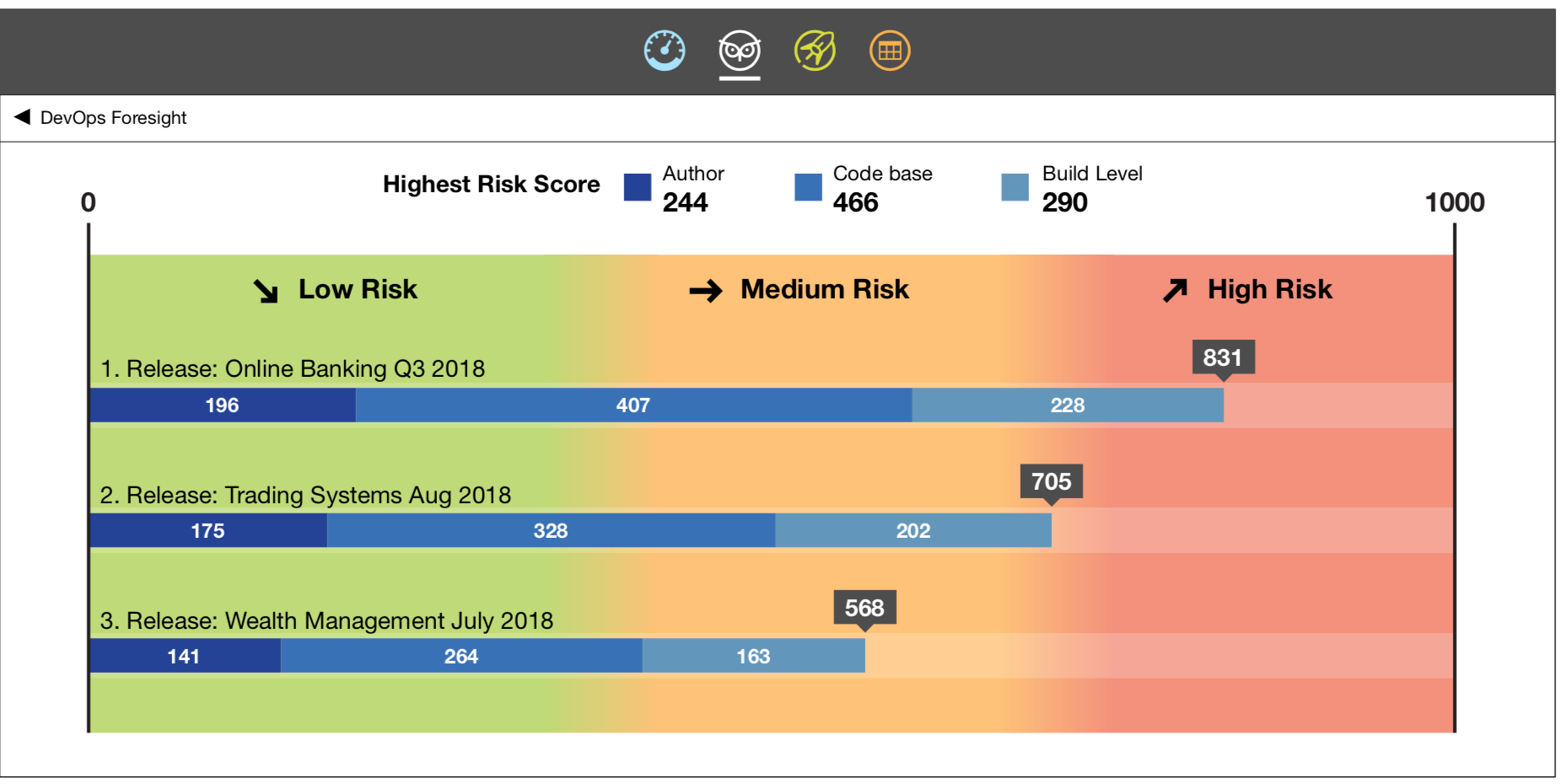
    ElectricFlow, the leading application release orchestration platform, uses deep learning to identify patterns in release pipelines and gauge the likelihood of software release success. By applying machine learning algorithms to the massive amounts of data generated by tool chains, ElectricFlow DevOps Foresight provides predictive analytics to develop a risk score metric that predicts the outcomes of releases before they head into production. Taking predictive analytics even further, the platform is also able to illustrate where to improve pipelines based on developer influence, code complexity influence, and more.

    “It is an honor to be recognized by EMA as a leading provider of actionable DevOps insight for development and operations teams through the use of artificial intelligence and machine learning techniques,” said Carmine Napolitano, CEO of Electric Cloud. “We pride ourselves in helping customers save hundreds of hours of work and relieve unnecessary anxiety related to releasing new products to market. By enabling data-driven insights about their software delivery toolchains and processes, they have the foresight to know a release’s success rate by looking at past successes and failures, build complexity, author profiles and more.”

    To arrange a demo of ElectricFlow DevOps Foresight, visit: (http://electric-cloud.com/solutions/devops-foresight/)

    Some of the key benefits of artificial intelligence and machine learning as identified in the research include:

    • Freeing up 30 percent of developer time used to support infrastructure
    • Eliminating operational silos as the root cause of cost, quality, and speed bottlenecks in DevOps
    • Proactively addressing operational issues and minimize mean time to repair (MTTR)

    Share This: ElectricFlow named by @ema_research as a Top 3 Enterprise Software solution leveraging #AI & #ML in #DevOps https://bit.ly/2NJXAHu #ContinuousDelivery #Analytics

    About Electric Cloud, Inc.
    Electric Cloud’s Adaptive Release Orchestration platform helps organizations like E*TRADE, HPE, Intel and Lockheed Martin confidently release new applications and adapt to change at any speed demanded by the business, with the analytics and insight to measure, track, and improve their results.


  • Electric Cloud Scores Highest in Three Out of Three Use Cases in Gartner’s   2018 Critical Capabilities for Application Release Orchestration  

    Critical Capabilities are Release Orchestration, Pipeline and Environment Management, and Deployment Automation and the Use Cases are Release Manager, Application/Product Owner and DevOps/Application Operations Team Member

    SAN JOSE, CA, September 25, 2018 – Electric Cloud (http://electric-cloud.com/), the leader in Adaptive Release Orchestration and Continuous Delivery, today announced it received the highest scores for three out of three use cases as defined in Gartner’s 2018 Critical Capabilities for Application Release Orchestration*.

    Gartner’s process evaluates products on a 5-point scale. Electric Cloud received highest scores from Gartner across all use cases in the 2018 Critical Capabilities for Application Release Orchestration*:  Release Manager (4.9/5), Application/Product Owner (4.88/5), DevOps/Application Operations Team Member (4.84/5).

    Download a complimentary copy of the full report: (http://bit.ly/2OQaKPB)

    “ARO tools provide a combination of deployment automation, pipeline and environment management, and release orchestration capabilities to simultaneously improve the quality, velocity and governance of application releases,” noted Colin Fletcher, Laurie Wurster and Christopher Little in the Gartner Critical Capabilities for Application Release Orchestration*. “ARO tools enable enterprises to scale release activities across multiple, diverse and multi-generational teams (DevOps, etc.), technologies, development methodologies (e.g., Agile), delivery patterns (continuous, etc.), pipelines, processes and their supporting toolchains.”

    “According to estimates, fewer than 20 percent of global enterprises have today implemented an ARO solution, but I bet they are all feeling pressure to deliver better, more secure software faster,” said Carmine Napolitano, CEO of Electric Cloud. “Electric Cloud has a deep understanding of the difficulties involved in coordinating and governing complex enterprise releases, and we’re very focused on helping organizations solve that problem. I believe this focus is paying off: Electric Cloud achieved the highest scores across all use cases. And, as a third-time Leader in Gartner’s associated 2018 Magic Quadrant for Automation Release Orchestration, we believe Electric Cloud also stands out with our positioning this year as furthest for completeness of vision this year.”

    This vision and current production leadership, along with our notable large enterprise customer successes, makes Electric Cloud the defacto standard for Enterprise ARO. Market leaders including TIAA, Samsung, Qualcomm, Motorola, Cisco, and GM choose ElectricFlow because it provides:

    • A way to implement and share secure, repeatable and adaptable pipelines to deliver mainframe, monolithic and microservices applications
    • Unprecedented, actionable insight into the health and status of enterprise releases, without requiring manual data collection and analysis
    • A solution that will reliably scale as they roll out DevOps processes across their entire organization

    For more information about ElectricFlow and to download the free Community Edition, please visit: (https://electric-cloud.com/products/electricflow).

     Connect with Electric Cloud


    Share This:

    Electric Cloud (@electriccloud) achieves highest scores for three out of three use cases in @Gartner_inc’s Sept. 2018 Critical Capabilities for Application Release Orchestration http://bit.ly/2OQaKPB #DevOps #ContinuousDelivery

    *Critical Capabilities for Application Release Orchestration; Published: 10 September 2018 ID: ID: G00343556; Analyst(s): Colin Fletcher, Laurie Wurster, Christopher Little

    **Magic Quadrant for Application Release Orchestration; Published: 10 September 2018 ID: ID: G00343560; Analyst(s): Colin Fletcher, Laurie Wurster, Christopher Little

    Gartner Disclaimer

    Gartner does not endorse any vendor, product or service depicted in its research publications, and does not advise technology users to select only those vendors with the highest ratings or other designation. Gartner research publications consist of the opinions of Gartner’s research organization and should not be construed as statements of fact. Gartner disclaims all warranties, expressed or implied, with respect to this research, including any warranties of merchantability or fitness for a particular purpose.

    About Electric Cloud, Inc.

    Electric Cloud’s Adaptive Release Orchestration platform helps organizations like E*TRADE, HPE, Intel and Lockheed Martin confidently release new applications and adapt to change at any speed demanded by the business, with the analytics and insight to measure, track, and improve their results.

    ###


  • Electric Cloud Launches Extended DevOps Training and Certification Program In Partnership with DevOps Institute

    Electric Cloud University offers online and private onsite training, along with public Continuous Education™ Workshops, to accelerate DevOps skills adoption


    SAN JOSE, CA, September 18, 2018 — Electric Cloud (http://electric-cloud.com/), the leader in Adaptive Release Orchestration and Continuous Delivery, announced a new training and certification program called Electric Cloud University (ECU). Created in partnership with the DevOps Institute (https://devopsinstitute.com/), the program allows Electric Cloud users to access on-demand training at their convenience and desired pace. ECU allows organizations to realize the benefits of DevOps and Application Release Orchestration (ARO) by providing a path for IT professionals looking to acquire new skills via training offered online, onsite, and through regional Continuous Education Workshops.


    Learn more about the inaugural ECU Continuous Education Workshops featuring industry leaders John Willis and Gary Gruver: https://electric-cloud.com/blog/2018/09/electric-cloud-university.


    Electric Cloud created ECU to augment traditional classroom training and to provide users with the flexibility to take the training when they need it. While organizations can still choose to have in-person training, ECU courses are also available in an online, self-paced learning management system (LMS). The ECU curriculum covers topics like DevOps Foundations, as well as pipeline and environment management, release orchestration, deployment automation, and build and test cycle acceleration. The ECU LMS has multiple levels of certification, with courseware that is kept up-to-date with the latest product and updated at the same cadence as Electric Cloud product releases, so information is always current and students don’t have to wait to be trained on the latest features.


    “Ultimately, the power of a Learning Management System (LMS) like ECU will help not only our current base of customers, but will support the continued learning and growth of the software delivery community as a whole,” said Sunil Mavadia, Global Head of Customer Journey at Electric Cloud. “As the leader in ARO, Electric Cloud is committed to advancing the industry by providing knowledge and best practices for ARO through the numerous learning paths and certifications available in ECU.”


    ElectricFlow certifications include:

    • Release Orchestration
    • Release Orchestration Master
    • Deployment Automation Engineer
    • Deployment Automation Engineer Master
    • Administrator


    ElectricAccelerator courses cover build and resource optimization, on-prem and cloud resource management, and test cycle acceleration.  ElectricAccelerator certifications include:

    • Build Accelerator
    • Test Accelerator
    • Administrator
    • Agile Master


    “The DevOps Institute works with recognized thought leaders like Electric Cloud to help teams acquire the relevant skills needed to survive, and thrive, during a digital transformation,” said Jayne Groll, CEO of the DevOps Institute. “We’re excited to be working with Electric Cloud to bring our curriculum and professional certifications to more organizations, starting with their inaugural Electric Cloud University workshops taking place this October in Las Vegas!”


    “Knowledge and community are cornerstones of a successful DevOps transformation,” said Gary Gruver, President at Gary Gruver Consulting. “I’m excited to be part of this inaugural Electric Cloud University Workshop so I can share my knowledge with other executives as they prepare to lead their teams through a digital transformation.”


    To learn more about Electric Cloud University and how to get started, visit: (https://electric-cloud.com/blog/2018/09/electric-cloud-university)


    ECU Continuous Education™ Days Agenda

    Electric Cloud University’s inaugural Continuous Education Workshops will be held both on October 21st and 25th, book-ending the DevOps Enterprise Summit Las Vegas 2018 (http://devopsenterprise.io).  More information about the sessions can be found here:


    • DevOps Workshop: Leading the Transformation with Gary Gruver
      • Build your knowledge and transformational leadership potential with this half-day workshop with DevOps thought leader Gary Gruver (Electric Cloud Advisor and author of “Scaling Agile” and “Leading the Transformation”).
      • Sunday, October 21, 2018
      • Register: https://electric-cloud.com/lp/20181021-workshop-exec/
    • You Build it, You Secure It. A DevSecOps Workshop with John Willis
      • A hands-on, technical tips and techniques workshop for developers and operators with John Willis (Electric Cloud advisor, co-author of “The DevOps Handbook” and Vice President of DevOps and Digital Practices at SJ Technologies).
      • Thursday, October 25, 2018
      • Register: https://electric-cloud.com/lp/20181025-workshop-devsecops
    • Experiential DevOps – A Simulation-Enhanced Learning Experience
    • ElectricFlow 101 Training – A Hands-On Intro to ElectricFlow


    Share This: .@electriccloud announces Electric Cloud University (ECU) in partnership with @DEVOPSINST as a self-service #DevOps training program to help organizations accelerate DevOps adoption and eliminate release anxiety (https://electric-cloud.com/blog/2018/09/electric-cloud-university)


    About Electric Cloud, Inc.

    Electric Cloud’s Adaptive Release Orchestration platform helps organizations like E*TRADE, HPE, Intel and Lockheed Martin confidently release new applications and adapt to change at any speed demanded by the business, with the analytics and insight to measure, track, and improve their results.

  • Electric Cloud Positioned Furthest for Completeness of Vision in Gartner’s 2018 Magic Quadrant for Application Release Orchestration

    Company’s ElectricFlow platform provides a safe and reliable way to scale software delivery quickly, in an adaptive manner, and with unprecedented actionable insight


    SAN JOSE, CA, September 12, 2018 — Electric Cloud (http://electric-cloud.com/), the leader in Adaptive Release Orchestration and Continuous Delivery, today announced it has been positioned as a Leader in Gartner’s 2018 Magic Quadrant for Application Release Orchestration for the third year in a row.* In its Magic Quadrant for ARO research, Gartner analysts evaluated companies for their ‘Ability to Execute’ and ‘Completeness of Vision.’ Electric Cloud was positioned the furthest for its ‘Completeness of Vision.’

    Download the full report: https://bit.ly/2N1nVjT

    “We believe being named a Leader in Gartner’s research for a third year in a row, and for being positioned the furthest for Completeness of Vision, underscores Electric Cloud’s commitment to market-leading innovation,” said Carmine Napolitano, CEO of Electric Cloud. “ElectricFlow provides game-changing control and visibility into complex enterprise pipelines and releases – across any combination of monolithic, mainframe and microservice-based applications. As our customers continue to make big bets on DevOps, we help them safely adapt to, and take advantage of, the massive and continual technological shifts underway. We work hard every day to empower our customers to transform software releases from a chore into a true competitive advantage.”

    From Automation to Orchestration

    Last year’s Magic Quadrant was focused on Application Release Automation. This year, Gartner expanded the scope of focus from Automation to Orchestration.

    Gartner’s 2018 Magic Quadrant and related Critical Capabilities for Application Release Orchestration evaluated vendors based on future market requirements capabilities, including 1) Deployment Automation, 2) Pipeline and Environment Management, 3) Release Orchestration, 4) Scalability and performance, and 5) Usability and access.

    Against these criteria, Electric Cloud was positioned the furthest for its ‘Completeness of Vision.’

    “To stay relevant, organizations are making big bets on DevOps – and not just in one team, but across many teams. As application architectures and toolchains shift, and more frequent development cycles overwhelm infrastructure and operations teams, digital transformations are put at risk,” added Napolitano. “We’re honored to be selected by so many industry leading companies to orchestrate their software delivery pipelines to enable faster, better, and safer software delivery at scale. Our users trust us with their core business – and we’re here to deliver, continuously.”

    Transforming Release from a Chore to a Competitive Advantage

    Today, the pace of software innovation equates to market success, and releasing high-quality software, securely and efficiently, is a critical need for all companies. There are a lot of ways to do ARO, but customers are increasingly choosing ElectricFlow to enable their releases. Electric Cloud is realizing 220 percent year-over-year new business growth with more than 100 percent net customer retention, signaling strong customer satisfaction and expansion.

    One of our recent customers, a Fortune 100 financial services firm, explains how they quickly ramped up their DevOps transformation with ElectricFlow. “We were able to get started and implement several useful pipelines very quickly,” said the DevOps Technical Lead. “We have found it to be quite adaptable, and the pipelines we’ve created are easy to extend, so we’re well positioned to incorporate new architectures, technologies and tools that our developers recommend – without the fear of anything breaking downstream. This ability to continuously adapt gives us an unfair advantage in the market place – an advantage which we will use to serve our end user customers reliably and securely, at any scale.”

    This company, along with many other market leading customers including Edward Jones, TIAA, Intel, Lockheed Martin, Phillip Morris, Terradyne, Cisco, GM, and E*Trade choose ElectricFlow because it uniquely provides:

    • A way to implement and share secure, repeatable and adaptable pipelines that deliver mainframe, monolithic and microservices applications
    • Unprecedented, actionable insight into the health and status of enterprise releases, without requiring manual data collection and analysis
    • A solution that will reliably scale as they roll out DevOps processes across their entire organization

    For more information, please visit: (https://electric-cloud.com/blog/2018/09/electric-cloud-positioned-highest-for-completeness-of-vision-in-gartners-application-release-orchestration-2018-magic-quadrant). To download the free Community Edition of ElectricFlow, visit: (http://electric-cloud.com/products/electricflow).


    *DevOps-Ready Release Management Requires Orchestration, Not Just Automation; Published: 23 August 2018 ID: G00368794; Analyst(s): Colin Fletcher, Christopher Little

    Gartner Disclaimer

    Gartner does not endorse any vendor, product or service depicted in its research publications, and does not advise technology users to select only those vendors with the highest ratings or other designation. Gartner research publications consist of the opinions of Gartner’s research organization and should not be construed as statements of fact. Gartner disclaims all warranties, expressed or implied, with respect to this research, including any warranties of merchantability or fitness for a particular purpose

    About Electric Cloud, Inc.

    Electric Cloud’s Adaptive Release Orchestration platform helps organizations like E*TRADE, HPE, Intel and Lockheed Martin confidently release new applications and adapt to change at any speed demanded by the business, with the analytics and insight to measure, track, and improve their results.


    ###


  • Electric Cloud Applies Machine Learning to DevOps

    Electric Cloud Applies Machine Learning to DevOps

    Machine learning algorithms are being applied to advance DevOps via analytics software that Electric Cloud is making available.

    Electric Cloud CTO Anders Wallgren said ElectricFlow DevOps Foresight is made possible because of the massive amounts of data that Electric Cloud is able to acquire providing an application release and continuous delivery platform-as-a-cloud service.

    Electric Cloud applies predictive analytics against all the data it collects to identify and contrast patterns, which it then uses to generate recommendations to specific DevOps teams based on what’s occurring in their local environment, said Wallgren.

    ElectricFlow DevOps Foresight is able to generate a risk score metric that predicts the probable outcome of a release before being deployed in a production environment. Based on that score, he said, a DevOps team can decide to go ahead and deploy that code or hold it back for further testing.

    The application also will make recommendations on how to improve pipelines based on, for example, the complexity of the code being deployed, Wallgren added.

    As part of this effort, Wallgren noted that Electric Cloud has been extending the level of integration it provides with application performance monitoring (APM) tools that serve as a source of data for a predictive analytics application.

    The goal is not so much to provide a “big brother” application that will determine who should be fired, , for example, but rather reduce as much friction in the DevOps process as possible, he said.

    Being able to apply machine learning algorithms to large amounts of data is becoming a compelling reason to shift DevOps processes into the cloud, he said, adding most organizations aren’t going to be able to collect the critical mass of data required to train machine learning algorithms running in an on-premises environment. ElectricFlow DevOps Foresight enables DevOps teams to leverage a turnkey application where support for those algorithms is already embedded into the cloud service, he said.

    Wallgren noted the result should be a significant reduction in the amount of anxiety surrounding any release of an application.
    Ultimately, the question many organizations will have to come to terms with is the degree to which they want to rely on machine learning algorithms and other forms of artificial intelligence (AI) to automate the DevOps processes. For now, Wallgren said Electric Cloud is focused on predictive applications that make recommendations versus taking independent action.

    It remains to be seen just how comfortable DevOps teams will become with various forms of AI. On the one hand, DevOps teams are clearly interested in accelerating application deployments at a time when the number of applications being  developed simultaneously is increasing exponentially. On the other hand, automating DevOps processes using AI could result in flaws being propagated at a level of unprecedented speed and scale. Long term, however, those organizations that fail to embrace AI to advance DevOps are more likely to find themselves at a competitive disadvantage.

    — Mike Vizard

  • Electric Cloud Takes Analytics into the Future with ‘DevOps Foresight’

    ‘ElectricFlow DevOps Foresight’ uses deep learning to identify patterns in release pipelines, gauge the likelihood of software release success, and will offer recommendations based on improving pipelines

    SAN JOSE, CA, June 25, 2018 — Electric Cloud (http://electric-cloud.com/), the leader in Adaptive Release Orchestration and Continuous Delivery, announced a new predictive analytics solution, ElectricFlow DevOps Foresight (http://electric-cloud.com/solutions/devops-foresight/). DevOps Foresight applies machine learning algorithms to the massive amounts of data generated by tool chains to develop a risk score metric that predicts the outcomes of releases before they head into production. Taking predictive analytics even further, it will also illustrate where to improve pipelines based on developer influence, code complexity influence, etc.

    ElectricFlow DevOps Foresight provides DevOps teams with the necessary steps to eliminate further sources of “release anxiety” by having clearer insight into existing development practices and release patterns. Now, bottlenecks and inefficiencies throughout the software delivery process are easier to find and correct. The ability to understand resource allocation for new and complex application and environment requirements also helps ensure the best path toward successful software releases.

    To arrange a demo of ElectricFlow DevOps Foresight, visit: (http://electric-cloud.com/solutions/devops-foresight/)

    Based on deep insights into past patterns of success and failures, DevOps Foresight predicts the likelihood of a release’s success. Much like a credit score, the creation of a release’s risk score numerical value is based on developer, code and environment profiles and gives stakeholders an easy, visual way to interpret the likelihood of success for a particular build or pipeline. If the score is high, DevOps teams can look at those profiles to determine what, specifically within those profiles, is driving up the risk.

    In order to illustrate areas for improving the pipeline, DevOps Foresight looks at contributing factors and what has helped to improve them in the past, and will suggest appropriate changes in teams, code or environments.  Managers will be able to proactively answer questions like:

    • Are we going to finish our release on time?
    • Can we move faster or can we do more?
    • Will this release cause more or less quality issues?
    • What’s the likelihood of a production deployment failure?

    “Electric Cloud long established great ways for its customers to gain insights into releases that are moving through the pipeline, but it’s been a challenge for organizations to understand the risks of releases before they’re finalized or even started,” said Carmine Napolitano, CEO of Electric Cloud. “Improving the pipeline is often based on trial and error or best guesses. What we aim to do with ElectricFlow DevOps Foresight is provide data-driven insights much earlier in the process by looking at past successes, build complexity, author profiles and more, and then show where the pipeline can be improved based on facts. I’m proud to say the team at Electric Cloud has built a tool that can save our customers hundreds of hours of work and relieve unnecessary release anxiety for each and every product they deliver.”

    To learn more about ElectricFlow DevOps Foresight and how it can help your organization ease release anxiety, visit: (http://electric-cloud.com/solutions/devops-foresight/).

    Share This: .@electriccloud releases new predictive analytics tool “ElectricFlow DevOps Foresight” to eliminate #releaseanxiety and accelerate software releases http://electric-cloud.com/solutions/devops-foresight/ #ContinuousDelivery #ITOps

    About Electric Cloud, Inc.

    Electric Cloud’s Adaptive Release Orchestration platform helps organizations like E*TRADE, HPE, Intel and Lockheed Martin confidently release new applications and adapt to change at any speed demanded by the business, with the analytics and insight to measure, track, and improve their results.


  • DevOps Chat: Post-DOES Workshop w/ Gary Gruver & Helen Beal

    DevOps Chat: Post-DOES Workshop w/ Gary Gruver & Helen Beal

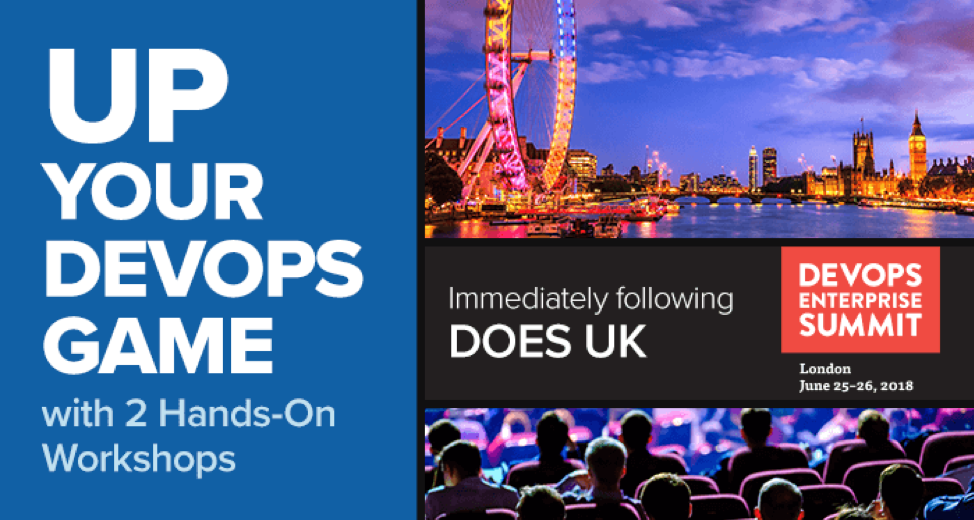
    Post-DOES WorkshopGene Kim’s DevOps Enterprise Summit UK is just a few weeks away, June 25-26. While DOES UK this year is shaping up to be a must-see event, there are also some great events taking place around DOES. One is sponsored by Electric Cloud (also a founding sponsor of DOES). It is a post-DOES workshop, featuring classes taught by Gary Gruver, John Willis and Helen Beal.

    The workshop session lineup includes “DevSecOps,” by John Willis, “Leading the DeOps Transformation,” by Gary Gruver and “DevOps Essentials,” with Helen Beal. Helen’s DevOps essentials and Gary’s executive leader workshops are both half-days, so you can attend both. Each of these are great learning events as well as a great way to network with your peers. If you are in London on June 27, be sure to check them out.

    As usual, immediately below is the streaming audio of our conversation, followed by a transcript so you can follow along.

    Audio

    Transcript

    Alan Shimel: Hey everyone, it’s Alan Shimel and you’re listening to a special edition of DevOps Chat. We have three folks on our panel for DevOps Chat today, and each one of them, actually, are really kind of special people to me within the DevOps community. And let me introduce them to you right off. First and foremost, ladies first.

    I want to introduce Helen Beal. Helen of course is DevOps fantastic at Ranger Four. But also, Helen was one of the first people I met in the DevOps community over in London and has been a friend ever since. Also has a position with the DevOps institute – an advisory role at DevOps institute as well. So Helen, welcome to DevOps cChat.

    Helen Beal: Thank you very much, it’s a pleasure to be here as always talking to you.

    Shimel: Thank you. My second guest really needs to introduction in the DevOps community. He has three – count them, one, two, three books around DevOps as well as many years of leading DevOps teams at HP and Macy’s and now consulting for many, many different organizations and helping them with their digital transformations and DevOps journeys, none other than Gary Gruver. Gary, welcome.

    Gary Gruver: Hi, thanks great to be here, nice to be speaking with you again.

    Shimel: Nice to have you here. And then certainly, last but not least – one of my good friends in the DevOps world, he runs marketing at Electric Cloud, which is also of course the founding partner of the DevOps enterprise summit (DOES) with Gene Kim and ITREV– Sam Fell. Sam, welcome.

    Sam Fell: Thank you, Alan. Happy to be here.

    Shimel: Okay, first thing I want to talk about today is we’re getting close to DOES London, which I believe is what? June 25 and 25 over at the O2 in London.

    And I know you’ll all be attending there and of course we can – Electric Cloud is again one of the founding sponsors and we can get all that information over on the IT revolution site. But part and parcel with Does London this year, I wanted to mention two special events taking place on the heels of Does London.

    One is a special post-Does workshop which, Sam, you and the Electric Cloud folks have driven. Why don’t you give us a little background here on what you guys are doing and why?

    Fell: Yeah, great – thanks, Alan, I appreciate that. So Gary – you mentioned, he has had all this experience helping these large  companies with their digital transformations. When we started our user conference back in 2013, Gene Kim came and spoke, Jez Humble came and spoke.

    And we were talking together, we said these are exactly the kind of people – these old horses that are trying to do these transformations that we want to try and attract to a large conference, which is sort of what the genesis of the DevOps enterprise summit. The folks that show up at that show, a lot of them are in a tough spot.

    They know they need to transform. Their business wants them to transform, they don’t know how to go about doing it. And so having a community of people that are available to talk to and learn from, admit mistakes to in a safe way, to know that you’re gonna get advice and counsel, it’s a fantastic show that the team has put together. And you can see by the success of it that the community really embraces it.

    So our thought last year with Gary was why don’t we take somebody who has helped companies with these transformations and go to DevOps enterprise summit and listen to those stories and see what people are going through and then directly after that you get in a room with an expert coach who can say, now, let’s apply that to you. Let’s apply that to your situation. All those stories that you’ve heard, how does that work for you?

    And last year we had just a fantastic time and so we decided to do the same thing this year at Does London. We’ll be doing the same thing at Does Los Vegas in October as well. And it’s just an opportunity for people to really put in practice and make real a lot of the things that they heard at the fantastic DevOps Enterprise Summit.

    Shimel: Fantastic, Sam. And it is, it’s a great workshop. Gary and Helen – before I jump over to you, Sam – I forget I apologize. For people to register for the workshop, what’s the cause? What’s involved? Where do they go?

    Fell: So it’s a heavily subsidized workshop. Helen, the DevOps institute, Gary, John Willis – these guys are giving their time in order to provide this for the community. Electric Cloud is helping to pay for the room and all this other stuff. So the cost is pretty minimal. I think it’s £195.00 for our early bird.

    We don’t have that many tickets eft but there are some tickets. There’s a group rate as well. So you know, non-expensive and it’s an opportunity for you to really rub elbows with people who are always wanting to learn how to do these types of things. And as you mentioned, John, we do have these couple different workshops.

    John Willis is doing Dev-Sec-Ops hands on technical workshop that same day. So we’ve got two tracks that we’ve got set up basically. I don’t want to spill the beans on what Helen and Gary are going to be talking about, but the John Willis workshop  we’re really excited about that. He’s gonna be showing people with a live pipeline how to incrementally improve it. how to bake security into your deployment pipelines.

    And one of the types of things that you can do to enable your teams and your developers to ship secure codes. Fantastic stuff.

    Shimel: Yeah, no, that’s gonna be a great hands on workshop for anyone interested in DevSecOps. We’ll have more info about DevSecOps in a little bit. But first, let’s turn to Gary. Gary – what is your workshop going to be about here?

    Gruver: I think I’m gonna follow your lead. Let’s go with Helen’s first with lady’s first and get to that and I think that’s the order that we’re going in with the day. Why don’t you lead off with Helen and then I’ll follow up.

    Shimel: Chivalry is not dead. Helen – go ahead.

    Beal: Thanks, Gary. So I’m going to be doing the half day DevOps institute course – the essentials of DevOps which essentially kind of what it says on the tin, the fundamentals or the foundation and relevance of DevOps and things like the three ways and coms and how it fits with Agile and IT send and Lean, PK studies, linking it to this integration.

    And continuous delivery. How they lead from one another. So that’s it. It’s a course really for people that are quite new to DevOps and they should expect to leave the course, really with an understanding of where DevOps has come from, why it’s important and what sort of business benefits people can anticipate from using DevOps practice and principles.

    Understanding some of the vocabulary that those of us that kind of live and breathe DevOps are quite familiar with. So things like the theory of constraints and CD and things like that and hopefully with some kind of action plan of what they can take back to their desk the next day and start making some DevOps differences in their own organization.

    Shimel: And it is the DevOps essentials course it’s really sort of a big time version of the full DevOps foundation, which Helen – you were instrumental in refreshing for this latest– I think it’s released three of DevOps foundation?

    Beal: Yeah, it’s very nearly ready. So it’s been updated with lots of additional case studies, we’ve updated things like the surveys too, the latest versions of the state of DevOps surveys. I know there’s another one coming out. I don’t think we’re expecting it for another few months, and actually part of what we’ve been doing this update is following our own principles. So we’re actually aiming for a much more incremental release cycle as we move forwards rather than in frequent big updates.

    I’m sure we’ll all be on board with that. And then, newer things have been coming through like liability engineering and more stuff around services and containers and those sort of things. Focused on safety culture, learning organizations and some of the things that John and Gene can cover in their beyond the finished product audiobook, also featured in there.

    As is some of the material from Nicole’s and Jane’s book – accelerate. And some references to that. And then we’ve removed some of the stuff that kind of isn’t really around anymore in the DevOps World.

    So things like NoOps – think it’s really gone away now. Rocket DevOps has been very overtaken by DevSecOps. So it’s a good solid refresh and hopefully the foundation will be able to keep refreshing it more frequently as this is such a fast changing world that we’re in – this DevOps world.

    Shimel: It certainly is. Okay, that’s fantastic Helen. And I encourage listeners that may be in the London area that week, if you’re near to DevOps or you really haven’t taken any formal DevOps sort of education or classes, you know, listening – goes to Does is a great way to learn from real life examples. But really this is a great class to give you a nice foundation in DevOps. Gary, how about you?

    Gruver: I’ll be doing my executive workshop that I do with most organizations when I go in and work with the executives to really help people put together their plans and figure out how do they approach it. The people that are gonna be at. Does are gonna be hearing a lot of different ideas, and a lot of perspectives on what they should be doing and I’ll hopefully be trying to help them put that in context.

    My big thing I champion is there are different approaches you need to use when you’ve got large tightly coupled systems than you do when you have small teams that can independently develop and qualify and deploy code. We’ll be going through a lot of those differences. We’ll be going through the role of the executive in terms of leading the transformation.

    A lot of this can be empowered if you have loosely coupled small teams but if you’ve got large groups of people who have to work together to coordinate the deployment pipeline in terms of being able to develop, qualify and release as a system, then you need to have the executives playing a pretty active role in coordinating the work across those teams and prioritizing the improvement. So we’ll be going through that.

    How do executives get the team all on the same page? And then how do you get them to a common definition of what they’re gonna go do and agree to that? So my analogy is a pipeline ____ described an elephant feels like most discussions I start with organizations that are starting to go down their DevOps transformation.

    And what I work to is a process and approach to give them a common view of the elephant and get people all rowing in the same direction. And helping people understand that the types of things they can and should do are different for large, tightly coupled systems versus loosely coupled systems. And then we’ll go through and we’ll help them understand where they should really be starting their transformation.

    Which is different for a lot of different organizations. And I feel that starting point is really important, because this is a lot of energy. It’s gonna take a lot of effort to transform how you do software development.

    And you really want to pick the changes that are gonna have the biggest impact on your business first off so you can create that positive momentum. I think if you just go down the path of doing DevOps without picking those things that will have the biggest impact, you’ll start doing it, you won’t see the benefits, and over time the organization will kind of disengage and you’ll lose momentum on your transformation.

    So a lot of what we focus on is trying to highlight those key lynchpins that you can really start making the big differences and how to go analyze that for different deployment pipelines in your organization.

    So it’s really that. I’ll be there. But there will also be a lot of your peers in the room. So it’ll be a good opportunity to take the things that you learned at Does to reflect on them and talk with myself and your peers about what you’re thinking about doing.

    And learning from it. And I would say that I’ve been doing this for a long time, and what I tell people is that just gives me more opportunities to have made the mistakes that you’re gonna make.

    And so if I can help you avoid the mistakes I already made so you can go make some new ones, learn from that, that’s kind of my goal. My experience is this stuff is such a breakthrough for the business that we’ve gotta have more people doing it. But how can we help people best we can so they realize those same benefits.

    Shimel: Excellent. Gary – you know, one of the things I think sometimes people get confused or question is when we talk about this is aimed at executives. It’s sort of a loaded term. In a large organization like a Macy’s, executive might mean CIO, it might mean VP of IT. in other organizations it may mean a director level. Can you give us a better definition or how you define you know, the executive who is gonna get a lot of good out of this workshop?

    Gruver: I think they all will. I’ve done it all the way from the CIO and I do execution workshops down to – to the leaders that are responsible for a tightly coupled deployment pipeline and then some organizations that might be a director or senior manager that’s over development and ideally, it’s nice that you can bring your partners in QA if it’s separate, and in operations if it’s separate. Maybe your security people, maybe your audit people.

    And come together as a team after Does. So if you’ve got a group of people that have gone to it and gone to a lot of different presentations, having them come together on that will be helpful. So this is the group at whatever level in the organization you think will be leading the transformation, or driving the changes. It can be – typically the CIO when I do the executive workshop is more to inform them of their role in it. Then at some level, we get down to a specific deployment pipeline.

    And the deployment pipeline may still be 1000 people if you’ve got a large tightly coupled system, like we had at Macy’s.

    Which requires large numbers of people working together, or it may be small. And if it’s small, you can do a lot of the things that you’ve seen unicorns do. And if it’s larger, the same principles apply but the practices are a little bit different.

    Shimel: Excellent. Yup. Great. So guys, we’ve covered a lot of ground here. Let me do a quick review. Sam, what day is the workshop?

    Fell: The workshop is the day directly after DevOps enterprise summit. Wednesday June 27.

    Shimel: It’s June 27.

    Fell: That’s correct. Right before… DevSecOps days on the 28th!

    Shimel: Yes, and Sam – I will put in our show notes a link to the URL about the workshop and registration. But where is it being held specifically?

    Fell: It’s conveniently located in exactly the same location as the DevOps Enterprise Summit which is the InterContinental – O2 in London. So if you’re in London, very convenient area to get to also. So come on by.

    Shimel: Excellent.

    Gruver: And you don’t have to have gone to DOES or the DevSecOps. If you’re in Europe and you wanted to stop by.

    Shimel: Excellent point. It’s not a pre-req if you’re looking for some good, hands on DevOps training and networking and education, this workshop is a standalone event. It’s fantastic as well. So let’s cover the three different workshops actually being conducted that day though. Number one is we’ve got none other than John Willis himself leading a real hands-on DevSecOps. Is Anders working with John on that one, Sam?

    Fell: Anders will be in there, yeah, he’ll be hanging around. But this is really John’s show. And this is his passion. And he’s driving the technical aspects of this workshop where people are really gonna be able to get their hands dirty with the technology, have a pipeline. Put some vulnerable code through it, and deploy it and then figure out how do we put automated steps in place and how do we sort of put the – get the developers thinking the right way to make sure that that kind of stuff can happen and what are the practices that need to be put in place. So really, for folks who want to try and get that level of specificity of how to do it, not just the high level, interesting, interesting workshop for people.

    Shimel: Absolutely. We’re all hearing a lot about DevSecOps. Gary made reference to DevSecOps. I think Helen did as well. And we talk about this DevSecOps rugged DevOps etc. This is really gonna be hands on. so it’s great whether you’re a DevOps person or a security person. Then we have Helen who is delivering the pre-req 101 DevOps essentials, based on the latest upcoming version of DevOps foundation from the DevOps Institute. And Helen, people who take essentials – do they get any kind of credit or anything towards a foundation or being able to take a certification or anything like that?

    Beal: As you said earlier, it’s basically a cut down version of the DevOps foundation course and that’s a certified course. This isn’t a certified course, so I’m sure if people wanted to follow up with the DevOps foundation, we could sort something out.

    Shimel: Fantastic. And then certainly, last but not least, aimed at DevOps leaders and executives, Gary is gonna be in essence, delivering what many organizations are paying thousands and thousands of dollars for. His course on kind of leading the transformation. That’s taken right from one of your books, Gary. I apologize. But really, dollar for dollar, what a great line up, what a great deal for anyone who is looking for DevOps training and education. I also wanted to quickly before we run out of time here, I wanted to mention that the day after the workshop is the first DevSecOps days in London.

    Again, headlined with John Willis. I think, Helen, you’re speaking there as well. Correct?

    Beal: I am, indeed. Yes.

    Shimel: Give us a little preview, what are you talking about?

    Beal: So John saw a talk I think I did in Belfast or somewhere – maybe last year. It might have been all day DevOps, can’t remember. Anyway. But basically we’ll be talking about DevSecOps engineering as a concept. As you probably know, the DOI at DevOps institute is just about to release a new course for DevSecOps engineering. So we’ll be talking about that role and what the requirements are to be successful in that area.

    Shimel: Yup. And DevSecOps days also promises to be a fantastic day. Sam and the Electric Cloud folks – we’re grateful for your sponsorship. Electric Cloud is one of the sponsors there. I will put in the show notes where you can get more information on DevSecOps days as well. But you can go to DevSecOpsdays.com and that’s the long and short of it right there. Guys, a couple of minutes left, let’s wrap up.

    Helen – beyond all of the great stuff you’re doing with DevOps institute, what any good news? Any new things going on with Ranger Four?

    Beal: One of the nice popular things that we’re doing at the moment is one of my favorite things conveniently as well. Which is our version of Phoenix project simulation game. That we kind of developed with our partner Gaming Works out in Amsterdam. So it’s a one day business simulation so experiential learning rather than classroom learning. We’ve got a free, public version of that coming up in London on the 19th of July. It is quite close to being fully booked.

    But if people want to find me on Linked In or would like to come along, we do have a couple of spaces left.

    Shimel: Excellent. And I’ve done the Phoenix Project simulation game, I love it and I’m sure you guys will deliver a rousing version, highly recommend. Gary, how about you?

    Gruver: Oh, I’m just spending more of my time with individual companies, learning from their journeys and trying to help them avoid the mistakes I’ve made and help them to learn from new mistakes they’re finding so I can help point it out to other people so that people can accelerate their journeys and be more successful. So that’s where I spend most of my time is just coaching different teams that are trying to transform their software development delivery processes.

    Shimel: You know what, Gary – what we should have mentioned though – for maybe folks listening out there who may want to engage your team to help them, where do they get information?

    Gruver: They can just go to garygruther.com – my website. And they can also go there and download a free copy of my latest starting scaling DevOps and enterprise, the electronic copies are there. I self-published that so I can give it away. Authors don’t really make money on books. So it’s out there, so I can give it away.

    If you read the first three chapters and then click at the end, you can get the rest of the chapters if you just give me your name, your title, where you work and where you live so that if I happen to be in the region – I keep thinking I’ll use that as a marketing tool. I haven’t sent anything out to it yet, but I’m still collecting names of the people that read the book because it feels like a good contact for me.

    Shimel: And of course, you’ve updated your privacy regulations to be GDPR. Anyway, Sam let’s see – DOES – you guys are the founding partners of DOES, you’re doing these workshop, you’re helping us with sponsoring DevSecOps days. What are you doing in your spare time?

    Fell: Next week we’re gonna be at Velocity San Jose if anybody is in the area, we’d love to have you stop by and see us. Yeah, we’re just looking forward to seeing everybody out in London. And it’s gonna be a super fun filled week. I mean, it’s a whole week of DevOps. I could not be happier. I’m super excited about it. really appreciate all the work that everybody is doing to try and make this community event a success. And looking forward to being in London.

    Shimel: As am I. I will be at all three of these events as well and you hit it there, Sam. Both the workshop and DevSecOps, these are community events. London has a fantastic DevOps community. Looking for your support, and I think it’s gonna be a great week for DevOps. So with that being said I think we’re about out of time here. Helen – as always it’s a pleasure to hear your voice and have you on the show with us. Look forward to seeing you in person.

    Gary, always a pleasure, my friend. I’m sorry, Helen – I stepped on you there.

    Beal: I was just gonna say, thank you very much for having me on and really looking forward to seeing you guys as well.

    Shimel: Great. Gary – as always, a pleasure.

    Gruver: It’s always a pleasure to get a chance to speak with you, Alan, and look forward to helping out the DevOps community.

    Shimel: Very cool – and Sam, what can I say that hasn’t already been said?

    Fell: I don’t know. You could say “goodbye?”

    Shimel: Okay – in that case, goodbye. This is Alan Shimel. You’ve just listened to another DevOps Chat. See you all in London for DevOps week.

    — Alan Shimel

  • DOES18: Discussing DevOps with Gary Gruver and Helen Beal

    DOES18: Discussing DevOps with Gary Gruver and Helen Beal

    It’s hard to believe that DevOps Enterprise Summit London ( DOES18 ) is right around the corner! The conference, which takes place June 25-26 at The InterContinental – O2, is guaranteed to provide two jam-packed days of learning around architecture, next-generation operations, spanning business and technology divides and much more. If you haven’t already registered, there is still time to secure your spot! Receive 20 percent off registration using the Friends of Gene Kim code (FOG20) at checkout. And, if two days of DevOps just isn’t enough, Electric Cloud is hosting post-conference workshops for a full immersion experience:

    • From New Learner to Executive Leader—Gary Gruver (Electric Cloud strategic advisor, author of “Scaling Agile” and “Leading the Transformation”) and Helen Beal (product owner at the DevOps Institute,) build up your knowledge and transformational leadership potential in this full-day, hands-on workshop geared toward business leaders.
    • You Build It, You Secure It: DevSecOps Workshop—John Willis (Electric Cloud strategic advisor, co-author of “The DevOps Handbook” and vice president of DevOps and Digital Practices at SJ Technologies) hosts this full-day, hands-on, technical workshop to help build and incrementally improve DevSecOps pipelines.

    Prior to DOES18 and upcoming workshops, we caught up with Beal and Gruver to learn a little more about their DevOps background and what attendees can expect during their workshop:

    Alan Shimel: First, for those who don’t know you, tell us a little about yourself?

    Gruver: Hi, everyone – glad to be here. In my professional career I’ve worn a lot of hats—I’ve been an engineering executive, a coach, an author. My experience in this space come from leading large-scale transformations in big organizations with complex tightly coupled systems. I think this gives me a unique perspective that is valuable to any managing large systems that aren’t in a position to just go and “re-architect everything to microservices in the next few months.”

    I started out by leading a group of 800 developers in the HP LaserJet firmware team through a transformation that delivered a 2-3X improvement in productivity. The results were so great that we decided to document the journey in my first book, “A Practical Approach to Large Scale Agile Development.” This book, coincidentally, echoed the same ideas and was finished about the same time that Jez Humble and David Farley published their book, “Continuous Delivery.”

    After that, I joined Macy’s.com as the VP of Release, QA and Operations to apply these same concepts to their very large-scale journey to CD. It helped that Jez worked down the street and we could share ideas back and forth over beers. During this period, the term “DevOps” started getting real traction, and I realized I was one of few people actually helping to roll out those practices in large, complex organizations. At the end of that experience, I published my second book, “Leading the Transformation,” where I documented everything I wish I had known to help others avoid the same mistakes I had made.

    After my experience at Macy’s, I began coaching executives in other large organizations in order to help them transform their own software development and delivery processes. Each one of these engagements was unique, with very different challenges—although I could definitely see commonalities among them. I compiled that knowledge into my third book, “Starting and Scaling DevOps in the Enterprise,” where I lay out the approach I use in working with these organizations.

    Beal: Hi, I’m Helen and I describe myself as a “DevOpsologist”—that is, I study DevOps. I coach, train, write and talk about all aspects of DevOps and help organizations use DevOps principles to deliver value outcomes faster, better and more reliably. I do this at Ranger4 through assessing capabilities, developing improvement roadmaps and then implementing those road maps through workshops, training and facilitating value stream-mapping exercises and games like The Phoenix Project Game. I’ve been working in the software industry for nearly 25 years and have spent most of them specifically focused on helping organizations make improvements in the software delivery life cycle. I also work with the DevOps Institute on content improvement and creation and am a DevOps editor at InfoQ.

    Shimel: How did you “get into” DevOps? Why is it so important to you?

    Gruver: I didn’t get into DevOps to “do DevOps,” because the term hadn’t yet been invented. Instead, I applied the concepts of what later became known as deployment pipelines to my particular situation because they were the process improvements we found had the biggest impact on our efficiency. The group I managed (at HP) was just starting a complete re-architecture of a 10M line code base when the economy crashed (2008), resulting in me being told I had 30 days to come up with a plan to drop my R&D spending by 50 percent but I still had to deliver the new architecture on time. This transformation was critical to the health of the business, so I took it as a personal mission to get this done so we could maintain staffing levels and keep the jobs of all my friends and co-workers.

    Every day I came in and got to work with an amazing group of people that were focused on doing everything possible to help the company survive by improving the efficiency of our software delivery process. We ended up implementing a lot of changes that were later called “DevOps.”

    It was such a huge breakthrough for the business that I have spent the next decade of my life trying to help others realize the benefits of these process improvements. And over time I have focused more on DevOps because I think it best represents the process changes that provide the biggest benefits for large organizations.

    Beal: Working on the whole software delivery life cycle led to four years closely focused on deployment automation just as DevOps was becoming a “thing.” At Ranger4 we decided to build our business around helping organizations understand how to use DevOps principles and practices to make improvements. At Ranger4 we like to say we are fanatical about making life on earth fantastic and that’s the core of why it’s so important to me—we are trying to take pain away from the work people are doing and make them more successful and their organizations more successful.

    Shimel: Tell us about your workshop. Who comes to your workshops? What will people coming to your workshop learn?

    Gruver: My workshop is a combination of the “Leading the Transformation” and “Starting and Scaling DevOps in the Enterprise” books. We start helping executives understand their roles in leading a successful transformation and provide a framework for that effort. Next, we deep dive on DevOps, helping executives understand how implementing DevOps in large, tightly coupled organizations can and needs to be different from what you hear about being recommended by the unicorns with loosely coupled architectures. The workshop also shows the executives how to analyze their current deployment pipelines to identify the biggest sources of waste because I strongly believe if you don’t start delivering real business benefits early your transformation will start losing momentum.

    This workshop gives people the opportunity to integrate everything they learned at DOES and put it together with an approach they can take back to their organization and start making changes that will improve the effectiveness of their software development and delivery processes.

    Beal: My workshop is the DevOps Institute’s “DevOps Essentials,” so kind of what it says on the tin: the fundamentals of DevOps in half a day. So we’ll be covering things like where DevOps has come from, why people are doing it and what they are actually doing; the Three Ways; CALMS; changing culture; the relationship between Agile, Lean and ITSM; and building DevOps toolchains. People that come to my workshop will leave with a solid understand of the core practices and principles and DevOps vocabulary.

    Extra insights from Beal:

    Shimel: What’s the hottest topic in DevOps for you right now?

    I’ve always been particularly interested in the cultural side of DevOps and right now I am most interested in the neuroscience of behaviors.

    What did you learn this week?

    I learned this thing about pigs and chickens in agile the other day which made me laugh, and also helped make an improvement in a particular team we are working with.


    Ready to get your hands on DevOps? Register now to join Beal and Gruver June 27 at The InterContinental London – O2.

    If you’re looking for a more technical hands-on experience, register for Willis’ workshop here.

    Plus, there is still time to register and save for DOES18! Gene Kim is giving out his “friends of Gene” discount – use code “FOG20” at checkout for 20 percent off the ticket price.

    — Alan Shimel

  • Electric Cloud and the Deployment Dashboard

    Electric Cloud and the Deployment Dashboard

    As my regular readers know, I started a series on companies that I found intriguing who were going to Jenkins World both late (a couple weeks before the event started), and ad hoc. That meant that companies I talked to on a regular basis came to mind, simply because I knew what they were up to, and whether or not they were going to Jenkins’ World.

    It turned out to be a popular few blog posts, both with readers and customers, but I was only able to fit three in before it was late enough in the event that publishing more would not achieve the goal of the series: telling you all about interesting bits to check out.

    But as these things go, the more I paid attention, the more interesting stuff I found. So I’m going to do a few “What you might not have seen at Jenkins’ World” posts to kind of get a chance to talk about other ideas that hold interest.

    Today, I’ll focus on a vendor I’ve followed but never actually used. That’s rare for me; generally speaking, if I’m writing about the product, I’ve used it. And no doubt I’ll snag a free license and put it through the paces, or have one of my coworkers do so. But for now, I’m covering them because I find what they’re doing to be of interest.

    The vendor is Electric Cloud. For those unaware, its ElectricFlow tool is in the same application release automation/continuous delivery (ARA/CD) market space that XebiaLabs (which I also wrote about at Jenkins World) XL Deploy is in. But the point of this blog is not to compare; since I have used both of XebiaLabs’ mainstream products and not Electric Cloud’s, a comparison would be unfair. I only mention XebiaLabs to help those just starting to research understand where Electric Cloud fits.

    dashboard
    Electric Cloud’s new dashboard

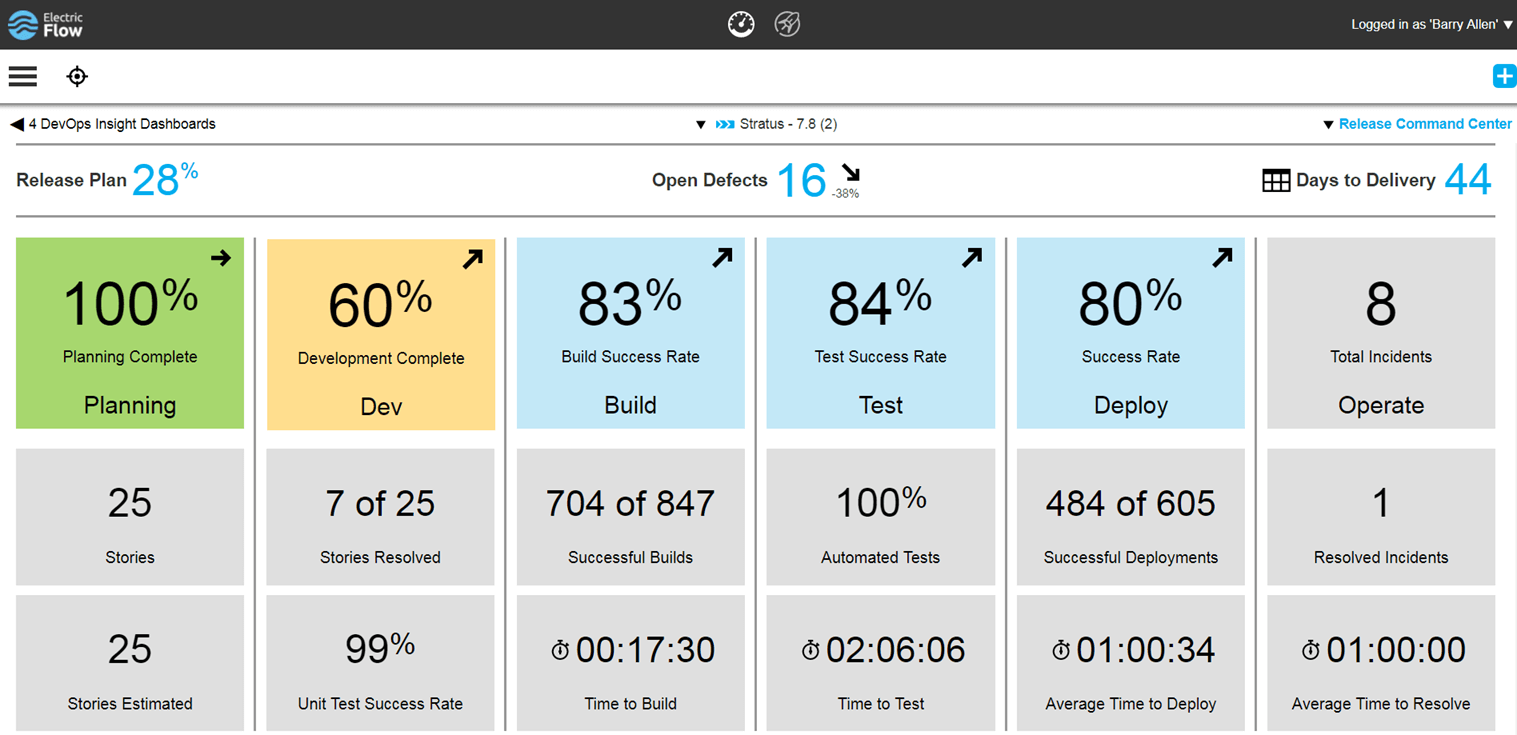
    Electric Cloud’s big bit at Jenkins’ World that intrigued me was its updates to ElectricFlow to allow better reporting. We all know when a build breaks, we have great systems on the AppDev side to notify the source of the breaks and project management of the issue. But as has traditionally been the case within IT, getting that information out to business leaders who have an interest in the application is spotty, at best. Combine that with the fact that what and how it is reported can vary project to project, and there always is a bit of confusion among the business about status of projects. This confusion translates to asking IT management about status and then, when IT management is wrong and a deadline is either missed or features are dropped from release at the last minute to meet the deadline, bad blood is created between AppDev/IT and the business. Since everyone at an org should be one team pulling toward success of the business, this bad blood is not good for anyone.

    It appears, from its release (I really wish I’d been at Jenkins’ World to poke the corners of this), that Electric Cloud has begun the process of bridging that gap. The growing number and complexity of toolchains means inputs are coming in from several vectors that can give indication of the status of a project. Instead of having IT management (or business management, at some orgs) run around and try to collect these disparate datasets and determine tracking for a project, Electric Cloud has begun the process of automating status collection/aggregation.

    The dashboard pictured above is a critical piece of this solution. Imagine giving business leaders access to a dashboard that doesn’t just cover the current step of a project, but tries to aggregate status from all of the steps in the DevOps life cycle. Basing this information upon release means that, over time, a library will build up that business leaders can reference to gauge this projects’ status against that of other projects, and make their business decisions based upon standardized inputs.

    This data already exists across IT, but this is the first solid attempt I have seen of a vendor tying it all together and presenting it in a manner that IT and the business can discuss with an eye to delivering. The more involved business leaders are in the process, the less friction will result, and this effort seems to be getting them more involved. While there is still much to do—note that unit test success rate is shown in the above screen capture, but unit test coverage isn’t, for example—this is a good solid start to setting up an easy-to-reference dashboard to show the business side what is going on with the project.

    There is also an API that can be used to set inputs to the dashboard that are not yet directly supported. While DevOps teams have plenty to do—and don’t really need to be developing plugins for tools that are supposed to improve quality while reducing workload—the ability to plug in whatever you need is useful for those shops where it is a priority.

    If you’re looking for a toolset that can give more information about what’s happening in your toolchain, it’s worth checking out the changes Electric Cloud has implemented, and I’ll be trying to make time in the next few weeks to give the tool a run and see how it works out. Though I see it as inevitable that the other ARA vendors will continue to increase their offerings also, sometimes it is worth checking into the early bird.

    — Don Macvittie