Tag: devsecops

  • The Pandemic’s Impact on Mobile App Security

    The Pandemic’s Impact on Mobile App Security

    Mobile device use has continued to grow throughout the global pandemic, surpassing 5.19 billion mobile phone users worldwide over the past year. As a result, companies have been launching mobile apps at an incredible pace to capitalize on the abundance of potential users.

    The rapid pace of mobile app development, however, has led to a sudden uptick in privacy and security issues as well. As a result, many mobile developers are starting to recognize the need for a more proactive and streamlined approach to app security by adopting a DevSecOps mindset.

    Mobile Security In The Spotlight

    Mobile apps have become an enticing target for criminal exploitation because many developers don’t have the time to prioritize security measures like obfuscating their code, encrypting sensitive information or monitoring for live attacks after publishing an app. In fact, the FBI has reported a 50% surge in mobile banking usage, which has led to an increase in banking trojans and other attempts at financial fraud. Moreover, studies have shown that nearly every sector and companies across industries are facing cyberthreats, with 55% saying that being compromised had a lasting impact.

    With regard to government responses to COVID-19, the release of contact tracing apps intended to help contain the coronavirus were recently in the spotlight for their lack of adequate security measures. These crowdsourced solutions gave governments more widespread reach for warning individuals that may have been exposed to the virus, but many mobile app developers had to launch them quickly, and security was not made a priority. Some contact tracing apps, like many other mobile apps on the market, failed to protect user privacy because they relied on the phone’s GPS, harvested personal information or sent data to a centralized database.

    In an effort to make these contact tracing apps more secure, build trust and gain more user adoption, Apple and Google jointly released an Exposure Notification API. One year into the pandemic, mobile developers can use this API to build more secure contact tracing apps without compromising personal information. While the majority of contact tracing apps have adopted the API, this issue has revealed broader concerns about mobile application security and the need for DevSecOps in the industry.

    DevSecOps For Mobile Developers

    DevSecOps is an approach to application security that integrates security processes throughout the entire development pipeline. For mobile apps, this means scanning for issues during development, testing, deployment and following up on threats after release. By creating a secure software development life cycle (SSDLC), organizations can leverage automation to improve application security without burdening developers.

    A key aspect of DevSecOps is catching issues earlier in the SSDLC, which is often called “shift left.” This is a proactive approach to application security where app developers use code hardening tools to protect their apps and code scanning tools to detect and remediate issues during development. By preventing vulnerabilities from reaching later stages of the SSDLC, the cost and effort involved with remediating security issues is much lower. While mobile app developers have prioritized being first to market in the past, many companies are now recognizing that a shift left of security efforts aligns with this goal.

    Besides the development phase of the pipeline, it’s crucial for mobile app developers to implement security processes in the testing phase, as well. Both static and dynamic automated testing tools can detect vulnerabilities in the source code and execution of mobile apps to prevent issues from reaching production. With a DevSecOps approach, mobile developers can integrate these tools directly into the continuous integration and continuous delivery (CI/CD) pipeline to minimize the manual effort involved with improving their security posture.

    While many mobile app developers have had to learn the hard way by experiencing a security breach, the pandemic has motivated others to take security more seriously. As people spend more time at home and shift to digital means for everyday tasks like shopping and banking, they’re using mobile apps far more frequently. Prioritizing security as well as speed by adopting DevSecOps methodologies allows mobile app developers to better protect their users and intellectual property as well as build greater trust in their apps without sacrificing time-to-market.

    Enterprises may have more mature security programs in place, but mobile app developers are quickly catching up. The pandemic has put mobile security issues in the spotlight and motivated app developers to adopt DevSecOps. As mobile apps continue to become more critical for businesses, the maturity of security programs within the mobile app industry will likely improve even further.

  • Christopher Krebs to Keynote in Live Fireside Chat/Q&A Session at DevOps Connect: DevSecOps at RSA Conference 2021

    Christopher Krebs to Keynote in Live Fireside Chat/Q&A Session at DevOps Connect: DevSecOps at RSA Conference 2021

    Former Director of Department of Homeland Security’s Cybersecurity and Infrastructure Security Agency (CISA) to headline free one-day event

    Boca Raton, FL, April 26, 2021 — MediaOps, the place to tell your story in the most powerful way, today announced that Former Director of the Department of Homeland’s Cybersecurity and Infrastructure Security Agency, Christopher Krebs, will be its keynote speaker at DevOps Connect: DevSecOps, a free one-day virtual event to take place on Friday, May 19, during the week of RSA Conference 2021. For the keynote session, Krebs will participate in a live fireside chat with MediaOps Founder and Editor-in-Chief Alan Shimel, which will also include questions fielded from attendees.

    “I am excited to have Chris headline our DevOps Connect: DevSecOps security event at RSA Conference this year. His experience in both the public and private sector of managing risk to businesses and government agencies, enabling them to defend themselves against cyber and physical threats is impressive. Chris probably knows as much about election security and working in a public-private partnership to safeguard our critical infrastructure as anyone. I look forward to an engaging discussion with him,” said Shimel.

    Krebs is a founding partner of the Krebs Stamos Group, and previously served as the first director of the federal Cybersecurity and Infrastructure Security Agency (CISA) for two years. Before serving as CISA Director, Krebs served in various roles at the Department of Homeland Security (DHS), responsible for a range of cybersecurity, critical infrastructure and national resilience issues. Prior to his time at DHS, he directed U.S. cybersecurity policy for Microsoft and advised industry and government clients on complex cybersecurity and business risk matters while serving in positions with Obsidian Analysis and Dutko Consulting. Finally, he also served in the George W. Bush Administration, advising DHS leadership on domestic and international risk management and public-private partnership initiatives.

    Krebs holds a Bachelor’s degree in environmental sciences from the University of Virginia and a J.D. from the Antonin Scalia Law School at George Mason University.

    For the sixth year in a row, DevOps Connect: DevSecOps is again part of the RSA Conference. Each year, MediaOps puts together a line-up of internationally recognized speakers to bring security and DevOps professionals the best in peer-to-peer knowledge exchange. In addition to keynote speaker Christopher Krebs, this year’s event features a powerhouse lineup of 30 cyber DevSecOps experts.

    Additional Resources

    About MediaOps

    MediaOps, the place to tell your story in the most powerful way, is an omniversal media company covering IT industries and practices that are re-shaping the world of technology, including DevOps, Cloud-Native, Cybersecurity and Digital Transformation. Through a convergence of new media distribution platforms, we deliver the experiential stories IT professionals need to gain fresh insights and learn new skills. For marketing partners, MediaOps delivers unparalleled access to inform and engage with a highly involved IT community, for thought leadership, demand generation and specialized campaigns. MediaOps is not only the most trusted name in technology media, but the most loved as well.

    ###

    Contact

    Rebecca Auguste

    rebecca@mediaops.com

    (561) 430-3347

  • DevOps Chat: Maximizing the Benefits of DevSecOps

    DevOps Chat: Maximizing the Benefits of DevSecOps

    When discussing security in DevOps, we often focus on the security tools instead of the DevSecOps process itself. In this DevOps Chat, ZeroNorth CEO John Worrall takes us to the root of “why” DevSecOps, focusing on the business benefit, gain and measurement of what we seek to accomplish through DevSecOps. John advocates we concentrate on the process and data enabling us to assess risk, prioritize the most beneficial security work and for decision making to creating business value.

    As usual, the streaming audio is immediately below, followed by the transcript of our conversation.

    Transcript

    Mitch Ashley: I have the pleasure of being joined by John Worrell, who is CEO of ZeroNorth. Welcome, John, good to be talking with you today.

    John Worrell: Thank you, Mitch. Good to be here as well.

    Ashley: And we’re talking about security and DevOps, DevSecOps. But before we get to that topic, would you tell us a little bit about yourself, let our audience know a little bit about ZeroNorth, too?

    Worrell: Sure, I’d be happy to, Mitch. I’m John Worrell, CEO of ZeroNorth. We’re in the DevSecOps space, maybe with a different approach that, a lot of times people focus on tooling. We believe that you need to kinda build a process out first for DevSecOps to actually have business value, and I’d like to maybe talk through that with you, Mitch.

    Ashley: That’d be excellent. I’m all about the business value, too. [Laughter] So, let’s talk about that. So, usually, when you say DevSecOps, it’s about shift left, how you need to get to the security people working with the software folks, how do you help developers write more secure code? You get to the tooling conversation.

    So, I think you’re talking about—well, let’s stop for a minute and ask why are we doing all that stuff? Yes, let’s create better app security, but why do we need to make this a process that produces, maybe, some business value, measurable results, those kinda things?

    Worrell: Yeah, you bet. That’s exactly right. We’re all for the tooling, we’re all for building the bridges between security and the Dev teams. But you have to have an objective in mind, and you have to have some help along the way. You have to have some data along the way that’s gonna actually get you there to pull all that together.

    One of the best quotes I ever heard that got applied to this was channeling your inner Deming, which is, you know, if you can’t describe what you’re doing as a process, you don’t know what you’re doing, right, and there is a real lot of truth to that. If you step back and look at AppSec over the years, it’s been very tool-centric, very sporadic, anything but a process. When you look at DevOps, it’s a process, it’s repeatable, it’s scalable. It’s kind of a self-learning or positive flow of information with telemetry so you can get better and better at it over time just by learning from your past experiences.

    And when you think about integrating security into Dev to drive DevSecOps, you have to think about it the same way, and I think that’s where it all starts. This is a process, this is not a tool selection, this is not just a scan or an integration, it’s that process that you need to build first, and then you can start building out your tooling, your technology underneath that.

    Ashley: You have a really good point, and if I’m being over general here and generalizing this, as security professionals, we kind of think of, “Let’s buy boxes, let’s buy software, let’s put functions into the network, into software, and not into the software development process that will solve our security problem.”

    But security is not just people attacking you, it’s also how you do your work and making sure you create a secure environment, you operate securely, write secure code. So, I think you’re spot on about the process and how you can do that consistently, referring back to Deming, right?

    Worrell: Yep.

    Ashley: You can’t manage what you can’t measure, your adaptation of that phrase. So, talk to us a little bit about how do you make that real? When you talk with people, how do you help them sort of elevate the conversation to that and then get on the right track?

    Worrell: So, I think it starts out with that process conversation and whichever analogy you’d like to us for that. Think about it this way—the process, in our view, works like this. You’re gonna set some kind of a governance standard for your organization. You can’t have each Dev team setting their own or each business unit setting their own, you’re gonna wanna try to get global visibility so you can actually have effective global risk management. And we’ll start that as a kinda catch-all for the business objective—but in a sense, that really captures what we’re trying to do with DevSecOps. You need global risk management across your organization. That means you have to have some visibility into it, but you have to have a way to impact your current state to make it better, and you need a process to drive that in a continuous way.

    It starts with setting some governance standards and saying, “Okay, what is our ideal objective for our top tier applications? What is our ideal objective or governance model we wanna put around our mid-tier?” or whatever the application categorization might be. Then you wanna make sure you’ve got a continuous process to build the data that’s gonna inform you, whether or not you’re actually meeting those objectives. You have to look at performance reporting so you can measure how you’re doing against that. 

    And then you have to be able to action that intelligence to say, yeah, that data is helpful to me for a number of reasons. Number one, I get visualization of risk, I can get prioritized remediation if I do this right so my developers can make intelligent business decisions about which vulnerabilities get fixed now before we progress the build and through the build. The third piece of that is, which teams need what kind of training on security coding, good security coding practices? Instead of trying to treat everybody the same, use this telemetry to say, “You know what? Team A is struggling with cross-site scripting. Let’s go do a lunch and learn with those guys and watch the immediate impact we’re gonna get from that” and then let the process continue and go all through. There’s a lot of technology in there, there’s a lot of things in there, but it starts with the process.

    The next piece that’s really critical is the data that comes out of that, right?

    Ashley: I was just gonna ask you about the data part of it. [Laughter] 

    Worrell: [Laughter] That data drives everything. It drives so much. You know, we had talked about this idea that you’ve got different tooling—well, sure you do. You want the best tool that you can get, you want best of breed. But trying to pull those tools or the data from those tools into some meaningful, actionable intelligence is a key step in the process, right? You wanna take different data points and put them together so you get a complete view of what the risk posture is for that particular target or entity or application you’re working with.

    We talk about the analogy of the blind man and the elephant. You have four blind men all experiencing an elephant from different places, and they all can come up with a different understanding of what they’re really touching and trying to investigate. And it’s a perfect analogy for a multi-tool environment when you’re scanning across the pipeline that, if you just look at one experience or one tool, you’re not gonna get a complete view of what’s going on.

    Imagine the difference of being able to just do static scanning and realize that you’ve got all these highs and criticals, but not compare that with your dynamic. So, a lot of those highs and criticals may not be exposed in my environment, right? I wanna pull those together.

    I’m trying to understand, number one, where the risk is, but I’m also trying to optimize my developer productivity and making sure they’re not fixing a bunch of stuff that doesn’t need to get fixed, if I’ve got a compensated control in place or it’s just not exposed already. That’s not high on my list. I want to really focus in on what’s valuable.

    So, that data can be used for making good business decisions on risk. It can be used for prioritizing remediation. That data can be used for, you know, call it the wall of fame, wall of shame. It’s how do you really measure and incent and reward your business units for meeting their risk management targets, right? Again, how do you help those that are lagging behind, how do you help them get better?

    And that, to me, built into this process, is where you get real business value. You’re getting the faster delivery of software, you’re getting the better developer productivity out of this, you’re getting that risk management layer and visibility you need, but you’ve got it as a process, and you can measure week to week, month to month, quarter to quarter, how much better you’re getting at it. That, to me, is a real business solution.

    Ashley: You know, you described a lot, so let’s unpack some of those things. The third piece of it usually is, you know, you talk about people process and technology people. What are the kinds of roles of people who are gonna be using that kind of information, that kind of data? Because we’re often talking about getting security information into the developer’s hands so they can fix things, but you’re also talking about, “Well, what should we fix? Let’s not waste our time on things that don’t matter, right? The environment secures against cross-site scripting, so let’s not worry a much about maybe that as something that can be exploited.” Who uses that information?

    And then I guess the third part of it is, it’s about continuous improvement, that’s a cyclical process of, “Are we getting better? Are we getting value? Is there benefit to the work we’re putting in on this?”

    Worrell: You bet. So, you’ve actually said a lot there, too, so, I’ll try to—

    Ashley: I did. I’m just following your lead, John. [Laughter]  

    Worrell: Yeah. [Laughter] Good, we can confuse each other in this whole process.

    So, you know, if we start with this idea of the continuous improvement, just kinda going backwards here, the whole goal is to have that process, which is a continual healing process, if you will, you’re always gonna get better. DevOps does that with telemetry about, “What is the productivity of my developers? What are my key metrics on how many story points I’m taking down, how many am I delivering, and am I getting better, sprint after sprint after sprint?” All great stuff—the same model plays out in security.

    That ties back to one of your comments about the role of the CISO. You mentioned, you know, typically, security guys, via technology, they deploy it. And that works or a proactive control, which is what security’s been doing so much for. My days of running the product for RSA SecurID and working at CyberArk and any kind of blocking technology or control—it is. You buy it, you deploy it, you set it and forget it, for the most part, and it works, right?

    By the same token, this isn’t really responding on the SOC side, either, right? This is not responding to an in process attack, this is a different approach to security. And I think the reason that’s important is, number one, businesses are demanding more business metrics, business telemetry out of their security programs, what am I getting for my investment? How do I know I’m investing in the right things? Am I spending in the right places? All of those things are really important, right?

    And the role of the CISO, by definition, is evolving as well. And you can see the people that were running security teams 10 years ago are very different than the model who’s out there now. Many people have grown into that role. Other people have come from the business side of the house, and they’re not the technology experts that were good at configuring firewalls that were really trying to deliver business value to the organization. And if you’re gonna step from infrastructure into the world of application security, you need to be able to have value to the business, and this data is a great way to deliver value to the business.

    Ashley: Really important point, because the CISO role is evolving, and oftentimes, it’s becoming a CIO/CISO kind of role, which means you’re getting into the application stack, not just the network stack. Not saying that they weren’t worried about the app stack, but now you’re getting much more into the nitty gritty of it. And are your security people software people? Well, not necessarily, but they are very accustomed to getting data and responding to that data, and in this case, maybe helping development teams, developers, others with understanding what the true severity, not what some scanning tool might say, right?

    Worrell: You bet.

    Ashley: Which is sort of our history with vulnerability management, [Laughter] to really help them understand, “Okay, great”—and then demonstrating to the business, to compliance, to whoever you may need to be reporting to, it could be customers as well, to say, “Here’s what we’re doing. Here’s the actions that resulted from investment in these tools, people, and processes.”

    Worrell: And that customer angle is actually really important. And I hate to use the word SolarWinds, but I’ll use it. It’s just put, yet again, a big spotlight on software supply chain, software security, and how critical that is. And so many organizations now are asking of us, as well as our customers, “What is your software development process? Prove to me you’ve got one.” Right? Great use of this data.

    When you think about your business line risk owners, the people that are actually responsible for data, they work for the GM or the SVP of that business unit, they’ve got the risk management challenge. They need this data to do their job well. If you take that data to the board, our data is being used as part of the quarterly board package to talk about how they are addressing and how they are improving the risk posture of the organization.

    And then, I wanna go down, really, one level deeper. Because when you think about this, you know, integrating into the DevOps process means that it’s not necessarily just about the developer making that independent decision. Typically, there’s a product owner in there some place that’s gonna be making some decision about what’s gonna get done now versus what’s gonna get done later, right?

    So, being able to feed that product owner with the data they need to help do the triage and make those decisions, that’s another great use case of this data we’re pulling together.

    Ashley: You know, you mentioned a lot of roles, too, including the product person. In your experience with ZeroNorth—and I really appreciate your background in security, too, so we can relate about those days as well—what’s most often, when people come to ZeroNorth and say, “Hey, we need your help, here’s what we need your help with?” Is it the software team, is it the product team, is it the compliance group, is it the CISO/CIO? Usually, what’s that initial driver for engaging with you.

    Worrell: Yeah, there’s probably two different ones we hear most commonly. One is, “Hey, I’ve got a somewhat mature program, I’m running two or three different tools. I can’t make heads or tails out of the data, or if I try to do it, it’s manual, I can only do it once a quarter or once a month, it’s just too labor intensive. So, I think I’m getting good, I’ve got a decent process right now for scanning, but I wanna start pulling that data together.”

    The second use case is those that wanna start out on building what we would call a federated or a shared governance model, and it’s led by the security team, perhaps, but they know they’ve gotta bring in the business line owners into this process, or business line risk owners into the process. And they say, “Hey, can you help me get data out there so I’ve got a single source of vulnerability truth or my applications?” And I’m looking at the same data that they’re looking at, we’re all making decisions off that same set of data so we can build a governance model that makes sense. 

    The security guys wanna work in partnership with the business owners and the people that are actually doing the software development and risk owners in the business. But that relationship is gonna get built on having really good data and everyone using the same data. I think that’s another use case.

    The third one, which is a variation of that, is people that are coming in and really saying, “Hey, listen, I need to go to full DevSecOps right away. I know that I can put this layer of reporting and analytics on top of my current tooling and that’s a great start, and I’m gonna build this over time.” It’s a fine strategy. Other people are coming in because they’re just getting started or they just have a business imperative to do it and they’re saying, “We’re going to DevSecOps right now, and we wanna do the pipeline integrations as well as the reporting and analytics that we’ve been talking about so that I do get that data in real time, I do have a consistent scanning process, it is automated, I don’t have to worry about the developer forgetting or not doing it, and I’m gonna get that data value out of this in that particular way.” 

    Ashley: Yeah, “Help me accelerate through the learning curve instead of making all those mistakes myself to get to DevSecOps, if you will.”

    Worrell: You bet, you bet.

    Ashley: That second example especially kind of is a multiplication of the first one, which is, you have Dev teams with all this data, maybe it’s the primary group—usually, it’s multiple, right? How do you pull it together into something? They can’t make sense of it. How do you do that across the enterprise to meet compliance requirements or even just your own internal assessment and reporting up the management chain maybe to the board.

    Worrell: You bet. If you step back, the biggest concern we get out of just about everyone we talk to is a CISO or a Risk Manager saying, “Hey, help me, I’m flying blind. I don’t know what highs and criticals I’ve got in my production environment right now. I just don’t know. I don’t have visibility into it. And for me to get it, it takes too much effort, and once I get it, it’s outdated, because it’s 30 days old. I’m pushing code every day” or every week or whatever it might be.

    And that is the primary motivator or so many people who just say, “Gimme that visibility, and that’s the starting point. And then at least I know what I’m dealing with and then I can start building out a program that’s gonna help me address that over time.”

    Ashley: You know, you brought up SolarWinds, so I’ll bring up COVID. What have you seen happening over the last 12 to 18 months with the acceleration to the cloud, acceleration of digital transformation projects? Has it taken these same issues and just made them even more visible critical to address, or have new problems emerged?

    Worrell: I think it’s more of an acceleration of the entire process. In general, COVID has driven people to be more comfortable or more reliant on relationships with their customers, with their partners, with their employees. And that means more software, by definition.

    So, as digital transformation accelerates because of more online interaction and new business models that this opens up, it’s just really accelerated the pace and some of the maturity of people coming. The types of questions we’re getting from our prospects now are much more advanced than they were a year ago. And that just shows that the market is really getting smart about this and they’re kind of moving beyond the tool only approach to say, “Okay, how do I get some business value out of this that can really, really help us move our risk management program forward?

    Ashley: That’s one of many indicators I see, kind of data points that are saying the technology groups, the software groups are getting out from under, looking at themselves and starting, trying to get aligned with the business and meet where the business is headed.

    Worrell: And as a big consumer of software, as we all are in our lives today, I’m really happy to see that, right? I mean, that’s what I—I know it’s gonna take bringing the two together and working cooperatively in that federated or shared model to make this work, and I’m really happy to see that kind of a progress. Because, like you and everybody else, software just drives so much of our daily experience.

    Ashley: It is. Can’t do much without it these days. Well, it’s been great talking with you, John. Where can folks learn more about ZeroNorth?

    Worrell: Well, that’s easy, ZeroNorth.io. We’d be happy to talk to you. Take a look, see what we have, and if we can help you out or you wanna hear more about it, we’d love to chat with you. Thank you very much.

    Ashley: Yeah, I think we’ve had a great conversation. Hopefully, that’ll spark some folks to elevate that conversation with you and the ZeroNorth team, so take care, we’ll talk to you again soon.

    Worrell: Thank you, Mitch. I appreciate it.

    Ashley: You bet. 

  • DevOps Trends to Watch in 2021

    DevOps Trends to Watch in 2021

    Engineers at fast-paced startups often wear both Dev and DevOps hats. Early in my career, as a developer at a sentiment-analysis startup, I was tasked with writing scripts to spin up servers, configure them, install necessary software and deploy the code we wrote. My custom shell scripts, Python scripts and cron jobs did all the heavy lifting so that we could reliably deploy software and scale resources on AWS. Fast forward to today, and that problem of confidently building and securely deploying software has become an even more enormous challenge at scale.

    The Cloud-Native Application Stack

    A simple looking e-commerce app today can easily be a big set of coordinating microservices that are powered by containers, orchestrated using Kubernetes and hosted on multi-cloud/hybrid cloud. This combination enables faster delivery of code, cheaper hosting bills and more efficient use of server resources.

    While the application components certainly became smaller over time, organizations today are tasked with managing tens of thousands of containers in a production environment. In a 2020 Cloud Native Computing Foundation (CNCF) survey, 92% of respondents said they use containers in production, a 300% increase from just 23% in the first survey from March 2016. Such coordination complexity at scale is being managed by software delivery pipelines. Just as Ford revolutionized the automobile industry with its assembly line, these integrated DevOps products are massively impacting verticals like finance and insurance.

    DevOps Trends

    Trend: Developers are now Decision Makers and Influencers

    We are excited to see the increasing impact and influence of developers when it comes to the selection of tools. The top-down sales motion largely doesn’t work in the cloud-native world, and needs to be supplemented by bottom-up community adoption. The best developers pick peer-recommended tools to solve these tech challenges. Developers today leverage large communities, self-organize and pick the best open source tools to kickstart small projects that have potential to impact the growth curve of any organization. For vendors, developer evangelism becomes an important strategy for customer acquisition.

    Trend: Integrated Software Delivery Pipelines

    CIOs typically pick category-leading products for each category of the DevOps toolchain, like CI, CD, SAST and SCA. Historically speaking, integrating these tools to maintain an effective CI/CD pipeline has been painful and requires stitching together tools using custom scripts. We hear the frustration when we speak with maintainers of such scripts. To address this challenge, we think end-to-end integrated DevOps platforms will become the norm. Such platforms will offer a few best-in-class components with built-in automation, and will enable organizations to integrate other DevOps tools in a plug-and-play manner.

    Trend: Shifting Left with Code

    The shift left phenomena, which enables fixing of bugs/security issues early in the software development life cycle when it is cheapest to do so, is accelerating. By implementing a shared security responsibility model and enabling developers to take more ownership related to infrastructure, security and other critical production issues with code, organizations are shipping code faster and cheaper with less bugs.

    Trend: Low-Code DevOps Automation

    Many workflows are pretty standard in the DevOps world. Go look at an alert in production; prioritize it, look at the knowledge base for a fix, create incident, apply fix, resolve ticket and then repeat. This example is an oversimplification, but there are many repeat use cases that can be automatically managed. These workflows can and should be automated, which can make DevOps teams more effective. We think that customizable low-code automation interfaces will evolve to act as secret weapons for effective DevOps engineers.

    Trend: Security at the Speed of Dev

    Software release cycles a decade ago used to be four to six months long — if not longer — but today, the software delivery life cycle and release cadence is accelerating. The 2019 State of DevOps report suggests that the top performers deploy software 1,460 times per year, which is effectively four deployments per day. Security, compliance, vulnerability management, authentication and authorization all have to move at this speed, otherwise delivery of secure code is just not possible. We see the most innovative CISOs adopt a shared ownership model of security that enables application component owners to detect and fix vulnerabilities. In this shared model, a good balance between agility (so that development is not blocked) and security (so that risk can be managed) needs to be struck.

    Are You Building the Next Big Thing?

    Cloud infrastructure is an enormous opportunity that Gartner expects to grow to $412 billion by 2024 and many enterprises are just getting started. If you haven’t been paying attention, Satya Nadella now runs Microsoft and Andy Jassy will soon run Amazon. Both these leaders are pioneers in cloud, having led Azure at Microsoft and AWS at Amazon, respectively. This shows how much the largest companies, as measured by global market cap, believe in the opportunity related to the cloud. We couldn’t agree more.

  • Pulumi Moves to Automate Cloud Infrastructure Provisioning

    Pulumi Moves to Automate Cloud Infrastructure Provisioning

    Pulumi announced today it is expanding the scope of its automation ambitions to make it easier to securely provision cloud infrastructure-as-code.

    Joe Duffy, Pulumi CEO, said the Cloud Engineering Platform enables DevOps teams to use Pulumi Packages to create reusable components for automating IT infrastructure provisioning in a way that can be embedded within workflows and applications using an application programming interface (API) that Pulumi has exposed. IT teams can define a Pulumi Package in the programing language of their choice, Duffy noted.

    The Cloud Engineering Platform is now generally available on the Microsoft Azure cloud, while a preview edition of the offering is available on Google Cloud Platform. Support for Amazon Web Services (AWS) is planned for later this year.

    The platform itself is based on version 3.0 of Pulumi, an open source tool that developers have previously employed to manage infrastructure-as-code. Pulumi is also making generally available a tool for integrating its tools with more than a dozen continuous integration/continuously delivery (CI/ CD) platforms.

    That capability, coupled with existing support for integrated testing capabilities and the tools for managing compliance-as-code based on identities, provides IT teams with a more comprehensive approach to managing infrastructure-as-code, said Duffy.

    Most cloud resources today are directly provisioned by developers using open source tools such as Terraform. The issue that organizations have encountered is that developers are prone to making configuration mistakes that cybercriminals then exploit. Pulumi is making a case for an alternative approach to provisioning infrastructure-as-code that makes it easier to validate configurations using testing tools, while at the same time limiting who can access infrastructure resources by including support for the secure access markup language (SAML) and single sign-on (SSO) capabilities.

    It’s not clear at what rate enterprise IT organizations will be shifting toward platforms that enable infrastructure to be managed as code in a more robust fashion. Developers that don’t always have the greatest appreciation for cloud security issues routinely employ tools such as Terraform to provision infrastructure-as-code with little to no supervision. Cloud resource misconfigurations often result in ports left wide open, and cybercriminals now make use of tools to scan for those types of misconfigurations.

    Pulumi Packages provides a means for IT teams to exercise more control over the provisioning process, using vetted reusable components in a way that doesn’t compromise the rate at which developers can spin up cloud resources, noted Duffy.

    As organizations focus more on software supply chains in the wake of some recent high-profile breaches, it’s only a matter of time before more questions arise about how cloud infrastructure is being provisioned. Much of the concerns organizations already have about cloud security doesn’t stem from the platforms themselves. Rather, it’s the processes employed to provision infrastructure under a shared cloud security responsibility model that results in so many vulnerabilities. Many developers assume the cloud service provider is securing configurations, only to discover later that it was their responsibility to validate those configurations. Security teams, meanwhile, can’t keep pace with the rate at which cloud infrastructure resources are being provisioned.

    Hopefully, there will come a day when DevSecOps best practices leverage automation to resolve this issue once and for all. The challenge is finding the best way to achieve that goal in a way the average developer will accept and embrace.

  • DevSecOps Practices Gap Assessment

    DevSecOps Practices Gap Assessment

    DevSecOps practices are essential to deliver software safely and securely withinDevOps value streams.

    To get the maximum security protection from DevSecOps, it is important to use recommended best practices, inclusive of people, processes and technologies. A gap assessment is a great way to efficiently evaluate an organization’s practices for DevSecOps and determine a strategy for improvement. Gap analysis provides valuable inputs for formulating a strategy and roadmap to improve a topic including DevSecOps.

    My SlideShare Gap Survey, Assessment and Analysis For DevSecOps explains how my 9 Pillars Gap Assessment Tool greatly speeds up the gap survey, gap assessment and gap analysis process for DevSecOps.

    It is important to clarify a few definitions for these purposes, because I have found that different people and organizations use these terms differently. In this blog, and in my consulting work, I use the following definitions:

    • Gap survey is discovery tool used to collect information about the current state of practices for a topic.
    • Gap assessment is a process to determine differences (gaps) between current practices and recommended practices for a topic. Gap assessment is also used to refer to the entire collection of activities in this list.
    • Gap assessment workshop is a meeting in which the gap assessment is validated prior to gap analysis.
    • Gap analysis is the process of determining priorities for reducing the gaps found during a gap assessment.
    • Gap assessment tool is software that helps perform gap surveys, gap assessments and gap analysis.

    For those that want to dig deeper on this topic, additional definitions and contextual information related to the way I do gap assessments are clarified in my book Engineering DevOps.

    I define a seven step process for gap assessments. The steps are as follows:

    1. Pick a topic to analyze. The same processes and tools can be applied equally well to almost any topic.
    2. Determine recommended practices for the topic. Something that is worth doing a gap assessment for, such as DevSecOps, will normally be fairly complex with tens, if not hundreds, of practices. Categorize the practices into groupings (I call the groups “pillars”) to make the list of practices more understandable and meaningful. Doing this will require some research and work. For example, I have a database of practices and pillars for DevOps, continuous testing, DevSecOps and SRE and some other topics such as containers.
    3. Enter the chosen practices into a gap assessment tool. The tool can be a simple survey tool you create, a commercial survey tool or something custom-made.
    4. Determine who needs to be included in the gap survey.
    5. Collect data using the gap survey.
    6. Perform a gap assessment.
    7. Perform a gap analysis.

    Let’s take a look at the above seven steps for DevSecOps.

    Step 1: Pick a Topic to Analyze

    For our purposes here, the topic is DevSecOps.

    Step 2: Determine Recommended Practices for DevSecOps

    For an example DevSecOps assessment, I used the practices under nine practices categories described in a blog that I co-authored called 9 Pillars of Continuous Security Best Practices. The nine practice category pillars are:

    • Leadership
    • Collaborative culture
    • Design for DevOps
    • Continuous integration
    • Continuous testing
    • Continuous monitoring
    • Elastic infrastructure
    • Continuous delivery
    • Continuous security

    Step 3: Enter the Selected Practices into a Gap Assessment Tool

    You can find and download a free gap assessment tool, pre-loaded with a sample of DevSecOps practices in a file called DevSecOps Assessment, from one of the resource pages found on my website, EngineeringDevOps. You can edit the practices categories and add/delete practices from each category if you prefer to make changes.

    Step 4: Determine Who to Include in the Gap Survey

    For the gap analysis to be comprehensive, people in roles that are affected by container practices need to be surveyed, or at least represented, to ensure their perspectives are included. Some example roles that are typically included:

    • Business leaders – because leaders influence culture and budgets for DevSecOps.
    • Developers – because developers need to design in accordance with DevSecOps practices.
    • Project owners – because they influence product work priorities.
    • QA testers – because they need to test in accordance with DevSecOps practices.
    • Ops – because DevSecOps practices affect operations.
    • Security – because DevSecOps practices affect security practices.

    The survey can be conducted for an individual application, a group of applications or all the applications in the enterprise. However, it is important that the gap assessment and gap analysis be performed on the organizational segment that is being targeted for improvement.

    Step 5: Collect Data Using the Gap Survey

    A gap survey should allow each surveyed person to enter an “Importance Level” score, a “Practice Level” score and comments for each practice. All this information is essential for the gap assessment and gap analysis. In the gap survey included in in my gap assessment tool, survey respondents are asked to score the importance of each practice as one of 0=not relevant, 1=not important, 2=nice to have, 3=important, 4=very important or 5=critical. Practice-level choices are 0=not sure, 1=rarely, if ever, 2= sometimes, 3=most of the time, 4=always or 5=we are good at this. Comments that are relevant to qualify or explain the scores entered for each practice should also be entered, especially if there is any doubt or ambiguity.

    Step 6: Perform a Gap Assessment

    The gap assessment process requires all the practices scores collected from the surveys to be collected and assembled to calculate an aggregate set of scores. Gap scores are calculated using a formula that weights each practice level score with the corresponding importance level score. A visual representation helps to identify practices areas and individual practices that have the highest, most important gaps.

    No matter how professionally written the practices and score definitions are, it is not unusual for some people to misunderstand and to enter scores that they would not have otherwise. For this reason, it is important to ensure that the data collected is validated before conducting the gap analysis. The preferred approach is to conduct a gap assessment workshop with key representatives from each role that participated in the survey. During the workshop, the scores for each practice that have a high deviation between survey responses are discussed and, if necessary, adjusted.

    Step 7: Perform a Gap Analysis

    The gap analysis process involves extracting the high gap practices and tagging and ranking each of them against solution categories that are determined by a consultant or topic expert.

    The result of the gap analysis indicates where solution strategies and implementation roadmaps need to be focused to reduce the most important gaps.

    What This Means

    While is it clear that DevOps offers immense value for software deployment, the adherence to best practices for DevSecOps is essential to reduce risk and assure security. Each organization is different, and has different security postures. The specific practices, security tools and metrics that are appropriate may vary according to a risk assessment for each organization. This blog explained a gap assessment approach, which uses my nine pillars of best practices for DevSecOps. My free DevSecOps assessment tool facilitates a gap analysis for DevSecOps and priorities to improve DevSecOps practices for an organization.

  • Solving Cloud-Native Challenges in the Rush to the Cloud

    Solving Cloud-Native Challenges in the Rush to the Cloud

    The shift to cloud-native environments away from traditional data center infrastructures continues unabated, but security and complexity challenges remain a struggle for DevOps teams.

    These were two of the main takeaways in a survey and analyst report published by the IT consultancy firm Flexera. 

    The survey, based on the responses of 750 IT professionals, revealed that 92% of the organizations represented in the survey have a multi-cloud strategy, 80% have a hybrid cloud strategy and only a minority (45%) have integrated data between cloud environments.

    The top challenges, according to the survey results, are:

    • security (81%)
    • managing cloud spending (79%)
    • governance, lack of resources/expertise and compliance (75%)
    • comprehending cost implications of software licenses (55%).

    The solution for these challenges largely involves — in addition to implementing the right DevOps culture and practices — adoption of the right tools and platforms, especially for security. However, first-generation cloud-cost management tools “simply are not cutting it” for modern architectures, said Asim Razzaq, CEO of Yotascale, which offers a cloud resource optimization platform.

    “Today’s modern architectures are dynamic, and ownership is transient and not always well-defined. The greatest strength of containers and Kubernetes is the ability to scale on-demand and share cloud resources among multiple applications,” said Razzaq. “Tracking cloud costs in modern architecture requires a strong ability to automate cost attribution — or tag management — for those dynamic resources, and the ability to understand usage at the application level, even for containers that are sharing resource instances.”

    First-generation cloud management tools are, in this way, unable to provide the information DevOps teams require to understand how to automate cost attribution for modern architectures, said Razzaq.

    “[DevOps teams] can’t break down costs into any level of meaningful detail for engineering and finance teams to digest and act upon,” said Razzaq. “Conversely, newer approaches that are focused on Kubernetes cost management lack the ability to understand and break down the costs of non-cloud-native workloads.”

    Indeed, tools are often frustrating to engineering teams because of their static custom reporting, broad and generalized recommendations and no effective workflow for effective collaboration between finance and engineering, Razzaq said.

    “The biggest source of frustration is the inability to drill down and manage costs in a way that matches the way that these teams do business. There may be 10 teams, each with five production applications running in the cloud, for a particular account,” Razzaq said. “Engineers need to see, at the application level, what their resource utilization, costs and cost anomalies are in order to make the best cost/performance decisions for their applications. Without that, they’re flying blind; having to defend their cloud usage without any supporting data.”

    As an example, a misconfigured Kubernetes cluster can “cause a massive spike in costs,” Razzaq explained. “Without detailed cost and utilization reporting at the team and application level, an engineer can spend weeks digging through spreadsheets and logs trying to track down the source of the anomaly. That’s weeks of their time that they aren’t [using to] be productive on new features.”

    cloud-native

    Razzaq said there are a number of solutions DevOps teams can adopt to address these issues, including automated cost attribution and tag management, actionable recommendations and comprehensive observability capabilities.

    Automated cost attribution and tag management “is the foundation of accurate and detailed cloud cost management,” said Razzaq. “Engineers need tools to help them set tag management policies, identify untagged instances and update tags quickly and easily in their cloud environment,” he said. “With this in place, cloud-native workloads can be automatically tagged as they are dynamically created, ensuring that cloud costs are always clearly attributed to the right teams and applications.”

    Actionable recommendations at the cloud-instance level with closed-loop feedback also are an important process “so that engineers can see exactly why the recommendation is being made, and what the cost impact will be of taking that action,” Razzaq said. “The ability to provide feedback on the recommendation and dismiss recommendations that don’t align with business needs ensures that new recommendations are relevant,” Razzaq added.

    Finally, tools that provide a unified view of both cloud-native and traditional workloads that have been shifted to the cloud help to ensure “that engineering and finance have a single source of truth for their cloud costs that enables them to make smarter decisions for their business,” Razzaq said. 


  • Seeing the Bigger Picture With BizDevSecOps

    Seeing the Bigger Picture With BizDevSecOps

    Not long ago, if you can believe it, software was shipped on physical floppy disks and CDs. These physical relics contained dense paper instruction books that humans read diligently for hours on end (I guess they had more time to spare back then?). Complexity was a given for computer-based tasks.

    Fast forward past the consumerization of IT to 2021, and you’ll find extremely high standards for technology. End users now expect intuitive apps with instant end value and 100% uptime. If they don’t receive gratification within minutes, they’re likely to trash it.

    In the race to meet digital innovation demands, software companies are increasingly tapping new strategies to deliver iteratively. Thus, disciplines like DevOps, DevSecOps, low-code and SRE have flourished. But are we adequately considering the end value of that work? Some feel business leadership needs a larger seat at the table and more input: enter the newest iteration of these disciplines, BizDevSecOps.

    I recently met with Gregg Ostrowski, CTO at AppDynamics, to discuss how to introduce BizDevSecOps in an organization. For Ostrowski, it boils down to having full-stack observability to connect application performance, security threats and revenue generation. Only by democratizing access to important metrics and identifying runtime weaknesses can business outcomes truly drive production.

    Full-Stack Observability

    Within our new pandemic-first reality, all organizations are amplifying their use of digital services to interact with customers. However, software teams are struggling to keep pace in this new environment — 89% of technologists report feeling under tremendous pressure at work, the Agents of Transformation 2021 report found. This strain has only increased as IT complexity soars amid the pandemic — 83% felt their job became more complex over the past year.

    IT staff is under mounting pressure to perform, and they may not have the correct elements in place to support elegant and profitable applications, said Ostrowski. When it comes to monitoring, in particular, alert fatigue could especially hamper innovation attempts and make it difficult to know what to prioritize.

    Instead, Ostrowski advocates for letting tangible business outcomes, such as conversion rates and performance, drive development. To correlate the impact on revenue more directly, he encourages “giving business leaders a seat at table during the entire CI/CD pipeline.” One aspect to roping in business, security, development and operations is unified observability across the entire stack.

    The Pendulum Swings

    But wouldn’t it be challenging to give business leaders a seat within a technical software delivery process? Well, this wouldn’t be the first time business has directed technological change.

    Ostrowski recalls the mid–2000s and the dawn of the mobile market. During this period, IT became consumerized for laypeople, with glossy apps and impressively intuitive experiences. He recalls a general loss of faith in IT staff, as workers often had “better tech at home than they did in the office.” This drove business leaders to invest heavily in modernizing their companies.

    In the following years, cloud solutions quickly re-empowered IT with new computing models, emboldening them to compete using the same tools as tech companies. However, simple deployments using a single server quickly morphed into arranging multiple workloads on various cloud service providers (CSPs). Virtualization, serverless and microservices architectures also brought novel complexities into the stack.

    “The IT staff is being asked to do jobs they’ve never done before,” Ostrowski said. He explained that SREs, for example, must understand networking, infrastructure and security — a vast portfolio for a single person and role. Supporting many disparate paradigms is simply beyond the scope and scale of what a single person can do, meaning new automation must be constructed — because “if you’re too busy debugging, you can’t innovate,” says Ostrowski.

    Amid mounting complexity and the burden of rising cloud costs, it appears business leaders again have a role in directing and prioritizing technological efforts.

    Getting Busy With BizDevSecOps

    According to Ostrowski, connecting IT and business with BizDevSecOps all hinges on collaboration. “If you don’t get to a point where you can collaborate with all these pillars, you’ll degrade your business,” said Ostrowski.

    BizDevSecOps also could help connect the dots to comprehend anomalies. For example, suppose a commerce application is experiencing a 15% conversion rate, but it drops to 7% after an upgrade. In this scenario, collaboration is crucial to identify usability bottlenecks in production and adjust accordingly.

    Tracking business outcomes can align development around improving the user experience. If broken features are hurting conversion rates, all stakeholders need to know to adjust accordingly. “User experience is the golden gem,” said Ostrowski.

    Other benefits of a BizDevSecOps approach may include:

    • Correlating activity and revenue: Ensuring spikes of activity are associated with revenue generation and not attacks or faulty instances.
    • Workload optimization: Monitoring business outcomes can help adjust the scope and size of machines as needed.
    • Before and after: Comparing financial results before and after migrations, new versions or new feature additions.
    • Postmortems: Pinpoint and correlate data when conducting postmortems.
    • Progressive delivery: A more rapid release frequency helps a business retain agility and pivot when needed.

    Visibility Enables BizDevSecOps

    DevSecOps is now a common philosophy — it promotes development with security baked into the application. Now, BizDevSecOps could be the next iteration; a collaborative approach that considers additional perspectives. BizDevSecOps is a vital method to “continue to build trust and collaboration so everyone has a seat at the table,” said Ostrowski.

    Ninety-six percent of technologists agreed that monitoring the entire IT stack to connect technical performance to business outcomes will be important in 2021, the Agents of Transformation Report found. To enable this, business, security and development must inevitably de-silo. According to Ostrowski, adopting BizDevSecOps depends on a window into performance management and business intelligence, because “when changes happen and no one knows about it, it’s a serious problem,” he added.

  • 1Password Extends Encryption to Automate Secrets Management

    1Password Extends Encryption to Automate Secrets Management

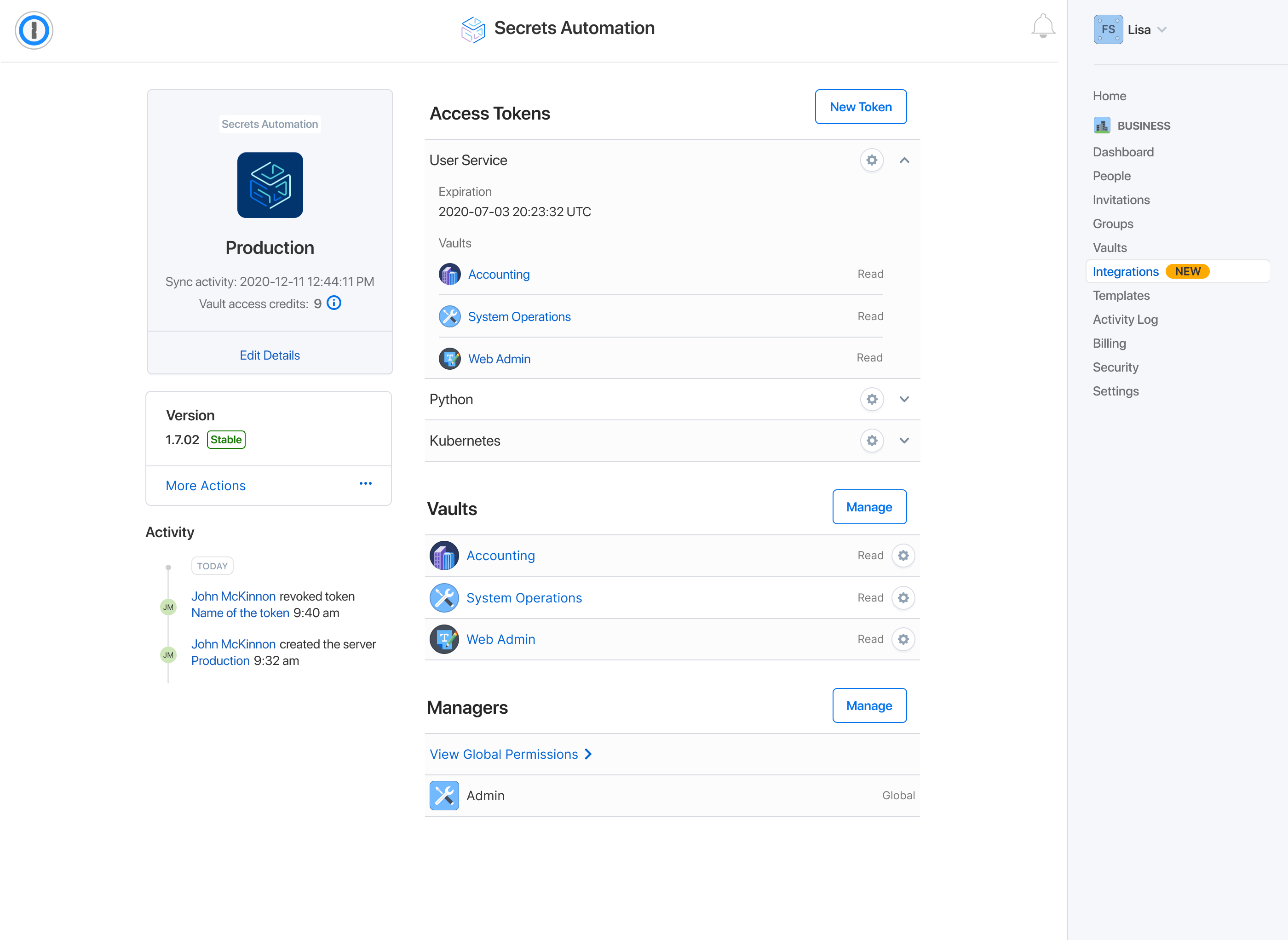
    1Password this week added a Secrets Automation platform to its offerings that enables IT organizations to more easily encrypt, manage and orchestrate credentials, application programming interface (API) tokens, keys and certificates.

    In addition, the company revealed it has acquired SecretHub, a provider of a separate secrets management tool. Terms of the acquisition were not disclosed.

    Carson Brown, senior product manager for 1Password, said the SecretHub team will now focus on the development of the 1Password Secrets Automation platform based on encryption technology previously created by 1Password.

    Finally, 1Password this week also announced an alliance with GitHub under which it will, at some future date, enable DevOps teams to employ SecretsHub to encrypt secrets used to access the source code repository. 1Password already provides integrations with HashiCorp Vault, Terraform, Kubernetes and Ansible, in addition to client libraries written in Go, Node and Python.

    The 1Password platform for managing and securing passwords is already in use by more than 80,000 businesses worldwide. The Secrets Automation platform now extends the reach of the company’s core encryption technology into the realm of DevSecOps best practices, said Brown.

    It’s still early in the cycle of DevSecOps best practices adoption, but it’s clear an initial focus will be secrets management. In the wake of recent high-profile breaches involving software supply chains, there’s now increased scrutiny of secrets management. Cybercriminals have become more adept at scanning for secrets left exposed as plain text. The challenge organizations face is that developers, while building applications, tend to copy secrets for the sake of convenience, which they often forget to delete after an application is deployed in a production environment.

    In response, many IT teams vacillate between overly restrictive and overly permissive access controls that are rarely implemented consistently.

    Of course, it’s now also only a matter of time before auditors start citing all those unencrypted secrets as compliance violations, Brown noted. A set of DevSecOps best practices based on automatic encryption of secrets eliminates those compliance concerns in a way that is transparent to application developers, noted Brown.

    It’s not immediately clear whether it will be DevOps teams that lead the charge to automate the encryption of secrets, or whether cybersecurity teams will take the lead. Regardless of which team assumes responsibility, the number of secrets that need to be tracked keeps expanding as the number of platforms employed increases. Manually keeping track of all those secrets is no longer feasible. Centralizing secrets management is the first step toward regaining control over an IT environment, said Brown.

    Secrets management may not always be the first thing that comes to mind when organizations begin their DevSecOps journey. As it turns out, however, securing secrets may very well turn out to be the first order of business as senior business and IT leaders review their entire software supply chain. After all, once it becomes apparent just how dependent organizations are on software, they quickly realize how much of their intellectual property is one compromised credential away from being stolen.

  • 4 Ways SASE Fuels DevOps Productivity

    4 Ways SASE Fuels DevOps Productivity

    Many enterprises are adopting secure access service edge (SASE) solutions as part of their digital transformation efforts. SASE, in a nutshell, merges together SD-WAN and security stacks to deliver secure networking and improved WAN performance, making it a logical choice for cloud-enabled businesses going through the throes of digital transformation. However, SASE offers other benefits, which may be of particular interest to DevOps teams.

    Let’s take a look at four ways SASE can enhance the productivity of DevOps teams.

    Reducing Collaboration Challenges

    SASE reduces the challenges associated with team collaboration. SASE, by design, integrates WAN optimization with cybersecurity. Today’s DevOps teams need to work together, despite being physically separated, and must have reliable, secure connectivity amongst the team. “DevOps are all about time-to-market, and DevOps teams are looking for ways to shorten their  CI/CD cycles. A critical part of that process is reducing their dependency on the networking and the security teams,” said Boaz Avigad, director of product marketing, CATO Networks. “Since SASE solutions already provide optimized performance and robust security, DevOps [teams] are free from waiting for infrastructure teams to provision the necessary resources. SASE provides DevOps the control and operational cadence they need without compromising performance or security.”

    SASE Improves Networking

    SASE improves overall network performance with integrated load balancing and failover capabilities. DevOps teams cannot afford to lose connectivity, especially when rolling out new iterations of software or resolving bugs. “For DevOps teams, fast and reliable application performance is critical,” said Avigad. “SASE architectures free DevOps [teams] from worrying about the infrastructure by connecting all the company’s edges, data centers, mobile users and cloud resources, with the same self-healing, secure and fully optimized global network. Should a line fail or a route become congested, SASE automatically switches to an alternate path.”

    Better Security Built In

    SASE helps to secure DevOps projects with native cybersecurity capabilities. When properly implemented, SASE integrates numerous security technologies directly into the network stack. “DevOps teams worry about information interception and protecting their applications from threats. All security services share a single, unified context, improving insight and closing the gaps in legacy security architectures; gaps attackers often exploit,” said Avigad. “SASE not only includes NGFW, IPS, SWG, AV and MDR services, it also converges them together into a single-pass architecture.”

    SASE Removes DevSecOps Burdens

    SASE secures internal applications, along with the interactions with those applications, which in turn helps to reduce the burdens on DevSecOps team members. Applications that run over SASE/SD-WANs are further secured by zero-trust network access (ZTNA) and software-defined perimeter (SDP), technologies that help to keep all interactions between an endpoint and an application secure. “Many proprietary applications are too sensitive to run over the public internet. SASE protects those applications by obfuscating traffic, protecting all entry points with a NGFW and restricting access with its zero-trust architecture,” said Avigad. “All internal application traffic is also continuously inspected for threats.”

    Adopting SASE for DevOps teams is beginning to make a lot of sense. The technology addresses many of the pain points that DevOps teams experience as businesses drive toward digital transformation. What’s more, the security benefits offered bring forth additional productivity, while also unifying the security stack.