Tag: devsecops

  • Appdome Integrates Mobile Security Platform With CircleCI CI/CD

    Appdome Integrates Mobile Security Platform With CircleCI CI/CD

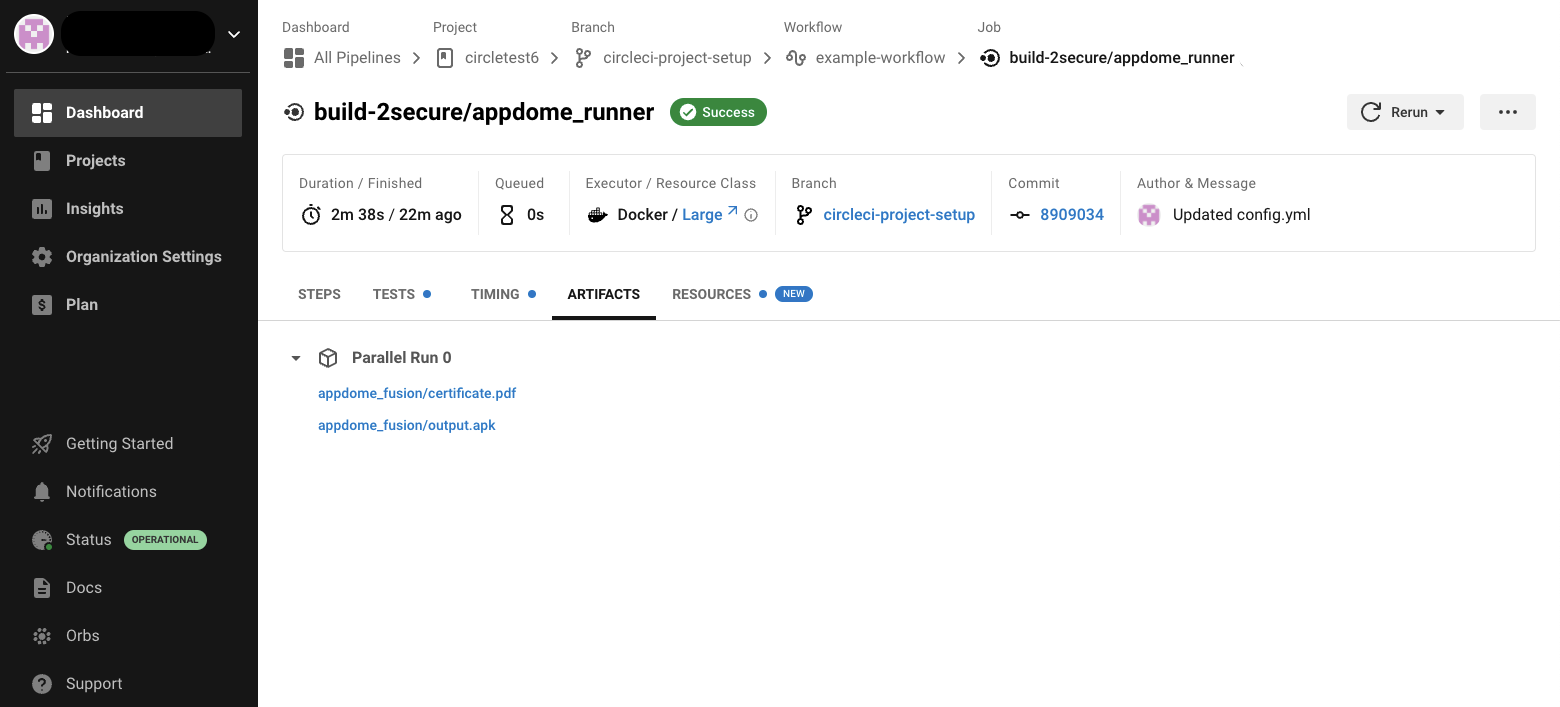
    Appdome this week made available an integration for the continuous integration/continuous delivery (CI/CD) platform from CircleCI that promises to make it simpler to secure mobile applications before they are deployed.

    As a provider of a platform for securing mobile applications running on iOS and Android platforms, Appdome provides a runtime application self-protection (RASP) platform that, among other capabilities, provides code obfuscation, mobile data encryption, jailbreak detection, root detection, man-in-the-middle attack prevention, on-device anti-malware, anti-fraud, anti-cheat and anti-bot capabilities.

    The platform is now integrated with the Circle CI/CD platform via the Orb framework created by CircleCI to simplify integrations with third-party tools.

    Karen Hsu, senior vice president of mobile DevOps and security solutions for Appdome, said the Appdome Build_2Secure Orb for CircleCI is an example of a series of integrations the company plans to make involving DevOps tools and platform that will make it easier to apply DevSecOps best practices to the deployment of mobile applications. That’s critical because it’s not uncommon for teams using different DevOps platforms and tools to be involved in the development of the same application, she noted.

    A recent Appdome survey suggested consumers are about to force the DevSecOps issue for providers of mobile applications regardless of how mature their processes are. A full 94% of respondents said they would promote a brand if the mobile apps protected them versus 68% that said they’d abandon brands that offered no protection.

    Securing mobile applications is especially challenging because once an application is compromised, it’s relatively trivial for cybercriminals to also inject malicious code into other applications running on a mobile device. There are no automated remediation capabilities, so the best defense is to isolate applications in a way that prevents malware from executing in the first place, noted Hsu. At a time when it’s already clear cybercriminals will be using artificial intelligence (AI) platforms to launch attacks, organizations will not have the time required to remediate vulnerabilities before malware is activated, she added.

    That Appdome approach provides the added benefit of reducing tensions between developers and cybersecurity teams that otherwise would be requesting immediate fixes to mobile applications that have been compromised, noted Hsu. As more mobile applications are built and deployed, the overall goal should be to enable both teams to work collaboratively together without unnecessarily disrupting each other’s workflow, added Hsu.

    It’s not clear what percentage of the applications being built and deployed today are destined to run on mobile devices, but securing those applications clearly presents some unique challenges. Many of those applications are deployed on consumer-grade devices attached to wireless networks that are not especially secure. Cybercriminals are increasingly targeting these devices not only to access sensitive data but also because they often provide a gateway through which the rest of an IT environment can be compromised.

    The simple truth of the matter is, sadly, DevOps teams need to assume that most mobile applications are going to be running in the cybersecurity equivalent of a hostile environment where the odds are considerably stacked against them.

  • Cisco AppDynamics Survey Surfaces DevSecOps Challenges

    Cisco AppDynamics Survey Surfaces DevSecOps Challenges

    A survey of 1,150 large enterprise IT professionals from the AppDynamics unit of Cisco suggested application security progress is being made slowly and steadily as organizations continue to embrace DevSecOps best practices.

    The survey finds that while more than three-quarters of respondents (76%) believe that DevSecOps is essential for organizations to effectively protect against a multi-staged security attack on the full application stack only 43% reported their organization has already started to implement DevSecOps workflows while another 46% said they are currently considering making the shift.

    More than three-quarters of respondents (78%) also said a lack of a shared vision between application development and security teams presents a challenge to application security over the next 12 months. More than half (55%) said they currently considered security to be more of an inhibitor of innovation than an enabler. Nevertheless, 81% admitted a lack of application security skills and resources is now an issue for their organization, with 79% acknowledging that securing the full application stack is now a priority for their organization.

    A full 92% admitted that the rush to rapidly innovate and respond to the changing needs of customers and users during the COVID-19 pandemic has come at the expense of robust application security. Well over half of respondents (58%) also noted their organization often ended up in ‘security limbo’ because they didn’t know what security issues to focus on and prioritize. A total of 88% acknowledged their organization could be doing more to secure the full stack of modern applications across the entire application life cycle.

    Not surprisingly, 93% said it’s important to be able to contextualize security so that they can correlate risk in relation to, for example, application performance, end user experience and business metrics. However, more than two-thirds (68%) reported that their current security solutions work well in silos but not together. A total of 85% stated that cultural changes to support the shift to a DevSecOps approach are important to improve application security.

    AppDynamics Executive CTO Gregg Ostrowski said it is apparent organizations are still wrestling with not just application security technologies but also people and process issues. The most critical issue is to knock down the silos that exist in organizations that often result in one team demonizing another, he added.

    Overall, application security is becoming more challenging as the attack surface expands. A full 89% of technologists reported that their organization experienced an expansion in its attack surfaces over the last two years, with almost half (46%) noting that this expansion is already increasing cybersecurity challenges. One of the primary drives of that expansion as been the rise of the internet-of-things (IoT) applications (59%), rapid adoption of cloud computing platforms (56%) and digital business transformation initiatives (51%).

    On the plus side, more than three-quarters of respondents (76%) said they believe artificial intelligence (AI) will play an increasingly important role in addressing application security challenges. The issue, of course, is how soon those advances might be made at a time when attacks against software supply chains are clearly on the rise.

  • Software Supply Chain Security Debt is Increasing: Here’s How To Pay It Off

    Software Supply Chain Security Debt is Increasing: Here’s How To Pay It Off

    Last year, the world woke up to the software supply chain dilemma. We saw a spike in attacks as hackers sought to exploit known and unknown vulnerabilities within dependencies. There is also the chance of typosquatting, and malicious code commits to consider. Such supply chain attacks have increased by a shocking 742% over the past few years.

    It’s easy to let software security debt accumulate, as it’s cumbersome to stay on top of frequent updates — especially when new releases cause breaking change. Furthermore, companies might unknowingly collect security debt by hastily looping in projects whose origin is unknown. Plugging these gaps can bring a high burden down the road, which too often falls on the shoulders of developers to manage.

    I recently reconnected with Dan Lorenc, founder and CEO of Chainguard, to discover why risks in the software supply chain contribute to increased security debt and how organizations can proverbially pay it off. Lorenc is a key figure behind Sigstore, the open source utility built to verify the provenance of open source packages. Below, we’ll consider the state of software supply chain security and examine some modern solutions that lessen its severity.

    Why is Supply Chain Security Debt Rising?

    Modern software ecosystems are an intricate mosaic of dependencies, and supply chain security concerns often arise at the cracks between them. “It’s about the gaps and hand-off points between individuals in the software life cycle,” said Lorenc. Since these hand-off points can threaten systems at large, they can accumulate considerable security debt if left unguarded.

    Another reason why security debt is increasing, said Lorenc, is that fixing issues is rarely incentivized—it’s always thought of as “someone else’s problem.” Minimizing this debt will require organizations to change this mindset and follow modern security best practices, like implementing multifactor authentication infrastructure and more frequent code reviews. It will also take a coordinated effort from package managers to integrate tooling that helps verify the legitimacy of packages, said Lorenc.

    Solutions to Reduce Software Supply Chain Security Debt

    Automated Vulnerability Scanning

    In addition to advancing internal culture toward greater security awareness, organizations will benefit from automation that enhances the discovery of vulnerabilities. Because when a severe incident like Log4j hits the presses, it’s a mad scramble to respond. Even a year later, one in four downloads still possesses the infamous vulnerability.

    Integrating automated security scanning is the first step to knowing how these incidents impact your security posture. A tool like Snyk can do a great job of surfacing known vulnerabilities and finding where they lie within your software stack and provide remediation advice. Continually checking for updates can also help pay off security debt “as you go” instead of upgrading everything all at once, says Lorenc. But although scanning tools are essential for increasing visibility, they don’t address the root cause of why they are vulnerabilities in these packages in the first place, says Lorenc.

    Checking Transitive Dependencies

    Reports find that 95% of vulnerabilities stem from transitive dependencies. These are dependencies that are buried deep within the dependency tree of another package. And depending on the programming language, they’re not always that visible. The combinatory effect of transitive dependencies can lead to exponentially more vulnerabilities and issues if not carefully tracked. And since they’re running locally with the same privileges as your other packages, you shouldn’t treat these vulnerabilities any differently, said Lorenc. “You need to realize they can affect your application in the same way.”

    Validating The Source

    The link between the package manager and the source code is a frail area that warrants additional verification. Social engineering tricks can effectively trick users into downloading insecure packages that appear safe at the outset yet hide corrupt code. Or, account takeovers can result in attackers inserting malicious code into commonly used open libraries. Package managers often host built versions and forked versions of software produced by the community on GitHub, yet do not validate a clear link to the original repository. This gap heightens the chance for a malicious package to slip through the cracks, says Lorenc.

    This is something that Sigstore, the open standard for signing, verifying and protecting software, aims to accomplish. In mid-2022, Sigstore was implemented within Kubernetes, signaling the adoption of Sigstore as a standard throughout the open source ecosystem. It’s also been adopted by Npm and PyPI and Maven Central will soon support Sigstore as well, said Lorenc. Although some of these moves have received pushback from developers, Lorenc argued that such verification is necessary to help link packages to their source and increase credibility for open source dependencies.

    Chipping Away At Security Debt

    Like technical debt piles up over time, security debt can quickly rise if left unchecked. Chipping away at increasing software supply chain security debt will likely require a “pay as you go” approach wherein developers continuously scan and update their dependencies. One good sign is that people are paying more attention to risks latent within their code, and the industry is discovering and sharing more potential vulnerabilities before they are exploited.

    “Security has advanced, and there are common best practices across the industry,” said Lorenc. But if these practices aren’t followed, it could bring dire consequences for the organizations and the industry as a whole. And although Sigstore can help bridge the disconnect between the package managers and the source code, there are plenty of other techniques to help improve a security footprint for open source software and cloud-native infrastructure. For example, SLSA and greater use of SBOMs can help address security debt more holistically.

    The software supply chain security dilemma is an advanced topic that requires a coordinated effort from various stakeholders to remedy. The important takeaway is to stay positive, see the debt, and pay it off incrementally, says Lorenc.

  • Dynatrace Survey Surfaces State of DevOps in the Enterprise

    Dynatrace Survey Surfaces State of DevOps in the Enterprise

    A global survey of 1,300 CIOs and DevOps managers working for organizations with more than 1,000 employees published today finds more than three-quarters of respondents work for organizations (78%) that deploy software updates into production every 12 hours or less, with more than half (54%) say they do so at least once every two hours. A total of 20% report they are deploying updates every minute or less.

    Conducted by the market research firm Coleman Parkes on behalf of Dynatrace, the survey also finds 90% of respondents reporting that the pace of digital transformation within their organization has accelerated in the past 12 months. More than a quarter (26%) expect the pace of digital transformation to continue to accelerate, the survey found.

    However, 55% of respondents work for organizations that make tradeoffs between quality, security and user experience to meet the need for rapid transformation. A total of 41% of respondents said they must sacrifice code quality and user experience due to meet demands for faster innovation, while more third (34%) also need to sacrifice code security.

    Overall, DevOps teams, on average, spend nearly a third (31%) of their time on manual tasks involving detecting code quality issues and vulnerabilities that conspire to slow the pace of innovation, the survey found.

    To address these issues, organizations plan to increase their spending on automation across development, security and operations by 35% by 2024, as they invest more in continuously testing software quality (54%) and securing production environments (49%), automatic vulnerability detection and blocking (41%) and automating release validation (35%). The average budget allocated to these activities in these large organizations is $9.1 million, the survey finds.

    A full 88% of CIOs said the convergence of observability and security practices will be critical to building a DevSecOps culture, with 94% noting that extending a DevSecOps culture to more teams is key to accelerating digital transformation. Only 27% of respondents claimed to fully adhere to a DevSecOps culture today. The biggest obstacles to achieving that goal are that security teams don’t trust developers (55%), developers perceive security teams to be blockers of innovation (49%) and the silos that exist between teams (36%).

    Organizations expect to increase their annual investment in DevSecOps automation by 2024 an average of 35%, but only a quarter (25%) said applying artificial intelligence to security was a priority. At the same time, only 28% of respondents said they are fully confident applications are fully tested for vulnerabilities before they are deployed.

    A total of 90% said increasing the use of AI for IT operations (AIOps) will be key to scaling up these practices. However, 70% of respondents said they need to improve their trust in the accuracy of AI’s decisions before they can automate more of their continuous integration/continuous delivery (CI/CD) pipeline.

    Bob Wambach, vice president of product marketing for Dynatrace, said there is a clear correlation between that accelerated pace of digital transformation and a need to deliver more frequent software updates that is driving those investments. Most organizations, however, are going to find it difficult to achieve all their goals unless they break down the silos that prevent them from automating and observing modern DevSevOps workflows, he added. Achieving that goal will also require DevOps teams to reevaluate which platforms they are employing as they move to reduce the current level of friction encountered when building and deploying applications, he added.

    It’s too early to say just how soon DevSevOps workflows will define the next era of software development. One way or another, it’s certain that every organization that embraces DevOps will need to address lingering application security issues.

  • A DevSecOps Process for Node.js Projects

    A DevSecOps Process for Node.js Projects

    Node.js is an open source development platform for running JavaScript code on the server side. Node is useful for developing applications that require a persistent browser-server connection and is often used for real-time applications such as chat, social applications, or news feeds. 

    DevSecOps is a way for development, security, and operations teams to work together throughout the project life cycle. It is often implemented by adding security to existing DevOps teams and agile processes.

    The idea behind this collaboration is to incorporate security early in the development process. This is called shifting security left. As security moves to the “left” of the development process, application vulnerabilities and bugs are discovered and addressed faster. This leads to more secure product releases with a reduced need to apply patches and troubleshoot in production. Applying DevSecOps to Node.js development can improve both the efficiency and security of Node.js projects.

    Common Node.js Attack Vectors

    Here are a few cyber threats that affect many Node.js applications.

    Cross-Site Scripting (XSS)

    XSS attacks inject manipulated client-side JavaScript code. Web apps are vulnerable to XSS if they don’t validate inputted hostnames from the DNS. Attackers can use forms to enter malicious scripts and hack into the system. In some cases, entering code into the filename can trigger cross-site scripting in the target browser. 

    A hacker can use your file upload form to hack into your system. There are many ways for this vulnerability to lead to a system compromise. Though usually mitigated by modern front-end frameworks, in some cases it may happen that putting javascript into the filename will trigger XSS in a user’s browser, allowing the theft of session IDs. In other cases, an attacker might get sensitive server information by uploading a file to the Node.js server and running it by exploiting a path traversal vulnerability.

    Code Injection

    Developers are responsible for writing secure application code, but it’s impossible to fully guarantee the code’s security when using open source components. A code injection attack involves injecting malicious code into the target system and forcing the application to execute it, allowing attackers to access the codebase. Inadequate data validation often results in code injection vulnerabilities.

    Default Cookie Names

    Cookies help web apps identify specific users by storing user actions in the underlying infrastructure (e.g., an eCommerce shopping cart that remembers the items a customer selects). 

    Developers should use custom names for cookies (rather than defaults) to prevent attackers from identifying and targeting cookies and extracting data. 

    Brute Force Attacks

    Brute force attacks often affect Node.js applications. An attacker randomly generates millions of passwords to find one that works, logging in to the application. You can prevent brute force attacks by strengthening the authentication mechanisms, limiting the number of permitted login attempts from a single IP, and encrypting stored passwords (using bcrypt.js).

    Cross-Site Resource Forgery (CSRF)

    This type of session hijacking forces an authenticated user to execute malicious actions on the target web application. The attacker hijacks a legitimate user’s session to bypass security controls and change the application’s state. CSRF can force users to transfer funds or change their account details, potentially compromising the web application’s security. 

    Node.js Security Best Practices

    Implement Strong Authentication

    A compromised, weak, or incomplete authentication mechanism is a common vulnerability. Many developers think of authentication as something that “just works”. However, authentication can easily be bypassed by attackers if not implemented correctly.

    In Node.js, you have the option of using the default Node.js authentication solution. There are a few things to keep in mind: 

    • Do not use Node.js’s built-in password library when generating passwords, use Bcrypt. 
    • Limit failed login attempts and do not notify users if their username or password is incorrect. Instead, return a generic “Invalid Credentials” error. 
    • Have a robust session management strategy. 
    • Implement two factor authentication (2FA). This can be done using modules like node-2fa.

    Alternatively, use one of many third-party solutions available for application authentication, which may be superior to built-in Node.js functionality. 

    Avoid Errors That Reveal Too Much

    There are many things to consider when building error handling functionality: 

    • Don’t give the user any details they don’t really need. Never return the entire error object to the client. It may contain information that you do not want to disclose, such as paths, other libraries you are using, or secrets. 
    • Wrap the path in a catch clause so that Node.js doesn’t crash if the request triggers an error. This prevents the app from crashing continuously, allowing attackers to send malicious requests that cause the app to crash.
    • Don’t expose your Node.js app directly to the internet. Use a component like a load balancer, cloud firewall or gateway. This means DoS attacks will be one step removed from your Node.js application.

    Using Security Linters to Capture Vulnerabilities in Code

    Code linters help identify various issues in code before compiling. They let you detect the most common issues and ensure you follow best practices.

    Code linters have their own rules, which you can customize according to your requirements. Before using a linter, make sure you enable rules related to security vulnerability detection in the linter configuration.

    Server-side Logging and Monitoring

    A good logging library provides developers with powerful troubleshooting and monitoring capabilities. On the other hand, unnecessary or excessive logging affects application performance and consumes more resources. Therefore, you should only use reasonable log levels when deploying applications to production environments.

    When constructing log messages, they must be in a format that can be read and understood by humans and machines. Logging ambiguous messages can lead to misunderstandings among developers. An error message must not only describe the problem but also advise what the user can or should do to fix it.

    It is also important to ensure that your logging mechanism captures all relevant information such as IP addresses, usernames, and actions taken. 

    Never retrieve or store sensitive information in application logs. This violates compliance standards such as PCI and GDPR. However, there are times when you need to record this information for troubleshooting – in this case, it is recommended to mask or anonymize sensitive information before writing it to the log.

    Implementing Node.js Security in a DevSecOps Organization

    Node.js security best practices are well known and security awareness is growing among Node.js developers. However, many organizations don’t have a clear organizational structure for implementing development best practices. Here are a few steps your organization can take to transition a Node.js development team to a full DevOps model:

    1. Adding mandatory guard rails for developers

    For example, adding static application security testing (SAST) within the IDE and on every commit. Linters should be deployed centrally with a consistent configuration for all developers in the team.

    1. Automated security testing in staging environments

    During the CI/CD process, when a Node.js application is deployed to a staging environment, there should be automated tests that can identify security misconfigurations and integration-related vulnerabilities. Dynamic application security testing (DAST) tools are ideal for this purpose.

    1. Runtime protection

    No DevSecOps process is complete without a safety net to identify security issues in production. This requires the use of tools like web application firewalls (WAFs), which can detect and block malicious traffic, and runtime application self-protection (RASP), which can proactively respond to attacks. Both these tools provide feedback to DevOps teams to help them identify and remediate vulnerabilities in the underlying application.

    By implementing these three stages, you can be sure that Node.js security is not just an ad-hoc practice but a formalized, coordinated process involving developers, operations teams and security experts. 

    Conclusion

    In this article, I explained the basics of DevSecOps and how to secure Node.js:

    • Implement strong authentication—In Node.js, you have the option of using the default Node.js authentication solution.
    • Avoid errors that reveal too much—Don’t give users more details than they actually need when displaying errors.
    • Using security linters to capture vulnerabilities in code—Code linters help identify various issues in code before compiling.
    • Server-side logging and monitoring—A good logging library provides developers with powerful troubleshooting and monitoring capabilities.

    I hope this will be useful as you implement Node.js security in your DevSecOps organization.

  • FAA Ground Stop due to Technical Debt? | Don’t Do DIY Crypto!

    FAA Ground Stop due to Technical Debt? | Don’t Do DIY Crypto!

    Welcome to The Long View—where we peruse the news of the week and strip it to the essentials. Let’s work out what really matters.

    This week: The FAA’s NOTAM database gets corrupted, and Threema shows why DIY cryptography is bad. (more…)

  • AppSec in the Cloud: What DevOps Teams Should Know

    AppSec in the Cloud: What DevOps Teams Should Know

    Cloud application security refers to the measures and controls that are put in place to protect cloud-based applications and data from cyberthreats, unauthorized access and data breaches. These measures can include technical controls such as encryption, access controls and secure networks, as well as operational controls like policies and procedures for managing and securing data in the cloud.

    Cloud application security is important because it helps to ensure the confidentiality, integrity and availability of data and applications in the cloud. It is especially critical for organizations that store sensitive or regulated data in the cloud, as a security breach could have serious consequences for the organization and its customers.

    There are many different approaches to cloud application security, including the use of security protocols, identity and access management (IAM) systems and security information and event management (SIEM) tools. Some organizations may also choose to use cloud security platforms, which provide a range of security services and tools that can be used to protect cloud-based applications and data.

    How DevOps Secures the Cloud

    DevOps is a software development approach that aims to optimize the collaboration and communication between development and operations teams to deliver software more quickly and efficiently. It involves using automation, continuous integration and delivery and other tools and practices to streamline the software development process.

    Cloud security operations, or CloudSecOps, refers to the practices, processes and tools used to secure and manage cloud-based applications, systems and data. CloudSecOps is a key aspect of DevOps, as it helps to ensure that cloud-based applications and systems are secure and compliant, while also allowing for rapid deployment, scaling and management of applications in the cloud.

    There are several key ways that CloudSecOps can be implemented in the cloud as part of a DevOps approach:

    • Automated security testing: CloudSecOps can be implemented using automated security testing tools, which can be integrated into the CI/CD pipeline to continuously test and validate the security of code changes.
    • Identity and access management: CloudSecOps involves using identity and access management (IAM) systems to control and monitor access to cloud-based resources. These systems can be integrated into the DevOps process to ensure that access to cloud-based systems is properly managed and secured.
    • Security as Code: CloudSecOps can be implemented using security-as-code practices, which involve writing security policies and controls in code and integrating them into the CI/CD pipeline. This allows organizations to automatically enforce security controls as part of the software development process.

    4 Cloud Application Security Best Practices

    Understanding and Monitoring Dependencies in Cloud Applications

    Application dependency mapping is a technique that can be used to visualize and understand the dependencies between different components of a cloud application. This can help organizations identify and manage the risks associated with dependencies and ensure that all application components are up-to-date and secure.

    There are several key benefits to using application dependency mapping as a cloud application security best practice:

    • Improved visibility: Application dependency mapping provides a clear and comprehensive view of the dependencies between different components of the application, which can help organizations to better understand the risks associated with these dependencies.
    • Improved risk management: By understanding the dependencies between different application components, organizations can identify and prioritize the most critical dependencies and take steps to mitigate any associated risks.
    • Improved security: By regularly monitoring dependencies for updates and vulnerabilities, organizations can ensure that all application components are secure and up-to-date.
    • Improved compliance: By understanding and managing the dependencies between different application components, organizations can ensure that they meet compliance requirements for storing and processing data in the cloud.

    Cloud Database Security

    Cloud database security is a critical aspect of cloud application security, as it involves the measures and controls that are put in place to protect data stored in the cloud from cyberthreats, unauthorized access and data breaches. 

    Ensuring the security of cloud-based databases is important because these systems often store sensitive or regulated data. A security breach could have serious consequences for the organization and its customers.

    There are several key best practices for ensuring the security of cloud-based databases:

    • Encryption: Encrypting data at rest and in transit can help to protect against unauthorized access to data stored in the cloud.
    • Access controls: Implementing fine-grained access controls can help to ensure that only authorized users have access to data stored in the cloud.
    • Security monitoring: Monitoring for security events and anomalies can help to identify and respond to potential threats to data stored in the cloud.
    • Compliance: Ensuring that cloud-based databases meet compliance requirements for storing and processing data is an important best practice to protect against data breaches and ensure regulatory compliance.

    Apply Cloud Governance Policies

    Cloud governance refers to the practices, processes, and controls used to manage and govern the use of cloud-based resources and services. Some of the key ways that organizations can apply cloud governance policies to improve the security of their cloud-based systems include:

    • Establishing policies for access and use: Organizations can establish policies that define who has access to cloud-based resources and how they can be used. This can help to ensure that access to sensitive data and systems is properly controlled and monitored.
    • Implementing security controls: Organizations can implement security controls such as encryption, access controls and secure networks to protect data and systems in the cloud.
    • Ensuring compliance: Organizations can establish policies and procedures to meet compliance requirements for storing and processing data in the cloud.
    • Monitoring and auditing: Organizations can establish policies for monitoring and auditing the use of cloud-based resources to ensure that they are being used in accordance with established policies and procedures.

    Identify, Categorize and Protect Sensitive Data Stored in the Cloud

    Sensitive data refers to information that is highly confidential or regulated and that requires special protection to ensure its confidentiality, integrity, and availability. There are several key steps that organizations can take to identify, categorize and protect sensitive data stored in the cloud:

    1. Identify sensitive data: The first step is to identify the sensitive data stored in the cloud. This may include personal data, financial data, intellectual property and other types of sensitive information.
    2. Categorize sensitive data: Once the sensitive data has been identified, it is important to categorize it based on its level of sensitivity and the potential risks associated with it. This can help organizations to prioritize the protection of different types of sensitive data.
    3. Protect sensitive data: There are several different measures that organizations can take to protect sensitive data stored in the cloud, including encryption, access controls and secure networks. It is also important to implement policies and procedures to ensure that sensitive data is handled and processed securely.

    Conclusion

    In conclusion, application security in the cloud is a critical concern for DevOps teams, as it involves the measures and controls that are put in place to protect cloud-based applications and data from cyber threats, unauthorized access, and data breaches. 

    To ensure the security of their cloud-based systems, DevOps teams should implement a range of best practices, including understanding and monitoring dependencies, implementing security controls, managing identities and access, and ensuring compliance. By following these best practices, DevOps teams can help to ensure the security and integrity of their cloud-based systems and protect against potential threats.

  • Are We Delivering?

    Are We Delivering?

    I had an interesting conversation today where I was told, “We do great with CI but terrible at the CD part.” My immediate reaction was to point at all the great CD activity going on in vendor space right now. But as I stopped to ponder, I realized that we’re doing all of that great CD activity to play catch-up.

    DevSecOps has us covered in spades—the toolsets allow for scanning and protection all through the process, from the first line of code to application retirement. I would argue that after being left out in the cold, DevSecOps has done a better job than DevOps at the right side of the equation.

    In DevOps, the various “cloud-native” deployment models (I use scare quotes because they’re not really cloud-native. If you dig into them, nearly every one of them includes Kubernetes in their definition of cloud) are starting to do the job admirably, but in shops starting to automate the entirety of the process, the CI part has been automated and code delivery accelerated for a good long while.

    In short, adoption seems to prove, once again, that the benefits of rapid development are more important than the benefits of offering a stable, repeatable deployment environment. This makes one wonder what, exactly, we should be doing to convince IT and business leaders in orgs smaller than web monsters that security and repeatability both demand the implementation of capable continuous delivery.

    I think we failed the audience when we allowed pundits to blather on and on about deploying thousands of times a second when most applications in most orgs need to deliver at a significantly slower pace. And not only that, but want to deliver at that slower pace, given the “Don’t fix what isn’t broken” rule. Even if the environment is stable, rolling out for a single minor bug fix is possible but it’s not the best use of time—both computer and human.

    But we are catching up. We have things like GitOps and Kubernetes automation catching up with the rate of development; security is already there and test automation is ready to find issues before deployment. It is simply implementation that is behind and, as time goes on, more orgs will get the implementation part nailed.

    And through that process, you’ll be there, rocking it. Step up and make sure it is done right. The entire process is there; you could sleep better at night knowing that it is all in place and you are not likely to get a midnight call. Your org loves stability, you love good nights of sleep … Go out and get it.

  • Will DevSecOps Replace the Security Operations Center?

    Will DevSecOps Replace the Security Operations Center?

    Traditionally, a security operations center (SOC) is a physical facility where an organization performs information security activities. The SOC team analyzes and monitors the organization’s security systems. A SOC aims to protect businesses from security breaches by identifying, analyzing and responding to cybersecurity threats. 

    The SOC team consists of administrators, security analysts and security engineers. They work in collaboration with internal development and IT operations teams.

    A SOC is a proven method to improve threat detection and incident response, reduce the potential for security breaches and help organizations respond appropriately in the event of an incident. The SOC team isolates unusual activity on servers, databases, networks, endpoints and applications, identifies and investigates security threats and responds to security incidents as they occur.

    SOCs were once considered suitable only for very large organizations. But many small organizations today are building lightweight SOCs, such as hybrid SOCs that rely on a combination of part-time in-house staff and outsourced experts or virtual SOCs that function without physical facilities.

    SOC Challenges

    SOCs play a critical role in protecting an organization’s assets from cyber threats and ensuring the security and integrity of its networks and systems. However, SOCs can face a variety of challenges in their efforts to detect and respond to potential threats, including:

    Alert Overload

    Alert overload is a common challenge faced by SOCs. It occurs when the SOC team is inundated with too many security alerts, making it difficult to prioritize and effectively respond to them. This can be caused by a high volume of alerts, a lack of context or proper prioritization, limited visibility, or limited resources. To address the challenge of alert overload, SOC teams may implement strategies such as tuning security tools, implementing a triage process, utilizing automation, and increasing the size of the team.

    Visibility Gaps

    Visibility gaps refer to areas of an organization’s networks and systems that are not adequately monitored or protected by security tools and processes. These gaps create vulnerabilities that cyber threats can exploit, making it difficult for SOC teams to detect and respond to potential threats. 

    Visibility gaps may be caused by complex environments, limited resources, shadow IT, or misconfigured systems. To address visibility gaps, SOC teams may implement strategies such as implementing a security information and event management (SIEM) system, conducting regular assessments, implementing additional security controls, educating employees and ensuring that systems are properly configured.

    Complex Investigations

    Investigating cybersecurity threats can be a challenging task for SOC teams. It requires them to quickly and accurately identify the root cause of the threat and take appropriate action to contain and mitigate it. This can be difficult due to limited visibility, complex environments, a lack of context or limited resources. 

    To aid in the investigation process, SOC teams may use forensics tools to gather and analyze evidence related to potential security incidents. Common tools include network forensics tools, which allow the team to analyze network traffic and identify the source of a threat and digital forensics tools, which allow the team to examine devices and systems to identify evidence of an incident. 

    Slow Detection and Response Times

    Slow detection and response times are a common challenge faced by security operations centers (SOCs). They can impact the organization’s mean-time-to-detection (MTTD) and mean-time-to-response (MTTR), which measure how long it takes the SOC team to detect and respond to potential security incidents. 

    A high MTTD and MTTR can have serious consequences for an organization, as it may allow a cybersecurity threat to remain active for an extended period of time, potentially causing significant damage.

    What Is DevSecOps?

    DevSecOps stands for development, security and operations. It is a new work process that involves integrating security practices into all DevOps processes. The DevSecOps mindset guides all technical experts equal access to security expertise.

    DevSecOps moves security practices and enforcement early in the development process. This creates a culture where security is everyone’s responsibility, not just that of the security team.

    Building security into every phase of the software delivery life cycle enables continuous integration and high development velocity with fewer security issues and lower compliance costs.

    How DevSecOps Improves Security and Quality

    Organizations using the DevSecOps model understand that security should not be an afterthought and should be a core part of the software development life cycle (SDLC).

    DevSecOps collaboration is more difficult than DevOps because it requires achieving two seemingly contradictory goals simultaneously—expediting the delivery process while spending more time to make sure code is secure and free of bugs.

    To implement DevSecOps without compromising product quality, organizations need to create a culture that deals with security-as-code, encouraging developers to consider the security aspects of their projects and automate security tasks. Organizations need to establish ongoing communication and collaboration between IT engineers, software developers and security teams.

    How DevSecOps Processes Are Transforming the SOC

    Traditionally, SOC processes were completely isolated from the rest of the organization. Developers would build systems, IT Ops run systems, and security protected them. Today, it is understood that merging these three functions into one organization that shares responsibility for security improves security and significantly increases operational efficiency.

    SecOps was a second phase, in which operations and security teams became one organization. Security was shifted left, starting from early stages of IT requirements and system design, not at the end of the process.

    SecOps had a major impact on organizations implementing DevOps. It paved the way for the third phase—broader collaboration between security, operations, and software development teams, known as DevSecOps. This moves security even further to the left, building security into the system from the first iteration of development.

    DevSecOps can operate in parallel to a SOC. Here are some ways SOCs can modernize their processes, even if the SOC itself is a silo:

    • Develop a decentralized SOC with DevOps members: Department members familiar with DevOps can help with incident response by gaining insight into IT systems and understanding vulnerabilities and threats to security personnel.
    • Collaborate with threat hunters and DevOps teams: Instead of isolating threats and reporting them to management, threat hunters can communicate directly with development or operations teams to address key security vulnerabilities.
    • Create a Center of Excellence: SOCs can work with development and operations teams to adopt security best practices and spread these positive results throughout the organization to promote DevSecOps practices.
    • Allow the SOC to provide advice and guidance: Everyone involved in security should have easy access to the SOC and be able to work with the organization’s top security experts.

    Conclusion

    In conclusion, while DevSecOps can significantly impact how SOCs operate, it is unlikely to completely replace the SOC. DevSecOps emphasizes the integration of security practices and tools into the development process from the beginning, which can help to prevent security incidents from occurring in the first place. However, it is still important for organizations to have a dedicated team in place to monitor for and respond to potential security incidents.

    The SOC will continue to play a critical role in protecting an organization’s assets from cybersecurity threats and ensuring the security and integrity of its networks and systems. By adopting DevSecOps practices, the SOC can improve the security and quality of the organization’s software applications, reduce the risk of security incidents and improve the efficiency of its operations. However, the SOC will remain a vital part of the organization’s overall security posture and will continue to evolve and adapt to new challenges as they arise.

  • How SASE Can Ease DevSecOps Adoption

    How SASE Can Ease DevSecOps Adoption

    DevSecOps is a software development methodology that merges development (Dev), security (Sec) and operations (Ops) into one team that integrates security throughout the entire software development life cycle (SDLC). The goal is to deliver high-quality applications quickly and securely.

    The traditional software development life cycle introduces security in the late phases of the SDLC. However, this approach cannot protect against sophisticated cybersecurity attacks. Today’s cybersecurity landscape requires shorter, frequent iterations to quickly patch and fix security issues. DevSecOps integrates security into the continuous integration and continuous delivery (CI/CD) pipeline to ensure teams can address pressing security issues at DevOps speed. 

    Many organizations are enthusiastically adopting DevSecOps but, in the process, discover they don’t have the necessary infrastructure. DevSecOps requires smooth global collaboration between teams and requires that security controls are built into the IT environment. This is where SASE comes in.  

    What is Secure Access Service Edge (SASE)?

    Secure access service edge (SASE) is a network security model that provides network connectivity with security based on identity, real-time security context and corporate security policies. It is aligned with the zero-trust security paradigm, ensuring that connections are denied by default unless a verified identity has permission to access a specific application, service or edge location. 

    SASE unifies networking and security functions into one fully integrated service delivered in the cloud. SASE includes several technologies: software-defined wide area networking (SD-WAN), secure web gateway (SWG), cloud access security broker (CASB), next-generation firewall (NGFW) and zero-trust network access (ZTNA).

    A key benefit of SASE is enhanced network security. SASE services enhance network security with a granular approach to network protection, detecting and blocking network attacks such as distributed denial of service (DDoS) attacks, man-in-the-middle (MitM) attacks, phishing, email spoofing and malware with deep security scans. 

    Additional benefits of SASE include: 

    • Lower cost compared to traditional networks because SASE includes fewer on-premises hardware components and features previously purchased from multiple vendors. 
    • Easier maintenance because it provides one pane of glass that allows IT teams to manage all applications and users wherever they are. 

    Components of SASE

    Cloud-access Security Broker (CASB)

    CASB acts as a bridge between users/devices and cloud applications. It allows organizations to apply security policies, two-factor authentication and single sign-on to all cloud applications, preventing unauthorized devices and individuals from accessing sensitive assets and denying access by default.

    Zero-Trust Network Access (ZTNA)

    ZTNA ensures that users or devices have explicit permission to access applications or resources. It is a critical component of a zero-trust security architecture, ensuring that internal, private applications are hidden from users who should not have access to them. It also enables secure remote access through layered authentication. ZTNA provides flexible security to meet modern security requirements.

    Software-Defined Wide-Area Networking (SD-WAN)

    SD-WAN is a connectivity architecture that separates network hardware from the physical control layer. It improves network performance by enhancing and simplifying WAN performance and management. SD-WAN supports modern, cloud-based applications and services while reducing connectivity costs. Combining SD-WAN with advanced security features provides a foundation for enterprises to transition to SASE.

    Secure Web Gateways (SWG)

    SWG protects online devices from malware infection, enforces corporate security policies and filters unwanted websites in user-initiated internet traffic. SWG provides URL filtering, application control, DLP, antivirus, sandboxing and SSL inspection. All these capabilities protect users from harmful websites and enforce security policies while ensuring full web access and promoting productivity.

    Firewall-as-a-Service (FWaaS)

    FWaaS is a firewall solution delivered as a cloud-based service. It provides hyperscale next-generation firewall (NGFW) features, including web filtering, advanced threat protection (ATP), intrusion prevention systems (IPS) and domain name system (DNS) security. By integrating FWaaS into the SASE platform, organizations can provide a wide range of cybersecurity capabilities at the edge.

    Centralized and Unified Management

    The modern SASE platform enables IT administrators to manage SD-WAN, SWG, CASB, FWaaS and ZTNA with centralized, unified management across networks and environments. This allows IT team members to focus on more pressing areas and improves the user experience for the organization’s mixed workforce.

    How SASE Will Impact DevSecOps and Security in Organizations

    SASE can help secure internal interactions and applications. As a result, the burden on DevSecOps teams is reduced. DevOps teams can use zero-trust network access (ZTNA) to further secure the applications running on SD-WAN. These technologies keep all interactions between endpoints and applications secure.

    The SASE model can also help protect mission-critical applications and sensitive data that cannot run on the public internet. To protect these assets, SASE obfuscates traffic, restricts access with a zero-trust architecture, and secures all network entry points with NGFW. It continuously evaluates application traffic for security threats.

    Facilitating Collaboration 

    DevOps teams are focused on time-to-market and are constantly working to accelerate the CI/CD pipeline. They need to collaborate remotely over a reliable and secure connection. DevOps teams are also working to reduce their reliance on network and security teams. The SASE model helps address these problems.

    SASE helps reduce collaboration issues by unifying WAN and network security. SASE solutions provide optimized performance and strong security, so DevOps teams don’t depend on infrastructure staff to provision resources. It gives teams full control over operations without compromising performance or security.

    Providing Built-In Security

    SASE offers the basic network security features required to secure a DevOps project. This allows teams to integrate different security mechanisms into their networking stack, with all security services sharing an integration context. This plugs the gaps in traditional security architecture often exploited by attackers and protects applications from threats.

    Improving Incident Response

    SASE can immediately block various attack vectors with security controls embedded in the network fabric, supporting the incident response team’s efforts. SASE increases visibility into behavioral anomalies and security incidents in a hybrid environment.

    Integrating SASE solutions into a security information and event management (SIEM) system allows incident responders to gain greater visibility into traffic anomalies and the automated security actions taken by the SASE tools. SASE features like NGFW, SWG, IPS and anti-malware might already contain or eliminate many incidents.

    Providing More Reliable Infrastructure 

    DevOps teams need fast, reliable application performance. SASE offers integrated load balancing and failover capabilities that can significantly improve the network’s overall performance. 

    The SASE architecture can connect all the edge devices, remote users, data centers and cloud resources to a secure, self-healing, fully optimized global network. If a circuit fails or the path becomes congested, the fabric can automatically switch to an alternate path.

    Conclusion

    In this article, I introduced DevSecOps and showed how SASE, a modern platform that provides fast network connectivity and security at the edge, can support its adoption. DevOps teams can use SASE security components to secure applications across on-premises data centers and clouds. SASE can encrypt and inspect traffic to protect it from threats, ensuring that workloads, users, and development systems are secure by default. 

    With SASE, DevSecOps teams have the infrastructure they need to secure the environment and can focus on integrating security tests and remediations into the development life cycle.