Tag: devops

  • Save the Date for Sirius Madness!

    Sirius to host sixth-annual technology conference in Charlotte, North Carolina

    Charlotte, NC (PRWEB) January 29, 2016

    Charlotte, NC – 29 January, 2016 – Registration is open and the agenda finalized for the sixth-annual Sirius Madness event, the Carolinas’ premier technology conference. Hosted by Sirius Computer Solutions, Inc. (Sirius), the conference combines the excitement of college basketball, St. Patrick’s Day, and all-star partners showcasing their innovative technologies. This year, Sirius Madness will be held on March 17, 2016 at the Westin Charlotte in North Carolina.

    The 2016 Sirius Madness is expected to be the biggest yet, with an estimated 50 breakout sessions ranging from solutions-focused presentations and panel discussions to technical deep dives and much more. Sirius Madness was designed to provide rich technical content in a casual and fun atmosphere. After reviewing a record number of submissions, the Madness panel of industry experts selected what they view as the best content for 2016. “We’re very happy to keep Madness going!” said Jason Nash, ‎Sirius director of Next Generation Architectures. “This year we’ll have over 50 sessions from the kind of industry leaders that attendees have come to expect.”

    The Madness technical sessions will cover today’s most relevant IT topics, including DevOps; private, hybrid and public cloud; end-user computing; security; and more. “We are also very happy to have Gene Kim, co-author of The Phoenix Project, as the keynote speaker,” Nash said. “Many in our industry have read this book, and found similarities in their own challenges as IT departments undergo transformation.”

    Visit the 2016 Sirius Madness microsite to check out the full agenda, register, and take advantage of discounted hotel blocks. The first 500 to register will get a free Madness T-shirt. Hotel rooms at various hotels are blocked for discounts until February 23, 2016.

    Special thanks to our sponsors! Among them are: EMC, VMware, Cisco, Citrix and IBM, Bit9 + Carbon Black, Blue Coat Systems, Dell, F5 Systems, Intel, Lenovo, Nutanix, Palo Alto, PernixData, Recovery Pointe Systems, RES Software, Splunk, VCE, Alert Logic, CA Technologies, Catalogic Software, Commscope, CyberArk, Liquidware Labs, Red Hat, RSA, Solutionary, Super Micro Computer, Inc., Trend Micro, Varonis Systems, Veeam Software, Winthrop Resources and Zerto Ltd.

    About Sirius Computer Solutions: Sirius is a national integrator of technology-based business solutions that span the data center and lines of business. Built on products and services from the world’s top technology companies, Sirius solutions are installed, configured and supported by our dedicated teams of highly certified experts. Sirius is focused on helping organizations of all sizes reduce cost and complexity, improve service levels, and minimize risk through the implementation of strategic solutions that include cloud, analytics, mobility, security, IT infrastructure optimization and more.

    For more information about Sirius, visit http://www.siriuscom.com.

    Contact Information: Jessica Carter, Marketing Manager, Sirius Computer Solutions

    Phone: 919-475-3200; E-mail: jessica(dot)carter(at)siriuscom(dot)com

    Vin Tugade, Corporate Communications Manager, Sirius Computer Solutions

    Phone: 801-964-4906; E-mail: vinia(dot)tugade(at)siriuscom(dot)com

    All brand, service and product names are trademarks or registered trademarks of their respective companies.

    For the original version on PRWeb visit:http://www.prweb.com/releases/2016/01/prweb13189619.htm

  • CloudBees Signs 13 New Reselling and Services Partners in Q4 2015

    New Partners Reflect Growing Demand for Jenkins-Powered Continuous Delivery Around the World;

    New Portal Designed to Drive Partner Profitability and Customer Success

    SAN JOSE, Calif.–(BUSINESS WIRE)–CloudBees, Inc., the enterprise Jenkins company and continuous delivery (CD) leader, today announced rapid growth in its partner community in Q4 of 2015. The growth of the reselling and services partner ecosystem in Q4 alone was nearly 50 percent and facilitates ready-access to more Jenkins-related services and CloudBees products in all global regions. To support the growing partner community, the company launched a new partner portal to provide greater access to CloudBees resources.

    New CloudBees partners reflect growing demand for #Jenkins powered CD around the world!

    New reseller, services and training partners were brought on-board during the final three months of 2015. New additions included two global services partners, two partners in the U.S. federal government sector, four partners for expanded coverage in the Asia/Pacific region and five new partners in Canada and the U.S.

    The new CloudBees partner portal, launched this month, provides the CloudBees partner community with a single destination to uncover and manage new opportunities and expand DevOps and enterprise-scale Jenkins business. Exclusively for CloudBees partners, the portal delivers marketing, sales and technical content and tools to help partners architect the best enterprise Jenkins solution for customers, help partners manage opportunities and facilitate the closing of sales.

    “The expansion of our partner ecosystem is a direct result of the global and growing demands for enterprise Jenkins solutions,” said Durga Sammeta, CloudBees senior director, global alliance and channels. “Customers are seeking enterprise Jenkins solutions and trusted advisors who can help them identify and implement continuous delivery in their transformation to a DevOps culture. These partners join CloudBees’ already extensive set of global reseller, services and training partners that enable enterprise software delivery teams to more easily embrace continuous delivery with Jenkins-based solutions.”

    The latest moves follow a series of innovations over the past year in the CloudBees partner program. The company revamped the program in July 2015 to include new tracks for reseller and training partners. By expanding these categories of partners, CloudBees ensured that customers seeking enterprise Jenkins solutions had expanded buying choices from trusted partners in the application development and DevOps sectors.

    New partners recently signed include:

    Global Services Partners:

    • InfoStretch – Global, Platinum Services and Reseller Partner
    • Unisys – Global, Services and Reseller Partner

    Reselling and Services Partners focused on the US Federal Government:

    • KP SOFT – U.S. Federal, Gold Services and Reseller Partner

    Reselling and Services Partners in APAC:

    Reselling and Services Partners in U.S. and Canada:

    Partner Comments:

    “With organizations under pressure to constantly deliver fully-featured, quality software that’s a step above the competition, the need for automation is a critical success factor. We are excited to partner with CloudBees to support customers through their continuous delivery and DevOps transformations.”
    – Adam Edwards, CTO, Middleware360 Solutions

    “U.S. Federal Government Agencies seeking to increase standardization and use of best practices, are turning to DevOps and IT automation solutions. Aurotech is excited to partner with CloudBees to help our government customers re-engineer IT practices.”
    – Imneetpal Brar, DevOps Program Manager, Aurotech

    “For InfoStretch’s enterprise customers, Jenkins is crucial for continuous integration and continuous delivery initiatives. By using the CloudBees Jenkins Platform, our customers’ will evolve their mobile strategy toward quality engineering and greater agility.”
    – Guy Vachtel, Senior Director of Global Partners & Business Development, InfoStretch

    “Alten is thrilled to resell CloudBees’ innovative solutions across the APAC region. Alten’s presence in China, Hong Kong and Korea, in particular, provides our mutual customers with leading edge technology, guidance and expertise in implementing CI and CD initiatives.”
    – Lawrence Kole, Managing Director, ALTEN China

    “It’s fantastic to work with an organization as committed to partnerships as CloudBees. What’s really compelling is to see the resources and investment CloudBees has made in its channel strategy. That aligns well with how we approach partnerships.”
    – Tyler Davey, VP Sales, Architech

    “Jenkins plays a key and essential role and is a recommended best practice to our clients for continuous delivery practices. The advanced enterprise features offered by CloudBees makes Jenkins a natural fit for our customers looking to implement scalable continuous integration and continuous delivery processes across DevOps teams.”
    – Joe Dickman, SVP, Vizuri

    Resources

    About CloudBees
    CloudBees (www.cloudbees.com), the Enterprise Jenkins Company, is the continuous delivery (CD) leader. CloudBees provides solutions that enable DevOps teams to respond rapidly to the software delivery needs of the business. Building on the strength of Jenkins, the world’s most popular open source continuous delivery hub and ecosystem, the CloudBees Jenkins Platform provides a wide range of CD solutions that meet the unique security, scalability and manageability needs of enterprises. The CloudBees Jenkins Platform supports many of the world’s largest and most business-critical deployments.

    Backed by Matrix Partners, Lightspeed Venture Partners and Verizon Ventures, CloudBees was founded in 2010 by former JBoss CTO Sacha Labourey and an elite team of continuous integration, continuous delivery and DevOps professionals. Follow CloudBees onTwitter, Facebook, LinkedIn and Google+.

    Contacts

    PAN Communications
    Katelyn Campbell / Gaby Berkman, +1-617-502-4300
    cloudbees@pancomm.com

  • Black Duck and Forest Technologies announce Strategic DevOps Partnership – See more at: https://www.blackducksoftware.com/news/releases/black-duck-and-forest-technologies-announce-strategic-devops-partnership#sthash.3m72gBvJ.dpuf

    London, UK and Burlington, MA – Jan. 27, 2016 – US-based Black Duck, a global leader in automated solutions for securing and managing open source software, and Forest Technologies, one of London’s leading DevOps consultancies, today announced a strategic partnership through which Forest’s DevOps consulting and enablement experience will support Black Duck’s solutions.

    The partnership enables Forest to address the security, regulatory and risk concerns facing their customers as they continue to embrace open source technologies.  Black Duck solutions can be integrated with existing software development tool chains to automatically inventory the open source in use, map known vulnerabilities, and continuously monitor for newly discovered vulnerabilities, embracing a continuous delivery approach.

    DevOps is among the hottest topics in IT today.  Forest has been helping companies worldwide transform their ability to deliver value to their customers through the adoption of DevOps and Automation for over 12 years.  They have worked across a variety of sectors including retail, telecoms, financial, online gambling and online travel from the biggest enterprises to small start-ups.  This gives them a unique insight into what it takes for companies to successfully adopt a collaborative DevOps culture, and the underlying processes and tools to increase the speed and quality that software and software-related services can be delivered to customers.

    Forest Technologies was founded in 2003 and is headquartered in London with offices in Singapore and more than 100 happy customers worldwide.  For more information, visit www.forest-technologies.co.uk.

    Organizations worldwide use Black Duck’s industry-leading products to secure and manage open source software, eliminating the pain related to security vulnerabilities, open source license compliance and operational risk.

    The company offer subscription-based software products and on-demand audit services. Founded in 2003 and headquartered in Burlington, MA, Black Duck is a privately held company with 230+ employees and more than 1,300 customers.

    Black Duck also has offices in Mountain View, CA, London, Frankfurt, Hong Kong, Tokyo, Seoul and Beijing. For more information, visit www.blackducksoftware.com.

    “I founded Forest following numerous unhappy interactions as a customer with software vendors and consultancies.  Our team are recruited for their DNA as much as their technical ability because honesty and the desire to go the extra mile are key to delivering what we promised, when we promised it, and within the budget we agreed. Consulting and Training the Forest way.” Andy Cureton, Founder & CEO – Forest Technologies.

    We’re delighted to welcome Forest Technologies to the Black Duck Partner Programme. We look forward to working closely with Forest to help customers use open source to create secure, high-quality software with trust and confidence, through our commitment to delivering the best outcome for our customers. The overall DevOps message is compelling, because many IT organizations want to achieve the scale-out and economies of scale achieved by world-class cloud providers. Black Duck also recently announced the addition of comprehensive container scanning capabilities to its Hub software. DevOps teams will be able to map open source security vulnerabilities for applications, Linux distributions, and other software in Docker and other Linux containers.  Kevin Bland, Director of Channels & Alliances, EMEA – Black Duck Software.

    About Black Duck Software

    Organizations worldwide use Black Duck Software’s industry-leading products to secure and manage open source software, eliminating the pain related to security vulnerabilities, compliance and operational risk. Black Duck is headquartered in Burlington, MA, and has offices in Mountain View, CA, London, Frankfurt, Hong Kong, Tokyo, Seoul and Beijing. For more information, visit www.blackducksoftware.com.

    Media Contact:
    Brian Carter, Director of Strategic Communications
    bcarter@blackducksoftware.com
    508-277-7570

    • See more at: https://www.blackducksoftware.com/news/releases/black-duck-and-forest-technologies-announce-strategic-devops-partnership#sthash.3m72gBvJ.dpuf
  • IBM AND CATALOGIC SOFTWARE TO ANNOUNCE JOINT SOLUTIONS FOR HYBRID CLOUD AND DEVOPS IN LIVE ONLINE EVENT FEBRUARY 2ND

    Live Online Event Will Present Details of New Set of Solutions That Combine Catalogic Software’s ECX Data Management Platform With Various IBM Storage Offerings and IBM SoftLayer Cloud

    /EINPresswire.com/ — WOODCLIFF LAKE, NJ — (Marketwired) — 01/27/16 — IBM® and Catalogic Software today announced that they will hold a live online event next week to introduce a new series of tested and validated joint solutions for both Hybrid Cloud operations and for DevOps, in addition to other important IT use cases. The event will be carried via live online stream on Tuesday, February 2nd at 11 AM Eastern. The event is open to the public, and available by registering at the following link: http://data.catalogicsoftware.com/en/ibm/catalogic-launch-event-lp-feb-2-2016

    The event will be co-hosted by IBM VP of Storage, Bina Hallman, and Catalogic Software CEO, Ed Walsh. The session will demonstrate how Catalogic’s data management software platform leverages IBM storage to deliver key functionality like self-service provisioning and automation — fundamental attributes of a modern, dynamic infrastructure. This powerful combination allows IT to easily deploy resources and move data in support of operations in the Cloud or in support of DevOps processes.

    The companies are not releasing significant details ahead of the formal announcement, but have revealed that each of the solutions being introduced combines Catalogic’s ECX software based copy data management platform with one of IBM’s primary storage offerings including the Storwize® family of storage arrays, SAN Volume Controller with IBM Spectrum Virtualize™ software, the IBM FlashSystem™ V9000 storage array, and storage software offering IBM Spectrum Protect™.

    Next week’s event will include live demonstrations that showcase how IBM storage can be leveraged as the infrastructure in key use cases. To exemplify the Hybrid Cloud capabilities, one demonstration will show how IBM storage clients can easily extend operations to the public cloud, using ECX’s automation and data management capabilities to orchestrate the process of creating live application environments in IBM’s Public Cloud division, SoftLayer, as well as in Amazon Web Services. A second live demonstration will show how leveraging ECX’s data management allows the IT organization to use IBM storage as the primary infrastructure in a DevOps environment.

    “Together with IBM, we are bringing powerful solutions to market that directly address some of the most pressing challenges that enterprise IT teams have today,” said Walsh. “We knew that a live presentation with detailed demonstrations was the best way to convey the value that these solutions can bring to our clients, and we are thrilled to be joined by Bina Hallman in our live broadcast next week.”

    About Catalogic Software
    Catalogic Software is the market’s leading software provider of intelligent Copy Data solutions. Founded in 1996 and with thousands of customers worldwide, Catalogic’s mission is to enable IT organizations to leverage their copy data, delivering significant reductions to CAPEX and OPEX while providing superior services to the business. With its software products, Catalogic helps clients Manage, Orchestrate and Analyze their Copy Data across their enterprise and cloud in support of mission critical IT functions including disaster recovery, test/dev, DevOps, next generation data protection, and business analytics. Catalogic has a state-of-the-art Partner Program, and its products are sold exclusively through its global network of distributors and value-added resellers. Visit the Catalogic Partner page at www.catalogicsoftware.com/en/partners, and download a free trial version to see the impact of ECX firsthand at: www.catalogicsoftware.com/en/products/trial

    Press Inquiries:

    Joanne Hogue
    Smart Connections PR
    410.658.8246
    Email Contact

  • You Say You’re Doing DevOps, But What Does That Mean?

    You Say You’re Doing DevOps, But What Does That Mean?

    From recent conversations I have been having, it is clear that DevOps is top of mind for many. Out of the 40 or so customers I have spoken with recently, the overwhelming majority brought up DevOps during our conversation. They believe they ought to do DevOps, but they wanted me to help them define it and point the best way to get started.

    From my experience, many claim to be “doing DevOps,” but when you drill in, you’ll find wildly varying degrees of what this means. If a team is doing anything at all within the larger DevOps value chain, such as testing their software, they often believe they’re doing DevOps.

    Our latest survey on the implementation of DevOps points out how easy it is for companies to say they’re doing DevOps but how difficult it is to do DevOps effectively. There’s widespread agreement among the respondents on all the different things that should get done, but very few people are making significant progress in most of them. If you ask about specific DevOps success factors, very few people are doing them.

    Understanding, Then Doing DevOps

    Why is DevOps so hard? In general:

    1. companies don’t know how to do it
    2. companies aren’t sure what it is
    3. it’s too hard given the existing organization and/or culture
    4. too many jobs and people identify with existing tools and technologies
    5. there may be regulatory issues
    6. there’s a lack of leadership on what needs to get accomplished and the direct impact on users/customers

    The biggest issue usually is the organizational structure. People within IT are working in roles that have institutionalized the separation of dev and ops for 20 or 30 years, and suddenly this must change. Ops, in particular, has a process that is somewhat opaque, but now it has to be transparent, ops teams have to coordinate closely with the development teams, and they are being measured on totally different things. That’s a huge shift.

    Going back to the results of the survey, if you told me 20 percent of companies are doing some element of DevOps exceptionally well, I would agree with that. If you tell me 20 percent of companies are doing DevOps end-to-end the way I think it ought to be done, I would say that number is probably closer to 5 percent.

    The definition of DevOps makes all the difference. To me, DevOps focuses on the distance between the idea and the customer, whether that idea is a feature, an application or a business model. The purpose of DevOps is to optimize that distance.

    I use the word “optimize” for a very particular reason, because there are several different dimensions beyond speed that we need to think about. We also need to optimize for reliability, or perhaps it is appropriate to think of that as quality. Efficiency is another dimension: How much does it cost to run that pipeline? Finally, agility: If I have to make a change based on the customer feedback or the market conditions, how rapidly can I change?

    Based on your customers and what you’re trying to achieve in your business, you might optimize for those four dimensions differently than some other company. In some cases, a company might choose to emphasize speed, rolling out a new release every single day. In other cases, reliability, efficiency or agility might be given more weight.

    The purpose of DevOps is to make speed, reliability, efficiency and agility a given so companies can focus on digital disruption and serving their customers better—we can see that in the survey results. If we also look at the 20 percent that are farthest along in implementing DevOps, we see their most important metrics are customer-facing metrics. In other words, it is clear that with the emergence of companies focused on business insight analytics, more organizations want to know if their application is meeting the needs of the customers as it was intended.

    This is where the cultural and organizational challenges of DevOps come into play. If the ops team owns ops-related metrics, and the dev team owns dev-related metrics, then the organization is probably losing its focus on the customers. Those internal, traditional metrics are not going to get organizations to the Promised Land. You may have developed a bunch of code faster because you’re agile—and that’s great—but it’s only the first step. Instead, if we turn this around and say, “We expect this application to generate a million dollars of new revenue every four hours,” that’s a totally different mindset, and you have a much better chance of DevOps success. The app is either generating the revenue or not, and it’s the feedback you get based on the usage of the application that tells you what else you need to do.

    ING is a great example of a company that has a group of people who are focused on metrics that track the distance between the idea and the customers, and they wake up every day with a focus on how to optimize that distance. The rest of the company is then organized and culturally aligned to deliver against that.

    When you talk to most companies, you’ll find that there are elements of agile development, code pipelining or release automation that they do very well. These companies are taking a vertical or functional slice—such as test automation or release automation—and concentrating on optimizing there. That just gets us back to where we started our discussion, with everybody saying they are doing DevOps but no one doing it successfully. A better way would be to take an application and optimize all of the delivery metrics around that application. Take it all the way, end-to-end, and focus on solving a customer problem. Once that end-to-end distance is optimized, then you can apply what you’ve learned to other applications.

  • Advanced Systems Concepts, Inc. Addresses IT’s Growing Need For Agility with Release of ActiveBatch Version 10

    Industry’s Most Advanced Workload Automation Solution Adds Capabilities that Cut Workflow Development Time in Half

    MORRISTOWN, NJ – (January 26, 2016) – Advanced Systems Concepts, Inc. (ASCI) today announced the availability of ActiveBatch Version 10, a major release of the company’s leading Workload Automation and Job Scheduling Software focused on improving IT performance despite the operational and business complexities impacting today’s IT organization. ActiveBatch Version 10 contains multiple new features that increase efficiency and reduce cost, while also meeting the intensifying demands for improved agility and bimodal deployment.

    “Most IT organizations are facing unprecedented challenges due to the rate of production growth, changing business requirements, stagnating budgets, and a shortage of skilled professionals,” said Jim Manias, Vice President of Sales and Marketing at Advanced Systems Concepts. “Our release of ActiveBatch Version 10 redefines IT automation with new automation capabilities that help IT professionals easily handle the core functions they are supporting, which in turn enables them to adapt to new requirements faster and more reliably.”

    Built with an understanding of common business functions, ActiveBatch Version 10 introduces new capabilities that can cut workflow development times by as much as 50%. The benefit of these innovations allow DevOps teams to refocus on critical IT business and operational processes, thereby reducing delays, decreasing errors, and improving the speed at which tasks are released into production.

    Closing the IT Resource Gap

    Among its many improvements, Version 10’s innovative Integrated Jobs Library includes hundreds of production-ready, templated Job Steps that are self-documenting. The library allows developers to assemble jobs and workflows faster  with pre-built logic that eliminate time spent on researching, writing, and testing code. A new Check-Out | Check-In with Collaboration capability lets multiple developers work on the same object(s) simultaneously; upon Check-In, authors can address conflicting changes with ActiveBatch’s built-in Conflict Resolution tool. Pairing this with v10’s new Simulation Mode, developers

    and operations can simulate workflow logic and execution for testing without incurring delays imposed by actually running the job payload.

    Five new views in ActiveBatch Version 10 speed time-to-insight by quickly visualizing activities.

    The newly designed Map View, for example, offers a real-time graphical display and development environment with all workflows and object relationships, while Machine Load View displays a visual heat map to identify heavily used, lightly used and available systems. Gantt, Forecast, and Workflow Optimizer Views also help shorten development time and improve workflow quality. Finally, an upgraded Dashboard provides dynamic visualization of KPIs as well as real-time and historical progress of business and IT workflows.

    Reducing Automation Complexity

    Most organizations struggle with a combination of three to eight separate automation tools. ActiveBatch Version 10 helps reduce that number to one, due to its cross-platform architecture and robust Jobs Library. Furthermore, its innovative predictive analytics and intelligent automation technology lets it anticipate upcoming computing needs, then assemble and later disassemble the exact mix of real, virtual and cloud resources required for the task, on the fly.

    To further simplify developer workloads, ActiveBatch Version 10 now offers REST support in addition to other API Interfaces. This makes it easier for users to create lightweight, dynamic and end-to-end workflows across mobile apps, social networking sites, mashup tools and automated business processes.

    Availability

    ActiveBatch Version 10 is now available for licensing as well as by automatic upgrade for companies participating in ASCI’s ActiveBatch Version Upgrade program. For more information, log on to www.advsyscon.com.

    About Advanced Systems Concepts, Inc.:

    Founded in 1981, Advanced Systems Concepts, Inc. has developed cutting-edge products across the breadth of customer markets for over 30 years. Advanced Systems Concepts offers many software products and options for users of Windows, UNIX, Linux, HP OpenVMS and NSK systems as well as IBM z/OS, AIX, i5OS and SCO UNIX. With a worldwide base of customers in over 46 countries, Advanced Systems Concepts helps companies respond to increasingly complex business needs with a leading edge IT Automation solution that improves business performance and IT operations. 

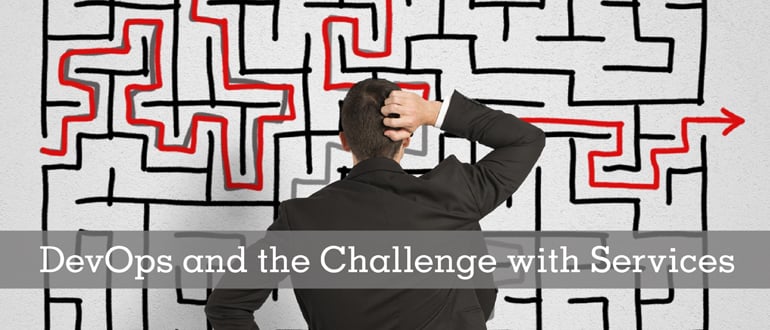
  • DevOps and the Challenge with Services

    DevOps and the Challenge with Services

    At RackN, we’ve been working for years to make DevOps portable across platforms. For us, that means the ability to move between clouds and from cloud to metal. Of the several challenges to portability—composability, API heterogeneity, sequence, cross-system dependencies—making configuration management tools work with services has been particularly important, as significant parts of building systems rely on services that are not directly configurable.

    Let’s look at DNS as an example. Whenever we configure services on a node, there are DNS implications. If we bring up a web server, we want to use a logical name for the node. If it’s a secure web server, that name should match our certificate. If we want to make that service discoverable, we likely want to add a logical name for that node, such as “clustermanager6.example.com” or similar. If you include names for BMC and rack location—not to mention IPv6 naming—it’s easy to image nodes with 10 names. Even cloud nodes have similar issues. That’s a lot of entries to manage!

    The problem with all those DNS names, and similar services, is that they are NOT configurable from the node. They are services with APIs that require restricted authorization.

    Services and Automation

    DNS is just one simple example.  System-level DevOps has many places where the configuration workflow needs to include external service actions. In cloud environments, generally that means either writing pre- or post-configuration steps that talk to the specific cloud API or using one of the cloud-specific template files. In physical environments, generally that means a lot of added manual steps or tightly constraining automation to inventory map files. No matter what, nodes don’t own DNS configuration—it’s a node external service with the API elements that are site specific.

    All of these approaches make DevOps brittle and site-locked. Five years ago that was okay, when choices were more limited and scripts were hand-crafted by DevOps artisans. Today, we need our automation to be robust, portable and transparent.

    We realized system automation needed to treat services interactions as equal to configuration. That means when we’re working on provisioning, we make sure service steps can be woven into the sequence of configuration steps. They must not be assumed correct or delegated to pre- or post-conditions because that makes it impossible to test and re-create working environments.

    What can you do? We’ve found service registration tools (we like Consul.io) are essential and relatively easy to implement to help track services that we manage or proxy. More broadly, we’ve been working in the open on Digital Rebar to blend configuration and services into a single workflow.

    The first step is to re-examine your configuration management scripts (and their prerequisites) for hidden service API interactions. Exposing those external dependencies will help you improve your automation repeatability and portability.

  • Webinar: DevOps at GE Transportation

    Webinar: DevOps at GE Transportation

    Reinventing Legacy Application to Respond to a Fast Pace World

    Many corporations have been doing software development for decades. The re-emergence of IT and Software Development in the last several years has revolutionized the way that new software is being developed & deployed while leaving many legacy applications behind. Join us for this informative session to learn how GE Transportation is using DevOps to reinvent their portfolio of time-tested software applications to respond to a fast pace world.

    Recording

    Slides

    [seoslides embed_id=”43980d9a7139″ script_src=”https://devopsy.kinsta.cloud/embed-script/devops-ge-transportation-webinar/12983/” overview_src=”https://devopsy.kinsta.cloud/slides/devops-ge-transportation-webinar/” site_src=”https://devopsy.kinsta.cloud” site_title=”devopsy.kinsta.cloud” title=”DevOps at GE Transportation” /]


    Your Hostalan_new_head_shot

    Alan Shimel, Editor-in-Chief devopsy.kinsta.cloud, An often-cited personality in the security and technology community and a sought-after speaker at industry and government events, Alan has helped build several successful technology companies by combining a strong business background with a deep knowledge of technology.

    About the Panelist

    Lawther_photo1Chris Lawther, Data Architect at GE Transportation, assumes multiple responsibilities including managing and defining database development processes, executing projects and improving database DevOps capabilities. During his 9 years at GE, Chris has been part of the transformation of IT into a fast moving, customer responsive organization. In his current role he has overseen the transformation of the database development and release process. Chris holds a bachelors degree in management information systems and supply chain management from Penn State University.

  • F5 Releases 2016 ‘State of Application Delivery’ Customer Survey Results

    SEATTLE–(BUSINESS WIRE)–F5 Networks (NASDAQ: FFIV), today released the results of its second annual State of Application Delivery customer survey. Expanded to include feedback from more than 3,000 customers worldwide, this year’s report details how they are delivering applications successfully, how they keep data and users secure, and how hybrid cloud, software-defined networking (SDN), and DevOps are changing IT. In addition, F5 executives will host a series of live panel sessions and a webinar that will offer attendees deeper insights into the data. The first live panel session is on January 28, 2016, and will be hosted by F5’s CTO and EVP of product development, Karl Triebes. Sign up for the panels and webinar, and download the full report at: http://f5.com/SOAD.

    Survey Highlights

    This year’s report goes bigger and broader with input from F5 customers in the Americas (AMER); Europe, the Middle East, and Africa (EMEA); and Asia-Pacific (APAC) regions. A variety of industries are represented, with the widest participation from customers in finance, technology, telecom companies, and government entities. Key takeaways include:

    • Application services are essential and pervasive: Ten or more application services are used by well over half of respondents, who recognize that slow, unresponsive, and unsecured applications can have a substantial negative impact on revenue and operations.
    • Hybrid cloud is the new normal: The vast majority of respondents (81 percent) are moving toward a hybrid cloud environment to leverage the flexibility and potential cost savings it offers, especially for small and mid-sized organizations.
    • Security focus is on protecting users, data, and applications:Security professionals who have the highest level of confidence in their ability to ward off attacks are protecting clients, requests, and responses—the critical points at which data can be easily compromised.
    • DevOps and SDN are key to improving operational efficiency:Because DevOps and SDN enable automation and orchestration, they are both seen as key factors for reducing operating costs and improving time to market.

    “Applications are vital to business success. Used by every employee, applications contribute to greater efficiency, lower costs, and increased margins,” said Triebes. “Without the correct services to support applications, they won’t be available, secure, or fast enough to meet companies’ needs. The results of this year’s State of Application Delivery survey offer valuable insights into how customers are managing and implementing their application services within dynamic and complex IT environments.”

    Additional Resources

    The following items are available at: http://f5.com/SOAD

    • Download the full 2016 State of Application Delivery report
    • Summary infographic
    • Register for the free online live panel sessions and webinar

    About F5

    F5 (NASDAQ: FFIV) provides solutions for an application world. F5 helps organizations seamlessly scale cloud, data center, telecommunications, and software defined networking (SDN) deployments to successfully deliver applications and services to anyone, anywhere, at any time. F5 solutions broaden the reach of IT through an open, extensible framework and a rich partner ecosystem of leading technology and orchestration vendors. This approach lets customers pursue the infrastructure model that best fits their needs over time. The world’s largest businesses, service providers, government entities, and consumer brands rely on F5 to stay ahead of cloud, security, and mobility trends. For more information, go to f5.com.

    You can also follow @f5networks on Twitter or visit us on LinkedIn and Facebook for more information about F5, its partners, and technologies.

    F5 is a trademark or service mark of F5 Networks, Inc., in the U.S. and other countries. All other product and company names herein may be trademarks of their respective owners.

    Forward-Looking Statements

    This press release may contain forward-looking statements relating to future events or future financial performance that involve risks and uncertainties. Such statements can be identified by terminology such as “may,” “will,” “should,” “expects,” “plans,” “anticipates,” “believes,” “estimates,” “predicts,” “potential,” or “continue,” or the negative of such terms or comparable terms. These statements are only predictions and actual results could differ materially from those anticipated in these statements based upon a number of factors including those identified in the company’s filings with the SEC.

    Contacts

    F5 Networks
    Nathan Misner, 206-272-7494
    n.misner@f5.com
    or
    WE Communications
    Holly Luka, 415-547-7054
    hluka@we-worldwide.com

  • 3 Ways to Develop the Perfect DevOps Culture

    3 Ways to Develop the Perfect DevOps Culture

    DevOps is not a new concept, but it is still maturing.

    In the seven years since the first “DevOps Day” took place in Europe, DevOps’ influence has spread to every corner of the world. Many organizations have embraced the concept, and it’s changed the way business is done. These companies have benefited from removing the gulf between development and operation teams—we have seen companies consistently churn out better software, in shorter time periods, to achieve new levels of efficiency.

    However, this success has not been replicated for all sectors. Federal agencies, for example, have been slow to adapt to DevOps. For other companies, a rush to implement DevOps has led to ongoing issues that prevent them from realizing the true benefits of DevOps.

    Building a DevOps Culture

    Many companies are moving in the right direction to implement DevOps successfully, but critical barriers still remain in developing the perfect culture. Here are three ways you can make the vision of DevOps a reality:

    1: End the Culture of Fear

    Much like previous aversions to cloud, the biggest barrier to implementing DevOps is the fear of change. This is a common problem across sectors, because trying something new can be daunting. This is true for federal agencies protecting national security or private companies attempting an ambitious new project. Successful DevOps begins with buy-in from the highest levels of management—but how do you get them on board?

    The best approach is to start small by moving forward with a low-risk, high-reward pilot program. This is an opportunity to get the development and operations teams in the same room and allow them to work together toward a common goal. Once executives see the positive results—reduced time-to-value, efficiency gains and cost savings—they’ll be more apt to double down on establishing a companywide DevOps culture.

    2: Find and Establish Talent

    A DevOps culture is different and requires a shift in mentality. It also requires talented people with unique skills and experience. Since DevOps is still a relatively new concept—even by technology standards—talented people are scarce and in high demand. But companies can bridge the talent gap through a targeted strategy that incorporates both recruiting and training.

    We are starting to see more companies provide educational support programs to develop talent. That must continue if companies want to build the next generation of DevOps leaders. These programs allow employees to grow their skills to better meet the needs of DevOps, which will fuel their career growth while helping their company improve its efficiency.

    In parallel with training, companies must aggressively recruit tech talent from top universities that have DevOps classes. Recruitment of tech talent has rarely been more fierce, and it will only intensify as more federal agencies implement DevOps and compete for talent. The commitment from federal agencies to emerging IT strategies, including DevOps and agile development, will make them far more attractive to the best STEM talent. 

    3: Measure, Measure, Then Measure Again

    The ability to deliver impactful ROI metrics is one of the best aspects of DevOps, because it removes all the guesswork whether it is making an impact. The numbers will tell you daily.

    The first step is to measure your current metrics, whether you’re struggling to make DevOps work or implementing it for the first time. Companies must know how efficient—or inefficient—existing software development processes are before beginning to change. With the right talent in place with the right frame of mind, it’s time to track the improvement.

    Also, understand what results to expect and plan accordingly. Based on our experience, deployment should be eight to 10 times faster with 50 percent uplift in quality (measuring reduction of incidents and incident duration), while software builds should be three to four times quicker.

    If you properly set up the perfect DevOps culture, the results can be astounding. We’ve seen a company institute a DevOps structure and reduce release windows from two days to two hours, simply through repeatability and scalability.

    The Goal: Break Down Barriers

    Despite DevOps rapidly growing in importance, questions remain from those skeptical about its effectiveness. It reminds me of a line I hear frequently at conferences and shows that always gets a laugh: “To err is human. To err on 10,000 servers in 10 minutes is DevOps.”

    The truth, however, is that DevOps is a very simple concept about working together and working smarter. It is the realization of a more efficient, more productive organizational model. It’s time for all companies to break down barriers, create a modern culture, and deliver better software in shorter cycles.

    About the Author/Raj Ananthanpillai

    Raj_headshotMr. Ananthanpillai is the Chairman, CEO and President of InfoZen and has been with the company since January 2004. Previously, he served as the Chief Strategy Officer of ePlus, a business process automation and financial services company, responsible for technology, marketing, analyst relations and business strategy. Prior to that, he was the president and CEO of NetBalance, a venture capital-backed multimillion-dollar software company, which was successfully sold in 2000. You can connect with Raj on twitter or on linkedin.